


Search results
Search for "argon" in Full Text gives 378 result(s) in Beilstein Journal of Nanotechnology. Showing first 200.
Optimizing PMMA solutions to suppress contamination in the transfer of CVD graphene for batch production
Beilstein J. Nanotechnol. 2022, 13, 796–806, doi:10.3762/bjnano.13.70
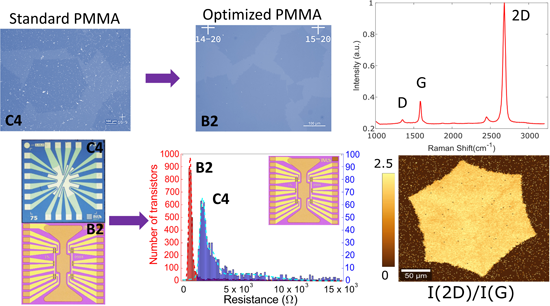
- controllers. The Cu foil was first annealed in argon atmosphere (500 sccm, 9.0 Torr) for 30 min in a quartz tube furnace. In the growth process, the gas mixture of argon (250 sccm), hydrogen (100 sccm), and methane (1.2 sccm) was subsequently introduced into the quartz chamber, where a reaction pressure of
- 4.0 Torr was kept constant through the variable frequency-driven pumping system. The growth time for single graphene crystals (250–350 µm) and large-area graphene films (ca. 25 cm2) was 40 and 80 min, respectively. To finalize the process, an argon flush of 500 sccm was conducted to cool down samples




A nonenzymatic reduced graphene oxide-based nanosensor for parathion
Beilstein J. Nanotechnol. 2022, 13, 730–744, doi:10.3762/bjnano.13.65
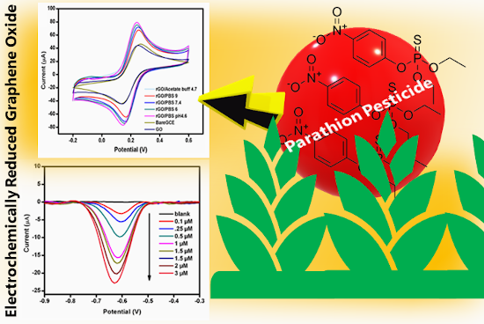
- spectra of the samples were recorded in the 1000–3500 cm−1 region with a resolution of 1 cm−1 using a Renishaw via a Reflex micro-Raman spectrometer with an argon ion (514.6 nm) laser. The X-ray photoemission spectroscopy (XPS) data were obtained from a PHI 5000 Versa probe II scanning XPS microprobe


Design and characterization of polymeric microneedles containing extracts of Brazilian green propolis
Beilstein J. Nanotechnol. 2022, 13, 503–516, doi:10.3762/bjnano.13.42
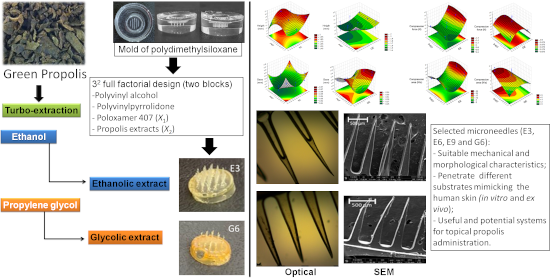
- details of the fabricated MNs was performed by scanning electron microscopy. Each sample was placed over a circular metallic holder (with the help of double-sided tape) and fixed with colloidal gold in a hermetically closed chamber in argon atmosphere. The samples were observed using a Quanta 250 electron


Investigation of electron-induced cross-linking of self-assembled monolayers by scanning tunneling microscopy
Beilstein J. Nanotechnol. 2022, 13, 462–471, doi:10.3762/bjnano.13.39
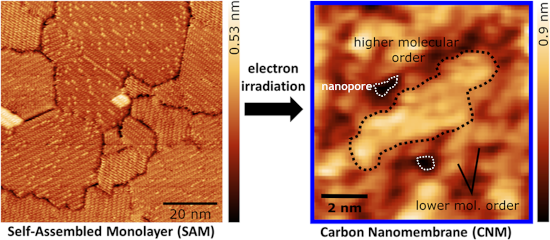
- Au(111) surface was prepared by argon sputtering for 10 min at 1 keV with a pressure of 3 × 10⁻⁶ mbar. Secondly, the treated substrate was annealed at 673 K for 1 h in order to obtain a flat substrate surface characterized by large gold terraces. When required, successive sputtering/annealing cycles


Tubular glassy carbon microneedles with fullerene-like tips for biomedical applications
Beilstein J. Nanotechnol. 2022, 13, 455–461, doi:10.3762/bjnano.13.38
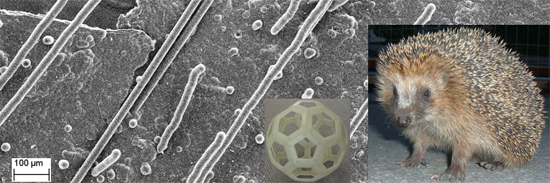
- prepared by flowing methane (CH4) at a rate of 40 sccm for 12 h at p = 200 mbar and a gas temperature of 1020 °C through a 20 mm diameter alumina (Al2O3) tube (15 mm internal diameter), which was then cooled under argon (Ar). Characterization The prepared glassy carbon microneedles were characterized by


Selected properties of AlxZnyO thin films prepared by reactive pulsed magnetron sputtering using a two-element Zn/Al target
Beilstein J. Nanotechnol. 2022, 13, 344–354, doi:10.3762/bjnano.13.29
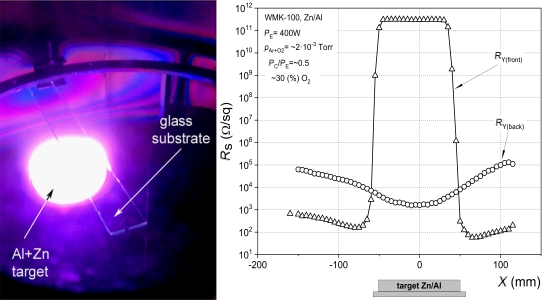
- magnetron sputtering. A two-element Zn/Al planar target was used as source material prepared in the form of a Zn disc (100 mm diameter) with Al rings pressed into its surface. The sputtering processes were carried out in a mixture of argon and oxygen. The films were deposited with a discharge power of PE
- so far by reactive sputtering of Zn/Al metal targets [8][10][12][13][14][19][20][21] using an argon/oxygen atmosphere. There are also examples where such films were deposited by co-sputtering of two independently powered ZnO and Al targets [10][20][21]. This method of sputtering allowed the
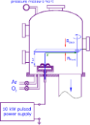
- working and reactive gases, namely argon and oxygen, with a ratio of 70:30, was introduced into the vacuum chamber through a set of needle valves (Figure 1). The total pressure during reactive sputtering processes was established at about pAr+O2 = 3 × 10⁻³ mbar. The power supplying the target (the



Tin dioxide nanomaterial-based photocatalysts for nitrogen oxide oxidation: a review
Beilstein J. Nanotechnol. 2022, 13, 96–113, doi:10.3762/bjnano.13.7
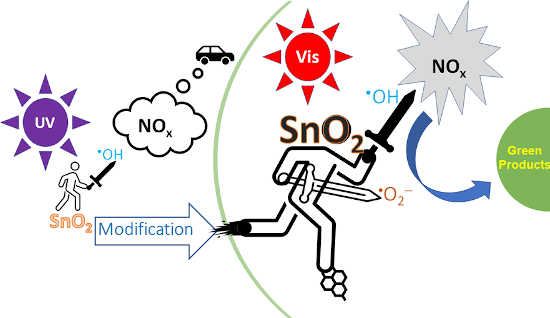
- suitable site for the formation of NO− intermediates to generate nitrite and nitrate products in the photocatalytic reaction processes. Moreover, additional OVs could be readily formed by thermal treatment under argon atmosphere. The work suggested an innovative approach for developing high-performance


Theranostic potential of self-luminescent branched polyethyleneimine-coated superparamagnetic iron oxide nanoparticles
Beilstein J. Nanotechnol. 2022, 13, 82–95, doi:10.3762/bjnano.13.6
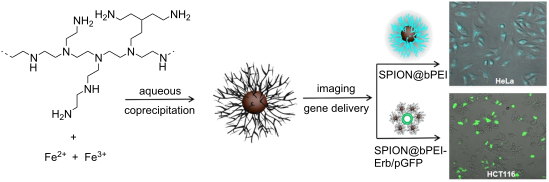
- 80 °C under argon atmosphere. The black solution was cooled to room temperature after 30 min and acidified to pH 5 with CH3COOH (Lachema, Czech Republic). The final product SPION@bPEI was washed with DI water using 30 kDa Amicon centrifugal filters and stored at room temperature. The total organic




Sputtering onto liquids: a critical review
Beilstein J. Nanotechnol. 2022, 13, 10–53, doi:10.3762/bjnano.13.2

- gas phase and subsequent film growth can be computed using, for example, SIMTRA [37] and NASCAM [38] codes, respectively. The evolution of the sputtering yield calculated by SRIM for carbon (C), titanium (Ti), and Au targets as a function of the kinetic energy of the bombarding argon ions is presented
- in Figure 4. The kinetic energy of the argon ions ranges from 100 to 1100 eV, which are typical values for MS discharges. For the calculation, ions are assumed to impinge the surface at normal incidence and the thickness of the target is set to 1 µm. The sputtering yield values are averaged over 5000
- plasma ON and OFF times. The liquid is heated by the sputtering plasma and cooled by the emission of radiation. Values of the liquid temperature reached after 1800 s of plasma ON time are reported in [48] for a power density of 4 W/cm2 applied to the magnetron cathode. The argon plasma (0.07 Pa) is used






Design aspects of Bi2Sr2CaCu2O8+δ THz sources: optimization of thermal and radiative properties
Beilstein J. Nanotechnol. 2021, 12, 1392–1403, doi:10.3762/bjnano.12.103
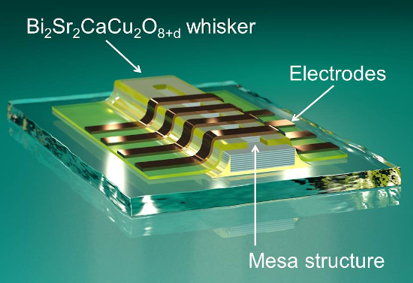
- on a flat portion of Bi-2212 surface, followed by argon-ion etching of the unprotected parts of Au and Bi-2212, the deposition of insulating SiO2 or CaF2 layers and a lift-off of the photoresist at the line. The depth of Bi-2212 etching at this stage (dm ≈ 200–400 nm) defines the height of mesas and
- photolithography and argon-ion etching. Mesa structures are formed at the overlap between the line and the electrodes, as indicated in Figure 1a. Figure 2a,b shows current–voltage (I–V) characteristics of mesas of whisker- and crystal-based devices, respectively. The I–V curves are fairly similar. They contain


Plasmon-enhanced photoluminescence from TiO2 and TeO2 thin films doped by Eu3+ for optoelectronic applications
Beilstein J. Nanotechnol. 2021, 12, 1271–1278, doi:10.3762/bjnano.12.94
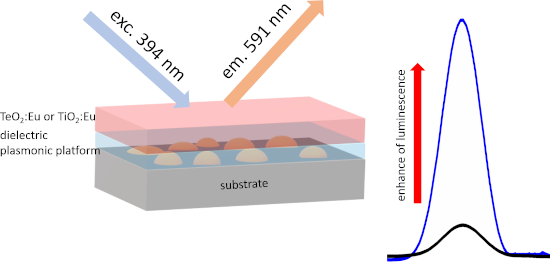
- ethanol and dried at 50 °C. Plasmonic nanostructures were prepared by thermal dewetting of gold thin films. Thin Au films with a thickness of 2.8 nm were deposited using a tabletop DC magnetron sputtering coater (EM SCD 500, Leica) in pure Ar plasma (argon, Air Products, 99.999%) at a pressure of 0.2 Pa
- was conducted at 200 °C. The second kind of dielectric layer was TiO2. It was prepared by radio frequency (RF) reactive magnetron sputtering using an Omicron Nanotechnology four targets sputter system. A Ti target (99.9%) was sputtered in an argon–oxygen atmosphere (Ar/O2 flow ratio: 5 sccm:30 sccm
- about 50 min in argon–oxygen atmosphere (Ar/O2 flow ratio: 5 sccm:30 sccm) at a power of 40 W. This resulted in deposited films with a thickness of ca. 300 nm (deposition rate ca. 0.1 Å/s). The deposition process of TeO2:Eu films was described in our previous work [27]. The preparation of all TiO2, TeO2


The effect of cobalt on morphology, structure, and ORR activity of electrospun carbon fibre mats in aqueous alkaline environments
Beilstein J. Nanotechnol. 2021, 12, 1173–1186, doi:10.3762/bjnano.12.87
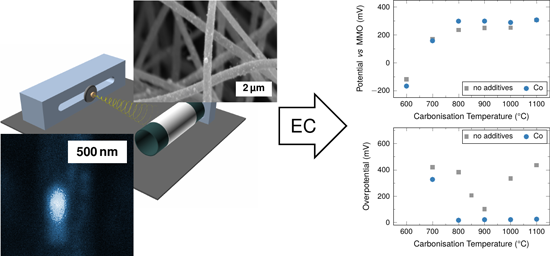
- cobalt-containing samples and 21 kV for the samples without cobalt additive. The samples were stabilised in air and subsequently carbonised in argon atmosphere for 3 h at temperatures between 600 and 1100 °C. Electrodes were prepared from the carbonised mats by applying a PTFE membrane by means of hot


Revealing the formation mechanism and band gap tuning of Sb2S3 nanoparticles
Beilstein J. Nanotechnol. 2021, 12, 1021–1033, doi:10.3762/bjnano.12.76
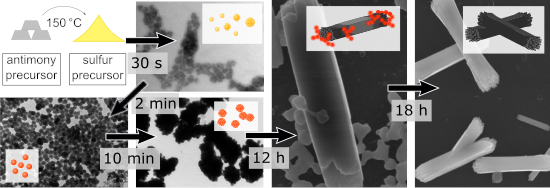
- KGaA, and 1,2-dichlorobenzene (>98%) from Fisher Scientific. All chemicals were used without further purification. Synthesis Undoped Sb2S3 nanoparticles All reaction steps were performed under an argon atmosphere. Prior to the reaction, two precursor solutions were freshly prepared. First, the sulfur


Is the Ne operation of the helium ion microscope suitable for electron backscatter diffraction sample preparation?
Beilstein J. Nanotechnol. 2021, 12, 965–983, doi:10.3762/bjnano.12.73
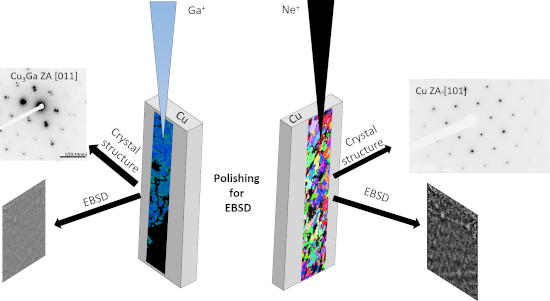
- determine the resulting interaction volume of the ions for the various conditions as well as vacancy formation and implanted impurity concentration. In addition, the achieved results are compared to those achieved by the conventionally used argon ion polishing (PIPS) and electropolishing approaches. Results
- values throughout the work against which the ion-irradiation-induced effects are evaluated. All values can be found in Table 1. Non-irradiated copper: electropolishing and Ar ion polishing To evaluate the effect of electropolishing and argon ion polishing on EBSD measurements, the Cu sample was polished
- electropolishing protocol not feasible for stress and strain analysis of the Cu sample. Argon ion polishing of the Cu sample produced better results than electropolishing. The FSD image (Figure 4j) reveals grains and does not show obvious sample surface alterations in comparison to the electropolishing approaches




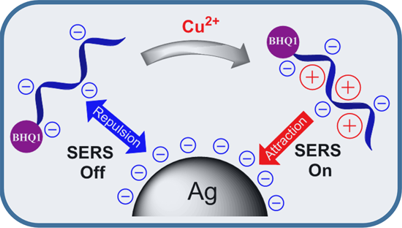
Modification of a SERS-active Ag surface to promote adsorption of charged analytes: effect of Cu2+ ions
Beilstein J. Nanotechnol. 2021, 12, 902–912, doi:10.3762/bjnano.12.67
- microscope in PeakForceQNM mode with recording the adhesion force maps and topographic images. SERS measurements were carried out by using a scanning probe Raman microscope “NanoFlex” (Solar LS, Belarus). The source of excitation at 488.0 nm was an argon ion laser (Melles Griot, USA). Excitation and


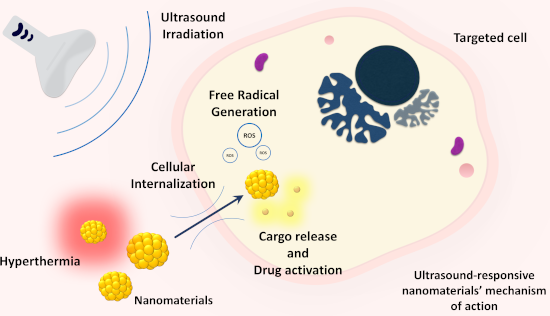
Comprehensive review on ultrasound-responsive theranostic nanomaterials: mechanisms, structures and medical applications
Beilstein J. Nanotechnol. 2021, 12, 808–862, doi:10.3762/bjnano.12.64


9.1% efficient zinc oxide/silicon solar cells on a 50 μm thick Si absorber
Beilstein J. Nanotechnol. 2021, 12, 766–774, doi:10.3762/bjnano.12.60
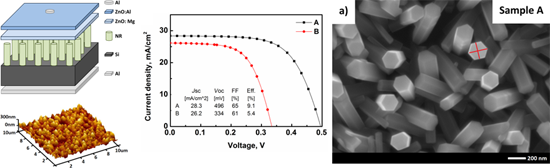
- deposited as a low-resistivity ohmic contact via sputtering. To improve the contact parameters, the samples were annealed at 500 °C for 5 min in argon atmosphere via rapid thermal processing. Si/Al substrates were prepared in two different ways, A and B. On the surface of sample A, zinc oxide nanorods


A review of defect engineering, ion implantation, and nanofabrication using the helium ion microscope
Beilstein J. Nanotechnol. 2021, 12, 633–664, doi:10.3762/bjnano.12.52
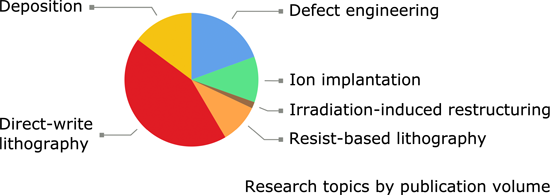
- was first demonstrated by Cybart et al. for the cuprate superconductor YBa2Cu3O7−δ (YBCO), by scanning the helium ion beam in line mode across 4 μm wide strips of YBCO that had been locally pre-thinned to a thickness of 30 nm using argon ion milling [31]. Due to the high-resolution writing capability


Stability and activity of platinum nanoparticles in the oxygen electroreduction reaction: is size or uniformity of primary importance?
Beilstein J. Nanotechnol. 2021, 12, 593–606, doi:10.3762/bjnano.12.49
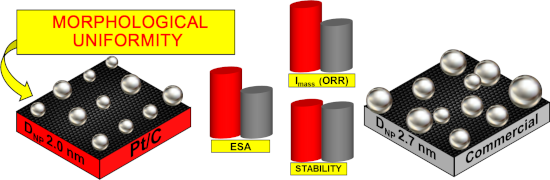
- saturated with argon for 40 min. Then, 100 cycles were carried out in the potential range from 0.04 to 1.2 V relative to RHE. The potential sweep speed was 200 mV·s−1. The electrochemically active surface area was determined from the cyclic voltammogram (CV) by calculating the amount of electricity consumed
- of 0.90 V (RHE). The method of multiple voltammetric cycling in the potential range of 0.6–1.0 V (RHE) with a sweep rate of 100 mV·s−1 was chosen as a method for assessing the degree of degradation of the electrocatalysts. The cycling was carried out in a 0.1 M HClO4 solution saturated with argon at


On the stability of microwave-fabricated SERS substrates – chemical and morphological considerations
Beilstein J. Nanotechnol. 2021, 12, 541–551, doi:10.3762/bjnano.12.44
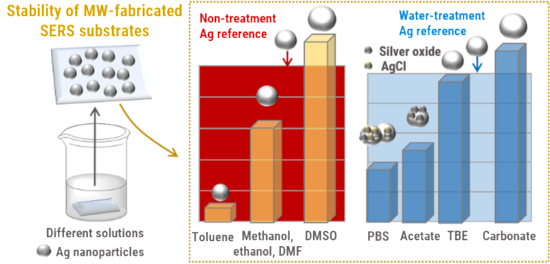
- available microscope glass coverslips, cut into rectangles with a dimension of 20 × 10 mm, were used as substrates. The glass substrates were first cleaned by washing with demineralized water and ethanol followed by plasma cleaning (argon plasma, 5 min, Diener Electronics). For all experiments, a single


Boosting of photocatalytic hydrogen evolution via chlorine doping of polymeric carbon nitride
Beilstein J. Nanotechnol. 2021, 12, 473–484, doi:10.3762/bjnano.12.38
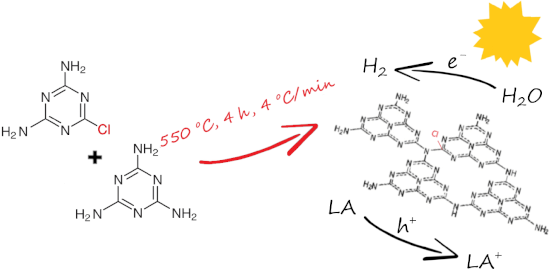
- and sonicating for 1 h. The photocatalytic water splitting reaction was carried out in an outer irradiation-type reactor (Pyrex reaction vessel) connected to an argon source. After the reaction solution was placed in the reactor, 5 mL of lactic acid was poured into and purged with argon for air


Solution combustion synthesis of a nanometer-scale Co3O4 anode material for Li-ion batteries
Beilstein J. Nanotechnol. 2021, 12, 424–431, doi:10.3762/bjnano.12.34
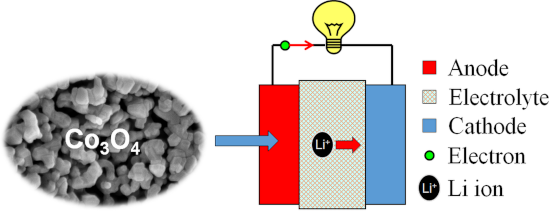
- M LiPF6 dissolved in a mixture of ethylene carbonate (EC)/diethyl carbonate (DEC) (weight ratio of 1:1) (DoDoChem). The electrochemical cells were assembled in an argon-filled glove box. Galvanostatic charge–discharge (GCD) tests were performed between 0.01 and 3 V at different current density rates


Structural and optical characteristics determined by the sputtering deposition conditions of oxide thin films
Beilstein J. Nanotechnol. 2021, 12, 354–365, doi:10.3762/bjnano.12.29
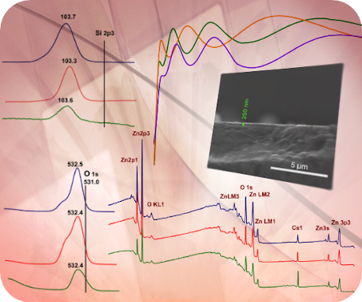
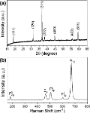
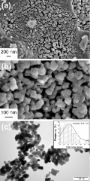
- 200 to 300 nm, from targets in the form of a disk with 4″ diameter and 0.125″ thickness. SiO2 and ZnO (99.99% purity, Lesker) were individually sintered. Working gases (i.e., argon, 95% and oxygen, 5%) were introduced in the deposition chamber via a circuit provided with flow meters (30 and 1.5 sccm


Nickel nanoparticle-decorated reduced graphene oxide/WO3 nanocomposite – a promising candidate for gas sensing
Beilstein J. Nanotechnol. 2021, 12, 343–353, doi:10.3762/bjnano.12.28
- supported on reduced graphene oxide paves the way for their application as dopant in other metal oxide gas sensors. Experimental Due to the sensitivity of the precursor substances towards moisture and oxidation, all experiments were carried out in a purified argon (grade 99.998 vol %) or nitrogen (grade
- was dried at 100 °C using a turbo molecular pump at 5 × 10⁻⁷ mbar for several days. Preparation of Ni@rGO in ionic liquid Nickel nanoparticles on rGO (Ni@rGO) were prepared in septum-sealed 10 mL microwave vessels (CEM GmbH, Germany) in a CEM Discover microwave under argon atmosphere. Ni(COD)2 (49.2
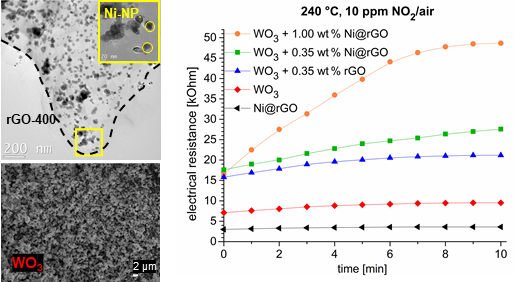
- + WO3 (blue), WO3 (red), and Ni@rGO (black) samples under exposure to a gas mixture containing 10 ppm NO2 in air. Left: magnetization as a function of temperature for the Ni@rGO composite in argon atmosphere. Right: magnetic susceptibility as a function of temperature for nickel in argon atmosphere


Exploring the fabrication and transfer mechanism of metallic nanostructures on carbon nanomembranes via focused electron beam induced processing
Beilstein J. Nanotechnol. 2021, 12, 319–329, doi:10.3762/bjnano.12.26
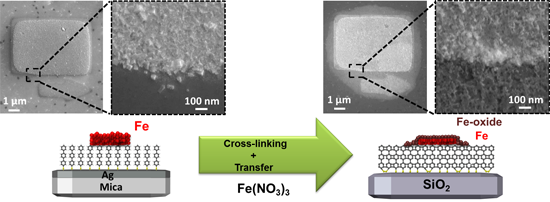
- CHEMICALS, 99.9%). The precursor 1,1′,4′,1′′-terphenyl-4-thiol (TPT) (Sigma-Aldrich, 97%) was sublimated before use. Preparation of SAMs/Ag follows the wet method for the analogous SAMs/Au as described elsewhere [26]. Silver substrates were immersed in a ca. 1 mM TPT solution under argon environment for 24
- h at 70 °C. Then, a repetition of rinsing in DMF and ethanol was applied to the samples in order to remove physically absorbed TPT molecules. The samples were consequently dried by a stream of nitrogen gas and preserved in argon environment until use in FEBID experiments. The FEBIP experiments were





