


Search results
Search for "atomic layer deposition" in Full Text gives 100 result(s) in Beilstein Journal of Nanotechnology.
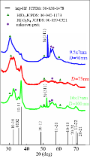
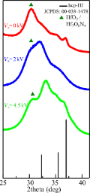
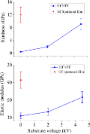
Synthesis of hafnium nanoparticles and hafnium nanoparticle films by gas condensation and energetic deposition
Beilstein J. Nanotechnol. 2018, 9, 1868–1880, doi:10.3762/bjnano.9.179

- fragile coatings that tend to fracture under small loads, making them in many cases unsuitable for industrial use. Mechanical reinforcement is necessary to improve mechanical stability. Some proposed methods in this direction are calcination [28], atomic layer deposition [29], hydrothermal treatment [30






Magnetic properties of Fe3O4 antidot arrays synthesized by AFIR: atomic layer deposition, focused ion beam and thermal reduction
Beilstein J. Nanotechnol. 2018, 9, 1728–1734, doi:10.3762/bjnano.9.164
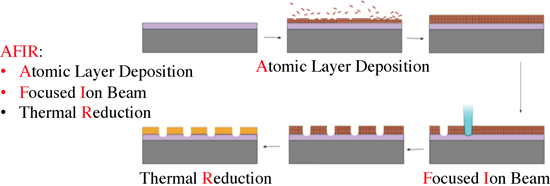
- .9.164 Abstract Magnetic films of magnetite (Fe3O4) with controlled defects, so-called antidot arrays, were synthesized by a new technique called AFIR. AFIR consists of the deposition of a thin film by atomic layer deposition, the generation of square and hexagonal arrays of holes using focused ion beam
- variable lattice parameters. Keywords: antidot arrays; atomic layer deposition; focused ion beam; magnetic properties; thermal reduction; Introduction Magnetic antidots, magnetic thin films with periodic arrays of holes, are currently an important topic for both the fundamental understanding of low
- atomic layer deposition (ALD) [31][32][33]. Due to the self-limited growth of material, ALD allows to control the thickness of the films with high precision [34]. The holes arise because of a dewetting process of the sample [35], which depends on its geometric and magnetic parameters as well as on the




Semi-automatic spray pyrolysis deposition of thin, transparent, titania films as blocking layers for dye-sensitized and perovskite solar cells
Beilstein J. Nanotechnol. 2018, 9, 1135–1145, doi:10.3762/bjnano.9.105
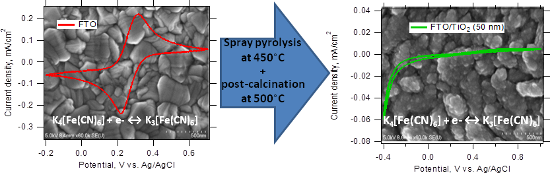
- prevent recombination on this surface [3][4][5]. Blocking layers (BLs) can be fabricated by spray pyrolysis [3][6], magnetron sputtering [7], electrochemical deposition [8] spin coating [9][10], dip coating [11] and atomic layer deposition (ALD) [3]. From the viewpoint of low-cost processing and easy


Effect of annealing treatments on CeO2 grown on TiN and Si substrates by atomic layer deposition
Beilstein J. Nanotechnol. 2018, 9, 890–899, doi:10.3762/bjnano.9.83
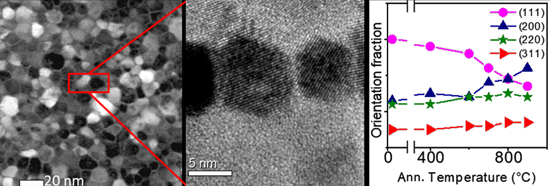
- this work, we investigate the effect of thermal treatment on CeO2 films fabricated by using atomic layer deposition (ALD) on titanium nitride (TiN) or on silicon (Si) substrates. In particular, we report on the structural, chemical and morphological properties of 25 nm thick ceria oxide with particular
- deposition process. This result is interpreted in the light of the contributions of different energy components (surface energy and elastic modulus) which act dependently on the substrate properties, such as its nature and structure. Keywords: atomic layer deposition; cerium(IV) oxide (CeO2) microstructure
- sputtering [7], e-beam [16], physical vapor deposition [17], chemical vapor deposition (CVD) [18], and atomic layer deposition (ALD). The latter has been explored by using different precursors, e.g., Ce(thd)4, Ce(iPrCp)3 and Ce(mmp)4) [19][20][21][22][23], obtaining as-deposited film with polycrystalline


Dynamics and fragmentation mechanism of (C5H4CH3)Pt(CH3)3 on SiO2 surfaces
Beilstein J. Nanotechnol. 2018, 9, 711–720, doi:10.3762/bjnano.9.66
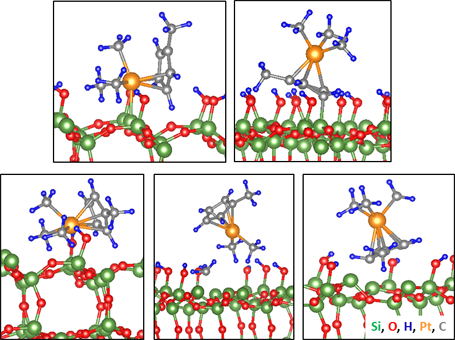
- fragmentation pathways qualitatively. In a recent investigation, thickness-controlled site-selective Pt deposits were obtained by direct atomic layer deposition (ALD) in which ALD was performed on EBID patterned substrates. In this ALD process, an O2 pulse is used to obtain better nucleation, even though the
- layer deposition (ALD) conditions are available [12]. The studies in this review fairly agree that (1) the presence of surface hydroxyl groups are the source for protons that help in the evolution of H2, CH4 and H2O during the deposition process, and (2) the molecules dissociate or associate through a
- bonds directly to three methyl groups and a methylated cyclopentadienyl ring is a widely used precursor to obtain Pt deposits. Although the dissociation mechanism of (C5H4CH3)Pt(CH3)3 leading to the Pt deposit remains unknown, studies for a family of precursors similar to (C5H4CH3)Pt(CH3)3 in atomic



Al2O3/TiO2 inverse opals from electrosprayed self-assembled templates
Beilstein J. Nanotechnol. 2018, 9, 216–223, doi:10.3762/bjnano.9.23
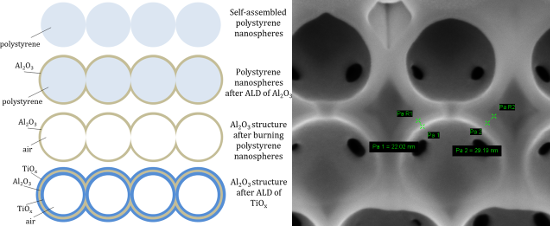
- errors and Al2O3/TiO2 as a structural layer infiltrated through the voids. This is a two-step atomic layer deposition (ALD) process in which the polymeric template is eliminated after the deposition of the alumina layer and before the ALD deposition of the titania layer. Results and Discussion The
- dislocations in between, and no cracks were present. Atomic layer deposition The second step of our fabrication procedure uses the polystyrene structure shown in Figure 2 as a template in which other suitable materials can be deposited. In our case, alumina was first deposited as it is a material that can be


Atomic layer deposition and properties of ZrO2/Fe2O3 thin films
Beilstein J. Nanotechnol. 2018, 9, 119–128, doi:10.3762/bjnano.9.14
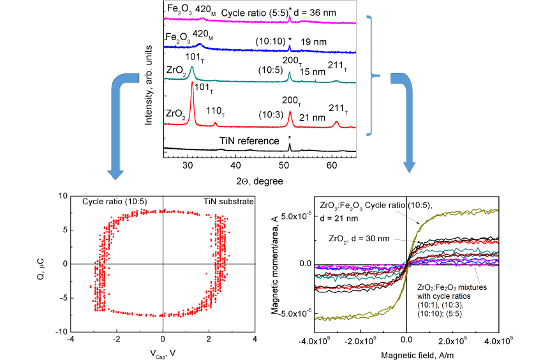
- grown by atomic layer deposition (ALD) at 400 °C. Metastable phases of ZrO2 were stabilized by Fe2O3 doping. The number of alternating ZrO2 and Fe2O3 deposition cycles were varied in order to achieve films with different cation ratios. The influence of annealing on the composition and structure of the
- with a Zr/Fe atomic ratio of 2.0. Keywords: atomic layer deposition; metal oxides; thin films; Introduction Doped ZrO2 has been a subject of interest because of several potential applications, for example, in microelectronics as a memory material [1]. Also, doping a dielectric film with a magnetic
- deposited ZrO2 were compared from the viewpoint of ferroelectric behavior [21], whereby ALD precursors were Zr-based metal organic precursors (TEMAZr) and H2O. Both fabrication methods provided samples with antiferroelectric behavior. Here, ZrO2 films doped with Fe2O3 were grown by atomic layer deposition


Comparative study of post-growth annealing of Cu(hfac)2, Co2(CO)8 and Me2Au(acac) metal precursors deposited by FEBID
Beilstein J. Nanotechnol. 2018, 9, 91–101, doi:10.3762/bjnano.9.11
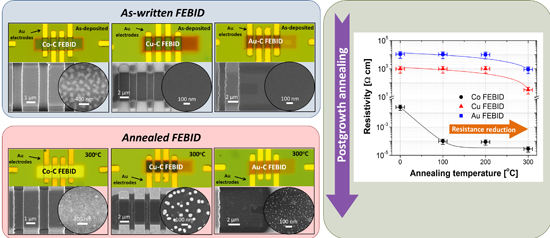
- μm2 were similar for Cu–C and Au–C (ca. 1.7 nm·min−1), while they were slightly lower for Co–C (ca. 1.4 nm·min−1), being comparable to typical atomic layer deposition (ALD) processes. Measurements performed on deposits after annealing at 300 °C indicate shrinkage with respect to the as-deposited


Direct writing of gold nanostructures with an electron beam: On the way to pure nanostructures by combining optimized deposition with oxygen-plasma treatment
Beilstein J. Nanotechnol. 2017, 8, 2530–2543, doi:10.3762/bjnano.8.253
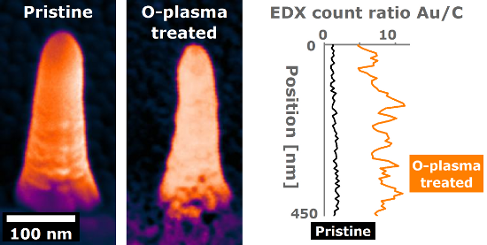
- layer deposition is feasible for platinum [58][59], but has proved very challenging for gold [60][61]. While the encouraging results from Pt purification can provide inspiration, it is still necessary to develop new procedures for the purification of FEBID gold. Roughly, all these procedures that strive
- different surface mechanisms prevented the direct application of the methods used for Pt purification to Au purification. These differences between the platinum precursor MeCpPtMe3 and the acetylacetonate-based gold precursors Me2-Au-acac, Me2-Au-tfac, and Me2-Au-hfac become evident by the fact that atomic

Refractive index sensing and surface-enhanced Raman spectroscopy using silver–gold layered bimetallic plasmonic crystals
Beilstein J. Nanotechnol. 2017, 8, 2492–2503, doi:10.3762/bjnano.8.249
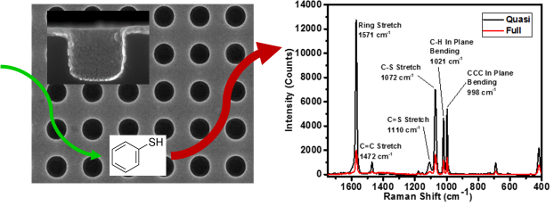
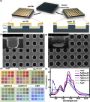
- frequencies. A ≈5 nm titanium dioxide adhesion layer was deposited using atomic layer deposition (Cambridge nanotech) on the embossed SOG nanostructure followed by deposition of a ≈50 nm metallic film (Au, Ag or both) via one of the various methods. Sputter deposition in a 5 mTorr argon atmosphere (AJA
- penetration of liquid solution into the interfaces formed between the metal films and the SOG substrate. To prevent the degradation in performance that this engendered, a conformal ≈6 nm thick Al2O3 passivation film was deposited on top of the metal by atomic layer deposition (Cambridge Nanotech). Bulk


Increasing the stability of DNA nanostructure templates by atomic layer deposition of Al2O3 and its application in imprinting lithography
Beilstein J. Nanotechnol. 2017, 8, 2363–2375, doi:10.3762/bjnano.8.236
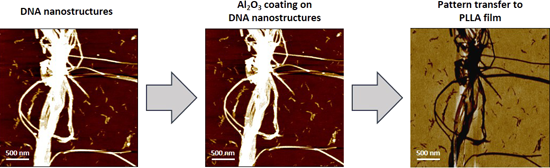
- conformal coating with a nanometer-thin protective inorganic oxide layer created using atomic layer deposition (ALD). DNA nanotubes and origami triangles were coated with ca. 2 nm to ca. 20 nm of Al2O3. Nanoscale features of the DNA nanostructures were preserved after the ALD coating and the patterns are
- resistive to UV/O3 oxidation. The ALD-coated DNA templates were used for a direct pattern transfer to poly(L-lactic acid) films. Keywords: aluminium oxide (Al2O3); atomic layer deposition; DNA nanostructure; nanofabrication; nanoimprint lithography; pattern transfer; polymer stamp; replica molding
- . Similarly, DNA nanostructures were also used in the anhydrous HF vapor etching of a SiO2 substrate, producing positive imprints of the DNA nanostructures with sub-10 nm resolution [35]. DNA nanostructures were also converted into carbon nanostructures with shape conservation by atomic layer deposition of




The integration of graphene into microelectronic devices
Beilstein J. Nanotechnol. 2017, 8, 1056–1064, doi:10.3762/bjnano.8.107
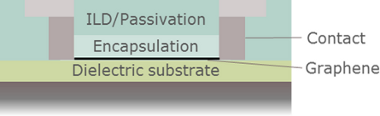
- yields excellent results [4], but this is not a production-relevant approach. A material that is available in mass-production quantities and fulfills both mentioned requirements is aluminum oxide deposited by atomic-layer deposition (ALD). It was demonstrated that graphene encapsulated in Al2O3 could be


High photocatalytic activity of Fe2O3/TiO2 nanocomposites prepared by photodeposition for degradation of 2,4-dichlorophenoxyacetic acid
Beilstein J. Nanotechnol. 2017, 8, 915–926, doi:10.3762/bjnano.8.93
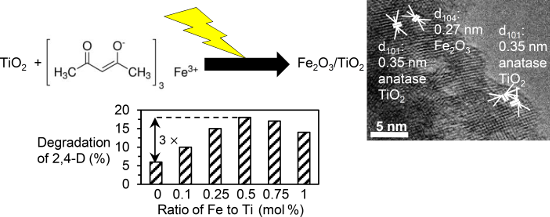
- ], plasma enhanced-chemical vapor deposition (PE-CVD) and radio frequency (RF) sputtering approach [12], and plasma enhanced-chemical vapor deposition and atomic layer deposition (ALD) followed by thermal treatment [13]. Among these preparation methods, impregnation is a commonly used approach for the


Investigation of growth dynamics of carbon nanotubes
Beilstein J. Nanotechnol. 2017, 8, 826–856, doi:10.3762/bjnano.8.85
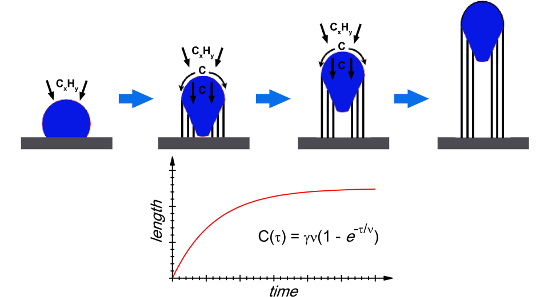
- layer deposition and impregnation. It was shown that the catalyst prepared by atomic layer deposition catalyzed the growth of SWCNTs by the tip-growth mode, whereas the catalyst prepared by impregnation catalyzed the base-growth of nanotubes. This was explained by weak interactions between Co
- nanoparticles and MgO support in the catalyst prepared by atomic layer deposition and extremely strong metal-support interactions between epitaxial Co nanoparticles and MgO support in the catalyst prepared by impregnation. Tangential and perpendicular growth modes. In the recent years, the other two growth
- process. It was proven that although both growth mechanisms coexisted in the experiments, long and oriented nanotubes were produced only by the tip-growth mechanism. In [100], SWCNTs were synthesized by the low-temperature CVD process using two different types of CoxMg1−xO catalysts prepared by atomic


Vapor deposition routes to conformal polymer thin films
Beilstein J. Nanotechnol. 2017, 8, 723–735, doi:10.3762/bjnano.8.76
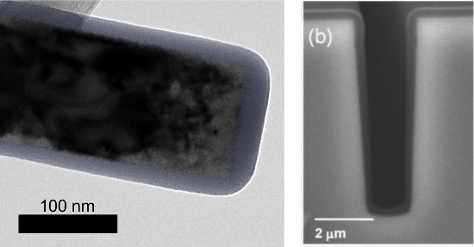
- ]. However, no systematic studies of conformality have been devoted solely to these techniques thus far. Practitioners of MLD can look at existing models for its inorganic analogue, atomic layer deposition (ALD), as a starting point for studying conformal MLD films [12]. This review will focus on two, well


Synthesis of graphene–transition metal oxide hybrid nanoparticles and their application in various fields
Beilstein J. Nanotechnol. 2017, 8, 688–714, doi:10.3762/bjnano.8.74
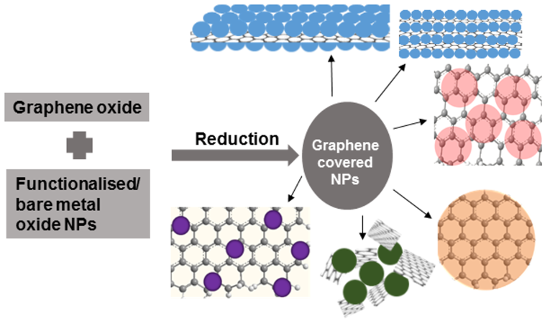






Advances in the fabrication of graphene transistors on flexible substrates
Beilstein J. Nanotechnol. 2017, 8, 467–474, doi:10.3762/bjnano.8.50
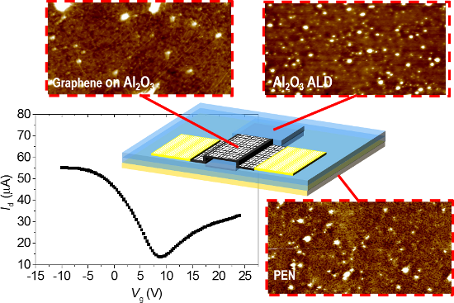
- buried gate contact under a thin Al2O3 insulating film. In order to be compatible with the use of the PEN substrate, optimized deposition conditions of the Al2O3 film by plasma-enhanced atomic layer deposition (PE-ALD) at a low temperature (100 °C) have been developed without any relevant degradation of
- the final dielectric performance. Keywords: atomic layer deposition; chemical sensing; field effect transistor; flexible electronics; graphene; Introduction One of the new challenges in the field of electronics is represented by flexible devices. The evolution of the processing technologies for soft
- layer deposition (ALD) represents an optimal method to fabricate a good quality Al2O3 dielectric film with a tight control on the deposited thickness and a high level of conformal coverage. While the thickness control allows easy fabrication of a tens of nanometer thick dielectric film (resulting in a



Diffusion of dilute gas in arrays of randomly distributed, vertically aligned, high-aspect-ratio cylinders
Beilstein J. Nanotechnol. 2017, 8, 64–73, doi:10.3762/bjnano.8.7
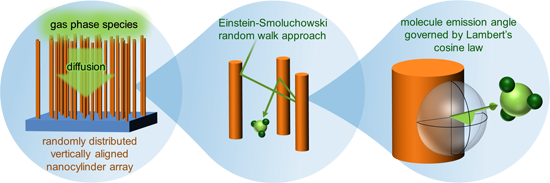
- molecules diffusing between vertically aligned carbon nanotubes. Our findings are important for the correct modelling and optimisation of gas-based deposition techniques, such as atomic layer deposition or chemical vapour deposition, frequently used for surface functionalisation of high-aspect-ratio
- the coating of nanotubes or nanowires with thin films employing techniques such as chemical vapour deposition (CVD) [11] or atomic layer deposition (ALD) [12][13]. Our recent study constitutes an example of the coating of vertically aligned carbon nanotubes (VACNTs) with monocrystalline anatase using


Active and fast charge-state switching of single NV centres in diamond by in-plane Al-Schottky junctions
Beilstein J. Nanotechnol. 2016, 7, 1727–1735, doi:10.3762/bjnano.7.165
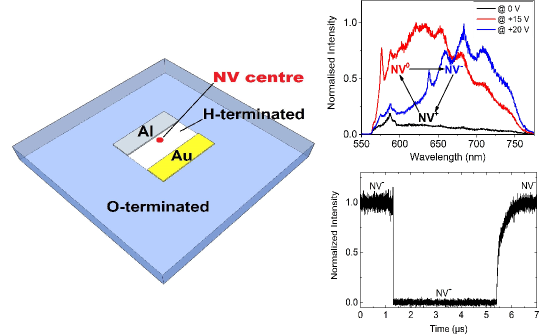
- stable device operation and NV manipulation. One passivation method was suggested by Hiraiwa et al. by covering the surface with an Al2O3 film using an atomic-layer-deposition (ALD) method with an H2O oxidant at 450 °C [29]. They could show that this film does not destroy the C–H bonds as well as the


Sb2S3 grown by ultrasonic spray pyrolysis and its application in a hybrid solar cell
Beilstein J. Nanotechnol. 2016, 7, 1662–1673, doi:10.3762/bjnano.7.158
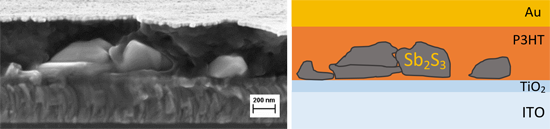
- -porous TiO2 as the electron conductor have reached a conversion efficiency of 7.5% when post-deposition sulfurization and thermal treatment of Sb2S3 were used [17]. The introduction of atomic layer deposition (ALD) for growing Sb2S3 onto a meso-porous TiO2 substrate was successful with respective solar
- solid state solar cells that use Sb2S3 absorber on top of a planar, fibrous, or mesoporous (mp) TiO2 layer. The technologies for growing Sb2S3 are denoted as “spray” for chemical spray pyrolysis, CBD for chemical bath deposition, ALD for atomic layer deposition, and “spin-c.” for spin coating




Linear and nonlinear optical properties of hybrid metallic–dielectric plasmonic nanoantennas
Beilstein J. Nanotechnol. 2016, 7, 111–120, doi:10.3762/bjnano.7.13
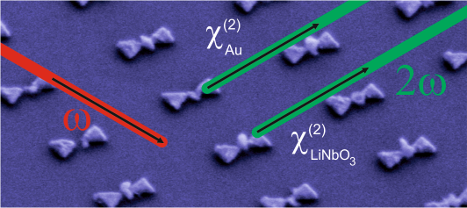
- achieve this goal. In all these cases, these techniques such as high-resolution electron beam lithography [78][79], self-assembled molecular monolayers [77], spacer layer engineering via atomic layer deposition [45], self-assembly of metallic nanoparticles with DNA and other molecular binding units [46


Dependence of lattice strain relaxation, absorbance, and sheet resistance on thickness in textured ZnO@B transparent conductive oxide for thin-film solar cell applications
Beilstein J. Nanotechnol. 2016, 7, 75–80, doi:10.3762/bjnano.7.9
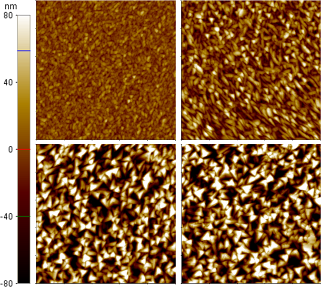
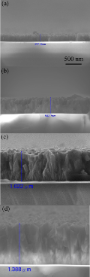
- addition, the microstructure, optical properties, and strain of thickness-dependent ZnO thin film grown by atomic layer deposition have been reported [17]. The thicker ZnO thin films show a larger crystalline grain, a smaller lattice strain, a higher Zn/O ratio, and better crystal quality. Furthermore



Paramagnetism of cobalt-doped ZnO nanoparticles obtained by microwave solvothermal synthesis
Beilstein J. Nanotechnol. 2015, 6, 1957–1969, doi:10.3762/bjnano.6.200
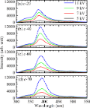
- cause any structural changes in the investigated samples. A comparison of the Fourier transformations of EXAFS oscillations (measured at the Co K-edge for four types of Zn1−xCoxO NPs and for the reference Zn1−xCoxO sample grown by atomic layer deposition (ALD)) is shown in Figure 11. The method of




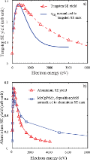
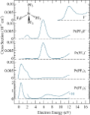
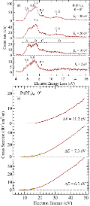
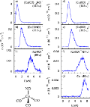
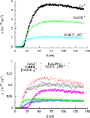
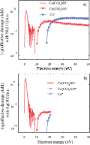
The role of low-energy electrons in focused electron beam induced deposition: four case studies of representative precursors
Beilstein J. Nanotechnol. 2015, 6, 1904–1926, doi:10.3762/bjnano.6.194
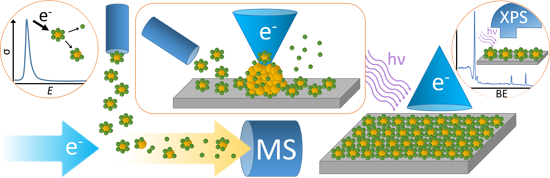
- ][60] and oxygen [57][58][61][62], but also the combination of FEBID with atomic layer deposition [63] and with laser exposure [64] have proven advantageous. Despite the poor purity of Pt deposits created from MeCpPtMe3 in the absence of any purification strategies, MeCpPtMe3 has continued to be used








Surface engineering of nanoporous substrate for solid oxide fuel cells with atomic layer-deposited electrolyte
Beilstein J. Nanotechnol. 2015, 6, 1805–1810, doi:10.3762/bjnano.6.184
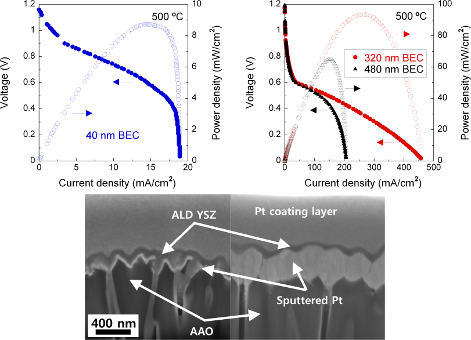
- density than the thinner BEC cell at 500 °C. Keywords: anodic aluminum oxide; atomic layer deposition; bottom electrode catalyst; mass transport; solid oxide fuel cell; Introduction Recently solid oxide fuel cells with thin film ceramic electrolytes, called thin film solid oxide fuel cells (TF-SOFCs
- pinhole issues causing gas permeation and electrode diffusion due to the rough surface of porous substrates [5]. This drawback necessitates conformal and dense thin film electrolytes, and can appreciably be relieved with an aid of atomic layer deposition (ALD) technique that is governed by binary reaction





