Search results
Search for "carboxylate" in Full Text gives 104 result(s) in Beilstein Journal of Nanotechnology.
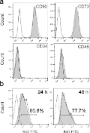
Nanoparticle delivery to metastatic breast cancer cells by nanoengineered mesenchymal stem cells
Beilstein J. Nanotechnol. 2018, 9, 321–332, doi:10.3762/bjnano.9.32
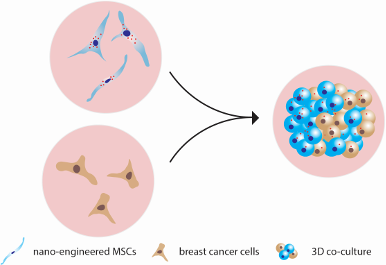
- shell coated with an amphiphilic polymer and functionalised with carboxylate. The QDs have an emission maxima of 655 nm. Xu et al. reported that the hydrodynamic diameter of the nanoparticles is 14.55 ± 4.157 nm and the zeta potential is −35.1 mV [51]. The stock solution was prepared at a concentration



Gas-assisted silver deposition with a focused electron beam
Beilstein J. Nanotechnol. 2018, 9, 224–232, doi:10.3762/bjnano.9.24
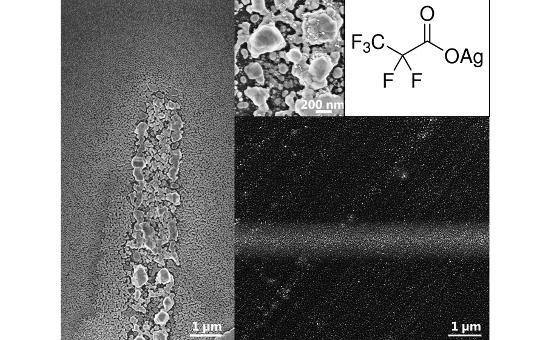
- such as plasmonics, suitable precursors which allow the deposition of desired materials have to be identified. Well known for its plasmonic properties, silver represents an interesting candidate for FEBID. For this purpose the carboxylate complex silver(I) pentafluoropropionate (AgO2CC2F5) was used for
- (AgO2CC2F5), for silver FEBID based on reported successful chemical vapor deposition (CVD) experiments yielding silver films at moderate temperatures of around ≤200 °C [16]. This carboxylate compound showed to be susceptible to electron-induced dissociation, but it requires thermal conditions outside the
- (version 1.2.0). Results and Discussion The depositions were conducted at substrate temperatures of 160 °C. In contrast to typical FEBID experiments, the gas injection system (GIS) had to be heated to 175 °C. The high GIS temperatures assured sufficient evaporation of the carboxylate compound, while the


Response under low-energy electron irradiation of a thin film of a potential copper precursor for focused electron beam induced deposition (FEBID)
Beilstein J. Nanotechnol. 2018, 9, 57–65, doi:10.3762/bjnano.9.8
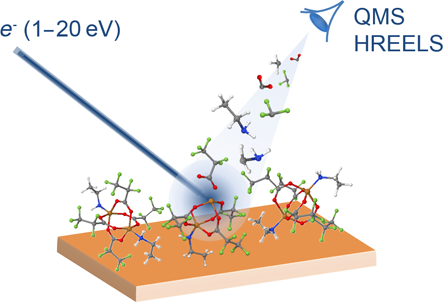
- fragmentation of the precursor for leaving deposited material of desired composition. Here a new class of copper precursors is studied following an approach that probes some surface processes involved in the fragmentation of precursors. We use complexes of copper(II) with amines and perfluorinated carboxylate
- the four perfluorinated carboxylate ligands. The use of lightly bound amine and carboxylate ligands gives complexes that are stable in gel form under ambient conditions but yield a copper purity from 60% to 80% in CVD. In these CVD studies, the sublimation of the full complexes was observed to be
- carboxylate ligands, one can anticipate the ease of removal of the lightly bound amine ligands. In addition, the carboxylate ligands could favourably drive the precursor dissociation to the release of CO2 fragments, known to be a general product of electron impact on carboxylic acids [9][10]. These



CdSe nanorod/TiO2 nanoparticle heterojunctions with enhanced solar- and visible-light photocatalytic activity
Beilstein J. Nanotechnol. 2017, 8, 2741–2752, doi:10.3762/bjnano.8.273
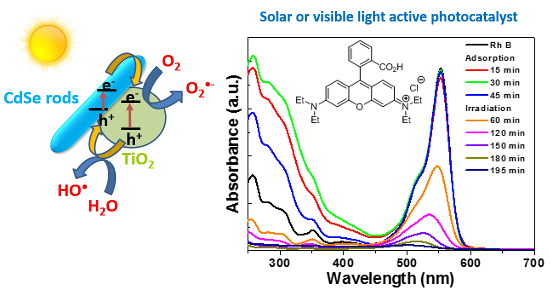
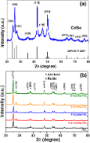
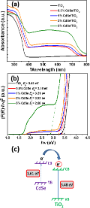
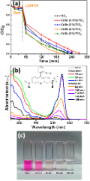
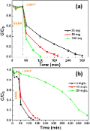
- zero charge of the TiO2 nanoparticles is at ≈6.5 [53] and the pKa of the acid function of RhB is 3.7. At pH ≥ 9, the weak photocatalytic activity probably originates from the strong repellency between the carboxylate function of RhB and the negatively charged catalyst. At pH 3, the positively charged
- RhB exhibits only a modest affinity for the positively charged catalyst. At pH values ranging from 5 to 8, RhB may associate to the photocatalyst either via interaction involving the carboxylate function or the positively charged diethylamino groups. Visible light photocatalytic activity of the CdSe






Patterning of supported gold monolayers via chemical lift-off lithography
Beilstein J. Nanotechnol. 2017, 8, 2648–2661, doi:10.3762/bjnano.8.265
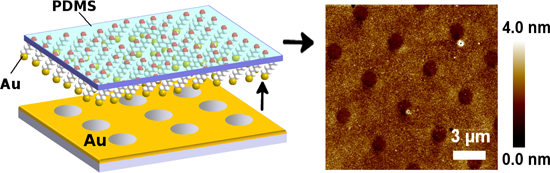
- determined that methyl-terminated SAMs do not react with activated PDMS and are therefore inert to lift-off. Terminal functional groups that are “CLL compatible” include hydroxyl, amino, carboxylate, and phosphonate moieties, such that these groups react with oxidized PDMS and are lifted off [1][10][11


The role of ligands in coinage-metal nanoparticles for electronics
Beilstein J. Nanotechnol. 2017, 8, 2625–2639, doi:10.3762/bjnano.8.263
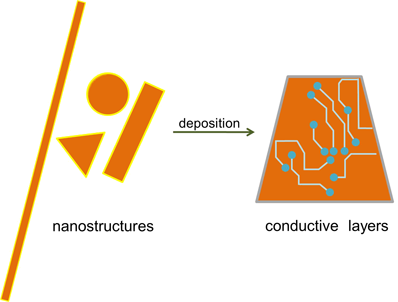
- acid ligands were also deposited as films. The authors report that the carboxylate moieties enabled ligand removal at low sintering temperatures (150 °C) so that nanoparticles coalesced and formed a continuous layer with conductivities between 39.2 and 47.6 S/cm [46]. The ω-functionalities of surface


Synthesis of [{AgO2CCH2OMe(PPh3)}n] and theoretical study of its use in focused electron beam induced deposition
Beilstein J. Nanotechnol. 2017, 8, 2615–2624, doi:10.3762/bjnano.8.262
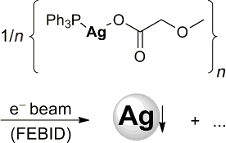
- coordination polymer in the solid state as evidenced by single crystal X-ray structure analysis. The coordination geometry at Ag+ is of the [3 + 1] type, whereby the carboxylate anions act as bridging ligands. The formation of PPh3–Ag(I) coordinative bonds results in distorted T-shaped AgPO2 units, which are
- O2CCH2OMe− is generated, further following the first fragmentation route. However, at 1.3 eV the initial step is decarboxylation giving [AgCH2OMe(PPh3)], followed by Ag–P and Ag–C bond cleavages. Keywords: DFT; DSC; FEBID; silver(I) carboxylate; solid-state structure; TGA; Introduction Focused electron
- silver(I) carboxylate [{AgO2CCH2OMe}n] (1), which gives [{AgO2CCH2OMe(PPh3)}n] (2), when treated with equimolar amounts of PPh3 (Scheme 1). Coordination polymers 1 and 2 are colorless solids, which are stable towards air and moisture and hence can be safely handled under aerobe conditions. Silver


Application of visible-light photosensitization to form alkyl-radical-derived thin films on gold
Beilstein J. Nanotechnol. 2017, 8, 1863–1877, doi:10.3762/bjnano.8.187
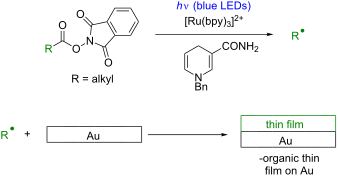
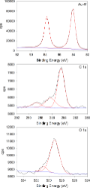
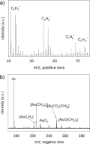
- have to be small relative to the number of decyl radicals or decane molecules deposited in the film. The presence of the oxygen-containing ions also indicates that some of the deposited layer may be bound to the substrate via Au–carboxylate (CO2–Au) bonds [67][68] which have also been observed in the



Synthesis and functionalization of NaGdF4:Yb,Er@NaGdF4 core–shell nanoparticles for possible application as multimodal contrast agents
Beilstein J. Nanotechnol. 2017, 8, 1815–1824, doi:10.3762/bjnano.8.183
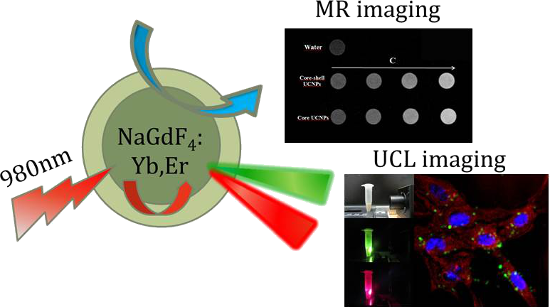
- peaks of oleate ligands. The absorption peak at 1710 cm−1 (Figure 3f) corresponds to the stretching vibration of C=O in pure oleic acid (Figure 3a) which is replaced by two carboxylate stretching bands (1560 and 1447 cm−1 in Figure 3e), which indicates oleate ligand adsorption on the UCNP surface. Tween


Methionine-mediated synthesis of magnetic nanoparticles and functionalization with gold quantum dots for theranostic applications
Beilstein J. Nanotechnol. 2017, 8, 1734–1741, doi:10.3762/bjnano.8.174
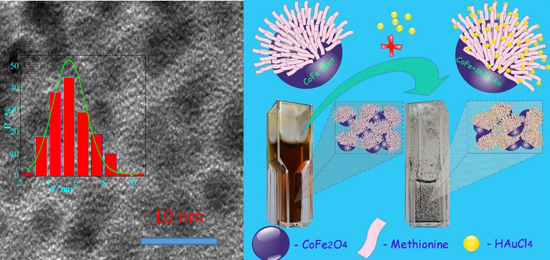
- has been previously reported, such frequency downshift is due to the direct interaction of the carboxylate group of the amino acid with the NP surface [43]. We also suspect that the appearance of the significantly stronger symmetric vibration mode in the FTIR spectrum of gold decorated NPs at 1515 cm


Deposition of exchange-coupled dinickel complexes on gold substrates utilizing ambidentate mercapto-carboxylato ligands
Beilstein J. Nanotechnol. 2017, 8, 1375–1387, doi:10.3762/bjnano.8.139
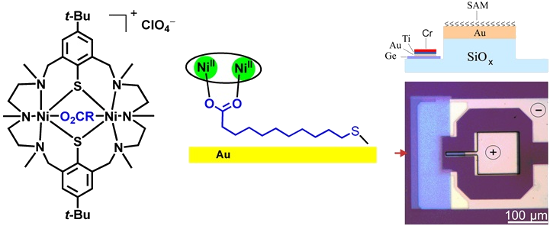
- (Scheme 1), L’ an ambidentate coligand, and M is a paramagnetic transition metal ion, usually MnII, FeII, CoII, or NiII [37]. The ambidentate phosphane-carboxylato [38] and thiol-carboxylato coligands H2L2 and H1L3 (Figure 1) were found to bind selectively via their carboxylate function to form the
- labels are collected in Scheme 2. The compounds were prepared in analogy to the synthesis of [Ni2L(HL2)](ClO4) (2) [39]. Thus, treatment of [Ni2L(μ-Cl)](ClO4) (1) [43][44] with a slight excess of the triethylammonium salt of the corresponding mercapto-carboxylate anion (prepared in situ from the free
- (L’)]+ cations (Table 1) were consistent with the formulation as mixed ligand [Ni2L(L’)](ClO4) complexes. It has already been demonstrated that the [Ni2L]2+ dication has a higher affinity for carboxylate ions than for thiophenolate groups, and that the former, when attached to [Ni2L]2+, invariably


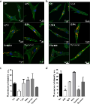
Nano-engineered skin mesenchymal stem cells: potential vehicles for tumour-targeted quantum-dot delivery
Beilstein J. Nanotechnol. 2017, 8, 1218–1230, doi:10.3762/bjnano.8.123
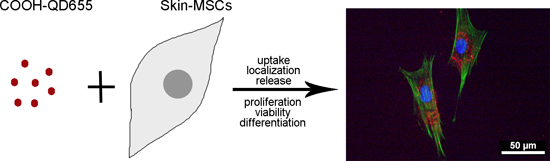
- Thermo Fisher Scientific, USA. QDs are composed of a CdSe core with a ZnS shell that are coated with amphiphilic polymers and functionalized with carboxylate. The QDs have an emission maximum at 655 nm. Xu et al. measured the hydrodynamic diameter of the nanoparticles to be 14.55 ± 4.157 nm and a zeta





Surface-enhanced Raman spectroscopy of cell lysates mixed with silver nanoparticles for tumor classification
Beilstein J. Nanotechnol. 2017, 8, 1183–1190, doi:10.3762/bjnano.8.120
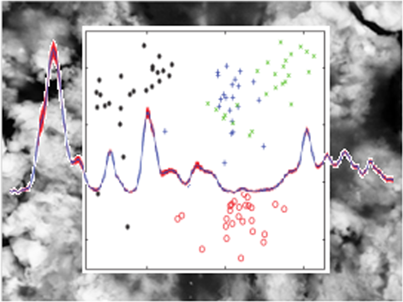
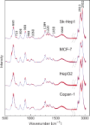
- raw spectra were baseline-subtracted and normalized. Figure 3 shows the processed mean SERS spectra and the standard deviation for each of the four cell lines Capan-1, HepG2, MCF-7 and Sk-Hep1. The band at 660 cm−1 is assigned to carboxylate [25]. Spectral contributions of adenine from nucleic acids
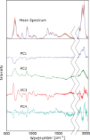
- 900 cm−1 in PC4 loadings. In general, we did not notice a significant difference in the amide content inside the four cell lines. The main differences were assigned to vibrations of nucleic acids, CH2/3 from the whole cell contents and the carboxylate moieties. The score values of the first four PCs


Tuning the spin coherence time of Cu(II)−(bis)oxamato and Cu(II)−(bis)oxamidato complexes by advanced ESR pulse protocols
Beilstein J. Nanotechnol. 2017, 8, 943–955, doi:10.3762/bjnano.8.96
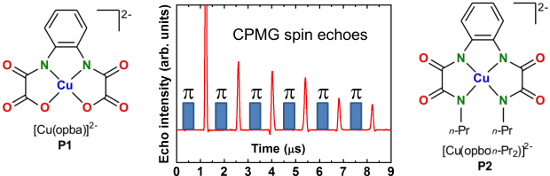
- some of us [10][28]. Due to the coordination of two deprotonated amido nitrogen atoms and two carboxylate oxygen atoms for P1 the formation of a CuO2N2 coordination unit was observed [28], cf. Figure 1. It is to note, that not only the CuO2N2 unit but the whole complex fragment P1 was observed as


Probing the magnetic superexchange couplings between terminal CuII ions in heterotrinuclear bis(oxamidato) type complexes
Beilstein J. Nanotechnol. 2017, 8, 789–800, doi:10.3762/bjnano.8.82
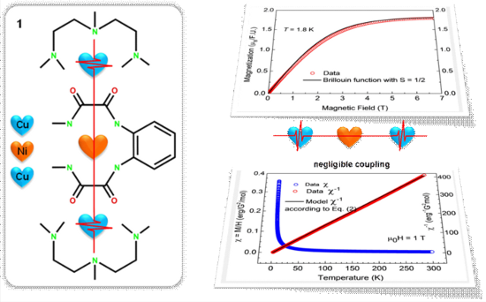
- the fourth one is significantly larger (11: 101.97(7)°; 12: 108.8(3)°). Thereby, the latter bond angle is the one created of the two carboxylate oxygen atoms of 11 or the two Nalkyl donor atoms of 12. This feature is due to the presence of 5-5-5 fused chelate rings around the NiII ion [17][24]. In


α-((4-Cyanobenzoyl)oxy)-ω-methyl poly(ethylene glycol): a new stabilizer for silver nanoparticles
Beilstein J. Nanotechnol. 2017, 8, 627–635, doi:10.3762/bjnano.8.67
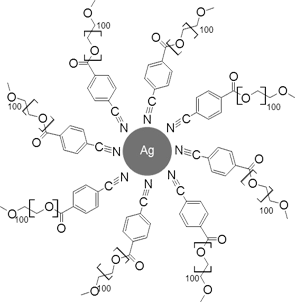
- produces a negatively charged carboxylate (from 4-cyanobenzoic acid attached to the SNP surface) and a neutral alcohol (from the free PEG chains released from the surface). The –OH group does not affect the surface charge at pH 12 but the higher number of negative charges from the cleaved benzoic acid
- negative zeta potential at the beginning of the experiment is due to the presence of residual citrate and nitrate ions adsorbed on the particle surface that are not removed during CBAmPEG@SNP synthesis. This is confirmed by Raman spectroscopy, which detects carboxylate groups (from citrate) and NO2
- electrostatic stabilization is likely somewhat stronger because the negatively charged carboxylate groups (from the cyanobenzoic acid moieties) also contribute to charging the SNP surface. Conclusion The current article describes synthesis and performance of α-((4-cyanobenzoyl)oxy)-ω-methyl poly(ethylene glycol


Investigation of the photocatalytic efficiency of tantalum alkoxy carboxylate-derived Ta2O5 nanoparticles in rhodamine B removal
Beilstein J. Nanotechnol. 2017, 8, 604–613, doi:10.3762/bjnano.8.65
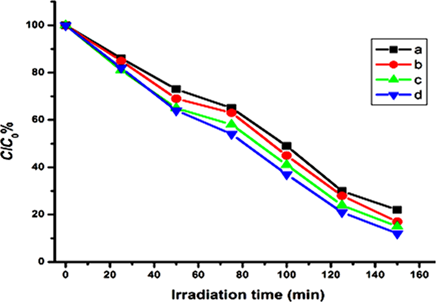
- alkoxide over a period of 30 min at 25 °C. After stirring at ambient temperature for 10 h the solvent was removed in vacuo to give the compounds. General method for the synthesis of Ta2O5 nanoparticles The precursor tantalum alkoxide/alkoxy carboxylate (1 mmol) was dissolved in its respective parent
- dimeric in nature, i.e., the geometry of parent alkoxides is maintained. The replacement of alkoxy groups by chloroacetate ligands in Ta(OR)5 (OR = OEt/On-Bu) slows down the hydrolysis during the sol–gel process. The bidentate carboxylate groups are difficult to hydrolyze and therefore, alkoxy groups are


Methods for preparing polymer-decorated single exchange-biased magnetic nanoparticles for application in flexible polymer-based films
Beilstein J. Nanotechnol. 2017, 8, 408–417, doi:10.3762/bjnano.8.43
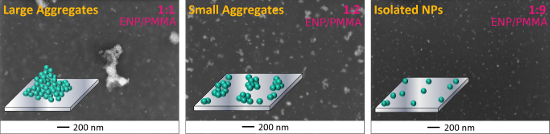
- of the resulting hybrid, namely polymer chains and inorganic NPs (e.g., covalent, ionic, van der Waals). Several halogenated coupling agents can be used to covalently graft an organic group onto the surface of oxide NPs, e.g., organosilanes [21][22][23], carboxylate [24][25] or phosphonate/phosphate


Tailoring bifunctional hybrid organic–inorganic nanoadsorbents by the choice of functional layer composition probed by adsorption of Cu2+ ions
Beilstein J. Nanotechnol. 2017, 8, 334–347, doi:10.3762/bjnano.8.36
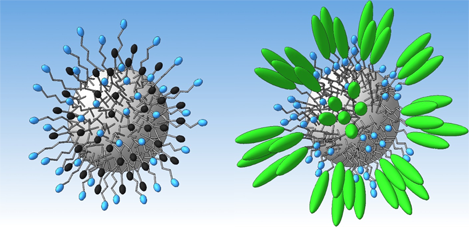
- ]. The best surface availability of organofunctional groups was achieved for the amino-terminated ligands when the organosilane was added 30 min after start of the particle growth, and for the carboxylate-terminated ones the optimal addition time was 5.5 h after particle growth initialization. No


Template-controlled piezoactivity of ZnO thin films grown via a bioinspired approach
Beilstein J. Nanotechnol. 2017, 8, 296–303, doi:10.3762/bjnano.8.32
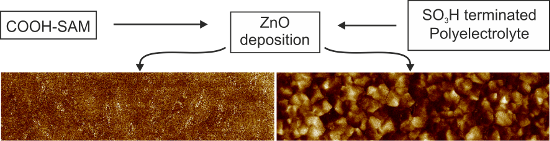
- of functional inorganic materials under mild reaction conditions where organic templates direct the deposition process. In this study, this principle was adapted for the formation of piezoelectric ZnO thin films. The influence of two different organic templates (namely, a carboxylate-terminated self
- different functionalities are available, e.g., amino-, carboxylate or sulfonate groups for hydrophilic or alkyl groups and fluorine atoms for hydrophobic modifications. The properties of these functional groups control the interaction with ZnO. In the case of a template with polar functionality
- zeta potential of SAMs with COOH- and SO3H-functional groups in dependence on the pH [40]. They found that the sulfonate SAM is more negatively charged (−115 mV) compared to the carboxylate one (−75 mV) at a pH of 9, which corresponds to the pH of the mineralization solution used in this study. This


Streptavidin-coated gold nanoparticles: critical role of oligonucleotides on stability and fractal aggregation
Beilstein J. Nanotechnol. 2017, 8, 1–11, doi:10.3762/bjnano.8.1
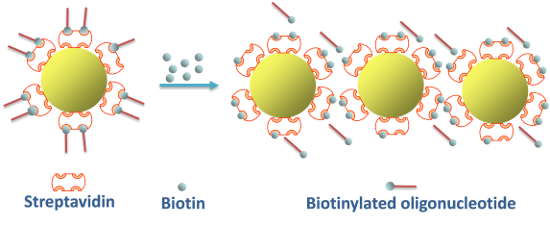
- has been demonstrated that the interaction between proteins and citrate-stabilized AuNPs occurs through a mechanism involving carboxylate–ammonium interactions established between citrate and lysine or histidine amino groups on the protein surface. The mechanism also includes contributions from steric




From iron coordination compounds to metal oxide nanoparticles
Beilstein J. Nanotechnol. 2016, 7, 2074–2087, doi:10.3762/bjnano.7.198
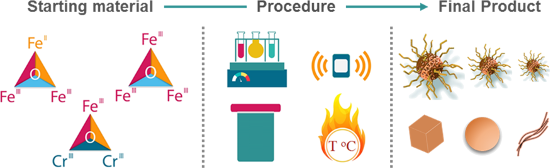
- filtrate was coded as NPT1a and the sample retained by filter was coded NPT1b and these were further characterized separately (Table 1). In the IR spectrum of NPT1a (Supporting Information File 1, Figure S2), the bands at 1634 and 1435 cm−1 assigned to νas,s(COO−) carboxylate groups can be found; these are
- the simple calcination procedure, it was found that using iron or iron/chromium carboxylate clusters, polydisperse nanoparticles of ≈200 nm are obtained, while using an iron precursor with silicone ligand, iron oxide–silica hybrid nanoparticles of just ≈30 nm in diameter can be prepared. It has been


A novel electrochemical nanobiosensor for the ultrasensitive and specific detection of femtomolar-level gastric cancer biomarker miRNA-106a
Beilstein J. Nanotechnol. 2016, 7, 2023–2036, doi:10.3762/bjnano.7.193
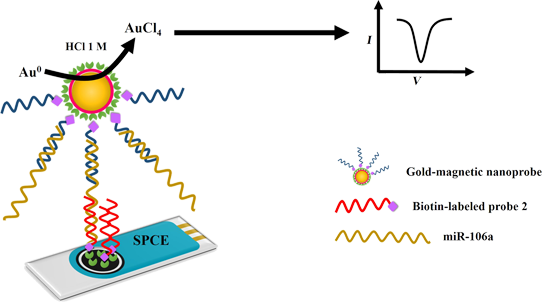
- gold–magnetic NPs with streptavidin; and (3) P1 immobilization onto the NPs. First, in order to carboxylate the gold–magnetic NPs, 100 mg of these particles were added to 1 mL ethanol solution of 20 mM MUA and incubated overnight after 1 h of sonication. Second, streptavidin was covalently immobilized


Intercalation and structural aspects of macroRAFT agents into MgAl layered double hydroxides
Beilstein J. Nanotechnol. 2016, 7, 2000–2012, doi:10.3762/bjnano.7.191
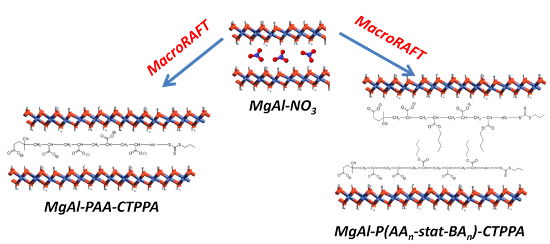
- nm), the interslab available for the PAA49-CTPPA corresponds to 0.6 nm, and indicates an orientation of the macromolecules as a monolayer with the carboxylate groups interacting with the positive adjacent inorganic layers (Figure 3a). The intercalation of P(AA-stat-BA)-CTPPA copolymers led to a
- with a bilayer arrangement of the copolymers. The two most intense peaks are due to the hydroxide layers containing Mg/Al cations. The carboxylate groups from the AA units and the end group of CTPPA would cause maxima at the outer parts of the interlayer space at a distance of ≈0.39 nm from the center
- of the hydroxide layers which is consistent with hydrogen bond interactions between carboxylate and OH groups: C–O· · ·HO–Mg/Al. The second maximum at a distance of ≈0.44 nm from the latter is attributed to both the carboxylate groups in BA units and the thiopropylsulfanyl groups that would be


In situ formation of reduced graphene oxide structures in ceria by combined sol–gel and solvothermal processing
Beilstein J. Nanotechnol. 2016, 7, 1815–1821, doi:10.3762/bjnano.7.174
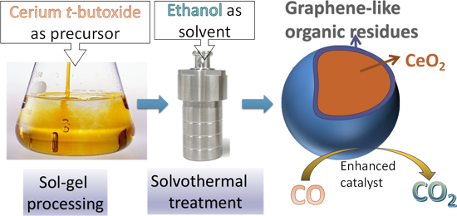
- alkoxide or carboxylate groups were identified [18]. Graphene-like structures, however, were never mentioned. Experimental Synthesis of rGO-modified CeO2 The procedure for the preparation of the ceria–rGO composites was the same as previously reported for that of pure ceria [17] (or Co3O4-modified CeO2 [19