


Search results
Search for "charging" in Full Text gives 217 result(s) in Beilstein Journal of Nanotechnology. Showing first 200.
Controlling the electronic and physical coupling on dielectric thin films
Beilstein J. Nanotechnol. 2020, 11, 1492–1503, doi:10.3762/bjnano.11.132
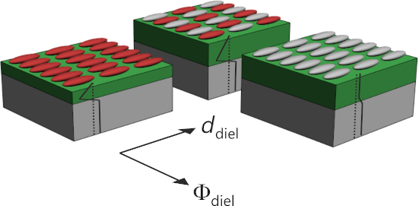
- of such decoupling layers may effectively change the electron donating properties of the substrate, for example, by lowering its work function and thus enhancing the charging of the molecular adsorbate layer through electron tunneling. Here, an experimental study of the charging of para-sexiphenyl
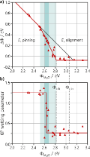
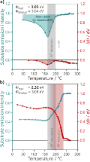
- physical coupling to the substrate induced by the charge transfer. Finally, the charging effect on the thermal dynamics and the stability of the 6P monolayer are considered. Results and Discussion Ambivalent behavior of 6P on regularly prepared MgO(100)/Ag(100) thin films Figure 2 shows STM images of four
- are other molecules with 6 lobes, but in a linear arrangement (Figure 2a). A possible explanation for this observation is the charging-induced planarization of 6P. For comparison, on the pristine Ag(100) substrate, planar 6P molecules are observed in the submonolayer regime despite the lack of any




Self-assembly and spectroscopic fingerprints of photoactive pyrenyl tectons on hBN/Cu(111)
Beilstein J. Nanotechnol. 2020, 11, 1470–1483, doi:10.3762/bjnano.11.130
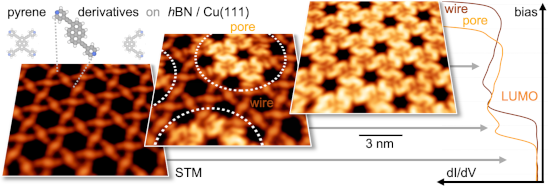
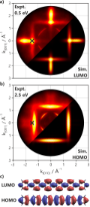
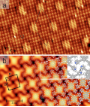
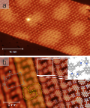
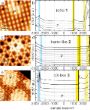
- . Furthermore, the agreement between the gas-phase calculations and STM data indicated that no charging occurred upon pyrene adsorption on hBN/Cu(111) [37]. To complement the on-surface investigations, we measured the optical gap by means of UV–vis spectroscopic characterization in solution (toluene) of the
- the trans-like species. Such a rigid shift can be caused by charges in the molecular layer (biasing nearby molecules) and by local modifications of the work function affecting the interfacial level alignment [9][35][82][83]. As the STM/STS experiments provided no indication of charging, we ruled out a




Triboelectric nanogenerator based on Teflon/vitamin B1 powder for self-powered humidity sensing
Beilstein J. Nanotechnol. 2020, 11, 1394–1401, doi:10.3762/bjnano.11.123
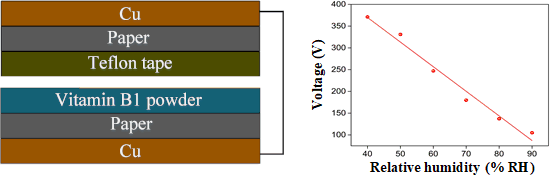
- (at a 100 MΩ load) is approximated to be equal to the open circuit voltage. Similarly, for a load of 100 kΩ, the corresponding output current can be considered to be equal to the short circuit current. In addition, as shown in Figure 3e, the charging capacity of the prepared TVB-TENG was investigated
- changing the load resistance. (d) The behavior of the output power density upon changing the load resistance. (e) TVB-TENG with a full-wave bridge rectifier for charging a 1 nF capacitor. In one cycle, 87 nC of charge is transferred. (f) The reliability of TVB-TENG was studied over 500 working cycles. The




Structure and electrochemical performance of electrospun-ordered porous carbon/graphene composite nanofibers
Beilstein J. Nanotechnol. 2020, 11, 1280–1290, doi:10.3762/bjnano.11.112
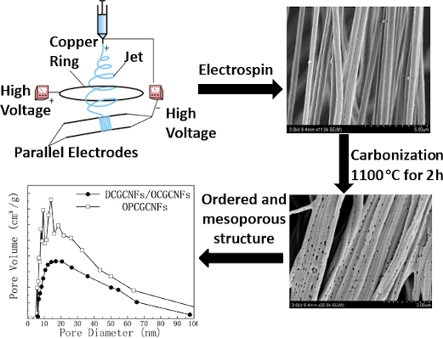
- devices [1][2], are one of the most needed energy storage devices. Their main characteristics include high energy density, high power density, and fast charging speed [3][4][5]. These instruments have electrodes that are composed of either carbonaceous materials (carbon nanotubes, graphene, carbon
- extensive induced current and the largest box-like shaped curve, demonstrating that the OPCGCNF electrode had the largest capacitance among the three CGCNF electrodes analyzed and had a very rapid charging/discharging reaction [45]. The high capacitance of the OPCGCNF electrode could be attributed to its


An atomic force microscope integrated with a helium ion microscope for correlative nanoscale characterization
Beilstein J. Nanotechnol. 2020, 11, 1272–1279, doi:10.3762/bjnano.11.111

- . For AFM and HIM, this is particularly advantageous since both can image non-conductive samples at very high resolution without charging. This is essential for correlative mechanical property and HIM surface imaging, and it is a clear advantage of AFM–HIM compared to AFM–SEM, where a conductive coating


Gas sorption porosimetry for the evaluation of hard carbons as anodes for Li- and Na-ion batteries
Beilstein J. Nanotechnol. 2020, 11, 1217–1229, doi:10.3762/bjnano.11.106
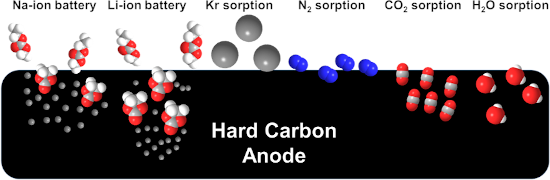
- carbon depends on the type of carbon. Both lithium and sodium are suggested to have two consecutive but very different charging mechanisms [17][19]. Characteristic charge–discharge curves of both SIBs and LIBs feature two regions, first, a sloping region having a hysteresis between charge and discharge


Scanning tunneling microscopy and spectroscopy of rubrene on clean and graphene-covered metal surfaces
Beilstein J. Nanotechnol. 2020, 11, 1157–1167, doi:10.3762/bjnano.11.100
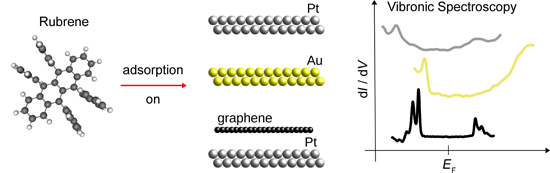
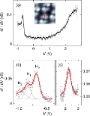
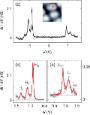
- the hole or electron to the vibrational quantum with energy hν. The Huang–Rhys factor can be expressed as where εν denotes the relaxation energy of the vibration when charging the molecule [10][41]. Comparing the peak height of the orbital signature (I0) with the first vibronic subband (Iν,1) enables



Monolayers of MoS2 on Ag(111) as decoupling layers for organic molecules: resolution of electronic and vibronic states of TCNQ
Beilstein J. Nanotechnol. 2020, 11, 1062–1071, doi:10.3762/bjnano.11.91
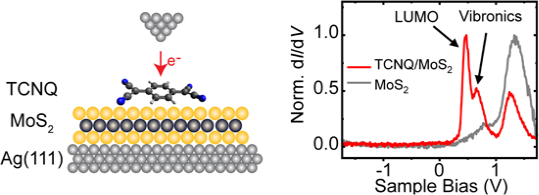
- vibronic sidebands, which occur due to the simultaneous excitation of a vibrational mode upon charging [22][25][57][58][59][60][61]. The sidepeaks should thus obey the same symmetry as the parent orbital state [62][63][64]. In the simplest case, these excitations can be described within the Franck–Condon
- *. Upon charging, the molecule undergoes a geometric distortion, captured by the shift of the potential energy curve of the excited state. Vertical transitions allow for probing many vibronic states, with the intensities given by a Poisson distribution, with Sk being the Huang–Rhys factor of the
- vibrational mode k and n its harmonics. The Huang–Rhys factor is determined by the relaxation energy εk of a vibrational mode when charging the molecule as From the DFT calculations of the TCNQ molecule, we determine all vibrational eigenmodes in the negatively charged state and also derive the Huang–Rhys


Hexagonal boron nitride: a review of the emerging material platform for single-photon sources and the spin–photon interface
Beilstein J. Nanotechnol. 2020, 11, 740–769, doi:10.3762/bjnano.11.61
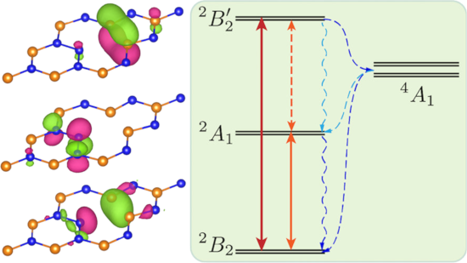
- and thus further investigations are necessary to explore SPEs in h-BN. The ZPL spectral fluctuation (diffusion) is often found due to ionization and the charging of neighboring defects leading to the Stark shift. SPEs in h-BN flakes exposed to blue (405 nm) laser light show pronounced fluorescence




Exfoliation in a low boiling point solvent and electrochemical applications of MoO3
Beilstein J. Nanotechnol. 2020, 11, 662–670, doi:10.3762/bjnano.11.52
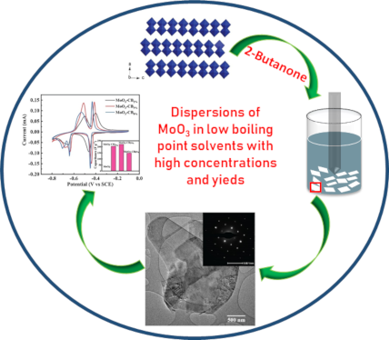
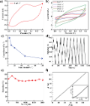
- different scan rates (Figure 3b). The change in specific capacitance as a function of the scan rate is shown in Figure 3c. Even at a high scan rate of 50 mV·s−1 the electrode retained a capacitance value of 200 F·g−1 suggesting that it is a suitable material for fast-charging applications. This property

Comparison of fresh and aged lithium iron phosphate cathodes using a tailored electrochemical strain microscopy technique
Beilstein J. Nanotechnol. 2020, 11, 583–596, doi:10.3762/bjnano.11.46
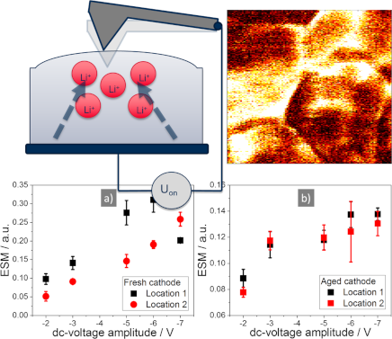
- for both cathodes. Looking at the first charging step, the aged cathode exhibits a smaller charge capacity compared to the fresh cathode. This indicates a smaller amount of lithium stored or available for the electrochemical process or a reduced amount of electrochemically active cathode material. The



Multilayer capsules made of weak polyelectrolytes: a review on the preparation, functionalization and applications in drug delivery
Beilstein J. Nanotechnol. 2020, 11, 508–532, doi:10.3762/bjnano.11.41
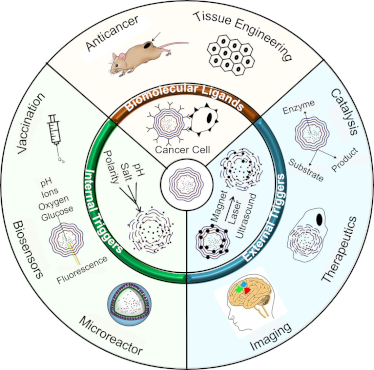
- charging of wall components and affect the wall structure, thereby affecting the capsule wall integrity. In spite of the versatility, in addition to the inexpensive and easy fabrication of electrostatic assemblies, the response over a wide pH range becomes a limitation as it is biologically irrelevant



High dynamic resistance elements based on a Josephson junction array
Beilstein J. Nanotechnol. 2020, 11, 417–420, doi:10.3762/bjnano.11.32
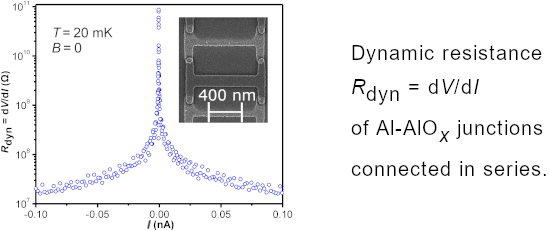
- connected in series, each being a Al–AlOx–Al junction with a gap of about 400 µV. The charging energy, Ec = e2/2C, of each SIS contact (considering it to be a plate capacitor with dielectric constant ε ≈ 10, area 100 × 100 nm and distance between plates ≈2 nm) is about two orders of magnitude higher than
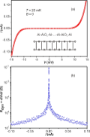
- the Josephson energy, EJ = Ic/2e. As EJ << Ec the physics of the system is dominated solely by charging phenomena. At zero magnetic field and small current bias, the dynamic resistance Rdyn ≡ dV/dI of the JJ chain can reach ≈1011 Ω (Figure 2b), while at a higher bias, Rdyn (I >> 0) approaches 100 kΩ

Implementation of data-cube pump–probe KPFM on organic solar cells
Beilstein J. Nanotechnol. 2020, 11, 323–337, doi:10.3762/bjnano.11.24
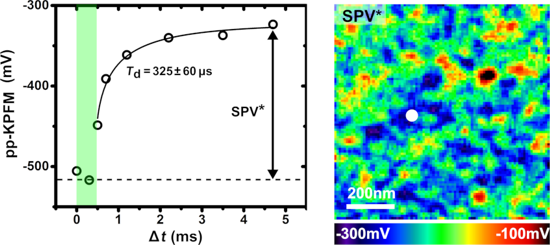
- the development of new time-resolved extensions of electrostatic force microscopy (EFM) and Kelvin probe force microscopy (KPFM). Time-resolved EFM (trEFM) has been used to map photoinduced charging rates (i.e., the time needed to reach an electrostatic equilibrium after illumination) in organic donor




Nanosecond resistive switching in Ag/AgI/PtIr nanojunctions
Beilstein J. Nanotechnol. 2020, 11, 92–100, doi:10.3762/bjnano.11.9
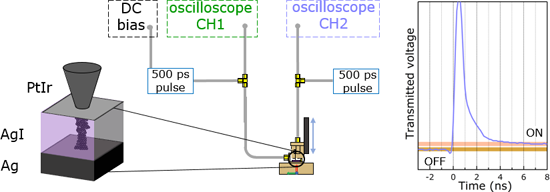
- implemented on identical, impedance-matched printed co-planar waveguide circuit boards, is shown in Figure 4b. The operation of G1 and G2 relies on the recurring charging and avalanche break-down of the 2N2369-type npn transistor. Charging occurs through the 1 MΩ resistor and the 2 pF capacitor located at the


Synthesis of amorphous and graphitized porous nitrogen-doped carbon spheres as oxygen reduction reaction catalysts
Beilstein J. Nanotechnol. 2020, 11, 1–15, doi:10.3762/bjnano.11.1
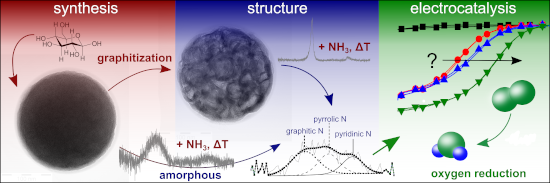
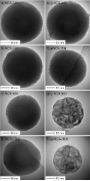
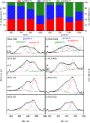
- support to the C 1s signal of the carbon-containing catalyst film. The spectra showed minor charging effects, which were compensated by a neutralizer (low-energy electron flood gun). The C 1s peak was set to 284.8 eV for binding energy calibration [50]. Evaluation and deconvolution of the measured signals
- electrolyte were subtracted from the measured ORR currents in order to remove double-layer charging currents. For each catalyst the cyclic voltammograms are presented, thus the ORR measurements of each catalyst consist of a cathodic (down-going scan, lower trace) and an anodic (up-going scan, upper trace




Adsorption and desorption of self-assembled L-cysteine monolayers on nanoporous gold monitored by in situ resistometry
Beilstein J. Nanotechnol. 2019, 10, 2275–2279, doi:10.3762/bjnano.10.219
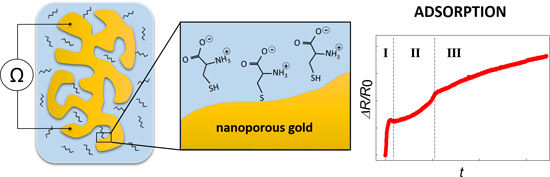
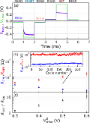
- demonstrates good reproducibility of the desorption peak at −820 mV. During desorption, the resistance (Figure 3b) strongly decreases by about 7.2%. In subsequent cycles it varies in a range of 4%, matching our earlier results for double-layer charging of npAu [19]. A slight drift during repeated cycling is
- most likely caused by sample degradation. The charge transfer of 0.15 C during desorption is a superposition of actual cysteine desorption and double-layer charging (with an increasing contribution as cysteine is desorbed). When we assume the double-layer capacitance to increase roughly proportionally
- to the total charge transfer, this yields contributions of 0.06 C for the double layer and 0.09 C for the cysteine desorption. This charge transfer can be associated with a resistance variation of 2.4% (estimated from the variations upon double-layer charging in following cycles) and 4.8

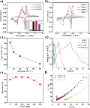
A novel all-fiber-based LiFePO4/Li4Ti5O12 battery with self-standing nanofiber membrane electrodes
Beilstein J. Nanotechnol. 2019, 10, 2229–2237, doi:10.3762/bjnano.10.215
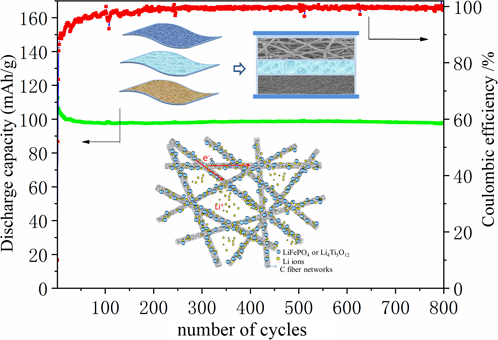
- active substances and electrolyte. The resistance of Li+ during charging and discharging of the battery decreases, and the internal structure of the material cannot collapse of deform easily. Thus, the structure of the material remains unchanged even after many cycles [40][41]. TEM images of the LiFePO4
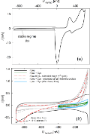
- , which are consistent with the CV curves, corresponding to the processes of Li+ removal from and intercalation in LiFePO4 and Li4Ti5O12, respectively. It is noteworthy that two smaller plateaus for charging and discharging of TiO2 are also found on the charge-discharge curves of Li4Ti5O12, which is in


Ultrathin Ni1−xCoxS2 nanoflakes as high energy density electrode materials for asymmetric supercapacitors
Beilstein J. Nanotechnol. 2019, 10, 2207–2216, doi:10.3762/bjnano.10.213
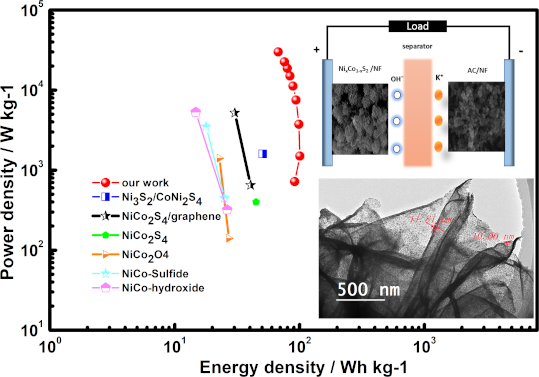
- curves of the ASC at different potential windows with a scan rate of 10 mV·s−1; (c) CV curves of the device at various sweep rates and (d) GCD curves of ASC at different charging/discharge current densities; and (e) the corresponding specific capacitance, (f) cycling stability of the ASC under a current


Oblique angle deposition of nickel thin films by high-power impulse magnetron sputtering
Beilstein J. Nanotechnol. 2019, 10, 1914–1921, doi:10.3762/bjnano.10.186
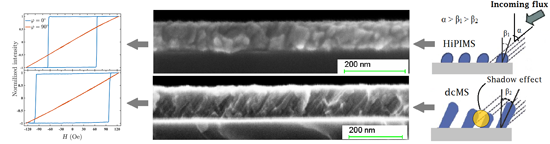
- was 25 cm. We used thermally oxidized Si(001) with an oxide thickness of 100 nm as substrates. However, for the scanning electron microscopy studies, Si(001) substrates with native oxide were used in order to eliminate the charging effect. All films were deposited at room temperature (25 °C) with a


Tuning the performance of vanadium redox flow batteries by modifying the structural defects of the carbon felt electrode
Beilstein J. Nanotechnol. 2019, 10, 1698–1706, doi:10.3762/bjnano.10.165
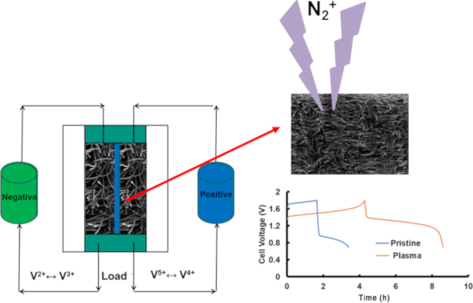
- the charging current reached less than 10 mA cm−2. All the cyclic voltammetry measurements were carried out at a scan rate of 5 mV s−1. Single-cell measurements were performed using a modified direct methanol fuel cell from ElectroChem, having a pin-type flow field with an active area of 25 cm2
- 1.8 V and 0.7 V were used for the charging and discharging steps, respectively. Between the charging and discharging, the cell was kept at an open-circuit voltage condition for 5 min. Long-term cycling measurements were carried out at a current density of 80 mA cm−2 with fresh electrolyte and fresh


Stationary beam full-field transmission helium ion microscopy using sub-50 keV He+: Projected images and intensity patterns
Beilstein J. Nanotechnol. 2019, 10, 1648–1657, doi:10.3762/bjnano.10.160
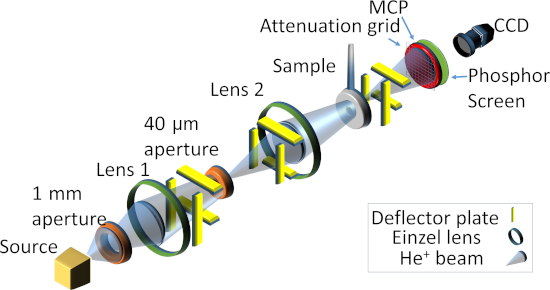
- revealed that these samples charge significantly under He+ ion irradiation. The spot patterns obtained in the THIM experiments are explained as artefacts related to sample charging. The results presented here indicate that factors other than channeling, blocking and surface diffraction of ions have an
- impact on the final intensity distribution in the far field. Hence, the different processes contributing to the final intensities will need to be understood in order to decouple and study the relevant ion-beam scattering and deflection phenomena. Keywords: charging; helium ion microscopy; ion
- He+ ions. The observed differences in the He+ ion intensity distribution as well as unexpected spot patterns are discussed. The results suggest that information about the sample morphology can be extracted. The results also show that charging-related effects can significantly contribute to the final


Upcycling of polyurethane waste by mechanochemistry: synthesis of N-doped porous carbon materials for supercapacitor applications
Beilstein J. Nanotechnol. 2019, 10, 1618–1627, doi:10.3762/bjnano.10.157
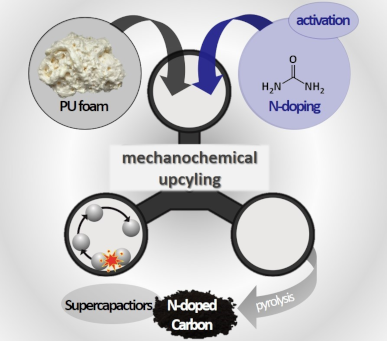
- introduced between charging and discharging. The gravimetric capacitance was calculated from the discharge curve via the following equation: with specific capacitance Cspec, cell voltage U corrected by IR drop, and carbon mass of both electrodes m (without binder). Upcycling approach consisting of high


Kelvin probe force microscopy work function characterization of transition metal oxide crystals under ongoing reduction and oxidation
Beilstein J. Nanotechnol. 2019, 10, 1596–1607, doi:10.3762/bjnano.10.155
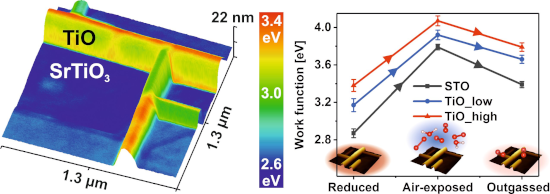
- reproducible Kelvin parabola with negative curvature for both structures. As up and down bias sweeps appear to follow the same curve, and there is no sign of charging or charge transfer. A comparative study of LC-AFM and KPFM of the TiO/SrTiO3 structure enables a clear distinction between two materials of


Rapid thermal annealing for high-quality ITO thin films deposited by radio-frequency magnetron sputtering
Beilstein J. Nanotechnol. 2019, 10, 1511–1522, doi:10.3762/bjnano.10.149
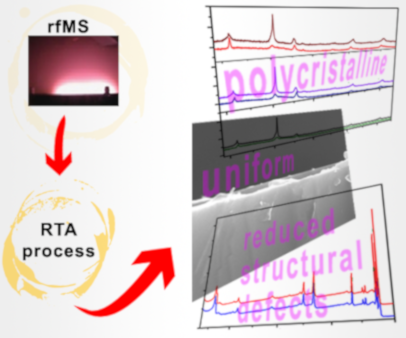
- sputtered onto the sample surfaces prior to imaging and cross-sectional analysis to avoid electrostatic charging during the measurements. The elemental and chemical composition of the ITO thin films as well as the electronic state of the elements within the material were investigated by X-ray photoelectron
- spectroscopy (XPS) method. A SPECS spectrometer with a PHOIBOS RX 150 analyzer and a Specs XR–50 M source was operated with a monochromatic Al anode (hν = 1486.61 eV) at 300 W. The charging effect of the sample deposited onto the quartz substrate is compensated for with a Specs FG15/40 flood gun. The chemical





