Search results
Search for "corrosion" in Full Text gives 137 result(s) in Beilstein Journal of Nanotechnology.
Atomic layer deposition for efficient oxygen evolution reaction at Pt/Ir catalyst layers
Beilstein J. Nanotechnol. 2020, 11, 952–959, doi:10.3762/bjnano.11.79
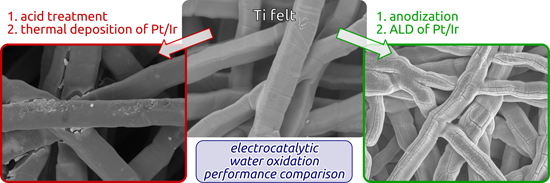
- etching. The surface roughness has increased, thereby increasing the specific surface area. The acid treatment also generates a homogeneously thin and stable TiO2 layer, which provides corrosion resistance while maintaining low transfer coefficients [24]. After coating with the catalyst layer (Figure 1c


Structural optical and electrical properties of a transparent conductive ITO/Al–Ag/ITO multilayer contact
Beilstein J. Nanotechnol. 2020, 11, 695–702, doi:10.3762/bjnano.11.57
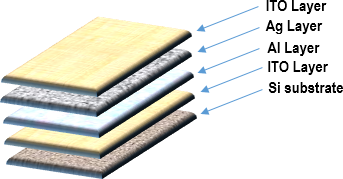
- improve the transport from the lower to the upper part of the device [9]. The good adhesion, low resistivity, and the stability against oxidation and corrosion of Al films make them suitable for application in optical and electronic devices [18][19][20]. The low resistivity and relatively high


Size effects of graphene nanoplatelets on the properties of high-density polyethylene nanocomposites: morphological, thermal, electrical, and mechanical characterization
Beilstein J. Nanotechnol. 2020, 11, 167–179, doi:10.3762/bjnano.11.14
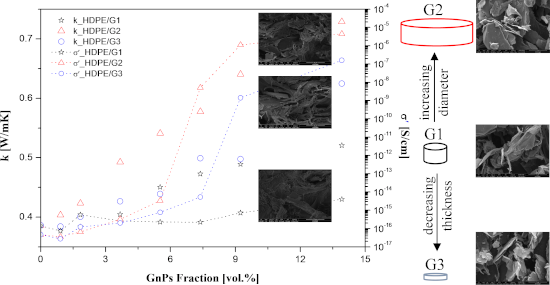
- , anti-statics, light-emitting devices, and corrosion-resistant coatings [1][2]. The addition of a conductive filler to the polymeric matrix is one of the easiest methods to produce these nanocomposites. Among conductive filler materials, carbon-based materials are attractive since they show significant



Influence of the epitaxial composition on N-face GaN KOH etch kinetics determined by ICP-OES
Beilstein J. Nanotechnol. 2020, 11, 41–50, doi:10.3762/bjnano.11.4

- corrosion of this otherwise relatively stable material. They also change the local electronic structure of the material. However, no precise understanding of the fundamental chemical reaction and the impact of multiple parameters has yet been generated. Many of the industrial processes still lack


Synthesis of amorphous and graphitized porous nitrogen-doped carbon spheres as oxygen reduction reaction catalysts
Beilstein J. Nanotechnol. 2020, 11, 1–15, doi:10.3762/bjnano.11.1

- Figure 10), where they were covered by a layer of N-doped TiO2 (TiON@NCS) [34] or N-doped TaxOy (TaON@NCS) [33]. The covering was supposed to serve two purposes, first, to yield ORR activity and, second, to protect the (nitrided) carbon core against corrosion. In this study we used the same procedure for





Advanced hybrid nanomaterials
Beilstein J. Nanotechnol. 2019, 10, 2563–2567, doi:10.3762/bjnano.10.247

- for sensing or corrosion protection. To understand composite formation of a complex hybrid assembly, high quality characterization is paramount. An example is small angle X-ray scattering (SAXS), which was used in the work “Mechanism of silica–lysozyme composite formation unraveled by in situ fast
Label-free highly sensitive probe detection with novel hierarchical SERS substrates fabricated by nanoindentation and chemical reaction methods
Beilstein J. Nanotechnol. 2019, 10, 2483–2496, doi:10.3762/bjnano.10.239
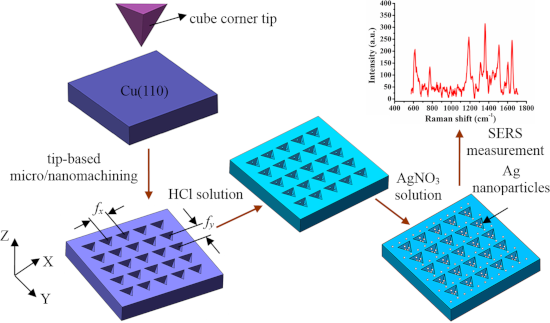
- nanoindentation process and chemical redox reaction to machine a hierarchical SERS substrate. The micro/nanostructures are first formed on a Cu(110) plane and then Ag nanoparticles are generated on the structured copper surface. The effect of the indentation process parameters and the corrosion time in the AgNO3
- on the Cu(110) plane by changing the period of the force signal and the machining feed. Ag nanoparticles were generated via redox on the cavities and pile-up of the Cu(110) surface. Different structures of silver nanoparticles and copper surfaces can be produced by changing the corrosion time, and
- electron microscopy (SEM) images of the arrayed triangular cavities fabricated by different feeds before and after five minutes of corrosion time in AgNO3 solution are shown in Figure 1. Figure 1a shows SEM images of arrayed triangular cavities before corrosion of HCl and AgNO3. The triangular cavities


Polyvinylpyrrolidone as additive for perovskite solar cells with water and isopropanol as solvents
Beilstein J. Nanotechnol. 2019, 10, 2374–2382, doi:10.3762/bjnano.10.228
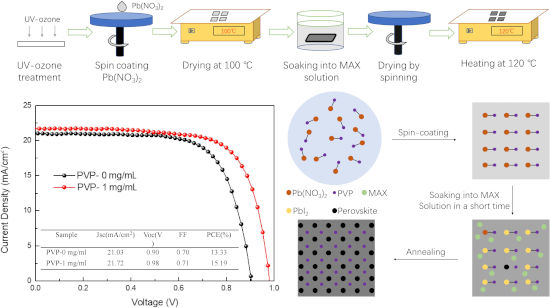
- photoanode and CH3NH3PbX3 (X = I, Br) as light absorbing material to derive perovskite dye-sensitized solar cells with conversion efficiencies of 3.81% (X = I) and 3.13% (X = Br). However, the corrosion of the perovskite material used in the electrolyte results in a poor stability of the devices [5]. In July




Oblique angle deposition of nickel thin films by high-power impulse magnetron sputtering
Beilstein J. Nanotechnol. 2019, 10, 1914–1921, doi:10.3762/bjnano.10.186
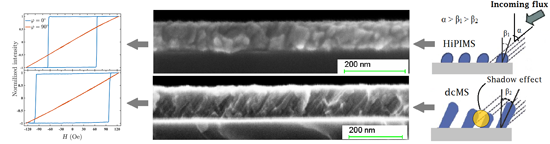
- ], corrosion-resistant coatings [3][4], optically transparent conductive electrodes [5], contact devices [6], Li-storage materials [7], and as selective absorbers in solar thermal energy conversion [8]. Moreover, a number of nickel-containing alloys exploit the ferromagnetic properties of nickel such as NiTi



BiOCl/TiO2/diatomite composites with enhanced visible-light photocatalytic activity for the degradation of rhodamine B
Beilstein J. Nanotechnol. 2019, 10, 1412–1422, doi:10.3762/bjnano.10.139
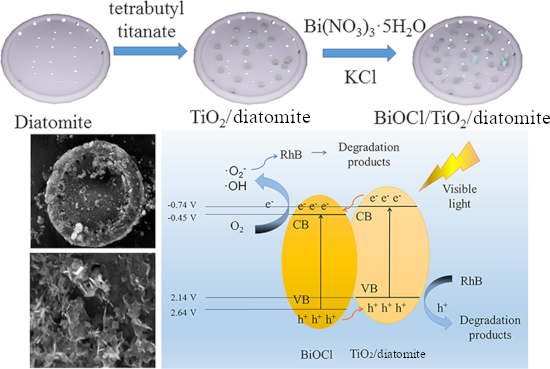
- [10]. As one of the most promising photocatalysts, in terms of its chemical stability, non-toxicity, photo-corrosion resistance in aqueous media and advanced oxidation properties, titanium dioxide (TiO2) has been widely studied [11][12] and employed for water splitting [13], energy storage [14], and


Alloyed Pt3M (M = Co, Ni) nanoparticles supported on S- and N-doped carbon nanotubes for the oxygen reduction reaction
Beilstein J. Nanotechnol. 2019, 10, 1251–1269, doi:10.3762/bjnano.10.125
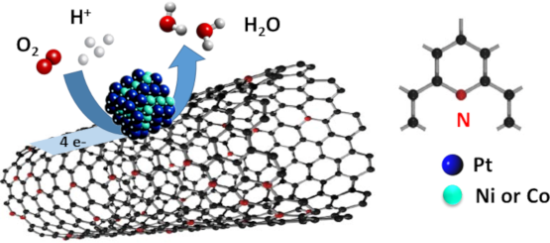
- be done without compromise to the catalyst layer performance and durability. It is known that catalyst degradation via platinum dissolution and carbon corrosion plays an important role in the voltage degradation of PEMFCs [6][7][8]. CB, which is widely used, particularly for its low cost, suffers
- from thermochemical instability and corrosion in fuel cell applications. In the cathodic layer, the oxidizing, wet and acidic environment, the high electrochemical potential, and the high platinum loading all lead to the oxidation of the carbon surface, and occasionally to the formation of CO2 [9
- ]. This carbon corrosion modifies the mass transport properties of the active layer, especially for the water management, and accelerates the degradation of the Pt NPs [10][11]. One way to reduce the Pt content is to use more active, tailored NPs [12][13], for example, bimetallic NPs with a core–shell









A highly efficient porous rod-like Ce-doped ZnO photocatalyst for the degradation of dye contaminants in water
Beilstein J. Nanotechnol. 2019, 10, 1157–1165, doi:10.3762/bjnano.10.115
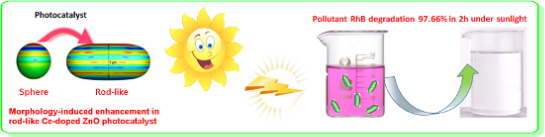
- most suitable catalysts in many industries given its inexpensive, non-toxic, efficient and anti-corrosion properties [7]. Nevertheless, it still has some disadvantages with respect to photocatalysis. For example, it has a narrow response range, low quantum efficiency, and its photogenerated electron


In situ AFM visualization of Li–O2 battery discharge products during redox cycling in an atmospherically controlled sample cell
Beilstein J. Nanotechnol. 2019, 10, 930–940, doi:10.3762/bjnano.10.94
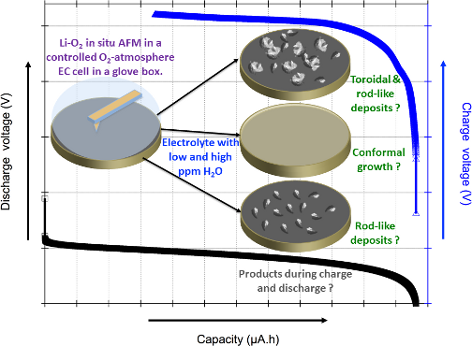
- deposition [3], corrosion and molecular adsorbates on a variety of surfaces [4] have also been investigated with scanning probe microscopy. In situ local probe techniques at electrical interfaces [5] use scanning probe microscopy to probe surface changes and reactions. A recent review by Yang et al. [6


Synthesis of MnO2–CuO–Fe2O3/CNTs catalysts: low-temperature SCR activity and formation mechanism
Beilstein J. Nanotechnol. 2019, 10, 848–855, doi:10.3762/bjnano.10.85
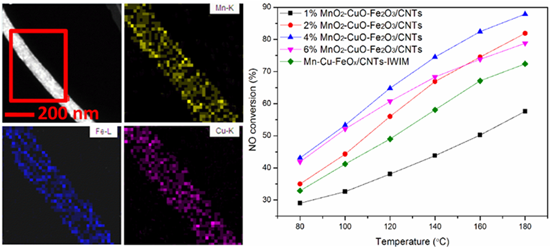
- °C. The mechanisms of above preparation method are redox reactions between MnO4− (from KMnO4) and Cl− (from FeCl3 and CeCl3), or Mn7+ and O2− (from KMnO4) as well as MnO4− (from the KMnO4) and Cl− (from CeCl3). The generation of Cl− anions in the preparation process can result in corrosion of the
- temperature range, but Cl− anions are formed in the preparation process, which might lead to a corrosion of metal equipment. The 4% MnO2–CuO–Fe2O3/CNTs catalyst reaches NO conversions of 43.1–87.9% at 80–180 °C, which is similar to two catalysts in our previous papers. Moreover, HNO3 is formed in the





An iridescent film of porous anodic aluminum oxide with alternatingly electrodeposited Cu and SiO2 nanoparticles
Beilstein J. Nanotechnol. 2019, 10, 735–745, doi:10.3762/bjnano.10.73
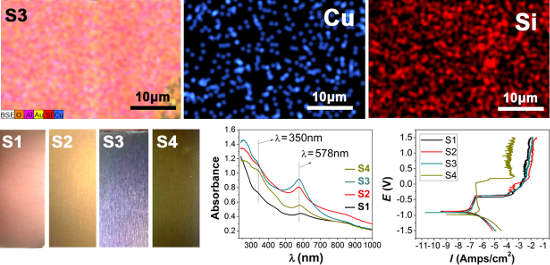
- film that exhibited a rainbow effect and superior anti-corrosion performance. Keywords: aluminum alloys; anodic aluminum oxidation; interference-enabled color production; rainbow effect; structural color; Introduction Due to the low cost, high mechanical strength and ductility, and well-developed
- interfacial impedance of the sample was estimated on the basis of the analysis described above, and the corrosion resistance performance was evaluated in more detail. Furthermore, the electrical polarization process of the sample in the test solution was studied by analyzing the Nyquist and Bode diagrams. The
- equipment. In the electrical polarization measurements, the self-corrosion current, Icorr, and self-corrosion potential, Ecorr, are critical parameters to evaluate the corrosion resistance of materials, especially aluminum profiles (Figure 7 and Table 4). Generally, the smaller the value of Icorr is, the


Outstanding chain-extension effect and high UV resistance of polybutylene succinate containing amino-acid-modified layered double hydroxides
Beilstein J. Nanotechnol. 2019, 10, 684–695, doi:10.3762/bjnano.10.68
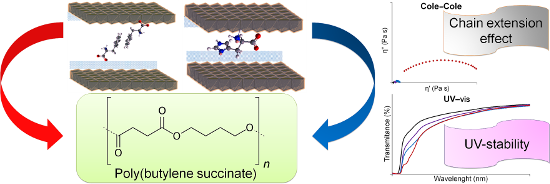
- study reports the beneficial role of PHE interleaved into LDH as a self-healing agent for polymer coating in corrosion inhibition for aluminium substrates [16]. Due to the presence of benzene (for PHE) or the heterocyclic imidazole ring (for HIS), both organic molecules should absorb in the short to


Nanocomposite–parylene C thin films with high dielectric constant and low losses for future organic electronic devices
Beilstein J. Nanotechnol. 2019, 10, 428–441, doi:10.3762/bjnano.10.42
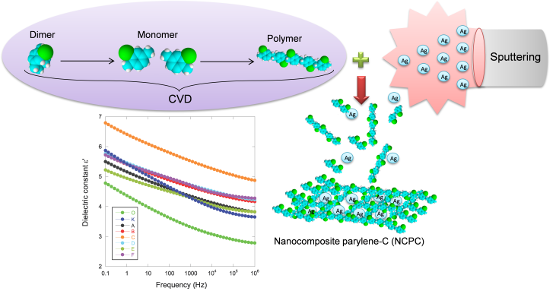
- ][22]. Parylene C is highly corrosion resistant on metallic surfaces and possesses outstanding electrical insulation with high tensile strength, moderate dielectric losses [16][23] and low permeability to gases [24][25]. Hydrophobicity [26] and physical stability [27] of parylene C make it a good





Interaction of Te and Se interlayers with Ag or Au nanofilms in sandwich structures
Beilstein J. Nanotechnol. 2019, 10, 238–246, doi:10.3762/bjnano.10.22
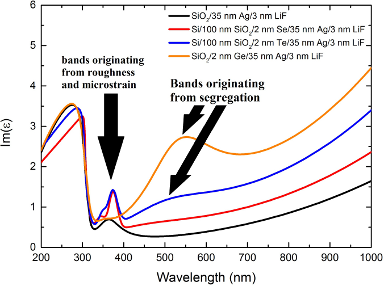
- deposited directly on SiO2 substrates, covered by 2 nm-thick films of Te or Se and then followed by another 20 nm-thick layer of Ag or Au. All of the samples were then capped with 3 nm-thick LiF films to avoid corrosion. Se and Te films were deposited using a II–VI semiconductor growth chamber of a dual


Nanoporous water oxidation electrodes with a low loading of laser-deposited Ru/C exhibit enhanced corrosion stability
Beilstein J. Nanotechnol. 2019, 10, 157–167, doi:10.3762/bjnano.10.15
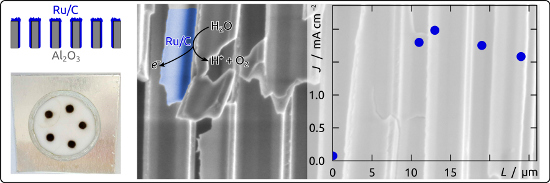
- limited by its significant dissolution (corrosion) at high anodic potential over the whole pH range (Figure 2) [10][11][12]. One strategy to address this limitation has involved mixing metallic Ru (or its oxides) with other solids (such as Ir [13][14][15][16][17][18], Ta [19], or Pt [20], TiO2 [21], Ni
- of the nanoporous geometry (variation of the pore length) towards obtaining reasonable current densities at low overpotential, (2) the minimization of corrosion via minimized overpotential and nanoparticle morphology, and (3) the minimization of noble metal loading. These efforts result in a very
- of metallic Ru to Ru(II) and subsequently to Ru(IV) at the solid surface [10][67][68]. The oxygen evolution reaction starts beyond +0.8 V (E’ = +0.79 V) vs Ag/AgCl at pH 4 whereas electro-corrosion to dissolved species (H2RuO5, RuO4−) begins at +0.95 V (Figure 2) [10][11]. These restrictions force us




Ternary nanocomposites of reduced graphene oxide, polyaniline and hexaniobate: hierarchical architecture and high polaron formation
Beilstein J. Nanotechnol. 2018, 9, 2936–2946, doi:10.3762/bjnano.9.272
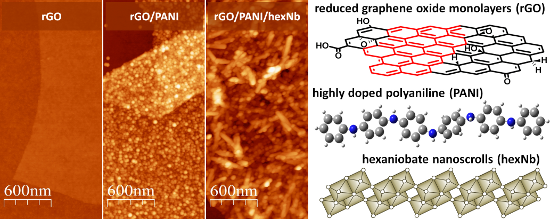
- morphological aspects. Therefore, the new nanocomposite presents promising properties for development of new materials in the film form on substrates for sensing or corrosion protection for example. Keywords: graphene oxide; hexaniobate; polyaniline; Raman spectroscopy; secondary doping; Introduction
- Nanostructured systems, such as nanocomposites, are potential materials for usage as electrochemical (bio)sensors for analytical purposes, electronics, energy storage devices and corrosion protection because the synergistic effects of their components at the nanoscale range may improve physical/chemical
- chemical versatility and significant interactions between the components are attractive features for applications that require chemically functionalised materials in the film form, such as sensing or corrosion protection. Experimental Materials Precursor graphite flakes (NGS Naturgraphit GmbH, 300 μm flake


Low cost tips for tip-enhanced Raman spectroscopy fabricated by two-step electrochemical etching of 125 µm diameter gold wires
Beilstein J. Nanotechnol. 2018, 9, 2718–2729, doi:10.3762/bjnano.9.254
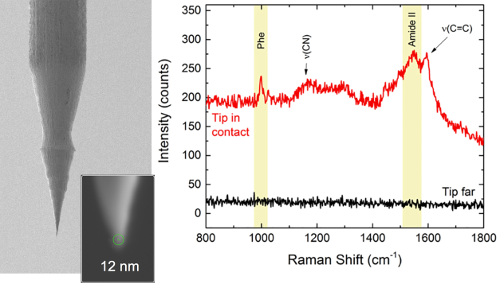
- Discussion Gold etching and tip formation mechanism The gold electrochemical corrosion is driven by a well-known redox process in acidic environment [31], whose main reactions are: Here the superficial gold atoms are oxidized, transforming into either Au(I) or Au(III). The chlorine ions combine with Au(I) or


Impact of the anodization time on the photocatalytic activity of TiO2 nanotubes
Beilstein J. Nanotechnol. 2018, 9, 2628–2643, doi:10.3762/bjnano.9.244
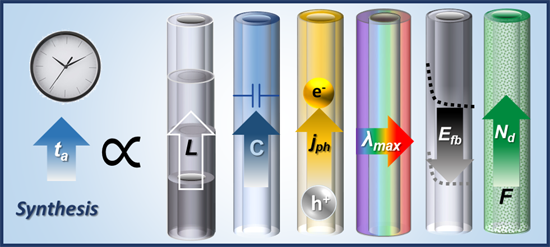
- such as excellent chemical stability, photo-corrosion resistance, low cost, and low toxicity make TiO2 a material suitable for energy production and environmental applications, such as advanced oxidation processes for the decomposition of organic pollutants in water [2][3]. However, the material


Thickness-dependent photoelectrochemical properties of a semitransparent Co3O4 photocathode
Beilstein J. Nanotechnol. 2018, 9, 2432–2442, doi:10.3762/bjnano.9.228
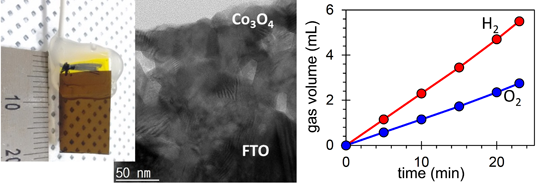
- regarding low-cost and reliable PEC cells [1][2][3][4][5][6][7][8]. For a widespread application of PEC cells, the photoelectrodes need to fulfill the criteria of (i) a low band gap (1.7–2.2 eV), (ii) low resistivity, (iii) low cost, (iv) corrosion stability and (v) a correct alignment of band edges with




Electrospun one-dimensional nanostructures: a new horizon for gas sensing materials
Beilstein J. Nanotechnol. 2018, 9, 2128–2170, doi:10.3762/bjnano.9.202
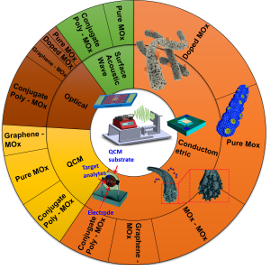
- improves the performance of electrospun fibers/mats. In addition, the electrospun fibers/mats may reduce corrosion and/or oxidation in NPs, especially those with anisotropic structure [40]. Depending on the type of polymer and NPs, electrospun fibers incorporated with NPs are optimized for specific






Metal-free catalysis based on nitrogen-doped carbon nanomaterials: a photoelectron spectroscopy point of view
Beilstein J. Nanotechnol. 2018, 9, 2015–2031, doi:10.3762/bjnano.9.191
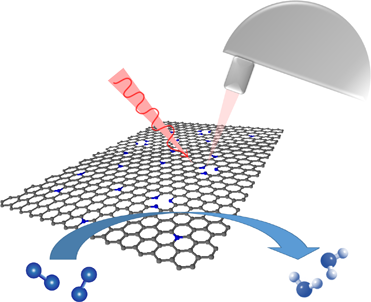
- candidates are the less expensive transition metals (Co, Ni, Fe, Mo) and their alloys [5]. However, these metals suffer from inherent corrosion and susceptibility to oxidation which limit their use in acidic electrolytic environments. The most common poisoning agent is CO, which inhibits the dissociative