


Search results
Search for "elastic modulus" in Full Text gives 118 result(s) in Beilstein Journal of Nanotechnology.
Synthesis of hafnium nanoparticles and hafnium nanoparticle films by gas condensation and energetic deposition
Beilstein J. Nanotechnol. 2018, 9, 1868–1880, doi:10.3762/bjnano.9.179
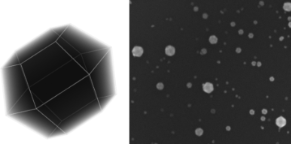
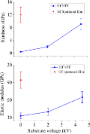
- . Nanomechanical properties and porosity of Hf NTFs Hardness (H) and elastic modulus (E) of the nanocrystalline porous Hf NTFs were determined by nanoidentation measurements. (The load–displacement curves of Hf NTFs are presented in Supporting Information File 1, Section 3.) For comparison, the hardness and
- elastic modulus of a radio-frequency (RF)-sputtered 120 nm thick Hf film, was measured with the same technique as the NTFs. When Vs = 0 kV, elastic modulus and hardness are E = 33.6 GPa and H = 0.45 GPa, respectively. With increasing substrate voltage the mechanical properties are improved. For Vs = 2 kV
- , elastic modulus and hardness increase to E = 40.4 GPa and H = 2 GPa, respectively. For Vs = 4.5 kV, further increments to E = 65.8 GPa and H = 9.1 GPa are observed. These values tend to approach the mechanical properties of the RF-sputtered Hf film, which are E = 94.5 GPa and H = 12 GPa. The results are






Preparation of micro/nanopatterned gelatins crosslinked with genipin for biocompatible dental implants
Beilstein J. Nanotechnol. 2018, 9, 1735–1754, doi:10.3762/bjnano.9.165
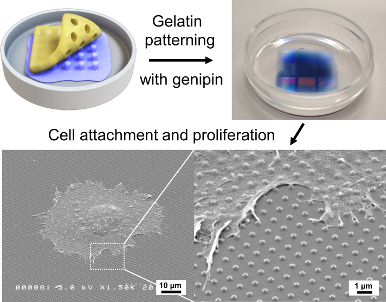
- of biological tissues and for the reinforcement of scaffolds. Genipin has low toxicity, being about 10,000 times less cytotoxic than other crosslinking agents, such as glutaraldehyde [47]. Crosslinking with genipin has been shown to result in an improvement in tensile strength, elastic modulus, and








Electro-optical interfacial effects on a graphene/π-conjugated organic semiconductor hybrid system
Beilstein J. Nanotechnol. 2018, 9, 963–974, doi:10.3762/bjnano.9.90
- peak force or tapping mode. Besides conventional topographic images, peak force mode yields several concomitant images which map mechanical properties of the sample, like adhesion, elastic modulus, dissipation and others [64]. The adhesion channel monitors tip–sample attractive forces along the imaging




Effect of annealing treatments on CeO2 grown on TiN and Si substrates by atomic layer deposition
Beilstein J. Nanotechnol. 2018, 9, 890–899, doi:10.3762/bjnano.9.83
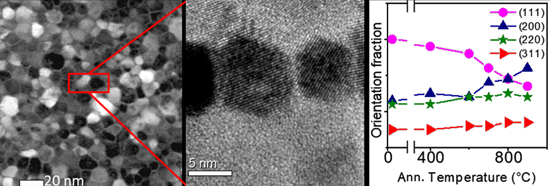
- deposition process. This result is interpreted in the light of the contributions of different energy components (surface energy and elastic modulus) which act dependently on the substrate properties, such as its nature and structure. Keywords: atomic layer deposition; cerium(IV) oxide (CeO2) microstructure


Single-step process to improve the mechanical properties of carbon nanotube yarn
Beilstein J. Nanotechnol. 2018, 9, 545–554, doi:10.3762/bjnano.9.52
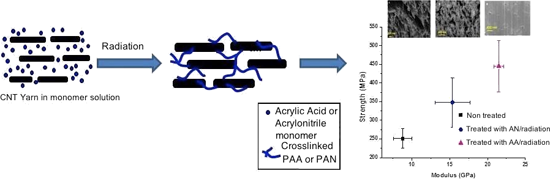
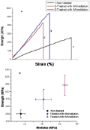
- elastic modulus increases with crosslinking while the strain decreases significantly when CNT yarns are modified. Untreated samples exhibit lower strength but higher strain because of slippage of the CNTs. The strain is reduced due to enhancement in the CNTs interaction because of the crosslinking process
- . After the treatment of the yarn samples, load transfer and strength increase. The crosslinking process strongly affects the strength and elastic modulus [45]. The untreated CNT yarn demonstrates a strength of 251.09 ± 26.52 MPa and a modulus of 8.79 ± 1.19 GPa The modification of the CNT yarn structure
- with PAN improved the strength to 347.94 ± 66.36 MPa and the modulus to 15.38 ± 1.19 GPa, because of the crosslinking that probably occurred at the nitrogen atom of the =C=N– functionality [46]. These results show an increase of about 38.6% in strength and about 75% in elastic modulus. The biggest




Ultralight super-hydrophobic carbon aerogels based on cellulose nanofibers/poly(vinyl alcohol)/graphene oxide (CNFs/PVA/GO) for highly effective oil–water separation
Beilstein J. Nanotechnol. 2018, 9, 508–519, doi:10.3762/bjnano.9.49
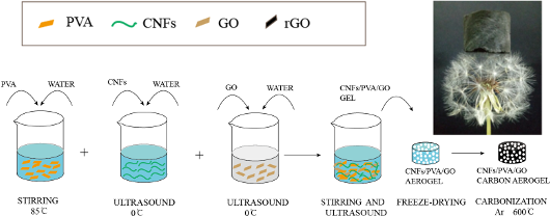
- on the planet because of its biodegradability, sustainability, nontoxic nature, and biocompatibility [5]. Cellulose nanofibers (CNFs) derived from cellulose have gained wide attention due to their outstanding mechanical properties [6][7] such as an elastic modulus of 140 GPa [8]. In an aqueous


BN/Ag hybrid nanomaterials with petal-like surfaces as catalysts and antibacterial agents
Beilstein J. Nanotechnol. 2018, 9, 250–261, doi:10.3762/bjnano.9.27
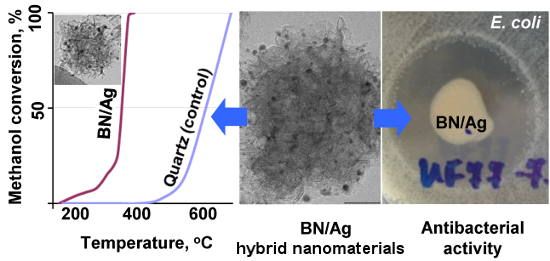
- effects of different nanocomponents. In recent years, BN nanostructures have been in the focus due to advantageous combination of properties, such as high tensile strength and elastic modulus, superb chemical stability, biocompatibility, high thermal conductivity and perfect electrical insulation. This





Liquid-crystalline nanoarchitectures for tissue engineering
Beilstein J. Nanotechnol. 2018, 9, 205–215, doi:10.3762/bjnano.9.22
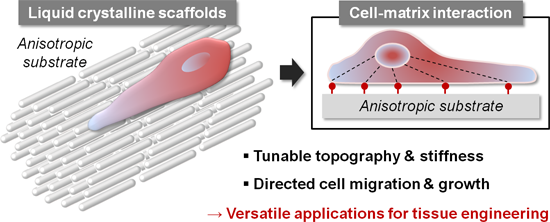
- tissue by altering the elastic modulus of tissue [58]. Hard tissues Skeletal tissues are mineralized compact matrices of ordered biopolymers [59]. In vertebrates, bones consist of a dense mesophase of collagen fibrils [60], which has been believed to render mechanical stiffness to the skeletal tissues
- induced 2D and 3D aligned cell growth in response to the lamellar molecular structure of LCE matrices, with tunable porosity and crosslinking density [99][100][101]. In addition, the 3D anisotropic cell scaffolds can be fabricated by using nematic LCE microspheres as building blocks by tuning elastic
- modulus, porosity, surface roughness, and local anisotropy [102]. LC hydrogels and implants in nematic and smectic-A phases LC-ordered anisotropic gels have great potential to be directly applied to regenerative medicine therapeutics, due to their intrinsic tissue compatibility. Thermally or


Humidity-dependent wound sealing in succulent leaves of Delosperma cooperi – An adaptation to seasonal drought stress
Beilstein J. Nanotechnol. 2018, 9, 175–186, doi:10.3762/bjnano.9.20
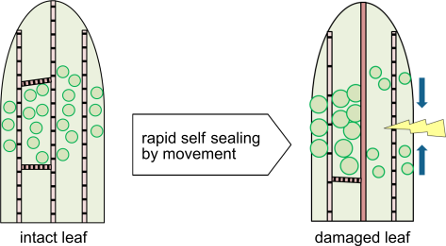
- mechanically important parameters. Mechanical properties of the entire leaf and of single tissue layers were measured in tensile tests, which provided the basis for calculating the elastic modulus and tensile strength. The elastic modulus of the epidermis in transversal and longitudinal directions was not
- significantly different (Wilcoxon Mann-Whitney signed rank test, W = 38, p > 0.05), whereas the tensile strength differed significantly (Wilcoxon Mann-Whitney signed rank test, W = 19.5, p < 0.05). On the basis of Equation 7 (presented later in this work), we calculated the elastic modulus of the parenchyma and
- diameter dc = 77 µm, cell wall thickness tcw = 0.42 µm and Poisson’s ratio v = 0.28 and by using an elastic modulus of cell walls Ecw = 5.00 MPa [15], an elastic modulus of 0.25 MPa was calculated for the parenchyma and chlorenchyma. Poisson’s ratio from entire leaves was calculated from pictures taken


A robust AFM-based method for locally measuring the elasticity of samples
Beilstein J. Nanotechnol. 2018, 9, 1–10, doi:10.3762/bjnano.9.1
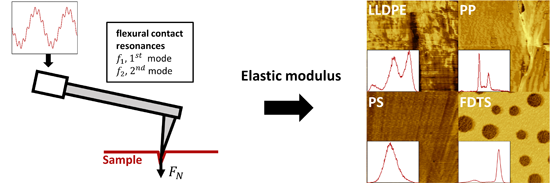
- relation exists when measuring in contact mode with a certain load FN and propose a new method for determining the elastic modulus of samples from this relation. The measurements were performed in non-dry air at ambient temperature on three different polymers (polystyrene, polypropylene and linear low
- elastic modulus from Δf22/Δf1. The method was used to give an estimate of the Young’s modulus of the FDTS thin film. Keywords: atomic force microscopy; contact resonances; elastic modulus; 1H,1H,2H,2H-perfluorodecyltrichlorosilane (FDTS); polymers; Young’s modulus; Introduction Knowledge of the local
- elasticity of samples is of high interest in many scientific domains, as many processes and physical quantities are correlated with the elastic modulus. In biology, for instance, studies showed that the elasticity of cells depends on their age, the stage of the cell cycle and the degree of differentiation [1


Material discrimination and mixture ratio estimation in nanocomposites via harmonic atomic force microscopy
Beilstein J. Nanotechnol. 2017, 8, 2771–2780, doi:10.3762/bjnano.8.276
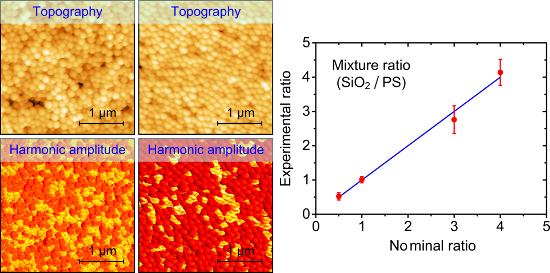
- conclusions can be drawn from direct observation. First, higher harmonic amplitudes appear on the PS domain (brighter area), which has a higher elastic modulus. Second, the amplitude difference between PS and LDPE first increases and then decreases when decreasing the set-point within the experimental range
- verify that the harmonic response depends on the contact time and peak contact force. Both quantities are related to the elasticity of the sample. Because the elastic modulus of PS is larger than that of LDPE, oscillating on the PS domain produces a much shorter contact time and a larger peak force in
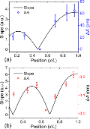
- value. However, at a higher drive frequency, the amplitude difference becomes positive. The results clearly demonstrate the presence of contrast reversal, which may cause difficulty in further establishment of the quantitative relation between harmonic amplitude and local elastic modulus. To realize




Fabrication of gold-coated PDMS surfaces with arrayed triangular micro/nanopyramids for use as SERS substrates
Beilstein J. Nanotechnol. 2017, 8, 2271–2282, doi:10.3762/bjnano.8.227
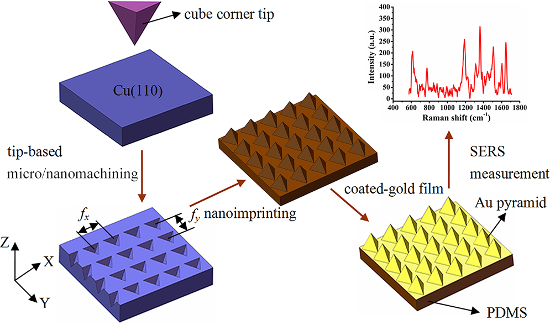
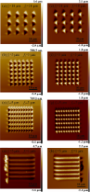
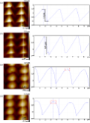
- mechanical properties such as hardness, elastic modulus and friction coefficient. The fabrication of micro/nanostructures using the nanoindenter method can be also achieved. The shortcomings of this technique include low machining speed, small machining area and high cost, and thus the nanoindentation method





Nanotribological behavior of deep cryogenically treated martensitic stainless steel
Beilstein J. Nanotechnol. 2017, 8, 1760–1768, doi:10.3762/bjnano.8.177
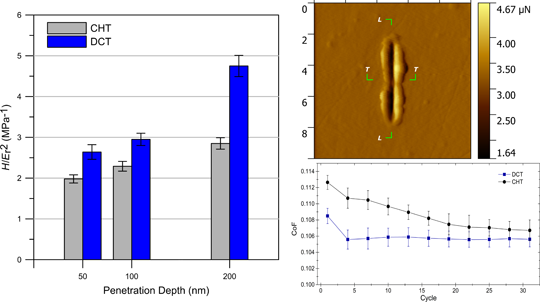
- of calculated hardness and elastic modulus from their real values. The formation of pile-ups during nanoindentation of steels has been studied by several researchers [29][30][31]. Our approach was to compare the conventional O&P method with the one proposed by Joslin and Oliver (J&O) [32]. The J&O
- method utilizes the ratio between the hardness and the square of the elastic modulus (H/E2) as an independent characteristic parameter. The proposed method utilizes the maximum force applied during the test (P) and the calculated contact stiffness (S) from the nanoindentation data. S is defined as the
- relative elastic modulus, defined as Es and νs are Young’s modulus and Poisson’s ratio of the sample, and Ei and νi are Young’s modulus and Poisson’s ratio of the indenter (Ei = 1140 GPa, νi = 0.07). This approach does not allow for the simultaneous determination of E and H, but several researchers [33][34


Oxidative stabilization of polyacrylonitrile nanofibers and carbon nanofibers containing graphene oxide (GO): a spectroscopic and electrochemical study
Beilstein J. Nanotechnol. 2017, 8, 1616–1628, doi:10.3762/bjnano.8.161
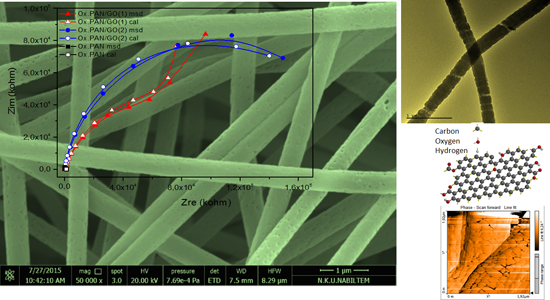
- properties in terms of modulus. Figure 2 shows stress–strain plots of aligned and non-aligned PAN nanofibers. According to the plots, the elastic modulus of a PAN-nanofiber web increases with fiber orientation from 63 MPa to 159 MPa. Thus, rotating collectors were chosen to obtain nanofibers with better


Two-dimensional carbon-based nanocomposites for photocatalytic energy generation and environmental remediation applications
Beilstein J. Nanotechnol. 2017, 8, 1571–1600, doi:10.3762/bjnano.8.159
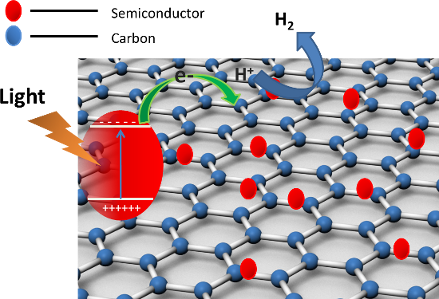
- high transparency, high elastic modulus (≈1 TPa), high mechanical strength (≈1060 GPa), and optical transmittance (≈97.7%) [44]. These superior properties of graphene make it a potential candidate for technological application such as such as optical electronics [45], photosensors [46] and


Luminescent supramolecular hydrogels from a tripeptide and nitrogen-doped carbon nanodots
Beilstein J. Nanotechnol. 2017, 8, 1553–1562, doi:10.3762/bjnano.8.157
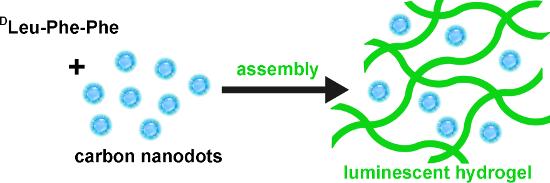
- so rapid that the monitoring of the sol-to-gel transition was not possible. Time sweep experiments (Figure 2a,c,e) revealed that relative to the peptide alone, which reached an elastic modulus G’ of 20 kPa within 1 h (Figure 2a), the addition of NCNDs to the peptide prior to self-assembly (Figure 2c
- hydrogel had already reached an elastic modulus of 10 kPa, thus yielding a stiffer material relative to the former case (Figure 2e). In any case, at any given time point, the hydrogels containing NCNDs displayed a lower elastic modulus G’ relative to the peptide alone. This phenomenon could be compatible


Parylene C as a versatile dielectric material for organic field-effect transistors
Beilstein J. Nanotechnol. 2017, 8, 1532–1545, doi:10.3762/bjnano.8.155
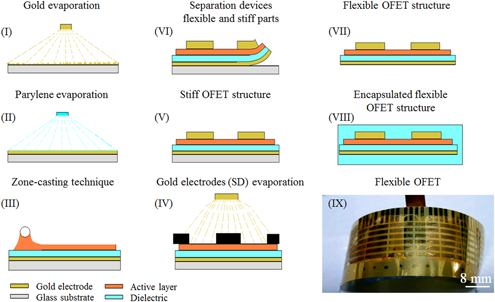
- crystallinity of Parylene C films affects their mechanical properties such as elastic modulus and/or Poisson’s ratio. The sample with higher crystallinity has approximately 30% greater tensile strength than the as-deposited films, a feature highly required from the point of view of material flexibility. The




Nanotopographical control of surfaces using chemical vapor deposition processes
Beilstein J. Nanotechnol. 2017, 8, 1250–1256, doi:10.3762/bjnano.8.126
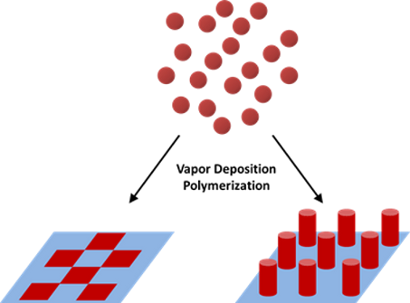
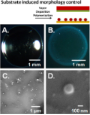
- the elastic modulus of the polymer coating and the substrate. Haller et al. investigated the morphology of vapor-deposited polymers on liquid substrates (Figure 3) [29]. Depending on surface tension, liquid viscosity, deposition rate and deposition time, either film or particle formation was found




Assembly of metallic nanoparticle arrays on glass via nanoimprinting and thin-film dewetting
Beilstein J. Nanotechnol. 2017, 8, 1049–1055, doi:10.3762/bjnano.8.106
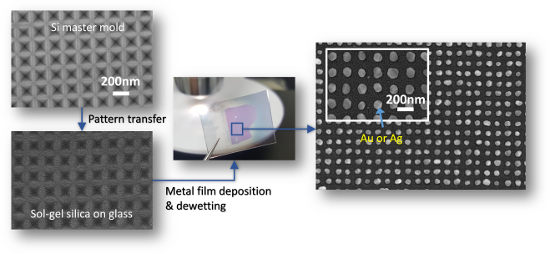
- , nanoindentation measurements were conducted. The measurements were performed using a nanoindentation system (MTS Nano-indenter XP) equipped with continuous stiffness measurement using a Berkovich indenter, and the elastic modulus and nanohardness were calculated using the method of Oliver and Pharr [32]. The
- examine the effect of the annealing temperatures on the mechanical stability of the structure, nanoindentation measurements were conducted for the resists on glass annealed at ≈400–600 °C. Figure 4a,b shows the changes in the composite hardness and elastic modulus of the thin resist–glass substrate as a
- annealed at different temperatures: (a) hardness and (b) elastic modulus. Photograph of transparent glass with Ag nanoparticle arrays. Metal nanoparticles formed on imprinted sol–gel silica: (a,b) 8 nm thick and (c,d) 10 nm thick Ag films dewetted at 300 °C, (e,f) 14 nm thick Ag and (g,h) Au films dewetted


Bio-inspired micro-to-nanoporous polymers with tunable stiffness
Beilstein J. Nanotechnol. 2017, 8, 906–914, doi:10.3762/bjnano.8.92
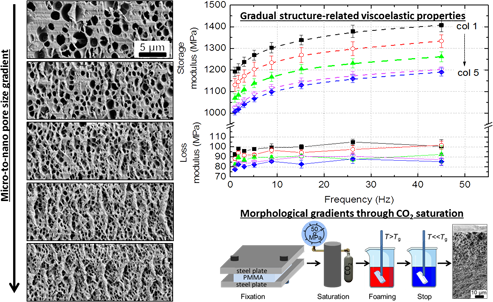
- polymeric foams have a lower density than the respective monolithic bulk material and, thus, typically exhibit a reduced elastic modulus [14]. Microporous polymers have been under development since the 1960s [15][16]. The development of fabrication methods allowing for smaller pore sizes made the next
- properties of a material with a pore-size gradient, have not been demonstrated yet. For nanocellular polymers, for example, two opposite effects were predicted: (i) local hardening of the material due to material confinement on nanometre dimensions [21] and (ii) a great reduction of elastic modulus of thin
- demonstrate that a foam of a stiff polymer such as poly(methyl methacrylate) (PMMA) can exhibit a gradually changing effective elastic modulus when the local morphology of the sample undergoes a transition from microcellular to nanocellular. Porous PMMA films with a controlled gradient of the pore size were


Relationships between chemical structure, mechanical properties and materials processing in nanopatterned organosilicate fins
Beilstein J. Nanotechnol. 2017, 8, 863–871, doi:10.3762/bjnano.8.88

- ., elastic modulus) of the samples are resolved. The spatial resolution of CR-AFM is determined by the contact radius established during measurements and it can be as small as 5–10 nm [33]. For the AFM-IR measurements presented here, a nanoIR2™ instrument was utilized. This instrument was equipped with a
- , Bruker, Santa Barbara, CA) at the oscillation frequency. For each measurement, the tip was brought into contact at a setpoint of 60 nN applied force and the frequency of the imposed modulation was swept from 100 kHz to 1 MHz with a step of 250 Hz [33][34]. The elastic modulus calculations were made by
- contribution in this case [42], and a direct comparison with the CR-AFM measurements on the wider fins would therefore be inconsistent. The decrease in SiC–H3 absorbance and increase in the elastic modulus as a function of fin width are summarized in Figure 3. In terms of elastic modulus, the 500 nm and 90 nm



Multimodal cantilevers with novel piezoelectric layer topology for sensitivity enhancement
Beilstein J. Nanotechnol. 2017, 8, 358–371, doi:10.3762/bjnano.8.38
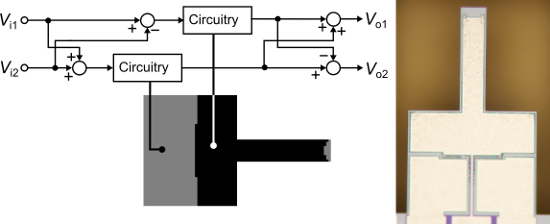
- was shown that these higher modes can be more sensitive to material properties such as elastic modulus and damping coefficients [17][18][19]. Additionally, stiff cantilevers have proven to provide high resolution imaging in ambient and liquid environments using quartz resonators [20][21]. Traditional
- aluminium is deposited on the device layer. A particular limitation of this process in the context of AFM is that it does not allow for the fabrication of tips preventing the demonstration of imaging using these cantilevers. The material properties of the silicon used in the analysis are an elastic modulus


When the going gets rough – studying the effect of surface roughness on the adhesive abilities of tree frogs
Beilstein J. Nanotechnol. 2016, 7, 2116–2131, doi:10.3762/bjnano.7.201
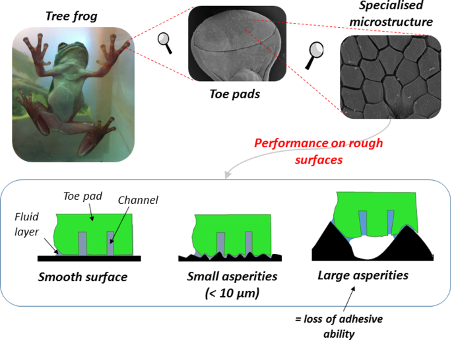
- experiments where the conformation of the pad to individual asperities was examined microscopically, our calculations indicate that the pad epithelium has a low elastic modulus, making it highly deformable. Keywords: adhesion; friction; Litoria caerulea; roughness; tree frog; Introduction Tree frogs exhibit
- difficult. The pads of tree frogs are very soft and so should deform to mould around rough surfaces, as is seen in smooth padded insects [17]. The Young’s modulus of the toe pads has been measured in several studies, an elastic modulus of 40–55 kPa based on AFM indentation being the most recent estimate [18
- ]. Barnes et al. [19] carried out indentations at different depths and measured different degrees of stiffness at different depths, lower values for the elastic modulus resulting from larger indentations. This is probably due to the stiff outer keratinous surface of the pad. The toes also have extensive




The difference in the thermal conductivity of nanofluids measured by different methods and its rationalization
Beilstein J. Nanotechnol. 2016, 7, 2037–2044, doi:10.3762/bjnano.7.194
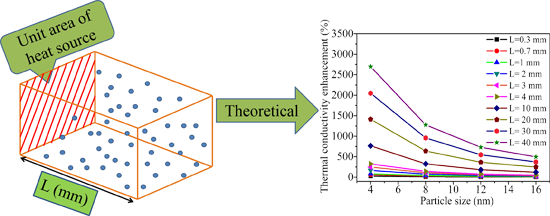
- can be determined from the impact dynamics [27] as with where rnp is the radius of nanoparticle (Figure 2), vcoll is the nanoparticle velocity, ρ is the nanoparticle density, ω is the elastic parameter for the nanoparticle. The elastic parameter ω is defined by where E is the elastic modulus and µ is


Reasons and remedies for the agglomeration of multilayered graphene and carbon nanotubes in polymers
Beilstein J. Nanotechnol. 2016, 7, 1174–1196, doi:10.3762/bjnano.7.109
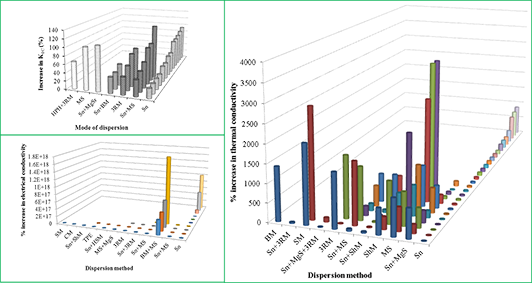
- matrix to reinforcement. The impact strength and fracture toughness increase significantly while elastic modulus and tensile strength increase marginally with increase in aspect ratio [40]. The transfer of external loads also requires strong interfacial bond. Qian et al. have studied the load transfer





