Search results
Search for "electric field" in Full Text gives 398 result(s) in Beilstein Journal of Nanotechnology. Showing first 200.
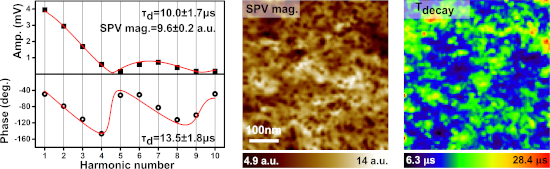
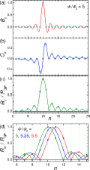
Dual-heterodyne Kelvin probe force microscopy
Beilstein J. Nanotechnol. 2023, 14, 1068–1084, doi:10.3762/bjnano.14.88


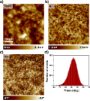


A visible-light photodetector based on heterojunctions between CuO nanoparticles and ZnO nanorods
Beilstein J. Nanotechnol. 2023, 14, 1018–1027, doi:10.3762/bjnano.14.84
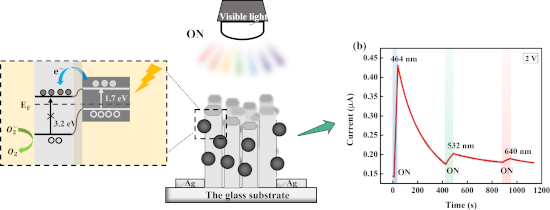
- transferred from CuO NPs to ZnO NRs. As a result, a space charge region is created at the heterojunction interface, and an internal electric field is formed. Under visible-light illumination (Figure 7b), while charge carriers are not generated inside ZnO NRs because of the large bandgap, electron–hole pair
- generation can occur easily inside CuO NPs as this material has a suitable value of Eg (ca. 1.7 eV): Since the CB of CuO NPs is higher (more negative) than that of ZnO NRs, photoexcited electrons in CuO easily transfer into ZnO NRs, while holes stay in the VB of CuO NPs: Besides the internal electric field


Nanoarchitectonics of photothermal materials to enhance the sensitivity of lateral flow assays
Beilstein J. Nanotechnol. 2023, 14, 988–1003, doi:10.3762/bjnano.14.82
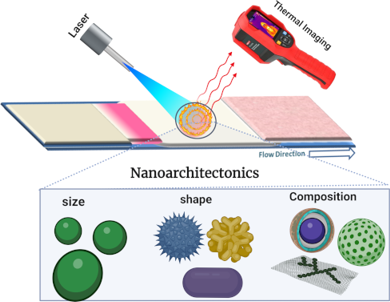
- decays to the ground state after internal conversion by emitting the excess energy absorbed in two different ways, namely a radiative pathway, which will enhance the electric field, and a non-radiative pathway, during which radiation is emitted as heat [36]. In the non-radiative decay, three processes
- -shaped architectonics [62]. Star-shaped nanoparticles contain a central core with sharp limbs. The electric field localized at the tip of the limbs will cause a dephasing of surface electrons. This energy will be transmitted to the atomic lattice and produce heat. In general, the production of heat


Metal-organic framework-based nanomaterials for CO2 storage: A review
Beilstein J. Nanotechnol. 2023, 14, 964–970, doi:10.3762/bjnano.14.79
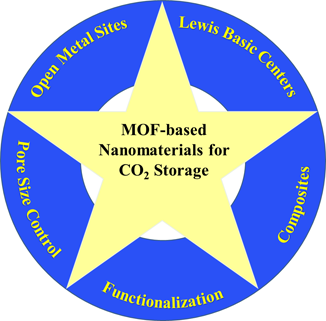
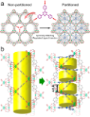
- , characterized by the smallest pore diameter (5.9 Å), displayed the highest CO2 adsorption capacity at 273 K. The interpenetrated linkers contribute to the expansion of the cavity and the creation of an electric field gradient, enhancing the affinity for CO2. Prasad et al. employed 4-(2-carboxyvinyl)benzoic acid




A wearable nanoscale heart sound sensor based on P(VDF-TrFE)/ZnO/GR and its application in cardiac disease detection
Beilstein J. Nanotechnol. 2023, 14, 819–833, doi:10.3762/bjnano.14.67
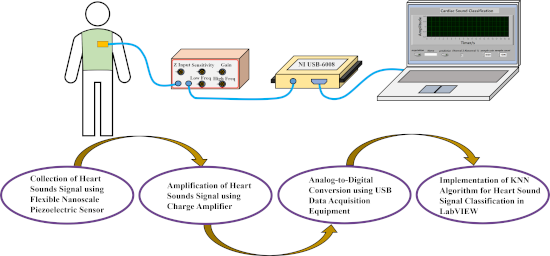
- with hydrogel. It harnesses the energy generated from bodily movements and utilizes it to create an electric field between the friction patch and the surrounding body tissues, thereby promoting the expedited healing of wounds. Poly(vinylidene fluoride–trifluoroethylene) (P(VDF-TrFE)) is a piezoelectric


Silver-based SERS substrates fabricated using a 3D printed microfluidic device
Beilstein J. Nanotechnol. 2023, 14, 793–803, doi:10.3762/bjnano.14.65
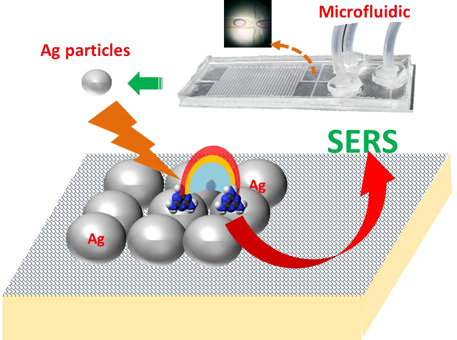
- particles. The electric field is enhanced, and the Raman enhancement factor (EF) can reach 106 [6]. The induced amplification of the local field by plasmonic coupling occurs in nanometer-scale regions around the metal particles, the so-called electromagnetic “hot spots”. The chemical mechanism suggests the
- NPs. The SEM image of PS@Ag reveals the presence of nanoscale gaps between the Ag NPs, which act as hot spots with a high electric field intensity when exposed to laser irradiation (Figure S10c). To confirm the distribution of chemical elements on the SERS substrate, energy-dispersive X-ray



Current-induced mechanical torque in chiral molecular rotors
Beilstein J. Nanotechnol. 2023, 14, 711–721, doi:10.3762/bjnano.14.57
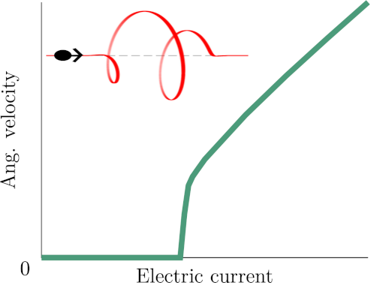
- , so that each transmitted particle results in a shift δϑ. This operational principle is different than an earlier reported one [15], where an electric field was needed to continuously accelerate the electrons while they travel along a helical wire. When the rotation of the molecule is hindered by a




![[Graphic 29]](/bjnano/content/inline/2190-4286-14-57-i54.svg?max-width=637&scale=1.18182)


Investigations on the optical forces from three mainstream optical resonances in all-dielectric nanostructure arrays
Beilstein J. Nanotechnol. 2023, 14, 674–682, doi:10.3762/bjnano.14.53
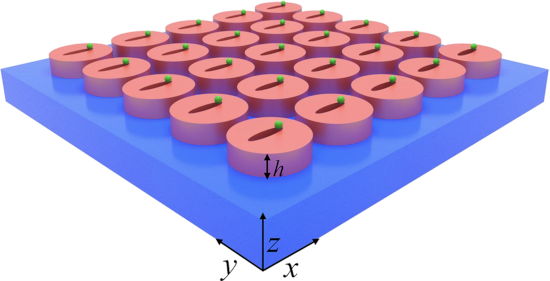
- center by a distance of d = 80 nm. Figure 2a presents the calculated transmission spectrum through this structure with the incident electric field polarized along the x-direction. It can be seen that a strong asymmetric optical resonance of the Fano-type is located around 1627 nm with a resonance Q
- force is dependent on the laser power, we should note that the light transmission spectra through the array is not if the nonlinear effect is ignored. So in the calculations of the transmission spectra and the on-resonance field distributions, the electric field magnitude of the incident plane wave is
- set as 1 [V/m]. Then the maximum electric field in Figures 2b, 3b, and 4b straightforwardly give the enhancement capability of the corresponding resonance. Moreover, two circular displacement currents with reverse rotational directions are formed in the x–y plane of the disk, indicating that two MD


Observation of multiple bulk bound states in the continuum modes in a photonic crystal cavity
Beilstein J. Nanotechnol. 2023, 14, 544–551, doi:10.3762/bjnano.14.45
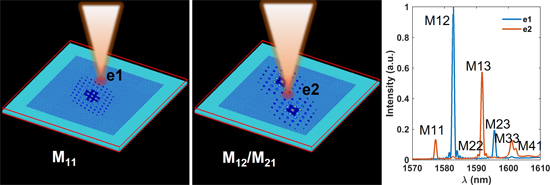
- . Such a periodic nanostructure array supports a BIC around 1.56 μm and has an infinite Q factor at the Г point, as shown in Figure 1b and Figure 1c, respectively. The electric field (E field) distribution of the eigenmode is shown in the inset of Figure 1b, and the white arrows indicate the in-plane E
- cell. (a) Schematic of a unit cell consisting of an AlGaAs nanoblock on a sapphire substrate. The side length and the height of the nanoblock are w and h, respectively. The period of the unit is p. (b) Band diagram related to the MD BIC mode. The electric field distribution for the mode at the Г point


Plasmonic nanotechnology for photothermal applications – an evaluation
Beilstein J. Nanotechnol. 2023, 14, 380–419, doi:10.3762/bjnano.14.33
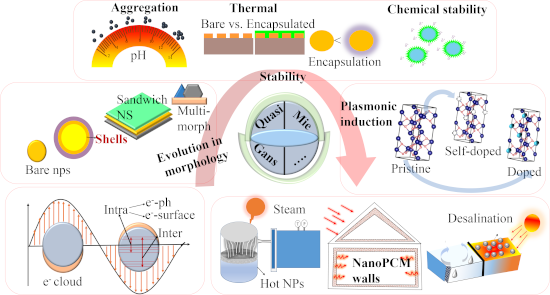
- arrival at the expression for the LSPR frequency of a free electron cloud (as is typically assumed to be present in metals) starts with the relations between the dielectric displacement (D) of the electron gas in relation to the incident electric field (E) which it is [38] subjected to, given by wherein P
- is the polarization density. P can be arrived at by solving the equation of motion for a single electron as Hence the expression relating the dielectric displacement (D) and the external electric field can be obtained as where is the natural frequency of oscillation of the electron cloud. Comparing
- charges are arranged in the direction of electric field and negative charges opposite to the field, causing a polarisation. The wavelength-dependent electric field and dipole moment determine the dielectric property of the material and also the plasmon absorption (by affecting the polarizability, as was




Quercetin- and caffeic acid-functionalized chitosan-capped colloidal silver nanoparticles: one-pot synthesis, characterization, and anticancer and antibacterial activities
Beilstein J. Nanotechnol. 2023, 14, 362–376, doi:10.3762/bjnano.14.31
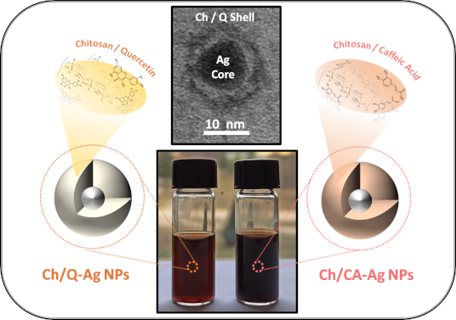
- characteristic surface plasmon resonance (SPR) absorption peak, which is due to the collective oscillation of free surface electrons in resonance with the electric field component of incoming photons, is located at 404 nm. However, the evolution of the absorption curve exhibits changes after the introduction of


Quasi-guided modes resulting from the band folding effect in a photonic crystal slab for enhanced interactions of matters with free-space radiations
Beilstein J. Nanotechnol. 2023, 14, 322–328, doi:10.3762/bjnano.14.27
- lead to an in-plane wave number-dependent resonance characteristic in both directions. Our numerical results demonstrate a local enhancement of the electric field magnitude by the order of 102, which is even more significant than those in most plasmonic structures. These quasi-guided modes with
- directions. This suggests the possibility of resonance tuning over an extended bandwidth by using the incident angle along two different directions as the tuning mechanism. More importantly, we further illustrate that these QGM resonances have a significantly enhanced local electric field, which is even
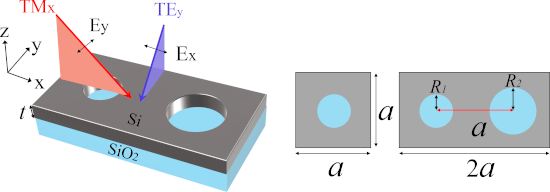
- formed and new sharp resonances will be superimposed onto the transmission spectrum. The setup of the incident beams with respect to the structure can be found in Figure 1a, where the electric field of Ey is used to excite the QGMs. A redshift of the resonance for a larger incident angle is observed for


Bismuth-based nanostructured photocatalysts for the remediation of antibiotics and organic dyes
Beilstein J. Nanotechnol. 2023, 14, 291–321, doi:10.3762/bjnano.14.26
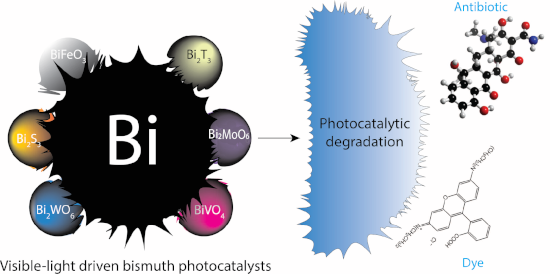
- static electric field, which effectively aids in the separation and transfer of photogenerated carriers. Bulk Bi and Bi-based nanostructure morphologies can also be easily altered using a variety of synthesis techniques due to their unique electrical and optical properties, which are directly tied to the
- facile solvothermal technique. An intrinsic electric field is created at the interface as a result of the active migration of electrons from BiVO4 to NiSe2. This improves the separation efficiency of the photogenerated carriers, and the interaction at the interface lowers the bandgap of BiVO4, which in


A distributed active patch antenna model of a Josephson oscillator
Beilstein J. Nanotechnol. 2023, 14, 151–164, doi:10.3762/bjnano.14.16
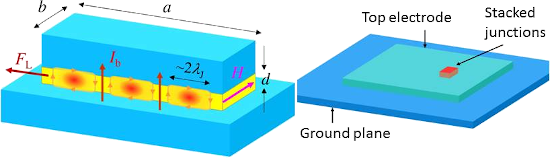
- similar to a microstrip patch antenna. However, it is biased by a dc current distributed over the whole area of the junction. The oscillating electric field is generated internally via the ac-Josephson effect. In this work, I present a distributed, active patch antenna model of a Josephson oscillator. It


Batch preparation of nanofibers containing nanoparticles by an electrospinning device with multiple air inlets
Beilstein J. Nanotechnol. 2023, 14, 141–150, doi:10.3762/bjnano.14.15
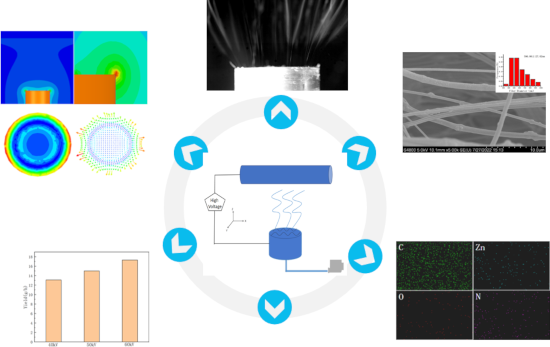
- were higher than those prepared by other high-yield electrospinning devices. Keywords: batch preparation; electric field simulation; electrospinning device; functional nanofibers; nanoparticles; Introduction In recent years, due to the characteristics of high specific surface area, good electrical
- 100 nanofibers from ten SEM images of each sample. Simultaneously, the element distribution on the sample surface was characterized by a desktop SEM (TM3030, Hitachi LTD.). Electric field simulation Maxwell 3D was used to simulate the electric field distribution of EMAI under different voltages (40
- , the edge of the groove, and the air inlets. This was because the edge part would produce higher electric field intensity due to the tip effect, while the air inlets would produce more jets due to the auxiliary effect of air flow. When the air flow rate was 150 m3/h (Figure 2a), because of the


Characterisation of a micrometer-scale active plasmonic element by means of complementary computational and experimental methods
Beilstein J. Nanotechnol. 2023, 14, 110–122, doi:10.3762/bjnano.14.12
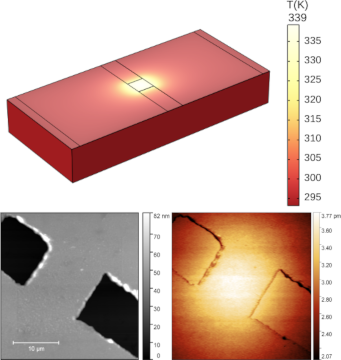
- polaritons (SPPs) are mixed states of photons and electron density waves propagating along the interface between a conductor and a dielectric. As a result of this phenomenon, an electric field strongly confined in the z-direction is produced at the interface. As direct excitation of a smooth metallic surface
- electric field. This method provides access to the modulation of the electric field induced by varying Joule heating. Second, the spatially resolved thermal distribution of the active plasmonic element and the surrounding environment was measured through the use of SJEM. This information is required to
- fully model the spatial distribution of the induced electric field changes. While this investigation focused on the behaviour of a single active plasmonic element, the combination of high localisation and the ability to modulate individual plasmonic elements at unique frequencies enables the design of


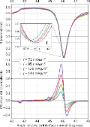


Solvent-induced assembly of mono- and divalent silica nanoparticles
Beilstein J. Nanotechnol. 2023, 14, 52–60, doi:10.3762/bjnano.14.6
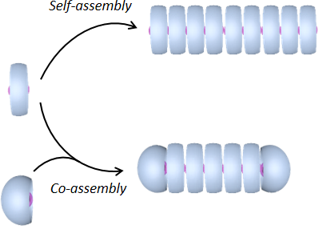
- by liquid bridging [23], and into a series of structures under an AC electric field [24]. The linear self-assembly of patchy gold nanorods tethered with hydrophobic polymer chains at both ends can be triggered by solvophobic attractions induced by a change in solvent quality [25]. By using post


Utilizing the surface potential of a solid electrolyte region as the potential reference in Kelvin probe force microscopy
Beilstein J. Nanotechnol. 2022, 13, 1558–1563, doi:10.3762/bjnano.13.129
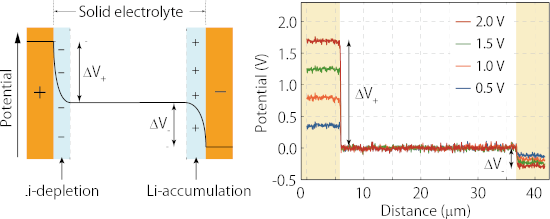
- changes when a DC voltage is applied between the electrodes in a simple electrochemical cell, as shown in Figure 1a. After applying the DC voltage for some time, the electric field in the solid electrolyte becomes shielded by the formation of a Li-depletion layer on the positive electrode side and a Li
- toward the negatively biased electrode, resulting in an ionic current flow. The ion current decays with time and, in principle, becomes zero when the electric field in the solid electrolyte is shielded by the accumulation and depletion of Li ions. Before starting each KPFM measurement, we waited 2–4 min
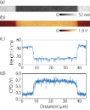
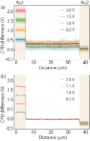
- this subtraction are shown in Figure 5a. In all the data, a voltage drop occurs at the Au electrode–solid electrolyte interfaces, and the potential change in the solid electrolyte region is constant. These results are direct experimental evidence that the electric field in the solid electrolyte was




Induced electric conductivity in organic polymers
Beilstein J. Nanotechnol. 2022, 13, 1551–1557, doi:10.3762/bjnano.13.128
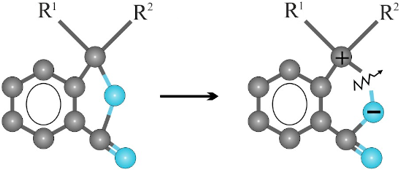
- , Ufa, Russia Institute of Molecule and Crystal Physics UFRC RAS, 450054, Ufa, Russia 10.3762/bjnano.13.128 Abstract Poly(diphenylene phthalide) (PDP) belongs to the class of carbocyclic organic electroactive polymers, which exhibits electric conductive properties when an external electric field and/or
- system. Relatively recently it was found that finite electric current can pass also through non-conjugated polymers. In the ground state they are wide-band dielectrics, but can exhibit high electric conductivity under the influence of such external parameters as mechanical stress and/or electric field [1
- methods [8][9]. Quantum chemical studies of PDP [10] have shown that its molecular structure is unstable with regard to interaction with an excess (thermal) electron and can result in a transition to a metastable state. However, in that state, e.g. induced by external electric field, the system is



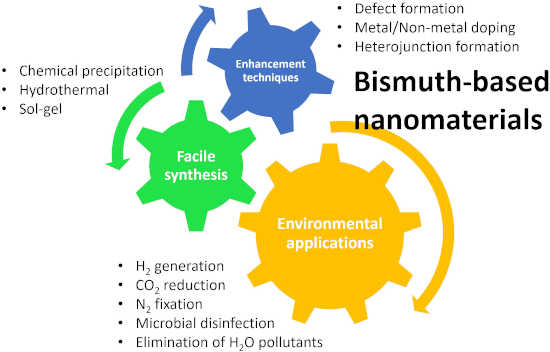
Recent trends in Bi-based nanomaterials: challenges, fabrication, enhancement techniques, and environmental applications
Beilstein J. Nanotechnol. 2022, 13, 1316–1336, doi:10.3762/bjnano.13.109
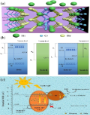
- electric field (IEF) between the layers. This electric field allows photogenerated charge carriers to be separated and moved effectively [17][18][19][20][21]. A range of visible-light-active Bi-based photocatalysts has lately raised curiosity among semiconductor photocatalysts. Bi3+ has a higher stability
- migration [95][96]. Photoinduced holes in n-type semiconductors are transported to p-type semiconductors by an electric field at the interface, whereas photoinduced electrons from p-type semiconductors are transported to n-type semiconductors (Figure 5b). Using simple and cost-effective experimental
- near the interface, which leads to an electric field. Also, the Fermi level of Bi2O3 goes down, while the level of Bi2S3 goes up. Along the Fermi level, the energy bands of both Bi2O3 and Bi2S3 are moving simultaneously in a downward and an upward direction. An equilibrium state, in which the Fermi




Studies of probe tip materials by atomic force microscopy: a review
Beilstein J. Nanotechnol. 2022, 13, 1256–1267, doi:10.3762/bjnano.13.104
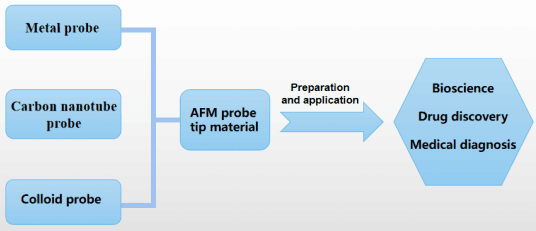
- electric field. The nanotube tips produced by this method have strong adhesion and mechanical stability. Since the above methods require scanning electron microscopy (SEM) monitoring throughout the transfer process, the process is relatively time-consuming. Hafner et al. [40] proposed a new method to
- generates a high-density network of CNTs on the sidewalls of the cone tip to help anchor the carbon nanotubes protruding from the tip. With the aim of simplicity in design and method of operation, the growth method does not use plasma or electric field as an enhancing factor to obtain effective tips, nor
Application of nanoarchitectonics in moist-electric generation
Beilstein J. Nanotechnol. 2022, 13, 1185–1200, doi:10.3762/bjnano.13.99
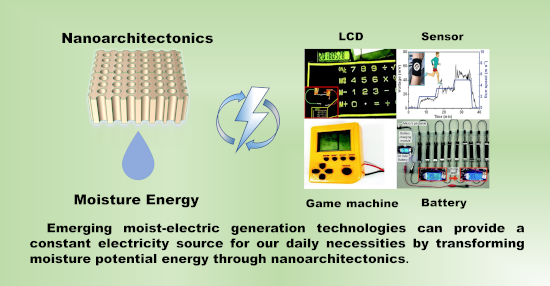
- in practical applications and provide green energy for more electronic devices. (a) The water flow is driven by an external electric field in the “motor” part, so the water molecules gain kinetic energy, and then an electromotive force is generated in the "Generator" part. (b) A scanning electron


Analytical and numerical design of a hybrid Fabry–Perot plano-concave microcavity for hexagonal boron nitride
Beilstein J. Nanotechnol. 2022, 13, 1030–1037, doi:10.3762/bjnano.13.90
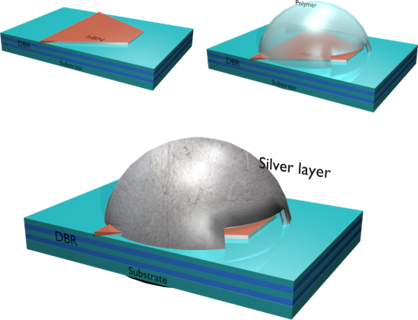
- analysis is performed, although diffraction losses have to be considered for an accurate description of the experimental limits of stability [21]. In the unstable regime (R2 < L2) extensive work has also been done [22][23]. Electric field distribution and resonant modes of the plano-concave microcavity A
- λ0/4n thickness layer of hBN (n = 1.72) was positioned on top of a 15-pair layer DBR with tantalum oxide (Ta2O5) and silicon oxide (SiO2) as the high- and low-index layers, respectively, on a (HL)15 configuration to ensure an electric field antinode at the surface of the hBN layer, making the hBN
- + DBR system a L(HL)15 dielectric stack. A transfer matrix model [24] was used to calculate the electric field distribution inside the hBN + DBR system (Figure 6). The full transfer matrix S of our microcavity is defined as: where L and I represent the transfer and interface matrix, respectively, of the


Numerical study on all-optical modulation characteristics of quantum cascade lasers
Beilstein J. Nanotechnol. 2022, 13, 1011–1019, doi:10.3762/bjnano.13.88
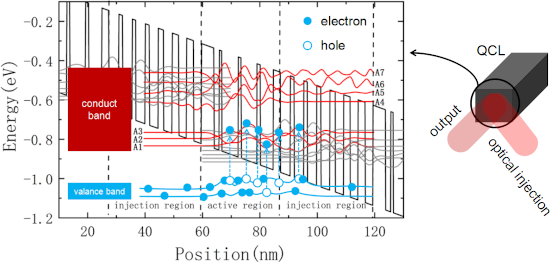
- active region of the QCL. The injected laser will then not be able to excite the electrons in the valence band to the laser subband of the conduction band, and the transition of electrons in the conduction band will be affected by the electric field. Therefore, we can allocate all the photoexcited


Effects of focused electron beam irradiation parameters on direct nanostructure formation on Ag surfaces
Beilstein J. Nanotechnol. 2022, 13, 1004–1010, doi:10.3762/bjnano.13.87
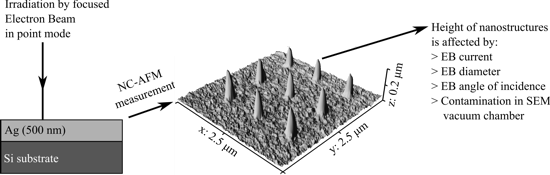
- . The first would be the height increase of the nanostructure when the EB diameter was reduced from 15 to 10 nm, while maintaining the same beam current. This observation supports the theory described in our previous work [30] regarding the movement of positive metal ions within the electric field
- formed around a negatively charged EB, promoting nanostructure formation on metal surfaces. A smaller beam diameter would imply a higher current density and a stronger local electric field, resulting in a larger attractive force on the metal ions. The second observation is the existence of a curve peak
- around a beam current value of 40 pA. The shape of the curve under 40 pA can be rather easily explained by the beam energy and current density. A higher beam current generally means that the electric field around the beam focus is stronger and that the beam thus supplies more energy to the surface for