


Search results
Search for "friction" in Full Text gives 203 result(s) in Beilstein Journal of Nanotechnology. Showing first 200.
Two dynamic modes to streamline challenging atomic force microscopy measurements
Beilstein J. Nanotechnol. 2021, 12, 1226–1236, doi:10.3762/bjnano.12.90
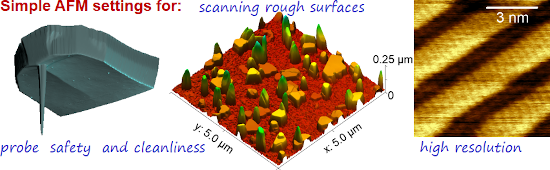
- classical contact mode, the friction force can be measured; when using off-resonance dynamic modes, stiffness and adhesion in the samples can be determined. Obviously, in determining the mechanical properties, the force of tip–surface interaction should be somewhat greater than that required if the task is


The role of convolutional neural networks in scanning probe microscopy: a review
Beilstein J. Nanotechnol. 2021, 12, 878–901, doi:10.3762/bjnano.12.66
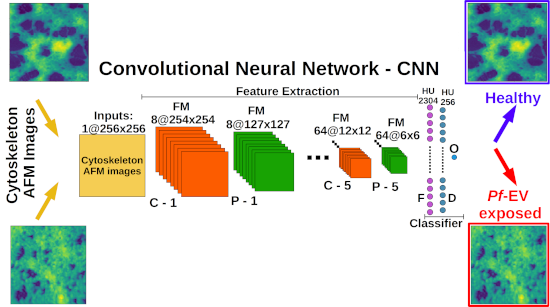
- topography, for example, adhesion, phase shift, stiffness, work function, or friction. In the following section, the utility of CNN in SPM is illustrated through several examples taken from the literature. Enhancing speed of image acquisition As discussed above, SPM imaging is inherently slow. One of the







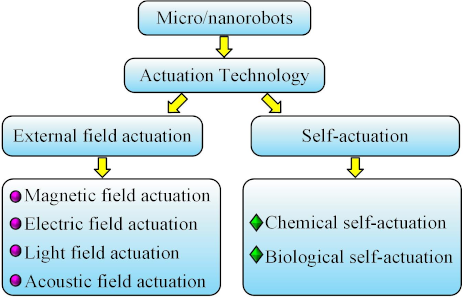
Recent progress in actuation technologies of micro/nanorobots
Beilstein J. Nanotechnol. 2021, 12, 756–765, doi:10.3762/bjnano.12.59
- direction of magnetization of the ISME, f represents the force of friction, ω indicates the rotation velocity of the microsphere, and θ denotes the tilt angle between the direction of the magnetic field and the direction of magnetization of the ISME. (c) Velocity–frequency profiles for ISMEs with different


Recent progress in magnetic applications for micro- and nanorobots
Beilstein J. Nanotechnol. 2021, 12, 744–755, doi:10.3762/bjnano.12.58
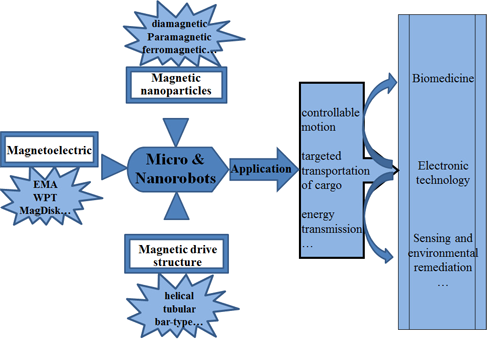
- on diamagnetic levitation nanomaterials. Without using strong electromagnets or bulky permanent magnets, it can make the microrobot move in three dimensions in a liquid environment through diamagnetic levitation. The main purpose of this method is to eliminate friction between the substrate surface


Physical constraints lead to parallel evolution of micro- and nanostructures of animal adhesive pads: a review
Beilstein J. Nanotechnol. 2021, 12, 725–743, doi:10.3762/bjnano.12.57
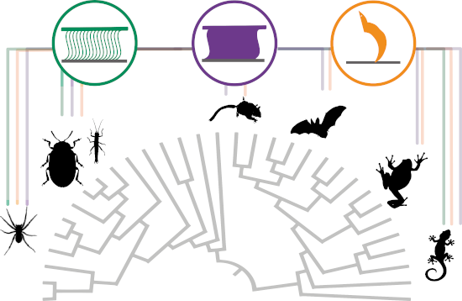
- principles of attachment pads with a special focus on insects, describe micro- and nanostructures, surface patterns, origin of different pads and their evolution, discuss the material properties (elasticity, viscoelasticity, adhesion, friction) and basic physical forces contributing to adhesion, show the
- might be potentially interesting for engineers as a kind of optimal solution by nature, the biomimetic implications of the discussed results are briefly presented. Keywords: adhesion; attachment devices; biomechanics; convergence; friction; substrate compliance; Review Animal attachment systems
- generally contribute to the attachment on rough surfaces due to friction and mechanical interlocking [83][89][92][232][233][234][235][236]. The performance of claws depends on the radius of the claw tip in relation to the curvature of the surface irregularities [83][234][237][238]. However, in combination


Nanogenerator-based self-powered sensors for data collection
Beilstein J. Nanotechnol. 2021, 12, 680–693, doi:10.3762/bjnano.12.54
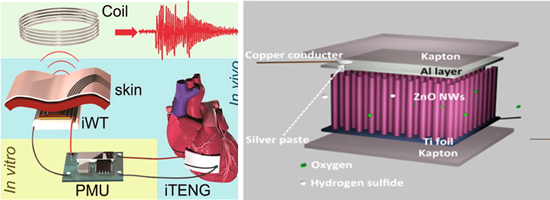
- load [7]. To detect the state of wheels at high friction and at high speed, sensors based on a harsh-environmental TENG (he-TENG) can be included in a self-powered smart brake system. TENG-based vehicle sensors can collect data on driving habits, such as the frequency of using brake pedal and



Simulation of gas sensing with a triboelectric nanogenerator
Beilstein J. Nanotechnol. 2021, 12, 507–516, doi:10.3762/bjnano.12.41
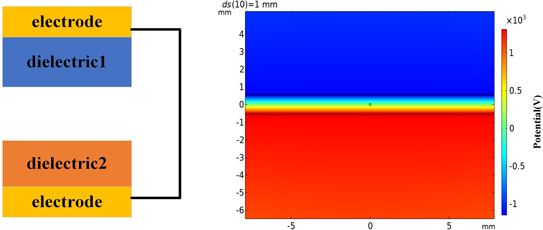
- layer with very small separation distance (less than 1 mm) [25], and the effective contact area of the friction material is increased by texturing its surface [26][27] to improve its electrical output. This setup is widely applied in vertical contact separation mode [28][29], sliding mode [30][31
- ], single electrode mode [32][33][34], and independent layer mode [35]. In order to explain the charge transfer process between two friction materials in contact, various models have been proposed and explored, such as electron cloud model [36][37][38], ion transfer model [39], and material transfer model
- electrification and electrostatic induction. Contact electrification refers to the electron transfer between two different materials in contact because the atoms are so close together. An electric field is generated after friction electrification, and electrostatic induction is caused by the electric field. The



A stretchable triboelectric nanogenerator made of silver-coated glass microspheres for human motion energy harvesting and self-powered sensing applications
Beilstein J. Nanotechnol. 2021, 12, 402–412, doi:10.3762/bjnano.12.32
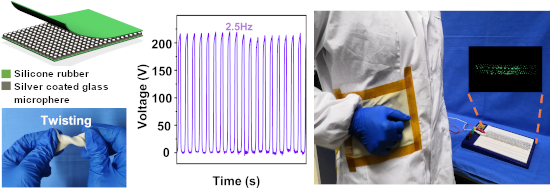
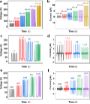
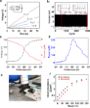
- is 1:1.5, VOC and ISC reach the largest values of 250 V and 6 μA, respectively, under a force of 150 N. As the content of SCGMs continues to increase, VOC and ISC gradually decrease. The larger amount of SCGMs causes less air in the same volume. Hence, there is less friction between silicone rubber
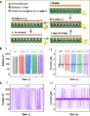
- to an intensification of friction and the generation of more charges. A similar trend is observed for VOC, as expected. Because of the mismatch between AC and DC systems a full-wave rectifier circuit was introduced to the setup. Figure 4a shows the voltage of different capacitors (2.2, 4.7, 10, and



Paper-based triboelectric nanogenerators and their applications: a review
Beilstein J. Nanotechnol. 2021, 12, 151–171, doi:10.3762/bjnano.12.12
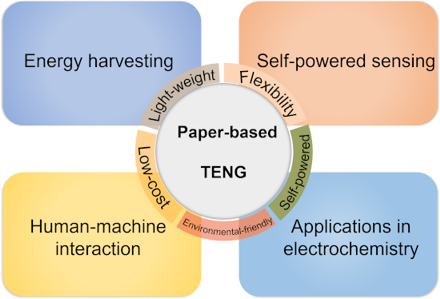
- moisture-retention capacity. This provides an efficient method to prepare paper electrodes for TENGs. Paper has also been proven to be a natural TENG friction layer. Due to that, it shows a tendency of easily losing electrons (i.e., electropositive) when contacting a material that can easily gain electrons
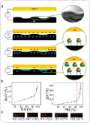
- (most common design in previous works) as a typical representative example, we further systematically analyze the working mechanism of the detailed charge-transfer process. Figure 2b elucidates the charge generation and the electron-transfer process at the friction interfaces (paper/the other dielectric
- negative charges) are induced by the same amount on the surfaces of the friction layers. As there is no electric potential at this stage, there is no electron transfer between the two conductive layers (Figure 2b-I). When the two friction layers start to separate along the vertical direction, opposite






Walking energy harvesting and self-powered tracking system based on triboelectric nanogenerators
Beilstein J. Nanotechnol. 2020, 11, 1590–1595, doi:10.3762/bjnano.11.141
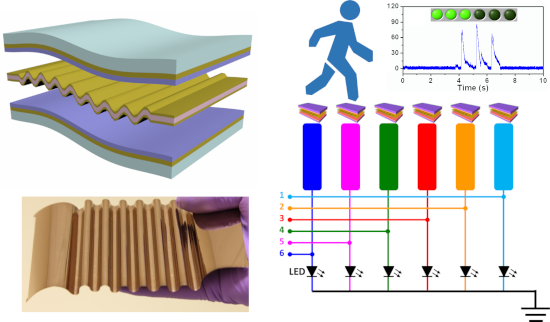
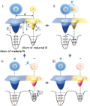
- area with the undulated electrode but also promotes the triboelectric charge density on the friction surface. The prepared u-TENGs are flexible, rugged, light, and small devices, as revealed in Figure 1c. It is worth noting that the application of the undulated electrode structure in this work is




Triboelectric nanogenerator based on Teflon/vitamin B1 powder for self-powered humidity sensing
Beilstein J. Nanotechnol. 2020, 11, 1394–1401, doi:10.3762/bjnano.11.123
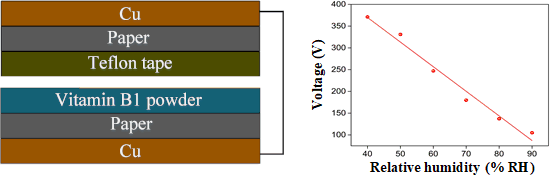
- lubricant to make a friction nanogenerator. Due to its sustainability and flexibility, paper can be used as a substrate and supporting structure. The conductive electrode is made of copper foil, while the triboelectric pair is comprised of Teflon tape and vitamin B1 powder. The approximate values of the




Magnetohydrodynamic stagnation point on a Casson nanofluid flow over a radially stretching sheet
Beilstein J. Nanotechnol. 2020, 11, 1303–1315, doi:10.3762/bjnano.11.114
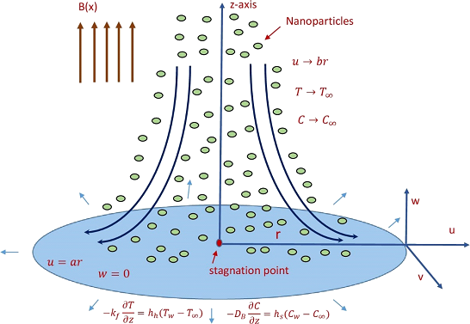
- written as The transformed boundary conditions are and the dimensionless parameters are defined as The formulas for the dimensional form of the skin-friction coefficient Cf, the Nusselt number Nu, and Sherwood number Sh, are given by and the formulas for τw, qw, and qm are The result of the transformation
- criteria for the shooting method is set as: in which ε is set as a very small positive number. In this work, ε is set as 10−5 whereas η∞ is set as 7. Results and Discussion In this section, the numerical results of the skin-friction coefficient, Nusselt and Sherwood numbers are listed in tables and shown
- ≤ 2.0, γ = 1.0, 1 ≤ Bi1 ≤ 2.0, and 1 ≤ Bi2 ≤ 2.0. Skin-friction coefficient, Nusselt and Sherwood numbers Prabhakar et al. [24] used a fourth-order Runge–Kutta method to obtain the numerical solution of the discussed model, whereas Attia [37] used the shooting technique and the computational software


Influence of the magnetic nanoparticle coating on the magnetic relaxation time
Beilstein J. Nanotechnol. 2020, 11, 1207–1216, doi:10.3762/bjnano.11.105
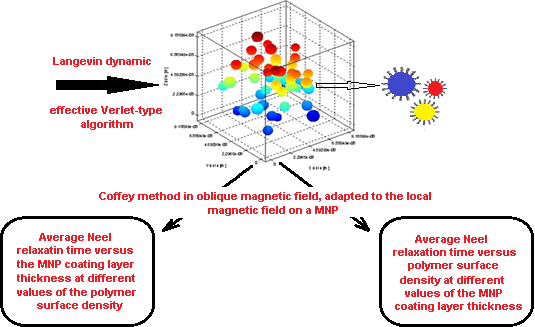
- the particle) and Brown relaxation (an external phenomenon driven by the rotation of the nanoparticle along the magnetic moment). Both internal and external sources of friction lead to a delay in the orientation of the particle magnetic moment in the direction of the applied magnetic field, thus
- nanoparticle i in the fluid environment [19] given as where mi is the mass of the i-th nanoparticle, is the linear speed of the i-th nanoparticle, is the resultant of the conservative forces acting on the i-th nanoparticle, αi,tr and αi,rot are the translational and rotational friction coefficients


Effect of magnetic field, heat generation and absorption on nanofluid flow over a nonlinear stretching sheet
Beilstein J. Nanotechnol. 2020, 11, 976–990, doi:10.3762/bjnano.11.82
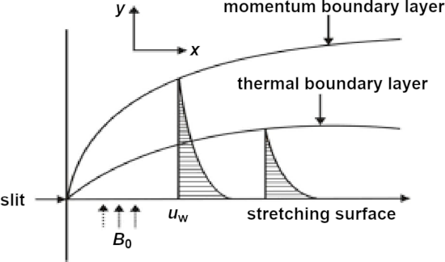
- the boundary layer, thus causing a reduction in its thickness for nanofluids. This is due to the fact that an increase in the slip parameter causes a reduction in the skin friction at the surface acting between the stretching sheet and the fluid flow, thus drastically decreasing the velocity gradient
- . Impact of ξ on θ(η) The temperature variation component, θ(η), increases with an increase in the slip parameter, ξ, which further leads to an increase in the fluid temperature, thus intensifying the thermal boundary layer thickness (Figure 3). An increase in the slip parameter causes friction at the
- slip parameter, ξ, at a given constant surface temperature. An increase in the slip parameter causes friction at the surface which, in turn, generates a frictional force allowing more fluid to flow passed the stretching sheet. This causes an increase in concentration distribution of the fluid as shown


Microwave photon detection by an Al Josephson junction
Beilstein J. Nanotechnol. 2020, 11, 960–965, doi:10.3762/bjnano.11.80
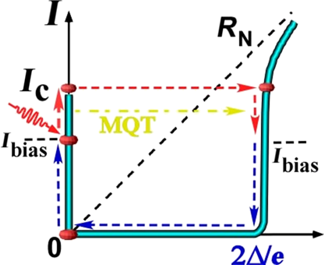
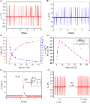
- particle moves along the potential in the presence of friction, the strength of which is characterized by α = ωp/ωc, where is the plasma frequency, ωc = 2eICRN/ℏ is the characteristic frequency, RN is the normal state resistance and C is the capacitance. The superconducting state of the JJ corresponds to


Extracting viscoelastic material parameters using an atomic force microscope and static force spectroscopy
Beilstein J. Nanotechnol. 2020, 11, 922–937, doi:10.3762/bjnano.11.77
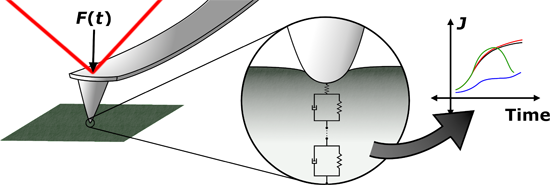
- fluids) will have a low storage modulus and high loss modulus. In this case, most of that input energy will be lost to friction and heat, and therefore the material will return far less energy than the stiff elastic material when unloaded. To acquire storage and loss modulus as functions of the frequency


Quantitative determination of the interaction potential between two surfaces using frequency-modulated atomic force microscopy
Beilstein J. Nanotechnol. 2020, 11, 729–739, doi:10.3762/bjnano.11.60
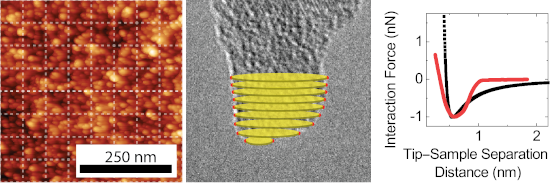
- . It also determines interfacial properties, such as adhesion and friction, and is a key input into mechanics models and atomistic simulations of contacts. We have developed a novel methodology to experimentally determine interaction potential parameters, given a particular potential form, using
- microscopy (AFM) [4][5], and nanolithography techniques [6]. In particular, material parameters, such as interfacial adhesion, friction and wear (in the case of translating surfaces), significantly impact the success of the aforementioned examples. For instance, micromirrors, present in DLP technology
- such issues. For example, the adsorption of self-assembled monolayers on contacting surfaces is one method by which the surface can be modified to reduce the detrimental impacts of adhesion, friction and wear [15][16][17]. The nanometer length scales over which these processes modify surface


Stochastic excitation for high-resolution atomic force acoustic microscopy imaging: a system theory approach
Beilstein J. Nanotechnol. 2020, 11, 703–716, doi:10.3762/bjnano.11.58
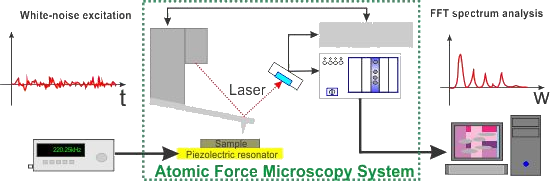
- deflection signal from the photodiodes of the AFM equipment. The classical Euler–Bernoulli beam equation is used, which is expressed by Vázquez et al. as [27][28][29]: where EI is the flexural stiffness, c is the damping due to viscous friction, m is the mass per unit length and z(x,t) is the deflection of



Understanding nanoparticle flow with a new in vitro experimental and computational approach using hydrogel channels
Beilstein J. Nanotechnol. 2020, 11, 296–309, doi:10.3762/bjnano.11.22
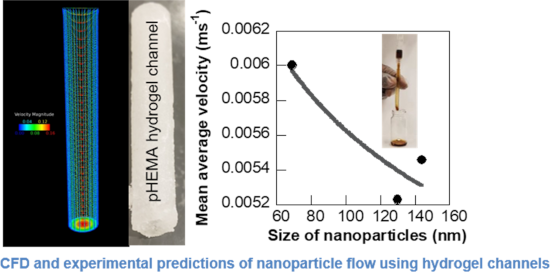
- the new 3D flow channels. pHEMA hydrogels synthesized with 1, 1.1, and 1.2 mL of DI water showed uneven surface textures owing to the increased softness of these materials. These formulations were not used for the flow channels as their rough surfaces could lead to friction artifacts in the flow of
- showed the smoothest surface of all gel formulations. The gels prepared with 1.5 mL DI water showed a distinctly porous surface structure. Therefore, the 1.3 mL DI water hydrogels were most suitable for making flow channels of negligible friction to resemble the vascular microenvironment. The hollow 3D


Nonclassical dynamic modeling of nano/microparticles during nanomanipulation processes
Beilstein J. Nanotechnol. 2020, 11, 147–166, doi:10.3762/bjnano.11.13
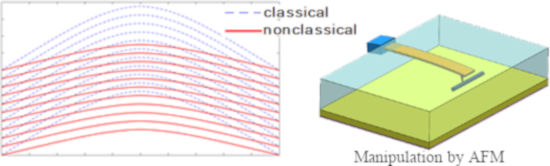
- –Grenoble (LuGre) theories for frictional models [9]. Hou et al. studied the behavior of cylindrical nanoparticle motion during the manipulation process. They considered the viscous friction and studied two states: turning the axis inside or outside of the nanoparticle [10]. Kahrobaiyan et al. investigated
- used for biological nanoparticles [13]. Using MSCT for modeling AFM with a piezoelectric system was considered in another study [14]. Polyakov et al. examined the dependence of static friction and contact area on nanoparticle geometry in the manipulation of spherical silver and polyhedral gold
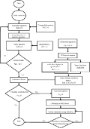
- critical time and force of the dominant motion mode are used as the inputs of next steps. After applying the exerted force on the nanoparticle by AFM and distributed resistant force resulting from friction and adhesion, deflections of the cylindrical nanoparticle before the onset of motion in the dominant







The effect of heat treatment on the morphology and mobility of Au nanoparticles
Beilstein J. Nanotechnol. 2020, 11, 61–67, doi:10.3762/bjnano.11.6
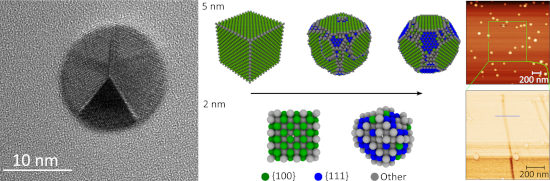
- should decrease the contact area compared to faceted particles, and hence reduce the friction forces in accordance with the known relation τ = F/A [6], where τ is the contact strength, F is the friction force and A is the contact area. For a round particle, the contact area is determined by contact
- power for a displacement than the experimental setup could provide. Therefore, the actual average friction determined for the NPs annealed at 200 °C is even higher. The power required to displace NPs is the highest for particles annealed at 200 °C and the lowest for NPs annealed at 600 °C. This finding
- from the ellipsometry measurements presented in Figure 7. How exactly the rapid growth of the SiO2 layer may be related to the drastic increase in friction remains unclear and can be the subject for future studies. Overall, we demonstrated that heat treatment, which is widely used as a surfactant


An investigation on the drag reduction performance of bioinspired pipeline surfaces with transverse microgrooves
Beilstein J. Nanotechnol. 2020, 11, 24–40, doi:10.3762/bjnano.11.3
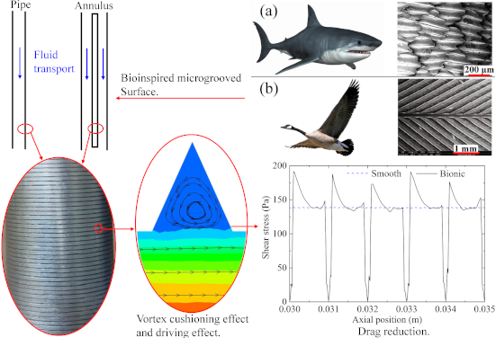
- transportation, the transport drag originates from skin friction drag, which is the main reason affecting the transport efficiency of long-distance pipelines [2][3]. In drilling engineering, the high pressure loss often encountered is mainly caused by a skin friction drag of the circulating drilling fluid, which
- severely hinders the exploration of oil and gas resources in deep wells [4][5][6]; therefore, it is necessary to put additional effort into reducing the skin friction drag. Conventional hydraulic drag reduction methods include the development of high-performance polymer additives to reduce fluid viscosity
- the direct numerical simulation (DNS) results, as shown in Figure 5. The agreement with DNS was satisfactory so that the accuracy of the numerical simulation method could be validated again. Dimensionless parameters: where uτ was the friction velocity (m/s); U was the instantaneous velocity (m/s); y


Dynamics of superparamagnetic nanoparticles in viscous liquids in rotating magnetic fields
Beilstein J. Nanotechnol. 2019, 10, 2294–2303, doi:10.3762/bjnano.10.221
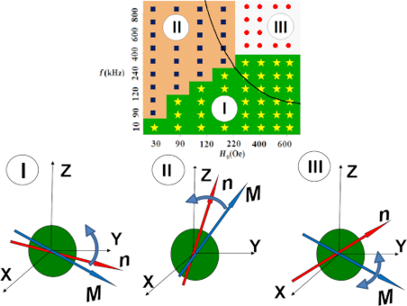
- ][53][54] where γ1 = |γ|/(1 + κ2), κ is the phenomenological damping parameter, and is the random thermal magnetic field that causes thermal fluctuations of the particle magnetic moment. The stochastic equation for the nanoparticle director is given by [25][54][55] where ξ = 6ηV is the friction


Nanoscale spatial mapping of mechanical properties through dynamic atomic force microscopy
Beilstein J. Nanotechnol. 2019, 10, 1332–1347, doi:10.3762/bjnano.10.132
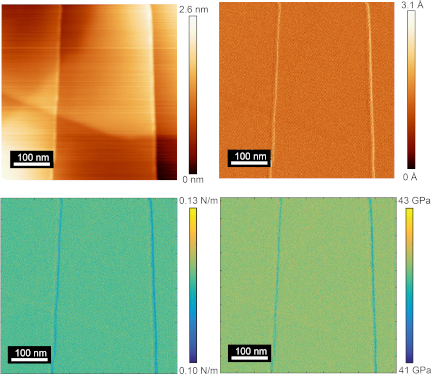
- have been several studies, particularly in the field of tribology, that have attributed observations or proposed mechanisms of friction that result from a weaker elastic constant at an atomic step edge [21][24][25]. Despite the number of proposed mechanisms relying on weakened graphite step edges
- made about HOPG and graphene step edges to interpret friction and AFM tip-convolution measurements made previously. In this paper, CR AFM is used to clearly identify atomic-scale defects, such as atomic step edges, that show mechanical property variations on surfaces of HOPG. FMM is then used to scan
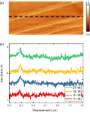
- uncovered step appears sharper than the covered step, this contrast difference is not as reliable as the smaller measured lateral and friction forces on the covered steps compared with the uncovered steps, as reported in [39]. Figure 3c shows the line profile extracted along the dashed line in Figure 3b for




Biological and biomimetic surfaces: adhesion, friction and wetting phenomena
Beilstein J. Nanotechnol. 2019, 10, 481–482, doi:10.3762/bjnano.10.48

- Keywords: adhesion; air retention; contact mechanics; fluid transport; friction; functional gradients; wetting; This Thematic Series is the continuation of the previous series on the broad topic of biological and bioinspired materials and surfaces [1][2][3]. This collection of articles displays a current
- cross section of recent developments in this highly diverse and interdisciplinary field of research. The articles highlight recent achievements in the understanding of animal and plant surfaces in the broadest context of adhesion, friction, and wetting phenomena on one hand. On the other hand, they
- novel flow and pressure sensors. While most of the articles represent experimental work, two are devoted to theoretical and numerical work on the adhesion of rough brush systems and the friction of functionally graded materials. The metrics mentioned above illustrate that this compilation of articles



