


Search results
Search for "heterogeneity" in Full Text gives 79 result(s) in Beilstein Journal of Nanotechnology.
The effect of atmospheric doping on pressure-dependent Raman scattering in supported graphene
Beilstein J. Nanotechnol. 2018, 9, 704–710, doi:10.3762/bjnano.9.65
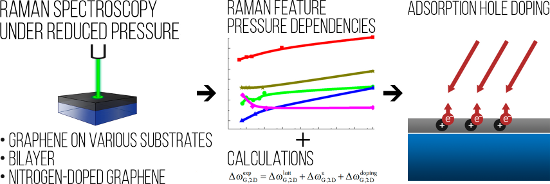
- doping drastically decreases the spatial heterogeneity of charge carriers in graphene doped with nitrogen, while the opposite effect was observed for undoped samples. The results of this study should be taken into account for the development of sensors and nanoelectronic devices based on graphene


Periodic structures on liquid-phase smectic A, nematic and isotropic free surfaces
Beilstein J. Nanotechnol. 2018, 9, 342–352, doi:10.3762/bjnano.9.34
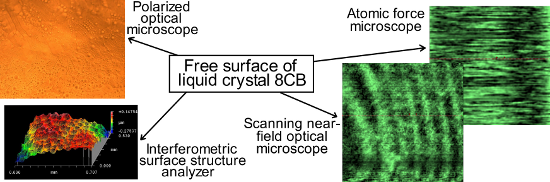
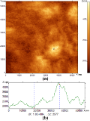
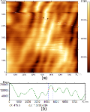
- shows an image obtained with the SNOM and AFM profile of the surface. The intensity of the SNOM signal is measured in counts per second (cps). We see some irregular variation of contrast on the image. The size of this heterogeneity is about 10–15 μm. This value correlates within an order of magnitude









Beyond Moore’s technologies: operation principles of a superconductor alternative
Beilstein J. Nanotechnol. 2017, 8, 2689–2710, doi:10.3762/bjnano.8.269



Exploring wear at the nanoscale with circular mode atomic force microscopy
Beilstein J. Nanotechnol. 2017, 8, 2662–2668, doi:10.3762/bjnano.8.266
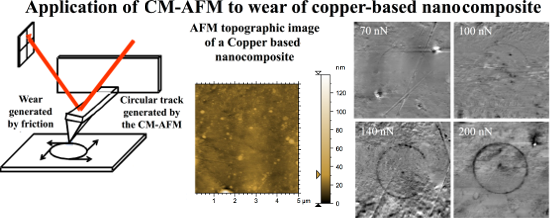
- friction, energy dissipation and worn material at the local scale or to exhibit local heterogeneity of the material. To summarize, CM-AFM applied to wear experiments regarding different applications such as tribochemistry and wear of thin films presents numerous advantages compared to conventional AFM wear


Photobleaching of YOYO-1 in super-resolution single DNA fluorescence imaging
Beilstein J. Nanotechnol. 2017, 8, 2296–2306, doi:10.3762/bjnano.8.229
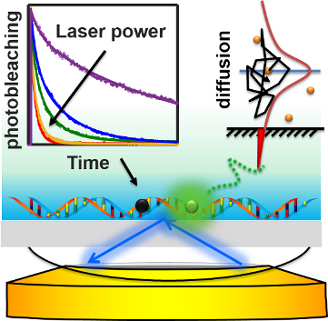
- under the microscope showing that sample preparation and our microscope work performed as expected (Figure 3b). In order to measure the heterogeneity among DNA molecules, DNA molecules were immobilized on the substrate at a lower density than in Figure 3. This lower density allows the DNA molecules to




Low uptake of silica nanoparticles in Caco-2 intestinal epithelial barriers
Beilstein J. Nanotechnol. 2017, 8, 1396–1406, doi:10.3762/bjnano.8.141
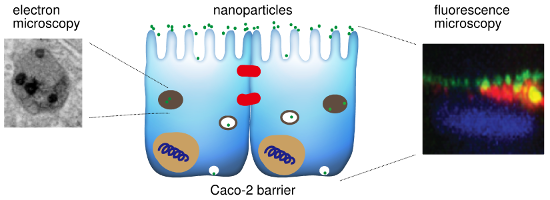
- of view, but also complicates the interpretation of imaging snapshots which do not sample all the variation of the population. Again, a different methodology will be needed to understand and capture this heterogeneity in detail. There could be broader implications of the low degree of internalisation



Surface-enhanced Raman spectroscopy of cell lysates mixed with silver nanoparticles for tumor classification
Beilstein J. Nanotechnol. 2017, 8, 1183–1190, doi:10.3762/bjnano.8.120
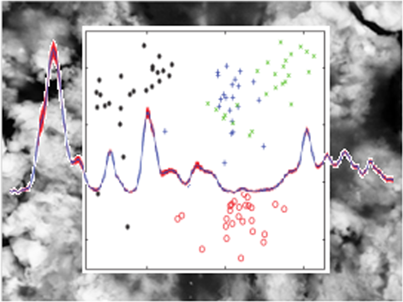
- specific antigens [21][22][23]. The disadvantages of approach (1) include the poor reproducibility due to nonspecific binding of nanoparticles, the long time needed for nanoparticles uptake by cells, and the heterogeneity of nanoparticles inside cells. Approach (2) is complicated because of complex


A new approach to grain boundary engineering for nanocrystalline materials
Beilstein J. Nanotechnol. 2016, 7, 1829–1849, doi:10.3762/bjnano.7.176
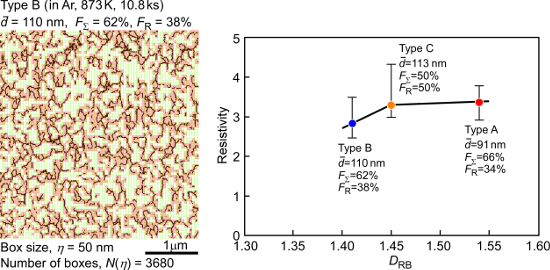
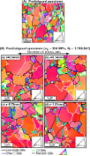
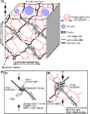
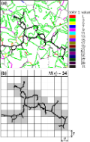
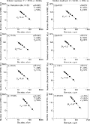
- that segregation-induced embrittlement in polycrystalline materials can be well controlled by optimizing the grain boundary microstructure, especially by GBCD, the grain boundary connectivity, and the heterogeneity of the grain size distribution. This is true even when local in nature, as revealed by
- thin film specimens, i.e., the heterogeneity of grain size distribution, GBCD, and grain boundary connectivity, or triple junction character distribution. To our knowledge, no literature is available which has reported such detailed information about grain boundary microstructure based on fractal







Manufacturing and investigation of physical properties of polyacrylonitrile nanofibre composites with SiO2, TiO2 and Bi2O3 nanoparticles
Beilstein J. Nanotechnol. 2016, 7, 1141–1155, doi:10.3762/bjnano.7.106
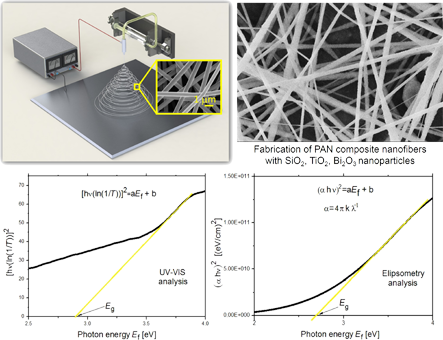
- characterised by numerous structural defects, usually occurring on their surface (Figure 5). In addition, with an increase in the concentration of the used reinforcing phases in the produced nanocomposites an increase of defects and an increased heterogeneity of the fibre morphology was identified. X-ray



The influence of phthalocyanine aggregation in complexes with CdSe/ZnS quantum dots on the photophysical properties of the complexes
Beilstein J. Nanotechnol. 2016, 7, 1018–1027, doi:10.3762/bjnano.7.94
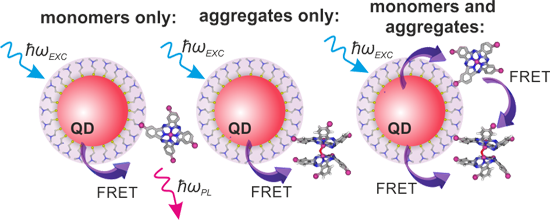
- photophysical properties of the complexes. For the first time this concentration dependence has been well described by the developed model taking into account the heterogeneity of QD–monomer and QD–aggregate complexes. We show that a reduction in the concentration of phthalocyanine aggregates in complex with



Large-scale fabrication of achiral plasmonic metamaterials with giant chiroptical response
Beilstein J. Nanotechnol. 2016, 7, 914–925, doi:10.3762/bjnano.7.83
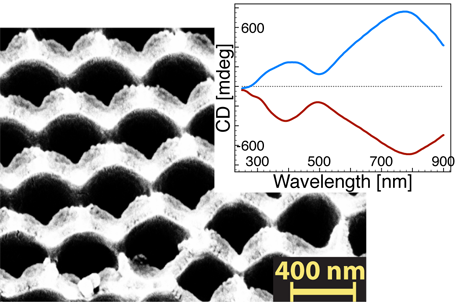
- broad signal [13]. This is presumably related to the heterogeneity and 3D nature of the ECM structures, which is less dominant in the hole arrays fabricated by focused ion beam lithography. In spite of this, the CD linewidths of the present ECMs are comparable to those of gammadion PCMs, which have been
- previously used for biosensor applications [10]. Furthermore, compared to PCMs fabricated by another scalable technique [29], the CD linewidths of the honeycomb ECMs are more narrow. Hence the heterogeneity and 3D structure has not limited the use of the honeycomb ECMs for biosensing applications. While the



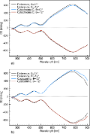
![[Graphic 2]](/bjnano/content/inline/2190-4286-7-83-i2.png?max-width=637&scale=1.18182) , of incident light with respect to the ECM structures.
, of incident light with respect to the ECM structures.



Correlative infrared nanospectroscopic and nanomechanical imaging of block copolymer microdomains
Beilstein J. Nanotechnol. 2016, 7, 605–612, doi:10.3762/bjnano.7.53
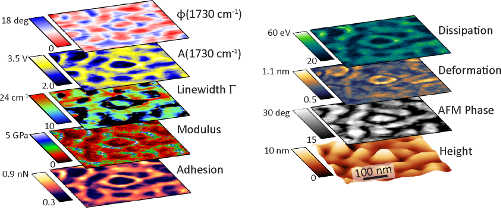
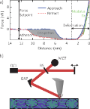
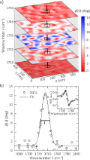
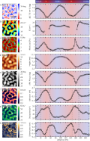
- channel alone. These variations suggest that regions of multicomponent chemical composition, such as the interfacial mixing regions between microdomains, are correlated with high spatial heterogeneity in nanoscale material properties. Keywords: block copolymers, force–distance nanomechanical spectroscopy
- , hybrid imaging, near-field infrared spectroscopy, scanning probe microscopy; Introduction Functional soft-matter and polymer systems often exhibit novel phenomena due to nanoscale chemical heterogeneity and the resulting intermolecular interactions. Infrared vibrational scattering scanning near-field


![[Graphic 9]](/bjnano/content/inline/2190-4286-7-53-i10.png?max-width=637&scale=1.18182) (1730 ...
(1730 ...
The eNanoMapper database for nanomaterial safety information
Beilstein J. Nanotechnol. 2015, 6, 1609–1634, doi:10.3762/bjnano.6.165
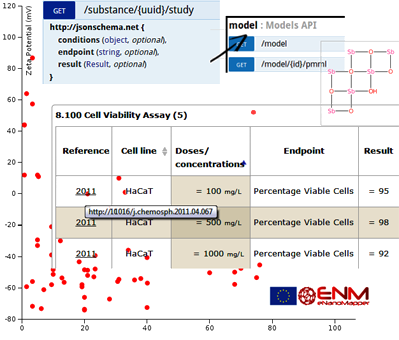


Experiences in supporting the structured collection of cancer nanotechnology data using caNanoLab
Beilstein J. Nanotechnol. 2015, 6, 1580–1593, doi:10.3762/bjnano.6.161
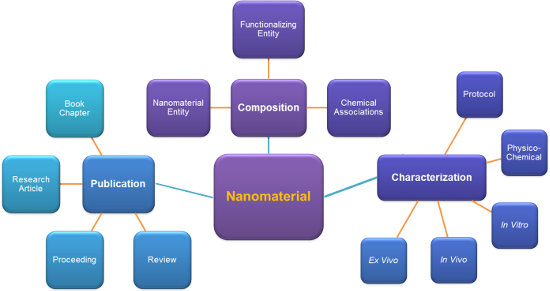
- development, must consider the heterogeneity of nanomaterial data and varied needs based on application (e.g., research focus – environmental vs medical vs energy). Even within a given research area, multi-disciplinary contributions to the field further complicate the development of management systems that






Chemoselective silicification of synthetic peptides and polyamines
Beilstein J. Nanotechnol. 2015, 6, 103–110, doi:10.3762/bjnano.6.10
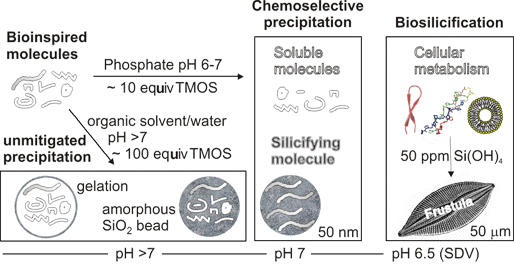
- nanostructure forms a template for the localized silicon dioxide precipitation in LCPA-rich but silaffin-poor areas [20]. From the numerous physical and experimental parameters, which differ from the literature experiments, only the chemical parameter of micro-heterogeneity is resolved in our experiments, which




The impact of the confinement of reactants on the metal distribution in bimetallic nanoparticles synthesized in reverse micelles
Beilstein J. Nanotechnol. 2014, 5, 1966–1979, doi:10.3762/bjnano.5.206
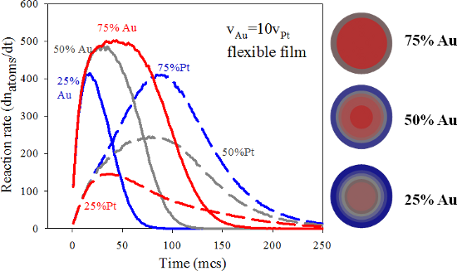
- obtained in homogeneous reaction media. It was extended to synthesis inside micelles without taking into account the heterogeneity of reaction media. It is understood that reverse micelles are reaction vessels in which classical assumptions cannot always be used. For example, it was demonstrated that the


Cathode lens spectromicroscopy: methodology and applications
Beilstein J. Nanotechnol. 2014, 5, 1873–1886, doi:10.3762/bjnano.5.198

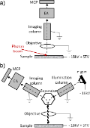
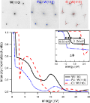
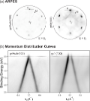
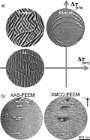
- excitation in the imaging column. By placing a small aperture in the illumination column or at the image plane of the objective lens, the probed area can be limited to a micrometer-sized region, thus giving rise to the micro-probe operation. When the length scale of the structural heterogeneity is below the



The influence of molecular mobility on the properties of networks of gold nanoparticles and organic ligands
Beilstein J. Nanotechnol. 2014, 5, 1664–1674, doi:10.3762/bjnano.5.177
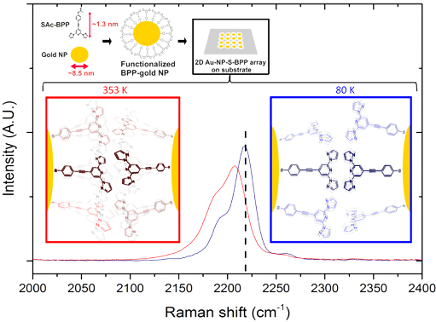
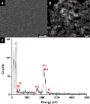
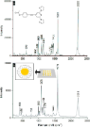
- excitation used here. Although there are clear commonalities, the spectra of the 2D single layer array and SAc-BPP powder spectra exhibit notable differences. The individual spectral features are broader in the SERS spectrum, consistent with the higher heterogeneity in the microenvironment the S-BPP




Ionic liquid-assisted formation of cellulose/calcium phosphate hybrid materials
Beilstein J. Nanotechnol. 2014, 5, 1553–1568, doi:10.3762/bjnano.5.167
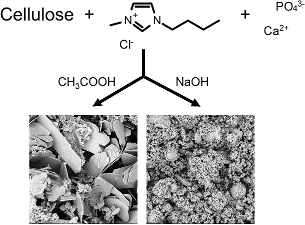
- particles observed in the TEM. Indeed, citrate has been suggested as a strong growth modifier for calcium phosphate from aqueous solution [76]. In contrast, the heterogeneity of the samples obtained with NaOH could be due to solubility issues of NaOH in the IL; as ILs are known to only poorly solubilize


In vitro interaction of colloidal nanoparticles with mammalian cells: What have we learned thus far?
Beilstein J. Nanotechnol. 2014, 5, 1477–1490, doi:10.3762/bjnano.5.161
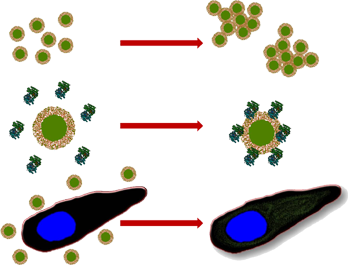
- less heterogeneity is present in the NP material and the easier the results (i.e., the correlation between the properties of the NPs and the observed interaction of NPs with cells) can be interpreted [13][18][86]. With limitations, a correlation of the spontaneous endocytotic uptake of NPs to the


Unlocking higher harmonics in atomic force microscopy with gentle interactions
Beilstein J. Nanotechnol. 2014, 5, 268–277, doi:10.3762/bjnano.5.29
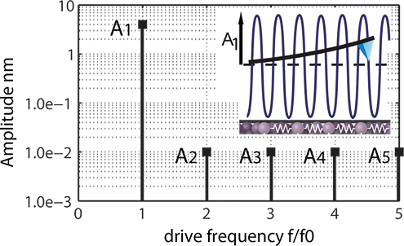
- absence of an external excitation of higher harmonics. Higher harmonic phase shifts further provide the means to directly decouple the true topography from that induced by compositional heterogeneity. Keywords: atomic force microscopy; chemistry; composition; heterogeneity; higher harmonics; phase
- establish a possible loss of contrast due to fundamental sources of noise. It is also shown that true topography and apparent topography, which is induced by chemical heterogeneity, can be decoupled at once by monitoring the phase contrast of higher harmonics. Results and Discussion Consider the equation of
- ), 0.8×10⁻¹⁹ J (squares) and 1.2 × 10⁻¹⁹ J (triangles). These variations induce variations in peak force of 29 (circles), 8 (squares) and 3 (trinagles) pN. (a–c) Illustration of a cantilever oscillating above a surface and recovering the true height Δzc = h when there are no compositional heterogeneity

![[Graphic 7]](/bjnano/content/inline/2190-4286-5-29-i27.png?max-width=637&scale=1.18182) of higher harmonics, including the fundamental shift
of higher harmonics, including the fundamental shift ![[Graphic 8]](/bjnano/content/inline/2190-4286-5-29-i28.png?max-width=637&scale=1.18182) , when N = 10 external harmonic ...
, when N = 10 external harmonic ...


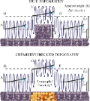
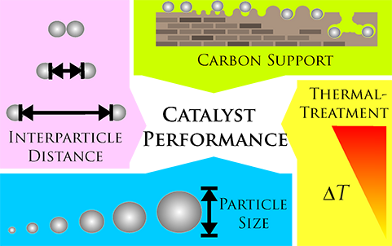
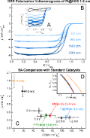
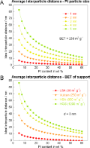
Design criteria for stable Pt/C fuel cell catalysts
Beilstein J. Nanotechnol. 2014, 5, 44–67, doi:10.3762/bjnano.5.5




Atomic force microscopy recognition of protein A on Staphylococcus aureus cell surfaces by labelling with IgG–Au conjugates
Beilstein J. Nanotechnol. 2013, 4, 743–749, doi:10.3762/bjnano.4.84
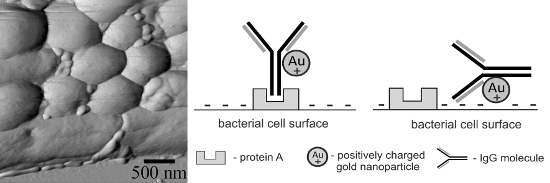
- bacterial cell surfaces by using colloidal gold nanoparticles as labels (Figure 4a). A moderate heterogeneity of the dimensional characteristics of the IgG–Au conjugates was revealed by AFM image analysis. Thus, conjugates were found both as single, spherically shaped objects, 80 ± 12 nm in size, and


AFM as an analysis tool for high-capacity sulfur cathodes for Li–S batteries
Beilstein J. Nanotechnol. 2013, 4, 611–624, doi:10.3762/bjnano.4.68
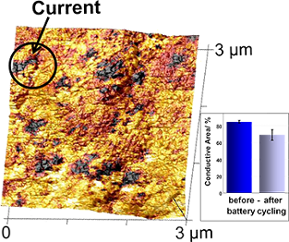
- distribution is present in this area, with a sulfur-rich region in the centre. No indication of this heterogeneity is visible in the topographical images. As observed in the recording of the TUNA™ current (where the average steady state current is displayed, Figure 6e), little or no steady current flow was



Photoelectrochemical and Raman characterization of In2O3 mesoporous films sensitized by CdS nanoparticles
Beilstein J. Nanotechnol. 2013, 4, 255–261, doi:10.3762/bjnano.4.27
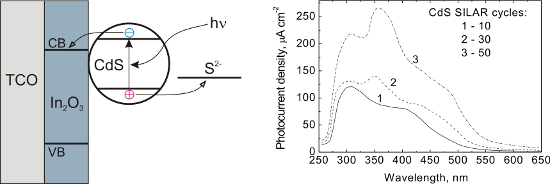
- heterogeneity (Figure 6). As can be seen from Figure 6, the CdS phonon energy decreases with increasing the number of SILAR cycles (i.e., the nanocrystal size). This effect can be explained in the following way: according to wavevector-relaxation [17] and continuum [18][19] models, the decrease of the size of





