


Search results
Search for "high temperature" in Full Text gives 348 result(s) in Beilstein Journal of Nanotechnology. Showing first 200.
Control of morphology and crystallinity of CNTs in flame synthesis with one-dimensional reaction zone
Beilstein J. Nanotechnol. 2023, 14, 741–750, doi:10.3762/bjnano.14.61
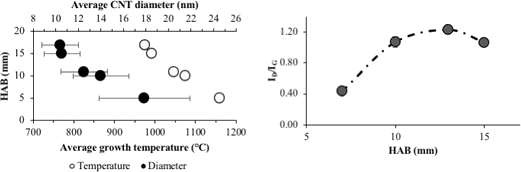
- , such as fuel, catalyst, temperature, and diluent. However, the heterogeneous gas properties during combustion lead to a high temperature gradient and a wide distribution of chemical species within the flame. The interrelated processes of heat generation and carbon supply requires an optimum parametric
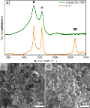
- observed, revealing the agglomeration and sintering of particles during high-temperature growth in the flame. The energy dispersive X-ray (EDX) analysis results in Table 1 indicate a high fraction of nickel. A previous study showed that nickel particles of 5 nm and above can be reactive towards CH4, which
- high-temperature region close to the flame sheet and the border between fuel and oxidizer streams of the burner. Whereas, at higher HAB, the growth region is concentrated at the flame centerline. However, despite the difference in temperature, the morphology and characteristics of the CNTs synthesized


The microstrain-accompanied structural phase transition from h-MoO3 to α-MoO3 investigated by in situ X-ray diffraction
Beilstein J. Nanotechnol. 2023, 14, 692–700, doi:10.3762/bjnano.14.55
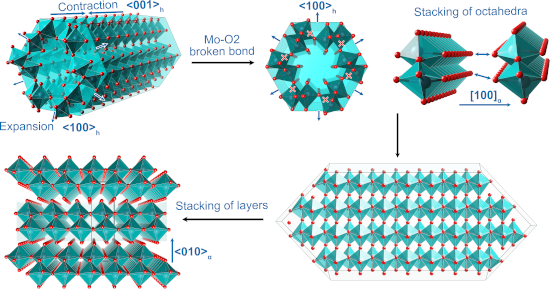
- temperature-induced structural evolution of h-MoO3, finely ground powders were measured using an X-ray diffractometer (Rigaku SmartLab) equipped with a high-temperature holder HTTK600, using Cu Kα radiation (λ = 1.5406 Å). The 2θ range was 5–70°, and the temperature range was 30–450 °C. The scanning rate was


ZnO-decorated SiC@C hybrids with strong electromagnetic absorption
Beilstein J. Nanotechnol. 2023, 14, 565–573, doi:10.3762/bjnano.14.47
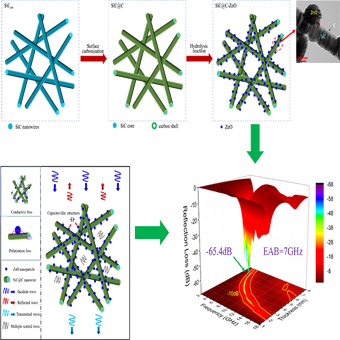
- diversification of working conditions, new electromagnetic (EM) absorbing materials are gradually designed and fabricated to obtain thinner, lighter, wider, and stronger materials than the traditional materials such as carbonyl iron and ferrite [1][2][3][4]. SiC has the advantages of low density, high-temperature


Conjugated photothermal materials and structure design for solar steam generation
Beilstein J. Nanotechnol. 2023, 14, 454–466, doi:10.3762/bjnano.14.36
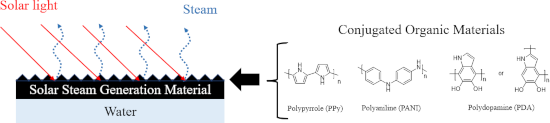
- achieved a high evaporation efficiency even at low solar intensities. Water could be continuously fed to the high-temperature section, and the evaporation rate remained constant after an initial transition period. At all light intensities, evaporation is greater with the evaporator than without the


Molecular nanoarchitectonics: unification of nanotechnology and molecular/materials science
Beilstein J. Nanotechnol. 2023, 14, 434–453, doi:10.3762/bjnano.14.35
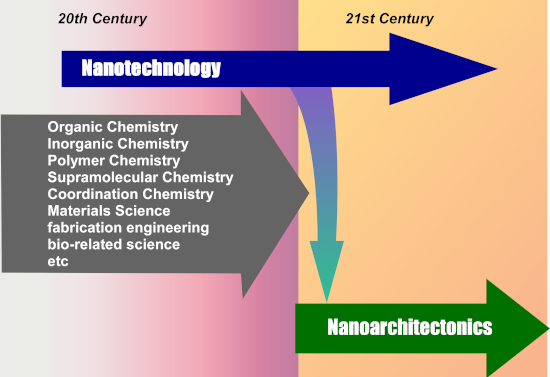
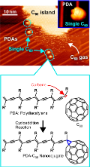
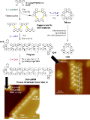
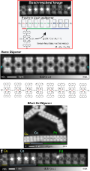
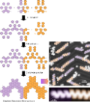
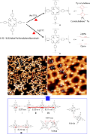
- oligomers at 210 °C, elongated one-dimensional structures were formed, ranging in length from a few nanometers to several tens of nanometers. They still have CF3 groups at both ends. The CF3 groups undergo coupling reactions at high temperature only in case of sufficiently close approaches of the reactants





Plasmonic nanotechnology for photothermal applications – an evaluation
Beilstein J. Nanotechnol. 2023, 14, 380–419, doi:10.3762/bjnano.14.33
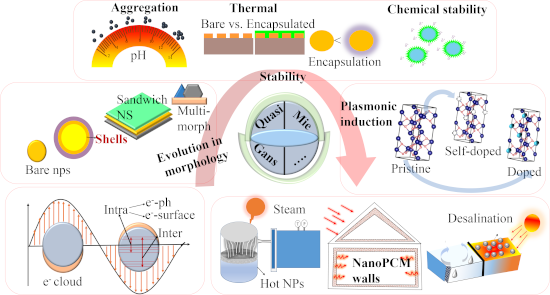
- , homogeneity, dimer formation, and placement, make them very interesting for multiple applications such as communication, hot-carrier enhanced catalysis, high-temperature sensing [61], and electronics applications such as transistors. Their extinction coefficient is often calculated using Gans theory for




A novel approach to pulsed laser deposition of platinum catalyst on carbon particles for use in polymer electrolyte membrane fuel cells
Beilstein J. Nanotechnol. 2023, 14, 190–204, doi:10.3762/bjnano.14.19
- (absolute) pressure in an argon atmosphere. After thermal ignition, a mixture of magnesium and calcium formate powders (mixed with a 6:1 molar ratio) reacted vigorously in a self-propagating high-temperature regime, giving rise to MgO/CaO and carbon as the main solid-state products. After the reaction, a
- water and acetone, and dried at 80 °C to constant weight. The black carbon product was referred to as a C-11. The research assumed the synthesis and use of a carbon material with a high degree of graphitization as carbon support, which is more resistant to the high-temperature oxidation process in a
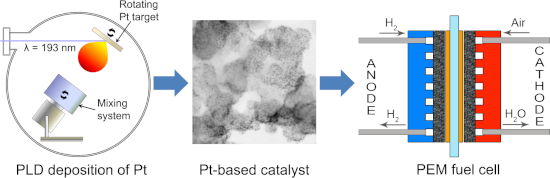
- strong exothermic redox reaction (self-propagating high-temperature synthesis, SHS) between pulverized anhydrous calcium formate and magnesium powder (all reagents purchased from Sigma-Aldrich, United States). Pulsed laser deposition of platinum on the carbon supports The platinum catalyst was deposited



Formation of nanoflowers: Au and Ni silicide cores surrounded by SiOx branches
Beilstein J. Nanotechnol. 2023, 14, 133–140, doi:10.3762/bjnano.14.14
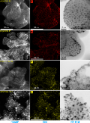
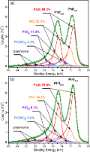
- their heterogeneous distributions in Figure 1e. Similar results of the other two samples are summarized in Supporting Information File 1, Figure S3 and Figure S4. The formation of the circular cavities can be attributed to the decomposition of the SiO2 layer at high temperature in reducing atmosphere
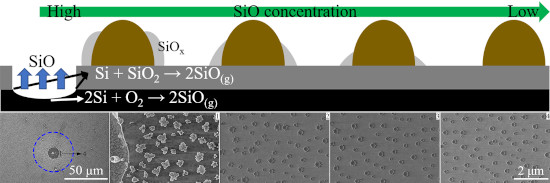
- SiOx NWs have been produced on a SiO2 (300 nm)/Si substrate after a rapid heat treatment. The core particle consists of segregated Ni silicide and Au. A high temperature of 1050 °C can activate the decomposition of SiO2. Together with the subsequent active oxidation of Si, it provides the volatile SiO


Two-step single-reactor synthesis of oleic acid- or undecylenic acid-stabilized magnetic nanoparticles by thermal decomposition
Beilstein J. Nanotechnol. 2023, 14, 11–22, doi:10.3762/bjnano.14.2
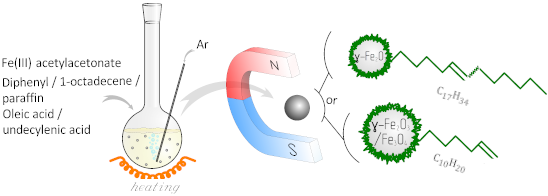
- thickness of the TMU-V particles significantly exceeded the length of the UA molecule (≈1.7 nm), indicating the formation of a multilayer shell. Conclusion The developed method of Fe(III) acetylacetonate high-temperature decomposition in the presence of a higher unsaturated carboxylic acid (OA or UA


Structural studies and selected physical investigations of LiCoO2 obtained by combustion synthesis
Beilstein J. Nanotechnol. 2022, 13, 1473–1482, doi:10.3762/bjnano.13.121
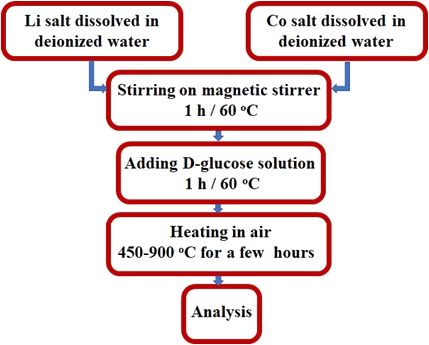
- created by using wet techniques may be controlled with a greater precision than that of a product from a solid-state method. Combustion synthesis (CS), also known as self-propagating high-temperature synthesis (SHS), is a low-cost process for handling a wide variety of industrially relevant materials. CS
- -temperature cubic phase (LT-LCO) and a high-temperature trigonal phase (HT-LCO) [64][65]. In this case, Ni3+ (I) in the axial symmetry could be attributed to the cubic phase, and the non-axial complex Ni3+ (II) would be characteristic of the trigonal phase. If the nickel admixture is equally well incorporated




Straight roads into nowhere – obvious and not-so-obvious biological models for ferrophobic surfaces
Beilstein J. Nanotechnol. 2022, 13, 1345–1360, doi:10.3762/bjnano.13.111
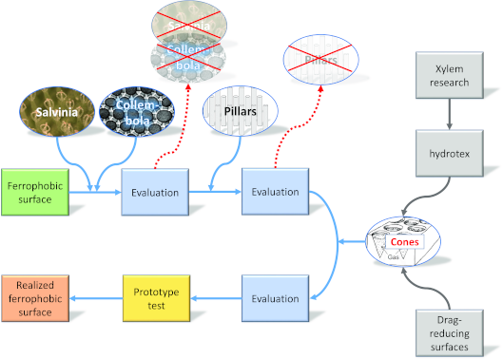
- existence and stability of the gas/liquid interface and of the air pocket it encloses. Figure 5 right (b) and (c) are from [47] and were reprinted by permission from Springer Nature from the journal Journal of Bionic Engineering (“When Lotus Leaves Prevent Metal from Melting – Biomimetic Surfaces for High
- Temperature Applications” by W. Konrad; J. Adam; S. Konietzko; C. Neinhuis), Copyright 2019 Springer Nature. This content is not subject to CC BY 4.0. The two test objects before (a, c) and after (b, d) testing. (a, b) Unmodified copper plate


Enhanced electronic transport properties of Te roll-like nanostructures
Beilstein J. Nanotechnol. 2022, 13, 1284–1291, doi:10.3762/bjnano.13.106
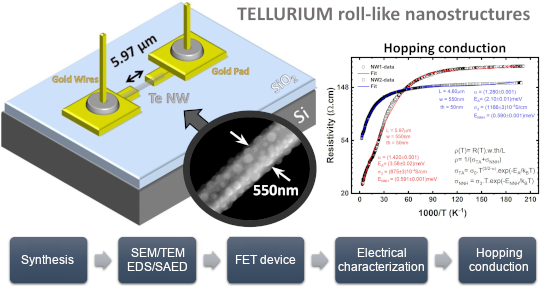
- at high and low temperatures, corresponding to the thermally activated conduction (σTA) of free holes and the nearest-neighbor hopping (NNH, σNNH) [30][31][32][33], respectively. In the high-temperature region, the thermally activated conduction can be expressed as [33]: where µ0 is a constant. Since




Studies of probe tip materials by atomic force microscopy: a review
Beilstein J. Nanotechnol. 2022, 13, 1256–1267, doi:10.3762/bjnano.13.104
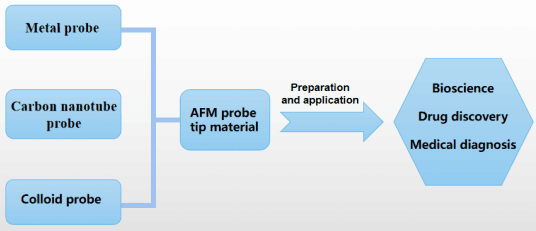
- , including the length, width, and thickness of the colloidal fibers. In addition, high-temperature calcination can increase the interaction force between particles, thus enhancing the mechanical properties of colloidal fibers. Due to the rough surface structure of colloidal fibers, we made them into surface
Design of surface nanostructures for chirality sensing based on quartz crystal microbalance
Beilstein J. Nanotechnol. 2022, 13, 1201–1219, doi:10.3762/bjnano.13.100
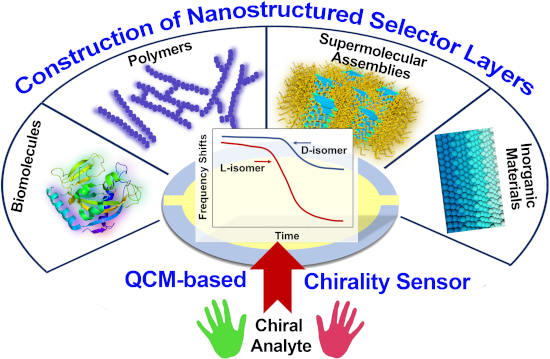
- recognition modes could enable sensing even in a complex environment with harsh conditions, such as high temperature, acidity, or alkalinity [44]. Haupt and Kutner et al. embedded the β-blocker S-propranolol within a poly(trimethylolpropane trimethacrylate-co-methacrylic acid) membrane on the surface of QCM


Solar-light-driven LaFexNi1−xO3 perovskite oxides for photocatalytic Fenton-like reaction to degrade organic pollutants
Beilstein J. Nanotechnol. 2022, 13, 882–895, doi:10.3762/bjnano.13.79
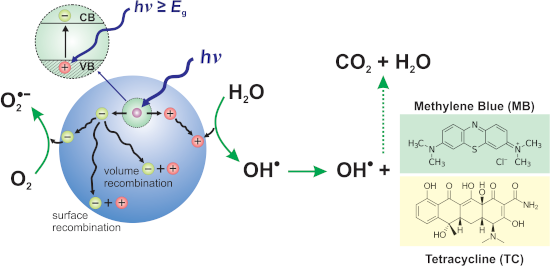
- crystal diameters than LaNiO3, indicating LaFeO3 tended to grow crystal than LaNiO3 at a certain calcination temperature. However, high temperature might cause particle aggregation, leading to the lower surface area. Therefore, a moderate temperature of 700 °C was selected to obtain the perovskite
- (≥98.0%, TC, C22H24N2O8), were provided from Sigma-Aldrich. Commercial tungsten oxide (99.8%, WO3) was bought from Alfa Aesar. Synthesis of LaFexNi1−xO3 The LaFexNi1−xO3 catalysts were synthesized via the sol–gel method with citric acid crosslinking reaction, followed by self-propagating high-temperature
- condensation and polymerization reactions occurred between citric acid and nitrate to chelate metal ions. Subsequently, the gel was formed and transferred to a high-temperature furnace for pre-calcination by self-propagating combustion in an air environment of 300 °C. The combustion duration was 20 min to



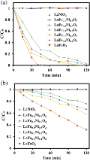
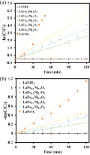
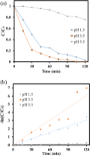
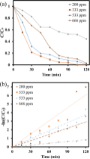
Optimizing PMMA solutions to suppress contamination in the transfer of CVD graphene for batch production
Beilstein J. Nanotechnol. 2022, 13, 796–806, doi:10.3762/bjnano.13.70
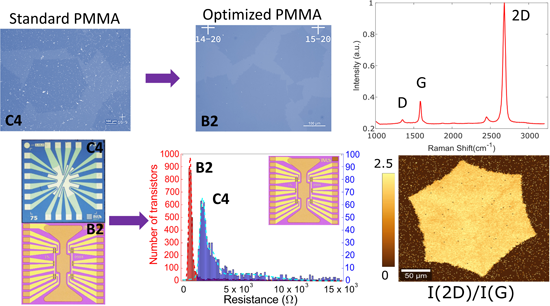
- reliable transfer at a negligible contamination level, even without any post-treatment at high temperature. The supporting layer formed by spin coating presents high mechanical flexibility and strength for the transfer process and appears easy to dissolve afterward. We validated the impact of the optimized




Experimental and theoretical study of field-dependent spin splitting at ferromagnetic insulator–superconductor interfaces
Beilstein J. Nanotechnol. 2022, 13, 682–688, doi:10.3762/bjnano.13.60
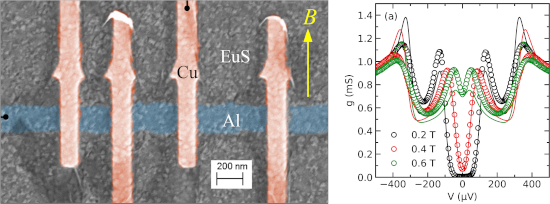
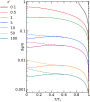
- periodic in δφ and hence the maximum spin mixing is reached at δφ = π). For small ε’ or high temperature, the phase transition is of second order. For larger ε’ and low temperature, the phase transition becomes of first order. In this case, the self-consistency relation becomes multi-valued, and a



Sodium doping in brookite TiO2 enhances its photocatalytic activity
Beilstein J. Nanotechnol. 2022, 13, 599–609, doi:10.3762/bjnano.13.52
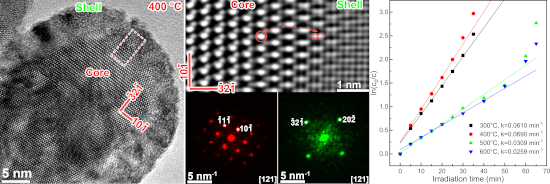
- enhance the photocatalytic activity [33][34]. However, the high temperature can improve the atomic migration rate which makes the atomic arrangement more ordered. In other words, the high temperature relaxes the lattice distortion and smoothen the incomplete structure while weakening the photocatalytic


Ethosomal (−)-epigallocatechin-3-gallate as a novel approach to enhance antioxidant, anti-collagenase and anti-elastase effects
Beilstein J. Nanotechnol. 2022, 13, 491–502, doi:10.3762/bjnano.13.41
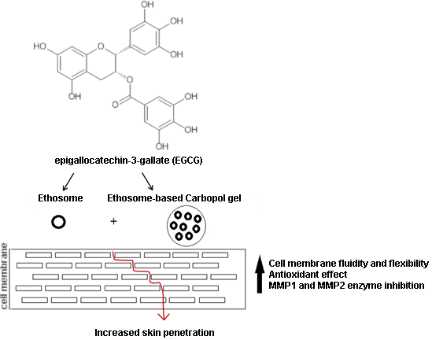
- study conducted by Gwak et al., the effect on the stability of ETHs developed to prevent the degradation of EGCG under different storage conditions was observed. The stability values of the solution and the ethosomal formulation of EGCG upon exposure to UV or high temperature were compared, and it was



Electrostatic pull-in application in flexible devices: A review
Beilstein J. Nanotechnol. 2022, 13, 390–403, doi:10.3762/bjnano.13.32
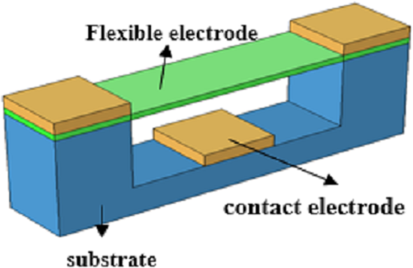
- increasing the electrode gap [54]. Due to the high voltage and the rapid local heating caused by the electrostatic discharge, the burning and melting electrode material will also affect the life cycles of the switch. Using AC voltage can reduce the need for high-temperature resistance of the electrodes. The


A broadband detector based on series YBCO grain boundary Josephson junctions
Beilstein J. Nanotechnol. 2022, 13, 325–333, doi:10.3762/bjnano.13.27
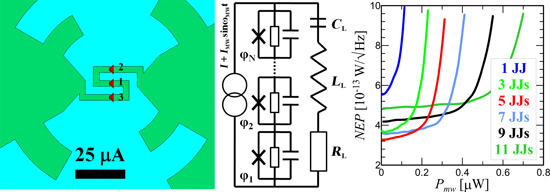
- ; electromagnetic modeling; log-periodic antenna; RCSJ model; series Josephson junctions; YBaCuO Josephson junction; Introduction High-temperature superconducting (HTSC) Josephson junctions (JJs) have great potential as promising materials for creating high-frequency devices, such as microwave generators [1][2



Engineered titania nanomaterials in advanced clinical applications
Beilstein J. Nanotechnol. 2022, 13, 201–218, doi:10.3762/bjnano.13.15
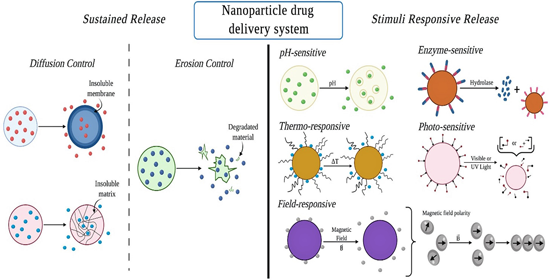
- direct route for both bandgap engineering and photoactivity enhancement. One strategy employed was high-pressure and high-temperature hydrogenation, resulting in reduced “black TiO2” (B-TiO2−x) nps with a crystalline center and a disordered surface that absorbs light in the visible range. Chen et al


Thermal oxidation process on Si(113)-(3 × 2) investigated using high-temperature scanning tunneling microscopy
Beilstein J. Nanotechnol. 2022, 13, 172–181, doi:10.3762/bjnano.13.12
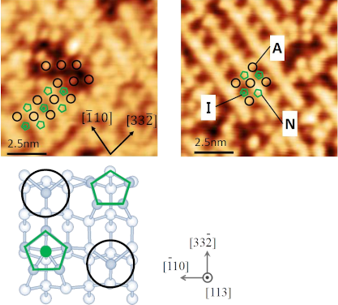
- Institute for Materials Science, 1-1 Namiki, Tsukuba, Ibaraki 305-0044, Japan 10.3762/bjnano.13.12 Abstract Thermal oxidation of Si(113) in a monolayer regime was investigated using high-temperature scanning tunneling microscopy (STM). Dynamic processes during thermal oxidation were examined in three
- chamber with an STM apparatus (JEOL, JSTM-4500XT). The base pressure of the chamber equipped with the STM unit was kept at 5.0 × 10⁻⁹ Pa. For the high-temperature measurements, in order to make the temperature of the tip close to that of the sample, the STM tip was moved close (100 μm) to the sample and




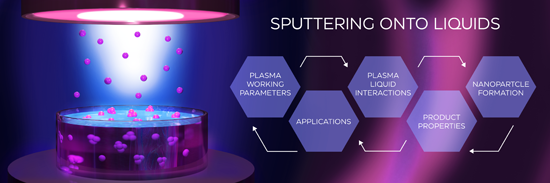
Sputtering onto liquids: a critical review
Beilstein J. Nanotechnol. 2022, 13, 10–53, doi:10.3762/bjnano.13.2






Design aspects of Bi2Sr2CaCu2O8+δ THz sources: optimization of thermal and radiative properties
Beilstein J. Nanotechnol. 2021, 12, 1392–1403, doi:10.3762/bjnano.12.103
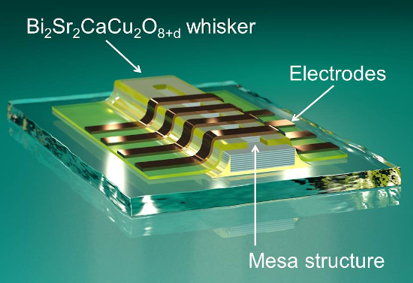
- sources. In this work we analyze thermal and radiative properties of such devices based on mesa structures of a layered high-temperature superconductor Bi2Sr2CaCu2O8+δ. Two types of devices are considered containing either a conventional large single crystal or a whisker. We perform numerical simulations
- facilitating good impedance matching. This leads to more than an order of magnitude enhancement of the radiation power efficiency in whisker-based, compared to crystal-based, devices. These results are in good agreement with presented experimental data. Keywords: high-temperature superconductivity; Josephson
- at significantly lower primary frequencies [4][5][6]. Although room temperature operation of QCLs at low frequencies can be achieved via mixing and down conversion of higher primary frequencies, this comes at the expense of dramatic reduction of RPE [2][3][5][7][8]. The layered high-temperature





