


Search results
Search for "image" in Full Text gives 1504 result(s) in Beilstein Journal of Nanotechnology. Showing first 200.
Bioinspired polypropylene-based functionally graded materials and metamaterials modeling the mistletoe–host interface
Beilstein J. Nanotechnol. 2025, 16, 1592–1606, doi:10.3762/bjnano.16.113
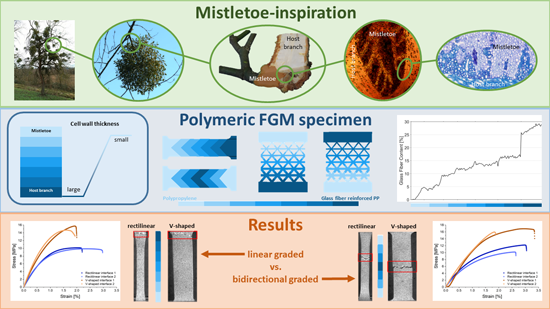
- showed that both Young’s modulus (by 38%) and ultimate tensile strength (by 62%) could be increased by introducing V-shaped interfaces. Digital image correlation analysis and the fracture images showed that the positioning of the area with the highest glass fiber content can lead to spatial control over
- with the host branch and provide a framework for creating bioinspired functionally graded material systems with programmable local strain and failure behavior. Keywords: bioinspiration; digital image correlation; fiber-reinforced polypropylene; materials interface; programmable failure; Introduction
- SkyScan 1272 CT scanner together with SkyScan software (version 1.1.10, both Bruker Corporation, Billerica, MA, United States). Data were reconstructed using NRecon software (version 1.6.10.1, Micro Photonics Inc., Allentown, PA, United States). Image processing was performed using the image processing


Photocatalytic degradation of ofloxacin in water assisted by TiO2 nanowires on carbon cloth: contributions of H2O2 addition and substrate absorbability
Beilstein J. Nanotechnol. 2025, 16, 1567–1579, doi:10.3762/bjnano.16.111
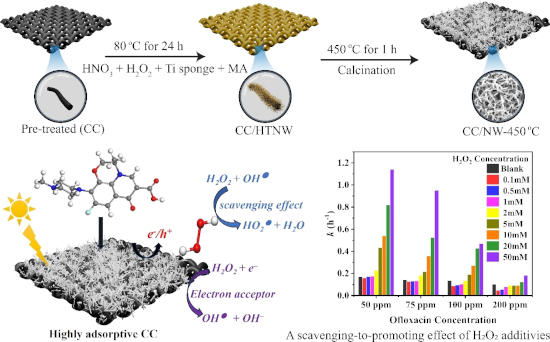
- nanowires. The corresponding selected-area electron diffraction (SAED) pattern reveals clear diffraction rings attributable to anatase and minor brookite TiO2 phases. Additionally, the HRTEM image (Figure 1f) shows well-defined lattice fringes with a spacing of approximately 0.35 nm, which corresponds to


Influence of laser beam profile on morphology and optical properties of silicon nanoparticles formed by laser ablation in liquid
Beilstein J. Nanotechnol. 2025, 16, 1533–1544, doi:10.3762/bjnano.16.108
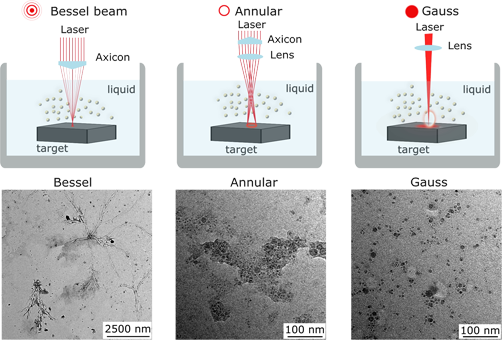
- magnified image of the area exposed to irradiation from the outer rings (Supporting Information File 1, Figure S5c) shows individual twisted nanofilaments. This observation confirms the participation of the outer rings in nanofilament formation and proves melting of the target by the outer rings. In


Laser processing in liquids: insights into nanocolloid generation and thin film integration for energy, photonic, and sensing applications
Beilstein J. Nanotechnol. 2025, 16, 1428–1498, doi:10.3762/bjnano.16.104
- morphological features [118][119]. A 3D AFM image of ZnO NPs drop-cast on a glass substrate is shown in Figure 11b, revealing the surface morphology. Their photodetection and photovoltaic properties are discussed in the later sections of this review. Research articles provide limited information on the






Photochemical synthesis of silver nanoprisms via green LED irradiation and evaluation of SERS activity
Beilstein J. Nanotechnol. 2025, 16, 1417–1427, doi:10.3762/bjnano.16.103
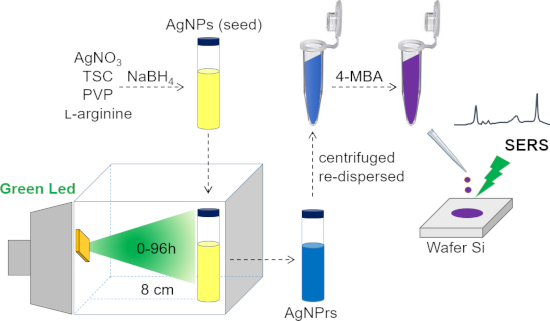
- spectra of the AgNPs seed shown in the Figure 1a displayed a single peak at 400 nm, indicating the presence of spherical silver nanoparticles with small sizes, consistent with studies in the literature [4][6][7]. The sample exhibited the characteristic yellow color of AgNPs. The TEM image and size
- performed (HORIBA XploRA ONE TM, France) using a 532 nm laser source and a 10× magnification microscope. Measurements were taken at ten random positions, and the average intensity was recorded. (a) UV–vis spectrum, (b) TEM image and (c) size distribution of seeds. UV–vis spectra of silver nanoparticles at


Parylene-coated platinum nanowire electrodes for biomolecular sensing applications
Beilstein J. Nanotechnol. 2025, 16, 1392–1400, doi:10.3762/bjnano.16.101
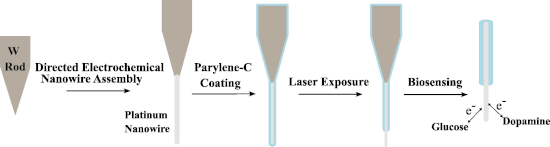
- complete as intended and these electrodes were discarded. A thin layer of copper deposition on the exposed platinum nanowire tip was further examined using SEM imaging and energy-dispersive X-ray spectroscopy (EDS) elemental composition analysis. Figure 2b presents an SEM image of the copper-coated
- 5a, an upright microscope was tilted 90° and placed on its side for vertical nanowire growth. Horizontal nanowire growth with the DENA method results in an angle between the nanowire and the tungsten rod, which is not ideal for this nanoscale electrode application. Figure 5b shows a close-up image of
- nanowire coated with parylene-C polymer, and (d) a laser-exposed platinum electrode. Scale bars are 10 μm. (a) Optical image of electrochemically deposited copper nodule on platinum nanowire tip. Scale bar is 10 μm. (b) SEM image of the deposited thin copper layer on the platinum nanowire tip of an


Synthesis and antibacterial properties of nanosilver-modified cellulose triacetate membranes for seawater desalination
Beilstein J. Nanotechnol. 2025, 16, 1380–1391, doi:10.3762/bjnano.16.100

- potential presence of oxidizing agents in brackish water can lead to the breakdown of the PDA matrix. The cross-sectional SEM image shows that the PDA layer remains present on the surface of the Ag@PCTA membrane, with a relatively dense structure (Figure 4h). High-magnification views clearly depict the PDA


Automated collection and categorisation of STM images and STS spectra with and without machine learning
Beilstein J. Nanotechnol. 2025, 16, 1367–1379, doi:10.3762/bjnano.16.99
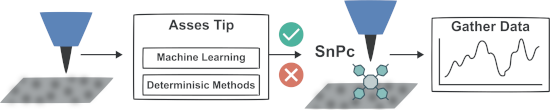
- accomplished via assessment of the imaging quality on the target molecule and also the characteristics of the scanning tunnelling spectra (STS) on clean metal surfaces. Critically for spectroscopic experiments, assessment of the spatial resolution of the image is not sufficient to ensure a high-quality tip for
- . This schema achieved final precision in classification of 84% and a recall of 74%. Similarly to image classification in scanning probe microscopy (SPM) [16][17][18], the availability of such a large amount of data for training is usually very low, making ML-based classifiers troublesome to train. In
- number of STS measurements can be obtained over various molecules automatically with optimised tips and the quality of the spectra and image assessed automatically. Methods Experimental details We used a third-generation commercial low-temperature (LT) STM NC-AFM instrument (Scienta Omicron GmbH), which




Ferroptosis induction by engineered liposomes for enhanced tumor therapy
Beilstein J. Nanotechnol. 2025, 16, 1325–1349, doi:10.3762/bjnano.16.97
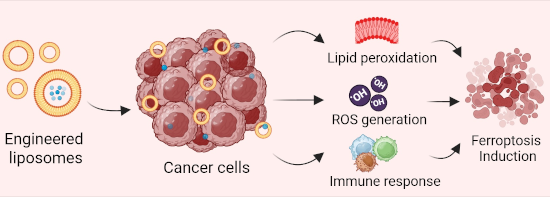
- light scattering (DLS) is commonly used to determine liposome size and size distribution. Transmission electron microscopy (TEM) and atomic force microscopy (AFM) can be used to image liposome morphology and determine lamellarity. Zeta potential measurements assess the surface charge of liposomes, which


Deep-learning recognition and tracking of individual nanotubes in low-contrast microscopy videos
Beilstein J. Nanotechnol. 2025, 16, 1316–1324, doi:10.3762/bjnano.16.96
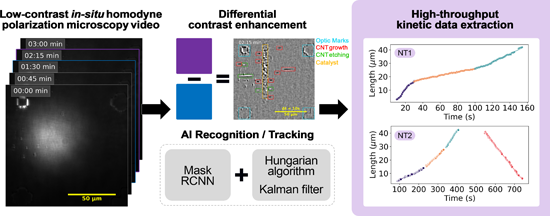
- filtering, and object edge contrast was enhanced using Gaussian difference filtering. Finally, image contrast was optimized through histogram equalization [10]. Deep learning model The deep learning model and its training are detailed in Supporting Information File 1. In short, an image recognition system
- 1). This approach, which is a variation of the shade correction commonly used in image processing, involves subtracting a background snapshot containing the illumination profile from the image [18][19]. Typically, the first frame (Figure 1a, left image) of a sequence is used as the background
- networks in a single pipeline (Figure 2). The image is first processed by the backbone network to produce a feature map. Region of interest (ROI) proposal and prediction networks then localize boundary boxes of the objects and classify them. Finally, a fully connected convolutional network generates a


Wavelength-dependent correlation of LIPSS periodicity and laser penetration depth in stainless steel
Beilstein J. Nanotechnol. 2025, 16, 1302–1315, doi:10.3762/bjnano.16.95
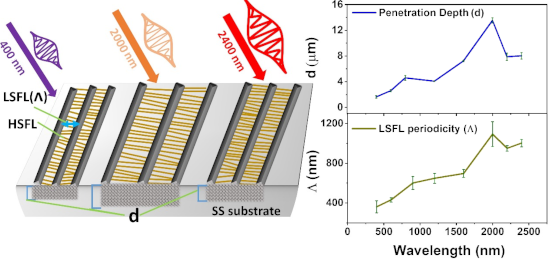
- periodic surface structures (LIPSS). Critical components of this setup include the femtosecond laser, optical parametric amplifier (OPA), ND variable filter (VF), mirrors (M), three-axis stages (3D stages), and a convex lens (L) employed to focus the laser beam onto the surface precisely. The inset image
- incident power at a wavelength of 800 nm. (a) 20 mW, (b) 150 mW, and (c) 300 mW. Showing the EDS elemental analysis for laser-treated and untreated stainless steel surface. (a) SEM image of laser-treated SS substrate, we picked three areas whose EDS spectra are shown in b, c, and d. (e) SEM image of bare




Better together: biomimetic nanomedicines for high performance tumor therapy
Beilstein J. Nanotechnol. 2025, 16, 1246–1276, doi:10.3762/bjnano.16.92


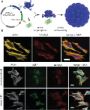



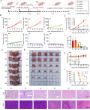

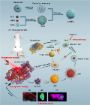

Functional bio-packaging enhanced with nanocellulose from rice straw and cinnamon essential oil Pickering emulsion for fruit preservation
Beilstein J. Nanotechnol. 2025, 16, 1234–1245, doi:10.3762/bjnano.16.91
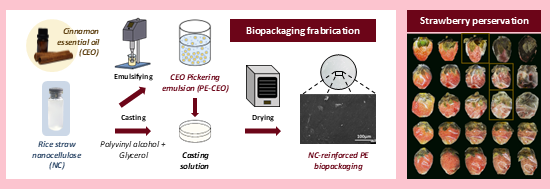
- suspension has a size of around 20–30 nm and a length below 300 nm, and size increase due to structural collapse would be seen upon drying [24][46]. A SEM image of the nanocellulose sample is given in Figure 3a. After freeze-drying, some coagulation occurred, increasing the size of the sample to reach ≈4 µm



Mechanical stability of individual bacterial cells under different osmotic pressure conditions: a nanoindentation study of Pseudomonas aeruginosa
Beilstein J. Nanotechnol. 2025, 16, 1171–1183, doi:10.3762/bjnano.16.86
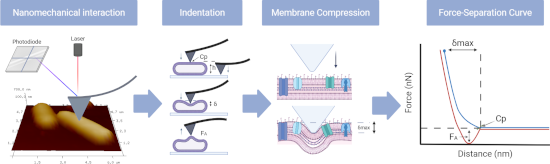
- force–separation curve analyzed in real time by the software. A color-coded map is obtained according to the physical parameters extracted from the curve, as shown in Figure 1B,C. Figure 2 shows an FV image of the topography or height channel for several individual PA bacteria on the substrate. An
- , maximal deformation, and adhesion force. Created in BioRender. García-torres, L. (2025) https://BioRender.com/zpchrmj. This content is not subject to CC BY 4.0. Mapping living bacteria with force–volume AFM. A) 2D height image of Pseudomonas aeruginosa obtained in FV mode where pixels indicating the
- location of single nanoindentations can be easily discerned. B) Cross-section profiles taken from both main axes of the bacteria shown in A) with dashed lines for length (blue) and width (red). C) 3D reconstruction of the image shown in A) shows how FV can also accurately represent the topography of the


Transfer function of an asymmetric superconducting Gauss neuron
Beilstein J. Nanotechnol. 2025, 16, 1160–1170, doi:10.3762/bjnano.16.85
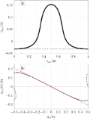
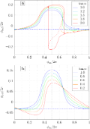
- , prediction, pattern recognition, and image and video generation. The increasing number of tasks and the growing volume of processed information highlight the relevance of using superconducting elements, which offer the advantages of high clock frequency and energy efficiency [1][2]. Studies [3][4][5][6



Deep learning for enhancement of low-resolution and noisy scanning probe microscopy images
Beilstein J. Nanotechnol. 2025, 16, 1129–1140, doi:10.3762/bjnano.16.83
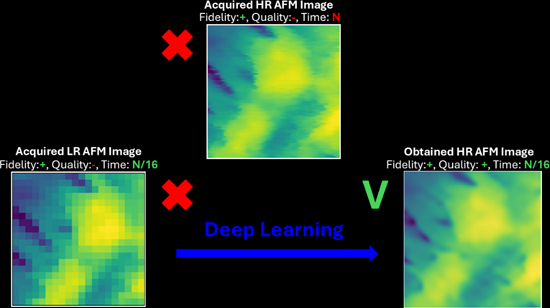
- minutes are typically required for each scan. Second, AFM scans can contain inherent artifacts in the captured image due to the operating system settings or the sample and its interaction with the tip. In principle, tip–surface contact should be carefully controlled to avoid damage due to these
- interactions. Scanning distortions due to non-linearities in the scan are also trickier to correct and harder to avoid in fast scanning. Some of these artifacts can be eliminated or attenuated by image processing techniques [4][5][6][7][8][9][10][11][12]. Another resolution-limiting factor in AFM is the tip
- to map the surface to scales below the measured image feature size by “erosion” [14]. It is also important to note that recently machine-learning based methods have been applied to blind reconstruction to reconstruct true surface images from AFM images experimentally broadened by the tip [15


Towards a quantitative theory for transmission X-ray microscopy
Beilstein J. Nanotechnol. 2025, 16, 1113–1128, doi:10.3762/bjnano.16.82
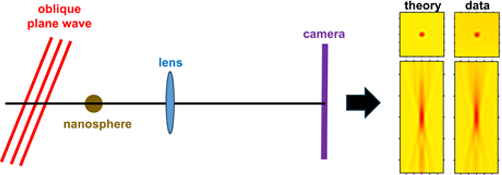
- TXM image. The qualitative agreement improves if we incorporate a small tilt into the condenser illumination relative to the optical axis, implying a small misalignment in the microscope. Finally, in quantitative comparisons, we show that the model predicts the nanosphere’s expected absorption as
- the microscope’s image-formation process, and for the improvement of 3D tomographic reconstruction procedures [13][14][15][16], which are used to produce 3D volumes from a 2D tilt series of TXM images. Over the past three decades, models for soft TXMs have grown increasingly sophisticated [17][18][19
- combination of the ellipsoidal mirror and central stop produces illumination of the sample (Figure 1a) over an angular range of 0.83–1.18°. The final size of the ellipsoidal mirror’s focused spot (≈2.7 μm × 0.7 μm) is smaller than most samples, and therefore to generate an image of the sample, the focused



Influence of ion beam current on the structural, optical, and mechanical properties of TiO2 coatings: ion beam-assisted vs conventional electron beam evaporation
Beilstein J. Nanotechnol. 2025, 16, 1097–1112, doi:10.3762/bjnano.16.81
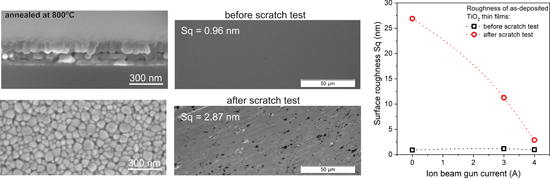
- morphology. After thermal modification, the surface morphology of the prepared coatings without additional ion bombardment showed very large grains with an average size of approximately 100 nm, which formed agglomerates with visible voids between them (Figure 3 A). Additionally, the cross-section image
- the cross-section morphology of the titanium dioxide coating deposited with Iibg = 3 A (Figure 3b), changing its fibrous structure to a coarse-grained one. The width of these elongated grains ranged from 60 to 120 nm. Contrary to this, the cross-section image (Figure 3c) of the TiO2 coating deposited
- coating, as the grains tend to grow due to recrystallization and diffusion processes, leading to changes in density and structure. The formation of a double-layer coating, as observed in the cross-section scanning electron microscopy image (inset in Figure 4c) of the annealed TiO2 coating deposited with




Single-layer graphene oxide film grown on α-Al2O3(0001) for use as an adsorbent
Beilstein J. Nanotechnol. 2025, 16, 1082–1087, doi:10.3762/bjnano.16.79
- Figure 1 shows an atomic force microscopy (AFM) image of SLG and SLGO on α-Al2O3(0001) substrates. The as-grown SLG film has an atomically flat surface and wrinkles with its height less than 0.4 nm [18]. The single layer of graphene was confirmed through X-ray photoelectron spectroscopy (XPS) peak


Piezoelectricity of hexagonal boron nitrides improves bone tissue generation as tested on osteoblasts
Beilstein J. Nanotechnol. 2025, 16, 1068–1081, doi:10.3762/bjnano.16.78
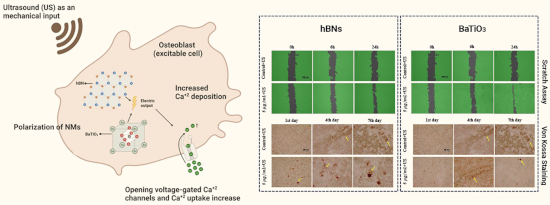
- inverted light microscope to observe the scratch closure (cellular migration). These images were analyzed using the Wound Healing Image Analysis Platform (Wimasis) and the ImageJ software, and the percent scratch closure was calculated. Von Kossa staining assay To estimate the influence of NMs and US
- amplitude and PRFM phase images of hBNs. The amplitude image presents the strength of hBNs piezoelectric response, which was recorded as 2 mV. This acquired amplitude response measures the effective piezoelectric coefficient, which can be correlated with the polarization magnitude. The observed PRFM
- higher than the piezoelectric response of hBNs, as expected due to the perovskite ceramic structure of BaTiO3 [56]. The phase contrast image also revealed a polarization magnitude of 300°, indicating the presence of spontaneous electrical polarization in BaTiO3 after stimulation. In vitro cell


Soft materials nanoarchitectonics: liquid crystals, polymers, gels, biomaterials, and others
Beilstein J. Nanotechnol. 2025, 16, 1025–1067, doi:10.3762/bjnano.16.77
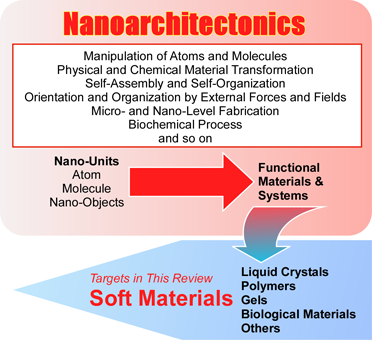






Time-resolved probing of laser-induced nanostructuring processes in liquids
Beilstein J. Nanotechnol. 2025, 16, 968–1002, doi:10.3762/bjnano.16.74
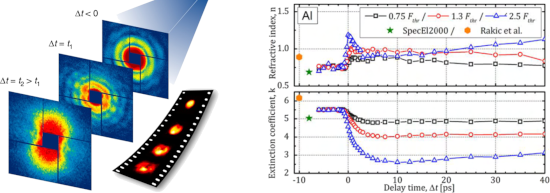
- -retrieved to image the specimen, revealing strained lattice deformations along the direction parallel to the Bragg reflection. Whilst this Bragg CDI offers exceptional sensitivity to lattice strain fields formed over the whole specimen, its imaging capability relies on successfully collecting a complete 3D
- must be structurally (morphologically) identical to the extent dictated by the image resolution. This condition is practically achievable due to remarkable advancements in monodisperse NP synthesis. Each single-pulse coherent diffraction pattern is collected from a new, fresh specimen with completely
- ]. Light scattering becomes relevant if the structures exceed a size of a fraction of the wavelength [126][127][128]. Figure 8A shows several schemes of exciting NPs by focused laser beams for excitation and probing. Both coaxially and side illumination allow to image the scattering emitted from induced


Shape, membrane morphology, and morphodynamic response of metabolically active human mitochondria revealed by scanning ion conductance microscopy
Beilstein J. Nanotechnol. 2025, 16, 951–967, doi:10.3762/bjnano.16.73
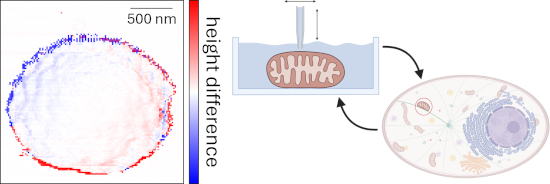
- processes and warrants further investigation. Scanning probe microscopy (SPM) methods, such as atomic force microscopy (AFM), have been employed to image mitochondria in liquid, showing features of both the inner and outer membrane [22][23][24]. However, AFM measurements are influenced by the cantilever
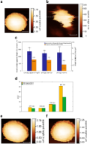
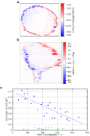
- small and primarily influenced by instrumental factors. Furthermore, its time-dependent behaviour should resemble that of metabolically inactive objects. This hypothesis is validated in the subsequent analysis. Figure 6a shows a difference image of a fixed mitochondrion and Figure 6b the TEV as a
- resolution ranged from 128 × 128 pixels to a maximum of 1024 × 1024 pixels, with scan ranges varying from 0.25 μm2 to 100 μm2. Each image line in the fast scan direction was scanned in both forward and backward directions, producing two images per measurement, that is, one forward and one backward scan. The



Tendency in tip polarity changes in non-contact atomic force microscopy imaging on a fluorite surface
Beilstein J. Nanotechnol. 2025, 16, 944–950, doi:10.3762/bjnano.16.72
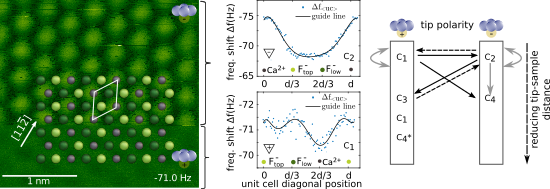
- reverse direction of presented cases. The contrast modes C4 or C4* are cyclic members of the same contrast mode, as introduced in [10]. Consequently, the assignment of NC-AFM image data to these contrasts modes requires the acquisition of systematic distance-dependent measurements [10]. Without such
- acquiring data in the constant height mode, we invert Δf images so that a steeper force gradient appears as a brighter feature corresponding to an elevation in an image of the same feature taken in the constant frequency shift (topography) mode. Arrows in the upper right corner of Δf images represent the
- ) reconstructed unit cell from STM imaging [33]. With the surface orientation established, the sublattices can be identified through a distance-dependent analysis of NC-AFM images [10], and corresponding model drawings of the CaF2(111) surface geometry are superimposed on the image data. To improve the signal-to


Synthesis of biowaste-derived carbon-dot-mediated silver nanoparticles and the evaluation of electrochemical properties for supercapacitor electrodes
Beilstein J. Nanotechnol. 2025, 16, 933–943, doi:10.3762/bjnano.16.71
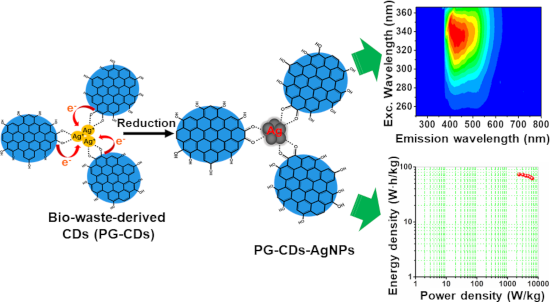
- storage. The size distribution, morphology, and crystallinity of PG-CDs-AgNPs were further characterized by SEM and TEM analysis. The SEM image of PG-CDs-AgNPs (Supporting Information File 1, Figure S2a) reveals that PG-CDs-AgNPs possess spherical and distorted spherical structure. Supporting Information
- -CDs-AgNPs proves the existence of O, C, and Ag (Supporting Information File 1, Figure S2c–e). Figure 4a–c displays TEM images of PG-CDs-AgNPs with different scale bars exhibiting that the particles are spherical and uniformly distributed. Figure 4d is the HR-TEM image of PG-CDs-AgNPs, exhibiting a
- crystalline nature. The ring-like diffraction suggests the (111) plane. The symmetry in the diffraction spots indicates that the spherical particles possess a high degree of crystallinity. Thus, both the SAED pattern and HRTEM image suggest that the synthesized spherical PG-CDs-AgNPs are nanocrystals





