


Search results
Search for "impedance" in Full Text gives 197 result(s) in Beilstein Journal of Nanotechnology.
A nonenzymatic reduced graphene oxide-based nanosensor for parathion
Beilstein J. Nanotechnol. 2022, 13, 730–744, doi:10.3762/bjnano.13.65
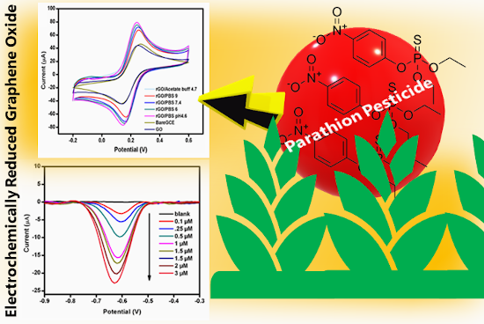
- Technologies, USA), which was connected by a three-electrode system, including a modified and/or unmodified GCE as the working electrode, a saturated Ag/AgCl as the reference electrode (RE), and a platinum wire as the counter electrode (CE). The electrochemical impedance spectroscopy (EIS) study of the
- indicates that the effective electroactive surface area of ERGO has been improved by ≈71.14% due to exfoliation of graphene sheets. Electrochemical impedance spectroscopy was performed to investigate the electron transfer capability of ERGO (Figure 4B). Supporting Information File 1, Table S3 depicts the
- values of charge-transfer resistance (Rct), capacitance (Cdl), and Warburg impedance (W) of bare GCE, GO/GCE, and ERGO/GCE. The Nyquist plot of the bare GCE electrode depicts a semicircle with Rct of 4.692 Ω. A nearly straight line for ERGO with a negligible Rct (1.618 Ω) value suggests opened porous


Reliable fabrication of transparent conducting films by cascade centrifugation and Langmuir–Blodgett deposition of electrochemically exfoliated graphene
Beilstein J. Nanotechnol. 2022, 13, 666–674, doi:10.3762/bjnano.13.58
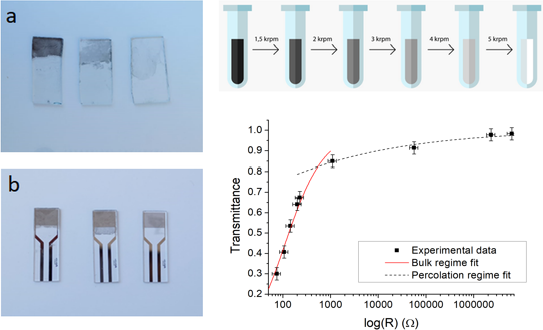
- sheet resistance RS obey the following equation: where Z0 is the impedance of free space, σop is the optical conductivity, and σdc,B is the bulk dc conductivity of the film. For film thicknesses below the percolation threshold, the transmittance and sheet resistance obey the following equation: where Π


Influence of thickness and morphology of MoS2 on the performance of counter electrodes in dye-sensitized solar cells
Beilstein J. Nanotechnol. 2022, 13, 528–537, doi:10.3762/bjnano.13.44
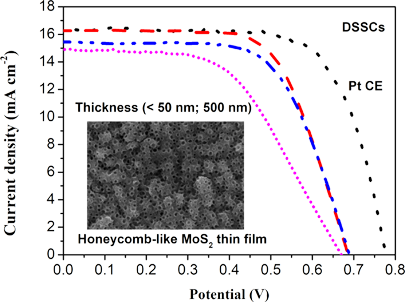
- -Newport-USA, Model No. 94061A). Simulated sunlight of 100 mW·cm−2 (1 sun) was generated and corrected by a 1000 W Xe lamp and an AM 1.5 filter. The photocurrent density–voltage (J–V) curves of the DSSCs were measured using a Keithley model 2400 multisource meter. Electrochemical impedance spectroscopy


The role of sulfonate groups and hydrogen bonding in the proton conductivity of two coordination networks
Beilstein J. Nanotechnol. 2022, 13, 437–443, doi:10.3762/bjnano.13.36
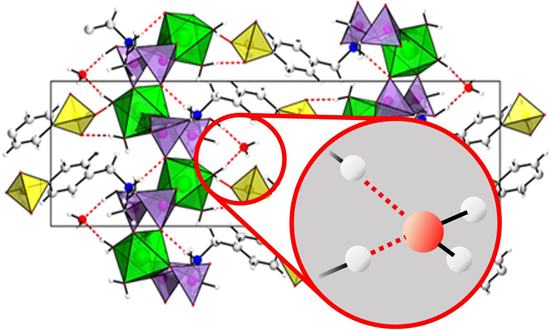
- , Germany 10.3762/bjnano.13.36 Abstract The proton conductivity of two coordination networks, [Mg(H2O)2(H3L)]·H2O and [Pb2(HL)]·H2O (H5L = (H2O3PCH2)2-NCH2-C6H4-SO3H), is investigated by AC impedance spectroscopy. Both materials contain the same phosphonato-sulfonate linker molecule, but have clearly
- the Pb-based metal-organic framework, in contrast, no extended hydrogen bonding occurs, as the sulfonate groups coordinate to Pb2+, without forming hydrogen bonds; the proton conductivity is much lower in this material. Keywords: coordination network; coordination polymer; impedance spectroscopy
- . Crystallographic and experimental details, as well as an extended structure discussion is provided in [17]. The proton conductivity of [Mg(H2O)2(H3L)]·H2O (in the following: Mg-CP) and [Pb2(HL)]·H2O (in the following: Pb-MOF) was investigated by AC impedance analysis [19][20]. For this purpose, the materials were


A non-enzymatic electrochemical hydrogen peroxide sensor based on copper oxide nanostructures
Beilstein J. Nanotechnol. 2022, 13, 424–436, doi:10.3762/bjnano.13.35
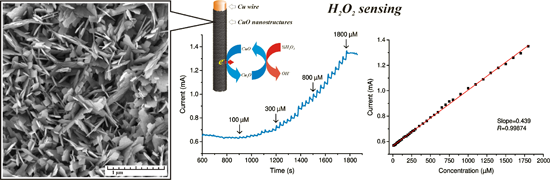
- following sections show the averaged data from all measurements. To determine the optimal scanning parameters that provide the maximum sensitivity of the sensor, the dependence of the electrochemical response on the pH of the buffer solution and on the scanning speed was studied. Impedance spectroscopy was




Electrostatic pull-in application in flexible devices: A review
Beilstein J. Nanotechnol. 2022, 13, 390–403, doi:10.3762/bjnano.13.32
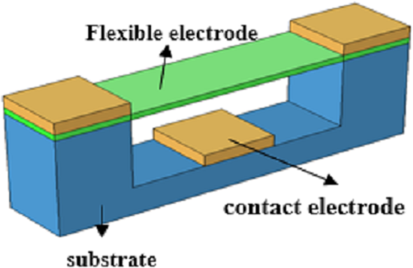
- a GR-NEM switching load. The GR-NEM switching load can affect the characteristic impedance of the transmission line, thus controlling the speed and generating a phase shift. A typical phase shifter structure is shown in Figure 6. Dragoman et al. [57] first used a GR switch in a RF system. They


Selected properties of AlxZnyO thin films prepared by reactive pulsed magnetron sputtering using a two-element Zn/Al target
Beilstein J. Nanotechnol. 2022, 13, 344–354, doi:10.3762/bjnano.13.29
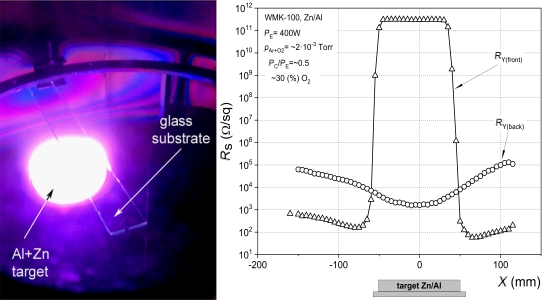
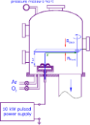
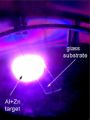
- impedance, the supply output voltage varies to keep the sinusoidal shape of the magnetron current. Since the power supply operates in a pulsed manner (100 kHz), the average output power is controlled via pulse quantity modulation with a gating period of about 1 ms. The target–substrate distance was dS–T


A broadband detector based on series YBCO grain boundary Josephson junctions
Beilstein J. Nanotechnol. 2022, 13, 325–333, doi:10.3762/bjnano.13.27
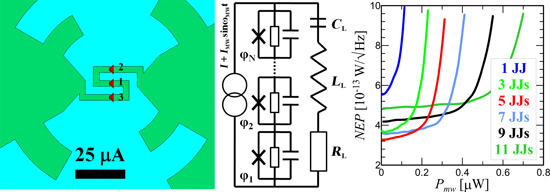
- applications the performance of the HTSC devices is limited by the fairly low impedance of the JJ. It leads to moderate conversion efficiency in Josephson mixers [15][16] and reduced absorbed power in JJ detectors [17]. One possible way to solve this problem is to replace a single JJ by a chain or an array of
- calculated for the case that a plane wave was incident on the structure through the lens. In the second method, the full matrix of the antenna input impedance Z was calculated for all ports in the emission regime. The first calculation method is well applicable for low frequencies, while for high frequencies
- results with acceptable accuracy. Figure 1 shows a complete modeling system with lens (Figure 1d) and calculated beam pattern at 250 GHz (Figure 1e). The obtained values of 15.7 dBi main lobe magnitude with 15° angular width demonstrate good receiving characteristics. A port with an impedance of 5 Ω was



Tin dioxide nanomaterial-based photocatalysts for nitrogen oxide oxidation: a review
Beilstein J. Nanotechnol. 2022, 13, 96–113, doi:10.3762/bjnano.13.7
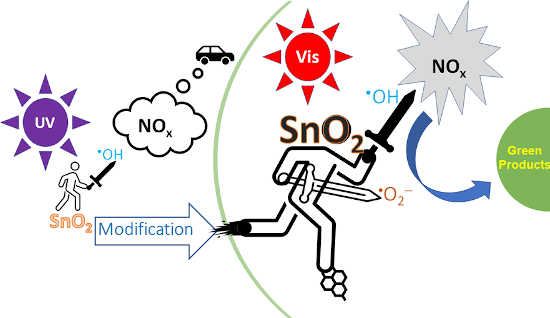
- extending the light harvesting range and promoting the separation of photogenerated electrons. A considerable amount of reactive oxygen radicals was produced during the photocatalytic reaction, resulting from the large amount of free surface OH groups. PL, photocurrent response, electrochemical impedance


Design aspects of Bi2Sr2CaCu2O8+δ THz sources: optimization of thermal and radiative properties
Beilstein J. Nanotechnol. 2021, 12, 1392–1403, doi:10.3762/bjnano.12.103
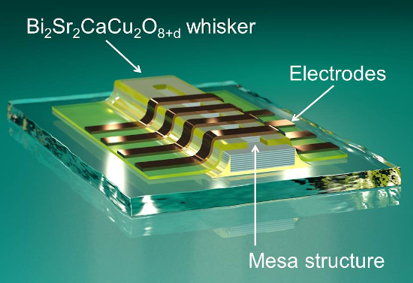
- Center, SE-10691 Stockholm, Sweden Institute of Metal Physics of National Academy of Sciences of Ukraine, 03142 Kyiv, Ukraine Kyiv Academic University, 03142 Kyiv, Ukraine 10.3762/bjnano.12.103 Abstract Impedance matching and heat management are important factors influencing the performance of terahertz
- crystal and the electrode leads to appearance of a large parasitic capacitance, which shunts terahertz emission and prevents impedance matching with open space. The overlap is avoided in whisker-based devices. Furthermore, the whisker and the electrodes form a turnstile (crossed-dipole) antenna
- facilitating good impedance matching. This leads to more than an order of magnitude enhancement of the radiation power efficiency in whisker-based, compared to crystal-based, devices. These results are in good agreement with presented experimental data. Keywords: high-temperature superconductivity; Josephson


Electrical, electrochemical and structural studies of a chlorine-derived ionic liquid-based polymer gel electrolyte
Beilstein J. Nanotechnol. 2021, 12, 1252–1261, doi:10.3762/bjnano.12.92
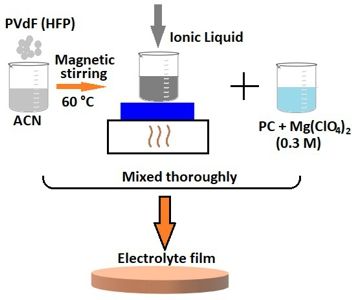
- polymer system. Along with the ionic liquid, magnesium salt was also used to prepare the final polymer films. The prepared films possess good dimensional and mechanical stability with acceptable parameters. Impedance spectroscopic studies confirmed that there is an increase in the room-temperature ionic
- conductivity of the prepared electrolyte films when the ionic liquid content is increased. The highest room-temperature ionic conductivity was found to be in the order of ≈8.9 × 10⁻³ S·cm−1 for the optimized system. The XRD data were also in line with the impedance data, confirming the increase in the
- time of fabrication of the devices. In the present study, σ was recorded by using complex impedance spectroscopic techniques, carried out by an LCR Hi-Tester (HIOKI-3522-50, Japan) in the frequency range of 100 kHz to 1 Hz with a signal level of 10 mV. The ionic conductivity was calculated by using



An overview of microneedle applications, materials, and fabrication methods
Beilstein J. Nanotechnol. 2021, 12, 1034–1046, doi:10.3762/bjnano.12.77
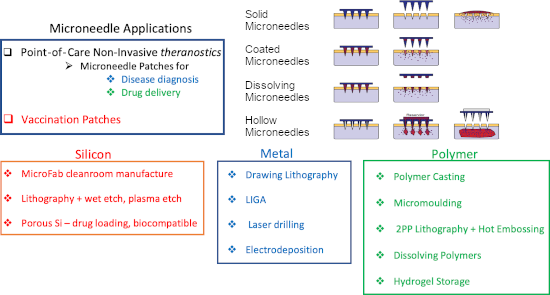
- skin diseases including cancer, via electrical impedance measurements [52]. Microneedle structure design Several factors should be considered when designing microneedles for skin penetration: (1) geometric features, such as length, diameter, tip size, and shape, (2) physical form: solid, hollow, side


Comprehensive review on ultrasound-responsive theranostic nanomaterials: mechanisms, structures and medical applications
Beilstein J. Nanotechnol. 2021, 12, 808–862, doi:10.3762/bjnano.12.64
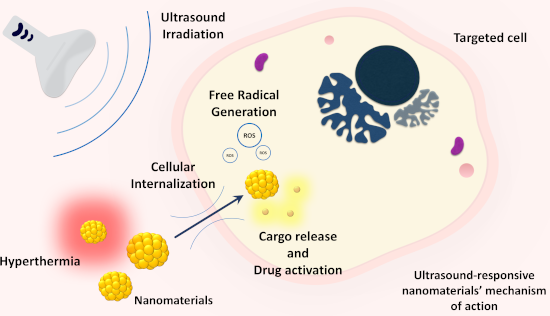
- conditions [32][33][34][35]. Acoustic impedance, attenuation, acoustic power, intensity, frequency, beam shape, and exposure time are important parameters for the utilization of US devices. Moreover, the anatomical location of the US application and the characteristics of the transduction medium should be
- values of acoustic impedance (a parameter that mainly depends on the tissue density), a proportion of the wave energy is reflected while the remainder passes through the tissue in a process called transmission. Other consequences are the refraction and diffraction of the acoustic wave. Also, a proportion


Boosting of photocatalytic hydrogen evolution via chlorine doping of polymeric carbon nitride
Beilstein J. Nanotechnol. 2021, 12, 473–484, doi:10.3762/bjnano.12.38
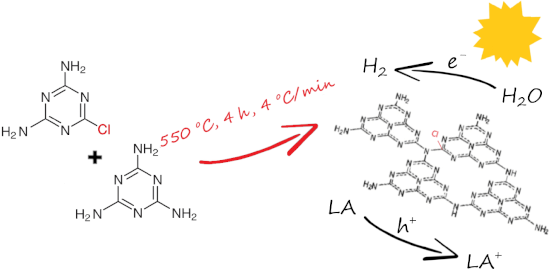
- three cycles of light on–off, the performance of both electrodes tends to stabilize, indicating that the photocatalysts are stable under visible-light irradiation [55]. The measurements obtained from electrochemical impedance spectroscopy (EIS) are shown in Figure 9b. It is known that the arc radius of
- the EIS spectrum is related to the charge-transfer resistance at the electrode–electrolyte interface [71]. The EIS arc radius of Cl-PCN is smaller than that of PCN. Its impedance is reduced compared to PCN, indicating that Cl doping decreased the charge-transfer resistance of polymeric carbon nitride
- (F7000, Hitachi) with an excitation wavelength of 280 nm. The DRS was performed using a Jasco (Japan) spectrometer. The Kubelka–Munk function was used to calculate the bandgap energy. The photocurrent response and electrochemical impedance spectroscopy were measured using the Autolab PGSTAT302 N


Solution combustion synthesis of a nanometer-scale Co3O4 anode material for Li-ion batteries
Beilstein J. Nanotechnol. 2021, 12, 424–431, doi:10.3762/bjnano.12.34
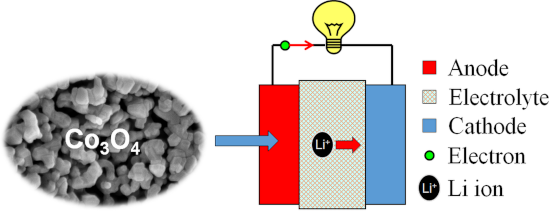
- Co3O4 electrode. In order to better understand of the capacitive behavior of the investigated Co3O4 electrode material, electrochemical impedance spectroscopy (EIS) measurements at a current density of 100 mA·g−1 were carried out before cycling and after the first, second, third, fourth, and fifth cycle
- Information File 1. These EIS features represent the charge transfer at the electrode–electrolyte interface (Rct) and the Warburg impedance (W), which is attributed to the diffusion of Li+ ions in the bulk electrode material [25][38]. The plots for the cycled cell are slightly different. They are composed of
- represent the charge transfer at the electrode–electrolyte interface (Rct) and the Warburg impedance (W), respectively. The semicircle at high frequencies is mainly attributed to SEI resistance (RSEI) and contact resistance (Rf) [13][15][20][21][25][38]. At this point, it should be also mentioned that the


A stretchable triboelectric nanogenerator made of silver-coated glass microspheres for human motion energy harvesting and self-powered sensing applications
Beilstein J. Nanotechnol. 2021, 12, 402–412, doi:10.3762/bjnano.12.32
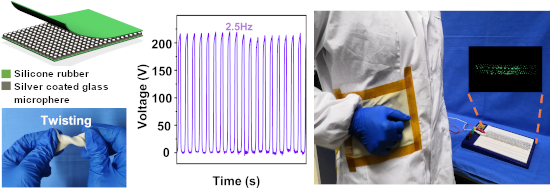
- decline after 3000 cycles for 25 min, demonstrating the long-term stable operation of the S-TENG on the human body. The impedance matching experiment was designed to measure the powering capability of the S-TENG with different resistances. Figure 4c,d shows the relationship between load resistance and ISC



Intracranial recording in patients with aphasia using nanomaterial-based flexible electronics: promises and challenges
Beilstein J. Nanotechnol. 2021, 12, 330–342, doi:10.3762/bjnano.12.27
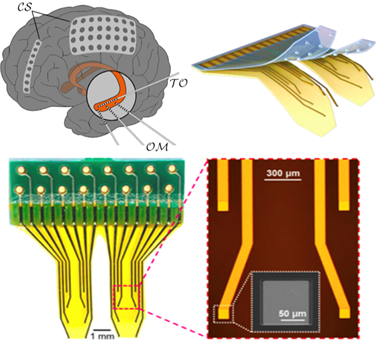
- covering almost the whole brain. The application of novel nanomaterials has the potential to overcome the limitations of conventional electrode arrays. IEEG electrode arrays electroplated with nanoparticles could lower impedance and allow for a closer contact with cortical cells, thereby providing more
- µm PI layers. The bifurcated flap shape was used to achieve good penetration and attachment to the cortical surface and avoid injuring blood vessels on the brain midline (Figure 5c, left). The width of the Au lines was designed to be 100 µm to reach a low impedance value and enhance the signal-to


Toward graphene textiles in wearable eye tracking systems for human–machine interaction
Beilstein J. Nanotechnol. 2021, 12, 180–189, doi:10.3762/bjnano.12.14
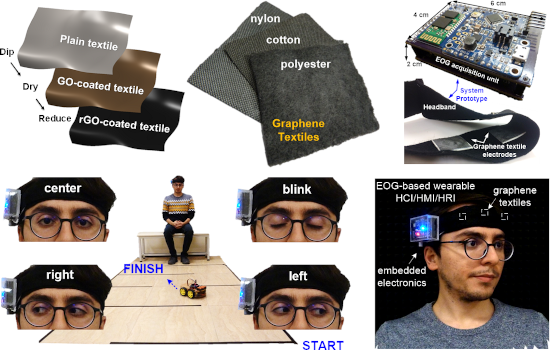
- this way, “passive” graphene textile electrodes were formed, which can be directly used to capture surface biopotentials without further modification. Conductivity measurements showed resistance values of the textiles between 1 and 10 kΩ and skin-electrode impedance values from 87.5 kΩ (at 10 Hz) to
- ” electrodes, the functionality of which degrades over time [23]. However, one common issue in dry electrodes is the relatively high skin-electrode contact impedance, which causes susceptibility to physical movements and power line interferences resulting in signal distortions. While the flexible, foldable
- nature of textile electrodes promotes wearability, it can adversely lead to dynamic contact conditions and, thereby, motion artifacts in the acquired signal. A strategy to minimize this effect, which was investigated in this work, is to reduce the impedance of the signal source by utilizing a buffer
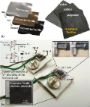


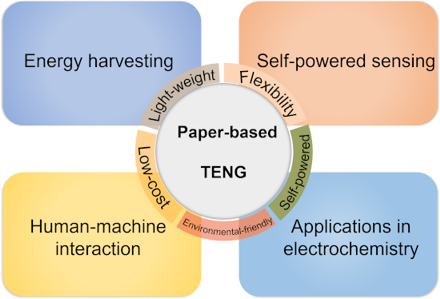
Paper-based triboelectric nanogenerators and their applications: a review
Beilstein J. Nanotechnol. 2021, 12, 151–171, doi:10.3762/bjnano.12.12
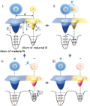
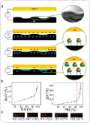
- groups on its surface. The basis of a GO humidity sensor is the variation of impedance or capacitance owing to the tendency of the water molecules to be adsorbed on the GO surface. The rich functional groups of GO and the flexibility of GO paper deliver the significant potential for a less complicated






ZnO and MXenes as electrode materials for supercapacitor devices
Beilstein J. Nanotechnol. 2021, 12, 49–57, doi:10.3762/bjnano.12.4
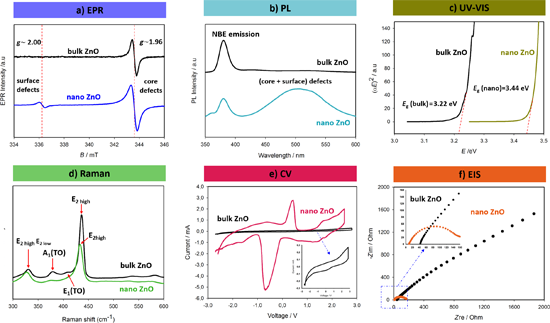
- ) spectroscopy techniques among the most powerful techniques to extract detailed information on the defect structures of ZnO. Also, electrical impedance spectroscopy (EIS) and cyclic voltammetry (CV) are sensitive to electrical properties such as specific capacitance and impedance, which can be correlated with
- and enable the device to act as a battery. Thus one may call such devices “superbat” (battery-like supercapacitors) [11]. To measure the impedance of the electrodes and, hence, the device, an AC voltage is applied and the real and the imaginary part of the impedance are plotted. Such a plot is called
Self-standing heterostructured NiCx-NiFe-NC/biochar as a highly efficient cathode for lithium–oxygen batteries
Beilstein J. Nanotechnol. 2020, 11, 1809–1821, doi:10.3762/bjnano.11.163
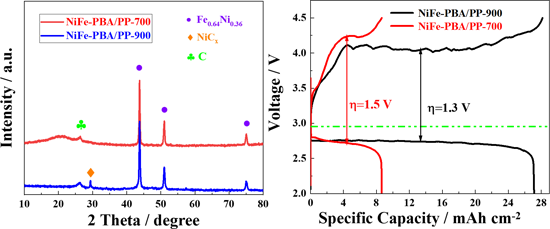
- impedance spectroscopy (EIS) in a frequency range from 100 kHz to 0.1 Hz and with a perturbation amplitude of 5 mV was used on the PARSTAT 4000 (AMETEK, USA) electrochemical workstation. Cyclic voltammetry (CV) was performed at a scan rate of 0.1 mV·s−1 and in a cell voltage range from 2.0 to 4.5 V vs Li
- existence of some amount of undecomposed Li2O2. Electrochemical impedance spectroscopy was also carried out to investigate NiFe-PBA/PP-T samples after the first charge and discharge (Figure 8c and Figure 8d). The illustrations (top part of Figure 8c and Figure 8d) show the corresponding equivalent circuit
- full charge at 0.1 mA·cm−2. Electrochemical impedance spectra of (c) NiFe-PBA/PP-900 and of (d) NiFe-PBA/PP-700. Performance comparison of Li–O2 batteries. Fitted impedance parameters of Li–O2 batteries with NiFe-PBA/PP-900 and NiFe-PBA/PP-700 at different stages. Funding This work was supported by






Mapping of integrated PIN diodes with a 3D architecture by scanning microwave impedance microscopy and dynamic spectroscopy
Beilstein J. Nanotechnol. 2020, 11, 1764–1775, doi:10.3762/bjnano.11.159
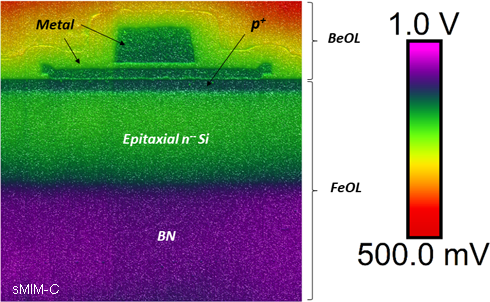
- ) (doped semiconducting layers) and “back end of line” (BEOL) layers (metallization, trench dielectric, and isolation) of highly integrated microelectronic devices. Based on atomic force microscopy, an electromagnetically shielded and electrically conductive tip is used in scanning microwave impedance
- microscopy (sMIM). sMIM allows for the characterization of the local electrical properties through the analysis of the microwave impedance of the metal–insulator–semiconductor nanocapacitor (nano-MIS capacitor) that is formed by tip and sample. A highly integrated monolithic silicon PIN diode with a 3D
- ; integrated PIN diode; nanoprobing; scanning probe microscopy (SPM); scanning microwave impedance microscopy (sMIM); spectroscopy; Introduction In “front end of line” (FEOL) processing, the control, detection, and quantification of the effective 2D distributions of active dopants in semiconductors are


Piezoelectric sensor based on graphene-doped PVDF nanofibers for sign language translation
Beilstein J. Nanotechnol. 2020, 11, 1655–1662, doi:10.3762/bjnano.11.148
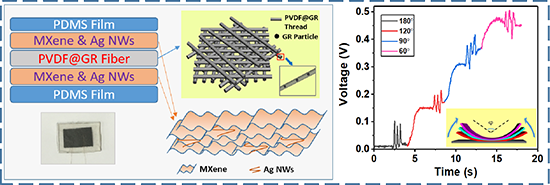
- glove with double-sided tape. The thin copper wires were connected to the input terminals of the analogue measurement channels of a National Instruments BNC-2111 connector block. Voltage and current were measured with a Keithley 6514 electrometer (200 TΩ input impedance). The analogue signal of each


Walking energy harvesting and self-powered tracking system based on triboelectric nanogenerators
Beilstein J. Nanotechnol. 2020, 11, 1590–1595, doi:10.3762/bjnano.11.141
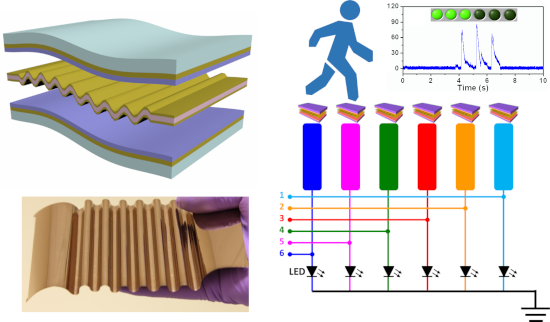
- -circuit current was 10.8 µA. The impedance dependence of the fabricated u-TENG is shown in Figure 3e. The maximum output power of 0.279 mW can be observed at a loading resistance of 300 MΩ in Figure 3f. A long-term stability test did not exhibit a noticeable response decline after 10000 cycles (inset of


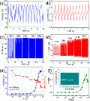


Structure and electrochemical performance of electrospun-ordered porous carbon/graphene composite nanofibers
Beilstein J. Nanotechnol. 2020, 11, 1280–1290, doi:10.3762/bjnano.11.112
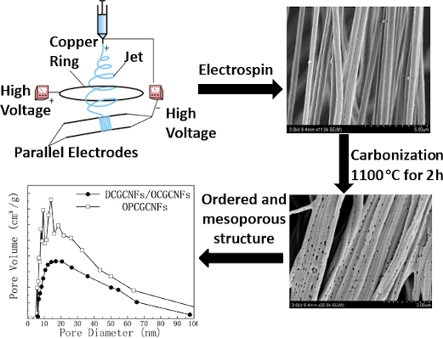
- station (CHI660E, Chenhua, Shanghai) by using cyclic voltammetry (CV), electrochemical impedance spectroscopy (EIS), and constant current galvanostatic charge/discharge (GCD) techniques. A voltage range of 0–1.0 V was applied to the CV electrode at a scan rate of 25 mV·s−1. The impedance measurements of
- of these electrodes exhibited similar symmetrical isosceles triangles, which were consistent with the characteristics of the double-layer capacitor electrode and with the results of the CV curves. Electrochemical impedance spectroscopy (EIS) is a reliable method used to characterize electrode
- represents the rapid ion diffusion in the electrolyte and the adsorption on the surface of the electrode, indicating the ideal capacitance behavior of the electrode. In addition, the more vertical the curve is in the low-frequency region, the more ideal the supercapacitor [42][43]. Comparing the impedance





