


Search results
Search for "kinetics" in Full Text gives 454 result(s) in Beilstein Journal of Nanotechnology. Showing first 200.
Hydrogels and nanogels: effectiveness in dermal applications
Beilstein J. Nanotechnol. 2025, 16, 1216–1233, doi:10.3762/bjnano.16.90
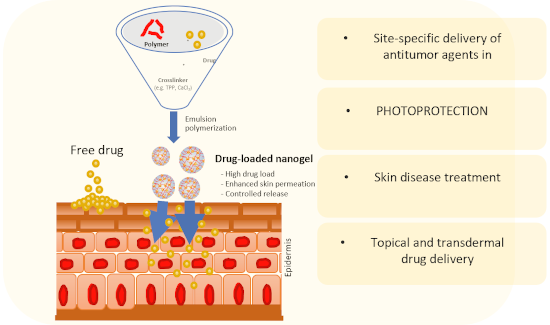
- nanocarriers, pharmacokinetic and pharmacodynamic parameters – such as size, release kinetics, and biodistribution of the encapsulated drug – must be carefully defined to maximize the efficacy of the system [65]. Such considerations are essential to obtain stable formulations with a controlled release profile


Investigation of the solubility of protoporphyrin IX in aqueous and hydroalcoholic solvent systems
Beilstein J. Nanotechnol. 2025, 16, 1209–1215, doi:10.3762/bjnano.16.89
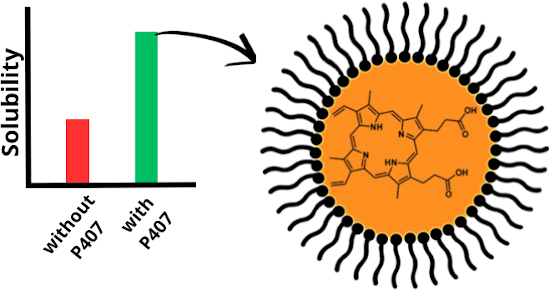
- solubility and stability for hydrophobic compounds. In systems containing 10% (w/w) P407 with 0.4 mg/mL PpIX (EtOH50, EtOH77, and water), the complete solubilization was achieved regardless of the solvent used. Figure 4 shows the solubilization kinetics in the polymeric systems. The average concentrations
- pharmaceutical applications. TEM micrographs revealed that PpIX micelles in water formed smaller and more uniform structures, suggesting improved drug load ability and permeability compared to alcoholic solutions. Moreover, dissolution kinetics, modeled using the Korsmeyer–Peppas equation with lag time (tlag


Influence of ion beam current on the structural, optical, and mechanical properties of TiO2 coatings: ion beam-assisted vs conventional electron beam evaporation
Beilstein J. Nanotechnol. 2025, 16, 1097–1112, doi:10.3762/bjnano.16.81
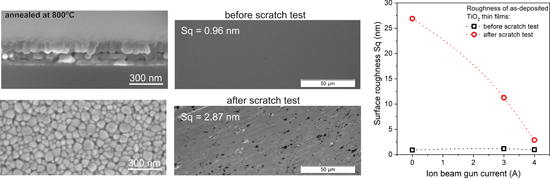
- recrystallize differently from those near the substrate, forming a visible boundary. The separation between the two layers of grains may be related to the difference in the grain growth kinetics, which may be influenced by the annealing conditions. For optical coatings, amorphous, very smooth TiO2 layers with




Multifunctional properties of bio-poly(butylene succinate) reinforced with multiwalled carbon nanotubes
Beilstein J. Nanotechnol. 2025, 16, 1014–1024, doi:10.3762/bjnano.16.76
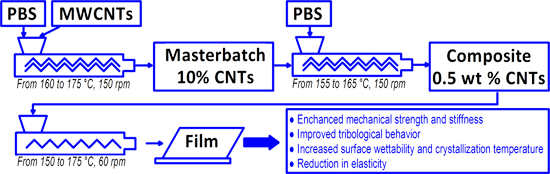
- %. Furthermore, the surface wettability increased by 15%, and the crystallization temperature rose by 25%, indicating an acceleration in crystallization kinetics. However, these enhancements were accompanied by a 37–50% reduction in elasticity. Despite the decrease in ductility, the elongation at break remained



A calix[4]arene-based supramolecular nanoassembly targeting cancer cells and triggering the release of nitric oxide with green light
Beilstein J. Nanotechnol. 2025, 16, 1003–1013, doi:10.3762/bjnano.16.75
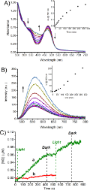
- excitation source Nanoled at 455 nm. The kinetics were monitored at 550 nm, and each solution itself was used to register the prompt at 455 nm. The system allowed for measurements of fluorescence lifetimes from 200 ps. The multiexponential fit of the fluorescence decay was obtained using the following


Time-resolved probing of laser-induced nanostructuring processes in liquids
Beilstein J. Nanotechnol. 2025, 16, 968–1002, doi:10.3762/bjnano.16.74
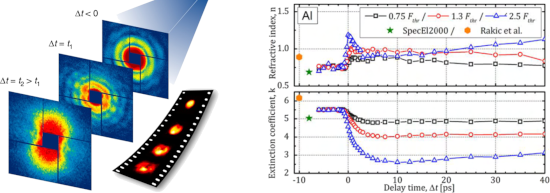
- laser fields with matter has significantly enriched our understanding of material deformation and phase transition kinetics, drawing increasing attention to strongly driven physical systems [54]. Hidden material phases revealed under non-equilibrium conditions have expanded research on photoinduced
- in aqueous solutions via laser pulse exposures [1][59], demonstrating practical applications and underscoring the need for deeper insights into non-equilibrium light–matter interactions. Experimental approaches to uncover the underlying reaction kinetics of such complex interactions have been diverse
- previously unknown material phases emerge, highlighting the existence of states accessible only under strongly driven non-equilibrium conditions. This insight has spurred further investigations into ultrafast reaction kinetics beyond the thermodynamic limit. However, these diffraction techniques often yield


Synthesis of biowaste-derived carbon-dot-mediated silver nanoparticles and the evaluation of electrochemical properties for supercapacitor electrodes
Beilstein J. Nanotechnol. 2025, 16, 933–943, doi:10.3762/bjnano.16.71
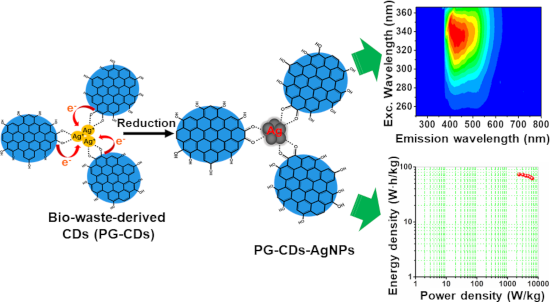
- very high, it is often followed by poor stability and an inferior specific energy density. This is due to the poor conducting nature, slow redox kinetics, as well as structural collapse which occurs throughout the redox progression [7]. EDLCs are able to provide desired stability, superior power
- graph that as the scan rates are increased, the current densities rise owing to the quicker diffusion kinetics on the electrode surface [37]. A lower scan rate means that the entire voltammogram takes longer to complete than a high scan rate. At low scan rates, diffusion layers extend further from the
- -electrode investigation, due to the faster diffusion kinetics on the surface of the electrode. At high scan rates (such as 500 mV/s), there was no discernible diversion of the features of the CV profiles. The current responsiveness of the device was adequate even at a 20 mV/s scan rate. For real-time


Synchrotron X-ray photoelectron spectroscopy study of sodium adsorption on vertically arranged MoS2 layers coated with pyrolytic carbon
Beilstein J. Nanotechnol. 2025, 16, 847–859, doi:10.3762/bjnano.16.64
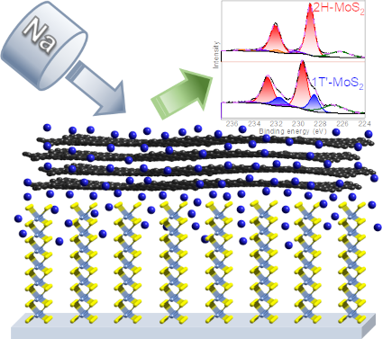
- fast intercalation reaction kinetics. Flower-like MoS2–carbon hybrids have demonstrated superior alkali metal storage capability and high rate performance due to the fast Na+ diffusion in radially orientated ultrathin MoS2 and graphene layers; the latter component ensured high electron transfer and


Facile one-step radio frequency magnetron sputtering of Ni/NiO on stainless steel for an efficient electrode for hydrogen evolution reaction
Beilstein J. Nanotechnol. 2025, 16, 837–846, doi:10.3762/bjnano.16.63
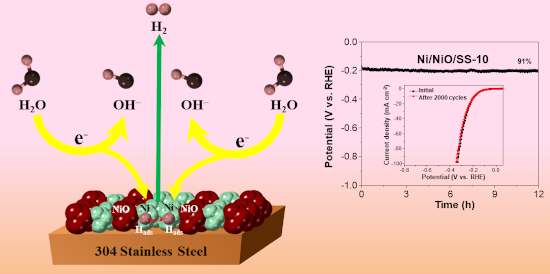
- ][47][48]. Specifically, the overvoltage of Ni/NiO/SS-10 is lower than those of NiO/C (565 mV) [40], Ni3S2/NC (199 mV) [44], NiCoP/rGO (209 mV) [47], and NF-Ni3Se2/Ni (203 mV) [48]. Also, the Tafel slopes indicate that the reaction kinetics of the Ni/NiO/SS-10 electrode is faster than those of the
- spectroscopy (EIS) was carried out at a voltage of −200 mV to confirm the HER kinetics. Figure 6c shows the Nyquist plots of the various electrodes accompanied by an equivalent circuit (inset of Figure 6c). Ni/NiO/SS-10 has a charge transfer resistance (Rct) of 5.35 Ω, which is much smaller than that of SS
- (30.75 Ω), Ni/NiO/SS-5 (9.79 Ω), Ni/NiO/SS-15 (10.58 Ω), and Ni/NiO/SS-20 (19.87 Ω). The lowest Rct of Ni/NiO/SS-10 indicates the best electron/ion transfer kinetics for HER, consistent with the Tafel slope analysis. In general, the electrochemical surface area (ECSA) can be predicted by measuring the


Synthesis and magnetic transitions of rare-earth-free Fe–Mn–Ni–Si-based compositionally complex alloys at bulk and nanoscale
Beilstein J. Nanotechnol. 2025, 16, 823–836, doi:10.3762/bjnano.16.62
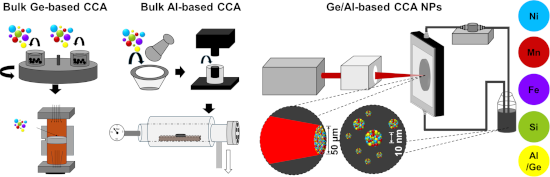
- ). This difference can be attributed to variations in alloy composition and material properties, which influence the ablation plume dynamics and particle formation kinetics during PLAL. Specifically, the thermal properties, such as melting point and heat conductivity, and the volatility of the alloy


Morphology and properties of pyrite nanoparticles obtained by pulsed laser ablation in liquid and thin films for photodetection
Beilstein J. Nanotechnol. 2025, 16, 785–805, doi:10.3762/bjnano.16.60
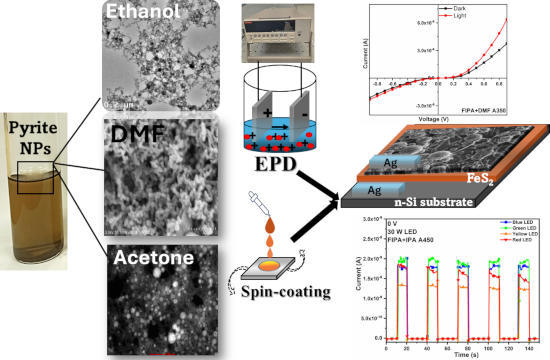
- experimental variables that cause the kinetics of the nanoparticles formation to change, resulting in nanoparticles with different sizes and morphologies [40]. Thermodynamic properties such as density, dielectric constant, viscosity, vapor pressure, and optical properties of the solvents are some of the






Synthesis of a multicomponent cellulose-based adsorbent for tetracycline removal from aquaculture water
Beilstein J. Nanotechnol. 2025, 16, 728–739, doi:10.3762/bjnano.16.56
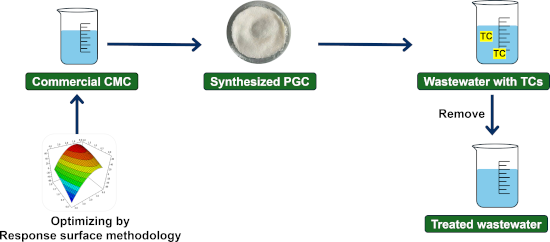
- adsorption process followed second-order kinetics and the Langmuir adsorption isotherm model. Under optimal experimental conditions, a maximum adsorption capacity (qm) of 123.2 mg·g−1 was estimated using the Langmuir isotherm model. These findings indicate that PGC demonstrates strong potential as an
- a homogeneous surface. Adsorption kinetics Experimental data derived from the analysis of the effect of contact time and initial TC concentration on adsorption capacity were used to study the kinetics of TC adsorption using first-order and second-order kinetic models. Table 3 and Table 4 present the
- concentration of 60 mg·L−1 TC. TC adsorption onto PGC followed pseudo-second-order kinetics and conformed to the Langmuir isotherm model. Additionally, preliminary tests in real water samples revealed that fulvic acid and humic acid in the water matrix affected the adsorption process. Owing to its high


Efficiency of single-pulse laser fragmentation of organic nutraceutical dispersions in a circular jet flow-through reactor
Beilstein J. Nanotechnol. 2025, 16, 711–727, doi:10.3762/bjnano.16.55
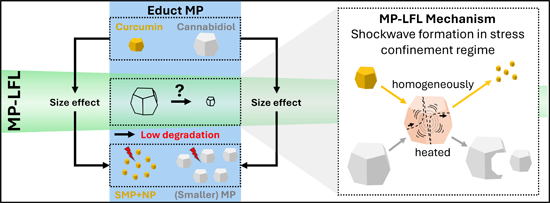
- that curcumin mostly functions as a radical scavenger at higher concentrations [63]. Further studies also report the photodegradation kinetics of phenolic compounds with antimicrobial properties to be inversely dependent on concentration [64]. For CBD with the same mass concentration of 0.1 wt % of


Aprepitant-loaded solid lipid nanoparticles: a novel approach to enhance oral bioavailability
Beilstein J. Nanotechnol. 2025, 16, 652–663, doi:10.3762/bjnano.16.50
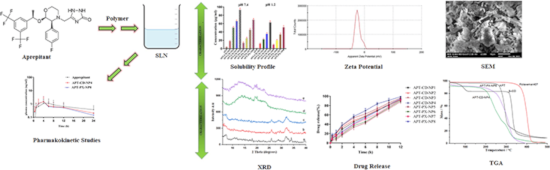
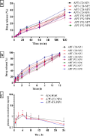
- /chitosan-coated cyclodextrin nanocapsules in acidic and basic media [16]. There is increased wetting of amorphous APT after loading into SLNs with increased surface area leading to rapid and consistent release. Drug release kinetics The drug release data obtained from APT-CD-NP1 to APT-PX-NP8 were analyzed
- (equivalent to 2 mg APT) were placed in a dialysis bag sealed at both ends in dissolution medium. After specified time intervals, samples (5 mL) were taken, replaced with fresh medium and analyzed through UV spectrophotometry at λmax = 210 nm after proper dilution. The drug release kinetics were determined by



Polyurethane/silk fibroin-based electrospun membranes for wound healing and skin substitute applications
Beilstein J. Nanotechnol. 2025, 16, 591–612, doi:10.3762/bjnano.16.46
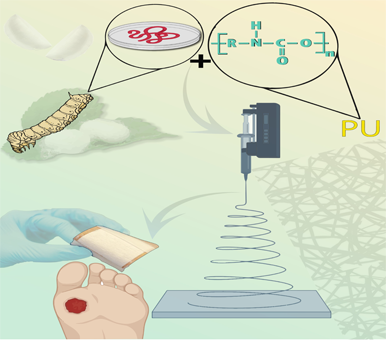
- kinetics. The degradation is also affected by surface-modifying macromolecules (SMMs). A variety of SMMs resists enzymatic action. Some SMM formulations are incompatible with PU, which can increase biodegradability. For the medical field, biodegradable polyester PU is derived from polycaprolactone diols



Functionalized gold nanoflowers on carbon screen-printed electrodes: an electrochemical platform for biosensing hemagglutinin protein of influenza A H1N1 virus
Beilstein J. Nanotechnol. 2025, 16, 540–550, doi:10.3762/bjnano.16.42
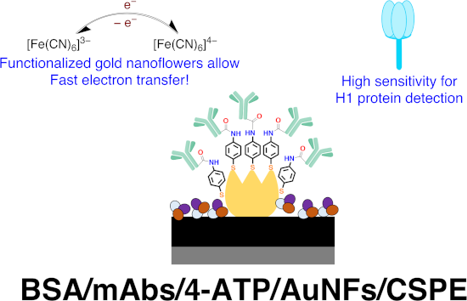
- charge transfer enhancement by a factor of eight according to studies on spheres, tetrapods, cubes, and dogbone nanoparticles [36]. In contrast, no enhancement effect, or even slower charge transfer kinetics have been observed for 4-ATP-functionalized gold nanoparticles bearing sizes between 5 and 25 nm


Impact of adsorbate–substrate interaction on nanostructured thin films growth during low-pressure condensation
Beilstein J. Nanotechnol. 2025, 16, 473–483, doi:10.3762/bjnano.16.36

- , subsequent growth kinetics, and final structural properties of thin films. These interactions are influenced by factors such as surface energetics, lattice matching, van der Waals forces, and chemical bonding configurations [20][21]. Strong interactions can lead to ordered nucleation and the formation of
- structures of the adsorbate [44]. In this work, we concentrate our attention onto effects related to reduced interaction strength δ onto structuring kinetics of thin films during deposition and the morphology of the first growing layer. The interaction strength for the specific choice of substrate and


Quantification of lead through rod-shaped silver-doped zinc oxide nanoparticles using an electrochemical approach
Beilstein J. Nanotechnol. 2025, 16, 422–434, doi:10.3762/bjnano.16.33
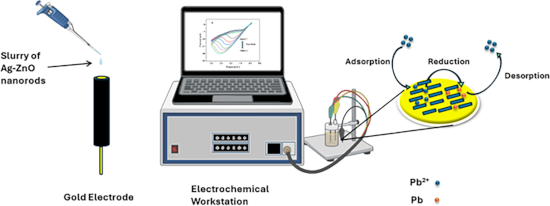
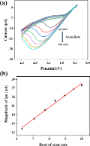
- electrode can provide additional details about the electrochemical process. It can help to understand the kinetics of electron transfer reactions, analyte diffusion, and electrode surface contact mechanisms. A modified Ag@ZnO NRs electrode with greater impedance is more stable and durable. This provides
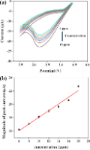
- ). Clearly, the cathodic peak current demonstrates a linear connection with v1/2, demonstrating diffusion-controlled kinetics [29]. Concentration effect on the peak current or calibration curve Figure 12a illustrates a steady increase in peak current as lead concentration increases. A standard calibration





Engineered PEG–PCL nanoparticles enable sensitive and selective detection of sodium dodecyl sulfate: a qualitative and quantitative analysis
Beilstein J. Nanotechnol. 2025, 16, 385–396, doi:10.3762/bjnano.16.29
- release kinetics. After copolymerization, the reaction is terminated by dissolving the resulting copolymer in DCM, a solvent that allows the copolymer to remain in solution. The solution is then precipitated in cold diethyl ether, which helps to remove unreacted monomers and other impurities. This


Emerging strategies in the sustainable removal of antibiotics using semiconductor-based photocatalysts
Beilstein J. Nanotechnol. 2025, 16, 264–285, doi:10.3762/bjnano.16.21
- sites, slow kinetics of surface reactions, and the reduced mobility of charges, resulting in electron delocalization [99][100]. The molecular rearrangement of g-C3N4 has been the subject of recent research because of its potential to alter the surface chemistry and textural structure [101]. This


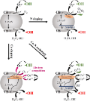

Radiosensitizing properties of dual-functionalized carbon nanostructures loaded with temozolomide
Beilstein J. Nanotechnol. 2025, 16, 229–251, doi:10.3762/bjnano.16.18
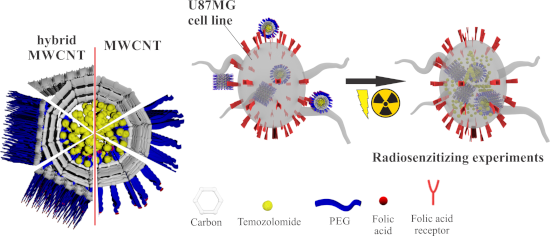
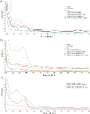
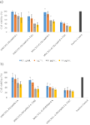
- higher cytotoxicity of the hybrid CN. Additional decrease in the viability of cells was observed when GBM cells pre-treated with the corresponding CNs were exposed to irradiation, which could be ascribed to changes in size, surface charge, and release kinetics of TMZ and to irradiation-induced changes in
- formulation, biopharmaceutics/release kinetics, and pharmacokinetics of TMZ. Also, surface functionalization attempts with multiple targeting ligands were made to deliver TMZ to the site of interest, exploiting the site-specific expression or overexpression of specific molecules on BBTB and GBM cells to




Precursor sticking coefficient determination from indented deposits fabricated by electron beam induced deposition
Beilstein J. Nanotechnol. 2025, 16, 35–43, doi:10.3762/bjnano.16.4

- saturation with an initial layer of adsorbate. Effectively, this means that the obtained sticking coefficients refer to “precursor-to-precursor” sticking rather than to “precursor-to-substrate” sticking. The investigations were also done for different kinetics energies of the impinging molecules revealing a
- decrease of the sticking coefficient with increasing energy. In comparison, the molecules investigated in all of these studies are significantly smaller than the organometallic precursors typically used in FEBID. Nevertheless, these findings are important in order to understand the adsorption kinetics of


Facile synthesis of size-tunable L-carnosine-capped silver nanoparticles and their role in metal ion sensing and catalytic degradation of p-nitrophenol
Beilstein J. Nanotechnol. 2024, 15, 1576–1592, doi:10.3762/bjnano.15.124
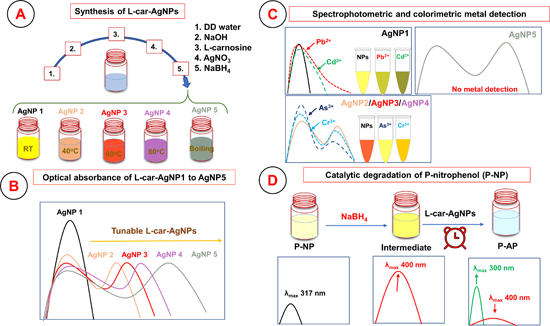
- al., where different shapes of gold nanoparticles had varying efficiencies in the catalytic degradation of nitrophenol compounds, with spherical nanoparticles being highly effective [48]. Kinetic analysis was performed based on pseudo-first-order reaction kinetics for the concentration of 0.25 mM P
- degradation of P-NP by ʟ-car-AgNPs can be attributed to the unique optical and catalytic properties of AgNPs, which are enhanced by their high surface-to-volume ratio and plasmonic effects. The observed pseudo-first-order kinetics suggest that the rate-determining step involves the adsorption of P-NP onto the




Polymer lipid hybrid nanoparticles for phytochemical delivery: challenges, progress, and future prospects
Beilstein J. Nanotechnol. 2024, 15, 1473–1497, doi:10.3762/bjnano.15.118
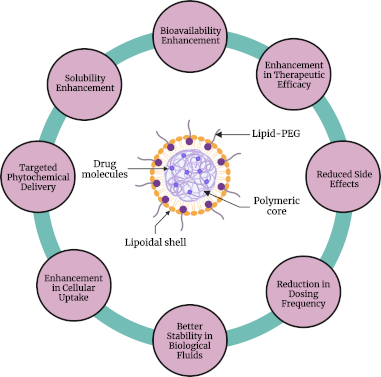
- crucial for maintaining therapeutic drug levels over extended periods of time [20][21]. By adjusting the polymer composition and lipid matrix, researchers can fine-tune the release kinetics of phytochemicals, ensuring sustained therapeutic effects. This controlled release mechanism is particularly


Effect of radiation-induced vacancy saturation on the first-order phase transformation in nanoparticles: insights from a model
Beilstein J. Nanotechnol. 2024, 15, 1453–1472, doi:10.3762/bjnano.15.117

- . Chemical rate theory approach The chemical rate theory approach involves the application of concepts from chemical kinetics to describe the evolution of defects in materials under irradiation. It considers the rates of defect formation, migration, and annihilation processes and aims to predict the steady
- to β phase is indeed a first-order phase transition, and Gibbsian thermodynamics can be used to estimate the probability and energies involved in the transformation. However, this approach does not directly provide information on the kinetics of how the transformation occurs. The probability of the
- barrier. This observation underscores the critical role of nucleation phenomena in determining the feasibility and kinetics of phase transitions in materials. When nucleation is considered, it becomes apparent that the phase transition process may not always proceed as expected, especially in cases where





