Search results
Search for "laser irradiation" in Full Text gives 94 result(s) in Beilstein Journal of Nanotechnology.
Polydopamine-coated Au nanorods for targeted fluorescent cell imaging and photothermal therapy
Beilstein J. Nanotechnol. 2019, 10, 794–803, doi:10.3762/bjnano.10.79
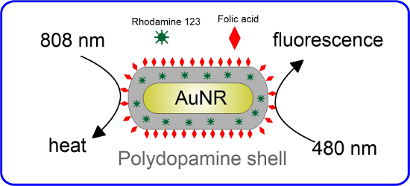
- 3 in Figure 3 shows small temperature changes in the well with grown HeLa cells incubated with AuNR-PDA-R123-folate nanocomposites in response to the laser irradiation. In this experiment, the HeLa cells were incubated with nanoparticles (concentration 1011 mL−1), added to the cell medium for 2 h


Hydrophilicity and carbon chain length effects on the gas sensing properties of chemoresistive, self-assembled monolayer carbon nanotube sensors
Beilstein J. Nanotechnol. 2019, 10, 565–577, doi:10.3762/bjnano.10.58
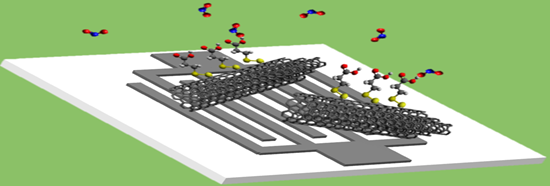
- laser irradiation. The chemical composition and, particularly, the presence of the Au–S bond were evaluated using a Versaprobe Phi 5000 instrument from Physical Electronics equipped with a monochromatic Al Kα X-ray source. The binding energy (BE) scales were referenced by setting the Au 4f7/2 to 84.0 eV


Study of silica-based intrinsically emitting nanoparticles produced by an excimer laser
Beilstein J. Nanotechnol. 2019, 10, 211–221, doi:10.3762/bjnano.10.19
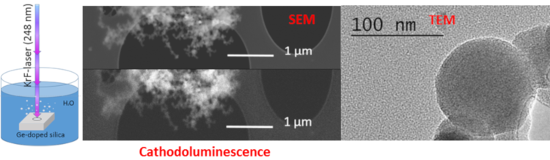
- , we highlight some details on laser irradiation of bulk materials for the production of nanoparticles, where the material is removed from the target due to energy absorption from the laser. For this reason, the specific process of material removal depends on the optical characteristics of the target
- by nanosecond pulsed KrF laser irradiation (140 mJ per pulse) from preform materials characterized by high Ge content and GLPCs [18]. In the present manuscript we report the possibility to generate nanoparticles from Ge-doped silica (produced by PCVD method [30]) using a lower energy per pulse
- the generation of irregular particles. In any case, the presence of the Ge atoms and the consequent increase of the sensitivity to laser irradiation could be combined with other ablation procedures using a UV ns pulsed laser as the one reported in [34]. In regard to previous studies [18], we improved



Nanoporous water oxidation electrodes with a low loading of laser-deposited Ru/C exhibit enhanced corrosion stability
Beilstein J. Nanotechnol. 2019, 10, 157–167, doi:10.3762/bjnano.10.15
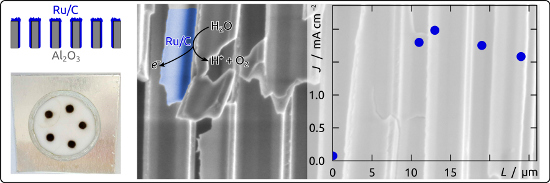
- reaction [69][70][71]. Conclusion With this, we have established a novel type of nanostructured Ru/C composite electrode for the oxygen evolution reaction at pH 4 by laser-induced deposition. Laser irradiation of Ru3(CO)12 in 1,2-dichloroethane at 325 nm provides the first laser-induced coatings of hybrid
- Ru3(CO)12 solutions. SEM images of planar samples coated with laser-induced Ru/C films in cross-section (a) and top-view (b). Laser-irradiation of Ru3(CO)12 solutions results in continuous and rough thin films deposited on ITO. Preparation of nanostructured Ru/C electrodes. (a) Anodization of Al in 1
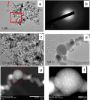
- length L = 24 μm (c). EDX profile taken along the cross-section (d). Laser-irradiation of Ru3(CO)12 solutions results in thin ruthenium containing coatings along the whole length of Al2O3 pores. Raman spectra of a nanostructured template coated with Ru/C films, without ITO contact (a) and of the solid




Zn/F-doped tin oxide nanoparticles synthesized by laser pyrolysis: structural and optical properties
Beilstein J. Nanotechnol. 2019, 10, 9–21, doi:10.3762/bjnano.10.2
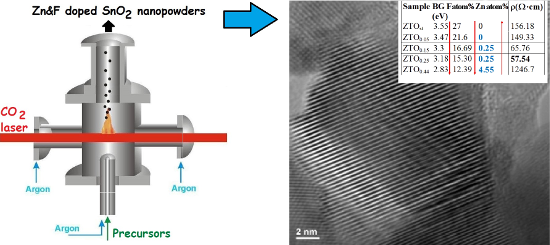
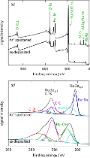
- -resistant glass reactor with a cross-sectional configuration in which the precursor gas stream, introduced vertically from the bottom and having a laminar flow, perpendicularly intersects the laser beam. Laser irradiation of the gaseous precursor is achieved by means of a focusing lens located in front of



Hybrid Au@alendronate nanoparticles as dual chemo-photothermal agent for combined cancer treatment
Beilstein J. Nanotechnol. 2018, 9, 2947–2952, doi:10.3762/bjnano.9.273
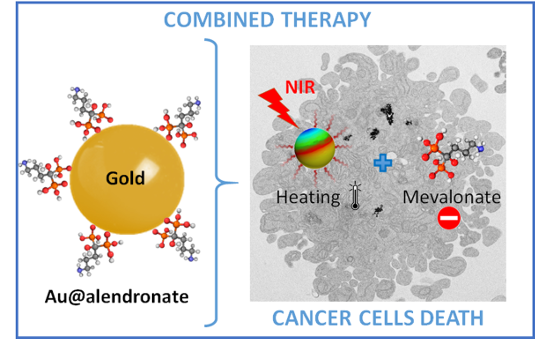
- treatment by using a 680 nm laser calibrated to illuminate cells at 1.7 W/cm2. The metabolic activity on PC3 cells incubated with Au@alendronate NPs in presence or absence of laser irradiation is compared in Figure 3b. At extracellular concentrations of alendronate below 1 µM, similar cell viability was
- observed in absence or presence of laser irradiation. This could be related to the low dose of internalized gold NPs and indicates that the laser power is sufficiently low to avoid nonspecific biological damage. At extracellular concentrations of alendronate over 1 µM, cell viability was considerably
- lowered in the presence of laser irradiation. The IC50 was reduced to 1 µM (instead of 100 µM), while at intermediate concentration of 100 µM, cell death was total. It clearly evidences the efficiency of the combined drug delivery and photothermal treatment of Au@alendronate NPs. In summary, we developed


Biomimetic surface structures in steel fabricated with femtosecond laser pulses: influence of laser rescanning on morphology and wettability
Beilstein J. Nanotechnol. 2018, 9, 2802–2812, doi:10.3762/bjnano.9.262
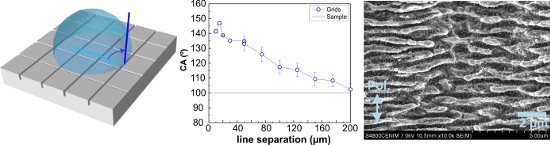
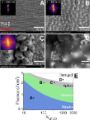
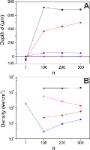
- angle measurements of water drops placed on the surface reveal that a wide range of angles can be accessed by selecting the appropriate irradiation parameters, highlighting also here the prominent role of the number of scans. Keywords: biomimetics; femtosecond laser irradiation; laser-induced periodic
- after laser irradiation, the samples were cleaned in an ultrasound bath with isopropanol for 5 minutes and gently dried with pressurized nitrogen. The irradiation strategy consisted of fabricating continuous areas of 5 × 5 mm2 with an adequate balance between the laser repetition rate (ν), scan velocity
- [46]. The errors specified for the different CA values were obtained via software analysis. SEM images of the three LIPSS structures produced in steel under different laser irradiation conditions, distinguished fundamentally by the laser fluence and pulse number Neff_2D (parameters given in the text



Enhancement of X-ray emission from nanocolloidal gold suspensions under double-pulse excitation
Beilstein J. Nanotechnol. 2018, 9, 2609–2617, doi:10.3762/bjnano.9.242
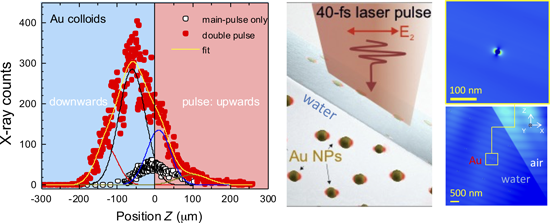
- -absorption efficiency and an enhanced generation of high-energy electrons from a highly ionized plasma with high electron temperature [10][11] under intense laser irradiation. For an efficient augmentation in X-ray intensity, femtosecond (fs)-laser excitation of metal nanoparticles and nanoclusters is of
- solution surface for different Δt up to 15 ns [28]. Analyses of the relation between the time-dependent X-ray generation and the optimum laser irradiation position are still missing for other aqueous solutions, especially for experiments under ambient pressure. Previous studies, mostly with solid targets
- laser beam. Usually, more than 120 mL of sample solution was being circulated by a pump during experiments. This amount is much larger than the volume of the laser irradiation at the focus, which can be estimated to be 1.5 × 10⁻⁴ mL. An apparent degradation of the solution absorption spectrum was not


Au–Si plasmonic platforms: synthesis, structure and FDTD simulations
Beilstein J. Nanotechnol. 2018, 9, 2599–2608, doi:10.3762/bjnano.9.241
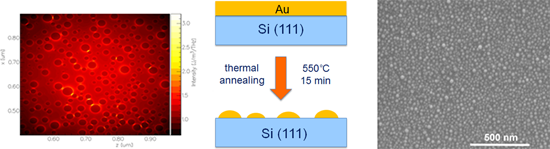
- concluded that the proposed method of manufacturing nanostructures yields good results. Of course, there are also other methods for the production of nanostructures or metal nanoparticles, for example laser irradiation of thin metallic films deposited on various substrates [29][30][31][32][33]. This method
- also gives the possibility, by scanning the surface of the sample with a laser or by changing the energy of the pulse or its duration, to create patterns of various sizes of nanostructures. Laser irradiation, however, does not provide the possibility of accurate temperature control, which is extremely

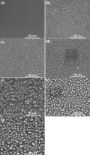


Fabrication of photothermally active poly(vinyl alcohol) films with gold nanostars for antibacterial applications
Beilstein J. Nanotechnol. 2018, 9, 2040–2048, doi:10.3762/bjnano.9.193
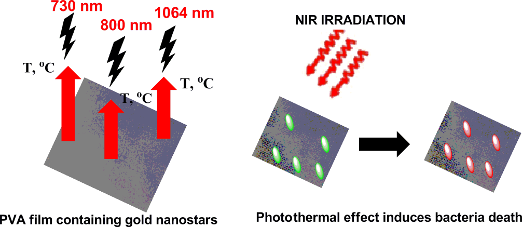
- possibility that the photothermal properties of engineered PVA-GNS films may be used for antibacterial purposes, Escherichia coli (DH5-alpha strain) were inoculated onto PVA without GNSs (as control) and PVA-GNS films, and then exposed to NIR laser irradiation (using the second NIR window). The detailed
- irradiation with a 1064 nm laser, as registered by a thermocamera (laser intensity 4 W/cm2). (b) After 5 minutes of laser irradiation (or simply exposure to the air for the control samples) the films were transferred to LB broth and left at 37 °C for cell growth. The number of bacteria per mL was calculated


Optical near-field mapping of plasmonic nanostructures prepared by nanosphere lithography
Beilstein J. Nanotechnol. 2018, 9, 1536–1543, doi:10.3762/bjnano.9.144
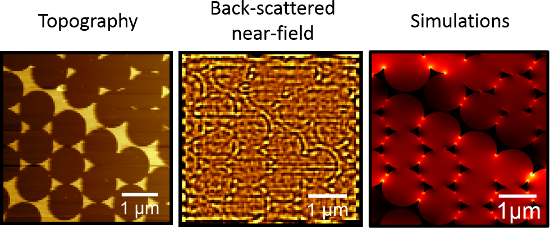
- spots due to higher and localized enhancement. Nevertheless, this technique is diffraction limited to a few hundred of nanometers as it is based on confocal microscopy measurements. Galarreta et al. [26] coated such triangular structures with an azopolymer thin film sensitive to laser irradiation and




Laser-assisted fabrication of gold nanoparticle-composed structures embedded in borosilicate glass
Beilstein J. Nanotechnol. 2017, 8, 2454–2463, doi:10.3762/bjnano.8.244
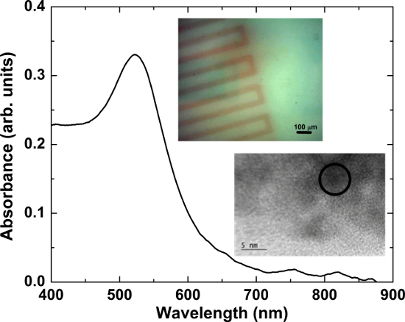
- . At 355, 532 and 1064 nm, no coloration of the sample was observed. The femtosecond laser irradiation at 800 nm also induced defects, again observed as brown coloration. The absorbance spectra indicated that this coloration was related to the formation of oxygen deficiency defects. After annealing
- oscillating in the UV [18] but more often by femtosecond lasers [15][16][17][22]. Nanosecond laser irradiation has rarely been reported as a source of metal reduction in glasses [23]. The studies cited indicated that the performance, i.e., the optimal process conditions, depends strongly on the glass type and
- composition. Due to the complexity of the process involved, it is difficult to devise a clear and detailed picture of the underlying physical phenomena and of their interplay. These include the mechanisms of laser irradiation interaction with and absorption by these materials, the development and evolution of


Au nanostructure fabrication by pulsed laser deposition in open air: Influence of the deposition geometry
Beilstein J. Nanotechnol. 2017, 8, 2438–2445, doi:10.3762/bjnano.8.242
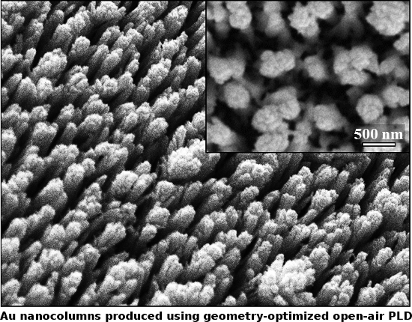
- light was demonstrated. Experimental The fabrication of the Au nanostructures was implemented in a one-step deposition of the ablated material on a substrate. The Au target (purity of 99.99 %) was mounted on a rotating holder in order to prevent deep drilling during laser irradiation. The ablated


Hydrothermal synthesis of ZnO quantum dot/KNb3O8 nanosheet photocatalysts for reducing carbon dioxide to methanol
Beilstein J. Nanotechnol. 2017, 8, 2264–2270, doi:10.3762/bjnano.8.226
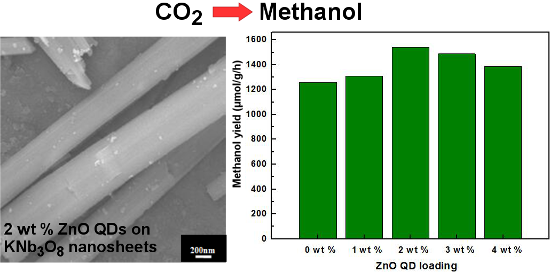
- transparent solution was centrifugally separated from the slurry and analyzed by a gas chromatograph (SCION 456–GC). The reference experiments were carried out in the absence of photocatalyst or laser irradiation, and there were no products formed. Results and Discussion Catalyst characterization The two-step




Laser processing of thin-film multilayer structures: comparison between a 3D thermal model and experimental results
Beilstein J. Nanotechnol. 2017, 8, 1749–1759, doi:10.3762/bjnano.8.176
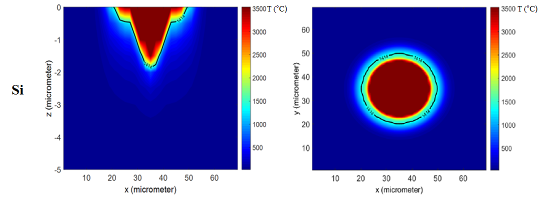
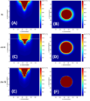
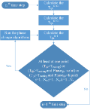
- -step can be written as follows (Equation 2 to Equation 4): Where: Convection, radiation and laser irradiation are the boundary conditions at the surface. The laser beam has a Gaussian profile. On the back side, insulation boundary conditions are assumed. Convection and radiation are the boundary





Oxidative chemical vapor deposition of polyaniline thin films
Beilstein J. Nanotechnol. 2017, 8, 1266–1276, doi:10.3762/bjnano.8.128
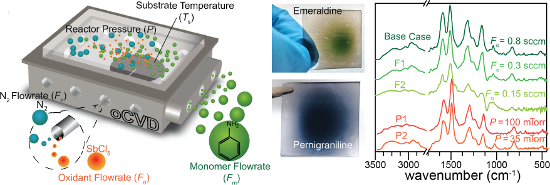
- morphology were highly dependent on the solvent matrix and the laser irradiation wavelength, and MAPLE led to a film that was electrically insulating [26]. Previous studies by Gleason and coworkers highlighted oCVD’s advantages in the conformal deposition of PEDOT films with tunable nanoporosity [27], and




Growth, structure and stability of sputter-deposited MoS2 thin films
Beilstein J. Nanotechnol. 2017, 8, 1115–1126, doi:10.3762/bjnano.8.113
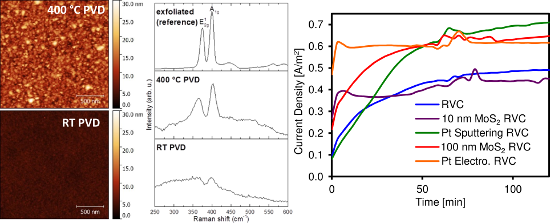
- appearance of a dark spot in the reflected light microscopic image (Figure 4b). The spectrum arising upon the 3.5 mW laser irradiation of the amorphous RT PVD MoS2 film is tentatively assigned to Mo-oxides or -hydroxides [41][42]. This suggests that through the energy input from the 3.5 mW laser the
- panel). The Raman spectra of the as deposited films (grey) were taken using a low laser power of 0.75 µW which leaves all tested MoS2 films unaffected. In situ laser annealing was undertaken by exposure to 3.5 mW laser irradiation for varying times in ambient atmosphere, followed by another low power


Near-field surface plasmon field enhancement induced by rippled surfaces
Beilstein J. Nanotechnol. 2017, 8, 956–967, doi:10.3762/bjnano.8.97
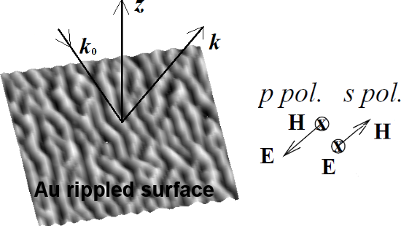
- rough surfaces. Ripple formation due to light–matter interaction, for example, using short laser pulses, is highly dependent on the laser irradiation conditions (angle of incidence, polarization, laser power, scanning speed – only to cite the most important factors), material properties, environmental


3D Nanoprinting via laser-assisted electron beam induced deposition: growth kinetics, enhanced purity, and electrical resistivity
Beilstein J. Nanotechnol. 2017, 8, 801–812, doi:10.3762/bjnano.8.83
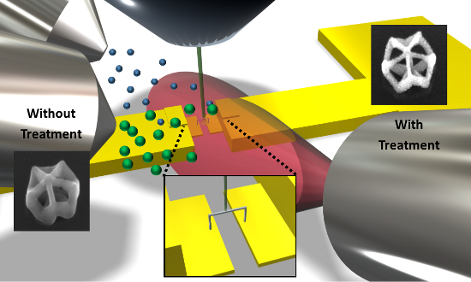
- A 915 nm wavelength 25 W multichip diode laser made by Oclaro Inc. was used as the source for laser irradiation. A PCX-7410 laser diode driver (DEI®) was used to control the pulse width, frequency, and power. The particular parameters were chosen based on initial experiments that resulted in heating
- reduction (see Supporting Information File 1 for 3D examples). Pulsed laser irradiation and gas pressure both affect the growth rate and morphology of the EBID structures. A useful way to characterize this change is by fabricating a pillar + cantilever, or ‘segment’, using EBID. Figure 2 depicts the changes
- deposits, Pt grain coarsening and a decrease in resistivity are observed at higher dwell times/higher segment angles. The 3D nanostructures maintain high fidelity during laser irradiation and realize a 100-fold decrease in resistivity when compared to standard EBID. This improvement in electron transport


Laser irradiation in water for the novel, scalable synthesis of black TiOx photocatalyst for environmental remediation
Beilstein J. Nanotechnol. 2017, 8, 196–202, doi:10.3762/bjnano.8.21
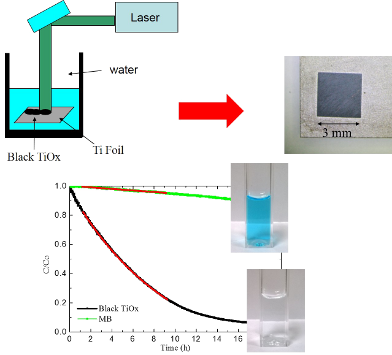
- hydrogen pressure and long annealing treatments. In this work, we present an industrially scalable synthesis of TiO2-based material based on laser irradiation. The resulting black TiOx shows a high activity and adsorbs visible radiation, overcoming the main concerns related to the use of TiO2 under solar
- trap surface states for holes in an amorphous hydrogenated TiOx layer. Keywords: black titania; laser irradiation in water; photocatalysis; TiOx; water treatment; Introduction The interest in titanium dioxide dates back in 1972, thanks to the pioneering work of Honda and Fujishima [1]. TiO2 has been
- /cm2. A schematic representation of the sample preparation procedure is shown in Figure 1. During laser irradiation, TiO2 nanoparticles were obtained in solution, as also reported in a previous publication [24][26], and a thin black layer of TiOx was formed on the top of the Ti foil (Figure 1a). The


Grazing-incidence optical magnetic recording with super-resolution
Beilstein J. Nanotechnol. 2017, 8, 28–37, doi:10.3762/bjnano.8.4
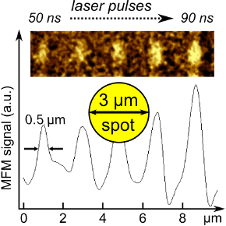
- , CW, P = 8 mW) on an as-is HDD piece. (a) Reference of the sample without bias field or laser irradiation. (b) Without a bias field the laser simply deletes the data and the intensity is averaged. (c) In the presence of a bias field the magnetization of the grains aligns parallel, i.e., the bias


The role of morphology and coupling of gold nanoparticles in optical breakdown during picosecond pulse exposures
Beilstein J. Nanotechnol. 2016, 7, 869–880, doi:10.3762/bjnano.7.79
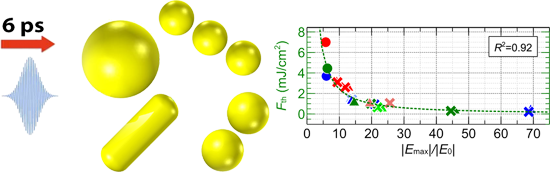
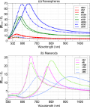
- = 0.8363σabs−0.311 with R2 = 0.46. Figure 7c shows the relation between the maximum field enhancement for different morphologies, wavelengths of laser irradiation and optical breakdown threshold. A power regression fit of the optical breakdown versus the maximum field enhancement yielded, Fth = 44.96(|E|max/E0




Thermo-voltage measurements of atomic contacts at low temperature
Beilstein J. Nanotechnol. 2016, 7, 767–775, doi:10.3762/bjnano.7.68
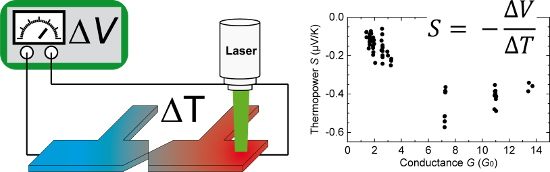
- is monitored by a CCD camera. The sample is controllably broken and closed at low temperature in cryogenic vacuum by bending and flattening the substrate without laser irradiation, while recording the current at an applied bias of 5 mV. Motor control and data collection is performed using a custom


Surface-enhanced Raman scattering by colloidal CdSe nanocrystal submonolayers fabricated by the Langmuir–Blodgett technique
Beilstein J. Nanotechnol. 2015, 6, 2388–2395, doi:10.3762/bjnano.6.245
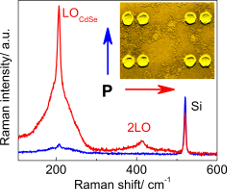
- performance. From other side, CdSe NCs are resistant against intense laser irradiation and have a direct band transition energy located in the same (red) spectral range as that for LSPR in Au nanoclusters and are therefore considered as a model system for resonant SERS experiments. SERS by optical phonons was


Green and energy-efficient methods for the production of metallic nanoparticles
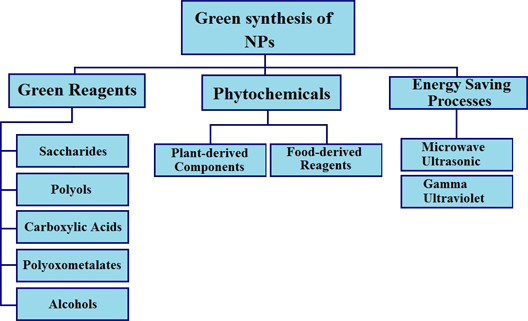
Beilstein J. Nanotechnol. 2015, 6, 2354–2376, doi:10.3762/bjnano.6.243