Search results
Search for "material" in Full Text gives 1952 result(s) in Beilstein Journal of Nanotechnology. Showing first 200.
From shield to spear: Charge-reversible nanocarriers in overcoming cancer therapy barriers
Beilstein J. Nanotechnol. 2026, 17, 159–175, doi:10.3762/bjnano.17.10
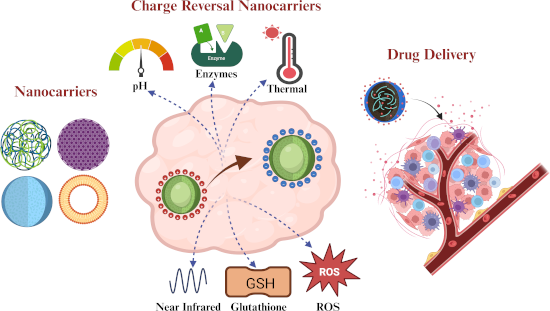
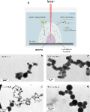
- tumour photodynamic therapy. The study highlights the excellent light absorption and ROS generation capacity of the material, allowing targeted tumour cell damage while sparing healthy tissues [56]. Similarly, a study reports thermo-responsive gold nanorod vesicles (USGRV-17-AAG) integrate NIR-II
- nuclear delivery in HeLa cells, reduced inflammatory cytokines, and improved tumour inhibition over free DOX, showing promise for cervical carcinoma therapy [72]. Cheah et al. developed a charge-responsive CPH material enabling electrically controlled protein release, reducing off-target effects through


Functional surface engineering for cultural heritage protection: the role of superhydrophobic and superoleophobic coatings – a comprehensive review
Beilstein J. Nanotechnol. 2026, 17, 63–96, doi:10.3762/bjnano.17.6
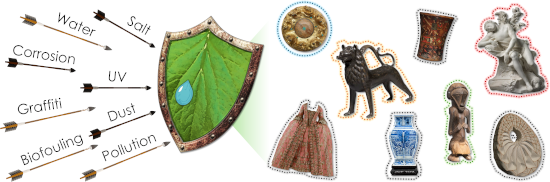
- material, which could be cut and applied with precision. A control test using a PHB–EL gel (without DFO) confirmed no harmful interaction with the bare steel substrate. Cleaning performance was evaluated for 10, 20, and 30 min of application, and effectiveness was found to increase. Multimodal
- years, the importance of cultural heritage applications has been recognized [45], and material science advancements are being applied in the field of prevention, instead of restoration, of the cultural heritage. At the 15th General Assembly of International Council of Museums (ICOM), held in Buenos
- [46][47]. Over the years, to these established criteria, another aspect has been increasingly, though not yet formally, acknowledged within the conservation community, namely, the sustainability of the material. Along these lines, with broader environmental awareness, coatings are now often expected




Microscopic study of the intermediate mixed state in intertype superconductors
Beilstein J. Nanotechnol. 2026, 17, 57–62, doi:10.3762/bjnano.17.5
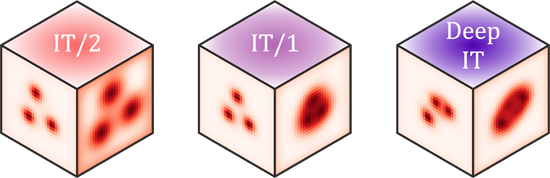
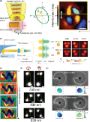
- superconductors has long served as a fundamental criterion for their classification into distinct types. Traditionally, two types are recognized, namely, type I, in which magnetic fields are completely expelled from the material (the Meissner state), and type II, with magnetic flux penetration in the form of


Reduced graphene oxide paper electrode for lithium-ion cells – towards optimized thermal reduction
Beilstein J. Nanotechnol. 2026, 17, 24–37, doi:10.3762/bjnano.17.3
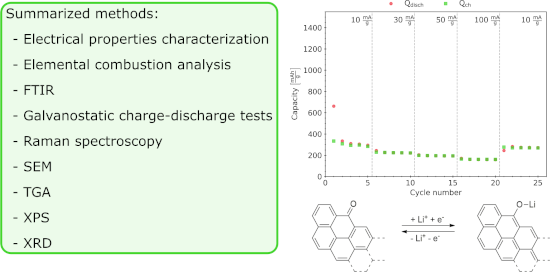
- electrode material in lithium-ion cells. Mildly reduced graphene oxide paper underwent further thermal reduction steps. The structural and chemical properties of the obtained materials were determined using Raman and Fourier-transform infrared spectroscopies and elemental combustion analysis. The morphology
- and thickness were determined with scanning electron microscopy imaging. This paper also reveals electrical and electrochemical properties of the material. The conductivity of the material obtained at 800 °C reached ≈70 S/cm, and the discharge capacity reached ≈160 mAh/g at 100 mA/g current density
- . Keywords: electrode material; graphene paper; lithium-ion batteries; reduced graphene oxide; thermal reduction; Introduction Electrode materials comprising reduced graphene oxide (rGO) for energy storage in lithium-ion-based or sodium-ion-based technologies have been the subject of over 3800 publications



Competitive helical bands and highly efficient diode effect in F/S/TI/S/F hybrid structures
Beilstein J. Nanotechnol. 2026, 17, 15–23, doi:10.3762/bjnano.17.2
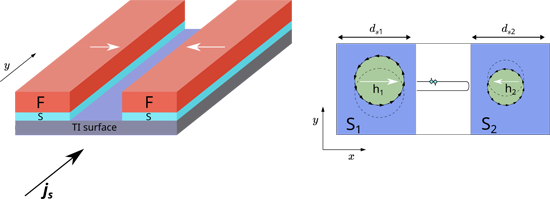
- employed as a way to detect the spin–orbital coupling (SOC) type of the material [72]. Typically, such devices require three ingredients for achieving the nonreciprocity of the critical current, including lack of inversion and time-reversal symmetries and the presence of the superconducting order parameter
- [1]. However, it should be emphasized that the lack of inversion symmetry is the implication of the gyrotropy in the structure of the material that supports nonreciprocal transport [39]. On the microscopic level, the lack of inversion symmetry is expressed by the SOC term. In this regard, systems
- in the dirty limit. h = (hx, 0, 0) is the exchange field due to the adjacent ferromagnetic material. The matrices τ and σ are 2 × 2 Pauli matrices in the particle–hole and spin spaces, respectively. The superconducting pair potential matrix is defined as , where the transformation matrix is . The


![[Graphic 16]](/bjnano/content/inline/2190-4286-17-2-i31.svg?max-width=637&scale=1.18182)
![[Graphic 17]](/bjnano/content/inline/2190-4286-17-2-i32.svg?max-width=637&scale=1.18182)


Internal 3D temperature mapping in biological systems using ratiometric light-sheet imaging and lipid-coated upconversion nanothermometers
Beilstein J. Nanotechnol. 2025, 16, 2306–2316, doi:10.3762/bjnano.16.159
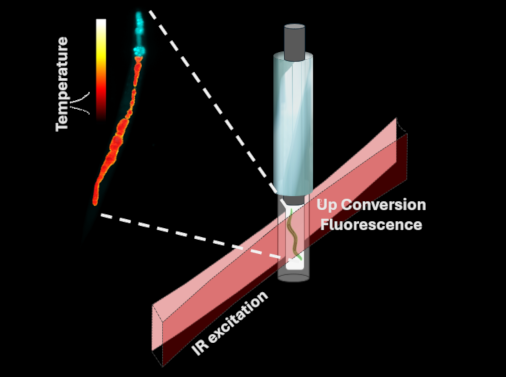
- two fluorescence bands centered at 525 and 550 nm, respectively; ∆E is the energy difference between the 2H11/2 and 4S4/2 levels, k is Boltzmann’s constant (0.695 cm−1·K−1), T is the absolute temperature in Kelvin (K), and C is a constant associated with the host material and determined by the
- lumen, which may be influenced by ingested material and microbial activity, rather than the metabolic heat production of the intestinal cells themselves. To probe intracellular temperatures, a surface coating engineered for active cellular uptake would be required. Conclusion We successfully


Terahertz-range on-chip local oscillator based on Josephson junction arrays for superconducting quantum-limited receivers
Beilstein J. Nanotechnol. 2025, 16, 2296–2305, doi:10.3762/bjnano.16.158
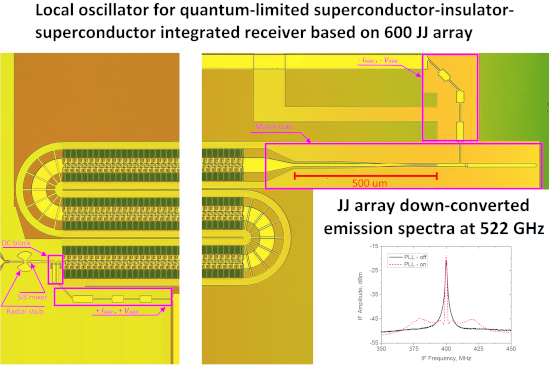
- discrepancy with the calculations at frequencies over 500 GHz (see Figure 6a). We studied the possible reasons for this and found that the performance deterioration at high frequencies is likely caused by the attenuation in the CPW. We performed calculations of the CPW with the same material parameters as the


Improving magnetic properties of Mn- and Zn-doped core–shell iron oxide nanoparticles by tuning their size
Beilstein J. Nanotechnol. 2025, 16, 2285–2295, doi:10.3762/bjnano.16.157
- properties of the nanoparticles [6]. A significant amount of research has focused on CoFe2O4 as a shell material to enhance the magnetic properties of core–shell nanoparticles due to its high coercivity and magnetic anisotropy [7]. The formation of CoFe2O4 shells on Fe3−δO4 cores has been shown to increase
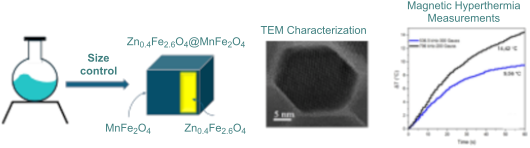
- material to eliminate the cytotoxicity concerns associated with cobalt. Furthermore, we demonstrate size control through synthesis by varying the concentration of oleic acid, a surfactant that influences particle size and morphology. This approach enables the synthesis of NPs with sizes ranging from 5 to
- [dT/dt]t=0 is the derivative function of the temperature at t = 0 (K·s−1). Results and Discussion X-ray diffraction analysis The XRD pattern (Supporting Information File 1, Figure S1) displays sharp and intense peaks characteristic of a well-crystallized material. The most intense peak is located at



Visualizing nanostructures in supramolecular hydrogels: a correlative study using confocal and cryogenic scanning electron microscopy
Beilstein J. Nanotechnol. 2025, 16, 2274–2284, doi:10.3762/bjnano.16.156
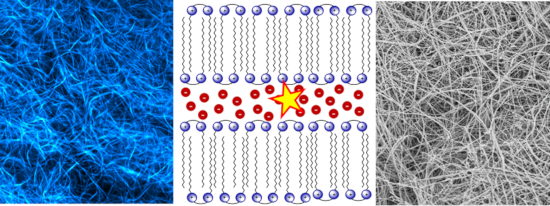
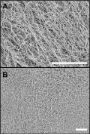
- material. The application of confocal microscopy, stimulated emission depletion (STED) microscopy, and conventional transmission electron microscopy (TEM) to a supramolecular peptide material has been shown to allow for sub-diffraction resolution imaging of fibre morphology in situ without covalent
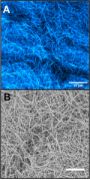
- result in phase separation whereby the water freezes, first expelling the ethanol into concentrated domains, which alters microscale material morphology. Such a phenomenon has been exploited for the fractional freezing of water–ethanol mixtures and in liposomal formulations containing water and DMSO [36
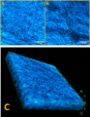
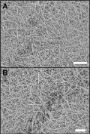
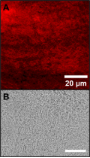
- confocal conditions. Importantly, no material is seen in between the fibres, indicating that the ZnPc is bound to the gelator. There is little observable difference in the gel morphology between the gel containing ZnPc and that containing DPP-BC, with both exhibiting long, curving fibres characteristic of



Geometry-controlled engineering of the low-temperature proximity effect in normal metal–superconductor junctions
Beilstein J. Nanotechnol. 2025, 16, 2265–2273, doi:10.3762/bjnano.16.155
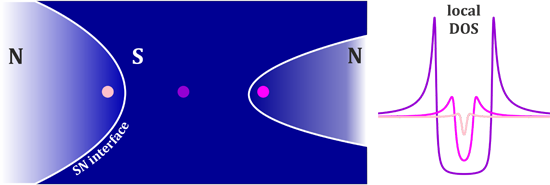
- Gennes equations; normal metal–superconductor junction; order parameter; proximity effect; superconductivity; Introduction When a superconductor (SC) is brought into contact with a normal metal (NM) or a ferromagnet (FM), Cooper pairs penetrate the adjacent material, imparting superconducting properties
- to it. This phenomenon, known as the proximity effect, enables normal material to support supercurrents and to exhibit a reduced density of states near the Fermi level, where a gap opens in the single-particle spectrum as electrons form into Cooper pairs [1][2][3][4]. At the same time, unpaired
- superconducting correlations in the NM is a hallmark of the proximity effect [14][15][16]. The pair correlations continuously decrease from their bulk value deep inside the superconductor, leak into the normal material, and eventually vanish at a distance much larger than ξn far inside the NM [7][17][18]. The


Chiral plasmonic nanostructures fabricated with circularly polarized light
Beilstein J. Nanotechnol. 2025, 16, 2245–2264, doi:10.3762/bjnano.16.154
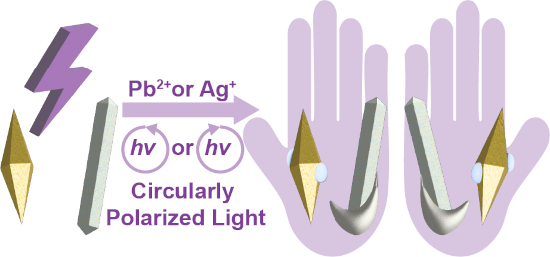
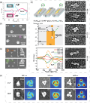
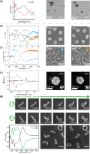
- -induced growth of cPNSs in the same year [20]. CPL offers several advantages over the chiral chemical precursors used in the seeded growth approach. First, CPL is traceless. Turning off the CPL removes its influence on the material system, which can simplify the characterization of the material’s
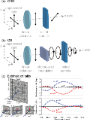
- magnetic fields, respectively. Derived by Tang and Cohen [119], the optical chirality is relevant to gλ, the fractional difference in rates of excitation of a small molecule between LCPL and RCPL at wavelength λ through Equation 2, where gCPL is the material dissymmetry factor, c is the speed of light, Ue
- orientation of the polarization plane of linearly polarized light when traveling through a chiral medium. It is related to the real part of the material refractive index, and a chiral material has a different index for LCPL and RCPL. CB is measured through ORD expressed by Equation 3: where nRCPL and nLCPL





Optical bio/chemical sensors for vitamin B12 analysis in food and pharmaceuticals: state of the art, challenges, and future outlooks
Beilstein J. Nanotechnol. 2025, 16, 2207–2244, doi:10.3762/bjnano.16.153
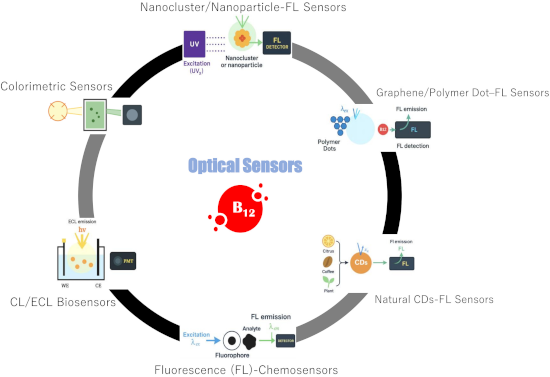
- -based AuNP colorimetric biosensors In this sensing system, the recognition material is the RNA aptamer, the indicator material is the gold nanoparticle (AuNP), and the sensing signal is colorimetric. The excellent optical-electronic characteristics of AuNPs have been recently considered in point-of-care
- significant difference in the detected amounts of MeCbl among the utilized diagnostic assays [78]. Small-molecule-based colorimetric chemosensors for cobalt/VB12 detection In this class, the recognition material is a small-molecule receptor (chemosensor), the indicator material is its intrinsic chromophore or
- phenols in a diazotization-like process produced a range of azo derivatives, 3-(diazenyl)-2-(styryl)quinazolin-4(3H)-one for detecting metal ions of Co2+ and Fe2+, where the azo-quinazolinone acted as the recognition material, the azo chromophore acted as the indicator, and the sensing readout was a


Missing links in nanomaterials research impacting productivity and perceptions
Beilstein J. Nanotechnol. 2025, 16, 2168–2176, doi:10.3762/bjnano.16.149
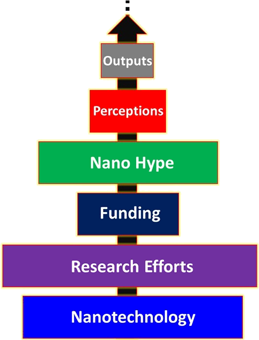
- technology to catch up with his ideas, his foresight catalyzed a profound shift in the way scientists approached the material world. What was once philosophical became increasingly feasible and eventually tangible. Since then, various aspects of nanoscience and nanotechnology have evolved, ranging from the
- acceleration after the discovery of fullerene by Kroto and co-workers in 1985 and witnessed an even more rapid surge following the discovery of graphene and the award of the Physics Nobel Prize in 2010 [6][7]. Graphene is often referred to as a “wonder material” due to its seemingly infinite potential in
Microplastic pollution in Himalayan lakes: assessment, risks, and sustainable remediation strategies
Beilstein J. Nanotechnol. 2025, 16, 2144–2167, doi:10.3762/bjnano.16.148
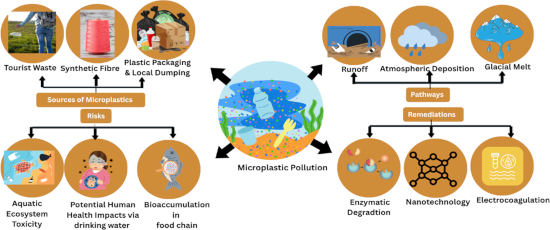
- , attack the polymer chains of MPs. They either break the chains into smaller pieces or mineralize them into CO2 and water. A lot of research is being done on the photocatalytic properties of nanomaterials like TiO2, graphene oxide (GO), and ZnO. An excellent material for breaking down MPs in water systems


Electron transport through nanoscale multilayer graphene and hexagonal boron nitride junctions
Beilstein J. Nanotechnol. 2025, 16, 2132–2143, doi:10.3762/bjnano.16.147
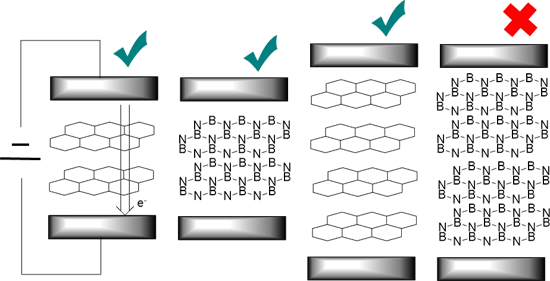
- perpendicular to the layers in the stacking direction. We compared the decay of the current with the number of layers and evaluated the ability of h-BN to filter currents as a material coating. To investigate the effect of disorder, we included two major defects in the graphene lattice, namely, nitrogen doping
- ) is a material that shares many structural and electronic properties with graphite. It is isoelectronic to graphene with N contributing two electrons to the π-conjugated bond and B contributing zero electrons, as opposed to graphene, where each C atom contributes one electron. The h-BN structure is
- composed of polar bonds with N acting as electron donor and B acting as electron acceptor. Unlike graphene and graphite, h-BN shows high resistivity and is a large-bandgap semiconductor [17]. h-BN has a wide range of applications due to its unique properties [18]. It is used as a substrate material for


Quality by design optimization of microemulsions for topical delivery of Passiflora setacea seed oil
Beilstein J. Nanotechnol. 2025, 16, 2116–2131, doi:10.3762/bjnano.16.146
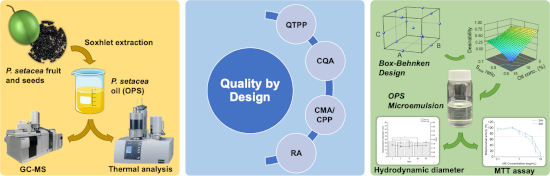
- quantitatively evaluate these risks. A three-level interdependence scale (1: low, 3: medium, 9: high) was applied to assess the relationship between the QTPP and CQAs (Supporting Information File 1, Table S1), as well as between the CQAs and the critical material attributes (CMAs) and critical process parameters


Rapid synthesis of highly monodisperse AgSbS2 nanocrystals: unveiling multifaceted activities in cancer therapy, antibacterial strategies, and antioxidant defense
Beilstein J. Nanotechnol. 2025, 16, 2105–2115, doi:10.3762/bjnano.16.145
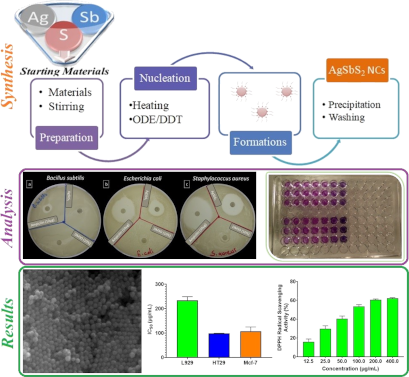
- reducing capacity. Conclusion Ag-based materials, which are well known for their antibacterial properties, have been the subject of many studies. Therefore, in this study, AgSbS2 NCs belonging to the Ag-based chalcogenide material family were produced using the hot-injection method to examine their


Toward clinical translation of carbon nanomaterials in anticancer drug delivery: the need for standardisation
Beilstein J. Nanotechnol. 2025, 16, 2092–2104, doi:10.3762/bjnano.16.144

- CNMs for drug delivery presents several practical and economic challenges. These include high equipment and raw material costs, limited yields, quality control issues, and environmental and safety concerns. Addressing these barriers requires targeted innovation in synthesis methods, improved
- responses [37]. In contrast, a recent first-in-human investigation of thin, highly purified graphene oxide nanosheets reported that acute inhalation was well tolerated, showing no adverse effects on lung function, cardiovascular health, or systemic inflammatory markers [28]. Even within the same material
- , and material purity are essential for translational development. Contaminants such as carboxylated carbonaceous fragments (CCFs) may be introduced during synthesis and processing, and these impurities can alter biological responses or induce toxicity. Their detection and removal should form a routine




Calibration of piezo actuators and systems by dynamic interferometry
Beilstein J. Nanotechnol. 2025, 16, 2086–2091, doi:10.3762/bjnano.16.143
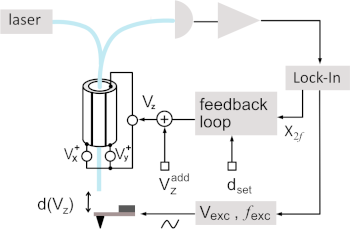
- calibration factor differs from the nominal value by more than a factor of two might be due to the manufacturing tolerance; but, more likely, it can be explained by a depolarization of the tube piezo material as it has been subject to many heating cycles for bakeout of the UHV chamber. Next, we investigate


Multifrequency AFM integrating PeakForce tapping and higher eigenmodes for heterogeneous surface characterization
Beilstein J. Nanotechnol. 2025, 16, 2077–2085, doi:10.3762/bjnano.16.142
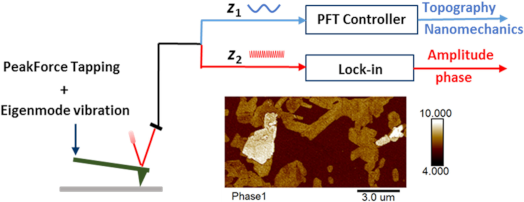
- ) technique that synergistically integrates PeakForce tapping mode with higher eigenmode vibrations to achieve simultaneous high-resolution topographical imaging and to access additional contrast channels for distinguishing material regions or compositions. Unlike conventional multimodal AFM, our method
- mappings obtained via the PeakForce tapping method. Furthermore, the technique’s dual capability, that is, quantitative mechanics via quasi-static force curves and qualitative material-sensitive information via eigenmode vibration signals, facilitates effective compositional differentiation in
- heterogeneous nanomaterials while significantly simplifying the requirements for probe selection, which are typically necessary for material differentiation via the standard PeakForce tapping method. This innovation enhances the technique’s practicality and extends compatibility to a wider array of probe types


Molecular and mechanical insights into gecko seta adhesion: multiscale simulations combining molecular dynamics and the finite element method
Beilstein J. Nanotechnol. 2025, 16, 2055–2076, doi:10.3762/bjnano.16.141
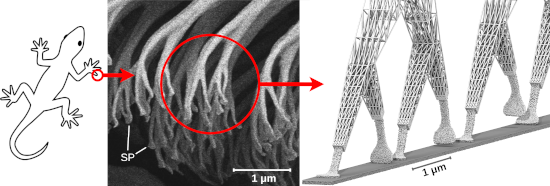
- natural hierarchy of real gecko setae, which includes finer branches, varying cross sections, and region-specific material anisotropy. Real setae possess complex cross-sectional shapes and non-uniform branching angles, which could lead to variations in force distributions. Nonetheless, this idealized
- material may exhibit anisotropy and viscoelastic or even plastic behavior, especially under rapid loading. Our FE mesh is presently limited to a linear-elastic, isotropic constitutive law, with parameters E and ν matching those of our molecular keratin spatula model [11][12]. These values were derived in a
- bottom-up manner from atomistic simulations that reproduced experimental data [8][38][39]. For each of our simulations, we sampled E and ν from normal distributions with the same mean and standard deviations as our mesoscale spatula model. Table 2 summarizes the material parameters used for our FE mesh







Stereodiscrimination of guests in chiral organosilica aerogels studied by ESR spectroscopy
Beilstein J. Nanotechnol. 2025, 16, 2034–2054, doi:10.3762/bjnano.16.140
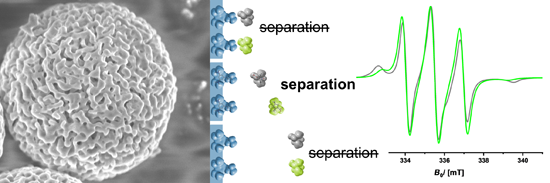
- available material confirmed the method’s reliability. The data underline how crucial the choice of the right solvent is if one wants to reach sufficient selectivity. Together with a series of custom-made organosilica aerogels, it is shown that adjusting solvent and surface properties so that the two
- enantiomers (+) and (−) experience a different chemical environment is key. Otherwise, there might be a dynamic equilibrium between surface-adsorbed and mobile spin probes without stereodifferentiation. With this knowledge, it was possible to reach higher selectivity values than for the commercial material. A
- Kotov and coworkers [4]. Chiral optical materials have unique optical activity, displaying phenomena such as circular dichroism and optical rotation. These characteristics are harnessed in applications like sensors, optical devices, and polarized materials. Material chirality can also lead to unusual




Beyond the shell: exploring polymer–lipid interfaces in core–shell nanofibers to carry hyaluronic acid and β-caryophyllene
Beilstein J. Nanotechnol. 2025, 16, 2015–2033, doi:10.3762/bjnano.16.139
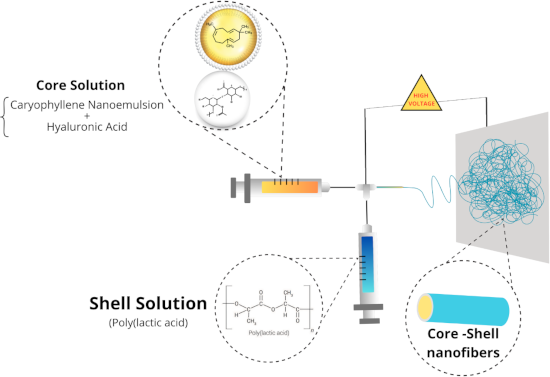
- encapsulated within a PLA shell, highlighting substantial potential for biomedical applications by overcoming key material integration hurdles. Keywords: co-axial nanofibers; electrospinning; hybrid nanosystem; nanofibers; nanoemulsion; poly(lactic acid); Introduction Driven by the significant potential of
- process variables, such as high voltage, flow rate, and the distance from the Taylor cone to the collector, which significantly impacts nanofiber morphology [17]. Furthermore, selection of the material to be electrospun is crucial, requiring control over key attributes such as molecular weight, polymer
- the shell and core flow rates is crucial to ensure proper incorporation of the core material. When this ratio is excessively high, the core flow becomes insufficient relative to the shell flow, resulting in fibers with a discontinuous or poorly defined core [50]. Conversely, when the core flow is too




The cement of the tube-dwelling polychaete Sabellaria alveolata: a complex composite adhesive material
Beilstein J. Nanotechnol. 2025, 16, 1998–2014, doi:10.3762/bjnano.16.138
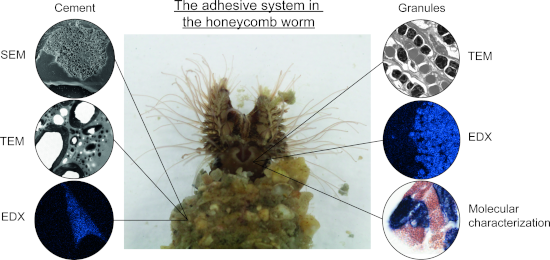
- and that of the cement suggests that the inclusions of the heterogeneous granules would inflate through a still unexplained process to form hollow spheroids dispersed in the cement matrix, leading to the formation of a complex composite material. Keywords: adhesive protein; Annelida; biological
- material; Polychaeta; protein phosphorylation; Introduction Many invertebrate marine organisms have adhesive mechanisms that allow them to firmly attach to various substrates in a wet and salty environment [1][2]. This remarkable ability has raised the interest of scientists in developing bio-inspired
- adhesive systems are remarkably similar although some differences have been noted such as the absence of sulfated polysaccharides in S. alveolata [31]. Production of a solid composite material forming highly resistant cement spots The ultrastructural study (SEM and TEM) of the adhesive system of S




Laser ablation in liquids for shape-tailored synthesis of nanomaterials: status and challenges
Beilstein J. Nanotechnol. 2025, 16, 1963–1997, doi:10.3762/bjnano.16.137
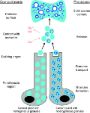
- target surface. The current understanding of the mechanisms of PLAL distinguishes the process depending on the laser pulse duration (Figure 1a). For the ultrashort pulses (femtosecond duration) the interaction of the ejected material with the laser pulse can be neglected. For longer laser pulses
- (nanosecond), this interaction should be taken into account, resulting in the ionization and heating of the ejected material. The initial stages of interaction of a laser beam with a solid target are strongly dependent on laser pulse duration and fluence, surrounding liquid, target morphology and composition
- generation of shockwaves and formation of cavitation bubbles, which typically have a lifetime of several microseconds. During its evolution, the cavitation bubble expands to reach the equilibrium with the confining liquid, after which the shrinking stage begins, which involves the ablated material moving