Search results
Search for "multicomponent" in Full Text gives 64 result(s) in Beilstein Journal of Nanotechnology.
Magnetic properties of iron cluster/chromium matrix nanocomposites
Beilstein J. Nanotechnol. 2015, 6, 1158–1163, doi:10.3762/bjnano.6.117
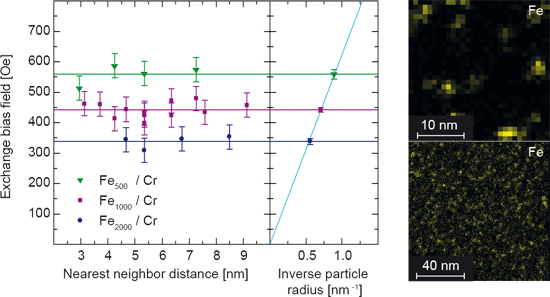
- treatment steps, i.e., quenching, annealing combined with plastic deformation, in order to obtain the multicomponent multiphase structures optimized for advanced structural and functional applications [1]. Besides the pathways used during the preparation of the alloys, their final nano- and microstructure


Electrical properties of single CdTe nanowires
Beilstein J. Nanotechnol. 2015, 6, 444–450, doi:10.3762/bjnano.6.45
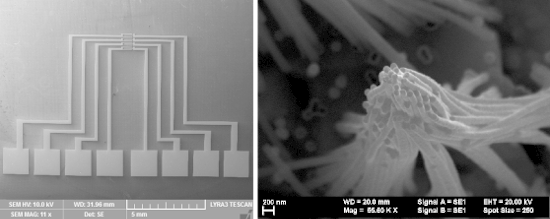
- stoichiometric composition for a rather wide range of electrode potentials and the ability to tune the bath composition over a rather wide range. Practically, the electrodeposition of multicomponent materials (either alloys or compounds) is related to the differences in reduction potentials for each component


Electrical response of liquid crystal cells doped with multi-walled carbon nanotubes
Beilstein J. Nanotechnol. 2015, 6, 396–403, doi:10.3762/bjnano.6.39
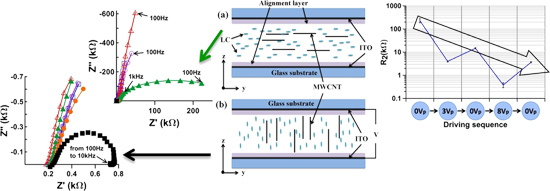
- electrical parameters can be established. This work intends to describe CNT-doped LC cells by means of an EEC. Instead of designing a complicated multicomponent EEC, a simple EEC already employed to describe undoped cells will be tested. The validity of the EEC will be checked using CNTs as conductive


Functionalization of α-synuclein fibrils
Beilstein J. Nanotechnol. 2015, 6, 124–133, doi:10.3762/bjnano.6.12
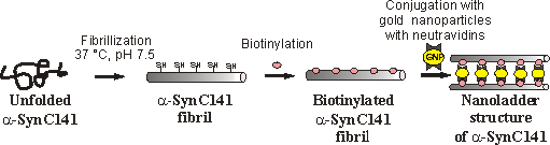
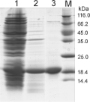
- multicomponent biocomplexes that can be employed in a broad range of applications. In this paper, we report the construction of a new nanostructure – nanoladders, which was generated from amyloid fibrils formed by the α-SynC141 mutant protein. Genetically inserted cysteine residue allowed the chemical
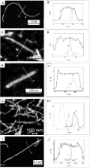
- modification of the target protein. Novel well-ordered multicomponent nanoderivatives have been constructed by labelling α-SynC141 fibrils with biotin. The biotinylated fibrils have been further assembled with neutravidin-conjugated gold nanoparticles. The resulting structures were evaluated by AFM and TEM
- fibrils, and were of 5.27 ± 1.02 nm height (Figure 2E,F). The modification of the α-SynC141 protein with biotin before the fibrillization was also performed, but no fibril structures were observed after such alteration (data not shown). To construct multicomponent nanostructures, biotinylated α-SynC141


Inorganic Janus particles for biomedical applications
Beilstein J. Nanotechnol. 2014, 5, 2346–2362, doi:10.3762/bjnano.5.244
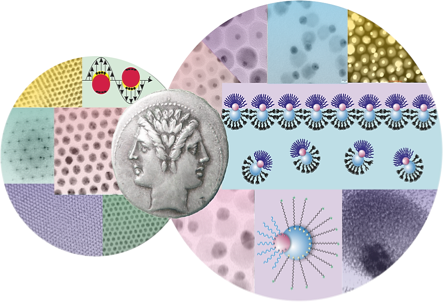
- -Weg 11, 55128 Mainz, Germany 10.3762/bjnano.5.244 Abstract Based on recent developments regarding the synthesis and design of Janus nanoparticles, they have attracted increased scientific interest due to their outstanding properties. There are several combinations of multicomponent hetero






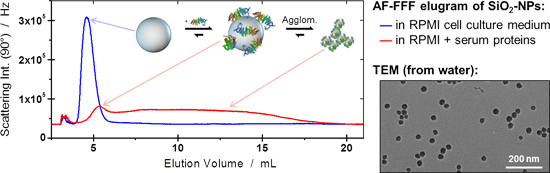
The surface properties of nanoparticles determine the agglomeration state and the size of the particles under physiological conditions
Beilstein J. Nanotechnol. 2014, 5, 1774–1786, doi:10.3762/bjnano.5.188
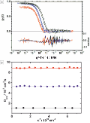
- evaluated by the so-called multicomponent analysis [28]. By this procedure, the measured autocorrelation function is subdivided into single components with each component again expressed as a discrete autocorrelation function. As the autocorrelation functions of single components cannot be determined by a
- fraction. As an example, the multicomponent analysis of the mixture of serum proteins (FCS), amorphous silica nanoparticles (NP) and the subsequently formed agglomerates at a scattering angle of 30° is shown in Figure 3. The autocorrelation function of pristine nanoparticles as well as that of the serum
- proteins were measured before and thus are preassigned. As result of the multicomponent analysis, the autocorrelation function of the mixture can be described as the autocorrelation function of serum proteins with an amplitude of 0.01 plus the autocorrelation function of pristine nanoparticles with an


Microstructural and plasmonic modifications in Ag–TiO2 and Au–TiO2 nanocomposites through ion beam irradiation
Beilstein J. Nanotechnol. 2014, 5, 1419–1431, doi:10.3762/bjnano.5.154
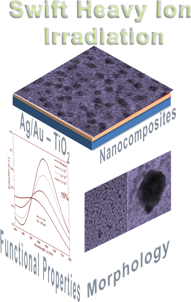
- Venkata Sai Kiran Chakravadhanula Yogendra Kumar Mishra Venkata Girish Kotnur Devesh Kumar Avasthi Thomas Strunskus Vladimir Zaporotchenko Dietmar Fink Lorenz Kienle Franz Faupel Chair for Multicomponent Materials, Institute for Materials Science, Christian Albrechts University Kiel, Kaiserstr. 2


Functionalized nanostructures for enhanced photocatalytic performance under solar light
Beilstein J. Nanotechnol. 2014, 5, 994–1004, doi:10.3762/bjnano.5.113
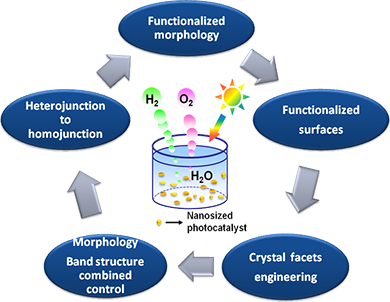
- located in ABO3 structures, and functionalized multicomponent ABO3 materials can thus be prepared by partial substitution of cations in A and B sites [46][47][48]. In this approach, we have successfully synthesized hexagonal single-crystal nanosheet-based NaSbO3 and AgSbO3 hierarchical cuboidal


Multiple regimes of operation in bimodal AFM: understanding the energy of cantilever eigenmodes
Beilstein J. Nanotechnol. 2013, 4, 385–393, doi:10.3762/bjnano.4.45
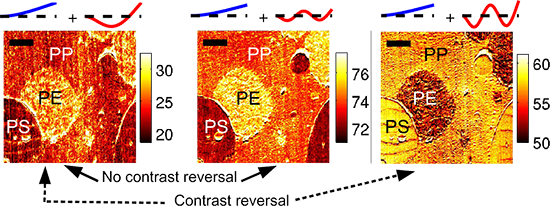
- this work we show a series of bimodal experiments on a multicomponent polymer blend using different combinations of eigenmodes. Bimodal AFM shows excellent contrast between the different components. We will show that there are several interesting effects that depend on the choice of eigenmodes and
- reversals on a multicomponent polymer blend. Higher eigenmode bimodal AFM (e.g., “1st eigenmode + 4th eigenmode”) behaves essentially the same as traditional bimodal AFM (“1st + 2nd”), when operated at similar energy levels. When the energy of the higher eigenmode is much smaller than the energy of the


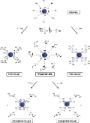
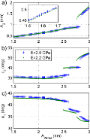
![[Graphic 3]](/bjnano/content/inline/2190-4286-4-45-i5.png?max-width=637&scale=1.18182) . In the top row (a, b) the first eigen...
. In the top row (a, b) the first eigen...



Functionalization of vertically aligned carbon nanotubes
Beilstein J. Nanotechnol. 2013, 4, 129–152, doi:10.3762/bjnano.4.14
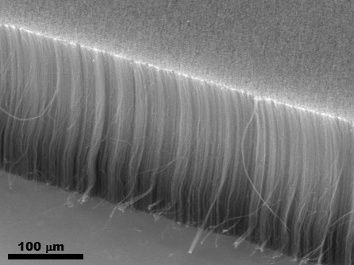
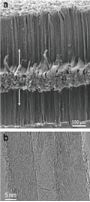
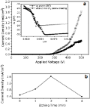
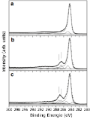
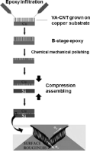
- and negative patterns [70]. 3D multicomponent micropatterns were synthesized by direct growth using masks produced by contact transfer [71]. Another example is the patterned growth of 3D interposed VA-SWCNTs and VA-MWCNTs by activating selective regions of iron substrates used for the synthesis of VA








Focused electron beam induced deposition: A perspective
Beilstein J. Nanotechnol. 2012, 3, 597–619, doi:10.3762/bjnano.3.70
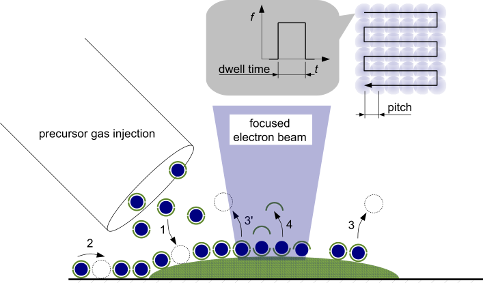
- that highlight this development in the areas of charge-transport regimes in nanogranular metals close to an insulator-to-metal transition, the use of these materials for strain- and magnetic-field sensing, and the prospect of extending FEBID to multicomponent systems, such as binary alloys and
- differential equations for the rate of change of adsorbates relevant for the FEBID process. This will be the focus of this section, with particular emphasis on employing this approach to multicomponent scenarios relevant for the formation of binary FEBID structures, i.e., structures grown in the presence of
- composition by variation of the dwell time can be devised. In the next subsection the continuum model will therefore be extended to a multicomponent variant. Multicomponent extension of the continuum model The extension of the model described above to the multicomponent case was first introduced by Lobo and


Nanolesions induced by heavy ions in human tissues: Experimental and theoretical studies
Beilstein J. Nanotechnol. 2012, 3, 556–563, doi:10.3762/bjnano.3.64
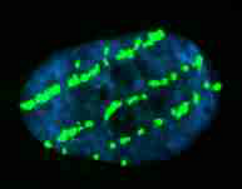
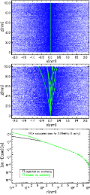
- as a sum of contributions from various secondary particles representing a multicomponent radiation field around the primary beam. The contributions of various fragments to the spectra are shown separately in Figure 6 for a TEPC located at the Bragg peak on the beam axis. The peak in the distribution



Functionalised zinc oxide nanowire gas sensors: Enhanced NO2 gas sensor response by chemical modification of nanowire surfaces
Beilstein J. Nanotechnol. 2012, 3, 368–377, doi:10.3762/bjnano.3.43
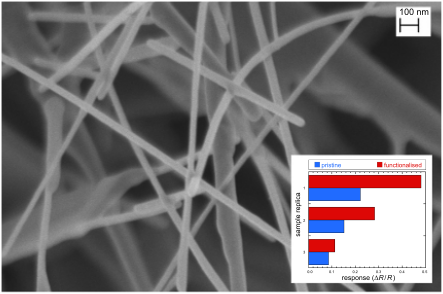
- dodecanethiol ligand and the ZnO surface could readily be distinguished at 164.4 eV with these samples, while sulfur peaks in the XPS spectrum of the unfunctionalised sensors were completely absent. Similarly THMA-functionalisation led to a multicomponent nitrogen peak, which could be fitted to the C–N bond in


Nano-FTIR chemical mapping of minerals in biological materials
Beilstein J. Nanotechnol. 2012, 3, 312–323, doi:10.3762/bjnano.3.35
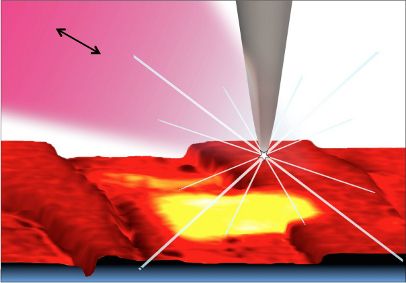
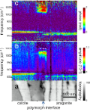
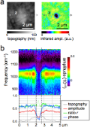
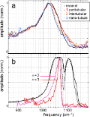
- . Multicomponent phosphate bands are observed on human tooth sections. These spectra vary characteristically near tubuli in dentin, proving a chemical or structural variation of the apatite nanocrystals. The infrared band strength correlates with the mineral density determined by electron microscopy. Since nano