Search results
Search for "nanospheres" in Full Text gives 142 result(s) in Beilstein Journal of Nanotechnology.
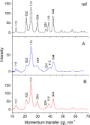
Magnetic-field-assisted synthesis of anisotropic iron oxide particles: Effect of pH
Beilstein J. Nanotechnol. 2020, 11, 1230–1241, doi:10.3762/bjnano.11.107
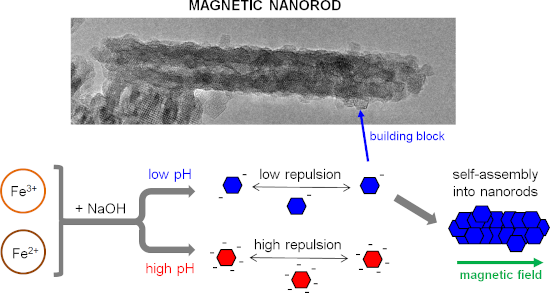
- properties and a larger length-scale of the locally induced magnetic field in comparison to nanospheres with a similar volume, providing an enhanced MRI contrast [11][19][23], higher specific adsorption rate in magnetic hyperthermia [13], and better separation efficiency in magnetic separation of immune
- binding to and an enhanced retention at the target sites [26] due to their larger contact area and multidentate interactions with the cell membranes. Thus, rod-like nanoparticles are preferred in many applications. However, their synthesis is more complicated than the synthesis of nanospheres since the






Gram-scale synthesis of splat-shaped Ag–TiO2 nanocomposites for enhanced antimicrobial properties
Beilstein J. Nanotechnol. 2020, 11, 1119–1125, doi:10.3762/bjnano.11.96
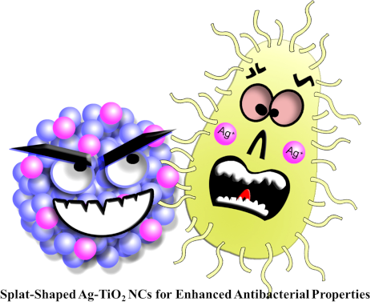
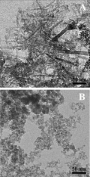
- –TiO2 NCs was tested against the Gram-positive Staphylococcus aureus (S. aureus) and Gram-negative Escherichia coli (E. coli) bacterial strains. The Ag–TiO2 NCs exhibited promising and superior antibacterial properties compared to TiO2 nanospheres as confirmed by the bacterial growth and inhibition zone
- nanoparticles (50 nm) appeared at the surface of theTiO2 nanospheres (Figure 2b,c). It was observed that the amount of the Ag NPs increased when the AgNO3 concentration increased. Figure 2d,f shows the EDS spectra. As expected, the EDS results identified Ag, Ti and O as the components present in the prepared
- compounds. The sample without Ag was identified as pure TiO2 nanospheres (Figure 2a). Figure 3a shows the FTIR spectrum of pure TiO2 NPs in comparison with the Ag–TiO2 nanocomposites at different Ag concentrations. The central absorption peak of pure TiO2 NPs and Ag–TiO2 nanocomposites at 3475.2, 3469.1


Applications of superparamagnetic iron oxide nanoparticles in drug and therapeutic delivery, and biotechnological advancements
Beilstein J. Nanotechnol. 2020, 11, 1092–1109, doi:10.3762/bjnano.11.94
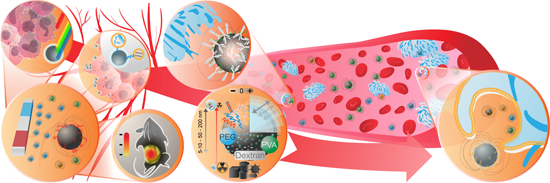
- infiltrated these macrophages in spheroids of tumor cells and destroyed the cells by hyperthermia in vitro [125]. Moghimi et al. [124] found that liposomes and polymeric nanospheres used as nanocarriers are also opsonized, which promotes their clearance by macrophage activation. The opsonization also leads to
- in any of the organs studied, even though an equivalent of 15 µg/day was released from the mass of the iron patch. Feng et al. [168] produced a multifunctional nanoplatform consisting of superparamagnetic iron oxide nanospheres coated with ultrasmall up-conversion nanoparticles on mesoporous


Microwave-induced electric discharges on metal particles for the synthesis of inorganic nanomaterials under solvent-free conditions
Beilstein J. Nanotechnol. 2020, 11, 1019–1025, doi:10.3762/bjnano.11.86
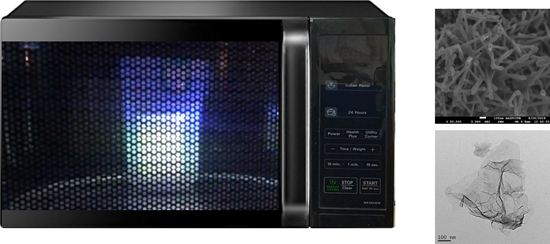
- mixture along with g-C3N4, sulfur helps to produce carbon nanotubes instead of carbon nanospheres. The reactivity of sulfur with the end caps of nanotubes does not allow the carbon nanotubes to close. These amorphous carbon nanotubes help as a template to intercalate metal fluorides/metal sulfides. As the


Key for crossing the BBB with nanoparticles: the rational design
Beilstein J. Nanotechnol. 2020, 11, 866–883, doi:10.3762/bjnano.11.72
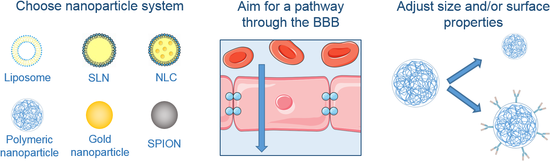
- (spheres, shells, rods) and size of which can be tailored depending on the synthesis process [173]. Most studies on the brain delivery of gold nanoparticles used gold nanospheres (AuNPs). AuNPs are composed of a gold core and covalently or non-covalently attached surface ligands. AuNPs have many very


Transition from freestanding SnO2 nanowires to laterally aligned nanowires with a simulation-based experimental design
Beilstein J. Nanotechnol. 2020, 11, 843–853, doi:10.3762/bjnano.11.69

- substrates covered with gold nanoparticles (Au NPs) were prepared. For the latter method, the substrates were cleaned with deionized (DI) water and dried with nitrogen before coating them with 10 µL of a 1:2 v/v% solution of Au NPs (80 nm gold nanospheres, citrate NanoXact 0.05 mg/mL, nanoComposix) and





Hexagonal boron nitride: a review of the emerging material platform for single-photon sources and the spin–photon interface
Beilstein J. Nanotechnol. 2020, 11, 740–769, doi:10.3762/bjnano.11.61




Silver-decorated gel-shell nanobeads: physicochemical characterization and evaluation of antibacterial properties
Beilstein J. Nanotechnol. 2020, 11, 620–630, doi:10.3762/bjnano.11.49
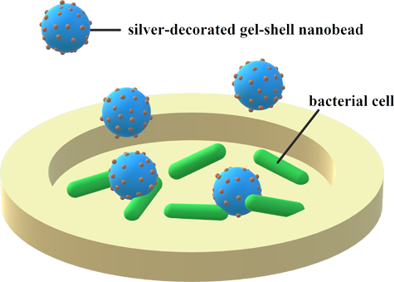
- -incorporated silver nanoparticles. Results and Discussion Preparation and physicochemical characterization of silver-decorated gel-shell nanobeads The preparation of sulfonated polystyrene beads with embedded silver nanoparticles (PSSAg) is schematically shown in Figure 1. First, polystyrene nanospheres are


Label-free highly sensitive probe detection with novel hierarchical SERS substrates fabricated by nanoindentation and chemical reaction methods
Beilstein J. Nanotechnol. 2019, 10, 2483–2496, doi:10.3762/bjnano.10.239
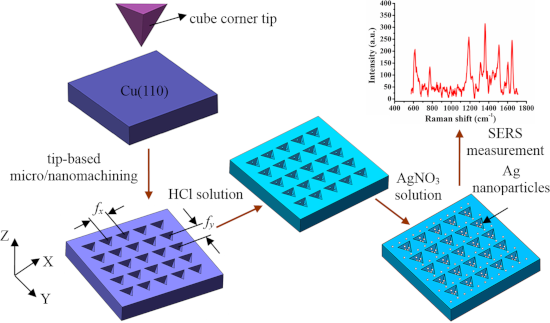
- ], nanostars [17][18], nanoantennas [19], and nanospheres [20]; these have been successfully machined by existing lithography-based technologies. Furthermore, hierarchical substrates have also been fabricated by a combination of lithography [21][22][23][24][25] and self-assembly. Matricardi et al. [21] used
- the template-assisted assembly of gold nanospheres with patterned PDMS molds featuring square array geometries with lattice parameters of 400 to 1600 nm and hole diameters of 230 to 960 nm. Then 4-acetamidothiophenol at 10−4 mol/L was detected using this substrate. Domenici et al. [22] used electron


Nonlinear absorption and scattering of a single plasmonic nanostructure characterized by x-scan technique
Beilstein J. Nanotechnol. 2019, 10, 2182–2191, doi:10.3762/bjnano.10.211
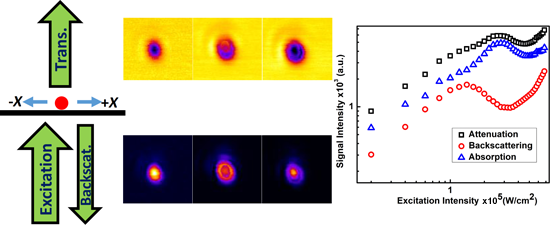
- reasonable. Sample preparation As samples, we used 80 nm diameter gold nanospheres commercially available from BBI Solutions, UK. Before use, the nanostructure solution was sonicated for 2 min to avoid particle aggregation. Then, one drop of the solution was placed on polysine slides (Thermo Fisher


Novel hollow titanium dioxide nanospheres with antimicrobial activity against resistant bacteria
Beilstein J. Nanotechnol. 2019, 10, 1716–1725, doi:10.3762/bjnano.10.167
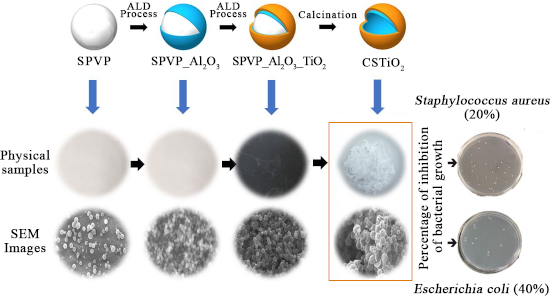
- this work, novel, hollow, calcined titanium dioxide nanospheres (CSTiO2) were successfully synthesized for the first time through the combination of electrospinning and atomic layer deposition techniques. Poly(vinylpyrrolidone) (PVP) electrosprayed spherical particles were double-coated with alumina
- and titanium dioxide, and after a calcination process, hollow nanospheres were obtained with a radius of approximately 345 nm and shell thickness of 17 nm. The structural characterization was performed using electron microscopy, and X-ray diffraction and small-angle X-ray diffraction evidenced an
- anatase titanium dioxide crystalline structure. Thermogravimetric analysis and Fourier-transform infrared spectroscopy studies demonstrated the absence of polymer residue after the calcination process. The antimicrobial properties of the developed CSTiO2 hollow nanospheres were evaluated against different


Revisiting semicontinuous silver films as surface-enhanced Raman spectroscopy substrates
Beilstein J. Nanotechnol. 2019, 10, 1048–1055, doi:10.3762/bjnano.10.105
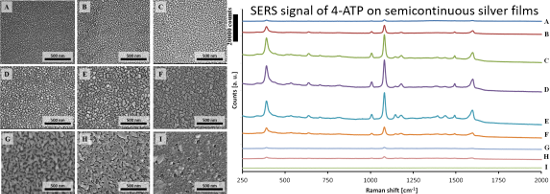
- . Chemical methods allow for fabrication, in solution or on surfaces, of nanostructures of various shapes including: nanospheres [5], spheres coated with a thin dielectric shell [10], dielectric core-metallic shell particles [11][12], nanostars [13], microflowers [14] and aggregates [15], just to mention a
- -structured surfaces made of glass [25][26], GaN [27][28][29], Si [30], TiO2 [31], Al2O3 [32], Ti [33], polymers [34], or planar surfaces coated with nano/microspheres resulting in metal film on nanospheres MFON [35][36], and Au nanocrescents on a monolayer of polystyrene nanospheres [37]. Additionally




Correlation of surface-enhanced Raman scattering (SERS) with the surface density of gold nanoparticles: evaluation of the critical number of SERS tags for a detectable signal
Beilstein J. Nanotechnol. 2019, 10, 1016–1023, doi:10.3762/bjnano.10.102
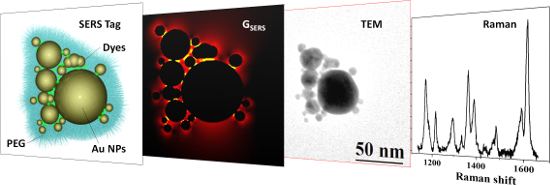
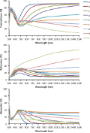
- -selected nanospheres. Conclusion In this study, the performance of SERS labels based on Au NPs and organic dyes resonant at 633 nm was investigated by a combination of Raman and TEM analysis. The AuNTs were designed in order to support multiple electromagnetic hot spots for any polarization direction of


Serum type and concentration both affect the protein-corona composition of PLGA nanoparticles
Beilstein J. Nanotechnol. 2019, 10, 1002–1015, doi:10.3762/bjnano.10.101
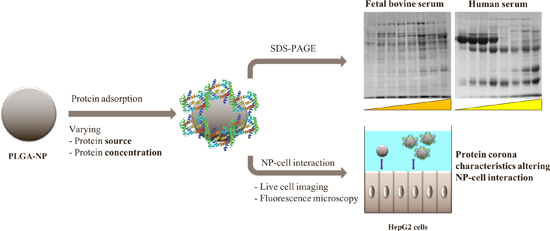
- blood clearance mechanisms of nanospheres [34]. However, one has to keep in mind that this is probably not the sole mechanism of elimination. For instance, Hu and co-workers supposed that adsorption of platelet factor 4 also promotes rapid clearance from the bloodstream (Table S2, Supporting Information



Self-assembly and wetting properties of gold nanorod–CTAB molecules on HOPG
Beilstein J. Nanotechnol. 2019, 10, 696–705, doi:10.3762/bjnano.10.69
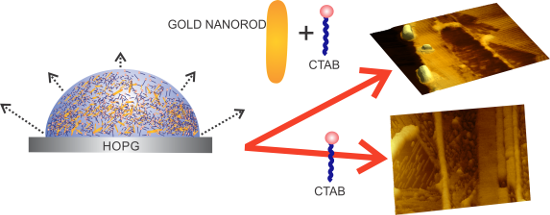
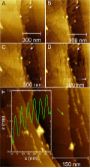
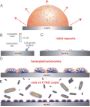
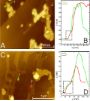
- for 10 min to reduce (1.0 mM to ≈0.4 mM) the excess CTAB concentration. Similarly, the same solution was centrifuged again at 5600 rpm for 5 min to separate nanospheres from nanorods. The supernatant, consisting mostly of nanorods, was carefully separated from nanospheres stuck at the bottom of the


Electromagnetic analysis of the lasing thresholds of hybrid plasmon modes of a silver tube nanolaser with active core and active shell
Beilstein J. Nanotechnol. 2019, 10, 294–304, doi:10.3762/bjnano.10.28
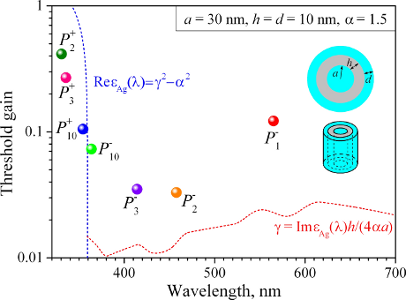
- of ways. After initial theorizing in the mid-2000s, this has led to the experimental demonstration of the smallest plasmonic laser in a random solution of colloidal gold nanospheres enveloped with dye-doped silica shells [3]. Today, plasmonic nanolasers attract great attention in research. A number


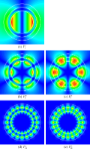
![[Graphic 29]](/bjnano/content/inline/2190-4286-10-28-i46.svg?max-width=637&scale=1.18182) λ = 565.03...
λ = 565.03...

![[Graphic 36]](/bjnano/content/inline/2190-4286-10-28-i53.svg?max-width=637&scale=1.18182) ...
...


Targeting strategies for improving the efficacy of nanomedicine in oncology
Beilstein J. Nanotechnol. 2019, 10, 168–181, doi:10.3762/bjnano.10.16
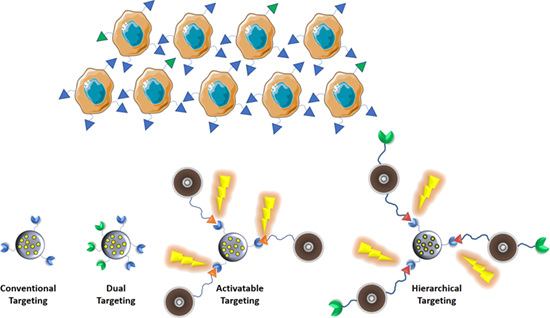
- specifically designed for binding to the epidermal growth factor receptors (EGFR) have been anchored on the surface of hollow gold nanospheres [39]. The thiolated version of these aptamers was anchored on the gold surface through the thiol groups producing an average anchorage yield of 250 aptamers per


Colloidal chemistry with patchy silica nanoparticles
Beilstein J. Nanotechnol. 2018, 9, 2989–2998, doi:10.3762/bjnano.9.278
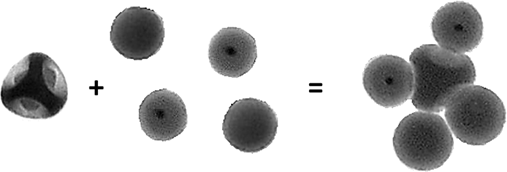
- report a new route to synthesize clusters, or so-called colloidal molecules (CMs), which mimic the symmetry of molecular structures made of one central atom. We couple site-specifically functionalized patchy nanoparticles, i.e., valence-endowed colloidal atoms (CAs), with complementary nanospheres
- , i.e., well-calibrated silica nanospheres or core–shell nanoparticles, were obtained according to a seeded-growth protocol [22] and a method using methoxy poly(ethylene glycol)-thiol as a coupling agent [23], respectively. Their surface functionalization with carboxylic acid groups was performed by a
- deactivation of the anhydride groups by hydrolysis. With our collection of dimpled particles and satellites, we can build colloidal assemblies that mimic both the chemistry and the geometry of molecules. We first performed a series of experiments by mixing 100 nm carboxylated silica nanospheres with particles


Graphene-enhanced metal oxide gas sensors at room temperature: a review
Beilstein J. Nanotechnol. 2018, 9, 2832–2844, doi:10.3762/bjnano.9.264
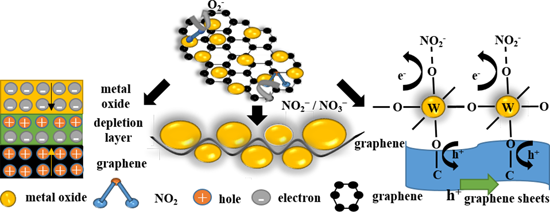
- as a gas sensor because of its small bandgap (2.585 eV) and its physical and chemical stability [88][89]. In an early work, Jie et al. [90] reported that a NO2 sensor based on WO3 nanospheres wrapped in graphene sheets, prepared by a simple sol–gel technique, showed a linear response to low
- concentrations of NO2, while the pure WO3 and graphene sensors did not respond to NO2 at room temperature. The authors claimed that the reason for room-temperature sensing of the composite sensor was the effective charge transfer between graphene and WO3 nanospheres by chemical bonds. The research group
- confirmed that there existed C–O–W chemical bonds between WO3 and graphene by Raman and XPS measurements. The proposed sensing mechanism is shown in Figure 5. When exposed to oxygen or NO2 molecules, the gas molecules adsorbed on WO3 nanospheres cause the energy band to bend upward via obtaining electrons



Silencing the second harmonic generation from plasmonic nanodimers: A comprehensive discussion
Beilstein J. Nanotechnol. 2018, 9, 2674–2683, doi:10.3762/bjnano.9.250
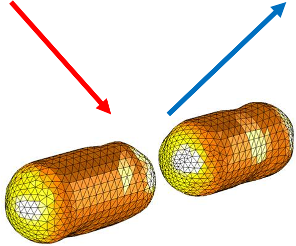
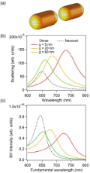
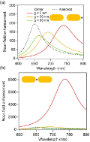
- from chemically synthetized plasmonic nanospheres in solution, revealing an interesting competition between the centrosymmetry breaking induced by the field variation and the nanoparticle shape [35][37][38][39]. To investigate this issue [40], the meshes describing the nanodimers have been modified as


Enhancement of X-ray emission from nanocolloidal gold suspensions under double-pulse excitation
Beilstein J. Nanotechnol. 2018, 9, 2609–2617, doi:10.3762/bjnano.9.242
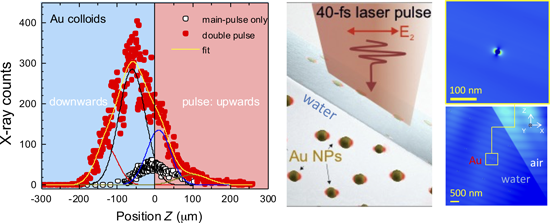
- most intense generation of hard X-rays. Experimental Colloidal suspensions of gold nanospheres were prepared via kinetically controlled seeded-growth synthesis of citrate-stabilized nanoparticles [32][33][34]. In a 250 mL three-necked round-bottomed flask, 2.2 mM sodium citrate in deionized water (>18
- solution, the temperature was cooled down to 90 °C and the seeded growth of gold nanospheres was carried out. 1 mL of HAuCl4(aq) solution (25 mM) was injected in the reaction vessel. The reaction was finished after 30 min and the process was repeated twice. The sample was diluted by extracting 55 mL of the
- an aperture of 2 mm. The orientation of the E1 polarization is shown for reference. X-ray intensities from (a) a water film and (b) a film of a colloidal suspension of gold nanospheres irradiated by a pre-pulse at 80 μJ/pulse and a main pulse at 700 μJ/pulse with different time delays. The automatic


Hydrothermal-derived carbon as a stabilizing matrix for improved cycling performance of silicon-based anodes for lithium-ion full cells
Beilstein J. Nanotechnol. 2018, 9, 2381–2395, doi:10.3762/bjnano.9.223
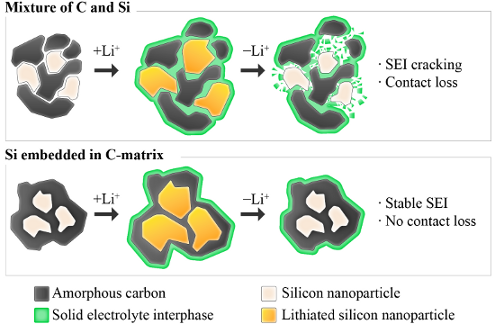
- nanospheres was also reported by Xia et al. [62] during the synthesis of carbon spheres containing electrocatalysts for oxygen reduction reactions. Heckmann et al. [63] investigated the use of high-temperature-treated hydrothermal carbon spheres as cathode materials for dual-ion cells and found spherical


Closed polymer containers based on phenylboronic esters of resorcinarenes
Beilstein J. Nanotechnol. 2018, 9, 1594–1601, doi:10.3762/bjnano.9.151
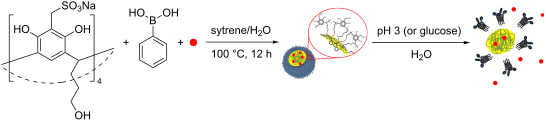
- National Research Technical University, K. Marx str. 10, Kazan 420111, Russia A. M. Butlerov Institute of Chemistry, Kazan Federal University, Kremlevskaya str. 18, Kazan 420008, Russia 10.3762/bjnano.9.151 Abstract Novel polymer nanospheres (p(SRA-B)) were prepared by cross-linking a sulfonated


Interaction-tailored organization of large-area colloidal assemblies
Beilstein J. Nanotechnol. 2018, 9, 1582–1593, doi:10.3762/bjnano.9.150
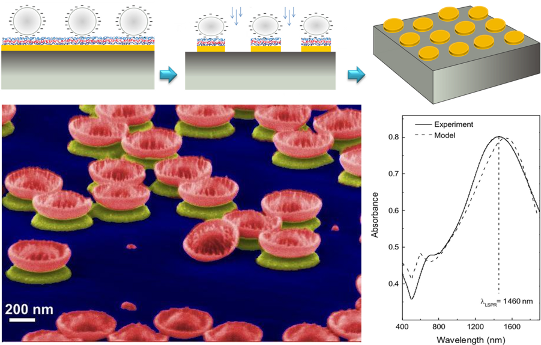
- thick metal layers (gold films deposited by thermal evaporation and cobalt films deposited by magnetron sputtering) and successively removing the metal-capped spherical, nanoscale materials (termed “nanospheres” throughout the remainder of this article) by careful tape stripping with carbon tape in
- . Successively, reactive ion etching was used to selectively remove the portion of the gold film not protected by the nanospheres. The etch rate (2.9 nm/min) was estimated measuring the thickness of the gold film for different etching times. Finally, the nanosphere residues were removed by oxygen plasma
- adhesion between the particles and the substrate. Instead, in the case of functionalized substrates, the electrostatic interactions between negatively charged polystyrene nanospheres and a positively charged surface allowed the formation of relatively ordered colloid patterns extended over a centimeter


Optical near-field mapping of plasmonic nanostructures prepared by nanosphere lithography
Beilstein J. Nanotechnol. 2018, 9, 1536–1543, doi:10.3762/bjnano.9.144
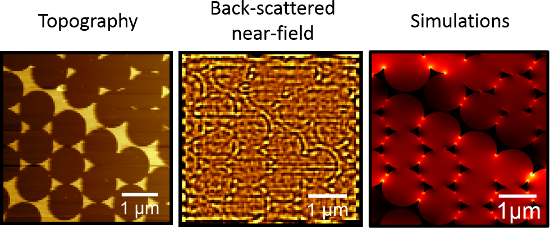
- nanospheres appears darker, while the apexes of the nanotriangles, corresponding to the hot spots, appear brighter. The features of the processed images can be extracted with a high spatial resolution confirming that we have a near-field image, as a diffraction limited image could not reach such a high