Search results
Search for "photocatalytic" in Full Text gives 213 result(s) in Beilstein Journal of Nanotechnology. Showing first 200.
LED-light-activated photocatalytic performance of metal-free carbon-modified hexagonal boron nitride towards degradation of methylene blue and phenol
Beilstein J. Nanotechnol. 2022, 13, 1380–1392, doi:10.3762/bjnano.13.114
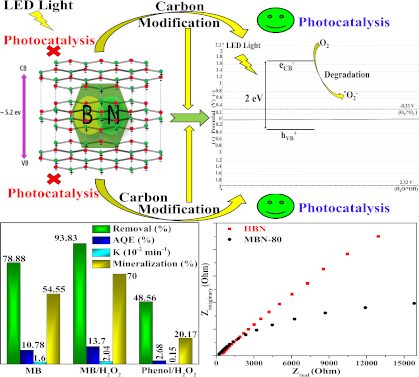
- percentage of carbon introduced. This demonstrates the potential of HBN to be used as a photocatalytic material. However the studies in the sense of exploring its photocatalytic ablity intented for environmental applications is very limited [15][16][17]. This has motivated us to extend our study on the
- specified subject. The present study discusses LED light-responsive modified boron nitride (MBN) towards its photocatalytic application. The HBN was modified by introducing carbon through the solid-state reaction method. Such introduction of carbon into the HBN lattice transformed it into a good light
- conditions. The linear sweep voltammetry (LSV) studies were conducted under both dark and light conditions with a scanning speed of 5 mV/s. Photocatalytic activity The LED-light-driven photocatalysis experiments were performed in a 250 mL conical flask containing 50 mg of the as-synthesized material and 200



Recent trends in Bi-based nanomaterials: challenges, fabrication, enhancement techniques, and environmental applications
Beilstein J. Nanotechnol. 2022, 13, 1316–1336, doi:10.3762/bjnano.13.109
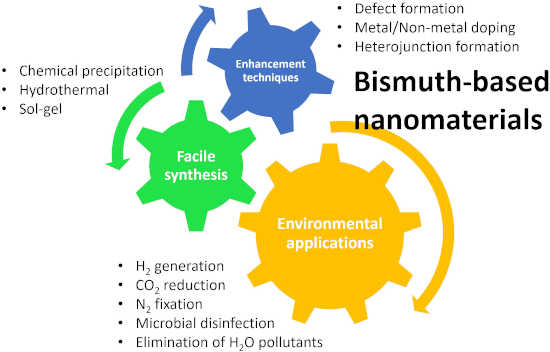
- modification is crucial in photocatalysis. Bi-based photocatalytic nanomaterials have gotten much interest as they exhibit distinctive geometric shapes, flexible electronic structures, and good photocatalytic performance under visible light. They can be employed as stand-alone photocatalysts for pollution
- control and energy production, but they do not have optimum efficacy. As a result, their photocatalytic effectiveness has been significantly improved in the recent decades. Numerous newly created concepts and methodologies have brought significant progress in defining the fundamental features of
- photocatalysts, upgrading the photocatalytic ability, and understanding essential reactions of the photocatalytic process. This paper provides insights into the characteristics of Bi-based photocatalysts, making them a promising future nanomaterial for environmental remediation. The current review discusses the




Role of titanium and organic precursors in molecular layer deposition of “titanicone” hybrid materials
Beilstein J. Nanotechnol. 2022, 13, 1240–1255, doi:10.3762/bjnano.13.103
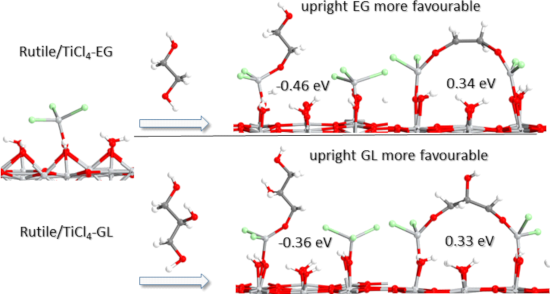
- catalytic and photocatalytic properties [46] porous TiO2 frameworks formed by the annealing of titanicone films may serve as catalytic supports [47]. Titanicone films can also be pyrolyzed under Ar to yield conducting TiO2/carbon composite films with important electrochemical applications as electrodes for


Rapid fabrication of MgO@g-C3N4 heterojunctions for photocatalytic nitric oxide removal
Beilstein J. Nanotechnol. 2022, 13, 1141–1154, doi:10.3762/bjnano.13.96
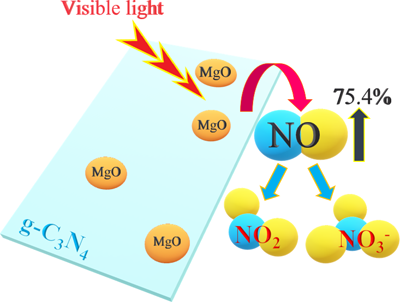
- environment, human health, and other biotas. Among the technologies to treat NO pollution, photocatalytic oxidation under visible light is considered an effective means. This study describes photocatalytic oxidation to degrade NO under visible light with the support of a photocatalyst. MgO@g-C3N4
- heterojunction photocatalysts were synthesized by one-step pyrolysis of MgO and urea at 550 °C for two hours. The photocatalytic NO removal efficiency of the MgO@g-C3N4 heterojunctions was significantly improved and reached a maximum value of 75.4% under visible light irradiation. Differential reflectance
- conversion, DeNOx index, apparent quantum efficiency, trapping tests, and electron spin resonance measurements were carried out to understand the photocatalytic mechanism of the materials. The high reusability of the MgO@g-C3N4 heterojunction was shown by a five-cycle recycling test. This study provides a








Green synthesis of zinc oxide nanoparticles toward highly efficient photocatalysis and antibacterial application
Beilstein J. Nanotechnol. 2022, 13, 1108–1119, doi:10.3762/bjnano.13.94
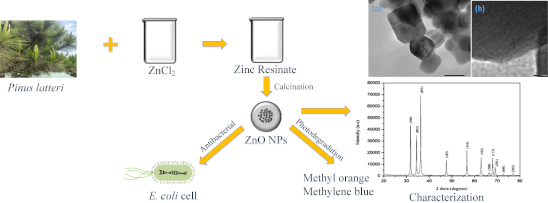
- photocatalysts. ZnO has a higher quantum efficiency than that of TiO2 since it absorbs more energy in the UV region [4][5][6][7]. Furthermore, ZnO is a low-cost photocatalyst with high photocatalytic activity, nontoxicity, light sensitivity, and stability [8][9][10]. The photodegradation of organic substances by
- of 10 °C/min. The zeta potential was measured by analyzing 0.1 g of ZnO in 10 mL of water using a Malvern ZetasizerPro. The solid UV–vis DRS was carried out using a JASCO V550 UV–vis spectrometer. Photocatalytic degradation reaction The photocatalytic degradation of a dye solution under visible and
- UV light using green-synthesized ZnO nanoparticles from rosin and zinc chloride salt was investigated using a batch photocatalytic reactor. Firstly, 0.1 g of ZnO NPs was added to 50 mL of MO or MB solution with an initial concentration of 10 mg/L. The solution was then submitted to magnetic stirring





Recent advances in green carbon dots (2015–2022): synthesis, metal ion sensing, and biological applications
Beilstein J. Nanotechnol. 2022, 13, 1068–1107, doi:10.3762/bjnano.13.93
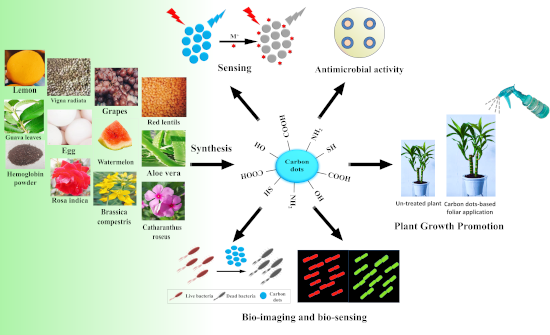
- to have excellent biocompatibility with cells [70]. Ramanarayanan and Swaminathan utilized guava leaves to prepare CDs, which were then utilized for the synthesis of a CD-TiO2 nanocomposite. The CD-TiO2 nanocomposite possesses good photocatalytic ability to degrade methylene blue dye [71]. White




Spindle-like MIL101(Fe) decorated with Bi2O3 nanoparticles for enhanced degradation of chlortetracycline under visible-light irradiation
Beilstein J. Nanotechnol. 2022, 13, 1038–1050, doi:10.3762/bjnano.13.91
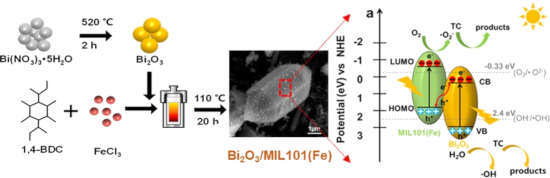
- China 10.3762/bjnano.13.91 Abstract Improving the photocatalytic performance of metal–organic frameworks (MOFs) is an important way to expand its potential applications. In this work, zero-dimensional (0D) Bi2O3 nanoparticles were anchored to the surface of tridimensional (3D) MIL101(Fe) by a facile
- solvothermal method to obtain a novel 0D/3D heterojunction Bi2O3/MIL101(Fe) (BOM). The morphology and optical properties of the as-prepared Bi2O3/MIL101(Fe) composite were characterized. The photocatalytic activity of the synthesized samples was evaluated by degrading chlortetracycline (CTC) under visible
- -light irradiation. The obtained BOM-20 composite (20 wt % Bi2O3/MIL101(Fe)) exhibits the highest photocatalytic activity with CTC degradation efficiency of 88.2% within 120 min. The degradation rate constant of BOM-20 toward CTC is 0.01348 min−1, which is 5.9 and 4.3 times higher than that of pristine


Solar-light-driven LaFexNi1−xO3 perovskite oxides for photocatalytic Fenton-like reaction to degrade organic pollutants
Beilstein J. Nanotechnol. 2022, 13, 882–895, doi:10.3762/bjnano.13.79
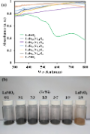
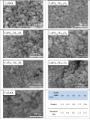
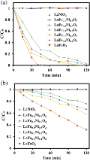
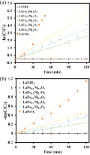
- ratios (1/9, 3/7, 5/5, 7/3, 9/1). The samples were examined by XRD, DRS, BET, and SEM to reveal their crystallinity, light-absorption ability, specific surface area, and surface features, respectively. The photocatalytic Fenton reaction was conducted using various LaFexNi1−xO3 perovskite oxides to
- decompose the methylene blue molecules. Accordingly, the synthesis condition of pH 0, calcination temperature at 700 °C, and Fe/Ni ratio = 7/3 could form LaFe0.7Ni0.3O3 perovskite oxides as highly efficient photocatalysts. Moreover, various conditions during the photocatalytic degradation were verified
- Fenton reaction, a photo-Fenton reaction excited by ultraviolet light or visible light can achieve a faster reaction rate and a complete degree of oxidation [19]. Besides, it shows a positive relationship between light intensity and photocatalytic activity. With the assistance of light irradiation, the



Efficient liquid exfoliation of KP15 nanowires aided by Hansen's empirical theory
Beilstein J. Nanotechnol. 2022, 13, 788–795, doi:10.3762/bjnano.13.69
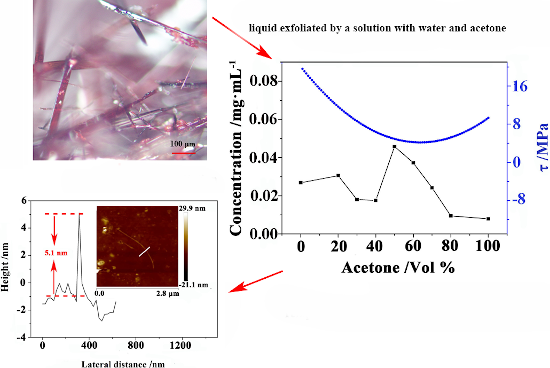
- one-dimensional material with high carrier mobility (308 cm2·V−1·s−1) and rapid response time [8][9][10]. These one-dimensional materials are ideal for photovoltaic and photocatalytic applications. The KP15 is considered to be a novel low-dimensional material with layered structure, high hole carrier


Hierarchical Bi2WO6/TiO2-nanotube composites derived from natural cellulose for visible-light photocatalytic treatment of pollutants
Beilstein J. Nanotechnol. 2022, 13, 745–762, doi:10.3762/bjnano.13.66

- nanotubes were formed by TiO2 nanotubes that uniformly anchored with Bi2WO6 nanoparticles of various densities on the surface. The composites exhibited improved photocatalytic activities toward the reduction of Cr(VI) and degradation of rhodamine B under visible light (λ > 420 nm), which were attributed to
- visible light together with an accelerated separation and transfer of the photogenerated electron–hole pairs of the nanocomposites, which resulted in increased effective amounts of photogenerated carriers for the photocatalytic reactions. It was demonstrated that the photoinduced electrons dominated the
- photocatalytic reduction of Cr(VI), while hydroxyl radicals and reactive holes contributed to the photocatalytic degradation of rhodamine B. Keywords: biomimetic synthesis; cellulose; nanoarchitectonics; nanocomposite; nanotubes; photocatalysis; pollutants; Introduction The direct emission of untreated


Direct measurement of surface photovoltage by AC bias Kelvin probe force microscopy
Beilstein J. Nanotechnol. 2022, 13, 712–720, doi:10.3762/bjnano.13.63
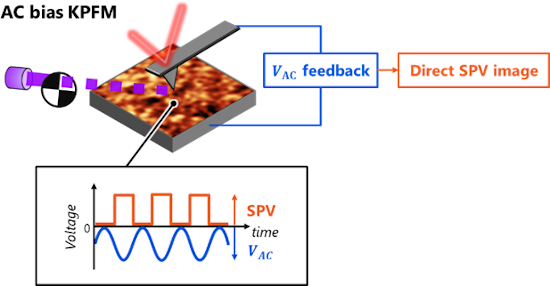
- photocatalytic semiconductors. The local SPV is generally measured consecutively by Kelvin probe force microscopy (KPFM) in darkness and under illumination, in which thermal drift degrades spatial and energy resolutions. In this study, we propose the method of AC bias Kelvin probe force microscopy (AC-KPFM
- . The tip was cleaned by Ar+ sputtering (0.8 keV, 5 × 10⁻⁷ Torr, 5 min) to remove the contaminants and the native oxide layer. We used a rutile TiO2(110) sample to demonstrate the AC-KPFM. TiO2 is one of the promising photocatalytic materials [38][39][40] and has been widely studied using AFM and KPFM
- reactions (hours) [62][63][64]. Particularly for photocatalytic semiconductors, AC-KPFM would be an indispensable tool for detecting the fast SPV distribution related to charge redistribution (microseconds to milliseconds) because SPV measured with classical KFPM is attributed to both charge redistribution


Sodium doping in brookite TiO2 enhances its photocatalytic activity
Beilstein J. Nanotechnol. 2022, 13, 599–609, doi:10.3762/bjnano.13.52
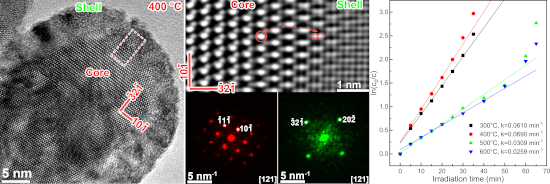
- enhances its photocatalytic activity, which becomes three times higher than that of the quasi-spherical brookite TiO2. The results demonstrated that the sodium-doped brookite NaxTi1−xO2 can be stable up to 500 °C. At 600°C, the sodium in the brookite precipitates in the form of Na2CO3, and above 700 °C
- structure and produce microstructures such as the core–shell structure, local lattice distortion, interstitial atoms, and atomic vacancies, which are critical to its excellent photocatalytic activity. Keywords: brookite titanium dioxide; core–shell structure; photocatalytic activity; sodium doping; twins
- increased due to its importance for photocatalytic application. Ohtani et al. reported that extra-fine brookite TiO2 exhibited good photocatalytic activity for redox reactions in aqueous propan-2-ol and silver sulfate solution [7]. Kobayashi et al. suggested that the photoactivity of brookite nanoparticles


Zinc oxide nanostructures for fluorescence and Raman signal enhancement: a review
Beilstein J. Nanotechnol. 2022, 13, 472–490, doi:10.3762/bjnano.13.40
- combined with metal nanoparticles, resulting in enhanced photoactivity of Au-decorated ZnO nanocrystals for photoelectrochemical water splitting [9], improved photodetection performance of ZnO nanofibers decorated with Au NPs [10], or enhanced photocatalytic activity of ZnO doped with Au NPs [11]. Moreover
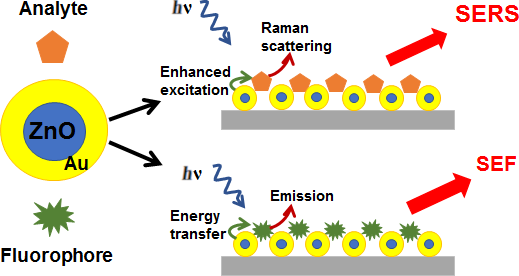
- properties including a high refractive index, which can confine the excitation light in order to enhance the SERS effect, various types of tuneable morphologies that can be used in combination with noble metals, but also its biocompatibility, photocatalytic self-cleaning capability, and high chemical
- milli-Q water to the freshly prepared Ag nanowire solution [55]. A higher photocatalytic activity was shown for the Ag–ZnO core–shell particles compared to ZnO alone under solar light irradiation. SERS applications of ZnO-based nanostructures SERS is a powerful technique with promising applications for




Engineered titania nanomaterials in advanced clinical applications
Beilstein J. Nanotechnol. 2022, 13, 201–218, doi:10.3762/bjnano.13.15
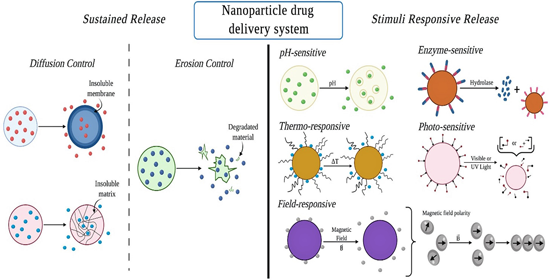
- systems for theranostic purposes. Titanium dioxide (titanium(IV) oxide/titania/TiO2) has garnered considerable attention as one of the most extensively studied metal oxides in clinical applications. Owing to the unique properties of titania, such as photocatalytic activity, excellent biocompatibility
- photocatalytic activity. Upon UV irradiation, the electrons in the valence band get excited to the conduction band, leading to the formation of electron–hole pairs and the generation of ROS. Subsequently, the generated holes (h+) convert water/hydroxide molecules to peroxide/hydroxyl radicals by oxidation. The
- generated free electrons (e−) react with molecular oxygen to generate superoxide radicals by reduction. Several factors contribute to the photocatalytic performance of TiO2, such as the structural phase (anatase, brookite, or rutile), defects in the lattice, the degree of crystallinity, morphology


A comprehensive review on electrospun nanohybrid membranes for wastewater treatment
Beilstein J. Nanotechnol. 2022, 13, 137–159, doi:10.3762/bjnano.13.10
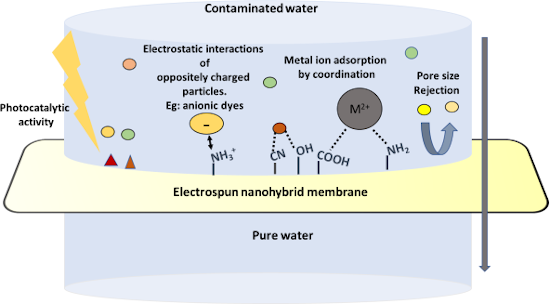
- functional specific nanosized additives to be used in various water remediation membrane techniques. The adsorption, filtration, photocatalytic, and bactericidal capabilities of the hybrid membranes in removing common major water pollutants such as metal ions, dyes, oils, and biological pollutants have been
- 50% glycerol. 97% of the dye removal efficiency of the membrane was maintained even after five consecutive adsorption/desorption cycles [79]. Hou et al. added the photoactivity of TiO2 into a hybrid membrane of PVA, PAA, and carboxyl-functionalized GO to degrade organic dyes by photocatalytic
- degradation. The membrane displayed an efficient photocatalytic capacity for MB, CR, and RhB [80]. Although TiO2 is abundant and inexpensive, it only converts to UV part of sunlight, which is only 5% of the solar energy. This makes the use of TiO2 impractical. To counter this drawback Liu and co-workers





Tin dioxide nanomaterial-based photocatalysts for nitrogen oxide oxidation: a review
Beilstein J. Nanotechnol. 2022, 13, 96–113, doi:10.3762/bjnano.13.7
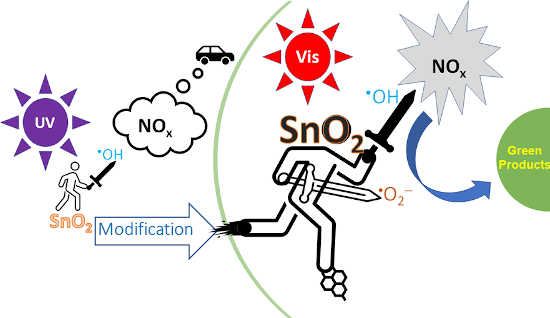
- received particular attention from the scientific community. The photocatalytic NOx oxidation will be an important contribution to mitigate climate change in the future. Existing review papers mainly focus on applying SnO2 materials for photocatalytic oxidation of pollutants in the water, while studies on
- the decomposition of gas pollutants are still being developed. In addition, previous studies have shown that the photocatalytic activity regarding NOx decomposition of SnO2 and other materials depends on many factors, such as physical structure and band energies, surface and defect states, and
- morphology. Recent studies have been focused on the modification of properties of SnO2 to increase the photocatalytic efficiency of SnO2, including bandgap engineering, defect regulation, surface engineering, heterojunction construction, and using co-catalysts, which will be thoroughly highlighted in this


Self-assembly of amino acids toward functional biomaterials
Beilstein J. Nanotechnol. 2021, 12, 1140–1150, doi:10.3762/bjnano.12.85
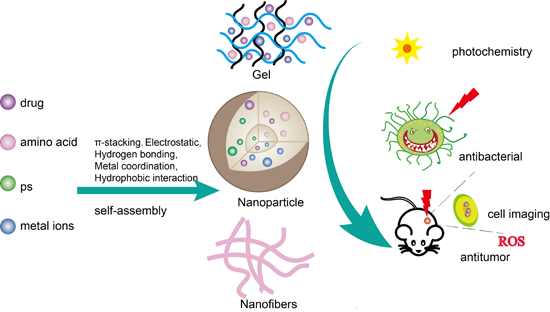
- (Cd2+) to form a three-dimensional crystal of Cys/Cd nanorods. Then, upon the introduction of Na2S, the Cys/Cd template mediates the mineralization of cadmium sulfide (CdS) into a layered CdS quantum dot structure, finally making a simple bionic daylight antenna with sustainable photocatalytic
- alcohol dehydrogenase may be incorporated into Cys microspheres, resulting in hybrid microspheres with photocatalytic and biocatalytic activities. In addition, Cys/Zn microspheres were modified with CO32−-doped ZnS nanocrystals by a hydrothermal treatment, and then glutamic acid dehydrogenase was

A Au/CuNiCoS4/p-Si photodiode: electrical and morphological characterization
Beilstein J. Nanotechnol. 2021, 12, 984–994, doi:10.3762/bjnano.12.74
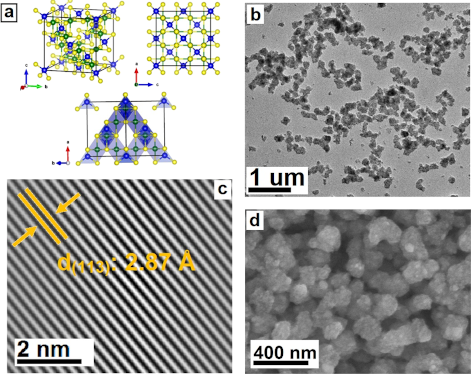
- quaternary CuNiCoS4 nanocrystals. The first study by Thompson is on the synthesis of CuNiCoS4 thiospinels [13]. The second is a study on the synthesis and photocatalytic hydrogen evolution, which was performed by our group [8]. In this study, the optical characterization results of the CuNiCoS4 nanocrystals



Recent progress in magnetic applications for micro- and nanorobots
Beilstein J. Nanotechnol. 2021, 12, 744–755, doi:10.3762/bjnano.12.58
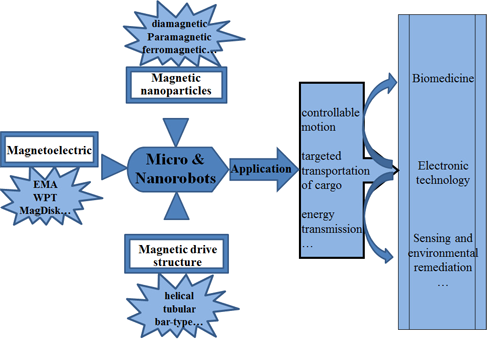
- to the human body or the environment caused by other materials such as lead. In addition, Gopal et al. [48] pointed out that boron exhibits diamagnetic properties in B-doped anatase TiO2 nanoparticles and showed photocatalytic activity in the visible-light range. Magnetic MNRs were applied to the
- chemical field, and preparation and characterization of B–TiO2 photocatalytic particles were carried out by using these diamagnetic nanoparticles. The research on magnetic nanoparticles will expand the application range of MNRs and promote the common development of different fields. Other nanoparticles


Nanoporous and nonporous conjugated donor–acceptor polymer semiconductors for photocatalytic hydrogen production
Beilstein J. Nanotechnol. 2021, 12, 607–623, doi:10.3762/bjnano.12.50

- be easily tuned via structural design. In addition, they are of light weight (i.e., mainly composed of C, N, O, and S). To improve the photocatalytic performance of CPs and better understand the catalytic mechanisms, many strategies with respect to material design have been proposed. These include
- tunable bandgaps, high charge carrier mobility, and efficient intramolecular charge transfer. In this minireview, recent advances of D–A polymers in photocatalytic hydrogen evolution are summarized with a particular focus on modulating the optical and electronic properties of CPs by varying the acceptor
- units. The challenges and prospects associated with D–A polymer-based photocatalysts are described as well. Keywords: π-conjugated polymeric photocatalysts; donor–acceptor junctions; nanostructure semiconductors; photocatalytic hydrogen production; Introduction To date, fossil fuels still are the





Boosting of photocatalytic hydrogen evolution via chlorine doping of polymeric carbon nitride
Beilstein J. Nanotechnol. 2021, 12, 473–484, doi:10.3762/bjnano.12.38
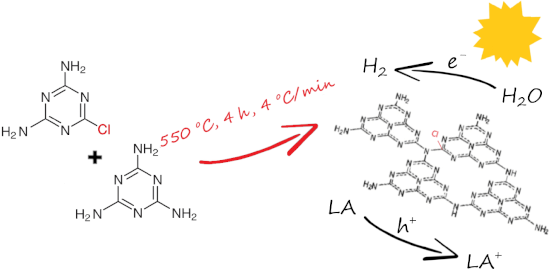
- , Poland 10.3762/bjnano.12.38 Abstract Chlorine is found to be a suitable element for the modification of polymeric carbon nitride properties towards an efficient visible-light photocatalytic activity. In this study, chlorine-doped polymeric carbon nitride (Cl-PCN) has been examined as a photocatalyst in
- the hydrogen evolution reaction. The following aspects were found to enhance the photocatalytic efficiency of Cl-PCN: (i) unique location of Cl atoms at the interlayers of PCN instead of on its π-conjugated planes, (ii) slight bandgap narrowing, (iii) lower recombination rate of the electron–hole
- pairs, (iv) improved photogenerated charge transport and separation, and (v) higher reducing ability of the photogenerated electrons. The above factors affected the 4.4-fold enhancement of the photocatalytic efficiency in hydrogen evolution in comparison to the pristine catalyst. Keywords: chlorine


A review on the biological effects of nanomaterials on silkworm (Bombyx mori)
Beilstein J. Nanotechnol. 2021, 12, 190–202, doi:10.3762/bjnano.12.15
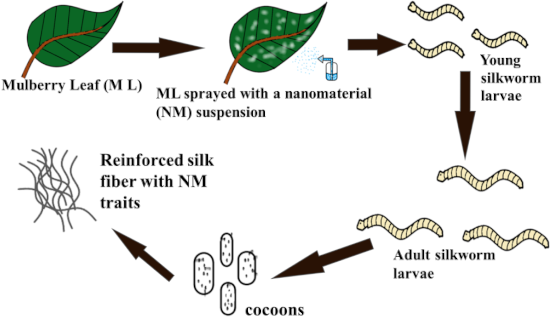
- summarizes some reports on the biological effects of nanomaterials on silkworm and how the application of nanomaterials improves sericulture. Keywords: biological effects; Bombyx mori; nanomaterials; nanotechnology; sericulture; Introduction Nanomaterials have unique optical, electronic, and photocatalytic


Unravelling the interfacial interaction in mesoporous SiO2@nickel phyllosilicate/TiO2 core–shell nanostructures for photocatalytic activity
Beilstein J. Nanotechnol. 2020, 11, 1834–1846, doi:10.3762/bjnano.11.165
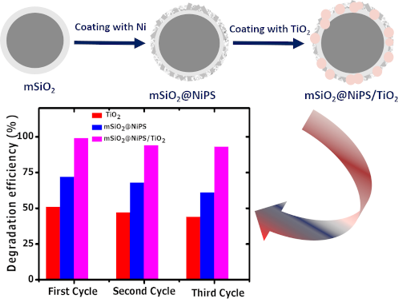
- the core–shell nanostructure and yielded superior photocatalytic properties. Keywords: bandgap energy; core–shell; dye degradation; nickel phyllosilicate; photocatalysts; Introduction Textile dyes and organic compounds are major water pollutants, which create an environmental hazard to aquatic
- brookite phases, the anatase phase has been extensively used for photocatalysis owing to its enhanced surface properties [7][8][9][10]. In a typical photocatalytic process, photons of energy greater than the bandgap energy of TiO2 excite electrons to the conduction band leaving holes in the valence band
- , the electron–hole recombination can be inhibited by loading metals, such as Ni [12], V, Fe [13], Ag [14], and Cu–Ni [15], on the TiO2 surface, which accelerates the formation of hydroxyl radicals and, consequently, improves the photocatalytic activity of TiO2. In contrast, the doping of TiO2 with


Nanocasting synthesis of BiFeO3 nanoparticles with enhanced visible-light photocatalytic activity
Beilstein J. Nanotechnol. 2020, 11, 1822–1833, doi:10.3762/bjnano.11.164
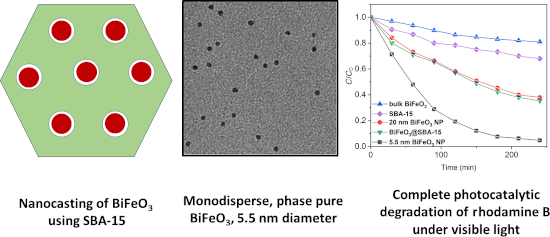
- applications has been limited due to their relatively large bandgaps along with their susceptibility to the fast recombination of photogenerated electron–hole pairs, leading to inefficient photocatalytic activity under visible-light or solar irradiation [14][15][16][17][18]. Thus, the development of
- photocatalytic activity [20]. Since the photocatalytic degradation of organic molecules using a metal oxide photocatalyst is a heterogeneous process, it is obvious that efficiency and overall catalytic performance are strongly correlated to the number of active sites on the catalyst surface area and, thus, to
- analyze the BiFeO3 nanomaterial are powder X-ray diffraction (XRD), transmission electron microscopy (TEM) and UV–visible reflectance spectroscopy. Furthermore, we investigated the photocatalytic efficiency of this nanomaterial under visible light in the degradation of rhodamine B (RhB) as a model




Cu2O nanoparticles for the degradation of methyl parathion
Beilstein J. Nanotechnol. 2020, 11, 1546–1555, doi:10.3762/bjnano.11.137
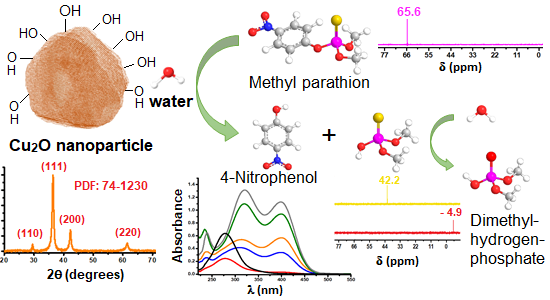
- less be classified as biotic, photocatalytic, or chemical degradation [27]. In aqueous media, chemical degradation of MP can result in either oxidation, isomerization or hydrolysis as some authors have suggested [11][12][13][14][28]. Oxidation of MP leads to the formation of methyl paraoxon, which is
- bacteria are used for the degradation of MP, whereas photocatalytic degradation needs photons in the form of UV light and chemical degradation utilizes chemical species, such as copper(I) oxide (Cu2O) NPs in this work. Cu2O is widely known for its photocatalytic activity [29][30][31][32][33]. However
- rising consensus on the damage that these reactive species, formed during the photocatalytic reactions, cause to cell membranes by peroxidation of the polyunsaturated phospholipids [34]. This leads to the subsequent loss of activity that relies on an intact membrane, and ultimately to the death of