Search results
Search for "photocatalytic degradation" in Full Text gives 86 result(s) in Beilstein Journal of Nanotechnology.
Facile synthesis of a ZnO–BiOI p–n nano-heterojunction with excellent visible-light photocatalytic activity
Beilstein J. Nanotechnol. 2018, 9, 789–800, doi:10.3762/bjnano.9.72
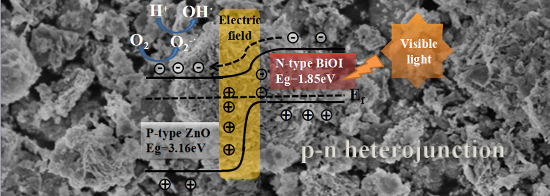
- well as the high specific area. Keywords: BiOI; photocatalytic degradation; p–n heterojunction; ZnO; Introduction The development of semiconductor photocatalysis has opened a new horizon for environmental pollution remediation and provides a potential solution to the global energy problem given the
- photocatalysts by a two-step synthetic method. The improved photocatalytic degradation of phenol could be achieved under simulated solar light irradiation. Herein, we report a new, facile method to produce the ZnO/BiOI heterojunction by a solution method followed by calcination. Using a milder precipitant
- , probably a result of the quantum confinement effect in the nanometer-sized ZnO particles. Photocatalytic degradation To test the as-synthesized samples’ ability to remove organic pollutants from waste water, the photodegradation of RhB was carried out under illumination by visible light from a 300 W Xe


Surface-plasmon-enhanced ultraviolet emission of Au-decorated ZnO structures for gas sensing and photocatalytic devices
Beilstein J. Nanotechnol. 2018, 9, 771–779, doi:10.3762/bjnano.9.70
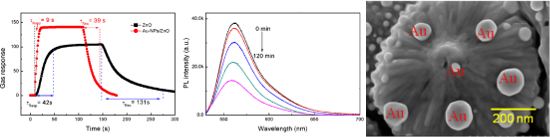
- improved response (τRes = 9 s) and recovery time (τRec = 39 s). The enhanced gas sensing performance and photocatalytic degradation processes are suggested to be attributed to not only the surface plasmon resonance effect, but also due to a Schottky barrier between plasmonic Au and ZnO structures
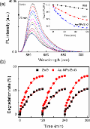
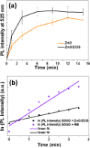
- radicals (e.g., •O2−, •OOH, and •OH) at the surface, which are mainly involved in photocatalytic degradation of dyes into CO2 or harmless compounds [42]. Therefore, to further determine the ability of Au-decorated ZnO and ZnO sub-micrometer spheres in improving irradiation, PL spectra of an aqueous RhB
- cycles of photocatalytic testing, no significant difference in the photocatalytic degradation process was found, indicating excellent reversibility and stable photocatalytic performance, as shown in Figure 5b. Cascade processes have been previously reported involving the morphology, specific surface and




Perovskite-structured CaTiO3 coupled with g-C3N4 as a heterojunction photocatalyst for organic pollutant degradation
Beilstein J. Nanotechnol. 2018, 9, 671–685, doi:10.3762/bjnano.9.62
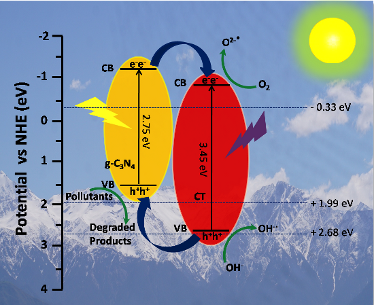
- in the literature [32][33]. Xian and coworkers have studied the photocatalytic degradation of MO under simulated solar light irradiation in BaTiO3–g-C3N4 composites with an efficient charge separation of photogenerated charge carriers at the interfaces [30]. Leong et al. have successfully made a
- promising amalgamated g-C3N4–SrTiO3 photocatalyst by a simple thermal method. The as-prepared composites showed exceptional properties for photocatalytic degradation of bisphenol A (BPA) under intense sunlight due to the enhanced migration of photogenerated charges over the close interfacial connections
- ) spectroscopy measurements were carried out by using an Agilent Technologies Cary Eclipse fluorescence spectrophotometer. The Brunauer–Emmett–Teller (BET) surface area and nitrogen adsorption–desorption isotherms were measured at 77 K on a Quantachrome Autosorb-iQ-MP-XR system. Photocatalytic degradation study


Fabrication and photoactivity of ionic liquid–TiO2 structures for efficient visible-light-induced photocatalytic decomposition of organic pollutants in aqueous phase
Beilstein J. Nanotechnol. 2018, 9, 580–590, doi:10.3762/bjnano.9.54
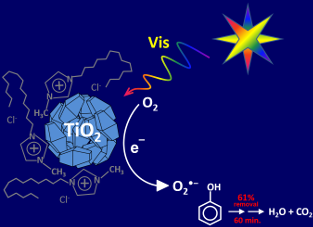
- absorption of IL–TiO2 in the visible region can be attributed to the existence of carbon species on the surface of the photocatalysts [45]. Chemical composition of ionic liquid/TiO2 composites The photocatalytic degradation is based on chemical reactions on the surface of the photocatalyst [46][47][48]. In
- estimated by means of the colorimetric method (λ = 480 nm) after derivatization with diazo-p-nitroaniline using a UV–vis spectrophotometer (Thermo Evolution 220). The photocatalytic degradation runs were preceded by a blind test in the absence of a photocatalyst or illumination. No degradation of phenol was
- out similar to the above-described photocatalytic degradation of phenol, except that the radical scavengers were added to the reaction system. The scavenger concentration was equal to 0.21 mmol dm−3. No adsorption of phenol was observed in the presence of the photocatalyst in the phenol/scavenger




Influence of the preparation method on the photocatalytic activity of Nd-modified TiO2
Beilstein J. Nanotechnol. 2018, 9, 447–459, doi:10.3762/bjnano.9.43
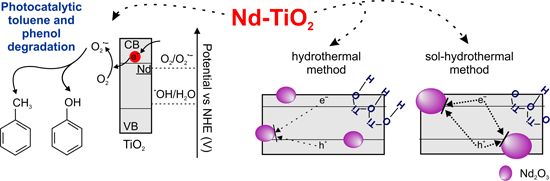
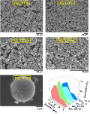
- photogenerated lifetime of the carriers, and finally increasing the formation of highly reactive and oxidative radicals during the photocatalytic degradation [15]. The Nd-TiO2 NPs showed intense emission of Nd3+ ions under excitation by laser radiation with λex = 350 nm (Figure 5). The characteristic transition
- influenced by surface hydroxyl groups helping to generate reactive oxygen species, such as hydroxyl radicals. The photocatalytic degradation of toluene was carried out under LED irradiation (λmax = 415 nm). A high photocatalytic activity was exhibited by all the neodymium-modified photocatalysts (Figure 6c
- successfully prepared via hydrothermal and sol–hydrothermal methods. Both Nd-modified samples can achieve the photocatalytic degradation of phenol and toluene under visible light, and Nd-TiO2 has a higher activity than pristine TiO2 (2.25- and 6.3-times higher activity for 0.25% Nd-TiO2(SHT), and 3.6- and 7.1




Facile synthesis of ZnFe2O4 photocatalysts for decolourization of organic dyes under solar irradiation
Beilstein J. Nanotechnol. 2018, 9, 436–446, doi:10.3762/bjnano.9.42
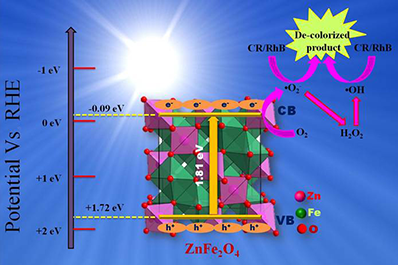
- . The photocatalytic degradation rate of 10 ppm phenol was found to be 60% after 60 min over ZFO-500. The degradation procedure of phenol is similar to the degradation of Rh B and Congo red [35]. Photodegradation of phenol was performed by using 20 mL of a 10 ppm phenol solution containing 0.02 g of
- results for decolourization activity are in good agreement with the results obtained from the other measurements. The values of BET surface area of ZFO-400, ZFO-500, ZFO-600 and ZFO-700 are 34 m2/g, 17 m2/g, 14.5 m2/g, 6.9 m2/g. This result shows that the surface area has no effect towards photocatalytic
- degradation process [34]. Kinetics of the decolourization of Congo red The kinetics involved in the decolourization of Congo red are shown in Figure 10e. The data obtained from the experiment was fitted with the model for first-order reactions, i.e., ln C0/C = kt) and the fitted parameters are given in Table


Sugarcane juice derived carbon dot–graphitic carbon nitride composites for bisphenol A degradation under sunlight irradiation
Beilstein J. Nanotechnol. 2018, 9, 353–363, doi:10.3762/bjnano.9.35
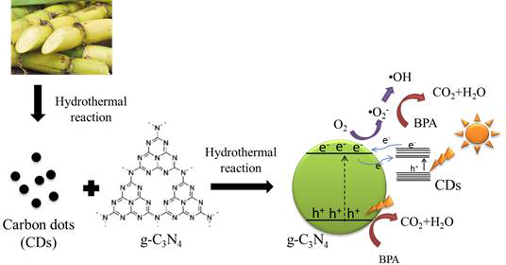
- superoxide anion radical (O2•−) and holes (h+) after performing multiple scavenging tests. Keywords: carbon dots; g-C3N4; photocatalytic degradation; sugarcane juice; sunlight; Introduction Carbon dots (CDs) predominantly consist of amorphous carbon together with nanocrystalline regions of sp2-hybridized
- irradiate photocatalytic degradation of organic pollutant (since CDs could act as a photosensitizer over the entire solar spectrum) and (ii) acknowledgement that the most reported bioprecursor-derived CDs and g-C3N4 composite are limited to the photocatalytic generation of H2 (instead limited attempts have
- properties. The CD/g-C3N4(0.5) exhibited the best photocatalytic degradation rate with 100% removal of BPA after 90 min of reaction. Pure g-C3N4 achieved relatively good degradation efficiency (68.2%) attributed to its visible light absorption capability (Table S1, Supporting Information File 1). A great


Facile synthesis of silver/silver thiocyanate (Ag@AgSCN) plasmonic nanostructures with enhanced photocatalytic performance
Beilstein J. Nanotechnol. 2017, 8, 2781–2789, doi:10.3762/bjnano.8.277
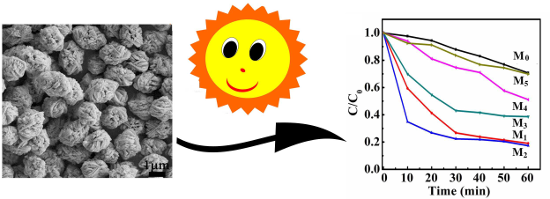
- intensively investigated in recent years, and various methods such as adsorption, biodegradation, photocatalytic degradation and chemical oxidation have been developed [1][2][3][4]. Among them, photocatalytic degradation is considered as one of the most effective strategies due to its high removal efficiency
- and environmental friendlessness. For example, as a typical semiconductor, TiO2 exhibits high photocatalytic degradation performance against a large number of organic pollutants [5][6][7]. However, it is difficult to obtain a high photocatalytic activity under visible-light irradiation with TiO2 as a
- M2. TEM images of precipitated samples formed after addition of the AgNO3 solution after (a) 2 min, (b) 6 min, (c) 10 min, and (d) 20 min. (a) XPS spectra of M0 and M1; (b) XPS peaks of Ag 3d5/2 and Ag 3d3/2 of M1. (a) Photocatalytic degradation of oxytetracycline over M0, M1, M2, M3, M4, M5. (b


CdSe nanorod/TiO2 nanoparticle heterojunctions with enhanced solar- and visible-light photocatalytic activity
Beilstein J. Nanotechnol. 2017, 8, 2741–2752, doi:10.3762/bjnano.8.273
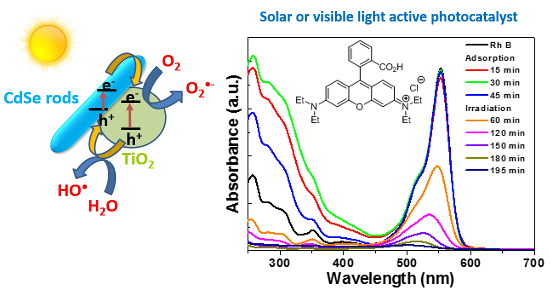
- mg of photocatalyst. As expected, the photocatalytic degradation rates increased with the catalyst dosage, which is linked to the concentration of adsorption sites and photocatalytically active sites (k = 0.010, 0.019 and 0.034 min−1 for reactions conducted with 25, 50 and 100 mg of photocatalyst
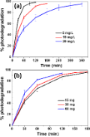
- photocatalytic degradation. (a) Effect of the catalyst concentration on the photodegradation efficiency (25, 50 or 100 mg of photocatalyst were dispersed in 50 mL of a 10 mg/L RhB solution). (b) Influence of RhB concentration on the photocatalytic efficiency (50 mg of photocatalyst and 50 mL of the dye solution
- scavengers on the photocatalytic degradation of rhodamine B under visible light irradiation (p-benzoquinone and t-BuOH were used at concentrations of 1 mM and 10 mM, respectively). Supporting Information Supporting Information File 188: Additional figures. Acknowledgements This work is supported by the



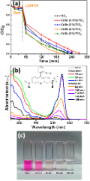
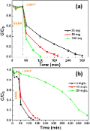

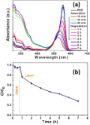


Two-dimensional carbon-based nanocomposites for photocatalytic energy generation and environmental remediation applications
Beilstein J. Nanotechnol. 2017, 8, 1571–1600, doi:10.3762/bjnano.8.159
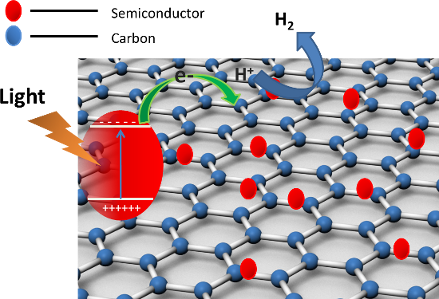
- photocatalytic degradation of adsorbed pollutants [48]. Several chemical and physical methods have been developed for the synthesis of graphene and graphene-based nanocomposites. One of the well-known methods for graphene oxide synthesis is Hummers’ method, which includes chemical oxidation of graphite flakes to


ZnO nanoparticles sensitized by CuInZnxS2+x quantum dots as highly efficient solar light driven photocatalysts
Beilstein J. Nanotechnol. 2017, 8, 1080–1093, doi:10.3762/bjnano.8.110
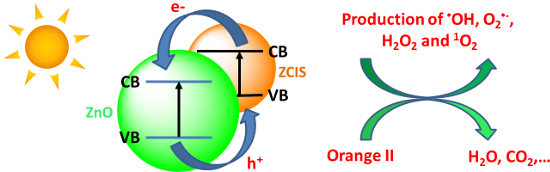
- composites prepared for the photocatalytic degradation of pollutants require a relatively large quantity of CIS nanocrystals to be complete (20 wt % CIS QDs relative to ZnO) [34][37]. When the ZCIS/ZnO weight ratio was decreased to ≈7%, the photodegradation never exceeded 80% even using a light source
- both under solar and visible light illumination (light intensity = 5 mW/cm2) of all the ZnO/ZCIS composites prepared, we selected Orange II dye as a model contaminant because this dye is not a photosensitizer (in contrast to Methylene Blue or Rhodamine which promote photocatalytic degradation). Prior
- concentration and catalyst loading We first evaluated the effect of the initial Orange II concentration (5, 10 or 20 mg/L) on the photocatalytic degradation (Figure 5a). As can be seen, the percentage of photodegradation increases when the initial concentration of the dye decreases. Considering the initial (C0




High photocatalytic activity of Fe2O3/TiO2 nanocomposites prepared by photodeposition for degradation of 2,4-dichlorophenoxyacetic acid
Beilstein J. Nanotechnol. 2017, 8, 915–926, doi:10.3762/bjnano.8.93
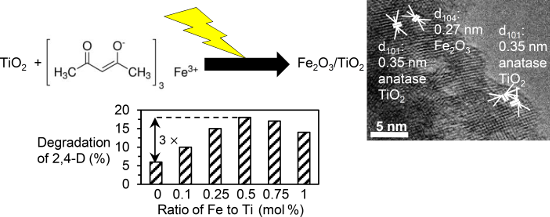
- Puncak Tidar N-01, Malang 65151, East Java, Indonesia 10.3762/bjnano.8.93 Abstract Two series of Fe2O3/TiO2 samples were prepared via impregnation and photodeposition methods. The effect of preparation method on the properties and performance of Fe2O3/TiO2 for photocatalytic degradation of 2,4
- be eliminated from the water source utilizing efficient approaches. Various removal methods of 2,4-D have been developed, including adsorption [24], biodegradation [25], ozonation [26], and photocatalytic degradation [15][20][21][22][27][28][29][30][31][32], of which the latter has been recognized
- transfer could suppress charge recombination on TiO2 [5][10][12][14][15], whereby the oxidation of 2,4-D still could occur in the VB of TiO2, and therefore, the photocatalytic degradation of 2,4-D could be improved. On the other hand, owing to the fast recombination of holes and electrons, the


Synthesis of graphene–transition metal oxide hybrid nanoparticles and their application in various fields
Beilstein J. Nanotechnol. 2017, 8, 688–714, doi:10.3762/bjnano.8.74
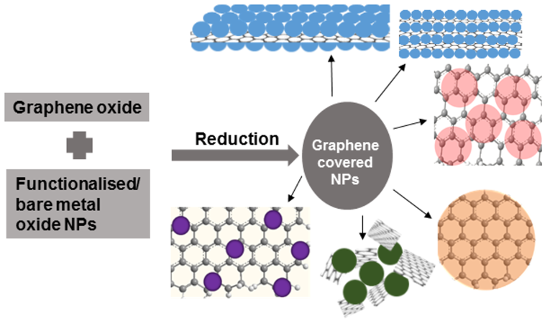
- of 12.1% with excellent thermal stability [209]. Cuprous oxide (Cu2O) is a p-type semiconductor and is used for solar energy conversion, as sensors and for photocatalytic degradation. The controlled synthesis of Cu2O results in a vast palette of architectures including nanocubes, nanocages, nanowires






Investigation of the photocatalytic efficiency of tantalum alkoxy carboxylate-derived Ta2O5 nanoparticles in rhodamine B removal
Beilstein J. Nanotechnol. 2017, 8, 604–613, doi:10.3762/bjnano.8.65
- gel was left at room temperature for 24 h for aging. It was then dried at 90 °C for 12 h to remove the solvent and other volatile residues to provide a white to off-white powder, which after calcination afforded Ta2O5 nanoparticles. Photocatalytic degradation of rhodamine B over Ta2O5 nanoparticles
- ]. Degradation of rhodamine B The photocatalytic degradation of rhodamine B by Ta2O5 nanoparticles under UV irradiation has been studied. The prepared nanoparticles decomposed the dye by a series of photochemical reactions. An electron–hole pair is generated when the semiconductor absorbs photons. These electron
- reasons for the difference of catalytic performances of nanoparticles. The nanoparticles were recycled from the reactions (after centrifugation, washing and drying) and reused, however, the efficiency of the reused catalysts was decreased by more than 50%. The mechanism of photocatalytic degradation of


Organoclay hybrid materials as precursors of porous ZnO/silica-clay heterostructures for photocatalytic applications
Beilstein J. Nanotechnol. 2016, 7, 1971–1982, doi:10.3762/bjnano.7.188
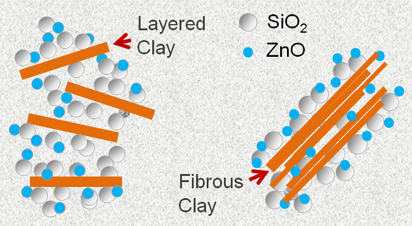
- devoted to study ZnO as a very promising catalyst in the photocatalytic degradation of water pollutants. This is because of its elevated activity, its low cost and, in particular, its environmentally friendly behavior [1][2]. It has been confirmed that ZnO compared to TiO2 exhibits better efficiency in the
- photocatalytic degradation of organic pollutants [3][4][5][6]. It should be remembered that nanoparticulated zinc oxide is a wide-band gap II–VI semiconductor with a band-gap energy of around 3.4 eV, which is of great interest for photocatalytic applications [7]. ZnO nanoparticles (NP) have been assembled to
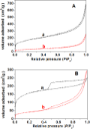
- activity of ZnO/SiO2-clay heterostructures compared to the ZnO-clay materials maybe related to the much higher specific surface area and the larger pore volume of the former. This could also lead to a removal of the pollutant by adsorption instead of just photocatalytic degradation. The current results





Role of RGO support and irradiation source on the photocatalytic activity of CdS–ZnO semiconductor nanostructures
Beilstein J. Nanotechnol. 2016, 7, 1684–1697, doi:10.3762/bjnano.7.161
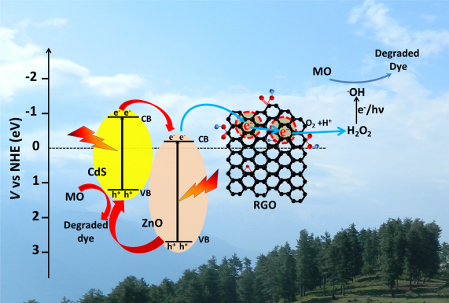
- nanostructures. Keywords: catalytic properties; chemical synthesis; nanostructures; semiconductors; transmission electron microscopy (TEM); Introduction In the past decade, there has been an increased interest in the photocatalytic degradation of various kinds of organic pollutants in water and soil [1]. Many
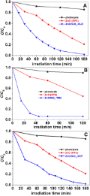
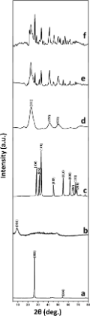
- spectra of (a) GO, (b) ZnO, (c) CdS, (d) CdS–ZnO and (e) CdS–ZnO–RGO nanocomposite. UV–vis absorption spectra of GO, ZnO NR, CdS NP, CdS–ZnO and CdS–ZnO–RGO nanocomposite. Time-dependent UV–vis spectra of photocatalytic degradation of MO: (a) visible light irradiation from a solar simulator using CdS–ZnO




High performance Ce-doped ZnO nanorods for sunlight-driven photocatalysis
Beilstein J. Nanotechnol. 2016, 7, 1338–1349, doi:10.3762/bjnano.7.125
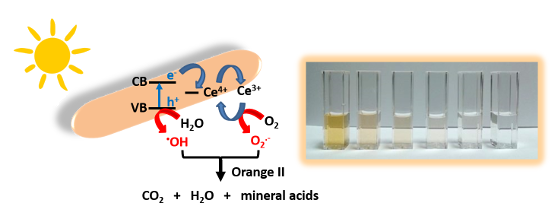
- ability of the Ce dopant to reduce charge recombinations is promising for the efficient photodegradation of pollutants. Photocatalytic degradation of Orange II We first investigated the photocatalytic activities of Ce-doped ZnO in comparison to ZnO rods in the photodegradation of Orange II used at a 10 mg
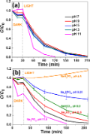
- min at pH 10 and 12, respectively). The high photocatalytic activity of the Ce-doped ZnO rods at basic pH may be attributed to the increased concentration of hydroxy anions that facilitate the photogeneration of hydroxy •OH radicals (−OH + h+ → •OH), thus enhancing the photocatalytic degradation
- successive runs, which indicates the good stability of ZnO:Ce rods. Only after seven cycles, C/C0 decreased to ca. 0.65. Photocatalytic degradation mechanism Scavenging experiments of the active species (•OH and O2•− radicals, e− and h+) were conducted to establish the mechanism of the photocatalytic







Effect of SiNx diffusion barrier thickness on the structural properties and photocatalytic activity of TiO2 films obtained by sol–gel dip coating and reactive magnetron sputtering
Beilstein J. Nanotechnol. 2015, 6, 2039–2045, doi:10.3762/bjnano.6.207
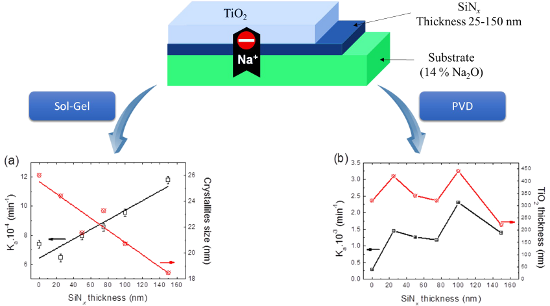
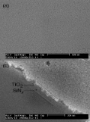
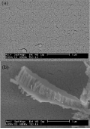
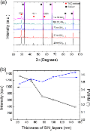
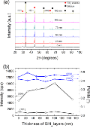
- . An increased SiNx diffusion barrier thickness resulted in a decrease in the crystallite size of the TiO2 film when produced by the sol–gel method, and consequently, the photocatalytic degradation of the OII dye was improved. However, when the reactive sputtering method was used, the thickness of the
Effects of swift heavy ion irradiation on structural, optical and photocatalytic properties of ZnO–CuO nanocomposites prepared by carbothermal evaporation method
Beilstein J. Nanotechnol. 2015, 6, 928–937, doi:10.3762/bjnano.6.96
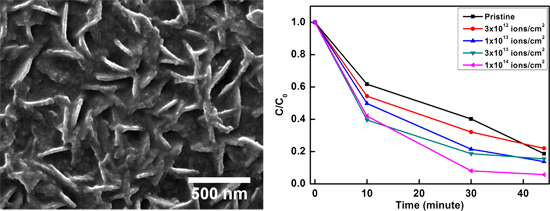
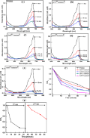
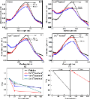
- photocatalytic degradation kinetics was observed by monitoring the characteristic peak of MB at 664 nm and MO at 464 nm as a function of sun light exposure time. It can be clearly seen that the photocatalytic efficiency is highest for the sample irradiated at a fluence of 1 × 10¹⁴ ions/cm2 as compared to the
- pristine samples and the samples irradiated with lower fluences. The schematic diagram showing the mechanism underlying the photocatalytic degradation of dye through ZnO–CuO nanocomposites is depicted in Figure 8. The mechanism of photocatalysis can be understood as follows. When sun light is incident on
- formation of hydroxyl radicals (•OH) and superoxide radicals (•O2−) during visible-light-induced photocatalytic degradation of acid orange and 4-nitrophenol. The formation of hydroxyl radicals (•OH) was detected by photoluminescence studies using terephthalic acid as a probe molecule, while 1,4-benzoquinone



Tm-doped TiO2 and Tm2Ti2O7 pyrochlore nanoparticles: enhancing the photocatalytic activity of rutile with a pyrochlore phase
Beilstein J. Nanotechnol. 2015, 6, 605–616, doi:10.3762/bjnano.6.62
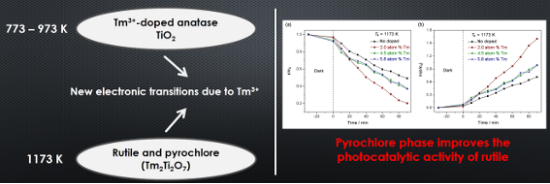
- obtained (Figure 8b), the photocatalytic degradation of MB, using our samples synthesized as a catalyst, is a pseudo-first-order reaction and its kinetics can be described by ln(c0/c) = −kKt = kappt, where c0 is the initial concentration of the MB, c is the concentration of the MB with irradiation time t


Palladium nanoparticles anchored to anatase TiO2 for enhanced surface plasmon resonance-stimulated, visible-light-driven photocatalytic activity
Beilstein J. Nanotechnol. 2015, 6, 428–437, doi:10.3762/bjnano.6.43
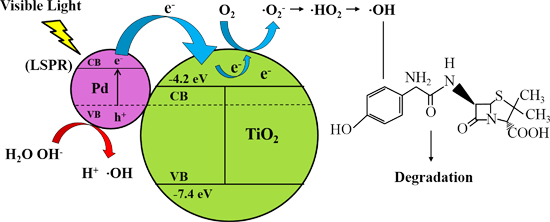
- degradation of AMX are of pseudo-first-order (Figure 12). The obtained kinetics parameters are tabulated in Table S2 (Supporting Information File 1). Finally, the degree of mineralization of AMX during the photocatalytic degradation was also presented through a total organic carbon (TOC) analysis and depicted
- % Pd/TiO2, c) 3.0 wt % Pd/TiO2 and d) 1.0 wt % Pd/TiO2. Photocatalytic degradation rates of AMX under visible light irradiation. Schematic diagram of electron transfer and degradation mechanism of AMX. Recycled photocatalytic degradation rates of AMX (0.5 wt % Pd/TiO2). The kinetics of AMX degradation
- the as prepared 0.5 wt % Pd/TiO2 photocatalyst maintains a high level of degradation efficiency after three times of recycling. An efficiency of 92.3% was achieved after the 3rd run, which indicates an excellent photostability of the synthesized photocatalyst. The kinetics of the photocatalytic


Nanomanipulation and environmental nanotechnology
Beilstein J. Nanotechnol. 2014, 5, 2079–2080, doi:10.3762/bjnano.5.216

- processes. For example, the photocatalytic degradation of pollutants can be interpreted using density functional theory. On a different scale, AFM measurements in liquid environments can be supported by advanced contact mechanics models including the squeeze-out of wetting fluids. Adhesion of fluorite
Characterization and photocatalytic study of tantalum oxide nanoparticles prepared by the hydrolysis of tantalum oxo-ethoxide Ta8(μ3-O)2(μ-O)8(μ-OEt)6(OEt)14
Beilstein J. Nanotechnol. 2014, 5, 1082–1090, doi:10.3762/bjnano.5.121
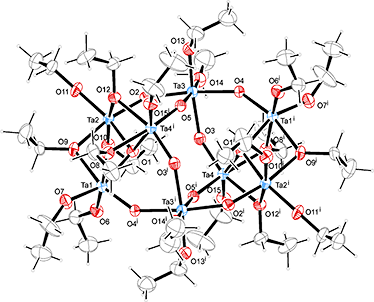
- increasing the amount of Ta2O5 from 0.2 mg/mL to 0.8 mg/mL, the photocatalytic degradation rate was enhanced due to increase in the active sites accessible for the reaction on the surface of the catalyst. However, when the amount of catalyst was increased further, the rate of dye degradation was found to be
- ground state molecules and thus reduce the degradation [31]. Effect of dye concentration on the rate of degradation of rhodamine B To study the effect of initial dye concentration on the photocatalytic degradation different amounts of rhodamine B were taken while keeping other factors constant. It was
- rhodamine B. Effect of dye concentration on photocatalytic degradation. Effect of dye concentration on photocatalytic degradation. Effect of the pH value on the rate of degradation of rhodamine B. Effect of the calcination temperature on the rate of degradation of rhodamine B. Selected bond lengths


DFT study of binding and electron transfer from colorless aromatic pollutants to a TiO2 nanocluster: Application to photocatalytic degradation under visible light irradiation
Beilstein J. Nanotechnol. 2014, 5, 1016–1030, doi:10.3762/bjnano.5.115
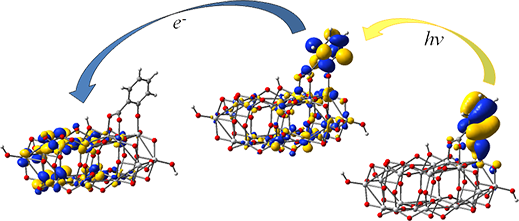
- order to explain experimental results regarding the photocatalytic degradation of these pollutants under visible light irradiation. Based on our modeling, we are able to clarify why transparent pollutants can degrade under visible light in the presence of a catalyst that absorbs only in the UV, to
- ; density functional theory; photocatalytic degradation; titanium dioxide; visible light irradiation; Introduction Titania, TiO2, has been widely used as photocatalyst for environmental applications [1][2][3][4][5][6], particularly for waste water purification. Due to its large band gap TiO2 absorbs only
- UV radiation, a fact that limits the efficiency and keeps the costs of the photocatalytic degradation of environmental pollutants high. To be used under visible light irradiation, in the range of wavelengths where the solar spectrum has its maximum, the electronic band structure of the photocatalyst



Nanostructure sensitization of transition metal oxides for visible-light photocatalysis
Beilstein J. Nanotechnol. 2014, 5, 696–710, doi:10.3762/bjnano.5.82
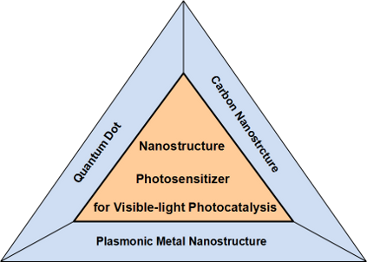
- composite photocatalysts in the case of the photocatalytic degradation of phenol under visible light irradiation [95] (Figure 7b). In this photo-excitation process, carbon nanotubes are firstly excited by visible light and transfer electrons to the CB of a transition metal oxide for the reduction reaction
- ) and then emit shorter wavelength light (300 to 530 nm) for the excitation of m-BiVO4 to further generate electron–hole pairs for photocatalytic degradation. Due to the special upconversion property of carbon nanodots, the carbon nanodots–m-BiVO4 nanospheres can be used as photocatalysts under the
- broad spectrum of sunshine. Based on a similar mechanism carbon nanodots can also be combined with Cu2O, Ag3PO4 or Fe2O3 for the photocatalytic degradation of methyl blue, methyl orange, and toxic gases of benzene and methanol, respectively [134][135][136]. The merits of carbon nanostructures, and