Search results
Search for "polycrystalline" in Full Text gives 259 result(s) in Beilstein Journal of Nanotechnology. Showing first 200.
Revealing the formation mechanism and band gap tuning of Sb2S3 nanoparticles
Beilstein J. Nanotechnol. 2021, 12, 1021–1033, doi:10.3762/bjnano.12.76
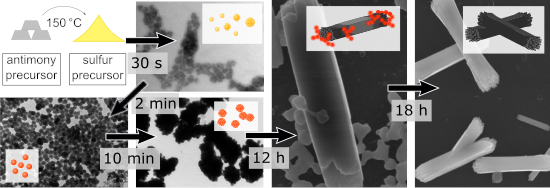
- et al., who evaluated the accuracy of the Tauc plot for 120 individual analyses of polycrystalline ZnO and found a deviation of about 0.03 eV [52]. XRD For XRD measurements, a minimum amount of 10 mg of dried particles was used. The samples were measured in a capillary in transmission geometry. Two


The role of deep eutectic solvents and carrageenan in synthesizing biocompatible anisotropic metal nanoparticles
Beilstein J. Nanotechnol. 2021, 12, 924–938, doi:10.3762/bjnano.12.69

- nanocrystals with high-index {771} facets. The nanoparticles with high-index planes exhibited higher catalytic activity due to high density of atoms with low coordination number compared to nanoparticles with low-index facets such as {100}, {111}, or {110}. Chirea et al. synthesized polycrystalline gold


Effects of temperature and repeat layer spacing on mechanical properties of graphene/polycrystalline copper nanolaminated composites under shear loading
Beilstein J. Nanotechnol. 2021, 12, 863–877, doi:10.3762/bjnano.12.65
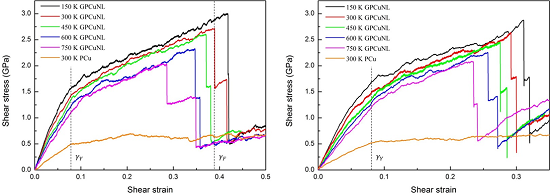
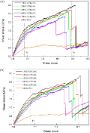
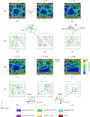
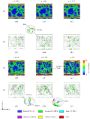
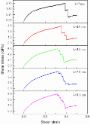
- Chia-Wei Huang Man-Ping Chang Te-Hua Fang Department of Mechanical Engineering, National Kaohsiung University of Science and Technology, Kaohsiung 807618, Taiwan 10.3762/bjnano.12.65 Abstract In the present study, the characteristics of graphene/polycrystalline copper nanolaminated (GPCuNL
- ]. The competition between interface and matrix in deformation and failure of a nanolayered polycrystalline Cu–graphene material has been reported [26]. In 2018, Weng et al. reported the potential strengthening mechanism of graphene/copper composites under compression. The results show that the
- this work, we focus on temperature and microstructure effects on graphene/polycrystalline copper nanolaminated (GPCuNL) composites. As mentioned above, the microstructure plays a crucial role for the mechanical behavior of GPCuNL composites. Thus, in the present study, molecular dynamics (MD











9.1% efficient zinc oxide/silicon solar cells on a 50 μm thick Si absorber
Beilstein J. Nanotechnol. 2021, 12, 766–774, doi:10.3762/bjnano.12.60
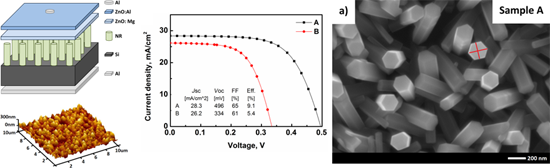
- prepared by the Fraunhofer Institute (Germany), the solar cells (SCs) market is dominated by silicon [2]. In 2019, monocrystalline, polycrystalline, and amorphous silicon accounted for about 95% of the PV market. The highest (laboratory device) efficiency for monocrystalline and polycrystalline silicon


A review of defect engineering, ion implantation, and nanofabrication using the helium ion microscope
Beilstein J. Nanotechnol. 2021, 12, 633–664, doi:10.3762/bjnano.12.52



High-yield synthesis of silver nanowires for transparent conducting PET films
Beilstein J. Nanotechnol. 2021, 12, 624–632, doi:10.3762/bjnano.12.51
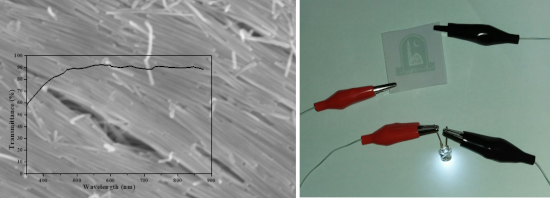
- , template reduction (hard and soft templates), and ultrasonic reduction methods [17][18][19][20][21][22]. Lithographic and hard template methods are used to prepare silver nanowires with well-defined dimensions but both methods produce polycrystalline silver nanowires with rough surface, triggering


Impact of GaAs(100) surface preparation on EQE of AZO/Al2O3/p-GaAs photovoltaic structures
Beilstein J. Nanotechnol. 2021, 12, 578–592, doi:10.3762/bjnano.12.48
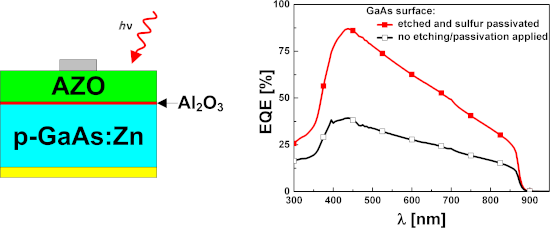
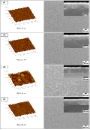
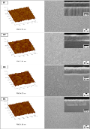
- B series, respectively. From the AFM results shown in Figure 3 and Figure 4, one can see that A1, A2, A4, B1, and B4 samples exhibit uniform surfaces by the means of polycrystalline thin film topography. By taking into consideration the roughness of the surfaces (RMS was measured for an area of 4




Structural and optical characteristics determined by the sputtering deposition conditions of oxide thin films
Beilstein J. Nanotechnol. 2021, 12, 354–365, doi:10.3762/bjnano.12.29
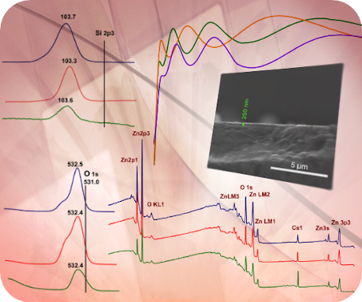
- was done to determine the type of structure (e.g., polycrystalline or amorphous) and orientation of the thin films. Figure 1 shows typical XRD patterns of ZnO thin films with increasing thickness and prepared via rfMS. Following the effect of the deposition parameters of the oxide films we found that


Atomic layer deposited films of Al2O3 on fluorine-doped tin oxide electrodes: stability and barrier properties
Beilstein J. Nanotechnol. 2021, 12, 24–34, doi:10.3762/bjnano.12.2
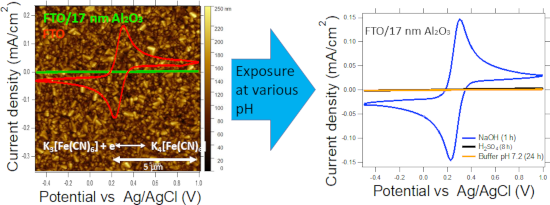
- amorphous to polycrystalline γ-Al2O3 [12] or to oriented θ-Al2O3 [13]. However, on thermodynamic grounds, alumina is soluble in both acidic and alkaline media [8]. Besides protection, Al2O3 ALD layers have also been used for passivating surface states on water-oxidizing hematite photoanodes [14][15]. Very


Scanning transmission imaging in the helium ion microscope using a microchannel plate with a delay line detector
Beilstein J. Nanotechnol. 2020, 11, 1854–1864, doi:10.3762/bjnano.11.167
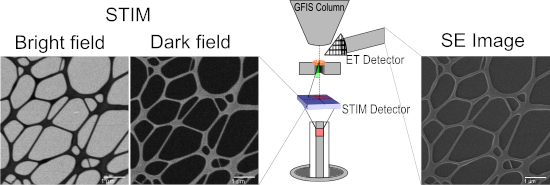
- also detect channeling-related contrast on polycrystalline silicon, thallium chloride nanocrystals, and single-crystalline silicon by comparing the signal transmitted at different directions for the same data set. Keywords: bright-field; channeling; dark-field; delay line detector; helium ion
- transmission-channeling contrast using polycrystalline silicon, thallium chloride samples and beam steering in single-crystalline silicon. Experimental The new STIM detector comprises a stack of two MCPs and a resistive anode layer with a delay line readout structure behind it, as represented in Figure 1c. The
- responsible for the observed mismatch. Beam steering and channeling Polycrystalline silicon A 15 nm thick nanoporous polycrystalline silicon membrane (available from Electron Microscopy Sciences, item number: 76042–79) has been investigated using STIM. In Figure 4b–f we present several STIM images, which were


Molecular dynamics modeling of the influence forming process parameters on the structure and morphology of a superconducting spin valve
Beilstein J. Nanotechnol. 2020, 11, 1776–1788, doi:10.3762/bjnano.11.160
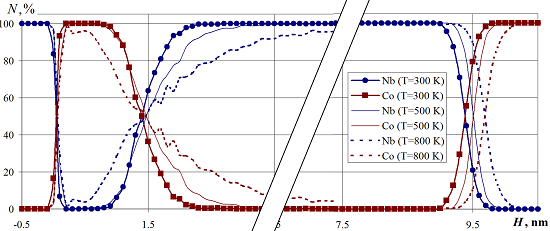
- structure of each layer does not form an ideal single crystal, but rather a polycrystalline system is formed. The influence of the interface quality on the spin valve functionality is an especially important issue, which has been experimentally investigated in previous works [16][17][18][19] where the
- nanosystem resulting from the mathematical modeling is presented in Figure 5. Figure 5 clearly demonstrates the niobium and cobalt layered nanosystem formation: the layers formed by niobium and cobalt atoms have a polycrystalline structure. In this case, groups of atoms are combined into domains with


High-responsivity hybrid α-Ag2S/Si photodetector prepared by pulsed laser ablation in liquid
Beilstein J. Nanotechnol. 2020, 11, 1596–1607, doi:10.3762/bjnano.11.142
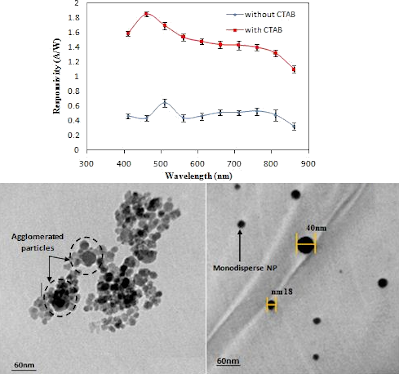
- (SEM), energy-dispersive X-ray spectroscopy (EDX), and UV–vis spectroscopy. The optical absorption decreased and the optical energy gap of α-Ag2S increased from 1.5 to 2 eV after the CTAB surfactant was added to the Tu solution. XRD studies revealed that the synthesized Ag2S NPs were polycrystalline




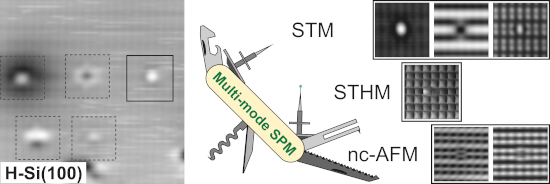
Atomic defect classification of the H–Si(100) surface through multi-mode scanning probe microscopy
Beilstein J. Nanotechnol. 2020, 11, 1346–1360, doi:10.3762/bjnano.11.119
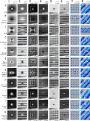
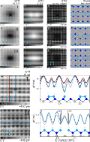
- . Methods Experiments were performed using an Omicron LT STM and an Omicron qPlus LT AFM [88][89] system operating at 4.5 K and ultrahigh vacuum (3 × 10⁻¹¹ Torr). STM tips were electrochemically etched from polycrystalline tungsten wire, resistively heated, and field-evaporated to clean and sharpen the apex



Proximity effect in [Nb(1.5 nm)/Fe(x)]10/Nb(50 nm) superconductor/ferromagnet heterostructures
Beilstein J. Nanotechnol. 2020, 11, 1254–1263, doi:10.3762/bjnano.11.109
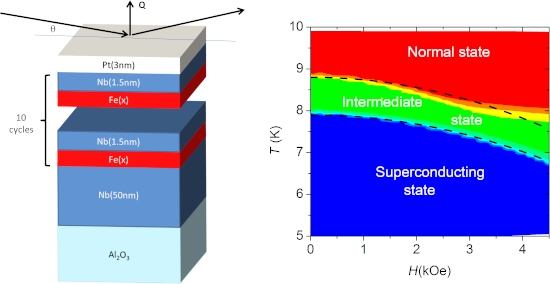
- thickness from 2 to 4 nm improves the film quality. The Fe layer becomes polycrystalline while the Nb layer remains amorphous. In contrast, for sample s6, which was grown on the 30 °C Nb buffer, both layers reveal polycrystallinity with a certain texture (Figure 2e,f). Finally, the Pt cap is always
- polycrystalline (Figure 2b). X-ray diffraction Figure 3a shows the diffraction pattern measured on sample s3. Together with two reflections from the substrate we observed a Nb(200) peak at 2θ = 55°with mosaicity of the same order as the substrate peak. In agreement with the observation by RHEED (Figure 4b) we
- observed that the Nb(200) peak is tilted off-specular by a few degrees, which is a well-known feature of Nb growth on Al2O3() substrates [45][46]. Similar patterns were measured for all samples, except for sample s6, which was grown at room temperature. For this sample we measured a typical polycrystalline


![[Graphic 13]](/bjnano/content/inline/2190-4286-11-109-i17.svg?max-width=637&scale=1.18182) ) substrate, (b) the Pt cap layer, and the Nb buffer layer grown at...
) substrate, (b) the Pt cap layer, and the Nb buffer layer grown at...


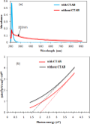
![[Graphic 16]](/bjnano/content/inline/2190-4286-11-109-i20.svg?max-width=637&scale=1.18182) (T) for the samples s4 (black) and s3 (red) in the vicinity of the superconducting transition m...
(T) for the samples s4 (black) and s3 (red) in the vicinity of the superconducting transition m...
Gas-sensing features of nanostructured tellurium thin films
Beilstein J. Nanotechnol. 2020, 11, 1010–1018, doi:10.3762/bjnano.11.85
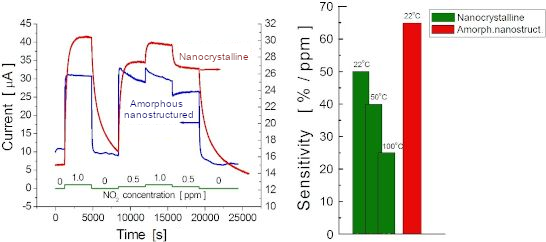
- nanostructured (porous) Al2O3 substrates. In both cases, the polycrystalline Te (purity 99.999%) was evaporated under 10−4 Pa vacuum conditions. The evaporation was carried out using VUP-5 equipment (SUMI, Ukraine) from a tantalum boat, keeping the same distance (20 cm) between the evaporation boat and substrate


Epitaxial growth and superconducting properties of thin-film PdFe/VN and VN/PdFe bilayers on MgO(001) substrates
Beilstein J. Nanotechnol. 2020, 11, 807–813, doi:10.3762/bjnano.11.65
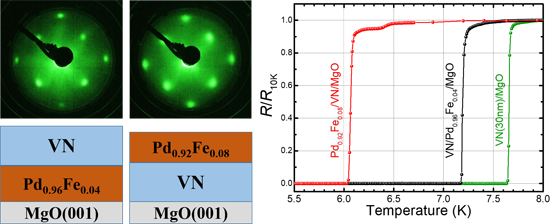
- matches that of the palladium-rich Pd1−xFex alloys (face-centered cubic with a0 = 389 pm). Therefore, a good crystallinity of the layer stack can hardly be expected. In the resulting polycrystalline films, crystallite boundaries and crystal lattice imperfections can lead to the segregation of iron


Effect of Ag loading position on the photocatalytic performance of TiO2 nanocolumn arrays
Beilstein J. Nanotechnol. 2020, 11, 717–728, doi:10.3762/bjnano.11.59
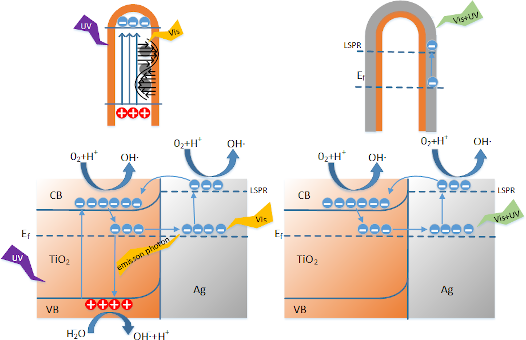
- nanocolumns conforms to the structural parameters of the AAO template. Figure 4b shows the diffraction pattern of TiO2 nanocolumns. According to diffraction spot analysis, it can be found that the prepared TiO2 has a polycrystalline structure. Figure 4c is a TEM image of the nanopillars of the AFT structure


Structural optical and electrical properties of a transparent conductive ITO/Al–Ag/ITO multilayer contact
Beilstein J. Nanotechnol. 2020, 11, 695–702, doi:10.3762/bjnano.11.57
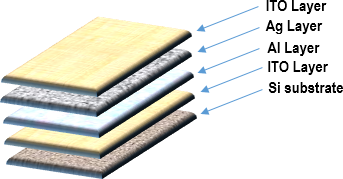
- becomes polycrystalline upon annealing at 400 °C. Strong diffraction peaks of ITO(222), Ag(111) and ITO(440) were observed after annealing. The appearance of diffraction peaks of ITO(222), Ag(111) and Al(200) in the annealed film indicate an enhanced crystallinity of the film. Diffraction peaks of In2O3


Implementation of data-cube pump–probe KPFM on organic solar cells
Beilstein J. Nanotechnol. 2020, 11, 323–337, doi:10.3762/bjnano.11.24
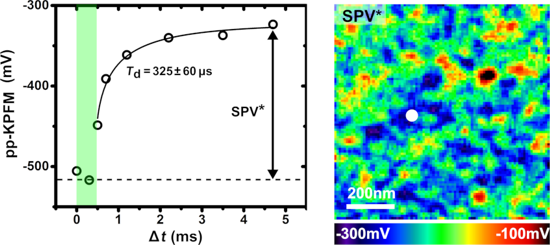
- -processed organic donor–acceptor blends called bulk heterojunctions (BHJ), for polycrystalline direct bandgap semiconductors such as CdTe, CuInxGa(1−x)Se2 and Cu2ZnSnS4 and for hybrid organic–inorganic perovskite solar cells. Whatever material used, improving the performance of the solar cell requires a
- compensation potential (or surface potential (SP)) on the frequency modulation (fmod) of an illumination source. The first demonstration of light intensity-modulated KPFM (IM-KPFM) was carried out in 2008 by Takihara et al. on polycrystalline Si solar cells [12], and it has been recently applied to organic [13




Antimony deposition onto Au(111) and insertion of Mg
Beilstein J. Nanotechnol. 2019, 10, 2541–2552, doi:10.3762/bjnano.10.245
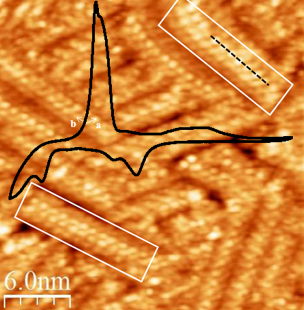
- counter electrode and another one as a reference electrode. All the magnesium electrochemical deposition measurements were carried out in a MBraun glovebox (H2O < 0.5 ppm, O2 < 0.5 ppm) in a similar manner as described in [19]. Cyclic voltammetry (CV) A polycrystalline Au electrode with a similar size was
- than that observed by us. We also observed a smaller peak C1 on a polycrystalline Au electrode. Therefore, this difference is probably due to the roughness of the Au(111) surface, resulting from repeated alloying and dealloying during the cycling to obtain stable voltammetry in [12]. Upon extension of
- is similar to the behavior of Mg at a polycrystalline gold electrode [19]. The small peak at 0.1 V (vs Mg) is due to the insertion of Mg into the Sb-adlayer and is not visible in the absence of Sb. The bulk deposition of Mg starts below −0.2 V. During the anodic going sweep, the current is still





Synthesis and acetone sensing properties of ZnFe2O4/rGO gas sensors
Beilstein J. Nanotechnol. 2019, 10, 2516–2526, doi:10.3762/bjnano.10.242
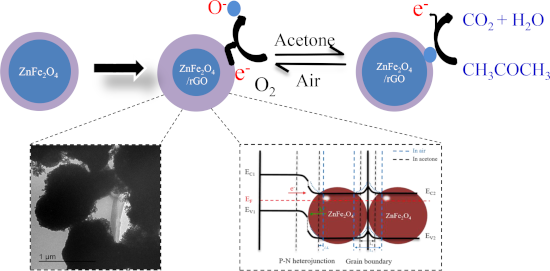
- selected area diffraction (SAED) pattern shows a series of distinct diffraction rings, which can be readily indexed to the (220), (311), (400), (422), (511) and (440) planes of the spinel ZnFe2O4 crystal, in line with the above XRD results. Moreover, the SAED pattern exhibits the polycrystalline nature of




Semitransparent Sb2S3 thin film solar cells by ultrasonic spray pyrolysis for use in solar windows
Beilstein J. Nanotechnol. 2019, 10, 2396–2409, doi:10.3762/bjnano.10.230
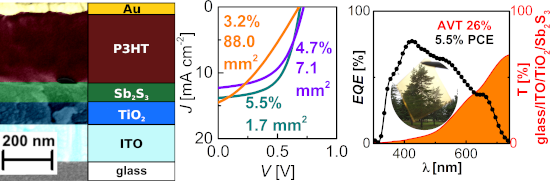
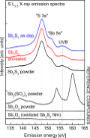
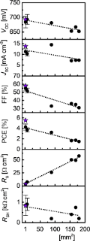
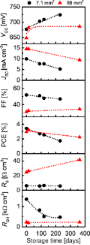
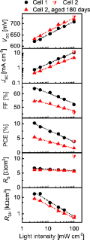
- composition, these results already give USP a distinct advantage over aqueous CBD, wherein the inclusion of oxygen is inevitable and traceable [57][58][59]. To summarize the thin film characterization, we have fabricated polycrystalline, chlorine-free (below EDX detection limit), and oxygen-free (EDX and XES



Integration of sharp silicon nitride tips into high-speed SU8 cantilevers in a batch fabrication process
Beilstein J. Nanotechnol. 2019, 10, 2357–2363, doi:10.3762/bjnano.10.226
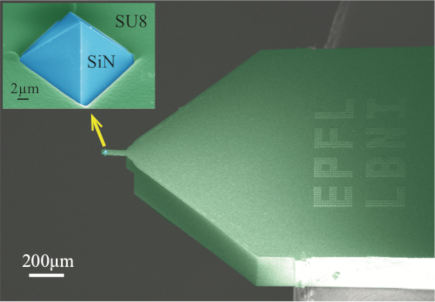
- sharpness, 20 randomly chosen LSNT-tip SU8 cantilevers have been tested with a polycrystalline titanium roughness sample. The images were taken using a NanoScope-V controller and a Multi-Mode-V AFM with a J scanner (Bruker) in tapping mode. The imaging conditions were as follows: scan size 2 µm, number of
- with one of the LSNT-tip SU8 cantilevers. To evaluate the tip sharpness, the blind tip estimation algorithm [33] as implemented in the Gwyddion program [34][35] has been used. The blind tip estimation algorithm is used to estimate the sharpness of the tip from the image of a polycrystalline titanium
- imaging of the polycrystalline titanium roughness sample (tapping mode, scan size 2 µm, 512 × 512 pixels and scan rate 1 Hz). Figure 2b shows the partial blind estimation of the tip shape for the first and last images after 16 mm tip travel. No obvious degradation occurred. Figure 2c shows the evolution


Ultrathin Ni1−xCoxS2 nanoflakes as high energy density electrode materials for asymmetric supercapacitors
Beilstein J. Nanotechnol. 2019, 10, 2207–2216, doi:10.3762/bjnano.10.213
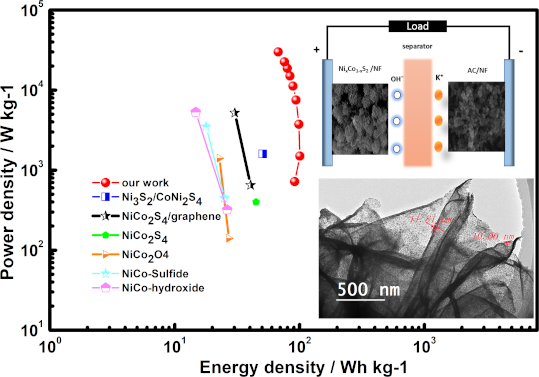
- ). Moreover, the polycrystalline nature of the synthesized Ni–Co sulfides was revealed by the selected area electron diffraction (SAED) pattern (Figure 1g, inset), the diffraction pattern can be readily indexed to the (002), (021), (112), (113) and (132) planes of Ni1−xCoxS2. The diffraction pattern is


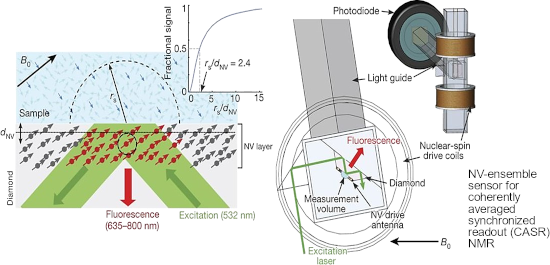
Nitrogen-vacancy centers in diamond for nanoscale magnetic resonance imaging applications
Beilstein J. Nanotechnol. 2019, 10, 2128–2151, doi:10.3762/bjnano.10.207