


Search results
Search for "proliferation" in Full Text gives 176 result(s) in Beilstein Journal of Nanotechnology.
Nanoarchitectonics to entrap living cells in silica-based systems: encapsulations with yolk–shell and sepiolite nanomaterials
Beilstein J. Nanotechnol. 2023, 14, 522–534, doi:10.3762/bjnano.14.43
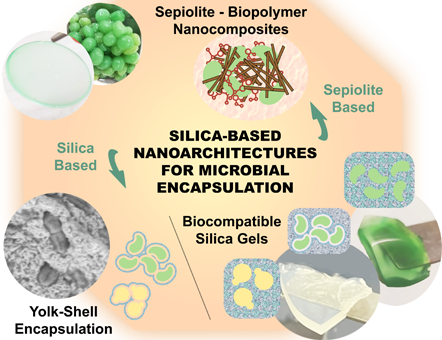
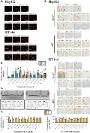
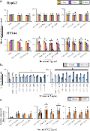
- to the previous day, that is, there was no cell proliferation, and the escape of cells from the matrix was negligible. In the case of neat yolk–shell encapsulated cells, the cell leakage has been evaluated mixing the particles in the tube and observing an increase in the absorbance of the supernatant
- above the sedimented particles. This way, a “−“ sign indicates no appreciable cell proliferation in the growth medium besides the cells already encapsulated in the yolk–shell microstructures. All these critical features have been studied and compared among the different systems over a course of ten days


Plasmonic nanotechnology for photothermal applications – an evaluation
Beilstein J. Nanotechnol. 2023, 14, 380–419, doi:10.3762/bjnano.14.33
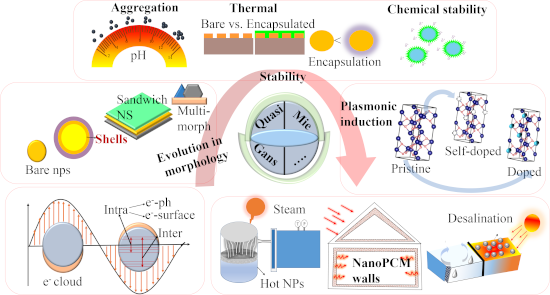
- various material phenomena other than bandgap absorption for heat generation in nanoparticles (NPs), leading to a rapid proliferation of materials for the same. For example, organic materials undergo rapid internal relaxation by the PT effect and are often desired in cancer treatment research as they




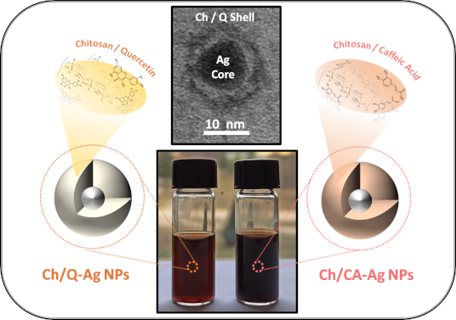
Quercetin- and caffeic acid-functionalized chitosan-capped colloidal silver nanoparticles: one-pot synthesis, characterization, and anticancer and antibacterial activities
Beilstein J. Nanotechnol. 2023, 14, 362–376, doi:10.3762/bjnano.14.31
- acid hydrate, Cell Proliferation Kit II test (Roche). XTT solution was added to each plate at 50 µL and was incubated for 4 h at 37 °C. Then, the absorbance (optical density, OD) of the solution in each plate was read at 450 nm by a spectrophotometer (BiotekELx800, Winooski, VT, USA). Statistical
- and their viability, as it greatly simplifies the procedure for measuring proliferation over MTT, reduces assay time, and increases the sensitivity of the assay [73]. In this study, the dose-dependent cell viabilities of human brain glioblastoma (U-118 MG) and human retinal pigment epithelium (ARPE-19


Recent progress in cancer cell membrane-based nanoparticles for biomedical applications
Beilstein J. Nanotechnol. 2023, 14, 262–279, doi:10.3762/bjnano.14.24
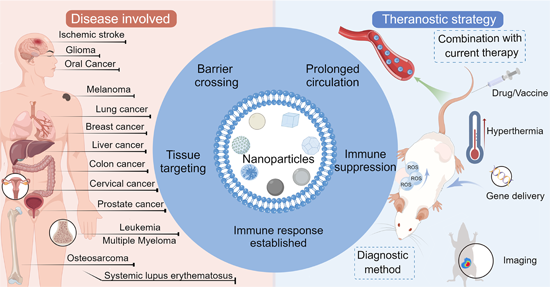
- being presented to antigen-presenting cells (APCs), will promote the proliferation and infiltration of active T cells in the TME and induce an antigen-specific antitumor response [33][45]. This natural advantage also makes cancer cell membranes useful in nanoimmunotherapy, which can induce specific
- responses after the presentation and delivery of leukemia membrane-associated antigens by APCs [59]. These bionanoparticles showed the advantage of multiple antigens and significantly prolonged survival. MM, a malignant proliferation of plasma cells derived from the bone marrow, is the second most common


Nanotechnology – a robust tool for fighting the challenges of drug resistance in non-small cell lung cancer
Beilstein J. Nanotechnol. 2023, 14, 240–261, doi:10.3762/bjnano.14.23
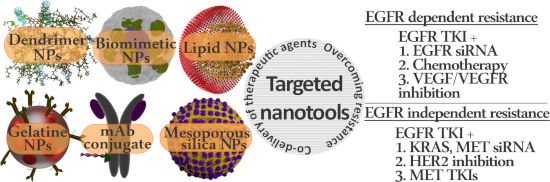
- proliferation and survival mechanisms on which the cancer cells are heavily dependent. The efficacy of existing small molecules in synergistic combinations for relevant genetic mutations in resistant cancers has been evaluated in many research and clinical studies, with promising results in some types of mutant
- the limitations of the conjugates [68][69]. Cytotoxic or molecular targeting agents with siRNA Targeting homologous mRNA sequences in cells and knockdown of receptors involved in cell survival and proliferation using RNA interference downregulates receptor protein expression, inhibits cell growth, and
- cycle progression and proliferation [78]. Therefore, it is expected that KRAS-mutated tumors would not respond to EGFR TKIs. Patients with KRAS-mutant NSCLC can benefit from direct KRAS inhibitors, such as sotorasib, which lock KRAS in its inactive GDP-bound form. However, a heterogeneous resistance


Structural, optical, and bioimaging characterization of carbon quantum dots solvothermally synthesized from o-phenylenediamine
Beilstein J. Nanotechnol. 2023, 14, 165–174, doi:10.3762/bjnano.14.17
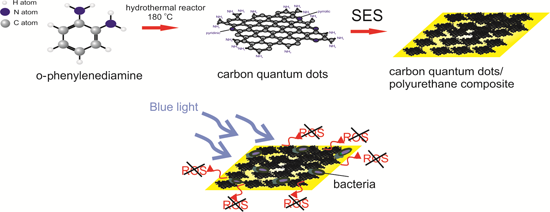
- and thermally stable, quasi-spherical, photoluminescent material with very good antibacterial and anticancer properties under visible light irradiation [9][10][11][12][13][14][15][16]. This material has very good biocompatibility, including low dark cytotoxicity and good cell proliferation
- which MRC5 cells were maintained as monolayer cultures, was replaced with undiluted sample extract (100%), and 50% and 25% sample extracts (prepared by diluting sample extracts with fresh RPMI-1640). After 48 h of treatment with sample extracts, cell proliferation was determined using MTT reduction


Antimicrobial and mechanical properties of functionalized textile by nanoarchitectured photoinduced Ag@polymer coating
Beilstein J. Nanotechnol. 2023, 14, 95–109, doi:10.3762/bjnano.14.11
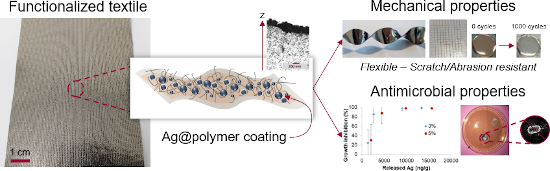
- Biomédecine de Strasbourg, F-67000 Strasbourg, France Université de Strasbourg, Faculté Dentaire, F-67000 Strasbourg, France CNRS, F-67000 Strasbourg, France 10.3762/bjnano.14.11 Abstract The control of microbial proliferation is a constant battle, especially in the medical field where surfaces, equipment
- nanocomposites exhibited remarkable microbial growth inhibitory effects. Keywords: antimicrobial properties; C. albicans fungus; E. coli bacteria; photoinduced functionalized textile; silver/polymer nanomaterials; Introduction The proliferation of microorganisms is a major concern for health organizations
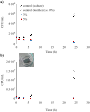
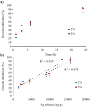
- avoiding planktonic bacteria proliferation by the direct action of silver ions. The capacity of 3 wt % and 5 wt %-loaded textiles to inhibit the growth of E. coli is thought to be related to this mechanism. Concerning the fungus, similarly to bacteria, the amount of loaded silver does not have a



In search of cytotoxic selectivity on cancer cells with biogenically synthesized Ag/AgCl nanoparticles
Beilstein J. Nanotechnol. 2022, 13, 1505–1519, doi:10.3762/bjnano.13.124
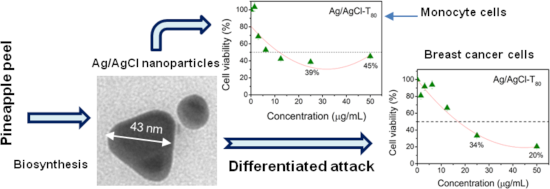
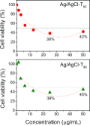
- % for AgNPs-T80. In other words, at concentrations close to 50 µg/mL, the cytotoxic action of the nanoparticles becomes selective. This result is possibly due to the fact that a higher content of nanoparticles prevents cell proliferation in neoplastic cells. MCF-7 cells are known to overexpress matrix





Hydroxyapatite–bioglass nanocomposites: Structural, mechanical, and biological aspects
Beilstein J. Nanotechnol. 2022, 13, 1490–1504, doi:10.3762/bjnano.13.123
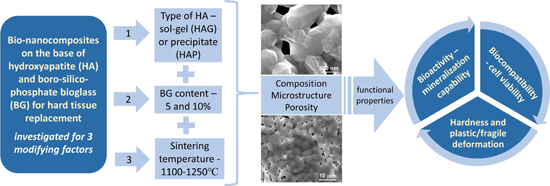
- favorable for bone cell proliferation, although a high pH value may be detrimental to optimal osteoblast metabolism [14]. It was shown, for example, that values of pH 7.0–7.5 were optimal for osteoclast differentiation and proliferation [57]. MTT assay and biocompatibility of composites Figure 9 shows the
- probably caused by the more porous structure and, as a result, higher dissolution rate of these composites, inducing an increased ion concentration in the surrounding biological environment, which may be detrimental for cell proliferation. It can be noticed that HAG-1200 ceramics without BG also exhibited
Facile preparation of Au- and BODIPY-grafted lipid nanoparticles for synergized photothermal therapy
Beilstein J. Nanotechnol. 2022, 13, 1432–1444, doi:10.3762/bjnano.13.118
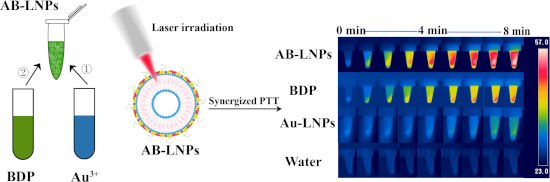
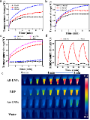
- -LNPs at the same concentration, indicating the synergistic effects of BDP and Au-LNPs (Figure 5c). Because of the photothermal effects of BDP and Au-LNPs, AB-LNPs with a BDP concentration of 30 μM and a Au concentration of 30 μM presented strong cell proliferation inhibitory effects (90.2%) in




Orally administered docetaxel-loaded chitosan-decorated cationic PLGA nanoparticles for intestinal tumors: formulation, comprehensive in vitro characterization, and release kinetics
Beilstein J. Nanotechnol. 2022, 13, 1393–1407, doi:10.3762/bjnano.13.115
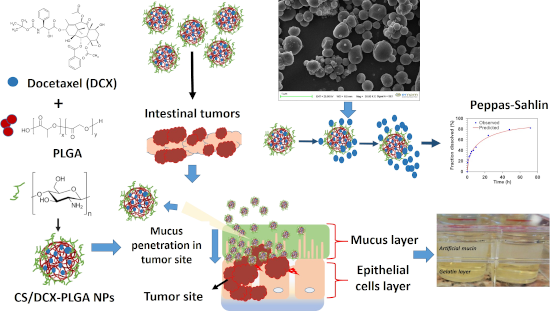
- : chitosan; docetaxel; intestinal tumors; oral drug delivery; PLGA; Introduction Cancer is one of the most common chronic diseases in the world, characterized by the uncontrolled proliferation and spread of cells [1]. To date, effective and safe treatment approaches for cancer treatment have not been fully
- the proliferation of cancer cells [32][33][34]. Its potent activity against a wide spectrum of cancers such as colon cancer, gastric cancer, breast cancer, recurrent ovarian cancer, and non-small cell lung cancer has been elucidated by in vitro and in vivo studies [35]. Its poor water solubility


Biomimetic chitosan with biocomposite nanomaterials for bone tissue repair and regeneration
Beilstein J. Nanotechnol. 2022, 13, 1051–1067, doi:10.3762/bjnano.13.92
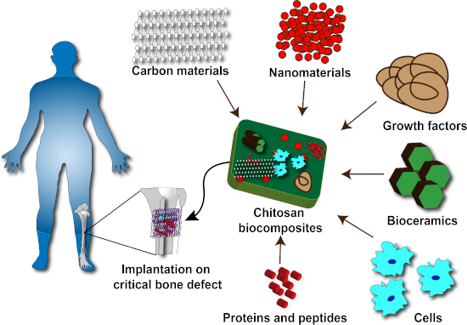
- oxide, zinc oxide, carbon nanotubes, graphene oxide, and biosilica was developed to improve bone scaffolds for better bone tissue repair and regeneration [11]. In tissue engineering applications, nanoscale topological characteristics influence cell adhesion, survival, proliferation, and differentiation
- their osteoinductive properties [40][41]. Chitosan is combined with several polymeric materials and nanoparticles to mimic the natural function of the bone (Table 1) [42][43]. Chitosan biomaterials enhance the proliferation of osteoblasts and the formation of bone minerals by promoting gene expression
- differentiation in human adipose-derived mesenchymal stem cells. The proliferation of the cells was demonstrated by the alamarBlue test. Further, qRT-PCR analysis showed upregulation of alkaline phosphatase, bone sialoprotein, and osteocalcin gene expression. The Alizarin red S test was carried out by culturing
Bioselectivity of silk protein-based materials and their bio-inspired applications
Beilstein J. Nanotechnol. 2022, 13, 902–921, doi:10.3762/bjnano.13.81
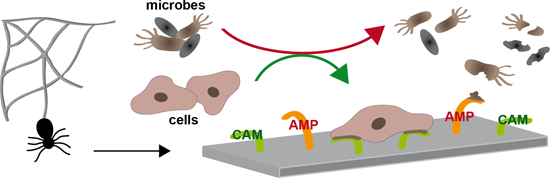
- materials using bioactive and bioadhesive molecules, such as full-length ECM proteins or functional peptide fragments thereof. These ligands interact with cell receptors for guiding cellular responses, such as cell proliferation or specific matrix degradation [31][32][33][34]. Compared to full-length
- worldwide. Natural spider silk has the potential to be used for tissue engineering and biomedical applications. For instance, NIH 3T3 cells showed increased adhesion and proliferation on fabricated, sterilized wovens made of native, unmodified spider dragline silk fibres from Nephila clavipes over five days
- a residue substitution of aspartate with glutamate thus rendering an identical charge distribution, was applied as a control. Cell culture studies using Balb 3T3 fibroblasts revealed that the RGD peptide enhanced primary cell attachment with increased spread morphology and proliferation on films


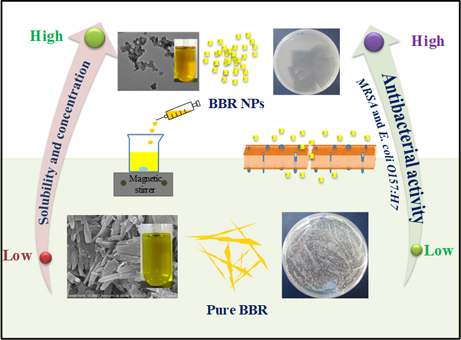
Antibacterial activity of a berberine nanoformulation
Beilstein J. Nanotechnol. 2022, 13, 641–652, doi:10.3762/bjnano.13.56
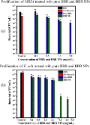
- , respectively. No MBC was found for pure BBR up to the saturation concentration of 2.0 mg/mL. Figure 6 shows the proliferation of MRSA and E. coli O157:H7 in nutrient broth after treatment with pure BBR and BBR NPs at different concentrations between 0.1 and 5.0 mg/mL. The results were obtained by colony
- increased from 0.5 mg/mL to the saturation concentration of BBR (2.0 mg/mL). The comparison between pure BBR and BBR NPs indicates that the antibacterial activity of BBR NPs was slightly higher in the concentration range of 0.1–1.0 mg/mL. Notably, proliferation of MRSA was not observed after treatment with
- BBR NPs at a concentration of 2.0 mg/mL. BBR NPs at a concentration of 2.0 mg/mL and higher exhibited a strong antibacterial effect against MRSA. Pure BBR and BBR NPs show low inhibitory activity at concentrations between 0.1 and 2.0 mg/mL against E. coli O157:H7 (Figure 6b). The proliferation of E



Effects of substrate stiffness on the viscoelasticity and migration of prostate cancer cells examined by atomic force microscopy
Beilstein J. Nanotechnol. 2022, 13, 560–569, doi:10.3762/bjnano.13.47
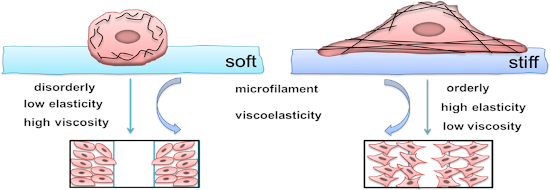
- elastography, whose imaging is based on the differences in stiffness between the lesion and the adjacent healthy tissue. It was found that an external environment with a high stiffness value promotes PC-3 cell migration and proliferation by inducing yes-associated protein and tafazzin (YAP/TAZ) nuclear
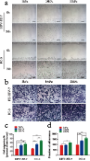
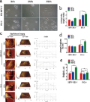
- migration capacity, and cells on soft substrates (3 kPa) had the lowest migration capacity (Figure 2c). Cell proliferation assays also revealed that both cell lines had a significantly greater ability to proliferate on stiff substrates, and that the proliferation of prostate cancer cells significantly
- increased with increasing substrate stiffness. (Supporting Information File 1, Figure S2a,b). The migration and proliferation assays were performed by culturing the cells on the substrates for 48 h, digesting them, and then inoculating them onto 6- and 96-well plates. This suggests that after 48 h the



Micro- and nanotechnology in biomedical engineering for cartilage tissue regeneration in osteoarthritis
Beilstein J. Nanotechnol. 2022, 13, 363–389, doi:10.3762/bjnano.13.31
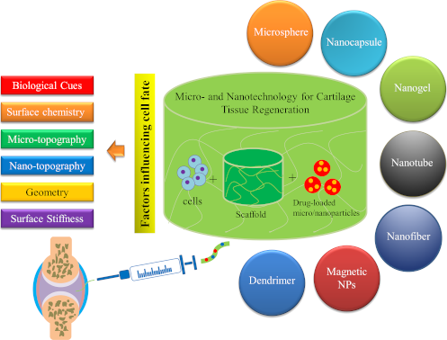
- ]. The results showed that MSCs cultured on GMs in a dynamic culture displayed a faster proliferation rate and higher stemness properties compared with those in two dimensional (2D) and 3D static culture systems [31]. Moreover, culturing MSCs on GMs in a dynamic system with the chondrogenic induction
- and proliferation of dental pulp stem cells (DPSCs) as well as chondrogenesis compared with the delivery of a single growth factor [54]. In addition, researchers utilized NPs composed of PLGA and poly(N-isopropylacrylamide) (PNIPAM) for the controlled release of insulin-like growth factor I (IGF-I
- ]. Although the results showed no appreciable difference between NMS and MS scaffolds in terms of inducing redifferentiation, nanoscale patterning of the microfibers influenced cell proliferation. In another study, similar results were obtained regarding the effect of poly(ʟ,ᴅ-lactide) (PLDLA) microfibers or


Photothermal ablation of murine melanomas by Fe3O4 nanoparticle clusters
Beilstein J. Nanotechnol. 2022, 13, 255–264, doi:10.3762/bjnano.13.20
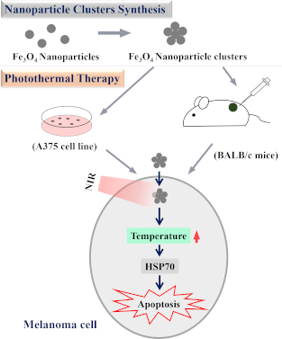
- -based nanoparticles, this method has long been regarded as the gold standard for cell viability and proliferation studies, and thus been applied extensively in studies of metal-containing nanoparticles [18][19][20]. In accordance with our flow cytometry findings, the MTT viability assay showed that in


Effects of drug concentration and PLGA addition on the properties of electrospun ampicillin trihydrate-loaded PLA nanofibers
Beilstein J. Nanotechnol. 2022, 13, 245–254, doi:10.3762/bjnano.13.19
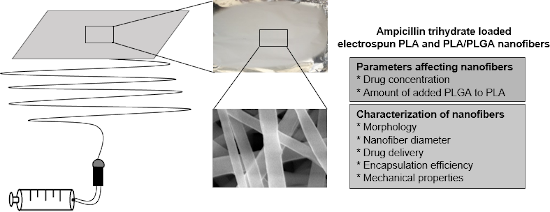
- different properties with many polymers and solvents [1][2][3][4]. Drug-loaded electrospun polymeric nanofibers have many unique properties, such as accelerating healing, controlled drug release, stimulation of cell growth and proliferation due to their similarity to the extracellular matrix, large surface


Engineered titania nanomaterials in advanced clinical applications
Beilstein J. Nanotechnol. 2022, 13, 201–218, doi:10.3762/bjnano.13.15
- adhesion and proliferation of hFOB. Their results also showed a noticeable reduction in cell viability with a higher percent of TiO2 (7 wt %). An antibacterial study of these fabricated structures implied that a minimum of 5 wt % concentration of TiO2 is sufficient for achieving the desired antibacterial
- phosphate ions than the rutile phase in body fluids, supporting the deposition of apatite. A titania nanotube array (anatase) showed increased cell adhesion, proliferation, and differentiation [67]. Titanium heart valves are also very compatible and compete with regular tissue valves [68]. In addition
- , proliferation, and differentiation of the osteoblasts. However, the low fracture toughness and brittleness of akermanite have limited its use in load-bearing sites of bone tissue. To strengthen the mechanical properties nanoscale titania (nano-TiO2) was distributed into the ceramic matrix. A remarkable


Bacterial safety study of the production process of hemoglobin-based oxygen carriers
Beilstein J. Nanotechnol. 2022, 13, 114–126, doi:10.3762/bjnano.13.8
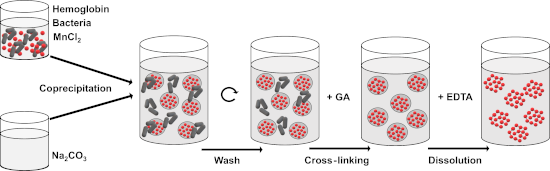
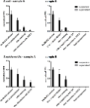
- ). Glutaraldehyde significantly inhibits the proliferation of bacteria under the given conditions. During cultivation of E. coli with the addition of glutaraldehyde at room temperature, there were also significant differences in growth rates compared to the control (Figure 2C). After a small increase in the optical
- inhibition of bacterial proliferation. There was also no growth during incubation of E. coli upon addition of EDTA at room temperature (Figure 4C). The optical density did not increase at any time point compared to the initial value. In contrast, the bacteria in the control group, in normal medium, grew
- bacteria. The former leads to dissolution of the carbonate template of the particles, while the latter leads to prevention of bacterial proliferation. It is possible that the stronger binding of EDTA to manganese results in insufficient EDTA to bind to all the magnesium from the cell walls of the bacteria


Theranostic potential of self-luminescent branched polyethyleneimine-coated superparamagnetic iron oxide nanoparticles
Beilstein J. Nanotechnol. 2022, 13, 82–95, doi:10.3762/bjnano.13.6
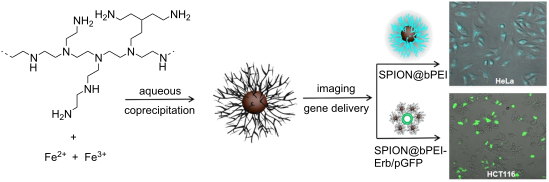
- -(4,5-dimethyl-2-thiazolyl)-2,5-diphenyl-2H-tetrazolium bromide (MTT) cell proliferation kit (Applichem) according to the instructions from the manufacturer. In each plate, the assay was repeated for the blank medium and untreated cells in medium as controls. Then, the MTT reagent was added to each well




Biocompatibility and cytotoxicity in vitro of surface-functionalized drug-loaded spinel ferrite nanoparticles
Beilstein J. Nanotechnol. 2021, 12, 1339–1364, doi:10.3762/bjnano.12.99
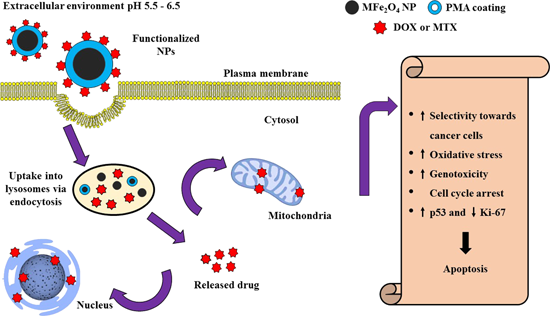
- studies; magnetic spinel ferrite nanoparticles; methotrexate; poly(isobutylene-alt-maleic anhydride); Introduction Cancer is the second leading cause of death and, as such, it is a global health concern [1]. It is caused by uncontrolled cell proliferation, reduced cell death rate, or both [2
- , a decrease in Ki-67 expression was observed in treated cells, indicating a potential role in the inhibition of cellular proliferation. A significantly stronger (p < 0.005) decrease in Ki-67 expression was observed in CFO and ZFO nanocarriers (CFO+DOX = 36.9 ± 1.57%, ZFO+DOX = 38.1 ± 1.17%, CFO+MTX
- expression in samples showing G2/M arrest in the cell cycle. Furthermore, irreparable DNA damage (double-stranded breaks) also contributes towards irreversible G1 arrest and senescence, which decreases the proliferative capacity of the cells [61]. Since the effect of Ki-67 on cell survival and proliferation





Polarity in cuticular ridge development and insect attachment on leaf surfaces of Schismatoglottis calyptrata (Araceae)
Beilstein J. Nanotechnol. 2021, 12, 1326–1338, doi:10.3762/bjnano.12.98
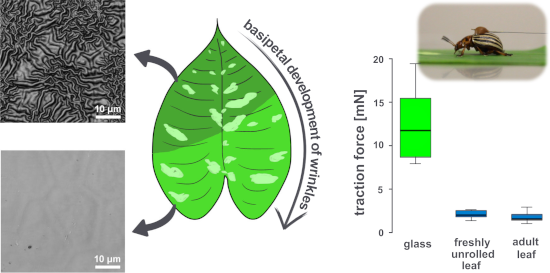
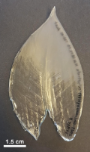
- four characteristic growth patterns: (1) basipetal, (2) acropetal, (3) diffused, and (4) bidirectional [15]. Such polarity in leaf growth is a result of direction-dependent cell differentiation, maturation, and proliferation processes along or perpendicular to the direction of the midrib [15][16][17




Self-assembly of amino acids toward functional biomaterials
Beilstein J. Nanotechnol. 2021, 12, 1140–1150, doi:10.3762/bjnano.12.85
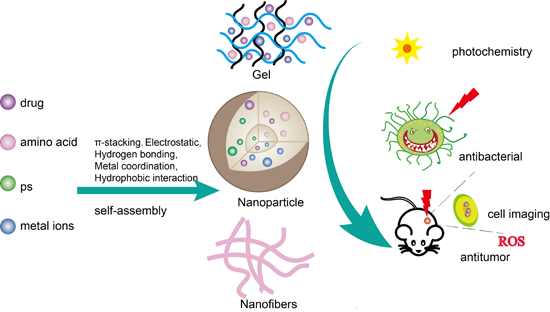
- membrane and had good biocompatibility. After 20 h of incubation, approximately 95% of Staphylococcus aureus bacterial proliferation was effectively inhibited [46]. A novel supramolecular self-assembled hydrogel was prepared by mixing Fmoc-ʟ-phenylalanine (Fmoc-ʟ-Phe) with oligo(thiophene ethynylene)-ᴅ
- promising natural antitumor drug, which can inhibit the transformation, proliferation, and migration of tumor cells through various ways, and has anti-angiogenic activity and good biocompatibility [72]. However, the poor water solubility and low bioavailability of curcumin hinder its direct application [73

Use of nanosystems to improve the anticancer effects of curcumin
Beilstein J. Nanotechnol. 2021, 12, 1047–1062, doi:10.3762/bjnano.12.78
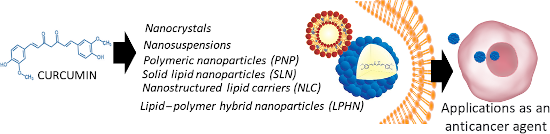
- highly dependent on angiogenesis [25], making this process a likely target to prevent, mitigate, or treat some types of cancer. Previous studies have reported the antiangiogenic activity of CUR against cancerous cells [26][27]. In fact, CUR has been shown to hinder proliferation and invasion of non-small
- showed a growth inhibition (GI50) value <10 µg/mL, enhanced inhibition of proliferation, and higher cytotoxicity as compared to free CUR (F-CUR) [50]. Hu et al. [51] formulated a nanocrystal with curcumin and yttrium-stabilized zirconium oxide, which maintained the stability of CUR for 60 days (at 25 °C
- nanoemulsion (25 µM-7 µM) inhibited cell proliferation by 50% via cell cycle arrest at the G2/M phase and induced apoptosis. In addition, a CUR nanoemulsion exerted a four-fold increase in caspase-3, in contrast to a six-fold increase exerted by co-administered CUR–PIP. Curcumin is also commonly co-loaded in





