


Search results
Search for "pyrolysis" in Full Text gives 117 result(s) in Beilstein Journal of Nanotechnology.
A highly efficient porous rod-like Ce-doped ZnO photocatalyst for the degradation of dye contaminants in water
Beilstein J. Nanotechnol. 2019, 10, 1157–1165, doi:10.3762/bjnano.10.115
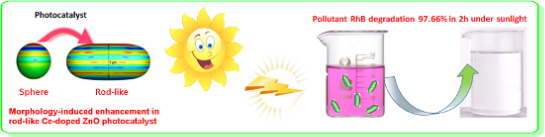
- rods and optimal synthesis conditions were determined by testing samples with different Ce/ZnO molar ratios calcined at 500 °C for 3 hours via a one-step pyrolysis method. The photocatalytic activity was assessed by the degradation of a common dye pollutant found in wastewater, rhodamine B (RhB), using
- knowledge, the synthesis of rod-like Ce-doped ZnO (abbreviated as CZO [9]) by pyrolysis derived from ZIF-8 (a zeolitic imidazolate framework, ZIF) has not been reported. As one of the most frequently used MOFs, ZIF-8 (2-methylimidazole zinc salt) has potential applications in gas storage, catalysis, etc
- , then ZnO and a series of Ce-doped ZnO were synthesized by a one-step pyrolysis method. The photocatalytic activity was evaluated by the degradation rate of RhB using a sunlight stimulator. The changes in crystal structure, Ce element state, morphology and chemical composition were characterized by XRD


Glucose-derived carbon materials with tailored properties as electrocatalysts for the oxygen reduction reaction
Beilstein J. Nanotechnol. 2019, 10, 1089–1102, doi:10.3762/bjnano.10.109
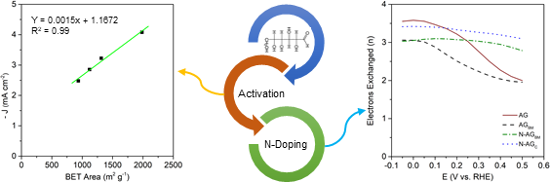
- determined in a Vario micro cube analyzer (Elementar GmbH), by combustion of the sample at 1050 °C. The oxygen content was determined using a rapid oxy cube analyzer (Elementar GmbH) in which the sample underwent pyrolysis at 1450 °C. Each sample was analysed in triplicate. X-ray photoelectron spectroscopy


Concurrent nanoscale surface etching and SnO2 loading of carbon fibers for vanadium ion redox enhancement
Beilstein J. Nanotechnol. 2019, 10, 985–992, doi:10.3762/bjnano.10.99
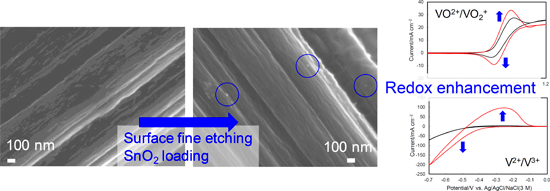
- , we attempted to obtain an additional enhancement effect of metal-oxide nanoparticles without the need for further processing steps. A coating with carbonaceous thin films was obtained coating by sublimation, deposition, and pyrolysis of tin(II) phthalocyanine (SnPc) on a carbon fiber surface in a
- carbonaceous thin film was formed by sublimation, deposition, and pyrolysis of CoPc on the carbon fiber surface during a single heat-treatment step using a conventional crucible. The treatment substantially enriched edge planes and produced an enhanced activity for the positive and negative electrode reactions
- . Results and Discussion Concurrent surface etching and SnO2 loading Graphitic carbon paper (TGP-H-090, Toray, abbreviated as TGP) was used as the substrate. The SnPc-derived carbonaceous thin film (CSnPc; obtained thorugh sublimation, deposition, and pyrolysis of SnPc in a single-step heat treatment in an



On the transformation of “zincone”-like into porous ZnO thin films from sub-saturated plasma enhanced atomic layer deposition
Beilstein J. Nanotechnol. 2019, 10, 746–759, doi:10.3762/bjnano.10.74
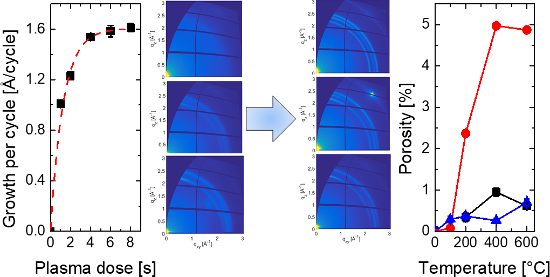
- 400 °C, showing significant loss of material starting from 200 °C. However, the crystallinity and crystal growth of the resulting porous ZnO structure were not investigated. In different systems, studying the evolution of Ti alkoxide upon pyrolysis in inert atmosphere, Abdulagatov et al. [11] showed
- of thickness and increase in refractive index. Two mechanisms could account for such phenomena. Residual carbon present in the layers is oxidized and desorbed, causing a further collapse of the non-volatile ZnO backbone. In an in situ FTIR investigation of the pyrolysis of alucone deposited by MLD
- different methods in the annealing temperature range of 350–450 °C [62][68][69][70][71][72][73]. For the pyrolysis of titanicone, a shift towards higher crystallization temperatures for TiO2 was reported by Abdulagatov et al. [11] due to hindrance of crystallization by organic ligands constraining amorphous


Nanocomposite–parylene C thin films with high dielectric constant and low losses for future organic electronic devices
Beilstein J. Nanotechnol. 2019, 10, 428–441, doi:10.3762/bjnano.10.42
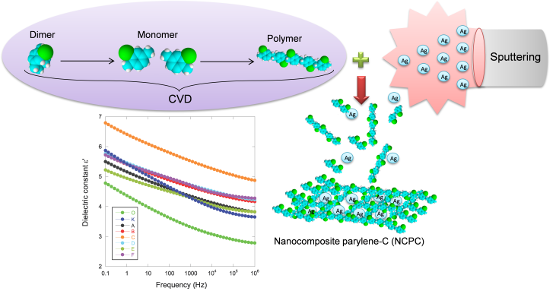
- (dichlorinated di-p-xylylene, 2.5 g, same amount for all the depositions) is sublimated at a temperature between 120 and 160 °C and a pressure of around 1–2 Pa in the first step. Then, the vapor of the dimer is cleaved into a reactive vapor monomer (monochlorinated p-xylylene) in a pyrolysis chamber at a




Removal of toxic heavy metals from river water samples using a porous silica surface modified with a new β-ketoenolic host
Beilstein J. Nanotechnol. 2019, 10, 262–273, doi:10.3762/bjnano.10.25
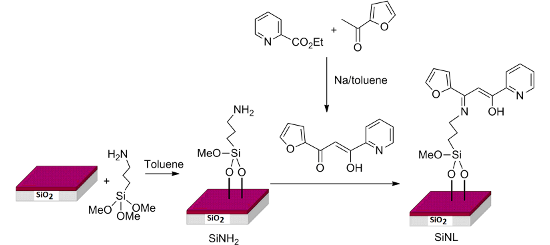
- , SiNH2 and SiNL also present two thermal steps. The first mass loss of 2.72% was assigned to the evaporation of adsorbed water. The second mass loss of 6.19% and 9.07% from 110 °C to 800 °C was attributed to SiNH2 and SiNL, respectively. This mass loss is attributed to the pyrolysis of the organic


Uniform Sb2S3 optical coatings by chemical spray method
Beilstein J. Nanotechnol. 2019, 10, 198–210, doi:10.3762/bjnano.10.18
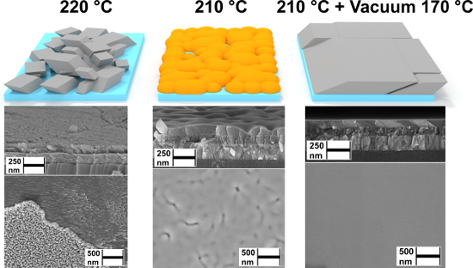
- controllable in-air growth of continuous, uniform, polycrystalline Sb2S3 absorber layers has not yet been accomplished. This could be achieved with chemical spray pyrolysis, a robust chemical method for deposition of thin films. We applied a two-stage process to produce continuous Sb2S3 optical coatings with
- pyrolysis in air by tuning of the deposition temperature, the Sb/S precursor molar ratio in the spray solution, and the post-deposition treatment temperature. Keywords: antimony sulfide; thin films; ultrasonic spray; vacuum annealing; Volmer–Weber growth; Introduction Antimony sulfide (Sb2S3) is an
- chemical bath deposition (CBD) [3][4], spin coating [5], atomic layer deposition (ALD) [6] or chemical spray pyrolysis (CSP) [7] method, has been applied in extremely thin absorber (ETA) solar cells due to its excellent absorption coefficient in the visible light spectrum (1.8 × 105 cm−1 at 450 nm) [1][2




Zn/F-doped tin oxide nanoparticles synthesized by laser pyrolysis: structural and optical properties
Beilstein J. Nanotechnol. 2019, 10, 9–21, doi:10.3762/bjnano.10.2
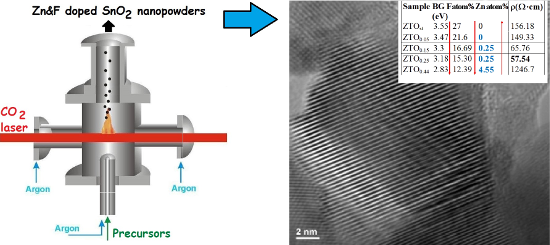
- -Magurele, Romania Ovidius University of Constanta, Mamaia Avenue no. 124, 900524, Constanta, Romania 10.3762/bjnano.10.2 Abstract Zn/F co-doped SnO2 nanoparticles with a mean diameter of less than 15 nm and a narrow size distribution were synthesized by a one-step laser pyrolysis technique using a
- dopant concentration). Keywords: laser pyrolysis; nanoparticles; optical bandgap; Zn/F-doped SnO2; Introduction Recently, there has been growing interest in the field of transparent conducting oxides and wide bandgap oxide nanocrystalline materials such as tin oxide (SnO2). It is generally agreed that
- .) antimony by spray pyrolysis [9] or by sol–gel methods followed by spin-coating and annealing in different environments [10], ii.) manganese by long-time annealing of Mn/SnO2 bilayers in air at 200 °C [11] or by co-precipitation [12], iii.) aluminum, copper or indium all by spray pyrolysis from ethanolic



A novel polyhedral oligomeric silsesquioxane-modified layered double hydroxide: preparation, characterization and properties
Beilstein J. Nanotechnol. 2018, 9, 3053–3068, doi:10.3762/bjnano.9.284
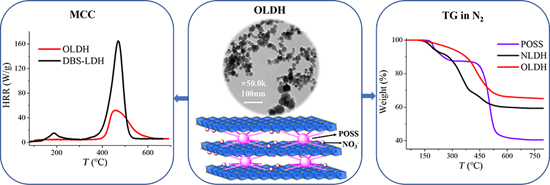
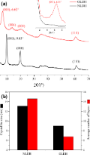
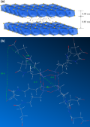
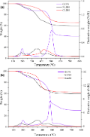
- the preceding IR and XRD results and also revealed the ease of purification of OLDH. Additionally, the temperature at the maximal pyrolysis rate (Tmax) showed no significant difference between these two LDHs. The pHRR and HRC values for OLDH were only 31.5% and 36.1%, respectively, of those for DBS







Site-controlled formation of single Si nanocrystals in a buried SiO2 matrix using ion beam mixing
Beilstein J. Nanotechnol. 2018, 9, 2883–2892, doi:10.3762/bjnano.9.267
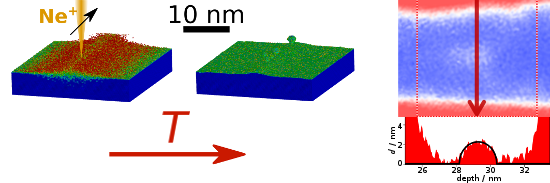
- pyrolysis [13] and ion beam synthesis in an SiO2 matrix [14][15][16][17]. Compared to conventional ion beam synthesis using low-energy ion implantation, collisional mixing of Si into an SiO2 layer by ion irradiation at higher energies leads to a better control over the Si excess, and a self-aligned δ-layer


Electrospun one-dimensional nanostructures: a new horizon for gas sensing materials
Beilstein J. Nanotechnol. 2018, 9, 2128–2170, doi:10.3762/bjnano.9.202
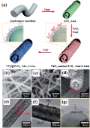
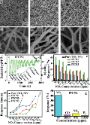
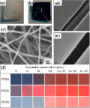
- produced by many different approaches. For example, by use of a molten-salt method, wet (or liquid) chemistry, nanocarving, self-catalyst growth, template-assisted (or sacrificial template) synthesis, chemical vapour deposition, thermal evaporation, spray pyrolysis or electrospinning [34][35][36]. Among






Metal-free catalysis based on nitrogen-doped carbon nanomaterials: a photoelectron spectroscopy point of view
Beilstein J. Nanotechnol. 2018, 9, 2015–2031, doi:10.3762/bjnano.9.191
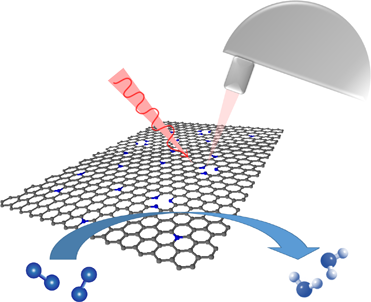
- the π-system of pyridinic N and graphene, as already reported for carbon nanofibers by Maldonado and Stevenson [102]. A more detailed study was performed by Kundu et al. [103] on N-CNTs prepared via pyrolysis of acetonitrile over cobalt catalysts. Samples were synthesized at different temperatures
- introduction of nitrogen into various carbon-based cathode catalysts for the polymer electrolyte fuel cell (PEFC) [105]. Different preparation methods were used: nitrogen doping using ammonia resulted in high amounts of pyridinic N, while using pyrolysis of nitrogen-containing precursors the amount of
- between graphitic N and pyridinic N. In the report of Parvez et al., nitrogen-doped graphene was synthesized from a composite made of graphitic carbon nitride and graphene sheets, which subsequently underwent heating treatment [107]. Depending on the pyrolysis temperature (800, 900 or 1000 °C), three




Semi-automatic spray pyrolysis deposition of thin, transparent, titania films as blocking layers for dye-sensitized and perovskite solar cells
Beilstein J. Nanotechnol. 2018, 9, 1135–1145, doi:10.3762/bjnano.9.105
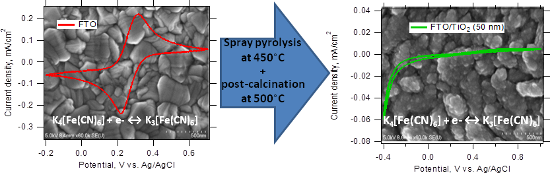
- electrons with the oxidized form of the redox mediator or with the hole-transporting medium can be avoided. In the present work, thin, transparent, blocking TiO2 films are prepared by semi-automatic spray pyrolysis of precursors consisting of titanium diisopropoxide bis(acetylacetonate) as the main
- properties that were not influenced by post-calcination. These results will surely find use in the fabrication of large-scale dye-sensitized and perovskite solar cells. Keywords: blocking films; FTO; solar cells; spray pyrolysis deposition; titanium dioxide; Introduction Dye-sensitized solar cells (DSSCs
- prevent recombination on this surface [3][4][5]. Blocking layers (BLs) can be fabricated by spray pyrolysis [3][6], magnetron sputtering [7], electrochemical deposition [8] spin coating [9][10], dip coating [11] and atomic layer deposition (ALD) [3]. From the viewpoint of low-cost processing and easy


Facile chemical routes to mesoporous silver substrates for SERS analysis
Beilstein J. Nanotechnol. 2018, 9, 880–889, doi:10.3762/bjnano.9.82
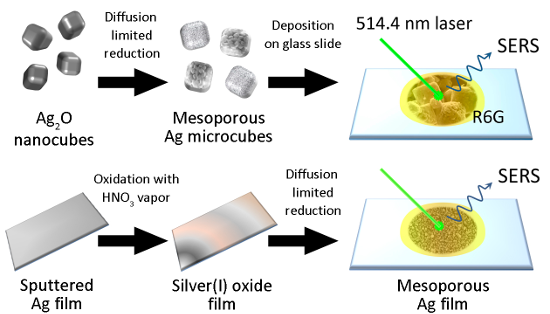
- the production of different mesoporous materials. Most of these materials are ordered or disordered oxides, which can be successfully produced by many methods such as wet chemistry [1][2], hydrothermal treatment [3], aerosol spray pyrolysis [4], etc. In contrast, metal mesoporous materials are rare
- ], electroplating using templates [8], electrophoretic deposition of nanoparticles [9] and diverse techniques of hollow porous structure formation, for example, by aerosol pyrolysis or by smart chemical etching. The latter includes selective chemical etching of one metal component [10][11] or etching during
- structures could be also synthesized using aerosol spray pyrolysis as described in [29][30]. The following reduction of Ag2O was performed using three different concentrations of NaBH4 solution. A 100-fold excess of NaBH4 led to instantaneous decomposition of Ag2O particles, producing a black-colored colloid


Green synthesis of fluorescent carbon dots from spices for in vitro imaging and tumour cell growth inhibition
Beilstein J. Nanotechnol. 2018, 9, 530–544, doi:10.3762/bjnano.9.51
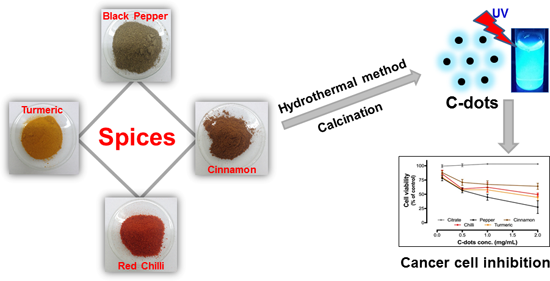
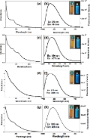
- . Results and Discussion Absorption and photoluminescence characterization of C-dots The C-dots were synthesized using spices as starting material through a green one-pot hydrothermal method that involves pyrolysis, carbonization and passivation [33][34][35], with no need to add surface passivation agents


Ultralight super-hydrophobic carbon aerogels based on cellulose nanofibers/poly(vinyl alcohol)/graphene oxide (CNFs/PVA/GO) for highly effective oil–water separation
Beilstein J. Nanotechnol. 2018, 9, 508–519, doi:10.3762/bjnano.9.49
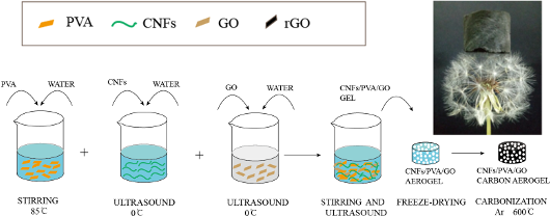
- to assure complete pyrolysis. The following step was to cool it to 200 °C at a rate of 4 °C min−1, and finally, natural cooling to room temperature (25 °C) to yield a black and super-hydrophobic CNF/PVA/GO carbon aerogel. Sample characterization A scanning electron microscope (SEM, Quanta 200, FEI


Synthesis of metal-fluoride nanoparticles supported on thermally reduced graphite oxide
Beilstein J. Nanotechnol. 2017, 8, 2474–2483, doi:10.3762/bjnano.8.247
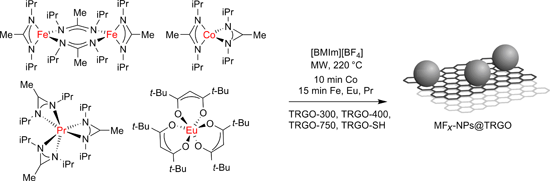
- reduction. During the thermal reduction of graphite oxide by flash pyrolysis, the decomposition of epoxy, carbonyl and carboxyl groups accounts for a build-up of pressure that exfoliates functionalized graphene [4]. In 1958, Hummers and Offeman reported on a ”graphene” synthesis by oxidation of graphite
- -conventional solvents and microwave-assisted pyrolysis [92][93][94]. Galvanostatic charge/discharge profiles of FeF2@TRGO-400 indicate a good rate performance of the composite material, e.g., capacities of 220 and 130 mAh/g at current densities of 200 and 500 mA/g, respectively. Experimental All syntheses were


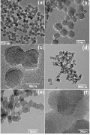
Fabrication of carbon nanospheres by the pyrolysis of polyacrylonitrile–poly(methyl methacrylate) core–shell composite nanoparticles
Beilstein J. Nanotechnol. 2017, 8, 1897–1908, doi:10.3762/bjnano.8.190

- , College of Materials Science and Engineering, Donghua University, Shanghai 201620, China 10.3762/bjnano.8.190 Abstract Carbon nanospheres with a high Brunauer–Emmett–Teller (BET) specific surface area were fabricated via the pyrolysis of polyacrylonitrile–poly(methyl methacrylate) (PAN–PMMA) core–shell
- production of carbon nanospheres. However, these methods require special equipment, and the size control of the resulting spheres also remains a problem. Carbon nanospheres or microspheres can also be fabricated via pyrolysis of various particulate polymer precursors [20][21][22][23][24][25][26][27]. The
- size and morphology of the resulting carbon nanospheres are closely related to those of the precursor. Thus, the pyrolysis method can produce carbon nanospheres with well-controlled size and morphology by adjusting the size and morphology of the precursor. As is well known, after preoxidization and



Oxidative stabilization of polyacrylonitrile nanofibers and carbon nanofibers containing graphene oxide (GO): a spectroscopic and electrochemical study
Beilstein J. Nanotechnol. 2017, 8, 1616–1628, doi:10.3762/bjnano.8.161
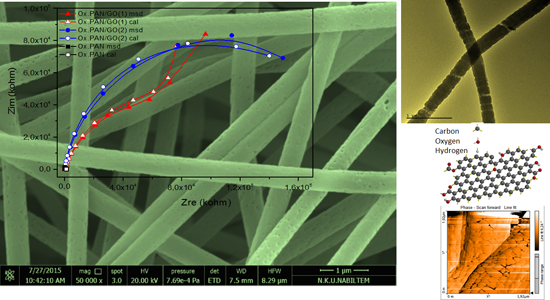
- stabilization reactions for PAN were reported [12]. Oxidative stabilization reactions mainly consist of dehydrogenations and cyclizations, i.e., cyclization of nitrile groups (C≡N) and crosslinking of chain molecules in the form of –C=N–C=N–. Moreover, this stabilization process depends on pyrolysis temperature


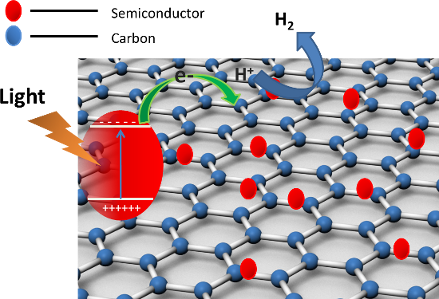
Two-dimensional carbon-based nanocomposites for photocatalytic energy generation and environmental remediation applications
Beilstein J. Nanotechnol. 2017, 8, 1571–1600, doi:10.3762/bjnano.8.159


Treatment of fly ash from power plants using thermal plasma
Beilstein J. Nanotechnol. 2017, 8, 1043–1048, doi:10.3762/bjnano.8.105
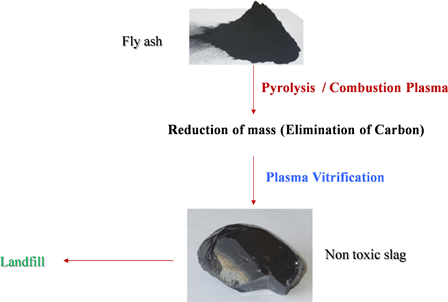
- in a pyrolysis/combustion plasma system to reduce the fraction of carbon. In the second step, the product obtained by the combustion of fly ash was vitrified in a plasma furnace. The leaching results show that the fly ash was detoxified by plasma vitrification and the produced slag is amorphous and
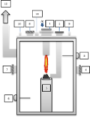
- plasma system consists of two plasma-reaction chambers, one for pyrolysis and the second for final combustion. The system also contains a loading system, a working gas unit, a cooling water unit, a power supply system, and a gas cleaning system. In the two plasma-reaction chambers, the working gas is air
- and is injected axially into the two plasma torches at a flow rate of 45 m3/h. The current intensity and the voltage for the pyrolysis and combustion plasma torches are 100 A/220 V and 150 A/220 V, respectively. A hydrofilter is used for purification of the exhaust flow from mechanical impurities



Bio-inspired micro-to-nanoporous polymers with tunable stiffness
Beilstein J. Nanotechnol. 2017, 8, 906–914, doi:10.3762/bjnano.8.92
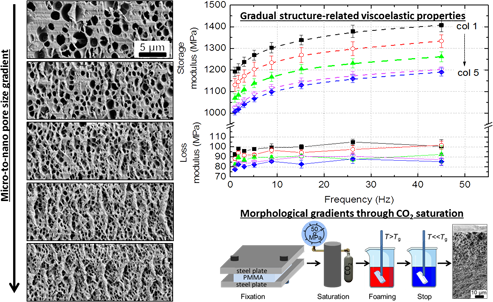
- properties [9]. Different techniques such as combining printing and infiltration [12], combined foaming and pyrolysis [8], or compression moulding of expandable beads [11] have been utilised. Recently, gradient metal-foam structures emulating the pomelo structure on the cellular level were manufactured using


Investigation of growth dynamics of carbon nanotubes
Beilstein J. Nanotechnol. 2017, 8, 826–856, doi:10.3762/bjnano.8.85


Vapor deposition routes to conformal polymer thin films
Beilstein J. Nanotechnol. 2017, 8, 723–735, doi:10.3762/bjnano.8.76
- ) pyrolysis, C) substrate adsorption. b) Mechanism of iCVD: 1) decomposition of initiator by hot filament, 2) initiator attack of adsorbed monomer, 3) propagation to form polymer film. a) Sticking coefficient of p-xylylene diradicals as a function of temperature, b) deposition rate as function of temperature


Liquid permeation and chemical stability of anodic alumina membranes
Beilstein J. Nanotechnol. 2017, 8, 561–570, doi:10.3762/bjnano.8.60
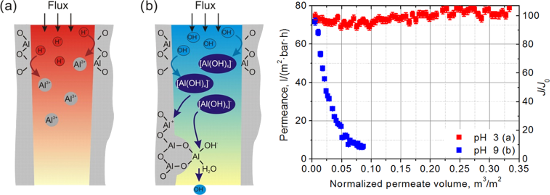
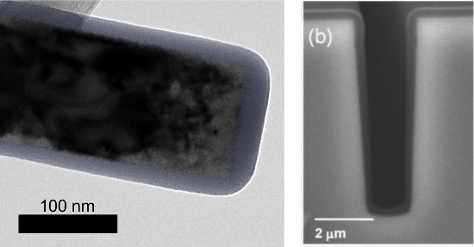
- , thermally treated membranes have also illustrated water permeation loss during the operation and after membrane drying between the cycles. To provide an additional protection, carbon CVD (by the pyrolysis of hydrocarbons) was also adopted in the same thermal treatment regime to provide a continuous 10 nm





