Search results
Search for "quantum dots" in Full Text gives 232 result(s) in Beilstein Journal of Nanotechnology. Showing first 200.
Impact of electron–phonon coupling on electron transport through T-shaped arrangements of quantum dots in the Kondo regime
Beilstein J. Nanotechnol. 2021, 12, 1209–1225, doi:10.3762/bjnano.12.89
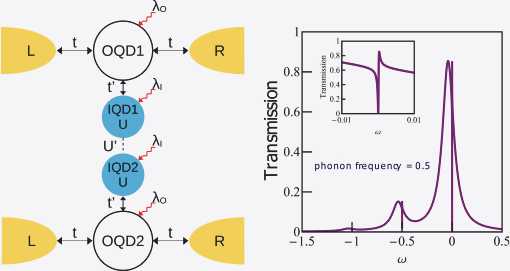
- ; polarons; quantum dots; Introduction As the dimension of a mesoscopic system decreases, interactions between electrons become more important and many-body resonances build up. As a consequence, new transport paths are opened. The key phenomenon of strong correlations is the Kondo effect, which arises from
- been observed in semiconductor-based quantum dots (QDs) [1][2][3][4], in carbon nanotubes [5], and in molecular nanostructures [6][7][8][9]. Besides the spin, also other degrees of freedom, for example, orbital [10] or charge [11][12] can give rise to Kondo correlations. For systems with higher
- studied in a number of papers [39][40][41][42][43][44]. Due to participation of localized phonons in single electron tunneling the phonon side bands appear in the spectral function of the dot. Interestingly, similar effects have been also observed in the rigid structures of semiconductor quantum dots


Assessment of the optical and electrical properties of light-emitting diodes containing carbon-based nanostructures and plasmonic nanoparticles: a review
Beilstein J. Nanotechnol. 2021, 12, 1078–1092, doi:10.3762/bjnano.12.80
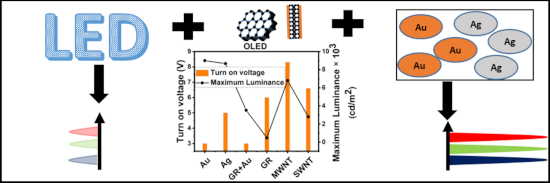
- ); plasmonic nanoparticles; quantum dots; Review Introduction Nanomaterials have engendered the miniaturization of devices, bringing about advances in a variety of fields, such as biomedicine, environmental technologies, optoelectronics, and photocatalysis [1][2]. In particular, light-emitting diodes (LED
- conductivity of the nanocomposite was enhanced by 185% as compared to pure polyaniline. Further, the role of carbon quantum dots (CQD) in the ETL has also been examined in the device ITO/PEDOT:PSS/PFO/CQD/LiF/Al [73]. The turn-on voltage with CQD in the device configuration reduced from 8 to 6 V with


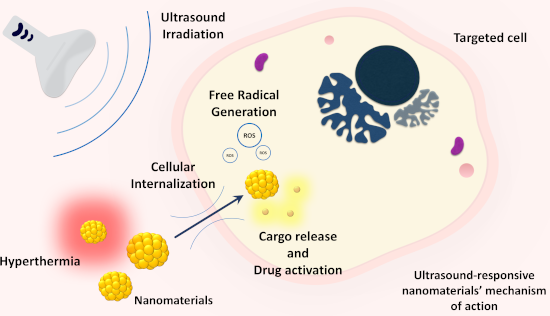
Comprehensive review on ultrasound-responsive theranostic nanomaterials: mechanisms, structures and medical applications
Beilstein J. Nanotechnol. 2021, 12, 808–862, doi:10.3762/bjnano.12.64


A review on the biological effects of nanomaterials on silkworm (Bombyx mori)
Beilstein J. Nanotechnol. 2021, 12, 190–202, doi:10.3762/bjnano.12.15
- ), graphene oxide, silver nanoparticles (Ag NPs) [24][25][26], quantum dots, and superparamagnetic particles [27] have been reported to have antibacterial properties against Streptococcus mutans [28] and Xanthomonas perforans, antifungal properties against Fusarium oxysporum [27] and Fusarium graminearum [29
- graphene quantum dots on its motor nervous system. The locomotion of the nematodes deteriorated following the exposure to these nanomaterials with damages in the dopaminergic and glutamatergic neurons [46]. Fast embryonic development outside the parent zebrafish is an attractive feature that allows for the
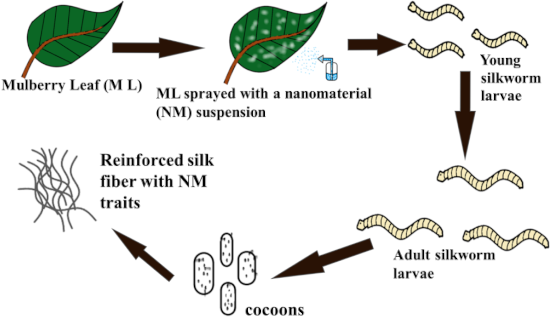
- . Liu et al. [131] exposed 5th-instar silkworm larvae to sublethal doses (0.08 and 0.32 nM) of cadmium telluride quantum dots (CdTe QDs) with sizes of 530 and 720 nm for 48 hours. The larvae exposed to quantum dots exhibited lower larval body mass when compared to the control group and the mortality


Kondo effects in small-bandgap carbon nanotube quantum dots
Beilstein J. Nanotechnol. 2020, 11, 1873–1890, doi:10.3762/bjnano.11.169
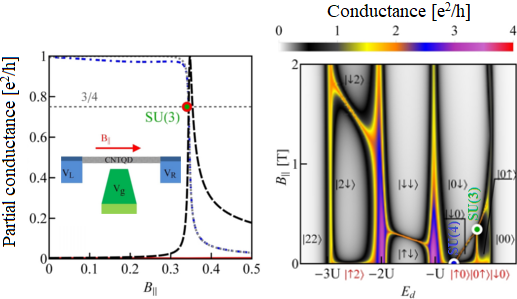
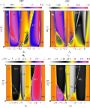
- quantum dots in the presence of spin–orbit coupling in the strong-correlations regime. A finite-U slave-boson mean-field approach is used to study many-body effects. Different degeneracies are restored in a magnetic field and Kondo effects of different symmetries arise, including SU(3) effects of
- close to perpendicular. When the field approaches a transverse orientation a crossover from SU(2) or SU(3) symmetry into SU(4) is observed. Keywords: carbon nanotubes; Kondo effect; mesoscopic transport; quantum dots; valleytronics; Introduction Due to their remarkable electronic, transport
- effects of interaction play a more fundamental role. Carbon nanotubes are quasi one-dimensional systems, and the role of correlations further increases in quantum dots due to additional confinement. Of importance is also the low dielectric constant, which is especially low in suspended nanotubes [36]. A



![[Graphic 37]](/bjnano/content/inline/2190-4286-11-169-i52.svg?max-width=637&scale=1.18182) as a functio...
as a functio...


A self-powered, flexible ultra-thin Si/ZnO nanowire photodetector as full-spectrum optical sensor and pyroelectric nanogenerator
Beilstein J. Nanotechnol. 2020, 11, 1623–1630, doi:10.3762/bjnano.11.145
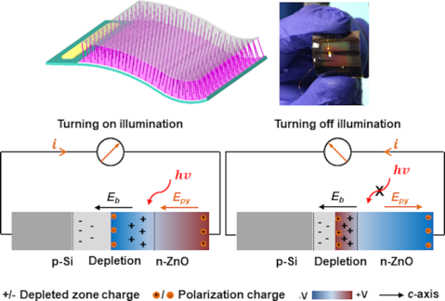
- applied in flexible wearable electronic devices have been extensively researched [5]. The majority of the reported full-spectrum PDs, which are based on perovskites, quantum dots, or organic materials are costly, complicated to prepare, and difficult to integrate into flexible electronic devices. This


High-responsivity hybrid α-Ag2S/Si photodetector prepared by pulsed laser ablation in liquid
Beilstein J. Nanotechnol. 2020, 11, 1596–1607, doi:10.3762/bjnano.11.142
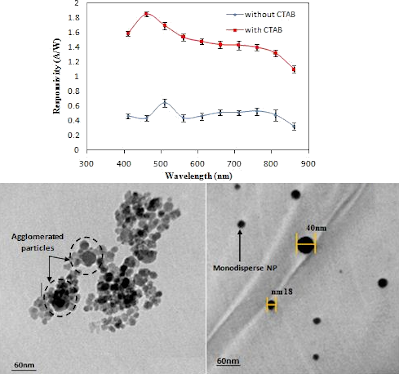
- . synthesized monodisperse Ag2S NPs by using a sonochemical method and fabricated photodetector devices by integrating Ag2S NPs on a graphene sheet [17]. Tretyakov et al. [18] reported the characterization of a Ag2SQD (quantum dots)/Si heterojunction photodetector used for short-wave infrared radiation
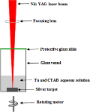
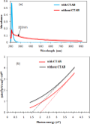
- fabricated by a chemical method. They show that the Ag2S quantum dots (QDs) planted on the surface of Si create impurity states in the Si bandgap. In pulsed laser ablation, the interaction between laser and material particles leads to severe particle aggregation and broad particle size distributions via




A wideband cryogenic microwave low-noise amplifier
Beilstein J. Nanotechnol. 2020, 11, 1484–1491, doi:10.3762/bjnano.11.131
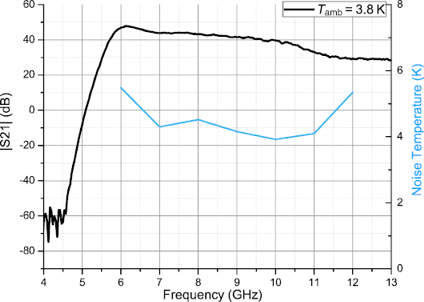
- processing circuits [4]. The latter include the most challenging and attractive topics such as quantum bits (qubits) [5], quantum dots [6], microwave single-photon detectors [7], high-quality resonators [8], superconducting microwave beam splitters [9], and other circuit quantum electrodynamics structures




Atomic defect classification of the H–Si(100) surface through multi-mode scanning probe microscopy
Beilstein J. Nanotechnol. 2020, 11, 1346–1360, doi:10.3762/bjnano.11.119
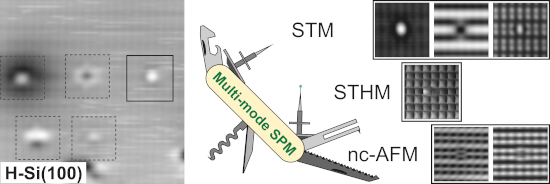
- due to its conductive orbital which extends into vacuum. DBs have been observed to act like quantum dots and have discretized charge states in the bandgap of the material [6]. Due to the degenerate n-type doping of our substrate (see Methods) [6][53], DBs are natively negatively charged when imaging



Thermophoretic tweezers for single nanoparticle manipulation
Beilstein J. Nanotechnol. 2020, 11, 1126–1133, doi:10.3762/bjnano.11.97
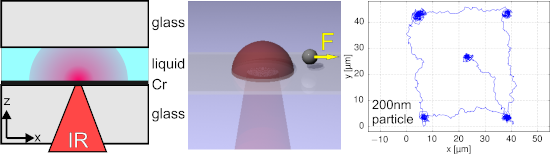
- the surrounding fluid via electroosmosis where an applied feedback electric field moves a layer of surface ions, which subsequently pulls the fluid, along with any suspended objects, by viscous drag. In such a manner, quantum dots in a liquid have been manipulated with nanometer precision [13]. Real


Applications of superparamagnetic iron oxide nanoparticles in drug and therapeutic delivery, and biotechnological advancements
Beilstein J. Nanotechnol. 2020, 11, 1092–1109, doi:10.3762/bjnano.11.94
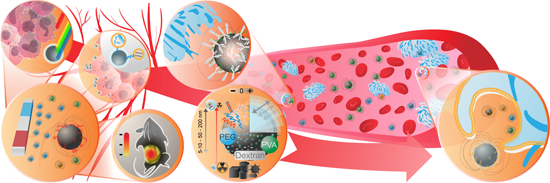
- on the environment. Many nanoparticles showed great potential and proved their utility in biology and medicine. There are multiple types of nanoparticles routinely used in biology and related sciences for sensing, targeting or imaging, including quantum dots for fluorescence applications and electron


Gas-sensing features of nanostructured tellurium thin films
Beilstein J. Nanotechnol. 2020, 11, 1010–1018, doi:10.3762/bjnano.11.85
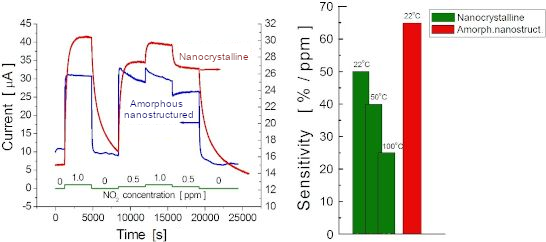
- ] for extended reviews on the topic). In the last decade, Te has also become an attractive element with great biological applicability since it can be used as quantum dots in imaging and diagnostics and has antibiotic properties [3]. Even though Te has a biological relevance, it is largely used in the


Soybean-derived blue photoluminescent carbon dots
Beilstein J. Nanotechnol. 2020, 11, 606–619, doi:10.3762/bjnano.11.48
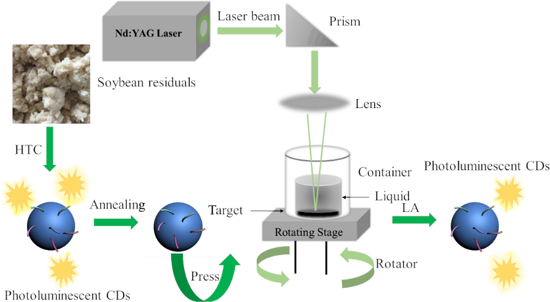
- quantum dots, which are referred to as carbon dots (CDs) [1] and are less-toxic and ecologically friendly [2][3], have attracted great interest due to their unique properties, such as high water solubility [4], high chemical stability [5], high photostability [6], tunable excitation and emission


Luminescent gold nanoclusters for bioimaging applications
Beilstein J. Nanotechnol. 2020, 11, 533–546, doi:10.3762/bjnano.11.42
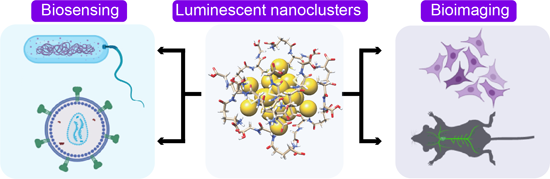
- , semiconductor quantum dots suffer from toxicity and are susceptible to oxidation. In this context, atomically precise gold nanoclusters protected by thiol monolayers have emerged as a new class of luminescent nanomaterials. Low toxicity, bioavailability, photostability as well as tunable size, composition, and
- [18][19]. Luminescent nanomaterials including semiconductor quantum dots, carbon dots, metal-doped nanoparticles, noble-metal nanoparticles, and organic–inorganic hybrid nanoparticles, have been studied for their ultrabright photoluminescence (PL) [20][21][22][23]. Semiconductor quantum dots (SCQDs
- easy oxidation, the extensive use in bioimaging remained a challenge. Therefore, efforts have been made to prepare silicon quantum dots (SQDs) [28]. SQDs exhibit relatively low cytotoxicity and better biocompatibility compared to SCQDs. Moreover, SQDs show broad absorption spectra, higher


Interfacial charge transfer processes in 2D and 3D semiconducting hybrid perovskites: azobenzene as photoswitchable ligand
Beilstein J. Nanotechnol. 2020, 11, 466–479, doi:10.3762/bjnano.11.38
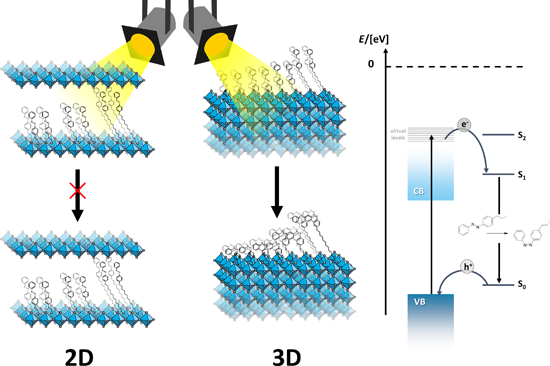
- mode. As the excited state is directly quenched no S2→S0 transition takes place and the molecules remain in their conformation [37]. In contrast, Saeed et al. reported a completely reversible and improved trans–cis isomerisation of an azobenzene ligand coordinated to semiconducting CdTe quantum dots


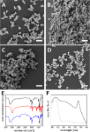

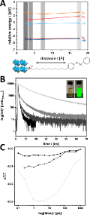

Nanoparticles based on the zwitterionic pillar[5]arene and Ag+: synthesis, self-assembly and cytotoxicity in the human lung cancer cell line A549
Beilstein J. Nanotechnol. 2020, 11, 421–431, doi:10.3762/bjnano.11.33
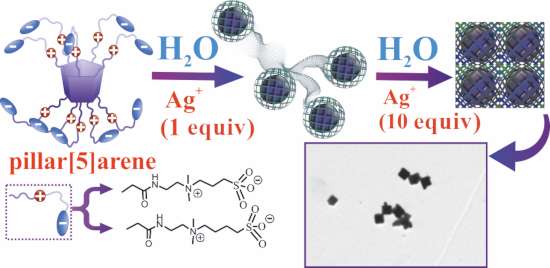
- the stability of supramolecular assemblies to pH changes [22][23]. Another remarkable property of sulfobetaine fragments is the ability to interact with silver ions [24][25][26] and participate in the stabilization of quantum dots [27]. It is worth noting that the use of polymer systems containing


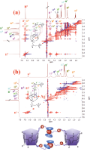


Formation of nanoripples on ZnO flat substrates and nanorods by gas cluster ion bombardment
Beilstein J. Nanotechnol. 2020, 11, 383–390, doi:10.3762/bjnano.11.29
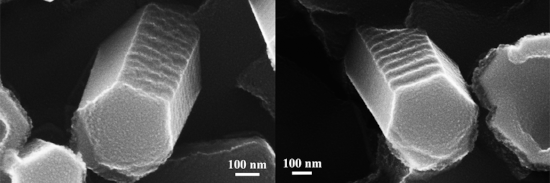
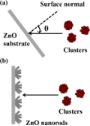
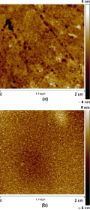
- of semiconductor quantum dots [2]. Arrays of metallic nanoparticles or nanowires aligned on dielectric surfaces with nanoripples are ideal for research on plasmonics [3]. Ag nanoparticle arrays created on rippled silicon surfaces have demonstrated excellent sensing of molecules through surface



Nonequilibrium Kondo effect in a graphene-coupled quantum dot in the presence of a magnetic field
Beilstein J. Nanotechnol. 2020, 11, 225–239, doi:10.3762/bjnano.11.17
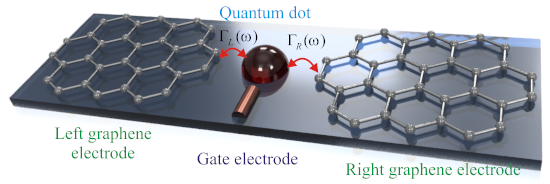
- 10.3762/bjnano.11.17 Abstract Background: Quantum dots connected to larger systems containing a continuum of states like charge reservoirs allow the theoretical study of many-body effects such as the Coulomb blockade and the Kondo effect. Results: Here, we analyze the nonequilibrium Kondo effect and
- value even at the Dirac point. The influence of the on-site Coulomb interaction and the magnetic field on the transport properties of the system shows a tendency similar to the previous results obtained for quantum dots connected to metallic electrodes. Most remarkably, we find that the Kondo resonance


Synthesis and acetone sensing properties of ZnFe2O4/rGO gas sensors
Beilstein J. Nanotechnol. 2019, 10, 2516–2526, doi:10.3762/bjnano.10.242
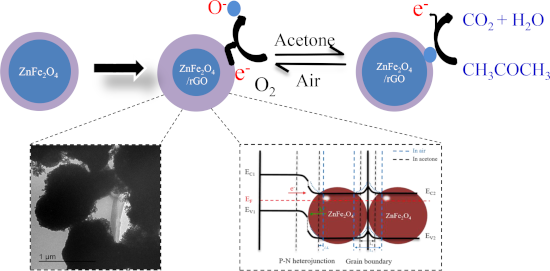
- characteristics and the gas sensing properties. Furthermore, 0.125 wt % graphene-ZnFe2O4 was prepared by a solvothermal method, and the corresponding gas sensor exhibited a fine response to 10–100 ppm acetone at 275 °C [31]. A hybrid sensor made of ZnFe2O4/graphene quantum dots showed a fine sensing response to




Small protein sequences can induce cellular uptake of complex nanohybrids
Beilstein J. Nanotechnol. 2019, 10, 2477–2482, doi:10.3762/bjnano.10.238
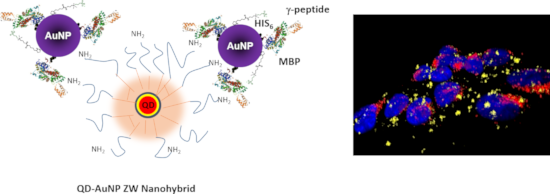
- . In one study, Jana and co-workers reported the design of fluorescent and plasmonic nanohybrids by covalent attachment of luminescent quantum dots (QDs) and Au nanorods. Further functionalization with glucose, using glutaraldehyde coupling chemistry, yielded nanohybrids that could subsequently be used
- hydrodynamic size exceeds both the QD construct of our previous study (d(QD-LA) ≈ 10–15 nm [22]) or the virus particle itself (d ≈ 40 nm [21]). Experimental In brief, the functionalized polymer-encapsulated quantum dots were left to incubate with partially capped gold nanoparticles. This conjugate was

pH-Controlled fluorescence switching in water-dispersed polymer brushes grafted to modified boron nitride nanotubes for cellular imaging
Beilstein J. Nanotechnol. 2019, 10, 2428–2439, doi:10.3762/bjnano.10.233
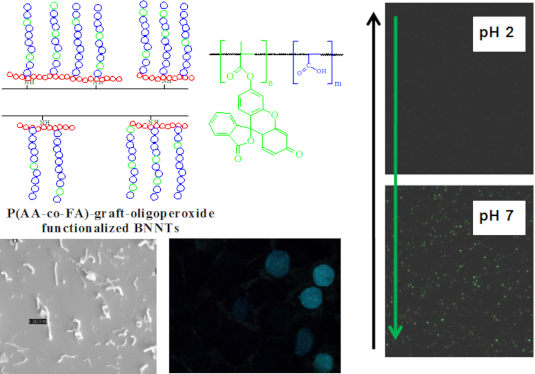
- ][31][32][33][34]. In [35], the fluorescent CdSe quantum dots were attached to BNNT surfaces, and in [36] the halloysite nanotubes were modified with carbon dots and used for cellular imaging. Another approach is surface modification with grafted polymers bearing organic fluorophores. One of the most


Deterministic placement of ultra-bright near-infrared color centers in arrays of silicon carbide micropillars
Beilstein J. Nanotechnol. 2019, 10, 2383–2395, doi:10.3762/bjnano.10.229
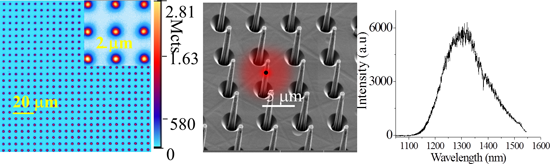
- for the VSi and the nitrogen vacancy (NCVSi) [36]. Micropillars in other materials have been successfully used as photonics structures designed to improve the photoluminescence performance of quantum dots for strong coupling of the emission with the photonics cavity, high photon-extraction efficiency


Nontoxic pyrite iron sulfide nanocrystals as second electron acceptor in PTB7:PC71BM-based organic photovoltaic cells
Beilstein J. Nanotechnol. 2019, 10, 2238–2250, doi:10.3762/bjnano.10.216
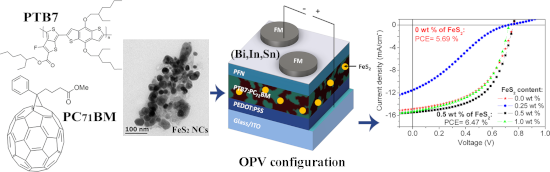
- et al. [18], reported an increment of the PCE from 2.08 to 2.3% with the incorporation of small amounts of FeS2 nanocrystals (NCs) (0.3 wt %) into the P3HT:PC71BM active layer. Moreover, Khan et al. [47], added 20 wt % FeS2 quantum dots (of ≈5 nm size) and obtained a high PCE of 3.62% compared to the


Optimization and performance of nitrogen-doped carbon dots as a color conversion layer for white-LED applications
Beilstein J. Nanotechnol. 2019, 10, 2004–2013, doi:10.3762/bjnano.10.197
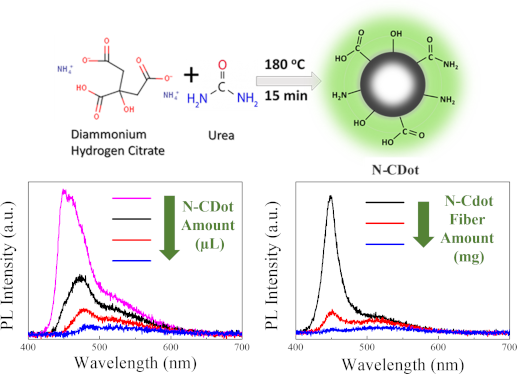
- perovskites [39][40][41], organic dyes [42][43], quantum dots [44] and CDots [15][45]. Among these, CDots are a promising alternative since they are cost effective and optically feasible, making them commercially viable. Employing CDots as color conversion layers in a WLED configuration is a relatively new
- concept, since the first discovery of these materials dates back only to 2004 [46]. Since then, CDots have been widely studied. For instance, Feng et al. reported on the synthesis of carbon quantum dots for use as single light converters in WLEDs [45]. CDots were prepared by a one-step hydrothermal method
- Figure 2 shows HRTEM micrographs of several individual nanoparticles identified as carbon quantum dots (CDots). We further diluted the stock solution for the HRTEM analysis in order to obtain the crystal structure of individual CDots avoiding possible agglomerations. As a consequence, the prepared TEM


Gold-coated plant virus as computed tomography imaging contrast agent
Beilstein J. Nanotechnol. 2019, 10, 1983–1993, doi:10.3762/bjnano.10.195
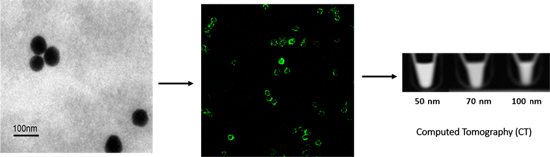
- as molecular imaging tools [8]. In general, NPs carry high contrast agent payloads in comparison to smaller moieties [9]. Semiconductor quantum dots (QDs) are nanosized crystals, a photostable fluorophore with a broad excitation spectrum but narrow emission at wavelengths dependent on the size and