Search results
Search for "selected area electron diffraction" in Full Text gives 95 result(s) in Beilstein Journal of Nanotechnology.
Synthesis of metal-fluoride nanoparticles supported on thermally reduced graphite oxide
Beilstein J. Nanotechnol. 2017, 8, 2474–2483, doi:10.3762/bjnano.8.247
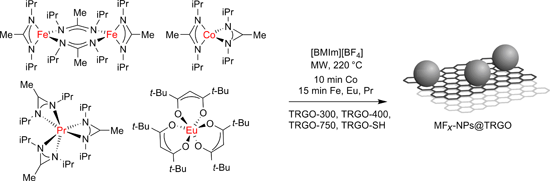
- irradiated for 10 min (Co) or 15 min (Fe, Pr, Eu) at a power of 50 W to a temperature of 220 °C. Examples of selected area electron diffraction (SAED) patterns (Figures S4 and S6 in Supporting Information File 1) have been recorded with an FEI Titan 80-300 TEM [103], operated at 300 kV accelerating voltage


Laser-assisted fabrication of gold nanoparticle-composed structures embedded in borosilicate glass
Beilstein J. Nanotechnol. 2017, 8, 2454–2463, doi:10.3762/bjnano.8.244
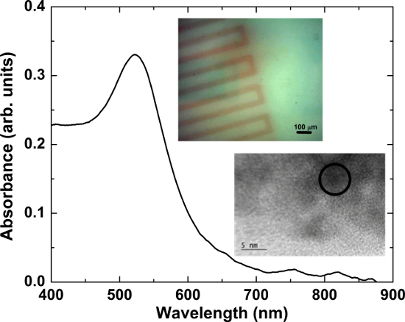
- program [24] was used to interpret the selected-area electron diffraction (SAED) patterns and to identify the phase composition of the samples. Optical images of the processed areas were obtained using an Optica B-150 microscope. Results and Discussion Glass characteristics The as-fabricated glass was


Au nanostructure fabrication by pulsed laser deposition in open air: Influence of the deposition geometry
Beilstein J. Nanotechnol. 2017, 8, 2438–2445, doi:10.3762/bjnano.8.242
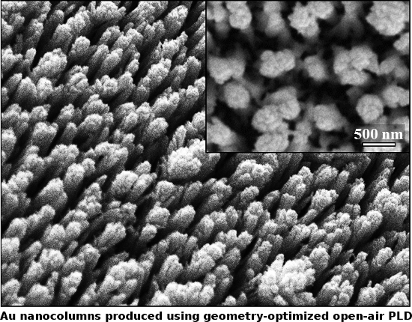
- pulses) in order to investigate the structure of the material ablated. The TEM and selected area electron diffraction (SAED) images were taken on a HR scanning transmission electron microscope (STEM) (JEOL JEM 2100) to reveal the morphology and crystallinity of the as-deposited samples. For STEM


Fabrication of CeO2–MOx (M = Cu, Co, Ni) composite yolk–shell nanospheres with enhanced catalytic properties for CO oxidation
Beilstein J. Nanotechnol. 2017, 8, 2425–2437, doi:10.3762/bjnano.8.241
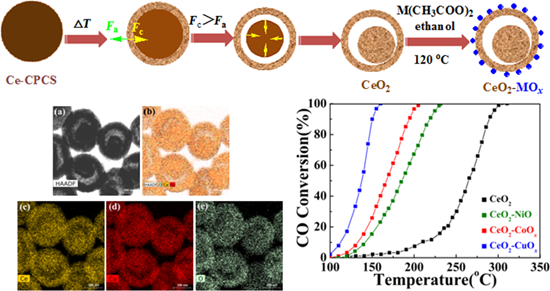
- corresponded to Cu species. In the corresponding selected-area electron diffraction (SAED) pattern in Figure 3d only the diffraction rings belonging to CeO2, indicative of a polycrystalline structure, can be recognized. This result is similar to the previously reported literature [22]. Energy-dispersive X-ray



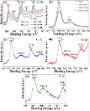


In situ controlled rapid growth of novel high activity TiB2/(TiB2–TiN) hierarchical/heterostructured nanocomposites
Beilstein J. Nanotechnol. 2017, 8, 2116–2125, doi:10.3762/bjnano.8.211
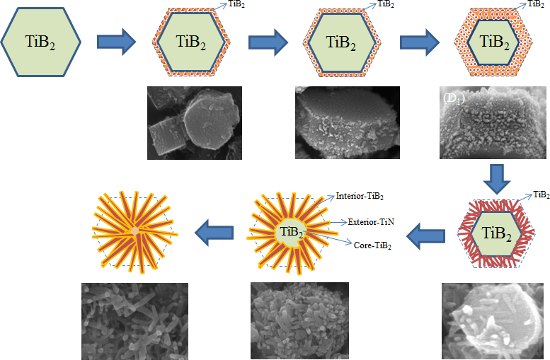
- ), scanning electron microscope (SEM), X-ray energy dispersive spectroscopy (EDX), transition electron microscopy (TEM), high-resolution TEM (HRTEM) and selected-area electron diffraction (SAED). The obtained TiB2/TiN hierarchical/heterostructured nanocomposites demonstrated an average particle size of 100
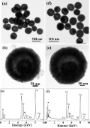
- to 30 nm. In order to further determine the internal microstructure and phase constitution of the as-synthesized samples, the high-resolution transition electron microscopy (HRTEM) (Figure 2d,f) and selected-area electron diffraction (SAED) (Figure 2e,g) analysis of the tapered nanorods and grains
- transmission electron microscope (HRTEM) and the selected-area electron diffraction (SAED) instrument attached on the Philips CM12 TEM. The elemental composition and content of the samples was analyzed using an X-ray energy dispersive spectroscopy (EDX) attached to the S4800 FSEM. The chemical activity of the


A systematic study of the controlled generation of crystalline iron oxide nanoparticles on graphene using a chemical etching process
Beilstein J. Nanotechnol. 2017, 8, 2017–2025, doi:10.3762/bjnano.8.202
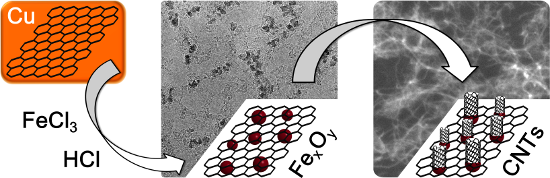
- modified etching process. Indeed we could confirm the contamination of synthesized and transferred graphene with crystalline iron oxide nanoparticles (Figure 2), as was first reported by Alemán et al. [39]. Selected area electron diffraction (SAED) of the detected nanoparticles indicated formation of cubic


Near-infrared-responsive, superparamagnetic Au@Co nanochains
Beilstein J. Nanotechnol. 2017, 8, 1680–1687, doi:10.3762/bjnano.8.168
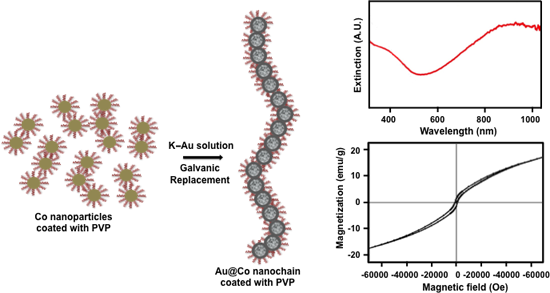
- provides the X-ray diffraction (XRD) data of the synthesized nanochains. The XRD pattern shows peaks at 2θ = 38.34°, 46.36°, 65.24° and 77.11°, which correspond, respectively, to the (111), (200), (220), and (311) crystallographic planes of the face-centered cubic (fcc) structure of gold. The selected area
- electron diffraction (SAED) shown in the inset is also consistent with a single-phase fcc structure [36]. The chemical composition of the bimetallic nanochains was evaluated by energy dispersive X-ray spectroscopy (EDX) and X-ray photoelectron spectroscopy (XPS). Figure 4 shows the EDX spectrum with peaks


Atomic structure of Mg-based metallic glass investigated with neutron diffraction, reverse Monte Carlo modeling and electron microscopy
Beilstein J. Nanotechnol. 2017, 8, 1174–1182, doi:10.3762/bjnano.8.119
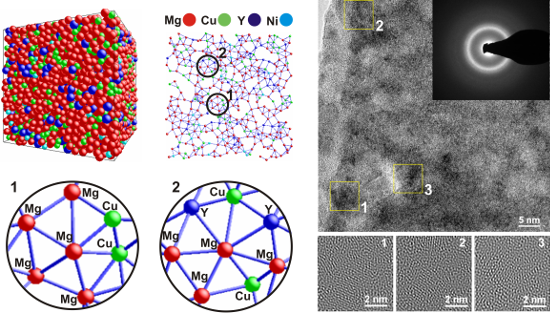
- . Figure 7 presents a high-resolution transmission electron microscope (HRTEM) image and corresponding selected area electron diffraction (SAED) patterns of a sample that was annealed at 473 K for 1 h. The annealing temperature was selected based on the results of the DSC measurements. The SAED image
- calculating the χ2 [23]: where k is intersects the points of the data set. An amorphous structure with nanocrystals was observed using a high-resolution transmission electron microscope S/TEM TITAN 80-300 by FEI. The high-resolution transmission electron microscopy (HRTEM) images, selected area electron
- determined by reverse Monte Carlo modeling: (a) simulation box, (b) a layer with thickness of 0.5 nm taken from the (100) plane and (c,d) indication that the SRO regions come probably from clusters. DSC curve of the Mg65Cu20Y10Ni5 ribbon sample in the as-cast state. (a) HRTEM image, (b) selected area




Carbon nanotube-wrapped Fe2O3 anode with improved performance for lithium-ion batteries
Beilstein J. Nanotechnol. 2017, 8, 649–656, doi:10.3762/bjnano.8.69
- -MWCNTs, which is in good agreement with the SEM result. Figure 2b shows a HRTEM image of the composites. There is an obvious secondary structure in which smaller Fe2O3 nanoparticles are formed on larger Fe2O3 nanoparticles. Figure 2c shows a HRTEM image and a selected area electron diffraction pattern of
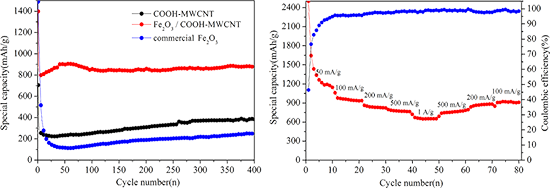
- composites: (a) XRD patterns; (b) SEM image; (c) and (d) energy-dispersive X-ray analysis (EDX). Fe2O3/COOH-MWCNT composites: (a) and (b) HRTEM; (c) HRTEM and selected area electron diffraction patterns of TEM. TG curve of Fe2O3/COOH-MWCNT composites. Electrochemical performance of the electrodes: (a


Formation and shape-control of hierarchical cobalt nanostructures using quaternary ammonium salts in aqueous media
Beilstein J. Nanotechnol. 2017, 8, 494–505, doi:10.3762/bjnano.8.53
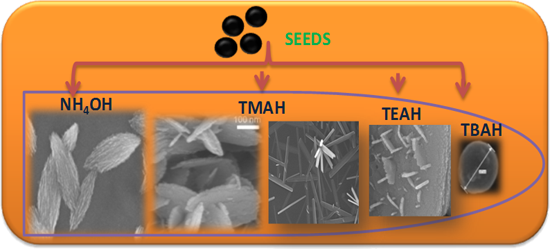
- -resolution micrograph and the selected-area electron diffraction (SAED) pattern in Figure S2 (Supporting Information File 1) indicates the crystalline nature of the seed particles. The lattice observed here shows a spacing of 0.12 nm corresponding to hcp Co(110). Furthermore, the size distribution of a
- area electron diffraction pattern (SAED), obtained with a 30 nm electron beam diameter (Figure 6b), confirms the hcp phase of cobalt. The SAED pattern acquired by an electron beam of 5 nm diameter provides a clear spot pattern highlighting the crystalline nature and various planes of a nanoplate
- parameters on the morphology of the nanoplates. Crystal structure The crystal structure of nanoplates and nanorods was determined by high-resolution micrographs (FEGTEM) and powder XRD methods. Figure 6a shows an FEGTEM micrograph of a group of interlocked nanoplates, captured after 120 min. The selected


Role of oxygen in wetting of copper nanoparticles on silicon surfaces at elevated temperature
Beilstein J. Nanotechnol. 2017, 8, 425–433, doi:10.3762/bjnano.8.45
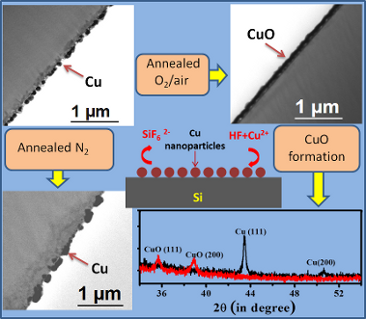
- thermal annealing was performed at 500 °C for 1 min (a heating ramp rate of 10 °C/s) was used for all three different samples. Before and after the thermal annealing, the structural analysis was done using the selected area electron diffraction (SAED) in the TEM as well as by the X-ray diffraction (model
- from a region marked by an orange rectangle in the STEM-HAADF image in Figure 1b. The thermal oxidation was performed in a rapid thermal annealing system at 500 °C for 1 min. We have analyzed the phase of the as-deposited material and the samples annealed under oxygen atmosphere by selected area
- electron diffraction (SAED). The diffraction pattern of the as-deposited sample (Figure 2a) shows some clear bright spots and faint rings. The bright spots were indexed as crystalline silicon in the [100] zone axis. The faint ring patterns correspond to the copper cubic structure along with the presence of


Influence of hydrofluoric acid treatment on electroless deposition of Au clusters
Beilstein J. Nanotechnol. 2017, 8, 183–189, doi:10.3762/bjnano.8.19
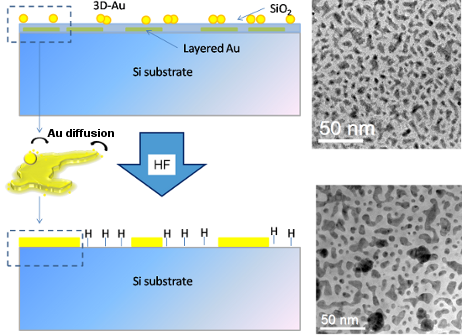
- . The corresponding plan view TEM micrographs of the two samples are also reported in the inserts of Figure 3a and Figure 3b, respectively. The selected area electron diffraction (SAED), shown in Supporting Information File 1, Figure S2, of the AuNPs presents a bright spot in the (200)Au ring along the


Nanocrystalline TiO2/SnO2 heterostructures for gas sensing
Beilstein J. Nanotechnol. 2017, 8, 108–122, doi:10.3762/bjnano.8.12
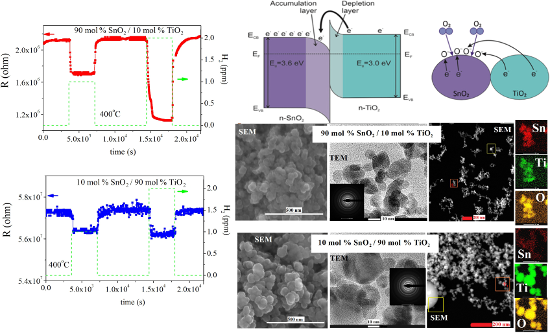
- ppm H2, Figure 4c). SEM and HR-TEM images, as well as the results of selected area electron diffraction (SAED) and mapping of elements are given in Figure 4b and Figure 4d for the gas sensing materials given in Figure 4a and Figure 4c, respectively. There are some differences between the




Effect of nanostructured carbon coatings on the electrochemical performance of Li1.4Ni0.5Mn0.5O2+x-based cathode materials
Beilstein J. Nanotechnol. 2016, 7, 1960–1970, doi:10.3762/bjnano.7.187
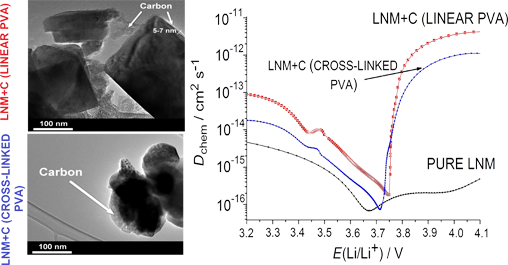
- compared to the pure Li1.4Ni0.5Mn0.5O2+x (Figure 8, inset). According to the selected area electron diffraction (SAED) patterns, the preservation of the hexagonal structure of Li1.4Ni0.5Mn0.5O2+x is especially visible in the carbon-coated material obtained from linear PVA (Figure 9B). At high potentials



Influence of hydrothermal synthesis parameters on the properties of hydroxyapatite nanoparticles
Beilstein J. Nanotechnol. 2016, 7, 1586–1601, doi:10.3762/bjnano.7.153
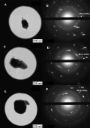
- electron microscopy (TEM) (JEM2000EX; JEOL, Tokyo, Japan). The TEM, high-resolution TEM, and selected area electron diffraction tests were conducted at 200 kV. The samples for the TEM observations were prepared by dropping the methanol particle dispersion, created by an ultrasonic technique, on a carbon


Nanostructured germanium deposited on heated substrates with enhanced photoelectric properties
Beilstein J. Nanotechnol. 2016, 7, 1492–1500, doi:10.3762/bjnano.7.142
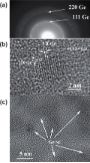
- transmission electron microscopy (HRTEM) investigations of the Ge:SiO2 thin films deposited on Si substrates at 500 °C are presented. Selected area electron diffraction (SAED) (Figure 2a) and HRTEM (Figure 2b) demonstrate the <112> orientation of Ge-nps. The HRTEM image in Figure 2c shows the spatial




Microwave synthesis of high-quality and uniform 4 nm ZnFe2O4 nanocrystals for application in energy storage and nanomagnetics
Beilstein J. Nanotechnol. 2016, 7, 1350–1360, doi:10.3762/bjnano.7.126
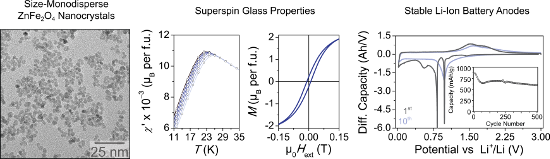
- shape of the ZFO nanoparticles was investigated by means of transmission electron microscopy (TEM). The low-magnification bright-field TEM image in Figure 1a shows that they are spherical in shape with a narrow size distribution around 4 nm. Both high-resolution TEM (HRTEM, Figure 1b) and selected-area
- electron diffraction (SAED, Figure 1c) demonstrate the high crystallinity of the ZFO nanoparticles. In addition, SAED indicates that the sol–gel derived material is single-phase and adopts a cubic structure. Figure 1d presents the size distribution obtained by particle counting from TEM images. These data


High performance Ce-doped ZnO nanorods for sunlight-driven photocatalysis
Beilstein J. Nanotechnol. 2016, 7, 1338–1349, doi:10.3762/bjnano.7.125
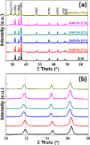
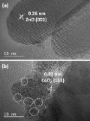
- some irregular cylindrical structures developed. The high crystallinity of the particles is further evident from the HRTEM image (Figure 6) and from the selected area electron diffraction (SAED) patterns shown in the insets of Figure 5. The bright and clear diffraction spots belong to the single







Fast diffusion of silver in TiO2 nanotube arrays
Beilstein J. Nanotechnol. 2016, 7, 1129–1140, doi:10.3762/bjnano.7.105
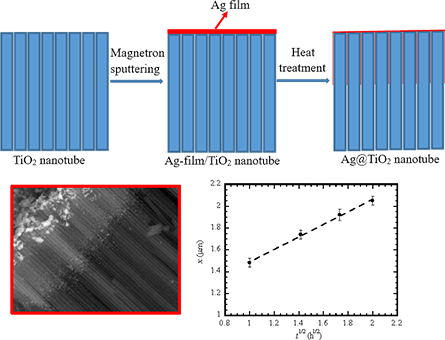
- times (1, 2 and 3 h) at a ramping rate of 2 °C·min−1 in a tube furnace in air. The heat treatment allowed Ag to migrate through the TiO2 nanotubes. Figure 1 shows schematically the facile route for the preparation of Ag@TiO2 nanotubes. Materials characterization The morphology and selected area electron
- diffraction (SAED) patterns of the prepared structures were examined using field-emission scanning electron microscopy (FESEM) (Tescan MIRA3 LMH) at 10 kV and transmission electron microscopy (TEM) (JEOL 2100-F) at 200 kV. The composition of the prepared structures was determined using energy dispersive


Synthesis of cobalt nanowires in aqueous solution under an external magnetic field
Beilstein J. Nanotechnol. 2016, 7, 990–994, doi:10.3762/bjnano.7.91
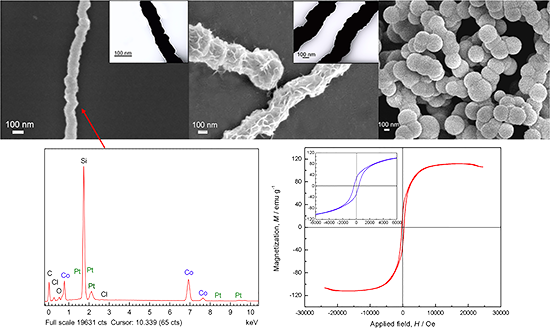
- ) with an incremental step size of 4°/min, the generator voltage of 40 kV and tube current of 40 mA, and selected area electron diffraction (SAED, FEI Tecnai-G20). The magnetic properties, such as saturation magnetization (Ms) and coercivity (Hc), were studied by a magnetic property measurement system


Improved biocompatibility and efficient labeling of neural stem cells with poly(L-lysine)-coated maghemite nanoparticles
Beilstein J. Nanotechnol. 2016, 7, 926–936, doi:10.3762/bjnano.7.84
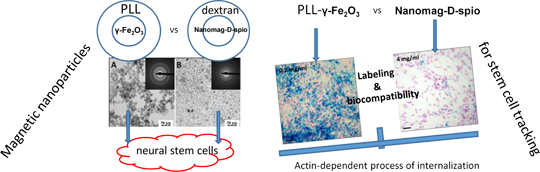
- confirmed that nanomag®-D-spio particles were significantly less spherical and had rougher edges than PLL-γ-Fe2O3. The crystal structure of both types of the iron oxide nanoparticles was investigated using the experimental two dimensional selected area electron diffraction (SAED) patterns, which were
- surface of the carbon film. The particles were dried at room temperature for more than 1 h, and TEM micrographs were obtained at an accelerating voltage of 120 kV by Tecnai Spirit G2 (FEI, Brno, Czech Republic). Bright field imaging (BF) and selected area electron diffraction (SAED) were used to visualize
- equaled to 1 for circles; all other shapes had CC < 1. RG of smooth objects was 1, whereas the rough objects had RG < 1. (D) Experimental selected area electron diffraction (SAED) patterns of PLL-γ-Fe2O3 and nanomag®-D-spio were compared to calculated X-ray diffraction (XRD) pattern of γ-Fe2O3. (E,F) Size




Determination of Young’s modulus of Sb2S3 nanowires by in situ resonance and bending methods
Beilstein J. Nanotechnol. 2016, 7, 278–283, doi:10.3762/bjnano.7.25
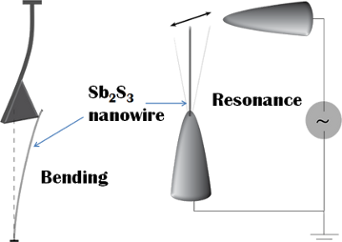
- were single-crystalline and showed orientation along c-axis as revealed by high resolution transmission electron micrograph images and selected area electron diffraction pattern analysis [17]. A detailed description of NW synthesis can be found in [17]. Sb2S3 NW powder was obtained by mechanically


Green synthesis, characterization and catalytic activity of natural bentonite-supported copper nanoparticles for the solvent-free synthesis of 1-substituted 1H-1,2,3,4-tetrazoles and reduction of 4-nitrophenol
Beilstein J. Nanotechnol. 2015, 6, 2300–2309, doi:10.3762/bjnano.6.236
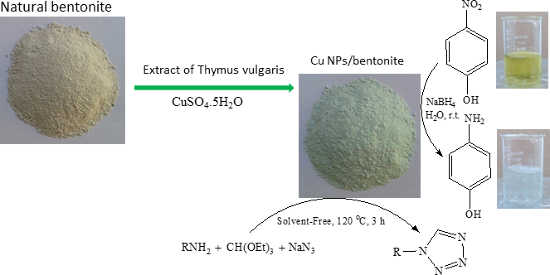
- microscopy (FE-SEM), energy dispersive X-ray spectroscopy (EDS), transmission electron microscopy (TEM), selected area electron diffraction (SAED) and Brunauer–Emmett–Teller (BET) analysis. Afterward, the catalytic performance of the prepared catalyst was investigated for the solvent-free synthesis of 1
- spherical morphology with a low tendency for agglomeration. Figure 6d (SAED) shows the measured selected area electron diffraction pattern of as-prepared Cu NPs/bentonite. This result indicates that the nanoparticles are crystalline and mainly composed of fcc Cu. The SAED patterns of the Cu NPs/bentonite


Structural transitions in electron beam deposited Co–carbonyl suspended nanowires at high electrical current densities
Beilstein J. Nanotechnol. 2015, 6, 1298–1305, doi:10.3762/bjnano.6.134
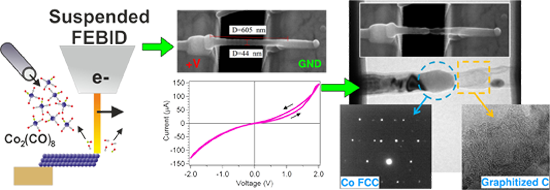
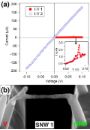
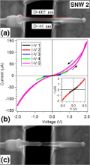
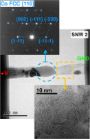
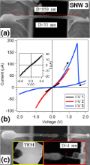
- , where metal grains with a size of few nanometers are embedded in an amorphous, carbonaceous matrix [27]. The structure is confirmed by TEM selected area electron diffraction (SAED) measured at the center of the wire and presented in Figure 1b. The pattern shows an innermost high-intensity ring with many

Electron-stimulated purification of platinum nanostructures grown via focused electron beam induced deposition
Beilstein J. Nanotechnol. 2015, 6, 907–918, doi:10.3762/bjnano.6.94
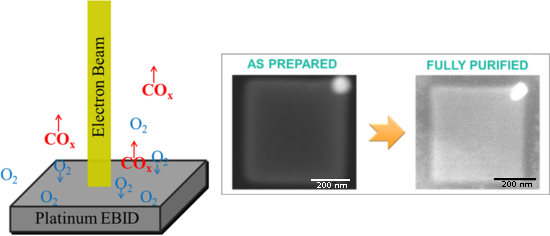
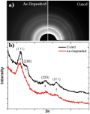
- ), and 5.06 nm (±0.80 nm) for as-deposited, 6 min, and 12 min purification patterns, respectively. In order to further characterize the microstructure development during purification, selected area electron diffraction patterns (SAED) were taken for an as-deposited and purified PtCx deposit as shown in
- ) of 2 min (51.2 C/cm2), 4 min (102.3 C/cm2), 6 min (153.5 C/cm2), 8 min (204.7 C/cm2), 10 min (255.8 C/cm2), and 12 min (307.0 C/cm2). Selected area electron diffraction was also performed to obtain diffraction patterns. These experiments were conducted in a Zeiss Libra 200 HT FE MC at 120 keV and
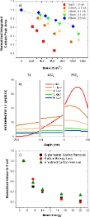
- . Selected area electron diffraction (SAED) patterns for O2 E-beam uncured (left) and cured (right) deposit. Diffraction peaks become more pronounced after curing. Bar graph comparing the simulated and experimental purification rates for varying beam parameters. The relevant derived variables used in the