


Search results
Search for "shear" in Full Text gives 189 result(s) in Beilstein Journal of Nanotechnology.
Comprehensive review on ultrasound-responsive theranostic nanomaterials: mechanisms, structures and medical applications
Beilstein J. Nanotechnol. 2021, 12, 808–862, doi:10.3762/bjnano.12.64
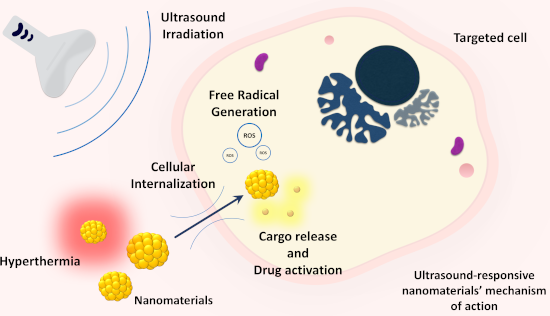
- the MBs, leading to the term “microstream”. Depending on the US intensity, the oscillating MBs come into close proximity with the cells and induce stresses on the cell membrane [75]. Consequently, the triggered shear forces cause disruption of the cell membrane and increase intracellular uptake of
- . reported that when the distance between the cell and the MB was increased to 5.5 µm, the exerted shear stress on the cell membrane suddenly decreased [78]. Schlicher et al. exposed prostate cancer cells (DU145) to 24 kHz US irradiation to investigate the cavitation events and the changes in the cell


Physical constraints lead to parallel evolution of micro- and nanostructures of animal adhesive pads: a review
Beilstein J. Nanotechnol. 2021, 12, 725–743, doi:10.3762/bjnano.12.57
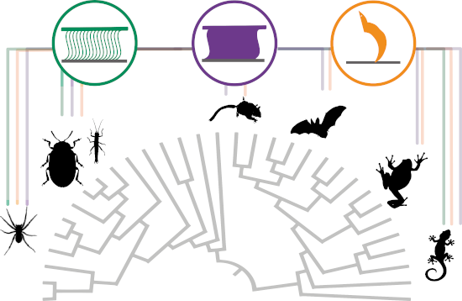
- recruited in this case. Such a mechanism may secure a stable position of an animal on a ceiling. As the shear forces are applied proximally towards the body in this situation, and because of a stronger friction in this direction due to an intimate contact between the membranes/spatulae, the pad sliding can


Spontaneous shape transition of MnxGe1−x islands to long nanowires
Beilstein J. Nanotechnol. 2021, 12, 366–374, doi:10.3762/bjnano.12.30
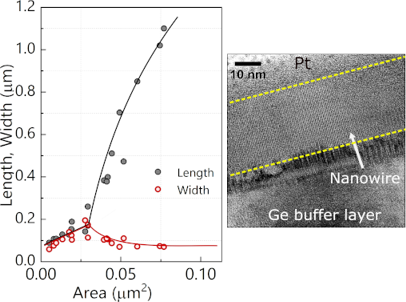
- plane, the Poisson ratio, and the shear modulus of the substrate, respectively [34]. The value of Γ/ch controls the final distribution and size of the islands. In particular, if Γ/ch ≫ 1, then α0 becomes too large to reduce the edge-to-area ratio. While the mechanism described here applies to the


Determination of elastic moduli of elastic–plastic microspherical materials using nanoindentation simulation without mechanical polishing
Beilstein J. Nanotechnol. 2021, 12, 213–221, doi:10.3762/bjnano.12.17
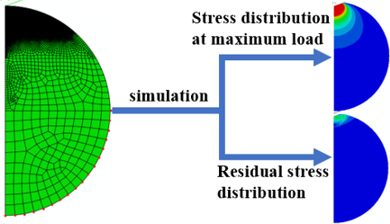
- of an elastic half space by a flat, cylindrical punch leads to a simple relation between P and h of the form [27] where a is the radius of the cylinder and G is the shear modulus. Noting that the contact area (i.e., the projected area or cross-sectional area of elastic contact) A is equal to πa2 and
- that the shear modulus is equal to E/[2(1 + ν)], differentiating P with respect to h leads to where S = dP/dh is the initial stiffness of the unloading curve, defined as the slope of the upper portion of the unloading curve during the initial stages of unloading (also called contact stiffness), and E


A review on the green and sustainable synthesis of silver nanoparticles and one-dimensional silver nanostructures
Beilstein J. Nanotechnol. 2021, 12, 102–136, doi:10.3762/bjnano.12.9
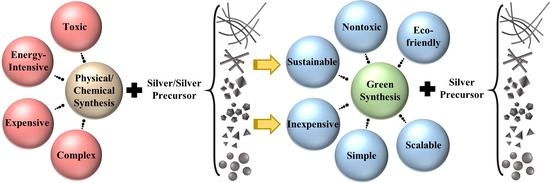
- in sheet resistance and to increase touch sensitivity [89]. Furthermore, AgNWs can be used to prepare AgNW-based conductive inks that have remarkable rheological characteristics such as thixotropic shear thinning and thus, can be simply used for screen printing without the addition of polymeric


Design of V-shaped cantilevers for enhanced multifrequency AFM measurements
Beilstein J. Nanotechnol. 2020, 11, 1525–1541, doi:10.3762/bjnano.11.135
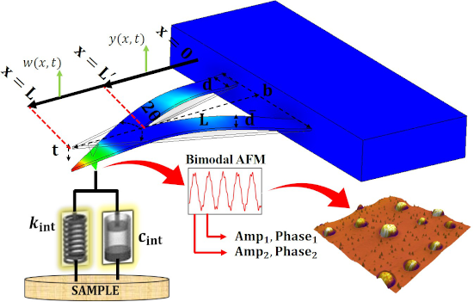
- , y(x,t), ϕ(x,t), ρ, I, E and c are shear coefficient, shear modulus, area of cross section, transverse deflection of the beam, bending angle of the beam, mass density of the beam, moment of inertia of cross section, Young’s modulus, and internal damping of the cantilevers, respectively. The cross


![[Graphic 4]](/bjnano/content/inline/2190-4286-11-135-i26.svg?max-width=637&scale=1.18182) = 15 µm, bref = 8...
= 15 µm, bref = 8...


![[Graphic 17]](/bjnano/content/inline/2190-4286-11-135-i39.svg?max-width=637&scale=1.18182) ) of V-shaped cantilevers for...
) of V-shaped cantilevers for...


On the frequency dependence of viscoelastic material characterization with intermittent-contact dynamic atomic force microscopy: avoiding mischaracterization across large frequency ranges
Beilstein J. Nanotechnol. 2020, 11, 1409–1418, doi:10.3762/bjnano.11.125
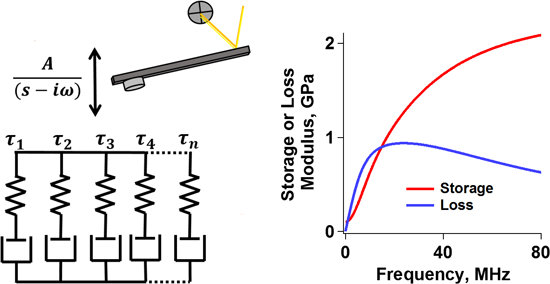
- viscoelastic harmonic functions as a function of frequency in the range of frequencies involved in the experiment. For example, for the Generalized Maxwell model, which this paper focuses on, the storage shear modulus, G′, which accounts for the elastic behavior of the material under harmonic excitation, is
- given by [15]: where ω is the angular frequency, equal to 2πν. At zero frequency, G′, is equal to Ge, the rubbery shear modulus, and as the frequency increases, it converges to the glassy shear modulus, Gg, which is given by: The loss shear modulus, G″, which accounts for the viscous behavior of the
- material, is given by [15]: where G″(ω) at both zero and infinitely large frequencies converges to zero, implying pure elastic behavior at those extrema. Note that the above equations and paragraphs refer to shear moduli (e.g., storage shear modulus and loss shear modulus) instead of tensile (Young´s


Magnetohydrodynamic stagnation point on a Casson nanofluid flow over a radially stretching sheet
Beilstein J. Nanotechnol. 2020, 11, 1303–1315, doi:10.3762/bjnano.11.114
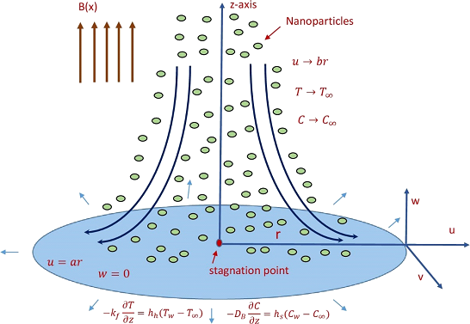
- fluid can be considered as a shear-thinning liquid, with infinite viscosity. On the other hand, when the stress rate approaches an infinite value the viscosity of the Casson fluid drops to zero [6]. Jam, tomato ketchup, honey, and concentrated fruit syrups are some quotidian examples of Casson fluids


An atomic force microscope integrated with a helium ion microscope for correlative nanoscale characterization
Beilstein J. Nanotechnol. 2020, 11, 1272–1279, doi:10.3762/bjnano.11.111
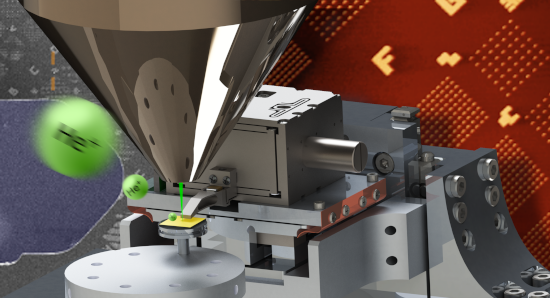
- down the sample using the z-piezo of the scanner, causing intermittent contact between the cantilever and the sample [25]. The maximum interaction force is computed and used as feedback by the controller, providing fine force control, reducing shear forces and thus preserving the tip and the sample [26


Magnetic-field-assisted synthesis of anisotropic iron oxide particles: Effect of pH
Beilstein J. Nanotechnol. 2020, 11, 1230–1241, doi:10.3762/bjnano.11.107
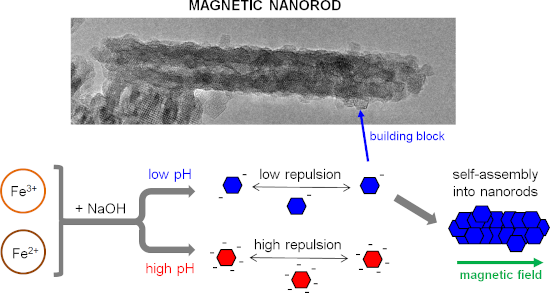
- ] in the presence of shear [40], etc. Almost all of these methods involve either the use of a template or a stabilizing agent to induce a directional one-dimensional growth of rod-like nanoparticles. The most common agents used are surfactants [11][21][23][26][37], polymers [27][36] and other additives






Revealing the local crystallinity of single silicon core–shell nanowires using tip-enhanced Raman spectroscopy
Beilstein J. Nanotechnol. 2020, 11, 1147–1156, doi:10.3762/bjnano.11.99
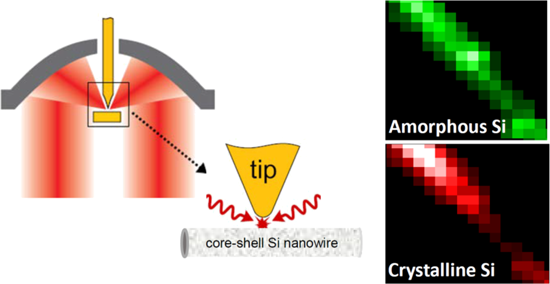
- ) along the perimeter of a SiNW. The tip–sample distance is controlled by a shear-force feedback. For this purpose, the tip is mounted on an oscillating tuning fork, which experiences a phase shift of the oscillation upon approach. This phase shift is recorded with a lock-in amplifier and fed to a
- measured using the shear-force scanning function of our custom-built TERS setup. Eight TERS spectra were taken along the white arrow in Figure 5a over a length of 64 nm. The distance between the two sequential spectra is 8 nm. The spectra were acquired from bottom to top, with the black spectrum on the
- observed. a) A shear-force scanning probe microscopy topography image (250 × 250 nm2) of a silicon wire edge. The white arrow indicates the range and direction along which the Raman spectra in panels c and d were recorded. b) Location of the wire indicated on the 50 × 50 µm2 optical image by a white square


Vibration analysis and pull-in instability behavior in a multiwalled piezoelectric nanosensor with fluid flow conveyance
Beilstein J. Nanotechnol. 2020, 11, 1072–1081, doi:10.3762/bjnano.11.92
- piezoelectric doubly curved nanoshells and orthotropic piezoelectric cylindrical nanoshells [23][24]. Wang utilized surface strain gradient elasticity to study a meticulous solution to the anti-plane shear problem of a circular elastic inhomogeneity [25]. Nami et al. utilized nonlocal elasticity theory and
- trigonometric shear deformation theory to investigate the static analysis of rectangular nanoplates [26]. The Gurtin–Murdoch surface theory is presented by Sigaeva et al. to study the universal model describing plane strain bending of a multilayered sector of a cylindrical tube [27]. Karimipour et al. presented


![[Graphic 46]](/bjnano/content/inline/2190-4286-11-92-i46.svg?max-width=637&scale=1.18182) on DNF of FC-MWPENS.
on DNF of FC-MWPENS.


![[Graphic 50]](/bjnano/content/inline/2190-4286-11-92-i50.svg?max-width=637&scale=1.18182) on DNF of SS FC-MWPENS.
on DNF of SS FC-MWPENS.


![[Graphic 54]](/bjnano/content/inline/2190-4286-11-92-i54.svg?max-width=637&scale=1.18182) on DNF of SS FC-MWPENS.
on DNF of SS FC-MWPENS.


![[Graphic 59]](/bjnano/content/inline/2190-4286-11-92-i59.svg?max-width=637&scale=1.18182) for fluid velocity
for fluid velocity ![[Graphic 60]](/bjnano/content/inline/2190-4286-11-92-i60.svg?max-width=637&scale=1.18182) on DNF of SS FC-MWPENS.
on DNF of SS FC-MWPENS.

![[Graphic 61]](/bjnano/content/inline/2190-4286-11-92-i61.svg?max-width=637&scale=1.18182) for pull-in voltage on DNF of SS FC-MWPENS.
for pull-in voltage on DNF of SS FC-MWPENS.

![[Graphic 67]](/bjnano/content/inline/2190-4286-11-92-i67.svg?max-width=637&scale=1.18182) for fluid velocity
for fluid velocity ![[Graphic 68]](/bjnano/content/inline/2190-4286-11-92-i68.svg?max-width=637&scale=1.18182) on DNF of SS FC-MWPENS.
on DNF of SS FC-MWPENS.

![[Graphic 69]](/bjnano/content/inline/2190-4286-11-92-i69.svg?max-width=637&scale=1.18182) for pull-in voltage on DNF of SS FC-MWPENS.
for pull-in voltage on DNF of SS FC-MWPENS.

![[Graphic 73]](/bjnano/content/inline/2190-4286-11-92-i73.svg?max-width=637&scale=1.18182) on DNF of SS FC-MWPENS.
on DNF of SS FC-MWPENS.


![[Graphic 75]](/bjnano/content/inline/2190-4286-11-92-i75.svg?max-width=637&scale=1.18182) on DNF of SS FC-MWPENS.
on DNF of SS FC-MWPENS.

Wet-spinning of magneto-responsive helical chitosan microfibers
Beilstein J. Nanotechnol. 2020, 11, 991–999, doi:10.3762/bjnano.11.83
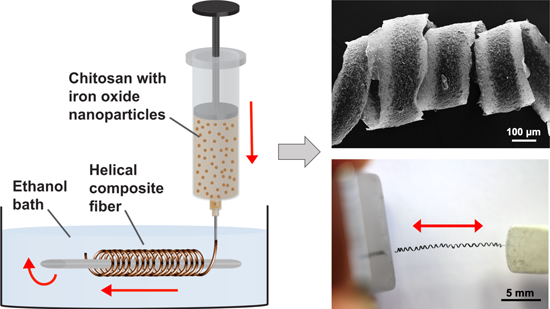
- helical fibers have the potential to be used as novel actuator systems or as magneto-responsive scaffolds for tissue engineering. Results and Discussion The viscous feedstock solutions containing 30 mg·mL−1 chitosan and 10 mg·mL−1 magnetic iron oxide particles (IOPs) showed a pronounced shear-thinning
- behavior. These results were corroborated by previous studies that used aqueous chitosan solutions for wet-spinning experiments [28][50]. A zero-shear viscosity of approximately 10 Pa·s (Figure 1A) was obtained. The yield point was not strongly pronounced at 0.1 Pa (Figure 1B), which explains why further
- rheometer (Malvern, Herrenberg, Germany) with a cone-plate geometry (1° angle and 50 mm diameter). The shear stress was measured at 20 °C with a stepwise increase in the shear rate and a one minute holding time at each shear-rate step. The size and zeta potential measurements were performed with 10 mg·mL−1


Extracting viscoelastic material parameters using an atomic force microscope and static force spectroscopy
Beilstein J. Nanotechnol. 2020, 11, 922–937, doi:10.3762/bjnano.11.77
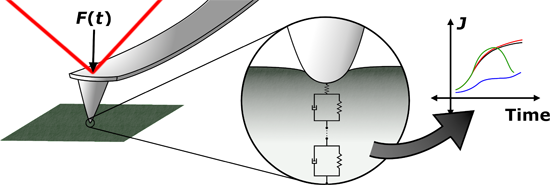
- very stiff will have a high storage modulus and a low loss modulus. Such a sample will tend to store a majority of the applied load within its molecular structure and elastically return most or all of that energy when unloaded. Alternately, a medium that is susceptible to large shear forces (such as


Identification of physicochemical properties that modulate nanoparticle aggregation in blood
Beilstein J. Nanotechnol. 2020, 11, 550–567, doi:10.3762/bjnano.11.44
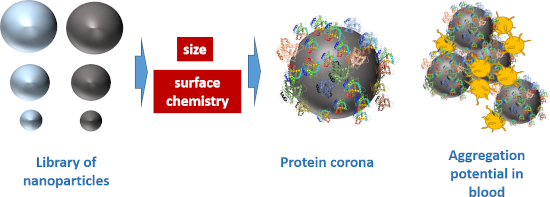
- . Dynamic platelet function assay (DPFA) The DPFA is a well-characterised real-time assay of platelet interaction with von Willebrand factor (VWF) under conditions of arterial shear [27][28][29]. The initial phases of platelet aggregation were assayed using the DPFA as previously described [25][26]. Briefly
- chamber at an arterial rate of shear (1500 s−1). Platelet translocation behaviour was recorded using real-time video microscopy at a rate of 19 frames per second. Image stacks were analysed by a custom-designed and validated software package [27]. The assay measurements obtained from this analysis include
- function assay (DPFA) was then used to investigate possible interference of the NPs on this process. This well-characterised assay monitors shear-mediated dynamic platelet interactions with surface-immobilised VWF. Adhesion was measured as the total number of platelets adhering to the substrate (Figure 11




Multilayer capsules made of weak polyelectrolytes: a review on the preparation, functionalization and applications in drug delivery
Beilstein J. Nanotechnol. 2020, 11, 508–532, doi:10.3762/bjnano.11.41




Nonclassical dynamic modeling of nano/microparticles during nanomanipulation processes
Beilstein J. Nanotechnol. 2020, 11, 147–166, doi:10.3762/bjnano.11.13
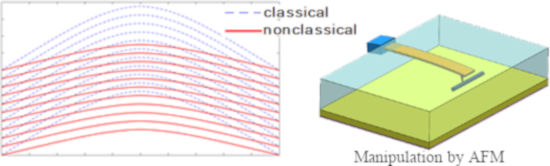
- , respectively, expressed by [16] where FT is the pushing force, τss, τrs and τrt are the shear strength of contact in sliding on the substrate and rolling on the substrate and particle, respectively, μ represents the friction constants, As and At are the substrate–particle and particle–tip contact area
- χij are the symmetric part of couple stress and curvature tensors, respectively. Also, the relation for couple stress and curvature tensors is written as [27] where l is the material length scale parameter for considering the size effects, and G is the shear modulus. The displacement fields for the







An investigation on the drag reduction performance of bioinspired pipeline surfaces with transverse microgrooves
Beilstein J. Nanotechnol. 2020, 11, 24–40, doi:10.3762/bjnano.11.3
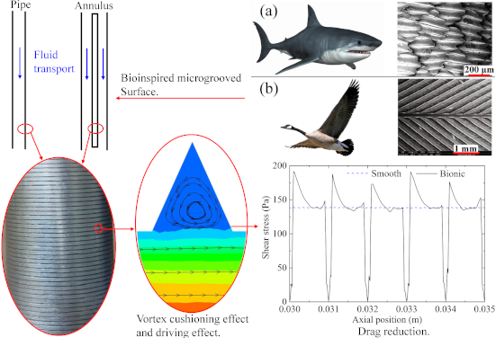
- were undertaken to evaluate the drag reduction performance of these bionic pipelines. It was found that the vortex ‘cushioning’ and ‘driving’ effects produced by the vortexes in the microgrooves were the main reason for obtaining a drag reduction effect. The shear stress of the microgrooved surface was
- complex conditions. Besides, these active antidrag methods require extra energy or may complicate the devices, which limits their application in engineering. Pressure loss mainly derives from the shear stress of a fluid flowing across the surface of a pipeline. The wall shear stress is expressed as where
- τ is the shear stress (Pa), μ is the dynamic viscosity of the fluid (Pa∙s); and du/dy is the velocity gradient (1/s). According to Equation 1, changing the turbulent boundary layer state in the vicinity of the wall for a decreased velocity gradient is an essential and appropriate measure to reduce


Design of a nanostructured mucoadhesive system containing curcumin for buccal application: from physicochemical to biological aspects
Beilstein J. Nanotechnol. 2019, 10, 2304–2328, doi:10.3762/bjnano.10.222
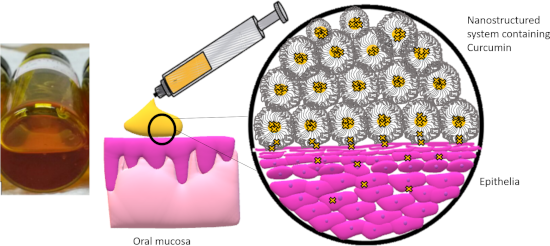
- , 0.08% (w/w) CUR were evaluated at 25 and 37 °C (Figure 6). The nonlinear behavior to shear stress due to the shear rate (non-Newtonian), resulting in structural changes, was maintained even after the incorporation of CUR in the polymer blends. Moreover, the addition of CUR in binary polymeric systems
- did not lead to a change in flow rheological profiles at 25 °C, whereas a slight decrease of shear stress was observed for systems evaluated at 37 °C. In this way, CUR did not change the structuring of the system. Conversely, the increase in temperature leads to an increase in shear stress due to the
- thermoresponsive properties of the preparations. Low hysteresis areas and different yield values could be observed in a prominent way at 37 °C, in comparison to systems investigated at 25 °C. Consequently, these systems showed shear thinning behavior flow, which is considered to be a desirable characteristic for


Microfluidics as tool to prepare size-tunable PLGA nanoparticles with high curcumin encapsulation for efficient mucus penetration
Beilstein J. Nanotechnol. 2019, 10, 2280–2293, doi:10.3762/bjnano.10.220
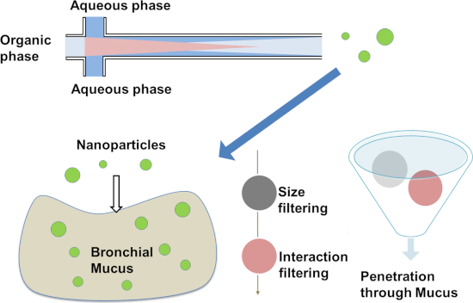
- sub-micrometer particles, because it is a simple and straightforward technique, without the involvement of any chemical additives, and also does not require harsh formulation parameters, such as high energy input or mechanical shear stress (e.g., by sonification) [30][31]. Nonetheless, the preparation


High-tolerance crystalline hydrogels formed from self-assembling cyclic dipeptide
Beilstein J. Nanotechnol. 2019, 10, 1894–1901, doi:10.3762/bjnano.10.184
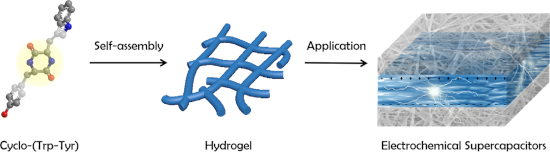
- properties The rheological properties of hydrogels are key evaluation indicators for a variety of applications [50][51]. It is typically challenging for hydrogels based on linear peptides to maintain their original gel state for a long time or under shear force. Driven by a thermodynamic process, they tend
- hydrogel enhanced along with time. Strain-induced shear-thinning and self-healing abilities of the hydrogel were detected through continuous step changes of oscillatory strain between 500% and 1% (at a constant frequency of 1 rad s−1). Under a high magnitude strain (500%), the modulus of G’’ values
- fifth test cycle. As compared to that of 48 h, the C-WY hydrogel at 240 h showed a faster recovery speed. The strain-dependent oscillatory rheology results (at 240 h) showed a great anti-shear performance at stains ranging from about 0.1% to about 20%, indicating the shear-thinning behavior of the


Flexible freestanding MoS2-based composite paper for energy conversion and storage
Beilstein J. Nanotechnol. 2019, 10, 1488–1496, doi:10.3762/bjnano.10.147
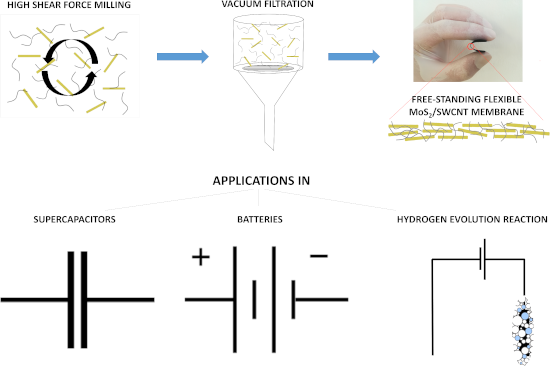
- flexible MoS2-based composite paper by high-energy shear force milling and simple vacuum filtration. This composite material combines high flexibility, mechanical strength and good chemical stability. Chronopotentiometric charge–discharge measurements were used to determine the capacitance of our paper
- the synthesis of a freestanding MoS2-based composite paper using a small addition of single-walled carbon nanotubes (SWCNTs) and shear-force milling in N-methyl-2-pyrrolidone (NMP). The paper was prepared simply by vacuum filtration of the slurry on top of a filter. The resulting material exhibits
- additional binders, conductive additives or a current collector. Results and Discussion Characterization of morphology, composition and mechanical properties The synthesized composite material based on MoS2 and SWCNTs was prepared by shear-force milling of MoS2 powder with SWCNTs. We then prepared a paper


Nanoscale spatial mapping of mechanical properties through dynamic atomic force microscopy
Beilstein J. Nanotechnol. 2019, 10, 1332–1347, doi:10.3762/bjnano.10.132
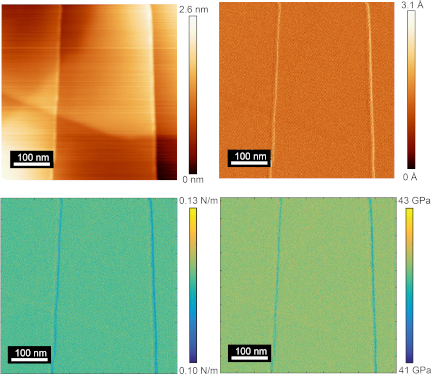
- mechanical properties of materials, the nanoscale mechanical properties, including elastic and shear moduli, can drastically differ from their bulk values. This results in opportunities to custom design or enhance bulk engineering materials with advances discovered through nanoscale interrogation [1]. Thus
- . Of course the advantages of dynamic AFM come at the expense that the lateral shear force between the tip and sample cannot be eliminated, making the technique inappropriate for weakly bonded samples. On the other hand, more variations of the experimental set up are possible for AFM, such as ultrahigh




Direct growth of few-layer graphene on AlN-based resonators for high-sensitivity gravimetric biosensors
Beilstein J. Nanotechnol. 2019, 10, 975–984, doi:10.3762/bjnano.10.98
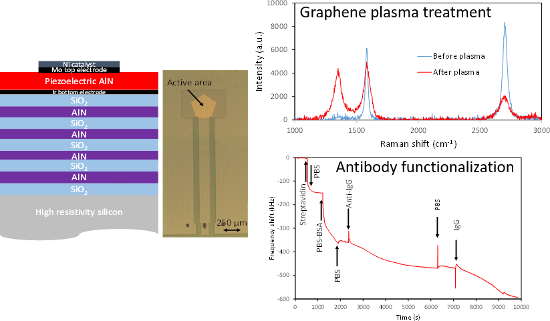
- reached during the CVD growth of graphene (up to 650 °C). The active AlN films, purposely grown with the c-axis tilted, effectively excite shear modes displaying excellent in-liquid performance, with electromechanical coupling and quality factors of around 3% and 150, respectively, which barely vary after
- functionalization schemes also play an essential role. In fact, for a given design, the sensitivity not only depends on the density of the attached active receptors, but also on their distance to the device surface. For example, the interaction length of shear-mode resonators operating in liquid appears to be
- and patterned over the top electrode of the shear-mode SMRs. The active area of the resonators was subsequently functionalized using both covalent and non-covalent schemes that ended with the successful detection of antibodies without significant worsening of the resonator performance. Opposite to



Outstanding chain-extension effect and high UV resistance of polybutylene succinate containing amino-acid-modified layered double hydroxides
Beilstein J. Nanotechnol. 2019, 10, 684–695, doi:10.3762/bjnano.10.68
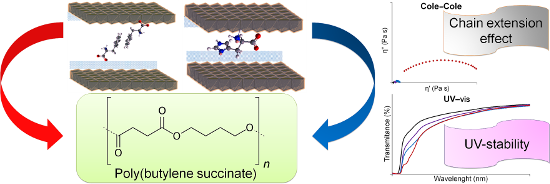
- investigated and compared to filler-free PBS as well as LDH Mg2Al/nitrate as references. Both organo-modified LDHs exhibited a remarkable chain-extension effect for PBS with an outstanding increase in the zero-shear viscosity η0 for PBS–Mg2Al/PHE (two order of magnitude increase as compared to filler-free PBS
- sweeps from 0.1 to 100 rad s−1 and the gap between plates set at 1 mm. In all cases, the oscillatory shear stress amplitude was checked to ensure that measurements were performed inside the linear viscoelastic domain. The storage modulus (G’), loss modulus (G”) and tan δ (ratio of G” and G’) were
- fitting and extrapolation of the Cole–Cole representation to the x-axis (η′ at η″ = 0), the Newtonian zero-shear viscosity η0 can be calculated using Equation 1, which reflects even small changes in molecular mass. The effect of 5 wt % Mg2Al LDH filler on the PBS chain extension is presented as η”–η’ Cole





