Search results
Search for "slip" in Full Text gives 103 result(s) in Beilstein Journal of Nanotechnology.
Patterning of supported gold monolayers via chemical lift-off lithography
Beilstein J. Nanotechnol. 2017, 8, 2648–2661, doi:10.3762/bjnano.8.265
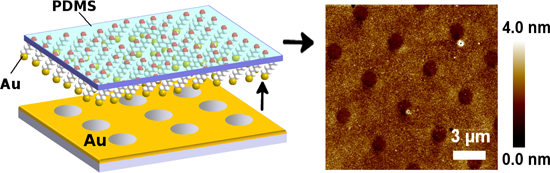
- with dye-labeled complementary strands (5′-AAA GAG GAG TTG ACA GTT GAG CTA ATG CCG ATT CTT GAG A/3AlexF488N/-3′). The samples were then imaged with the patterned side facing down in a drop of deionized water on a clean cover slip. The magnification and exposure time was adjusted appropriately for each


Interface conditions of roughness-induced superoleophilic and superoleophobic surfaces immersed in hexadecane and ethylene glycol
Beilstein J. Nanotechnol. 2017, 8, 2504–2514, doi:10.3762/bjnano.8.250
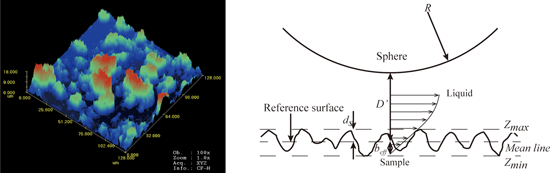
- that can affect the drag of fluid flow. For surfaces with different oleophobicity, the boundary slip at the solid–oil interface is mostly larger than that at the solid–water interface. Roughness is a key factor for the wettability of superoleophilic/superoleophobic surfaces, and it has been found to
- affect the effective value of slip length in measurements. Moreover, there are no studies on the effect of roughness on slip at interfaces between oil and superoleophilic/superoleophobic surfaces. A theoretical description of the real surface roughness is yet to be found. Results show that the effective
- slip length is negative and decreases with an increasing root mean squared (RMS) roughness of surfaces, as the increasing roughness enhances the area with discontinuous slip at the solid–liquid interface. The underlying mechanisms are analyzed. The amplitude parameters of surface roughness could





Numerical investigation of the tribological performance of micro-dimple textured surfaces under hydrodynamic lubrication
Beilstein J. Nanotechnol. 2017, 8, 2324–2338, doi:10.3762/bjnano.8.232
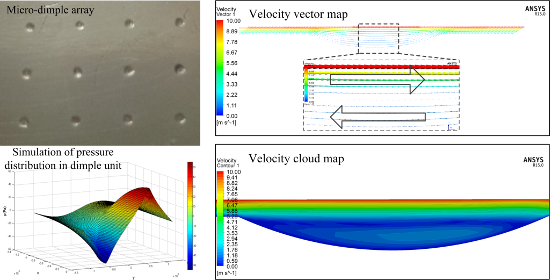
- conservation. For the purpose of facilitating modeling and analysis, the following assumptions were made: 1) The body force is considered negligible (e.g., gravity or magnetic force); 2) No slip of lubricant is supposed to occur on the boundary, which means the velocity of lubricant close to the friction pair
- this model. Figure 5 shows the meshed model of the micro-dimple unit with a total grid number of 416,670. Boundary conditions As shown in Figure 5, the upper and lower walls of the simulation model are set as no-slip boundaries. The upper wall moves along the positive direction of the y-axis with a




Photobleaching of YOYO-1 in super-resolution single DNA fluorescence imaging
Beilstein J. Nanotechnol. 2017, 8, 2296–2306, doi:10.3762/bjnano.8.229
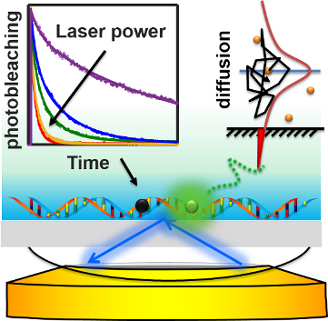
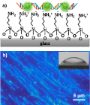
- , immobilize, and image a single DNA using the established protocol and our fluorescence microscope. Glass cover slip substrates modified with amino silane are used to immobilize single DNA molecules (Figure 3). After surface modification, the water contact angle for the cover slips is 48 ± 4° which is




Molecular dynamics simulations of nanoindentation and scratch in Cu grain boundaries
Beilstein J. Nanotechnol. 2017, 8, 2283–2295, doi:10.3762/bjnano.8.228
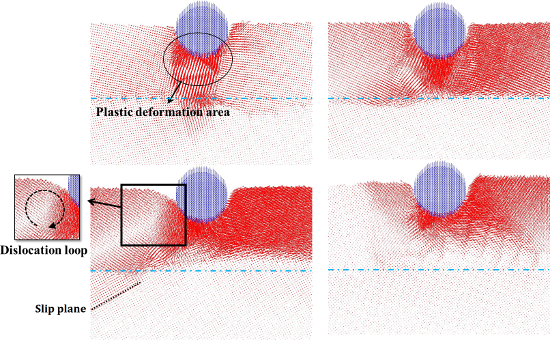
- work, we analyzed the transverse and vertical grain boundaries for different angles. From the simulation results, it was found that the sample with a transverse grain boundary angle of 20° had a higher barrier effect on the slip band as compared to samples with other angles. Moreover, the
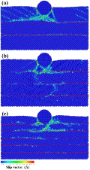
- interest. In this paper, the nanomechanical and grain boundary characteristics of Cu films were studied using MD simulations. The results are discussed in terms of the atomic trajectories, slip vectors, atomic flows, as well as the force and the average friction coefficients. Methodology The physical model
- , respectively. With the aim to observe the effect of the indentation and scratch grain boundaries on the atomic movement during dislocation, the diagram of the slip vector [30], which was applied to body-centered cubic (BCC), FCC, and hexagonal close packed (HCP) structures, was defined as where ns is the




Velocity dependence of sliding friction on a crystalline surface
Beilstein J. Nanotechnol. 2017, 8, 2186–2199, doi:10.3762/bjnano.8.218
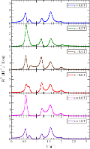
- cantilever. In that scheme a stick-slip to smooth-sliding transition can also be investigated, especially at low speed (see Appendix “The static friction force”), allowing one to study in detail the nonlinear phenomena and mechanisms of phonon excitations that arise at slip times. The stick-slip regime and
- -slip process repeats itself. Conversely, if vpull is less than a certain critical value vpull c, the whole chain speed advances at a speed asymptotically close to vpull: the support, the slider, and the chain slide together at the same velocity and the spring never elongates enough for the elastic


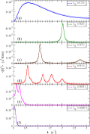

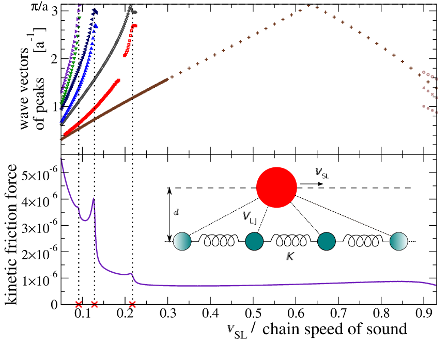
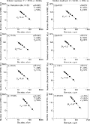
![[Graphic 31]](/bjnano/content/inline/2190-4286-8-218-i50.svg?max-width=637&scale=1.18182) as functions of vSL. Panels (c) and (d): detail ...
as functions of vSL. Panels (c) and (d): detail ...

![[Graphic 34]](/bjnano/content/inline/2190-4286-8-218-i53.svg?max-width=637&scale=1.18182) , with the dynamic friction Fd as a function of vSL...
, with the dynamic friction Fd as a function of vSL...


![[Graphic 40]](/bjnano/content/inline/2190-4286-8-218-i59.svg?max-width=637&scale=1.18182) (symbols), compared with the values of k of the phonons who...
(symbols), compared with the values of k of the phonons who...


A comparative study of the nanoscale and macroscale tribological attributes of alumina and stainless steel surfaces immersed in aqueous suspensions of positively or negatively charged nanodiamonds
Beilstein J. Nanotechnol. 2017, 8, 2045–2059, doi:10.3762/bjnano.8.205
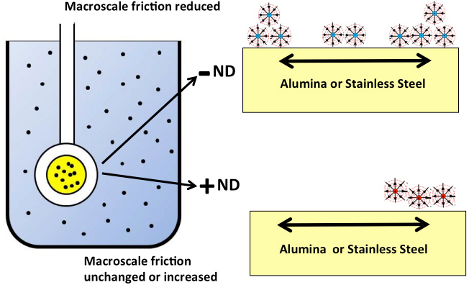
- dominate the tribological performance. The surface charges on ND are also expected to affect the interfacial solid–fluid slip lengths attributes, and therefore the apparent fluid viscosity, via electroviscous and/or steric mechanisms [18][19][20]. Fundamental studies at the nanoscale are clearly essential
- of the liquid under no-slip boundary conditions are given by [35]: where ρq = 2.648 g/cm3 is the density and µq = 2.947 × 10¹¹ g/cm/s2 is the shear modulus of quartz. Immersion of one side of a 5 MHz resonant frequency QCM in water at room temperature (ρ3 = 1 g/cm3, η3 = 0.01 poise) results in a δf
- is manifested as an increase in the series resonant resistance Rm of the QCM resonator that can be measured electrically. For a QCM electrode exposed to a fluid from one side under non-slip conditions [36][37]: where K2 = 7.74 × 10⁻³ is the electromechanical coupling factor for the AT cut quartz (AT


Stick–slip boundary friction mode as a second-order phase transition with an inhomogeneous distribution of elastic stress in the contact area
Beilstein J. Nanotechnol. 2017, 8, 1889–1896, doi:10.3762/bjnano.8.189
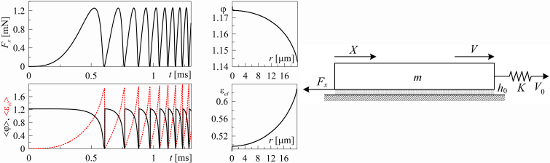
- the stick–slip mode of boundary friction. An analytical description and numerical simulation with radial distributions of the order parameter, stress and strain were performed to investigate the spatial inhomogeneity. It is shown that in the case when the driving device is connected to the upper part
- of the friction block through an elastic spring, the frequency of the melting/solidification phase transitions increases with time. Keywords: boundary friction; dimensionality reduction; numerical simulation; shear stress and strain; stick–slip motion; tribology; Introduction The boundary friction
- structure states which may lead to the stick–slip motion with non-monotonic time dependence of the friction force [1][2][4][5]. Stick–slip motion is known to cause fast destruction of the contact parts of microscopic devices, which is why it receives significant attention from the scientists and engineers


![[Graphic 15]](/bjnano/content/inline/2190-4286-8-189-i33.png?max-width=637&scale=1.18182) = 1.0, ...
= 1.0, ...


The effect of the electrical double layer on hydrodynamic lubrication: a non-monotonic trend with increasing zeta potential
Beilstein J. Nanotechnol. 2017, 8, 1515–1522, doi:10.3762/bjnano.8.152
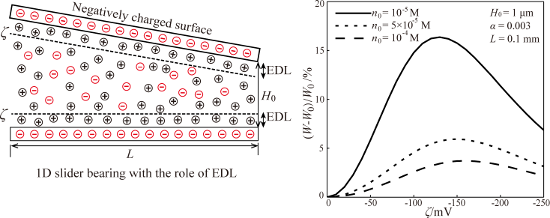
- and have the same zeta potential, ζ. The lubricant film thickness is much larger than the Debye length, thus, the two EDLs are non-overlapped. The no slip condition of the velocity is considered. The lubricant is an incompressible Newtonian fluid in the steady laminar state. Inertial force is


Liquid permeation and chemical stability of anodic alumina membranes
Beilstein J. Nanotechnol. 2017, 8, 561–570, doi:10.3762/bjnano.8.60
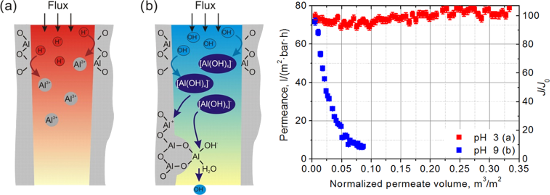
- carbon coating (Figure 8). A slight decrease of the ethanol permeance from 49.4 ± 2.1 to 41.9 ± 0.5 L/(m2·bar·h) was observed for the composite membrane. In comparison with earlier published studies [26][27], we have not observed any improvement of the membrane performance due to slip flow. This can


Studying friction while playing the violin: exploring the stick–slip phenomenon
Beilstein J. Nanotechnol. 2017, 8, 159–166, doi:10.3762/bjnano.8.16
- Santiago Casado Madrid Institute for Advanced Studies in Nanoscience (IMDEA Nanoscience), Faraday 9, Ciudad Universitaria de Cantoblanco, 28049 Madrid, Spain 10.3762/bjnano.8.16 Abstract Controlling the stick–slip friction phenomenon is of major importance for many familiar situations. This
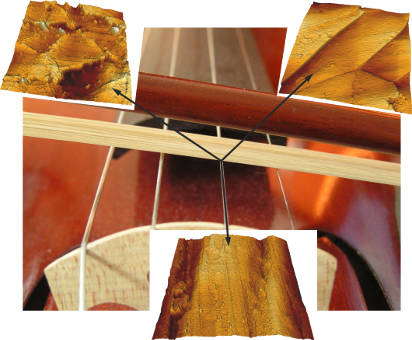
- the case of a musical bow-stringed instrument, stick–slip is controlled in order to provide well-tuned notes at different intensities. A trained ear is able to distinguish slight sound variations caused by small friction differences. Hence, a violin can be regarded as a perfect benchmark to explore
- the stick–slip effect at the mesoscale. Two violin bow hairs were studied, a natural horse tail used in a professional philharmonic orchestra, and a synthetic one used with a violin for beginners. Atomic force microscopy characterization revealed clear differences when comparing the surfaces of both


Structural and tribometric characterization of biomimetically inspired synthetic "insect adhesives"
Beilstein J. Nanotechnol. 2017, 8, 45–63, doi:10.3762/bjnano.8.6
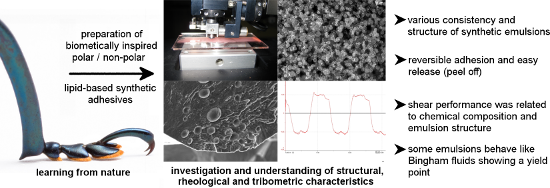
- (grease-like) consistency of the adhesive emulsion with increased viscosity, in accordance with the properties of a Bingham fluid. Such a property would consolidate several functional principles and properties that are essential for effective locomotion: (1) improving slip resistance, (2) facilitating
- speed in VG50, VP50 and WP20, the opposite was the case in WG20 (Figure 4a, Supporting Information File 1, Tables S2 and S11). In addition, the friction curves of emulsion VG50 showed a stick and slip pattern (not shown), especially at 50 µm s−1; this was caused by the short-term sticking of the
- property would consolidate several functions in the context of effective locomotion (and possibly technical applications) such as Bingham-like slip resistance, tarsal releasability, desiccation resistance, mechanical compliance and protection from abrasive damage. Tarsal releasability might be brought by


When the going gets rough – studying the effect of surface roughness on the adhesive abilities of tree frogs
Beilstein J. Nanotechnol. 2016, 7, 2116–2131, doi:10.3762/bjnano.7.201
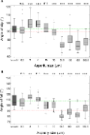
- = −5.7368, p < 0.0001). As the roughness of the surfaces increased, this resulted in a decrease in the angle of slip. Slipping occurred before vertical (mean of 89.4°) on the 30 µm surface, significantly lower than on the smooth surface (z = 3.6554, p < 0.0001). On the largest roughnesses, frogs performed
- and fell were recorded, which relate to their frictional and adhesive abilities, respectively. Results for this experiment are shown in Figure 7. The angles of slip and fall on the dry smooth surface (97.6 ± 6.2° for slip and 121.2 ± 6.1° for fall) were broadly similar to the results described
- previously (in the free climbing tree frog section). Likewise, the frogs also attached poorly to the dry rough surfaces (slip angle: 73.4 ± 4.98°, fall angle: 82.8 ± 3.7°). However, when water was introduced to the smooth surface, it caused a loss of friction in the frogs’ pads. This lead to the frogs




“Sticky invasion” – the physical properties of Plantago lanceolata L. seed mucilage
Beilstein J. Nanotechnol. 2016, 7, 1918–1927, doi:10.3762/bjnano.7.183
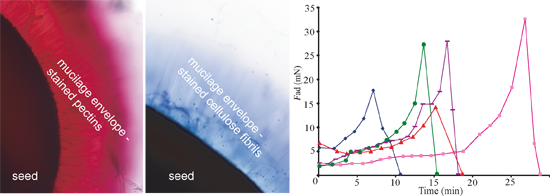
- the following equation: where the first sum minimizes the deviation of the estimated slip angle from the measured slip angle and the second sum is a regulatory term smoothing the curves of μ and Fad. D2 is an operator of the second derivative of time, λ is a regulatory parameter, c is a weighing


A new approach to grain boundary engineering for nanocrystalline materials
Beilstein J. Nanotechnol. 2016, 7, 1829–1849, doi:10.3762/bjnano.7.176
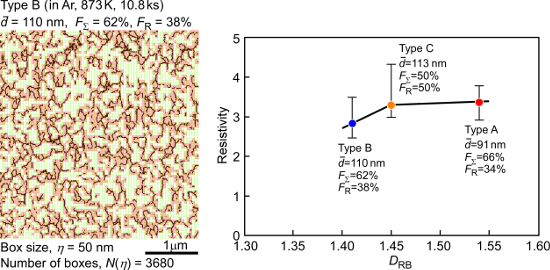
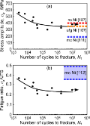
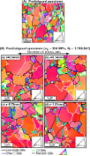
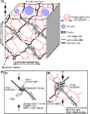
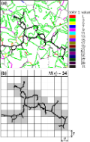
- probably deformed by shear stress as in the case of a single crystal, because the persistent slip bands (PSBs) can continuously transfer across the low-angle boundaries [97]. The fatigue cracks preferentially nucleated along random boundaries whose boundary plane may almost correspond to the direction of







Biomechanics of selected arborescent and shrubby monocotyledons
Beilstein J. Nanotechnol. 2016, 7, 1602–1619, doi:10.3762/bjnano.7.154
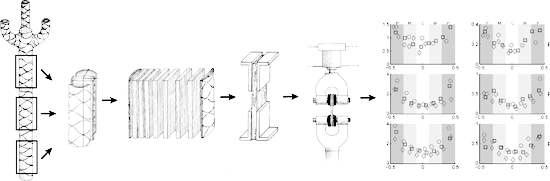
- clamping jaws was carefully adjusted to prevent radial crushing of the sample but at the same time to prevent any axial slip during testing. Details on the individual testing procedures per plant are provided in Supporting Information File 2. For the determination of the Young’s modulus (MoE) an ordinary



Deformation-driven catalysis of nanocrystallization in amorphous Al alloys
Beilstein J. Nanotechnol. 2016, 7, 1428–1433, doi:10.3762/bjnano.7.134
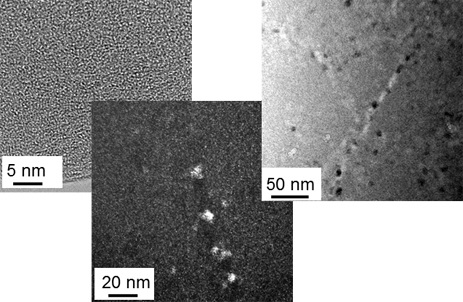
- spikes with shear band formation [43], but models were also developed that demonstrated stick–slip of shear bands and “cold” temperatures in the shear bands [44]. The findings on temperature behavior in shear bands of metallic glasses over the last years were summarized by Greer, Cheng, and Ma [45]. One


Reasons and remedies for the agglomeration of multilayered graphene and carbon nanotubes in polymers
Beilstein J. Nanotechnol. 2016, 7, 1174–1196, doi:10.3762/bjnano.7.109
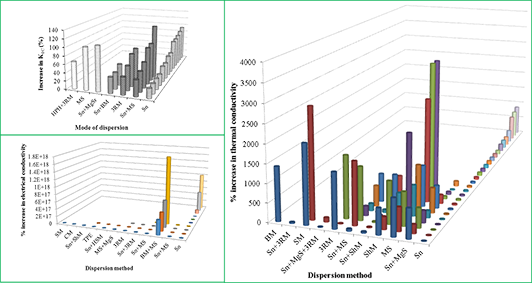


The hydraulic mechanism in the hind wing veins of Cybister japonicus Sharp (order: Coleoptera)
Beilstein J. Nanotechnol. 2016, 7, 904–913, doi:10.3762/bjnano.7.82
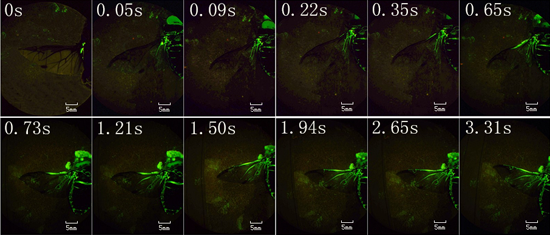
- shown in Figure 2. At 0.036 s, the opening of the elytra appears; at 0.054 s, the hind wings slip from the elytra that are gradually rotating and ascending to a certain height; at 0.651 s, the hind wings start flapping but are still folded; until 0.741 s, the elytra keep rotating outward and lifting



Characterization of spherical domains at the polystyrene thin film–water interface
Beilstein J. Nanotechnol. 2016, 7, 581–590, doi:10.3762/bjnano.7.51
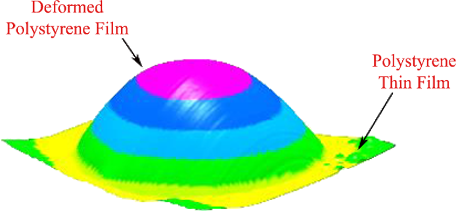
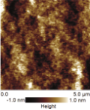
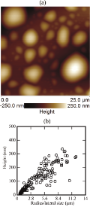
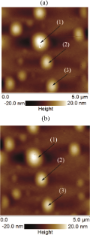
- example, to study boundary slip and micro-/nanobubble formation [15][16][17][18][19]. Nanobubbles are gaseous domains that may be found at a solid–liquid interface. Over the past few decades, dedicated research has been carried out on nanobubbles at the solid–liquid interface. AFM has been proven to be a




Nanoscale rippling on polymer surfaces induced by AFM manipulation
Beilstein J. Nanotechnol. 2015, 6, 2278–2289, doi:10.3762/bjnano.6.234
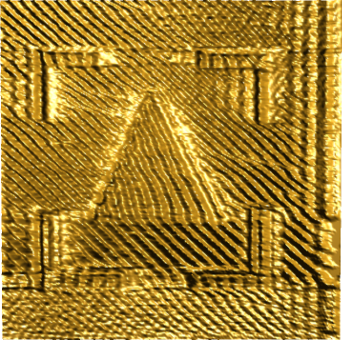
- of an AFM tip on polymer films are basically three: Schallamach waves [28], stick–slip behavior [52][53], and fracture-based descriptions [15][48]. On the macroscale, Schallamach waves are a reversible phenomenon that occurs at the surface of an elastomer when it slides past a stiff surface under
- contact area. Or, it is better to say that the possible formation of Schallamach waves within the contact area cannot be observed. Therefore the formation of nanoripples is a phenomenon that occurs at the front edge of the contact. In particular, it has been suggested to be due to a stick–slip motion of
- the tip during the stage movement. A hole forms where the tip resides and a mound forms in front of the tip hindering the sliding motion [20]. The tip can slip over when the cantilever exerts a lateral force larger than the tip–sample adhesive interaction. Then the tip forms a new pair of hole and




Electroviscous effect on fluid drag in a microchannel with large zeta potential
Beilstein J. Nanotechnol. 2015, 6, 2207–2216, doi:10.3762/bjnano.6.226
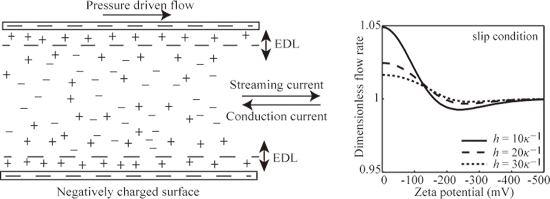
- . Nevertheless, the study on the combined effect of EDL with large zeta potential up to several hundred millivolts and surface charge depenedent-slip on the micro/nano flow is still needed. In this paper, the nonlinear Poisson–Boltzmann equation for electrical potential and ion distribution in non-overlapping
- EDL is first analytically solved. Then, the modified Navier–Stokes equation for the flow considering the effect of surface charge on the electrical conductivity of the electrolyte and slip length is analytically solved. This analysis is used to study the effect of non-overlapping EDL with large zeta
- potential on the pressure-driven flow in a microchannel with no-slip and charge-dependent slip conditions. The results show that the EDL leads to an increase in the fluid drag, but that slip can reduce the fluid drag. When the zeta potential is large enough, the electroviscous effect disappears for flow in


Tattoo ink nanoparticles in skin tissue and fibroblasts
Beilstein J. Nanotechnol. 2015, 6, 1183–1191, doi:10.3762/bjnano.6.120

- gently washed before mounting with a glass cover slip. Skin tissue collection for isolation and culture of dermal fibroblasts Normal human tissue (female, 35 years of age) was sourced from elective plastic surgery (facelift) and placed immediately in transport media. After arrival at the laboratory the


Automatic morphological characterization of nanobubbles with a novel image segmentation method and its application in the study of nanobubble coalescence
Beilstein J. Nanotechnol. 2015, 6, 952–963, doi:10.3762/bjnano.6.98
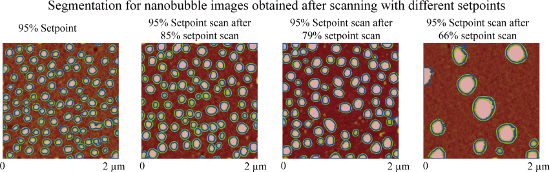
- -range attractive hydrophobic forces [19][20]. The coalescence of NBs on hydrophobic surfaces is believed to form a gas bridge and leads to long-range attractive forces [19][21]. They are also believed to be the reason for the breakdown of the no-slip boundary condition at the solid–liquid interface on


Stiffness of sphere–plate contacts at MHz frequencies: dependence on normal load, oscillation amplitude, and ambient medium
Beilstein J. Nanotechnol. 2015, 6, 845–856, doi:10.3762/bjnano.6.87
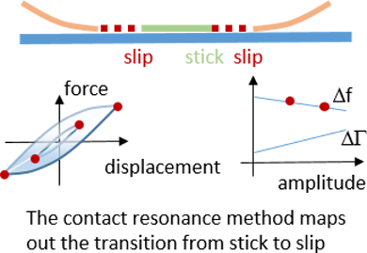
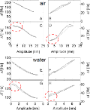
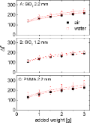
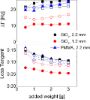
- tentatively explained by the rocking motion of the spheres, which couples to a squeeze flow of the water close to the contact. The loss tangent of the contact stiffness is on the order of 0.1, where the energy losses are associated with interfacial processes. At high amplitudes partial slip was found to occur
- can be explained by nanoroughness. In other words, contact splitting (i.e., a transport of shear stress across many small contacts, rather than a few large ones) can be exploited to reduce partial slip. Keywords: contact mechanics; contact splitting; contact stiffness; partial slip; quartz crystal
- microbalance; Introduction Partial slip is a widespread and multifacetted phenomenon. When a contact experiences partial slip, parts of a contact stick to each other under a tangential stress, while others slide. Partial slip is found in many tribological situations of practical relevance. This includes