


Search results
Search for "swelling" in Full Text gives 103 result(s) in Beilstein Journal of Nanotechnology.
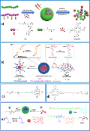
Rational design of block copolymer self-assemblies in photodynamic therapy
Beilstein J. Nanotechnol. 2020, 11, 180–212, doi:10.3762/bjnano.11.15
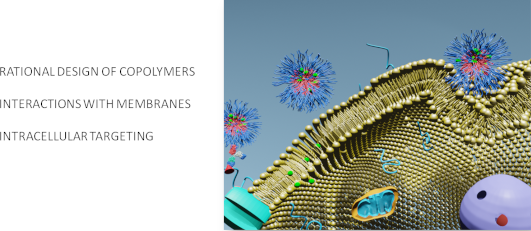




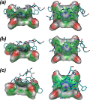


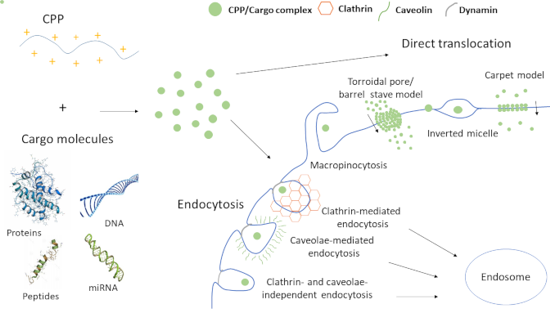
Internalization mechanisms of cell-penetrating peptides
Beilstein J. Nanotechnol. 2020, 11, 101–123, doi:10.3762/bjnano.11.10


Fully amino acid-based hydrogel as potential scaffold for cell culturing and drug delivery
Beilstein J. Nanotechnol. 2019, 10, 2579–2593, doi:10.3762/bjnano.10.249
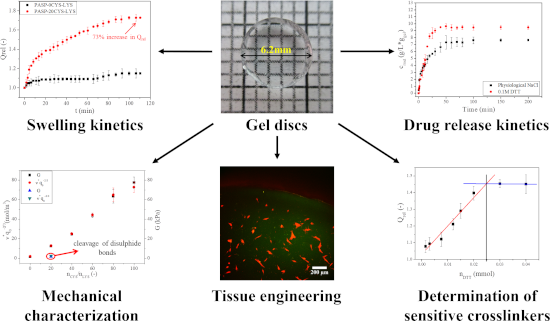
- and the biodegradability of the hydrogel. In this paper, PASP cross-linked with cystamine (CYS) and lysine-methylester (LYS) was introduced as fully amino acid-based polymer hydrogel. Gels were synthesized employing six different ratios of CYS and LYS. The pH dependent swelling degree and the
- concentration of the elastically active chain were determined. After reduction of the disulfide bonds of CYS, the presence of thiol side groups was also detected. To determine the concentration of the reactive cross-linkers in the hydrogels, a new method based on the examination of the swelling behavior was
- , but at the same time they are permeable for small molecules. One of the most beneficial properties of polymer hydrogels is that they are sensitive to alterations of the local environmental conditions, such as the pH value or temperature. Polymer hydrogels can change their swelling degree depending on


Microfluidics as tool to prepare size-tunable PLGA nanoparticles with high curcumin encapsulation for efficient mucus penetration
Beilstein J. Nanotechnol. 2019, 10, 2280–2293, doi:10.3762/bjnano.10.220
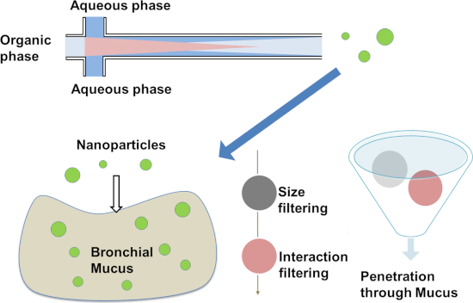
- Figure 2 [41]. For this reason, a longer time was required for the diffusive material to be mixed. Another scenario was proposed by Wang et al. [42], who suggested that the increase in NP size at higher FRR is related to the use of larger amounts of solvent causing swelling of the NPs. Afterwards, the


Porous silver-coated pNIPAM-co-AAc hydrogel nanocapsules
Beilstein J. Nanotechnol. 2019, 10, 1973–1982, doi:10.3762/bjnano.10.194
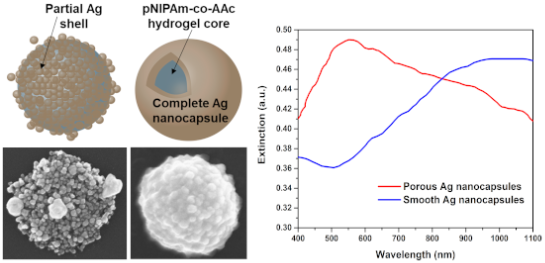
- ), allowing for reversible contraction and swelling of the hydrogel via photothermal heating of the surrounding silver shell. Given that NIR light can pass through tissue, and the silver shell is porous, this system can serve as a platform for the smart delivery of payloads stored within the hydrogel core
- LCST of the hydrogel copolymers can be tuned from ≈30–60 °C [60][61]. As such, hydrogel copolymers are capable of undergoing completely reversible swelling–collapsing volume transitions in response to changes in temperature [62][63][64]. Appropriate chemical modifications to the thermo-responsive
- nanoparticle distribution, we can conclude that there is a soft hydrogel polymer core onto which the gold seeds are attached. Furthermore, these results are consistent with SEM measurements. Thermo-responsive behavior of the pNIPAM-co-AAc hydrogel cores. The swelling and collapsing behavior of hydrogels is


Materials nanoarchitectonics at two-dimensional liquid interfaces
Beilstein J. Nanotechnol. 2019, 10, 1559–1587, doi:10.3762/bjnano.10.153
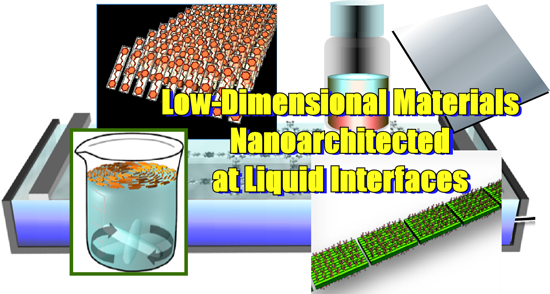
- vapour annealing [201]. Complicated morphology shifts such as swelling, coalescing of aggregates, bicontinuous pattern formation, one-dimensional droplet formation, and the periodic evolution of the droplets were observed. Mori et al. reported the formation of two-dimensional arrays of disk-shaped nano













Photoactive nanoarchitectures based on clays incorporating TiO2 and ZnO nanoparticles
Beilstein J. Nanotechnol. 2019, 10, 1140–1156, doi:10.3762/bjnano.10.114
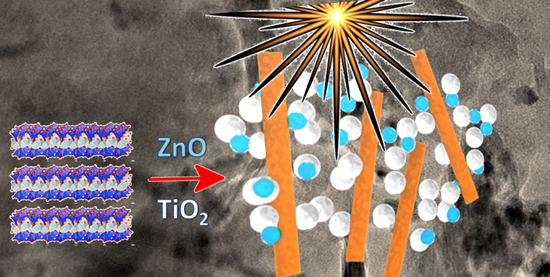
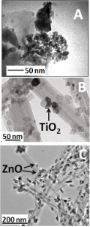
- irradiation (Table 1). Among the 2D clay-based solids (layered silicates), montmorillonite and other smectites used for assembly with diverse NPs exhibit excellent adsorption, rheological, ion-exchange, and swelling properties as well as a large relative surface area for incorporating the NPs. Kaolinite clay



On the transformation of “zincone”-like into porous ZnO thin films from sub-saturated plasma enhanced atomic layer deposition
Beilstein J. Nanotechnol. 2019, 10, 746–759, doi:10.3762/bjnano.10.74
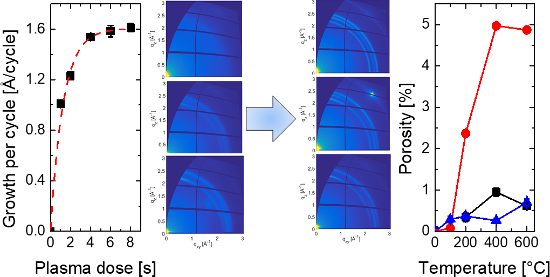
- the thickness of the layer and the adsorbate multilayer, respectively, Vmol is the molecular volume of the adsorptive, and αads is the polarizability of the adsorptive molecule. If swelling occurs, dt is ignored in the equation and only the layer thickness is taken into account, as reported in [49
- ]. Therefore, the adsorptive volume contains both information about pore filling and the formation of multilayers or swelling. The porosity (P) in the layers is calculated from the isotherm when all the pores accessible to the probe molecules have been filled. Using the Lorentz–Lorenz equation, P can be
- micropores and mesopores, respectively [49][50]. At 90% relative humidity a rapid increase of the water uptake was witnessed. This was attributed to swelling of the layers, accounting for the desorption branch crossing the adsorption branch while decreasing the relative humidity. When water leaves the


Block copolymers for designing nanostructured porous coatings
Beilstein J. Nanotechnol. 2018, 9, 2332–2344, doi:10.3762/bjnano.9.218
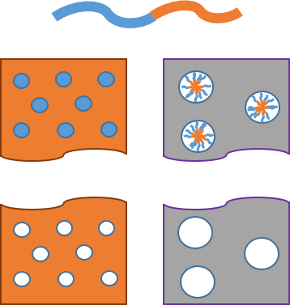
- by further functionalization of the hydroxy functionality, thus making PS-b-PEO membranes attractive for several applications. Other methods require the introduction of swelling agents (i.e., agents for increasing the microdomain dimensions) [92] as well as additives able to affect the microdomain


Fabrication of photothermally active poly(vinyl alcohol) films with gold nanostars for antibacterial applications
Beilstein J. Nanotechnol. 2018, 9, 2040–2048, doi:10.3762/bjnano.9.193
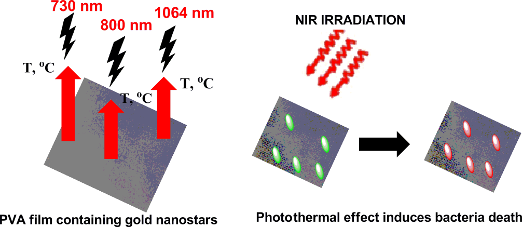
- are known to be sensitive to water [20][27]. In order to test the potential application of the fabricated films in biological environments, a crucial prerequisite is the study of the swelling behavior and the water uptake capability [11]. With this aim, the fabricated films were immersed for 24 h in
- water at room temperature. At this time point, the water content of swollen films was 93 ± 0.6% with a corresponding degree of swelling of 13.3 ± 0.8%.The corresponding parameters for the PVA film without GNSs were 92.6 ± 0.6% and 13.1 ± 0.8%, respectively. This negligible difference can be explained by
- the observed spots correspond to the same aggregation number, unless these are single nanoparticles. Swelling behavior As described previously [20], in order to estimate the swelling degree of the films, three specimens of each film (2 × 2 cm) weighed before (W0) were separately soaked in 7 mL of


Biomimetic and biodegradable cellulose acetate scaffolds loaded with dexamethasone for bone implants
Beilstein J. Nanotechnol. 2018, 9, 1986–1994, doi:10.3762/bjnano.9.189
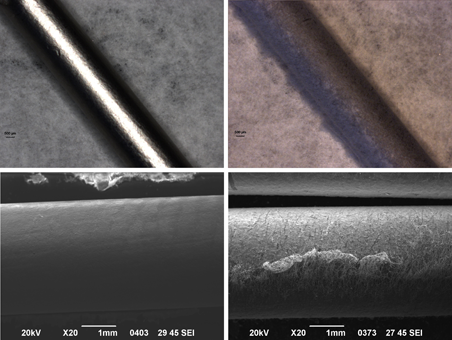
- degradation of CA fibers were studied via SEM after 1, 30 and 150 days (Figure 3). 20 fibers were randomly selected from the images at the highest magnification (3000×) and their diameter was determined by using the ImageJ software. A swelling of fibers was observed after day 30, as confirmed by the increase
- presented in Figure 6. In addition, 20 fibers were randomly selected from the images at the highest magnification (3000×) and their diameter was determined by using the ImageJ software. Again, from day 1 to day 30 the average fiber diameter increased due to fiber swelling, from 1756 to 4078 nm. After 150


Preparation of micro/nanopatterned gelatins crosslinked with genipin for biocompatible dental implants
Beilstein J. Nanotechnol. 2018, 9, 1735–1754, doi:10.3762/bjnano.9.165
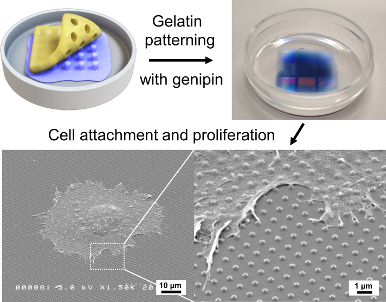
- ]. Although the collagen/gelatin surface patterns that can be formed are in the micro- to nanoscale range, it is more difficult to fabricate surface patterns with smaller elements because of the solubility, swelling properties, and weakness of collagen/gelatin compared to engineered polymers. The type of
- , 333 to 650 nm wide, have been successfully fabricated using crosslinking with carbodiimide [46]. Gelatin pillars with a diameter of 250 nm to 1 µm have also been patterned using polymerization with GelMA. The swelling ratio of these pillars could be successfully controlled by changing the GelMA
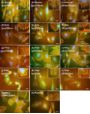
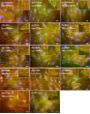
- estimate bone-related functions of osteoblasts in the future. Swelling and degradation of the different gelatin patterns examined here in the presence of cell culture medium were largely influenced by the concentration of genipin. In general, gelatin patterns with a lower degree of crosslinking had a






Bioinspired self-healing materials: lessons from nature
Beilstein J. Nanotechnol. 2018, 9, 907–935, doi:10.3762/bjnano.9.85
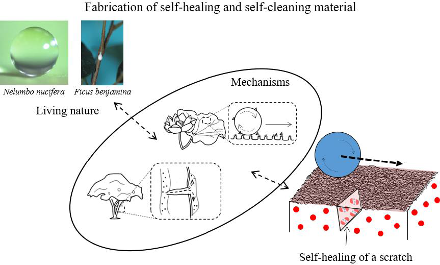
- the body. Inflammation initiates the innate immune response, often seen as a swelling redness as an increase in cells occurs at the site of the wound. In proliferation, fibroblasts (counterparts to the osteoblasts in hard tissue) secrete extracellular matrix, fibrinogen, and collagen to remodel tissue







Liquid-crystalline nanoarchitectures for tissue engineering
Beilstein J. Nanotechnol. 2018, 9, 205–215, doi:10.3762/bjnano.9.22
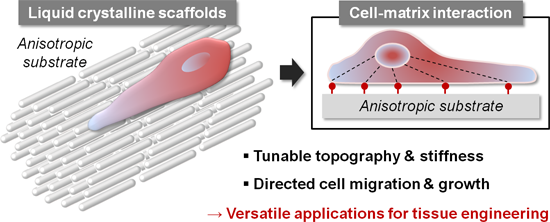
- been reported [106]. Lamellar phase PLA-b-PEG-b-PLA hydrogels can be made to exhibit better biodegradability and higher swelling behavior than isotropic gels for medical purposes [107]. Thermotropic copolyester materials in nematic order can be also synthesized to be used as a bioresorbable and tissue


Humidity-dependent wound sealing in succulent leaves of Delosperma cooperi – An adaptation to seasonal drought stress
Beilstein J. Nanotechnol. 2018, 9, 175–186, doi:10.3762/bjnano.9.20
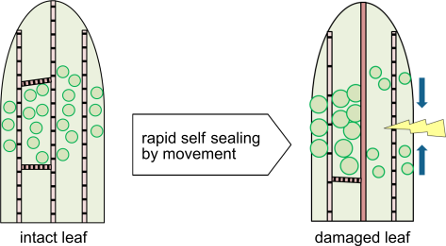
- cooperi. After a transversal incision, the entire leaf bends until the wound is closed. Our results indicate that the underlying sealing principle is a combination of hydraulic shrinking and swelling as the main driving forces and growth-induced mechanical pre-stresses in the tissues. Hydraulic effects
- circumferential direction. This advanced model exclusively takes into account mechanically driven movements and ignores swelling and shrinking effects due to internal water displacement or dehydration [7]. In order to obtain a more detailed and more comprehensive understanding of the underlying functional


Interface conditions of roughness-induced superoleophilic and superoleophobic surfaces immersed in hexadecane and ethylene glycol
Beilstein J. Nanotechnol. 2017, 8, 2504–2514, doi:10.3762/bjnano.8.250
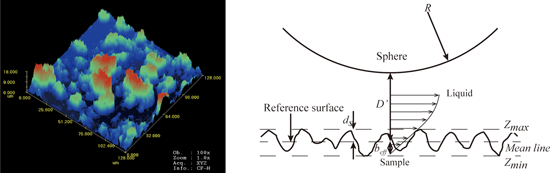
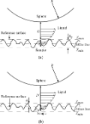
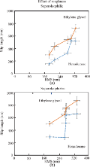
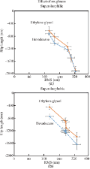
- goniometer collects six values for each droplet, from which the average CA is obtained. For CAH measurements, a droplet of 5 μL of each liquid was deposited on the sample and was captured by the goniometer. Then, by using a syringe a volume of 1 μL was added until swelling deformation. The swelling droplet





Preparation and characterization of polycarbonate/multiwalled carbon nanotube nanocomposites
Beilstein J. Nanotechnol. 2017, 8, 2026–2031, doi:10.3762/bjnano.8.203
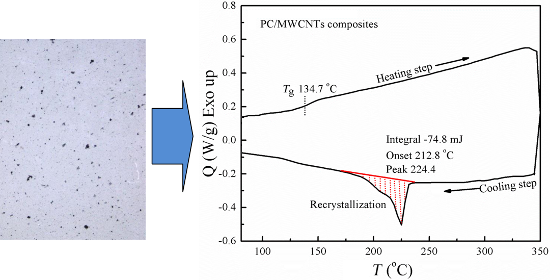
- of 30 min with on/off cycles (4 s and 2 s, respectively) in order to prevent heating which could occur during acoustic cavitation. The initial swelling of MWCNT agglomerates by solvent infiltration and interaction was considered as a crucial precondition to obtain a good dispersion of MWCNTs inside


BTEX detection with composites of ethylenevinyl acetate and nanostructured carbon
Beilstein J. Nanotechnol. 2017, 8, 982–988, doi:10.3762/bjnano.8.100
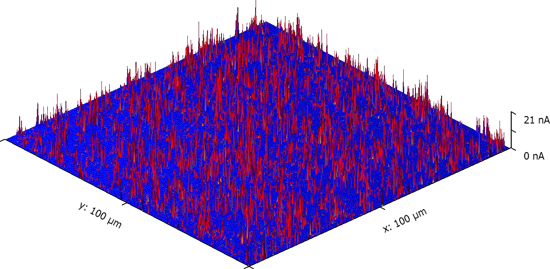
- enough to diffuse into the polymer matrix inducing a swelling of the composite and an increase of the distance between CB nanoparticle aggregates. In case of benzene more molecules diffuse into the polymer matrix, but they increase the distance between the CB nanoparticles aggregates to a lower degree
- than toluene and as mentioned previously ethylbenzene molecules induce a swelling of the polymer matrix more effectively than VOCs with smaller molecule size such as toluene. Ethylbenzene and toluene are pure compounds, but the contents of gasoline may vary based on its production including many highly


Synthesis of coaxial nanotubes of polyaniline and poly(hydroxyethyl methacrylate) by oxidative/initiated chemical vapor deposition
Beilstein J. Nanotechnol. 2017, 8, 872–882, doi:10.3762/bjnano.8.89
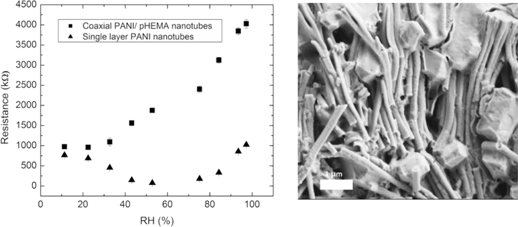
- PANI nanotubes, the resistance changed parabolically with relative humidity because of competing effects of doping and swelling of the PANI polymer under humid conditions. Introducing a hydrogel inner layer increased the overall resistance, and enhanced swelling, which caused the resistance to
- protons and negative hydroxyl ions upon entering the polymer chain. The protons dope the polymer further until the undoped parts of the emeraldine salt is mostly doped with the H+ ions, after which swelling starts dominating. Swelling of the polymer due to excess water in the ambient results in higher
- resistance on the humidity as observed in the thin films was also observed in the nanotube samples (Figure 9). This type of parabolic dependence of resistance on the humidity was previously reported for PANI nanotubes [53]. The competition between the doping and swelling effects determines at which RH% value


Colorimetric gas detection by the varying thickness of a thin film of ultrasmall PTSA-coated TiO2 nanoparticles on a Si substrate
Beilstein J. Nanotechnol. 2017, 8, 229–236, doi:10.3762/bjnano.8.25
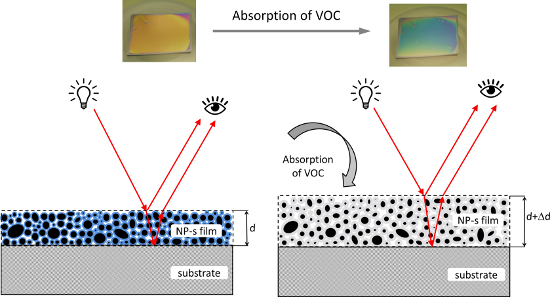
- thickness of the NP-based film. Indeed, VOC absorption causes significant swelling of the film. Thus, the optical path length is increased, interference wavelengths are shifted and the refractive index of the film is decreased. This causes a change of color of the sensor element visible by the naked eye
- compounds (VOCs) into the PTSA binding agent between the NPs and the subsequent swelling of the film. Thus, the film thickness and the optical path length of the light in the film are changed. This varies the interference wavelengths of light reflected by the substrate and the thin film. The change of
- refractive index of the individual layers [1][17][18]. Our objective was to demonstrate a simpler and more cost-effective system utilizing the gas absorption in films and the subsequent swelling of the films, which changes the interference maxima and minima of light reflected from the surface of the film and


The cleaner, the greener? Product sustainability assessment of the biomimetic façade paint Lotusan® in comparison to the conventional façade paint Jumbosil®
Beilstein J. Nanotechnol. 2016, 7, 2100–2115, doi:10.3762/bjnano.7.200
- . Furthermore, it also provides a high degree of natural protection against algae and fungal attack. Lotusan® is extremely hydrophobic and shows no swelling. Contaminations like airborne dirt particles are washed away with the next rainfall. Jumbosil® (option 2): Jumbosil® is a filled, silicone-annealed


Polystyrene-block-poly(ethylene oxide) copolymers as templates for stacked, spherical large-mesopore silica coatings: dependence of silica pore size on the PS/PEO ratio
Beilstein J. Nanotechnol. 2016, 7, 1454–1460, doi:10.3762/bjnano.7.137
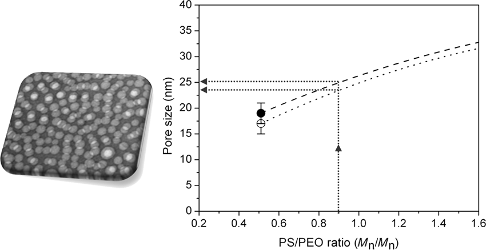
- different swelling effect of the PS core that depends on the micelle morphology. In the investigated formulations, PS blocks form the internal core of the templating micelles and PEO blocks form the external corona. For low PS/PEO ratios, the PS-made micellar core occupies a smaller volume and is surrounded
- core, thus reducing the swelling and size of the micelle core. Vice versa, if the PEO block is shorter than the PS one, by increasing the PS/PEO ratio, the PEO corona becomes less dense, facilitating the diffusion of benzene through it. As a consequence, the PS-made micellar core increases up to a
- constant value. This happens when a swelling equilibrium with the apolar solvent inside/outside the templating micelles is achieved. Even though further studies are necessary to better clarify this point, the interesting trends reported here confirm the importance of the template choice in order to obtain


On the pathway of cellular uptake: new insight into the interaction between the cell membrane and very small nanoparticles
Beilstein J. Nanotechnol. 2016, 7, 1296–1311, doi:10.3762/bjnano.7.121
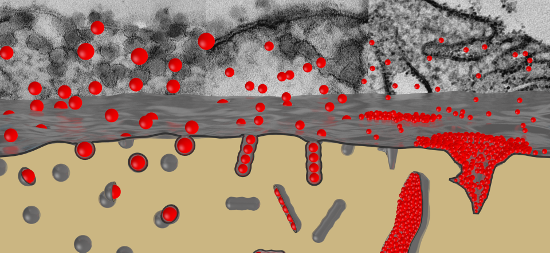
- hints at necrotic cell death involving membrane disintegration, cell swelling (and even bursting, Supporting Information File 1, Figure S12), vacuolisation and Ca2+-containing agglomerates inside mitochondria. In EM and cLSM experiments we could not observe any apoptotic bodies. After longer incubation
- active, protein dependent endocytic pathway necessary. This assumption is further corroborated by the observation, that this process still works when all energy-dependent endocytosis mechanisms were switched off by means of cooling (Figure 11A and B). Toxicity Features like cell swelling, blebbing and




Functional diversity of resilin in Arthropoda
Beilstein J. Nanotechnol. 2016, 7, 1241–1259, doi:10.3762/bjnano.7.115
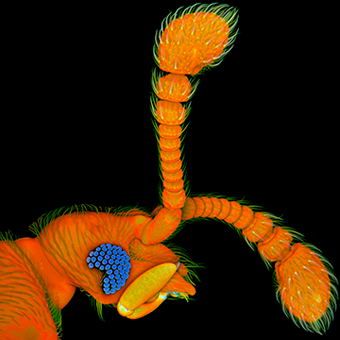
- transparent or sometimes, when the sclerotisation is very pronounced, not transparent at all. When immersed in aqueous media and in many anhydrous hydrophilic liquids, resilin exhibits an isotropic swelling, which is reversible and depends on the pH. (It is least pronounced at pH values of about 4.) In its


Experimental and simulation-based investigation of He, Ne and Ar irradiation of polymers for ion microscopy
Beilstein J. Nanotechnol. 2016, 7, 1113–1128, doi:10.3762/bjnano.7.104
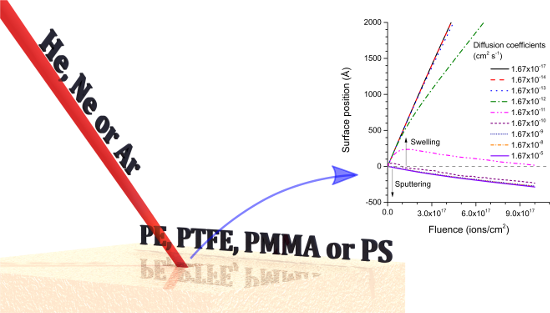
- , Ne and Ar in polymers are sufficiently high to prevent any accumulation of rare gas atoms in the polymers which could lead to some swelling and bubble formation. Roughness formation was also not observed. Preferential sputtering is more of a problem, with enrichment of carbon up to surface
- allows molecular fragments to desorb. The degradation of organic molecules and their fragmentation are not the only important parameters for imaging in SIMS using light primary ions. For inorganic matter, the swelling of samples under ion bombardment has been observed for He+ and Ne+ bombardment of Si
- shows that roughness formation does not seem to be a major issue for polymers under rare gas irradiation, opposite to what is observed for inorganic materials where the implantation of the rare gas species leads to irradiation-induced roughness formation, swelling and bubble formation. To understand how





