


Search results
Search for "tension" in Full Text gives 205 result(s) in Beilstein Journal of Nanotechnology. Showing first 200.
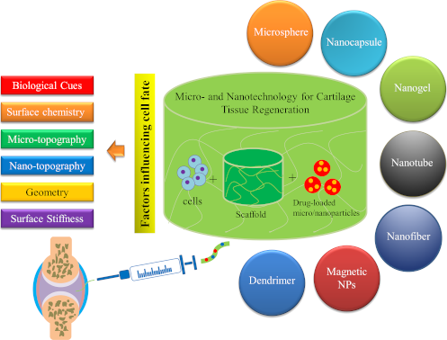
Micro- and nanotechnology in biomedical engineering for cartilage tissue regeneration in osteoarthritis
Beilstein J. Nanotechnol. 2022, 13, 363–389, doi:10.3762/bjnano.13.31


Systematic studies into uniform synthetic protein nanoparticles
Beilstein J. Nanotechnol. 2022, 13, 274–283, doi:10.3762/bjnano.13.22
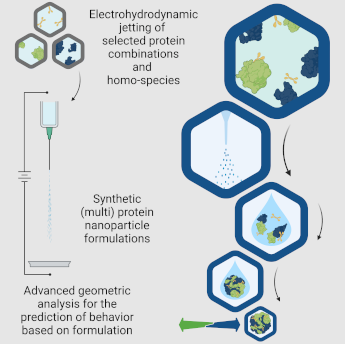
- used for all jetting experiments. This inclusion of ethanol decreased the dielectric constant and surface tension of the solution. The exception was insulin- and mucin-based SPNPs, which were manufactured as described in the Materials section. Furthermore, a homobifunctional amine-reactive macromer


Effects of drug concentration and PLGA addition on the properties of electrospun ampicillin trihydrate-loaded PLA nanofibers
Beilstein J. Nanotechnol. 2022, 13, 245–254, doi:10.3762/bjnano.13.19
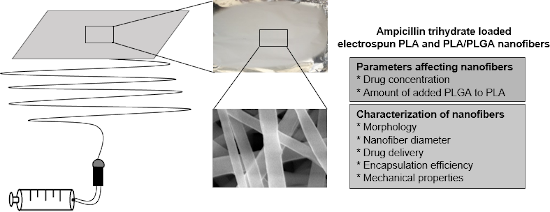
- critical component of the bacterial cell walls [9]. 1,1,1,3,3,3-Hexafluoro-2-propanol (HFIP) was used as solvent in the study. It is preferred due to its sufficiently low surface tension, sufficiently high dielectric constant, and volatility [10]. The aim of this study was to produce and characterize


A comprehensive review on electrospun nanohybrid membranes for wastewater treatment
Beilstein J. Nanotechnol. 2022, 13, 137–159, doi:10.3762/bjnano.13.10
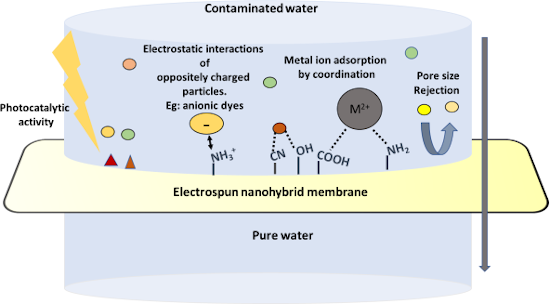
- through this high voltage. Hence, a potential gradient is built up between the polymer droplet at the tip of the spinneret and the ground collector. When the voltage is gradually increased, the hemispherical droplet will transform into a cone, the so-called “Taylor cone”, in which surface tension is
- dominant. When the voltage is high enough for the electrostatic forces of the Taylor cone to overcome the surface tension and viscous force, jet initiation happens, and a polymer jet will reach the ground collector completing the circuit. Polymers with high molecular weight will form ultrafine fibers due
- results are obtained after changes of parameters. 3.1 Process parameters 3.1.1 Applied voltage. The applied voltage is one of the most critical parameters that affect fiber morphology. The applied voltage aids the polymer to overcome its surface tension and form the polymer jet. After forming the Taylor




Tin dioxide nanomaterial-based photocatalysts for nitrogen oxide oxidation: a review
Beilstein J. Nanotechnol. 2022, 13, 96–113, doi:10.3762/bjnano.13.7
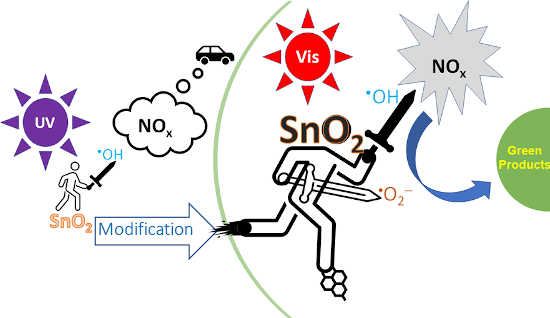
- SnO2, TiO2, and CuInS2 using an automated spray pyrolysis method, which is particularly beneficial for air cleaning applications. This work showed that the surface tension of the material surface directly impacts the photocatalytic activity under humid conditions. Furthermore, introducing CuInS2


Sputtering onto liquids: a critical review
Beilstein J. Nanotechnol. 2022, 13, 10–53, doi:10.3762/bjnano.13.2
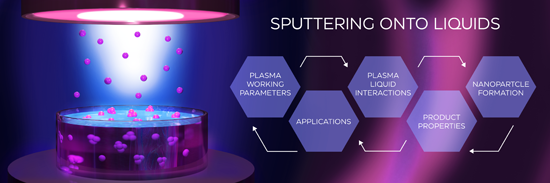
- reported data; we will address the influence of the sputtering parameters (sputter power, current, voltage, sputter time, working gas pressure, and the type of sputtering plasma) and host liquid properties (composition, temperature, viscosity, and surface tension) on the NP formation as well as a detailed






Morphology-driven gas sensing by fabricated fractals: A review
Beilstein J. Nanotechnol. 2021, 12, 1187–1208, doi:10.3762/bjnano.12.88
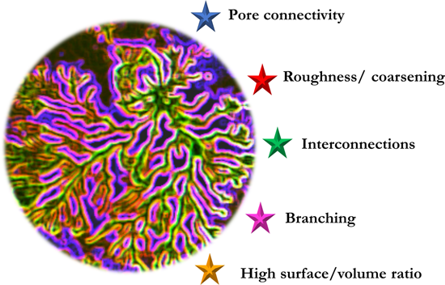
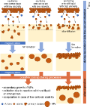
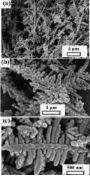
- starts drying, evaporation of the solvent causes voids and helps in generating clusters of the solute on the substrate. For smaller pockets of the fluid, which can be regarded as droplets, variation in surface tension or temperature at different interfaces predominantly causes either a surface tension
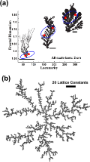
- , respectively, termed as Gibbs–Marangoni concerning surface tension gradients and Bénard–Marangoni concerning thermal gradients [58][59][60][61][62]. The pattern and shape of the fractals depend on flux, thermal energy, surface energy, and diffusion coefficient of the clusters. The schematic shown in Figure 4










An overview of microneedle applications, materials, and fabrication methods
Beilstein J. Nanotechnol. 2021, 12, 1034–1046, doi:10.3762/bjnano.12.77
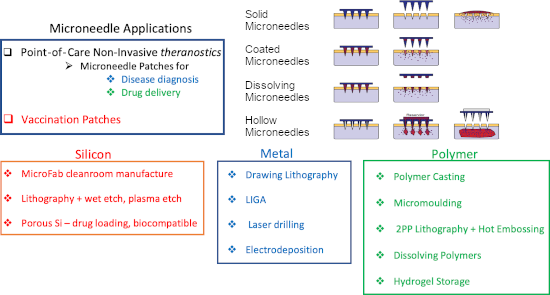
- parameters determining flow in a microchannel include blood viscosity, contact angle, hydrodynamic diameter, and driving forces such as surface tension. In addition, due to the elastic nature of the skin and its irregular surface, varying from person to person, and with age and position on the body, the


Progress and innovation of nanostructured sulfur cathodes and metal-free anodes for room-temperature Na–S batteries
Beilstein J. Nanotechnol. 2021, 12, 995–1020, doi:10.3762/bjnano.12.75
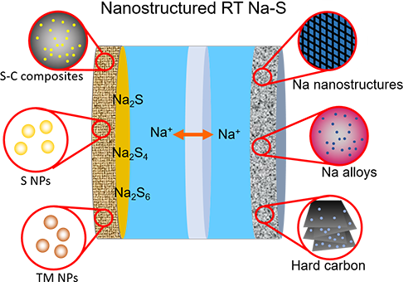
- rather large (up to 170%) and may damage the cathode and lead to capacity loss [4]. Nanoscaling the cathode compounds and the concomitant introduction of porosity is a widely investigated strategy to mitigate the emerging mechanical tension and to prevent electrode failure [18][24]. Unlike sodium-ion




The role of deep eutectic solvents and carrageenan in synthesizing biocompatible anisotropic metal nanoparticles
Beilstein J. Nanotechnol. 2021, 12, 924–938, doi:10.3762/bjnano.12.69
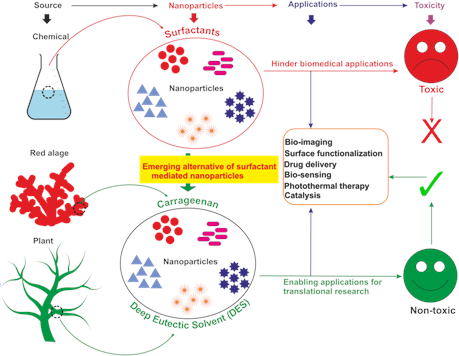
- oxide nanoparticles [28]. Numerous indispensable parameters including surface tension, polarity, viscosity, and hydrogen bonding have an important influence on the reactivity of species. Also, the formation of nanostructures is governed by the mass transport properties of the DES components. It is also
- ]. The difference between the electrochemical double layers and a differential activity of chloride ions (i.e., preferential facet binding during crystal growth restricting the lattice growth in a particular direction) were responsible for the observed morphological difference. The lower surface tension


Comprehensive review on ultrasound-responsive theranostic nanomaterials: mechanisms, structures and medical applications
Beilstein J. Nanotechnol. 2021, 12, 808–862, doi:10.3762/bjnano.12.64


Physical constraints lead to parallel evolution of micro- and nanostructures of animal adhesive pads: a review
Beilstein J. Nanotechnol. 2021, 12, 725–743, doi:10.3762/bjnano.12.57
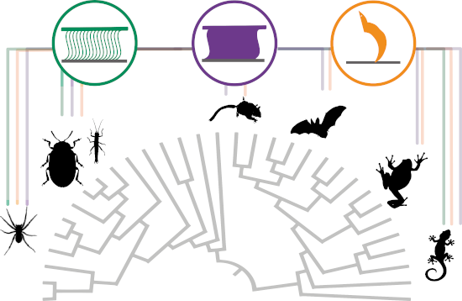
- under compression but strong under tension, (4) anisotropy in fibre orientation, and (5) presence of fluid in the contact area. Adaptation to fractal substrate surfaces due to hierarchical organization Hairs with high aspect ratios in the hairy systems and internal fibres/filaments of smooth systems
- rough surfaces [158][162]. Pad material (structure) that is soft under compression but strong under tension It is well known that an array of thin fibres is soft under compression, but exceptionally strong under tension [253]. This is the key principle of both pad architectures: hairy and smooth (Figure
- 7). The specific external (hairs/setae) or internal (fibres/foam) structures of the attachment pads are not only responsible for their softness under compression, but also for their stiffness under tension. The specific arrangement of thin hairs or fibres in the direction of tensile forces, acting


High-yield synthesis of silver nanowires for transparent conducting PET films
Beilstein J. Nanotechnol. 2021, 12, 624–632, doi:10.3762/bjnano.12.51
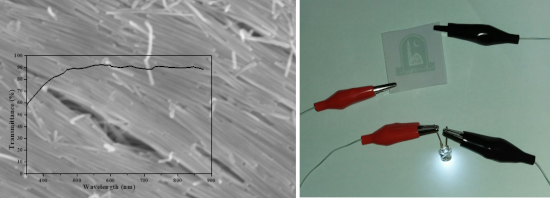
- alignment and density of AgNWs can be easily adjusted by increasing the number of times of water washing. Water, with a very high surface tension of 72.75 × 10⁻³ N·m−1 at 20 °C, tends to bundle the hydrophilic AgNWs together [55]. The literature has shown the fabrication of conducting PET films using


Colloidal particle aggregation: mechanism of assembly studied via constructal theory modeling
Beilstein J. Nanotechnol. 2021, 12, 413–423, doi:10.3762/bjnano.12.33
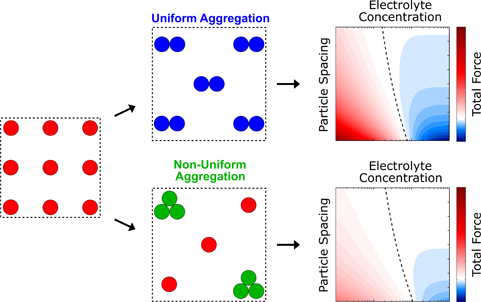
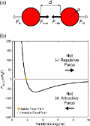
- that final equilibrium state. In concurrence with such constructal analyses, Bejan and Wagstaff showed that the natural coalescence of masses in space, with respect to attractive gravitational forces, will lead to a hierarchical distribution [11]. The internal tension of the system, which drives this


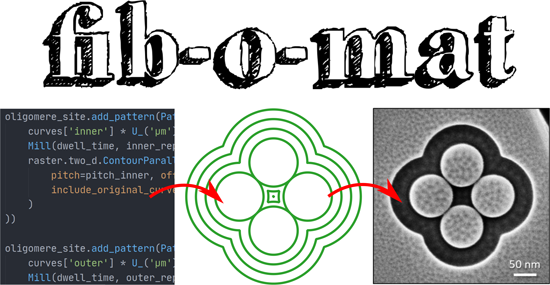
The patterning toolbox FIB-o-mat: Exploiting the full potential of focused helium ions for nanofabrication
Beilstein J. Nanotechnol. 2021, 12, 304–318, doi:10.3762/bjnano.12.25
- tension in the device is reduced because graphene has a negative thermal expansion coefficient [53], and a down-shift in resonance frequency is observed. The mode frequency can be shifted up by 100 percent through increasing the laser power from 15 to 150 μW. The large bandwidth in combination with the


Fusion of purple membranes triggered by immobilization on carbon nanomembranes
Beilstein J. Nanotechnol. 2021, 12, 93–101, doi:10.3762/bjnano.12.8
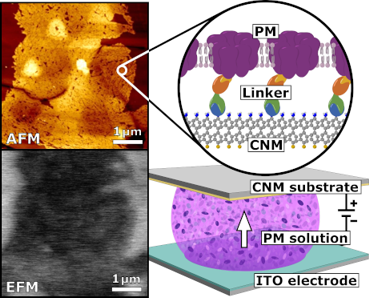
- between the capacitor plates using a syringe. For an incubation time of 5 min, a voltage of 5 V was applied, and then the drop was removed. Since the substrate was not completely dry after removal of the solvent, it was found that the surface tension pulls the deposited patches apart forming quasi


Bio-imaging with the helium-ion microscope: A review
Beilstein J. Nanotechnol. 2021, 12, 1–23, doi:10.3762/bjnano.12.1
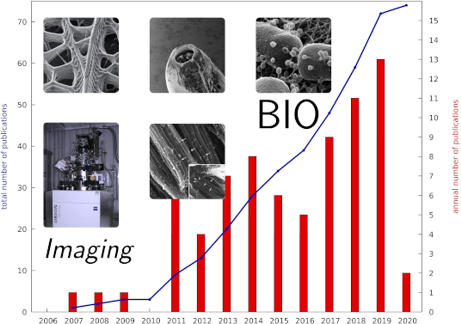
- sample is subject to surface tension, which can lead to damage of the specimen during imaging. To overcome this issue, researchers typically focus on removing any liquid water from a sample whilst, at the same time, maintaining the cellular integrity. This is usually achieved by chemical fixation
- gaseous state. Through this process the sample is dried without ever crossing the liquid–gaseous boundary and, thus, avoiding surface tension, which is so damaging to the sample. The operating procedures for CPD vary depending on the sample or instrument, with some being automated and others manually
- ) Hexamethyldisilazane (HMDS): Low-tension media, such as HMDS, can be added after the final stage of ethanol dehydration. This method is most often used as an alternative to CPD due to the ease and rapidity of application. However, its carcinogenic properties mean that careful handling is necessary. Several studies


Wafer-level integration of self-aligned high aspect ratio silicon 3D structures using the MACE method with Au, Pd, Pt, Cu, and Ir
Beilstein J. Nanotechnol. 2020, 11, 1439–1449, doi:10.3762/bjnano.11.128
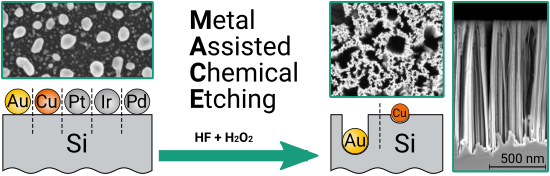
- bundle is larger than the elastic force [26]. This bundling effect is the main limiting factor of this integration scheme. To overcome this issue, one can use liquids with low surface tension or supercritical CO2 [27]. However, this would increase complexity and cost of the process significantly


Structure and electrochemical performance of electrospun-ordered porous carbon/graphene composite nanofibers
Beilstein J. Nanotechnol. 2020, 11, 1280–1290, doi:10.3762/bjnano.11.112
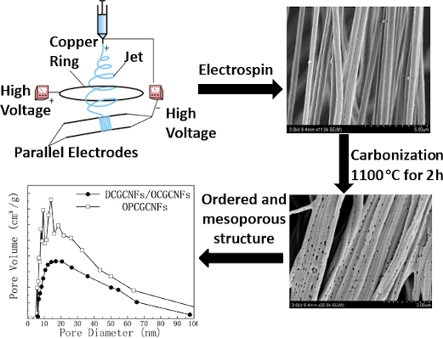
- temperature rises during the carbonization process, differences in the radial chemical structure of the CNF gradually increase, resulting in an increase of the internal tension. The tension regulates the shape and structural reorganization of the crystallites in the CNF, leading to a smaller CNF diameter. The


Role of redox-active axial ligands of metal porphyrins adsorbed at solid–liquid interfaces in a liquid-STM setup
Beilstein J. Nanotechnol. 2020, 11, 1264–1271, doi:10.3762/bjnano.11.110
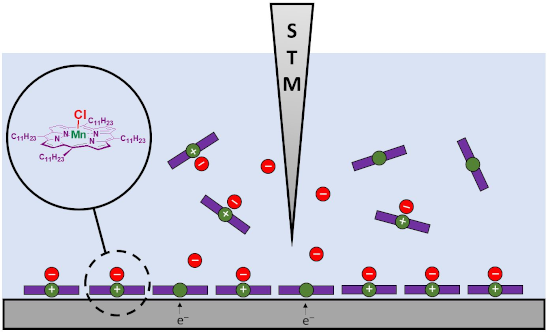
- tension of the droplet. In our modified setup, we used a liquid cell to contain a larger and well-defined volume of solution at the sample surface, ensuring that the concentration of the solutes remains stable during the sometimes prolonged measurements. During the experiments the voltage difference


Proximity effect in [Nb(1.5 nm)/Fe(x)]10/Nb(50 nm) superconductor/ferromagnet heterostructures
Beilstein J. Nanotechnol. 2020, 11, 1254–1263, doi:10.3762/bjnano.11.109
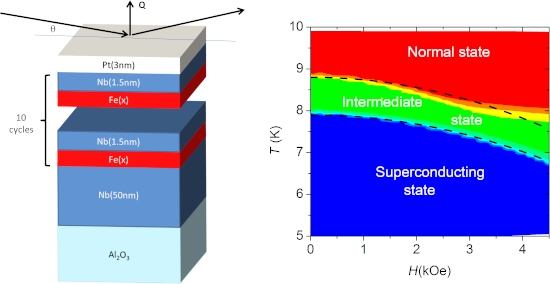
- metallic springs touching the surface of the sample. The tension of the springs is sufficiently high to ensure good contact with the sample surface and to measure the resistivity using a standard four-point contact method. The setup is designed to enable simultaneous PNR and transport experiments, though


![[Graphic 13]](/bjnano/content/inline/2190-4286-11-109-i17.svg?max-width=637&scale=1.18182) ) substrate, (b) the Pt cap layer, and the Nb buffer layer grown at...
) substrate, (b) the Pt cap layer, and the Nb buffer layer grown at...


![[Graphic 16]](/bjnano/content/inline/2190-4286-11-109-i20.svg?max-width=637&scale=1.18182) (T) for the samples s4 (black) and s3 (red) in the vicinity of the superconducting transition m...
(T) for the samples s4 (black) and s3 (red) in the vicinity of the superconducting transition m...
Magnetic-field-assisted synthesis of anisotropic iron oxide particles: Effect of pH
Beilstein J. Nanotechnol. 2020, 11, 1230–1241, doi:10.3762/bjnano.11.107
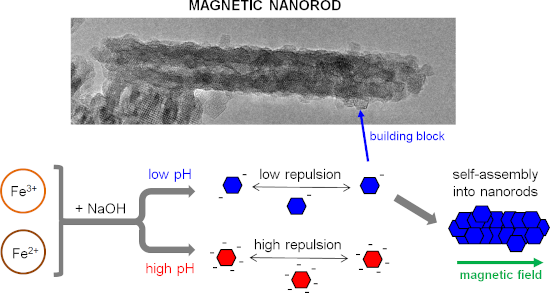
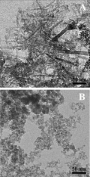
- shape of the primary nanocrystals, so that the adjacent nanocrystals can mutually orient along their facets that is along the same crystal plane {220}. The attachment of the single-crystal nanorods releases the interfacial tension [22], thus reducing the free energy. However, if the bound nanocrystals





Evolution of Ag nanostructures created from thin films: UV–vis absorption and its theoretical predictions
Beilstein J. Nanotechnol. 2020, 11, 494–507, doi:10.3762/bjnano.11.40
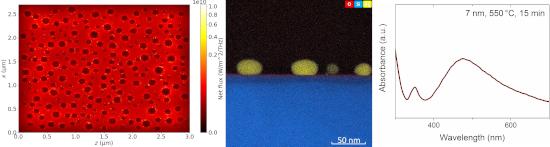
- type of dewetting [19][20][21]. If dewetting is of the spinodal type, then the above parameters are related in the following way: where f(θ) is a geometric factor based on the particle contact angle θ, γ is the surface tension of the metal and A is the Hamaker constant. This is valid for the




Internalization mechanisms of cell-penetrating peptides
Beilstein J. Nanotechnol. 2020, 11, 101–123, doi:10.3762/bjnano.11.10
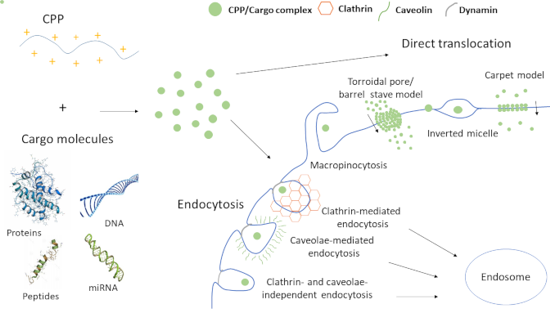
- lipids in the outer leaflet in the membrane and the cationic groups of the CPP. This causes a lateral rearrangement of the negative charges and a thinning of the membrane. The aggregation of the CPPs at the membrane surface provokes a reduction of the local surface tension and allows for intercalation of


Formation of metal/semiconductor Cu–Si composite nanostructures
Beilstein J. Nanotechnol. 2019, 10, 2497–2504, doi:10.3762/bjnano.10.240
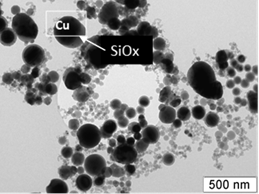
- formed (Figure 2a). The simulated system seeks to minimise the surface free energy. Therefore, because the surface tension of copper is greater than that of silicon, the silicon atoms are segregated to the surface of the cluster, and copper atoms are segregated to the cluster core. The nucleus formed





