


Search results
Search for "tissue engineering" in Full Text gives 91 result(s) in Beilstein Journal of Nanotechnology.
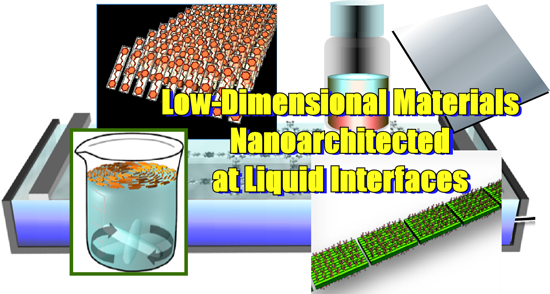
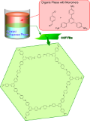
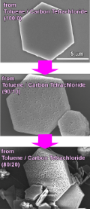
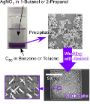
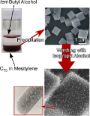
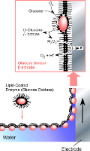
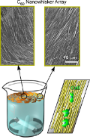
Materials nanoarchitectonics at two-dimensional liquid interfaces
Beilstein J. Nanotechnol. 2019, 10, 1559–1587, doi:10.3762/bjnano.10.153













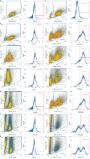
Scavenging of reactive oxygen species by phenolic compound-modified maghemite nanoparticles
Beilstein J. Nanotechnol. 2019, 10, 1073–1088, doi:10.3762/bjnano.10.108
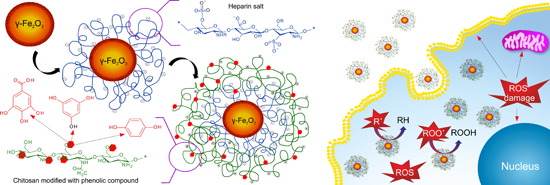
- [12]. Due to its biocompatibility, it has been investigated in several biomedical applications, e.g., tissue engineering, ophthalmology, and drug delivery. Chitosan modification with phenolic compounds leads to the enhancement of already existing antioxidant properties [13]. The antioxidant properties


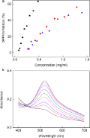



The systemic effect of PEG-nGO-induced oxidative stress in vivo in a rodent model
Beilstein J. Nanotechnol. 2019, 10, 901–911, doi:10.3762/bjnano.10.91
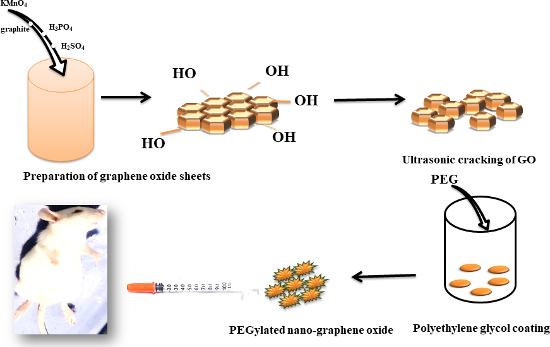
- ) [5], poly(ε-caprolactone) (PCL) [6], hydroxypropyl-β-cyclodextrin (HPCD) [7], and poly(L-lactic acid) (PLLA) [8]. Biocompatible GO has many prospective uses in tissue engineering [9], drug delivery [10], cancer therapy [11][12], and treatment of bacterial infections [13][14]. Dinescu et al. designed
- a chitosan 3D scaffold and enhanced its bioactivity, mechanical properties, and pore formation with GO for optimal bone tissue engineering [15]. Zhang et al. improved the chemotherapy efficacy of anticancer drugs with polyethyleneimine (PEI)-grafted GO [16]. Liu et al. discussed the antibacterial


Tungsten disulfide-based nanocomposites for photothermal therapy
Beilstein J. Nanotechnol. 2019, 10, 811–822, doi:10.3762/bjnano.10.81
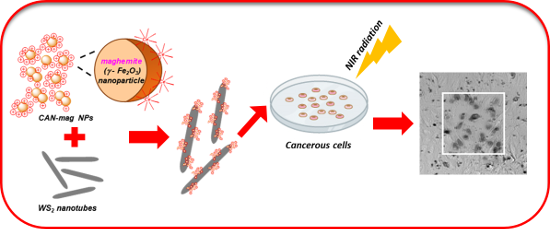
- carbon equivalent and found the toxicity of the former to be lower [23]. Wu et al. produced biocompatible MoS2 nanoparticles by a pulsed laser ablation technique [24]. Examples of medical applications with TMDC nanostructures are their addition as reinforcing agents to polymers for bone-tissue
- engineering, and their incorporation in dental devices [25][26][27][28][29][30][31][32]. Another important medical application for nanostructures in general, and for TMDC nanostructures in particular, is targeted cancer treatment through photothermal therapy (PTT). In this method, light-responsive materials


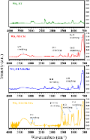




Biocompatible organic–inorganic hybrid materials based on nucleobases and titanium developed by molecular layer deposition
Beilstein J. Nanotechnol. 2019, 10, 399–411, doi:10.3762/bjnano.10.39
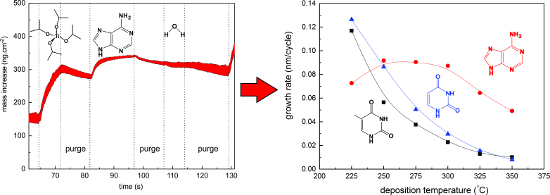
- response [9]. Thus, the tailoring of the surface of materials used in tissue engineering is important for designing bioactive and biocompatible materials. Our choice is the atomic layer deposition/molecular layer deposition (ALD/MLD) technique by which organic–inorganic materials are developed through the




Characterization and influence of hydroxyapatite nanopowders on living cells
Beilstein J. Nanotechnol. 2018, 9, 3079–3094, doi:10.3762/bjnano.9.286
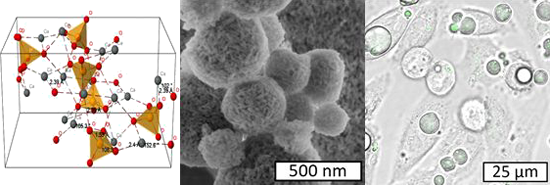
- and J774.1 to assess the influence of the nanoparticles on immune, reproductive and respiratory systems. Keywords: nanomaterials safety; biomaterials; tissue engineering; microscopic characterization; cytotoxicity; hydroxyapatite; Introduction Engineered nanomaterials have found applications in many
- (OH)2) is a calcium phosphate, structurally and chemically similar to the mineral phase of human bone and teeth. Due to its high biocompatibility and bioactivity, it has been successfully applied in the manufacturing of cosmetics and hygiene products, as well as in bone-tissue engineering and
- /ST8/07559: „Three-dimensional composite scaffold based on biodegradable polymers and bioceramic with incorporated growth factors for bone tissue engineering. Research on the manufacturing process and the material influence on living cells function“. We sincerely thank Katarzyna Czarnecka for

![[Graphic 1]](/bjnano/content/inline/2190-4286-9-286-i2.svg?max-width=637&scale=1.18182) .
.



Enhanced antineoplastic/therapeutic efficacy using 5-fluorouracil-loaded calcium phosphate nanoparticles
Beilstein J. Nanotechnol. 2018, 9, 2499–2515, doi:10.3762/bjnano.9.233
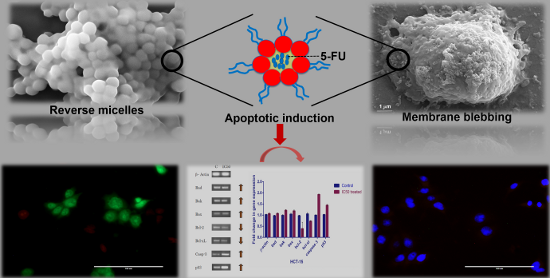
- nanoparticles in biomedical applications is extended to tissue engineering, gene/siRNA delivery, anticancer drug delivery, protein and antigen delivery, vaccine delivery, insulin as well as imaging probe or contrasting agent delivery for bio-imaging. 5-Fluorouracil (5-FU), a well-known anticancer agent


Biomimetic and biodegradable cellulose acetate scaffolds loaded with dexamethasone for bone implants
Beilstein J. Nanotechnol. 2018, 9, 1986–1994, doi:10.3762/bjnano.9.189
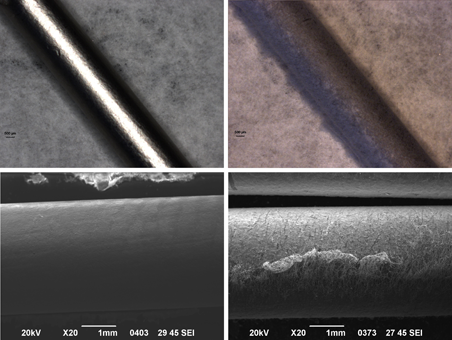
- inflammations along with a simultaneous controlled release of the drug. Keywords: drug delivery; electrospinning; nanocoatings; orthopedics; tissue engineering; Introduction The application of nanotechnology in medicine, known as nanomedicine, aims to overcome problems associated with diseases at the
- acetate (CA) is used in this work. CA is derived from a natural polymer and is biocompatible, biodegradable, nonirritant and nontoxic. Moreover, it has excellent mechanical properties and there are potential applications, for instance as films, membranes, tissue engineering scaffolds and drug-delivery


Preparation of micro/nanopatterned gelatins crosslinked with genipin for biocompatible dental implants
Beilstein J. Nanotechnol. 2018, 9, 1735–1754, doi:10.3762/bjnano.9.165
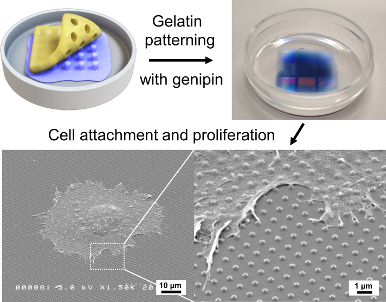
- implants [21][22]. It is also used as an absorbable hemostatic sponge to provide an occlusive matrix [23][24] and as a bone healing material in tissue engineering [25][26] in the field of dentistry. Recent studies have attempted to regenerate collagen fibers, lost as a result of periodontal disease, using








Liquid-crystalline nanoarchitectures for tissue engineering
Beilstein J. Nanotechnol. 2018, 9, 205–215, doi:10.3762/bjnano.9.22
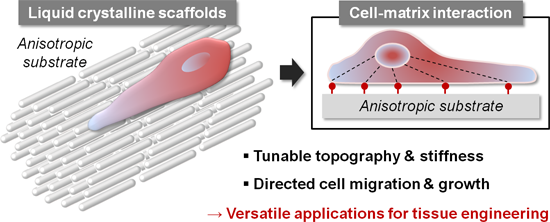
- has recently been increased interest in research for engineering nanobiomaterials by incorporating LC templates and scaffolds. In this review, we introduce and correlate diverse LC nanoarchitectures with their biological functionalities, in the context of tissue engineering applications. In particular
- challenges for applying LC nanoarchitectures in tissue engineering fields is discussed. Keywords: biocolloid; biopolymer; cell-matrix interaction; mesophase; regenerative medicine; Review Introduction Liquid crystals (LCs) are ubiquitous in our life [1]. On one hand, LC materials play a central role in
- not yet been sufficiently recognized among scientists in the field of tissue engineering and regenerative medicine, or even among experts in fields of LC technology. The objective of this review article is to deal with this issue with a multidisciplinary point of view. First, the ultrastructures and


Uptake and intracellular accumulation of diamond nanoparticles – a metabolic and cytotoxic study
Beilstein J. Nanotechnol. 2017, 8, 1649–1657, doi:10.3762/bjnano.8.165
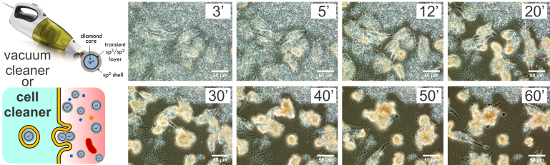
- are tailorable on demand [2]. This work investigates the use of diamond nanomaterials, or nanodiamonds (NDs), especially in life sciences, tissue engineering and regenerative medicine [3][4][5][6]. Diamond is biocompatible [7][8], and for advanced biomedical applications, it is particularly promising


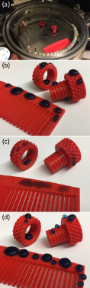
Surface functionalization of 3D-printed plastics via initiated chemical vapor deposition
Beilstein J. Nanotechnol. 2017, 8, 1629–1636, doi:10.3762/bjnano.8.162
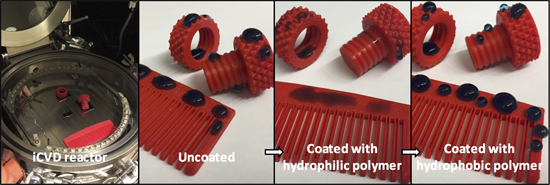
- [1][2]. These attractive features have led to applications of 3DP in diverse fields including tissue engineering [2][3], microfluidics [4], robotics [5], and batteries [6][7]. 3DP involves a computer-aided design of the target structure sliced into 2D layers and printed layer-by-layer [2][3]. Four
- 3DP applications, because it allows for tuning of bulk properties, such as cost-effectiveness or structural rigidity, independently of sophisticated surface functionalization. For example, in scaffolds for bone tissue engineering, angiogenesis is a major challenge, because printed scaffolds have
- . Hong et al. demonstrated that simply dipping polycaprolactone/poly(lactic-co-glycolic acid) 3D scaffolds in mussel adhesive proteins promoted cellular adhesion, proliferation and differentiation, showing that a facile surface modification improved the viability of using 3D-printed scaffolds for tissue



Luminescent supramolecular hydrogels from a tripeptide and nitrogen-doped carbon nanodots
Beilstein J. Nanotechnol. 2017, 8, 1553–1562, doi:10.3762/bjnano.8.157
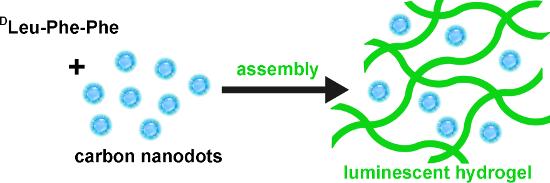
- materials. Peptide self-assembled hydrogels are inherently biocompatible and biodegradable and thus are promising biomaterials for cell culture, regenerative medicine, tissue engineering, and drug delivery applications [22]. The identification of self-assembling peptides that are as short as possible is


Calcium fluoride based multifunctional nanoparticles for multimodal imaging
Beilstein J. Nanotechnol. 2017, 8, 1484–1493, doi:10.3762/bjnano.8.148
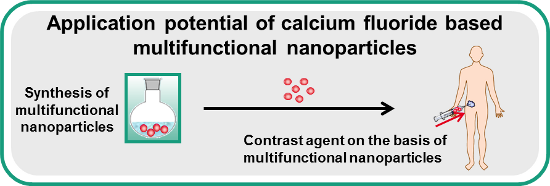
- Translational Center Wuerzburg “Regenerative Therapies for Oncology and Musculosceletal Diseases”, Branch of Fraunhofer Institute for Interfacial Engineering and Biotechnology IGB, 97070 Wuerzburg, Germany University Hospital Wuerzburg, Chair Tissue Engineering and Regenerative Medicine, Roentgenring 11, 97070


Fully scalable one-pot method for the production of phosphonic graphene derivatives
Beilstein J. Nanotechnol. 2017, 8, 1094–1103, doi:10.3762/bjnano.8.111
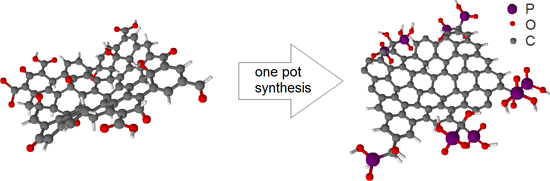
- retardation [4][11], catalysis [12], tissue engineering [13], and purification air and water [6][14]. Results and Discussion The phosphonic derivative of graphene (GO-P) was obtained through the reaction of GO with phosphorus trichloride in water. Phosphorous trichloride reacts with water to produce


Recombinant DNA technology and click chemistry: a powerful combination for generating a hybrid elastin-like-statherin hydrogel to control calcium phosphate mineralization
Beilstein J. Nanotechnol. 2017, 8, 772–783, doi:10.3762/bjnano.8.80
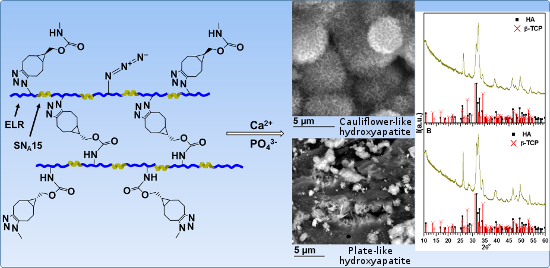
- functional performance that can be used for different applications, such as tissue engineering [1]. This perspective can be applied in one of the hottest current research fields, namely control of the formation of calcium phosphate (CP) nanostructures for the generation of biomimetic hybrid materials. Among
- SNA15. The soluble state of the ELRs shows the merit of generating delicate nanostructures, such as neuron-like morphology [13]. Yet, their soluble nature could restrict their applications for tissue engineering as compared to its hydrogel state. When hydrogel matrices are used, different HA



Silicon microgrooves for contact guidance of human aortic endothelial cells
Beilstein J. Nanotechnol. 2017, 8, 675–681, doi:10.3762/bjnano.8.72
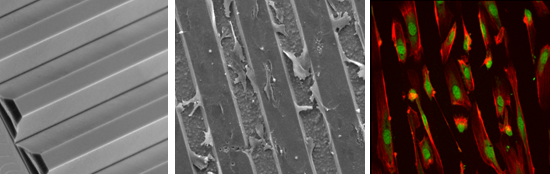
- for its application in biotechnology and biomedicine [27][28]. Silicon dioxide is nontoxic and biocompatible, and based on these features it has been proposed as material for drug delivery in cell culture models and for tissue engineering [29]. In addition, silicon offers a flexible surface chemistry


Dispersion of single-wall carbon nanotubes with supramolecular Congo red – properties of the complexes and mechanism of the interaction
Beilstein J. Nanotechnol. 2017, 8, 636–648, doi:10.3762/bjnano.8.68
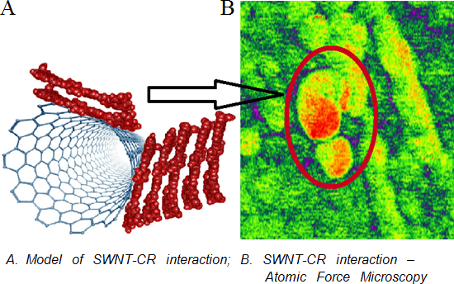
- ; Introduction Carbon nanotubes (CNTs) present enormous application potential in many areas of chemistry, technology and medicine and are currently one of the most intensely studied nanomaterials. Biomedical use of CNTs includes biosensors [1], bioimaging [2][3], drug delivery [4][5][6][7][8][9] and tissue
- engineering [10][11][12]. Pristine CNTs exist in form of bundles composed of hundreds of single tubes bound by van der Waals interactions. Most applications of carbon nanotubes require their dispersion (solubilization) which can be achieved by either covalent or noncovalent functionalization [8][13][14


Biological and biomimetic materials and surfaces
Beilstein J. Nanotechnol. 2017, 8, 403–407, doi:10.3762/bjnano.8.42

- articles of this Thematic Series, Egorov et al. proposed a relatively simple protocol for 3D printing of complex-shaped biocompatible structures based on sodium alginate and calcium phosphate for bone tissue engineering [24]. The analysis of 3D printed structures shows that they possess large
Chitosan-based nanoparticles for improved anticancer efficacy and bioavailability of mifepristone
Beilstein J. Nanotechnol. 2016, 7, 1861–1870, doi:10.3762/bjnano.7.178
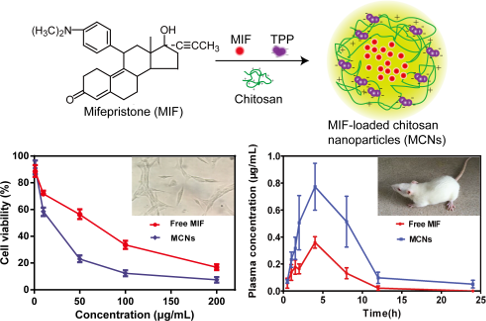
- biodegradability [9]. It possesses various bioactivities such as anti-inflammatory, antibacterial, antifungal, muco-adhesive, and antitumor effects [10][11]. Therefore, chitosan has been widely used as a biomaterial or adjuvant in disease therapy [12], tissue engineering, and drug delivery [13]. Owning to the


3D printing of mineral–polymer bone substitutes based on sodium alginate and calcium phosphate
Beilstein J. Nanotechnol. 2016, 7, 1794–1799, doi:10.3762/bjnano.7.172
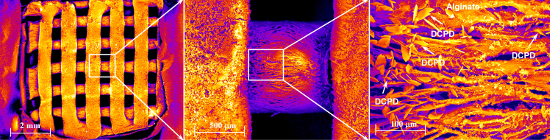
- calcium phosphate (CP) for bone tissue engineering. The fabrication of 3D composite structures was performed through the synthesis of inorganic particles within a biopolymer macromolecular network during 3D printing process. The formation of a new CP phase was studied through X-ray diffraction, Fourier
- diameter ≈800 μm) and were found to possess compressive strengths from 0.45 to 1.0 MPa. This new approach can be effectively applied for fabrication of biocompatible scaffolds for bone tissue engineering constructions. Keywords: 3D printing; bone graft; calcium phosphate; composite materials; sodium
- alginate; tissue engineering; Introduction 3D printing is one promising methodology for tissue engineering constructions with specific architectonics and properties. It has the attractive advantages of both accurate and reproducible layer-by-layer fabrication of complex-shaped structures [1][2][3][4]. A


Numerical investigation of depth profiling capabilities of helium and neon ions in ion microscopy
Beilstein J. Nanotechnol. 2016, 7, 1749–1760, doi:10.3762/bjnano.7.168
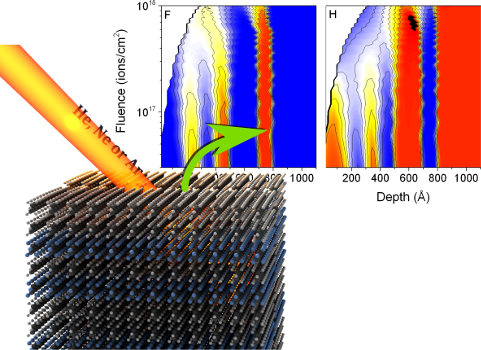
- surface by disordering the surface structure and forming hydrogenated amorphous carbon [4]. Similarly, Ga+ irradiation of polydimethylsiloxane (PDMS) results in micro- and nanopatterns with controlled stiffness for potential applications in tissue engineering [5]. Overall, the properties depend on the


Viability and proliferation of endothelial cells upon exposure to GaN nanoparticles
Beilstein J. Nanotechnol. 2016, 7, 1330–1337, doi:10.3762/bjnano.7.124
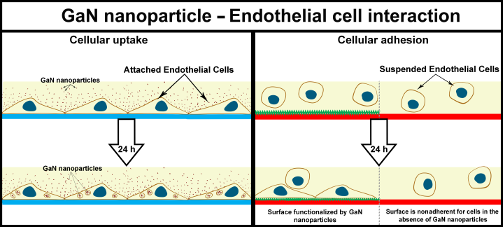
- capillary tubes and thus develop new blood vessels via ramification of the existing ones. The development of the blood vessel wall after the capillary formation discloses the efficient intercellular communication [10]. Tissue engineering and artificial organ development are also emerging fields that involve



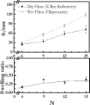
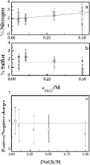
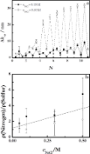
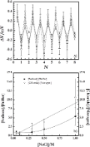
3D solid supported inter-polyelectrolyte complexes obtained by the alternate deposition of poly(diallyldimethylammonium chloride) and poly(sodium 4-styrenesulfonate)
Beilstein J. Nanotechnol. 2016, 7, 197–208, doi:10.3762/bjnano.7.18
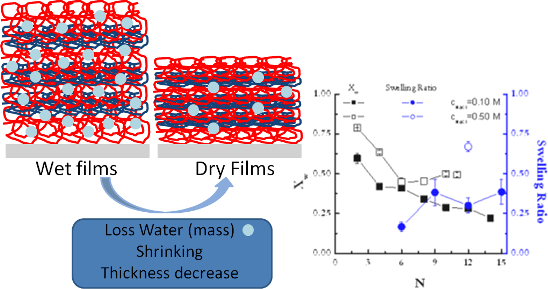
- application in several fields, including optics, electronics, coatings and biomaterials (drug delivery and tissue engineering). In order to create the aforementioned materials, the development of new bottom-up techniques, which allow one to control the properties and structure of the materials at the sub



Fabrication of hybrid nanocomposite scaffolds by incorporating ligand-free hydroxyapatite nanoparticles into biodegradable polymer scaffolds and release studies
Beilstein J. Nanotechnol. 2015, 6, 2217–2223, doi:10.3762/bjnano.6.227
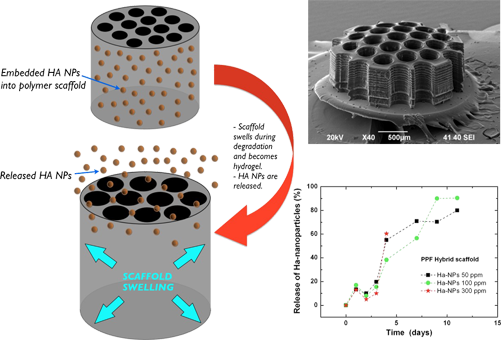
- great importance with regard to the promotion and enhancement of biological fixation (firm bonding of the implant to the host bone by on-growth or ingrowth). Hydroxyapatite (HA) nanoparticles (NPs) are one of the most commonly used materials in osteochondral tissue engineering, since they bear chemical
- similarity to the mineral constituent of human bones, are bioactive and can be fairly easily bioconjugated [1]. HA NPs can enhance cell proliferation in bone tissue regeneration [2]. Tissue engineering is an interdisciplinary field that combines the principles of life sciences and engineering to improve
- osteoconductive and osteoinductive capabilities [5][6], made it a platform for large-scale biomedical applications, such as controlled drug release and bone tissue engineering materials [7][8]. Lee et al. [9] reported on cellular responses to crosslinkable poly(propylene fumarate)/hydroxyapatite nanocomposites





