


Search results
Search for "Pt" in Full Text gives 493 result(s) in Beilstein Journal of Nanotechnology. Showing first 200.
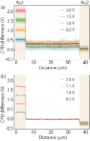
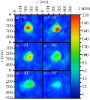
Spatial mapping of photovoltage and light-induced displacement of on-chip coupled piezo/photodiodes by Kelvin probe force microscopy under modulated illumination
Beilstein J. Nanotechnol. 2023, 14, 1059–1067, doi:10.3762/bjnano.14.87
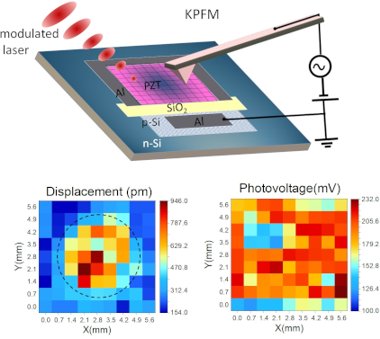
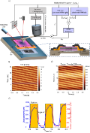
- piezoelectric stack. Kelvin probe force microscopy was employed to measure the photoinduced voltage simultaneously with the displacement at the surface of the top LNO electrode as the bottom electrode was grounded. These measurements were performed with a Park Systems NX10 AFM microscope equipped with Pt/Ir


A visible-light photodetector based on heterojunctions between CuO nanoparticles and ZnO nanorods
Beilstein J. Nanotechnol. 2023, 14, 1018–1027, doi:10.3762/bjnano.14.84
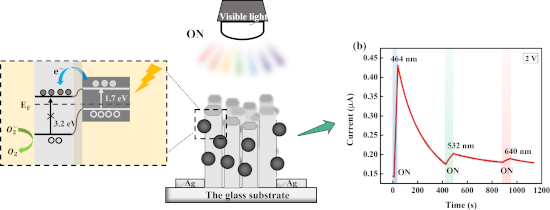
- properties of ZnO nanostructures, such as bandgap or conductivity [26]. Decorating ZnO with metals such as Ag, Au, Pd, Pt, and Al [27][28] can provide surface plasmonic effects that assist the electron transfer process in materials and extend the light absorption range of a photodetector [29][30]. However


Nanoarchitectonics of photothermal materials to enhance the sensitivity of lateral flow assays
Beilstein J. Nanotechnol. 2023, 14, 988–1003, doi:10.3762/bjnano.14.82
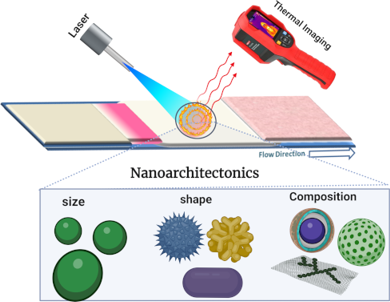
- properties, that is, plasmonic materials (e.g., Au, Ag, and Pt), semiconductor materials (e.g., transition metal oxides, transition metal chalcogenides, and transition metal dichalcogenides), carbon-based nanomaterials (such as graphene oxide and carbon nanotubes), and polymer nanomaterials [33][34] (Figure
- LSPR effect highly depends on size, shape, composition, interparticle distance, dielectric constant, and surrounding medium of the particles [36][37]. While Pt, Ag, and Au particles all exhibit photothermal properties, Au nanoparticles are commonly used for photothermal applications. By changing the
- material [75]. For example, nanocomposite materials have been developed by combining noble metal nanoparticles (Au–Ag, Au–Pt, and Au–Ag–Pt) or hybrids of noble metals, metals, and/or carbon materials (Au–Fe, Au–carbon, and Au–Fe–carbon). The resultant nanocomposites exhibit properties of all constituents


Green SPIONs as a novel highly selective treatment for leishmaniasis: an in vitro study against Leishmania amazonensis intracellular amastigotes
Beilstein J. Nanotechnol. 2023, 14, 893–903, doi:10.3762/bjnano.14.73
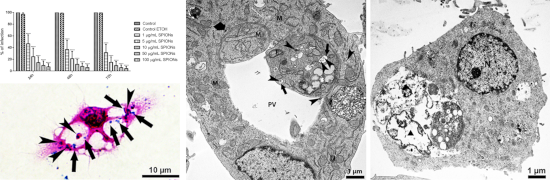
- using a PT-PC PowerTome ultramicrotome (RMC Boeckeler, USA) stained with uranyl acetate and lead citrate and observed using a FEI TECNAI SPIRIT transmission electron microscope operating at 120 kV. Antiproliferative effects of SPIONs in Leishmania amazonensis promastigotes and intracellular amastigotes


Cross-sectional Kelvin probe force microscopy on III–V epitaxial multilayer stacks: challenges and perspectives
Beilstein J. Nanotechnol. 2023, 14, 725–737, doi:10.3762/bjnano.14.59
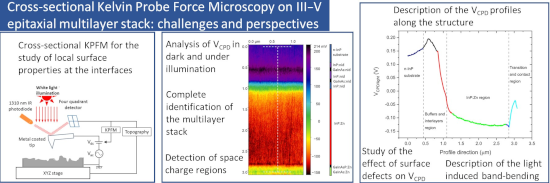
- (radius < 25 nm) with a conductive Pt/Ir coating at a resonance frequency of 75 kHz were used. During KPFM measurements under ambient conditions, tip contamination is likely to occur because of pollutants that may be present on the sample surface causing a variation of ϕtip [18]. Hence, ϕtip was evaluated


Titania nanoparticles for photocatalytic degradation of ethanol under simulated solar light
Beilstein J. Nanotechnol. 2023, 14, 616–630, doi:10.3762/bjnano.14.51
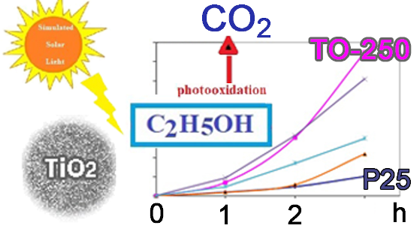
- electrochemical, and photochemical methods [25]. Ethanol obtained from biomass is a renewable resource, and hydrogen has a high energy content and does not produce greenhouse gases by burning. Hence, it is an ideal combustible for the future [25]. TiO2 has some advantages over commonly used catalytic Pt- or Pt




Evaluation of electrosynthesized reduced graphene oxide–Ni/Fe/Co-based (oxy)hydroxide catalysts towards the oxygen evolution reaction
Beilstein J. Nanotechnol. 2023, 14, 420–433, doi:10.3762/bjnano.14.34
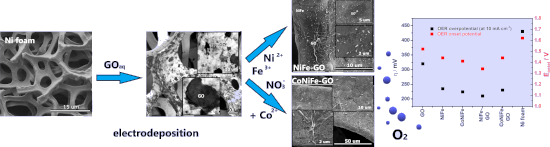
- process is primarily the oxygen evolution reaction (OER) due to its sluggish kinetics resulting in a high overpotential and low efficiency [4]. To overcome this problem, robust anode electrode catalyst materials are required. Since the Ru- and Pt-based catalysts used so far for OER are made using limited
- the Ru- and Pt-based catalysts used so far for OER. There is a lack of literature reports presenting some discussions and determining the specific role of the addition of graphene to the state-of-the-art NiFe and/or CoNiFe-based oxide/hydroxides. Moreover, most of the performed studies were focused




Plasmonic nanotechnology for photothermal applications – an evaluation
Beilstein J. Nanotechnol. 2023, 14, 380–419, doi:10.3762/bjnano.14.33
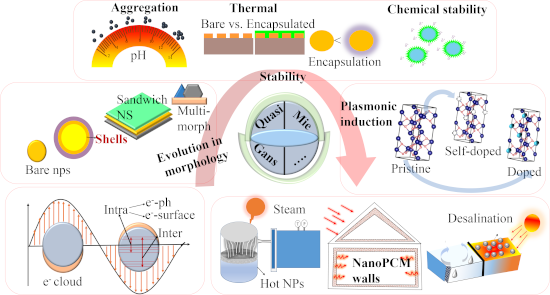
- tunability of optothermal properties and enhanced stability, these nanostructures show a wide range of applications in optical sensors, steam generation, water desalination, thermal energy storage, and biomedical applications such as photothermal (PT) therapy. The PT effect, that is, the conversion of
- absorbed light to heat by these particles, has led to thriving research regarding the utilization of plasmonic nanoparticles for a myriad of applications. The design of conventional nanomaterials for PT conversion has focussed predominantly on the manipulation of photon absorption through bandgap
- , a higher efficiency of photon absorption, facile tuning, as well as flexibility in the synthesis of plasmonic nanomaterials. This review of plasmonic PT (PPT) research begins with a theoretical discussion on the plasmonic properties of nanoparticles by means of the quasi-static approximation, Mie




Bismuth-based nanostructured photocatalysts for the remediation of antibiotics and organic dyes
Beilstein J. Nanotechnol. 2023, 14, 291–321, doi:10.3762/bjnano.14.26
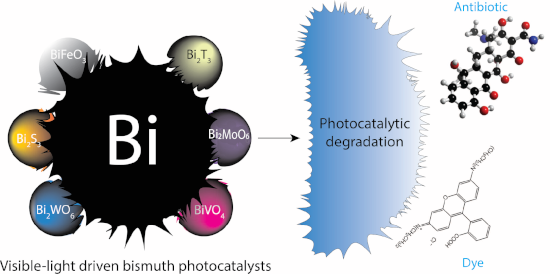
- turn improves the photocatalytic activity of the nanocomposites. Additionally, to maximise the effectiveness of the transfer/separation of photogenerated carriers, noble metals (such as Pt, Ag, and Au) are typically used to induce surface plasmon resonance effects in photocatalysts [146]. However


A novel approach to pulsed laser deposition of platinum catalyst on carbon particles for use in polymer electrolyte membrane fuel cells
Beilstein J. Nanotechnol. 2023, 14, 190–204, doi:10.3762/bjnano.14.19
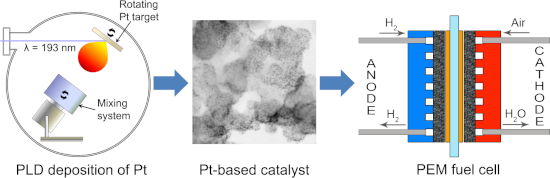
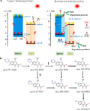
- an efficient Pt-based catalyst for polymer electrolyte membrane fuel cells (PEMFCs) by using a cost-effective and efficient physical method to deposit platinum nanoparticles (PtNPs) on carbon supports directly from the platinum target. The method developed avoids the chemical functionalization of the
- graphitization were used as carbon supports. The best electrochemical measurement results were obtained for Pt deposited on Vulcan XC-72R. The peak power density measured for this material in a membrane electrode assembly (MEA) of a PEMFC (fed with H2/Air) was 0.41 W/cm2, which is a good result compared to 0.57
- W/cm2 obtained for commercial 20% Pt Vulcan XC-72R. This result was achieved with three times less Pt catalyst on the carbon support compared to the commercial catalyst, which means that a higher catalyst utilization factor was achieved. Keywords: carbon particles; cyclic voltammetry; fuel cells



Cooper pair splitting controlled by a temperature gradient
Beilstein J. Nanotechnol. 2023, 14, 61–67, doi:10.3762/bjnano.14.7
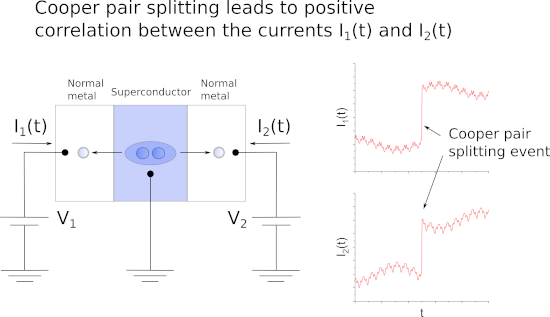
- integrals are taken over the contact areas , and tr(x) denote coordinate- and spin-independent tunneling amplitudes. Let us denote the probability for N1 and N2 electrons to be transferred, respectively, through the junctions 1 and 2 during the observation time t as Pt(N1,N2). Introducing the so-called


Utilizing the surface potential of a solid electrolyte region as the potential reference in Kelvin probe force microscopy
Beilstein J. Nanotechnol. 2022, 13, 1558–1563, doi:10.3762/bjnano.13.129
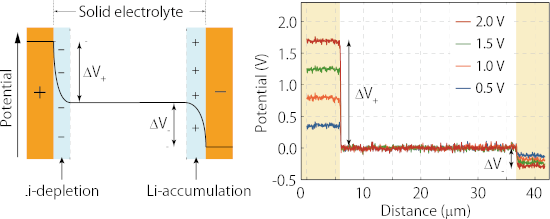
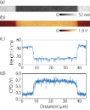
- measurement The KPFM measurements were performed at room temperature using a commercial atomic force microscope (Park Systems, NX10) placed in an Ar flow glove box (O2: <1 ppm, H2O: <1 ppm). We used Cr/Pt-coated Si cantilevers (Budget Sensors, Multi75E-G) with a nominal resonance frequency of 75 kHz and a




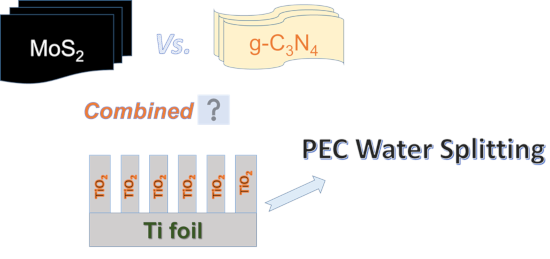
Photoelectrochemical water oxidation over TiO2 nanotubes modified with MoS2 and g-C3N4
Beilstein J. Nanotechnol. 2022, 13, 1541–1550, doi:10.3762/bjnano.13.127
- , the electrode material must be extremely durable and nearly chemically inert to be able to withstand highly acidic or basic environments. Therefore, noble metals such as Pt, Pd, Au and Ag with suitable chemical properties, such as inertness, good resistance against corrosion and good electrical
- electrodes were a Pt counter electrode, a Ag/AgCl 3 M reference electrode, and a MoS2/TNAs or g-C3N4/TNAs working electrode in a 1 M Na2SO4 (pH 7.4) electrolyte solution. The light source used in this study was a 150 W Xe lamp (ABET Instruments) with a calibrated luminous intensity of 100 mW·cm−2 and a UV


A TiO2@MWCNTs nanocomposite photoanode for solar-driven water splitting
Beilstein J. Nanotechnol. 2022, 13, 1520–1530, doi:10.3762/bjnano.13.125
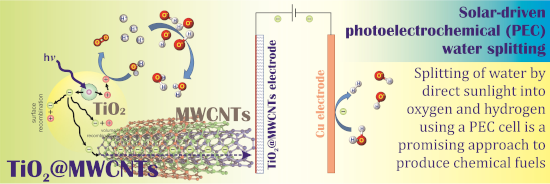
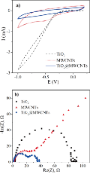
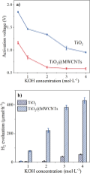
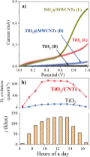
- performed in 0.1 M KCl solution at a scan rate of 50 mV·s−1 with a three-electrode cell using Ag/AgCl and Pt wire as the reference and counter electrodes, respectively. The prepared TiO2@MWCNTs electrode is used as the working electrode. The measurement is carried out in a lab under 350 ± 10 lux of



LED-light-activated photocatalytic performance of metal-free carbon-modified hexagonal boron nitride towards degradation of methylene blue and phenol
Beilstein J. Nanotechnol. 2022, 13, 1380–1392, doi:10.3762/bjnano.13.114
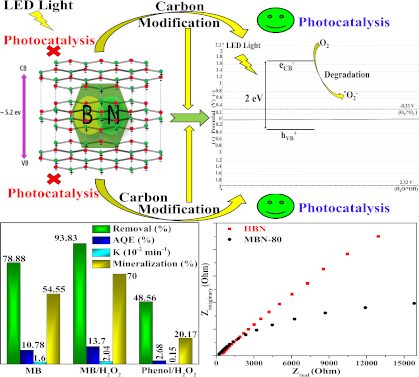
- utilizing an EMX micro A200-9.5/12/S/W, Bruker Biospin, Germany. Photoelectrochemical study The photoelectrochemical properties of the studied materials were evaluated through a CHI 650 electrochemical workstation comprising a three-electrode system with Pt and Ag/AgCl as counter and reference electrodes



Recent trends in Bi-based nanomaterials: challenges, fabrication, enhancement techniques, and environmental applications
Beilstein J. Nanotechnol. 2022, 13, 1316–1336, doi:10.3762/bjnano.13.109
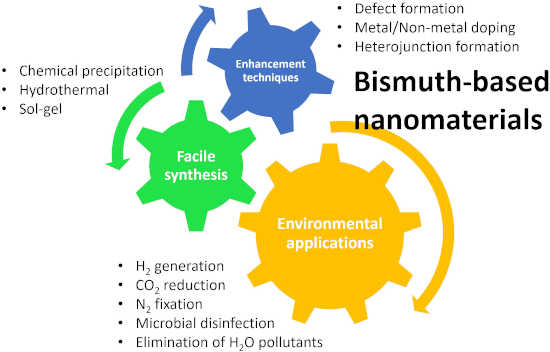
- photocatalyst is complex, which is why a h+-capturing substance is frequently added to the system to promote the production of H2 [112]. Pt, Pd, Au, and other precious metals, as well as photocatalysts containing Cd, Pb, and other elements (such as CdS), are some of the costliest and environmentally hazardous




Studies of probe tip materials by atomic force microscopy: a review
Beilstein J. Nanotechnol. 2022, 13, 1256–1267, doi:10.3762/bjnano.13.104
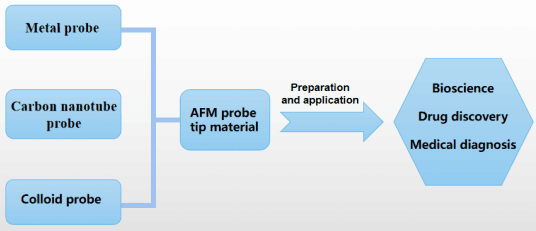
- and conductive materials at the nanoscale. Slattery et al. [46] describe the use of Pt/Ir conductive tips modified with single-walled carbon nanotubes (SWCNTs), a type of tip suitable for use in conductive imaging mode with high-sensitivity current acquisition AFM, which can also be applied to worn
- conductive coatings and regenerated broken tips. The Pt/Ir cantilever was modified with small bundles of SWCNTs by a manual attachment process and fixed using a conductive Pt pad. AFM images of the current and topography of the nanomaterial samples and non-homogeneous polymers were collected using this type
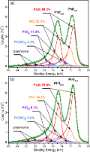
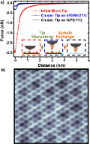
- curve is obtained with the same tip after exchanging the sample with a G/Pt(111) surface. Acquisition parameters: fo = 168274 Hz; k = 33.3 N/m; red curve: VCPD = −0.1 V; A = 13.5 nm. Blue curve: VCPD = −0.45 V; A = 16 nm. Black curve: VCPD = +0.2 V; A = 19.2 nm. (b) Atomically resolved NC-AFM image of
Design of surface nanostructures for chirality sensing based on quartz crystal microbalance
Beilstein J. Nanotechnol. 2022, 13, 1201–1219, doi:10.3762/bjnano.13.100
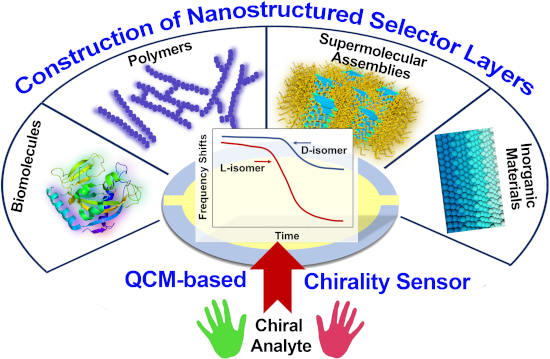
- -amino acids on metal crystals of Ag, Cu, Pt and alloys by density functional theory (DFT) simulations. They revealed that Pt(531) with a step–kink metal surface has better enantiospecificity for eight α-amino acids (alanine, α-aminobutyric acid, valine, leucine, phenylalanine, serine, cysteine, and 3


A cantilever-based, ultrahigh-vacuum, low-temperature scanning probe instrument for multidimensional scanning force microscopy
Beilstein J. Nanotechnol. 2022, 13, 1120–1140, doi:10.3762/bjnano.13.95
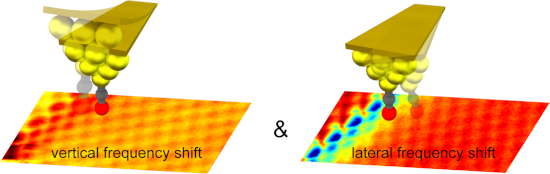
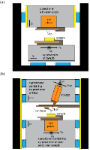
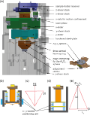
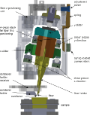
- grain boundaries [69] of the rather thick metallic coating applied to the tip side of the cantilever. Note that a nominally 20 nm thick Pt coating is required to permit tunneling, but the coating thickness along the cantilever could presumably be minimized using masking procedures similar to those used





Electrocatalytic oxygen reduction activity of AgCoCu oxides on reduced graphene oxide in alkaline media
Beilstein J. Nanotechnol. 2022, 13, 1020–1029, doi:10.3762/bjnano.13.89
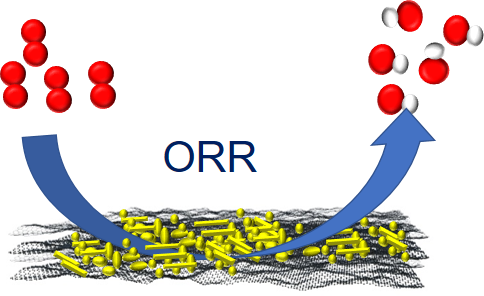
- ][13][14]. In particular, the ORR in alkaline environments with faster kinetics and lower over potential requires stable transition metal-derived electrocatalysts [15]. The major hurdles for Pt-based ORR electrode catalysts in alkaline media include high cost, low operational stability, fuel crossover
- effects, and carbon monoxide poisoning [16][17]. The electrocatalytic reactivity (mechanism and kinetics) of silver has similarities to that of Pt regarding the ORR performance, with considerably high onset potential, half-wave potential, current density, and number of transferred electrons. The important
- attributes include high electrical conductivity, cost-effectiveness (50 times lower than Pt), and the ability to execute the ORR via a single step (four-electron transfer). Thus, Ag and its bi- and trimetallic alloys, with and without supporting matrices, have been extensively researched as potential ORR


Effects of focused electron beam irradiation parameters on direct nanostructure formation on Ag surfaces
Beilstein J. Nanotechnol. 2022, 13, 1004–1010, doi:10.3762/bjnano.13.87
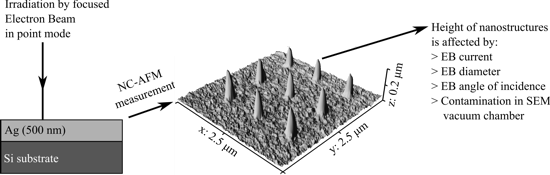
- . However, some studies suggest that this process may not always be so simple. Ueda and Yoshimura [27] reported the fabrication of free-standing nanowires on various metal surfaces (Al, Ag, Au, Cu, Pt, Ta, Ti, and W) via EBID with pump oil (hydrocarbons) as a precursor. It was observed that the substrate




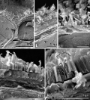
Hierachical epicuticular wax coverage on leaves of Deschampsia antarctica as a possible adaptation to severe environmental conditions
Beilstein J. Nanotechnol. 2022, 13, 807–816, doi:10.3762/bjnano.13.71
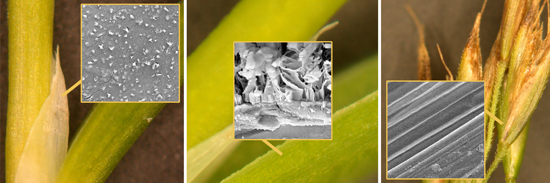
- ) The pedicel. (d–f) The abaxial side of the glume. The inset in (c) shows cuticular folds. CF, cuticular fold; NF, narrow furow; PT, protrusion; RD, ridge; ST, stoma; TR, trichome; WF, wide furrow. The arrows in (a) and (b) show the apical direction for (a–c) and (d–f), respectively. Scale bar in (c




Hierarchical Bi2WO6/TiO2-nanotube composites derived from natural cellulose for visible-light photocatalytic treatment of pollutants
Beilstein J. Nanotechnol. 2022, 13, 745–762, doi:10.3762/bjnano.13.66
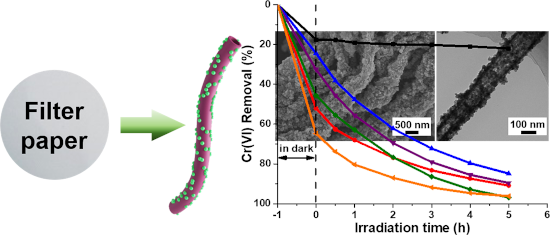
- , respectively. The transient photocurrent responses and electrochemical impedance spectroscopy (EIS) Nyquist plots (frequency: 0.01 Hz−100 kHz, alternate current: 5 mV) of a given sample were obtained on a CHI 760D (Shanghai, China) electrochemical workstation using a three-electrode system. The Pt plate (1.0


A nonenzymatic reduced graphene oxide-based nanosensor for parathion
Beilstein J. Nanotechnol. 2022, 13, 730–744, doi:10.3762/bjnano.13.65
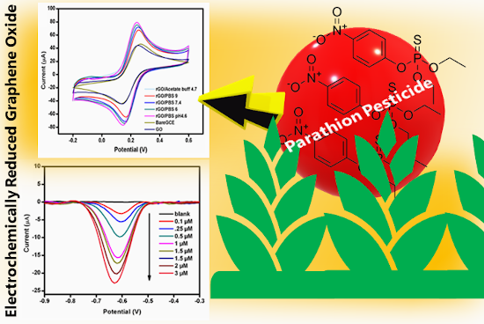
- /bjnano.13.65 Abstract Organophosphate-based pesticides (e.g., parathion (PT)) have toxic effects on human health through their residues. Therefore, cost-effective and rapid detection strategies need to be developed to ensure the consuming food is free of any organophosphate-residue. This work proposed
- the fabrication of a robust, nonenzymatic electrochemical-sensing electrode modified with electrochemically reduced graphene oxide (ERGO) to detect PT residues in environmental samples (e.g., soil, water) as well as in vegetables and cereals. The ERGO sensor shows a significantly affected
- electrocatalytic reduction peak at −0.58 V (vs Ag/AgCl) for rapid quantification of PT due to the amplified electroactive surface area of the modified electrode. At optimized experimental conditions, square-wave voltammetric analysis exhibits higher sensitivity (50.5 μA·μM−1·cm−2), excellent selectivity, excellent


Influence of thickness and morphology of MoS2 on the performance of counter electrodes in dye-sensitized solar cells
Beilstein J. Nanotechnol. 2022, 13, 528–537, doi:10.3762/bjnano.13.44
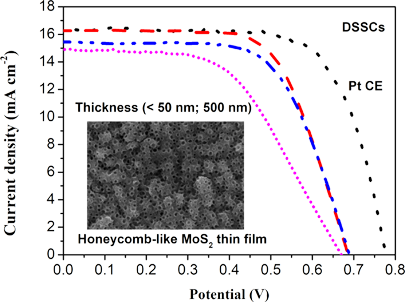
- conventional Pt/FTO CE (15.3 mA·cm−2). This work reports for the first time the possibility to obtain a honeycomb-like MoS2 thin film morphology by the CV method and investigates the effect of film structure on the electrocatalytic activity and photovoltaic performance of CEs for DSSC application. Keywords
- DSSCs, which has led researchers to explore efficient cathode materials for DSSCs beyond platinum. To date, Pt replacement materials are divided into three categories, namely carbonaceous materials [2][3][4][5], conductive polymers [5], and transition metal compounds [6][7][8]. Transition metal
- catalytic activity. Li et al. reported the synthesis of MoS2/graphene composite films on FTO, which were directly used as CE for DSSCs without further thermal treatment. The power conversion efficiency (PCE) of the DSSCs was 8.01%, which was comparable to that of a Pt CE (8.21%) [21]. Quy et al. prepared





