


Search results
Search for "adhesion" in Full Text gives 472 result(s) in Beilstein Journal of Nanotechnology. Showing first 200.
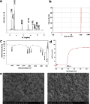
Exploring surface charge dynamics: implications for AFM height measurements in 2D materials
Beilstein J. Nanotechnol. 2024, 15, 767–780, doi:10.3762/bjnano.15.64
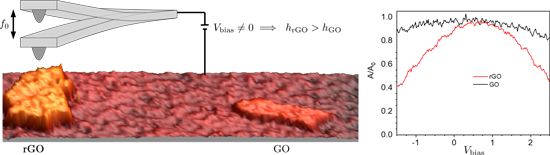
- oscillation amplitudes, the tip mechanically touches the surface during part of the oscillation. This mode is known as “intermittent contact” or tapping mode, and incorrect height measurements are usually ascribed to variations in the local elasticity [32][33] or differences in the local adhesion, related to
- ][56][57]. The origin of incorrect height measurements in 2D materials has been ascribed to the same sources as those mentioned above, including capillary forces and adhesion [8][46], electrostatic forces [58][59][60], or residues of the solvent [8]. However, in many cases, this is not enough to fully


Functional fibrillar interfaces: Biological hair as inspiration across scales
Beilstein J. Nanotechnol. 2024, 15, 664–677, doi:10.3762/bjnano.15.55
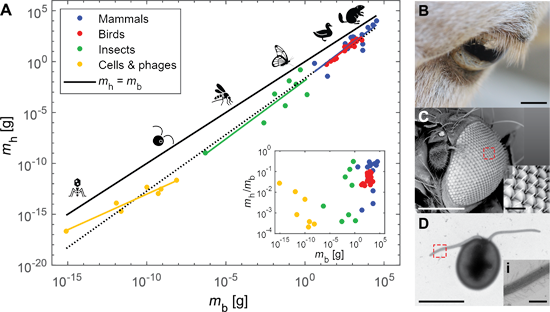
- , reversible adhesion, and surface modulation (e.g., superhydrophobicity). This review will present various functions that biological hairs have been discovered to carry out, with the hairs spanning across six orders of magnitude in size, from the millimeter-thick fur of mammals down to the nanometer-thick
- length scales. Keywords: adhesion; fibers; fluid–structure interactions; mastigonemes; mechanosensing; setae; wettability; Introduction Given the bottom-up approach that biology uses to create materials, fibrous structures formed by molecular chains are found everywhere. For example, internally in the
- providing low adhesion. Such structures are typically found on body parts where contamination is common, such as adhesive pads [40], or where cleanliness is crucial for survival, such as insect wings [41]. Hairs provide more ways to prevent or clean contamination. For a dedicated review on the topic, please


Comparative analysis of the ultrastructure and adhesive secretion pathways of different smooth attachment pads of the stick insect Medauroidea extradentata (Phasmatodea)
Beilstein J. Nanotechnol. 2024, 15, 612–630, doi:10.3762/bjnano.15.52
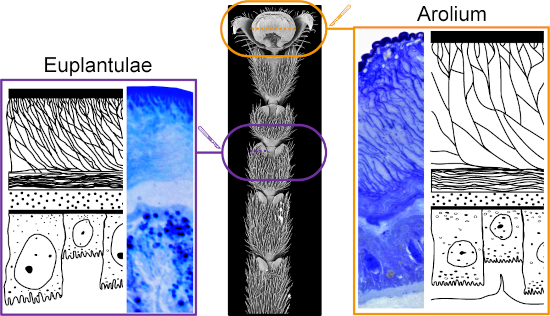
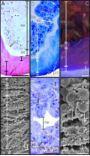
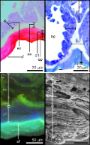
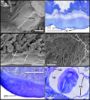
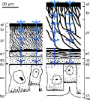
- long intrigued scientists, prompting extensive research on the functional morphology of attachment pads. In stick insects, attachment and locomotion are facilitated by two distinct types of smooth cuticular attachment pads: the primary adhesion force-generating arolium and the friction force-generating
- the material composition of attachment pads and the distribution process of the adhesive secretion can potentially aid in the development of more effective artificial attachment systems. Keywords: adhesion; arolium; biomechanics; euplantulae; friction; functional morphology; tarsal secretion
- enhance the actual contact area between the pad and the substrate for the realisation of efficient attachment due to adhesion and friction forces [3][9][12][13][14]. Smooth attachment pads have independently evolved in most large insect groups, possessing multiple specialized types of pads on the same leg



Stiffness calibration of qPlus sensors at low temperature through thermal noise measurements
Beilstein J. Nanotechnol. 2024, 15, 580–602, doi:10.3762/bjnano.15.50
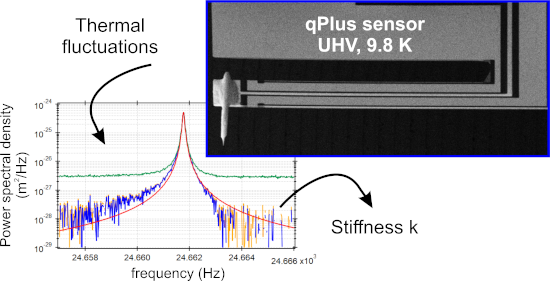
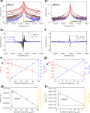
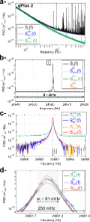
- ring electrode for mechanical excitation. The QTF surface features a set of three metallic electrodes evaporated on it. Their chemical composition has been characterized by EDS as consisting of a ≃200 nm thick layer of Au on a thinner chromium layer to favor the adhesion and wetting of Au. The massive

Radiofrequency enhances drug release from responsive nanoflowers for hepatocellular carcinoma therapy
Beilstein J. Nanotechnol. 2024, 15, 569–579, doi:10.3762/bjnano.15.49
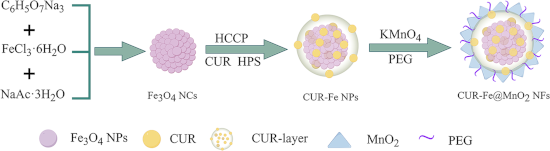
- downregulating the expression of VEGFs and the endothelial cell adhesion molecule CD31 [16]. However, disadvantages of CUR include its poor stability, rapid metabolism, and low solubility, which limits its application [17][18][19][20]. To address the aforementioned challenges, intelligent delivery systems have


Cholesterol nanoarchaeosomes for alendronate targeted delivery as an anti-endothelial dysfunction agent
Beilstein J. Nanotechnol. 2024, 15, 517–534, doi:10.3762/bjnano.15.46
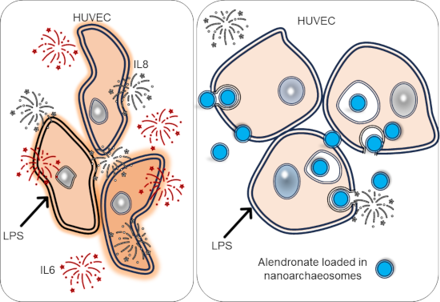
- ]. Recent studies have also shown that ALN has a direct anti-inflammatory effect on endothelial cells. It reduces LPS-induced activation in terms of expression of cell adhesion molecules to leukocytes and increases the production of nitric oxide, reducing platelet activation [12]. According to the
- , respectively; 1200 pg/mL TNF-α were also induced. HUVECs on the apical side were exposed to the proliferative and increased vascular permeability stimulus of IL-8 and IL-6 and induced to express adhesion molecules and cytokine production by IL-6 and TNF-α [52] secreted in the basal compartment. In this more
- findings show that the co-culture of HUVECs with macrophages decreases the expression of eNOS [62], making them more likely to produce pro-inflammatory cytokines such as IL-6 and IL-8 and to express cell adhesion molecules, that is, making them more activated and pro-atherogenic [63]. Overall, the results





Sidewall angle tuning in focused electron beam-induced processing
Beilstein J. Nanotechnol. 2024, 15, 447–456, doi:10.3762/bjnano.15.40
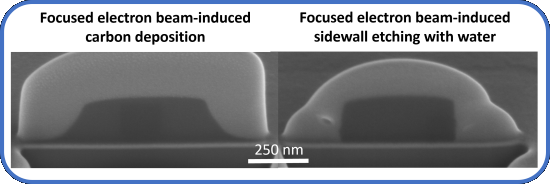
- ) and from the BSE (SE2) [6][7][8]. An example of a line deposited from a carbon precursor on a silicon substrate, coated with a 20 nm Au–Pd layer and a 5 nm Ti adhesion layer, is shown in Figure 1a, clearly showing the broad (black) tails on both sides of the line. The cross section of the line, made
- , section S1 for more details on the simulation). Sidewall slope evolution under FEBIE To experimentally study the modification of the sidewalls of a FEBID structure, carbon structures were first deposited on a silicon substrate with a 20 nm gold–palladium layer and a 5 nm titanium adhesion layer. The
- substrate with a 20 nm gold–palladium layer and a 5 nm titanium adhesion layer. The line was patterned in 500 passes with a dwell time of 500 µs, using a 5 keV beam and 100 pA current with a defocus of 100 nm. Prior to the FIB milling the line was covered with a protective layer of FEBID Pt/C from the




Insect attachment on waxy plant surfaces: the effect of pad contamination by different waxes
Beilstein J. Nanotechnol. 2024, 15, 385–395, doi:10.3762/bjnano.15.35
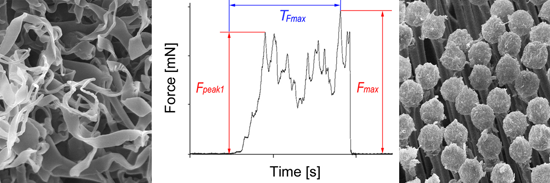
- experimentally supports the contamination hypothesis. Keywords: adhesion; Chrysolina fastuosa; Chrysomelidae; Coleoptera; epicuticular wax projections; tenent setae; traction force; Introduction It has been shown in numerous experimental studies that insects possessing hairy adhesive pads (i.e., specialized
- (3D) epicuticular wax projections, insects usually fail to attach to [4][5][6]. The reducing effect of such plant surfaces on insect adhesion has been shown for many plant and insect species using various experimental approaches, from direct behavioral observations and simple inversion [7] or incline
- (number per unit area) influence insect attachment [11][12]. As an explanation for reduced insect adhesion on waxy plant surfaces, several contributing mechanisms have been previously suggested, such as (1) specific micro/nanoroughness created by wax projections (roughness hypothesis), (2) contamination




Nanomedicines against Chagas disease: a critical review
Beilstein J. Nanotechnol. 2024, 15, 333–349, doi:10.3762/bjnano.15.30
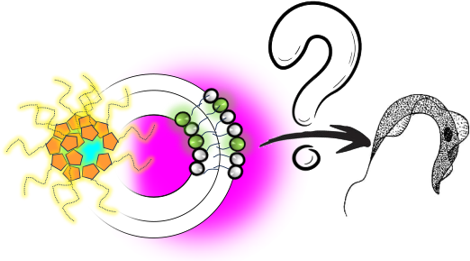
- -II drugs with low solubility, or low or irregular bioavailability, and promoting adhesion to the gastrointestinal wall [95]. The small size of the crystals is associated with a large surface area, which increases interactions with the dissolving medium and accelerates the dissolution rate. The latest

Exploring the relationships between physiochemical properties of nanoparticles and cell damage to combat cancer growth using simple periodic table-based descriptors
Beilstein J. Nanotechnol. 2024, 15, 297–309, doi:10.3762/bjnano.15.27
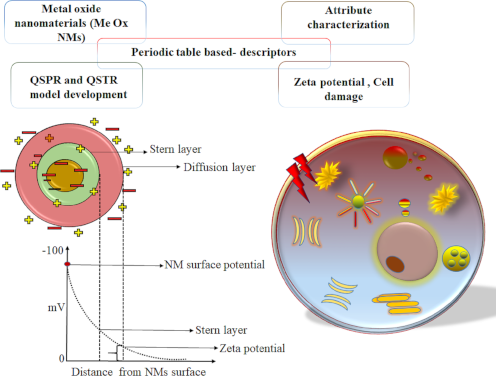
- a vital role in adhesion to the hydro–water interface and solid surfaces, providing an idea about the viability and permeability of the cell membrane under stress. As most of the cell surface carries a negative charge, metals with higher zeta potential can easily enter the cell and increase the


Ultrasensitive and ultrastretchable metal crack strain sensor based on helical polydimethylsiloxane
Beilstein J. Nanotechnol. 2024, 15, 270–278, doi:10.3762/bjnano.15.25
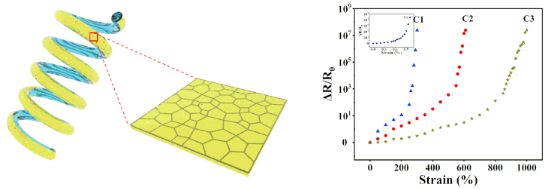
- from the taobao shopping platform. The medical rubber gloves and injection syringes were procured from a local hospital (Shanghai, China). The titanium (Ti) target (99.99%) utilized for the adhesion layer was purchased from Deyang Ona New Materials Co., Ltd. The gold (Au) target (99.999%) employed for
- structured PDMS was initially cleansed through a 5 min Ar plasma sputtering and, subsequently, coated with a 10 nm thick Ti adhesion layer. After that, ion beam sputtering was utilized to deposit a 50 nm thick Au thin film onto the outer surface of the helically shaped PDMS. Then, a controlled pre-stretch


Design, fabrication, and characterization of kinetic-inductive force sensors for scanning probe applications
Beilstein J. Nanotechnol. 2024, 15, 242–255, doi:10.3762/bjnano.15.23
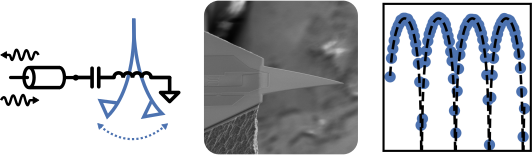
- adhesion of the following 150 nm deposition of chromium with electron-beam evaporation in the Auto306 from Edwards. After the lift-off in mrREM700, we also strip the protective PMMA layer on the front side with AR600–71, and we clean the wafer in isopropanol (IPA). (d) Coarse circuit pattern. A layer of
- first spin a thin layer of an adhesion promoter (AR 300–80) before spinning a roughly 170 nm thick layer of the electron-beam resist ARP–6200–09 (CSAR 09), baking at 150 °C for 1 min. We expose with a dose of 110 μC/cm2 in a Voyager EBL system from Raith Nanofabrication and etch the Nb-Ti-N film using



Multiscale modelling of biomolecular corona formation on metallic surfaces
Beilstein J. Nanotechnol. 2024, 15, 215–229, doi:10.3762/bjnano.15.21
- HIE, GLN, PHE, GAN (−43.86kBT to −20.85kBT). VAL, THR, SER, CYS, ALA exhibit the weakest attraction (−19.51kBT to −1.76kBT). On iron surfaces, charged and aromatic PRO, TYR, ARG, HIS AAs are strongly adsorbed (−91.29kBT to −43.34kBT), while hydrophobic VAL, LEU, ALA AAs show a weaker adhesion




Assessing phytotoxicity and tolerance levels of ZnO nanoparticles on Raphanus sativus: implications for widespread adoptions
Beilstein J. Nanotechnol. 2024, 15, 115–125, doi:10.3762/bjnano.15.11
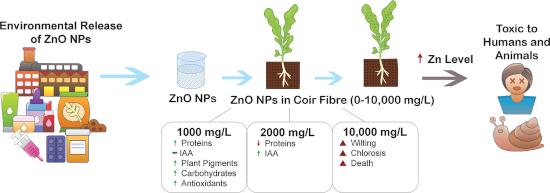
- surface is higher than that of bulk ZnO [53]. As an example, the influence of ZnO NPs (15–40 nm) on Zn accumulation in H. vulgare indicates a significant increase in the roots, without a corresponding effect in the shoot, suggesting substantial adhesion of ZnO NPs to the root surface [42]. Further


Nanotechnological approaches in the treatment of schistosomiasis: an overview
Beilstein J. Nanotechnol. 2024, 15, 13–25, doi:10.3762/bjnano.15.2
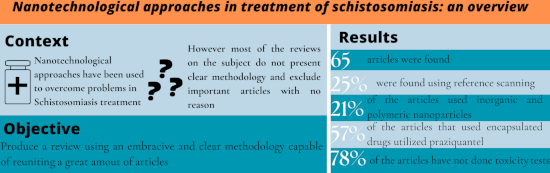
- mice even in high concentrations (27 mg Sb/kg). Although the mortality was reduced, drug efficiency remains unaltered, especially when the nanoformulation was intraperitoneally administered [78]. However, it is known that oral route adhesion is better than the others tested in this work


Determination of the radii of coated and uncoated silicon AFM sharp tips using a height calibration standard grating and a nonlinear regression function
Beilstein J. Nanotechnol. 2023, 14, 1200–1207, doi:10.3762/bjnano.14.99
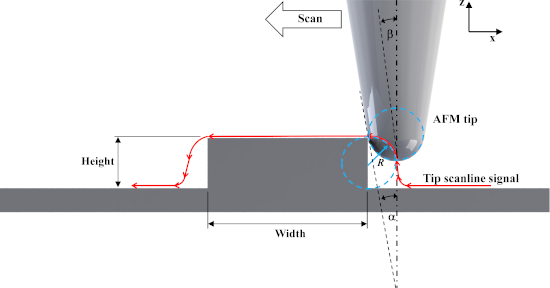
- nanostructured materials, for example, graphene, carbon nanotubes, nanoscale semiconductors, biomaterials, and molecules. Mechanical properties such as surface stiffness, adhesion, friction, electrostatics, and electrowetting can be measured [1][2][3][4]. In contact mode scanning, the contact area between the
- force curves with contact mechanics models and extracting the adhesion and friction forces [5][6]. If we do not know the exact value of the tip radius, the sample image with the observation of scanning frequency and the calculation results are not accurate. This indicates that the measurement results


Spatial variations of conductivity of self-assembled monolayers of dodecanethiol on Au/mica and Au/Si substrates
Beilstein J. Nanotechnol. 2023, 14, 1169–1177, doi:10.3762/bjnano.14.97
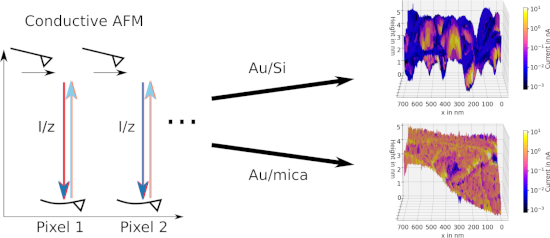
- applied method uses conductive atomic force microscopy (CAFM). In this technique, a conductive probe is used in an AFM, which allows for imaging the surface topography (and other characteristics such as adhesion and stiffness) with lateral resolution while simultaneously being able to measure current


Hierarchically patterned polyurethane microgrooves featuring nanopillars or nanoholes for neurite elongation and alignment
Beilstein J. Nanotechnol. 2023, 14, 1157–1168, doi:10.3762/bjnano.14.96
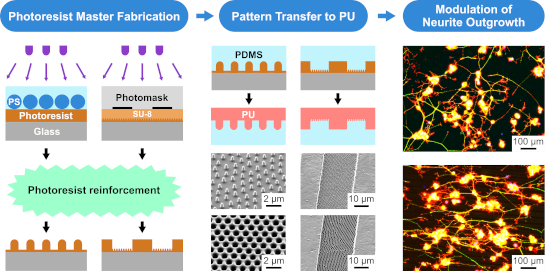
- -8 nanopillar array fails due to the breakage of the brittle SU-8 nanopillars (Supporting Information File 1, Figure S1A,B), while further hard-baking to strengthen pillar adhesion causes SU-8 reflow, resulting in a dramatic decrease in the pillar aspect ratio (Supporting Information File 1, Figure
- molds The formation of the SU-8 nanopillar array was similar to that of our previous study [16]. Briefly, a thin SU-8 layer was first hard-baked on a 2.5 cm × 2.5 cm glass slide as an adhesion layer. Then, the SU-8 layer to be patterned was spin-coated using a GBL-diluted SU-8 solution (SU-8 50/GBL vol
- (in PDMS) in conformal contact with the photoresist (Figure 1A(i)). AZ1518 was developed with AZ 300 MIF developer for 30 s, followed by rinsing with ultrapure water and N2 drying (Figure 1A(v)). The nanopatterned AZ1518 was finally post-baked at 120 °C for 2 min to improve substrate adhesion. PDMS (A


Elasticity, an often-overseen parameter in the development of nanoscale drug delivery systems
Beilstein J. Nanotechnol. 2023, 14, 1149–1156, doi:10.3762/bjnano.14.95
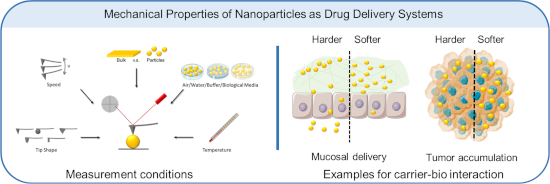
- . However, more complete approaches can be applied [24], which consider the situation of a given system. An example is the Johnson–Kendall–Roberts (JKR) theory, including surface forces, the influence on the adhesion, deformation, and contact behavior between the nanoparticle and the AFM probe suitable for
- -targeting molecule to achieve an active receptor-mediated cell uptake. The receptor binding results in an enhanced adhesion to cells which is further increased by the deformability of the particles. This results in an enhanced cellular uptake in both static and flow conditions. This is described to be due


Density functional theory study of Au-fcc/Ge and Au-hcp/Ge interfaces
Beilstein J. Nanotechnol. 2023, 14, 1093–1105, doi:10.3762/bjnano.14.90
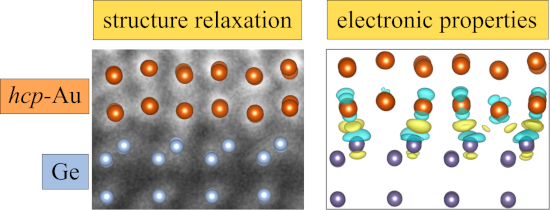
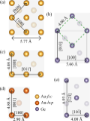
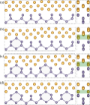
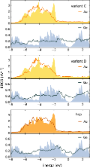
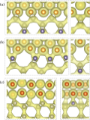
- separation (adhesion) were used. We applied first principles methods based on density functional theory (DFT) to study Au/Ge heterostructures with different interfacial plane orientations. The remainder of the paper is organized as follows. In the Methodology section the calculation details are given, and





Recognition mechanisms of hemoglobin particles by monocytes – CD163 may just be one
Beilstein J. Nanotechnol. 2023, 14, 1028–1040, doi:10.3762/bjnano.14.85
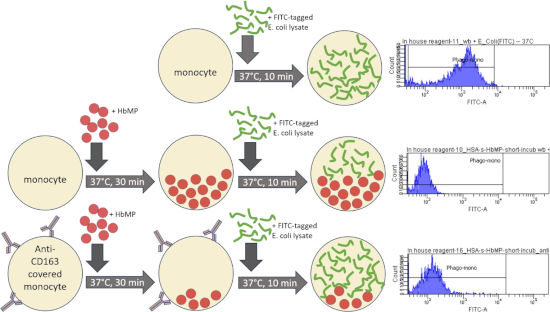
- cell surface adhesion of the test particles. On the other hand, binding to the particles caused a conformational change within the structure of BSA. This denatured BSA promoted binding by scavenger receptor A (SR-A/CD204) and, thus, induced internalization of the protein–particle–receptor complex. In




Antibody-conjugated nanoparticles for target-specific drug delivery of chemotherapeutics
Beilstein J. Nanotechnol. 2023, 14, 912–926, doi:10.3762/bjnano.14.75
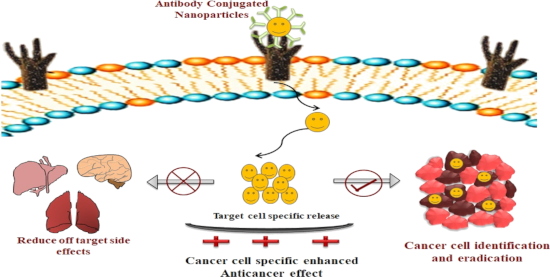
- or elimination of NP targeting capability by shielding or completely covering relevant functional groups. To block the adhesion of corona proteins on NP surfaces, various strategies have been established using surface barrier layers, such as polymer, protein, or biomimetic coatings, with the ultimate



N-Heterocyclic carbene-based gold etchants
Beilstein J. Nanotechnol. 2023, 14, 865–871, doi:10.3762/bjnano.14.71
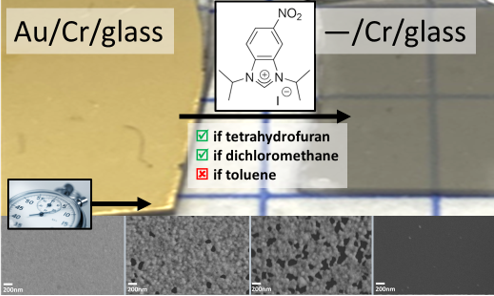
- a gold-coated token in a solution of 1 in DCM. There is evident loss of optical density accompanied by a transition from a reflective gold surface to one with more transmission, which allows for increased optical access to the underlying chromium adhesion layer. Figure S1 (Supporting Information
- Information File 1. Gold-coated glass slides were purchased from Electron Microscopy Sciences (71892-05, Hatfield, PA, USA). The films were 50 nm of gold deposited by electron beam evaporation onto a 2–7 nm chromium adhesion layer. Slides were cut into ca. 1 × 1 cm2 tokens and immersed in 2 mL of the relevant
- , used as an adhesion layer underneath the original gold film, was present on the surface in (a). UV–vis spectra of 10 µL of 5 mM 1 in THF mixed with 10 mL of AuNPs (left) and 10 μL of 5 mM 2 in THF mixed with 10 mL of AuNPs (right) over 6 h of hourly measurements. The inset shows the peak at approx. 530



Industrial perspectives for personalized microneedles
Beilstein J. Nanotechnol. 2023, 14, 857–864, doi:10.3762/bjnano.14.70
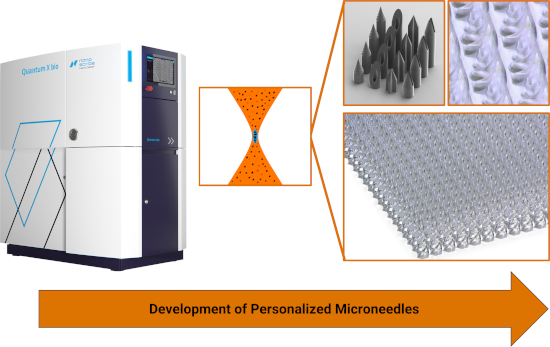
- microneedles are most often directly printed onto the medical device and aligned to specific features, such as pores, on the device. Direct microneedle printing has its own set of extensive requirements (e.g., biocompatibility of the material, mechanical robustness, and surface adhesion). Also, FDA’s 510(k


Biomimetics on the micro- and nanoscale – The 25th anniversary of the lotus effect
Beilstein J. Nanotechnol. 2023, 14, 850–856, doi:10.3762/bjnano.14.69

- biological processes and surface interactions involved in the bioselective adhesion of mammalian cells. The second topic of the review was on repellence of microbes on protein-based material surfaces, highlighting the importance of materials made of recombinant spider silk proteins. Biomaterials that
- bees to seal their hive and protect the colony against pathogens. Since propolis is quite a sticky substance, the authors analysed whether the mandibles of the bees show specific anti-adhesive properties, enabling them to manipulate the propolis. Adhesion experiments with propolis and bee mandibles
- were performed and the mandibles were analysed using (cryo-) scanning electron microscopy, indicating that a fluid substance covers the medial surface of the mandibles reducing propolis adhesion. Weiser et al. [13] take biomimetics into industrial production with their paper “Roll-to-roll fabrication





