


Search results
Search for "adsorbates" in Full Text gives 122 result(s) in Beilstein Journal of Nanotechnology.
Electrospray deposition of organic molecules on bulk insulator surfaces
Beilstein J. Nanotechnol. 2015, 6, 1927–1934, doi:10.3762/bjnano.6.195
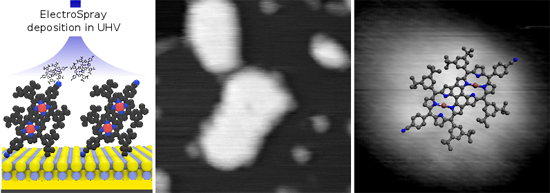
- exposure time compared to the generally applied molecules deposition time of 1–5 min. As can be seen, terraces remain large and flat, and step-edges remain clean from adsorbates. However, some pits are observed on the terraces and step-edges present lots of kinks. Such pits are known from the bombardment


Atomic scale interface design and characterisation
Beilstein J. Nanotechnol. 2015, 6, 1708–1711, doi:10.3762/bjnano.6.174

- surface adsorbates [28], and nanosystems structured from misfit layer compounds [29]. Planar and bended misfit structures, such as tubes, scrolls or nanoparticles, with intriguing electronic and magnetic characteristics have been synthesized, while calculations explained their electronic structure and
Continuum models of focused electron beam induced processing
Beilstein J. Nanotechnol. 2015, 6, 1518–1540, doi:10.3762/bjnano.6.157
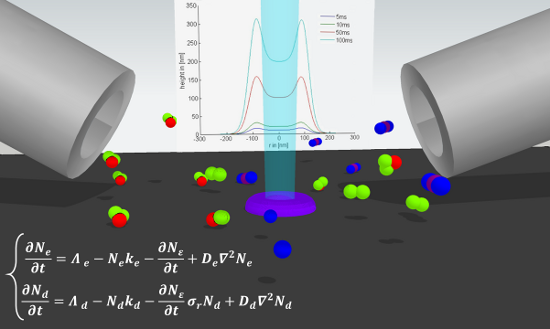
- species ‘a’, Na, their desorption rate ka and desorption flux Naka have units of [adsorbates/Å2], [molecules/s] and [molecules/Å2/s], respectively. Frequently used symbols in this review are defined in Table 1. The term “growth” is applied to both FEBIE and FEBID (positive and negative growth rates refer
- ]. Reaction rate limited growth regime In order to reach clear conclusions it is often desirable to perform simulations and experiments under simplified conditions where one or more processes are negligible. In the case of FEBIP models, a useful simplification occurs when the net transport of adsorbates via
- called the adsorbate-limited growth regime) is defined as . In the mass transport limited regime, the magnitude of the electron flux is sufficiently high to cause significant depletion of precursor adsorbates, and adsorbate diffusion into the area irradiated by electrons makes an important contribution


![[Graphic 37]](/bjnano/content/inline/2190-4286-6-157-i117.png?max-width=637&scale=1.18182) and chemisorbed
and chemisorbed ![[Graphic 38]](/bjnano/content/inline/2190-4286-6-157-i118.png?max-width=637&scale=1.18182) adsorbates versus pressure, calcul...
adsorbates versus pressure, calcul...


Formation of pure Cu nanocrystals upon post-growth annealing of Cu–C material obtained from focused electron beam induced deposition: comparison of different methods
Beilstein J. Nanotechnol. 2015, 6, 1508–1517, doi:10.3762/bjnano.6.156
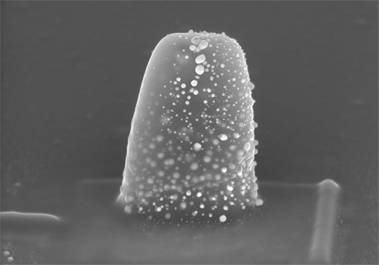
- nanolithography technique, based on the local dissociation of adsorbates upon the irradiation with electrons [1]. The molecules are delivered into the microscope chamber by a gas injection system (GIS) where they reversibly physisorb onto the substrate surface. Part of the energy from the primary electron beam or
- from the secondary electrons generated in the vicinity of the impinging primary beam is transferred to the adsorbates and breaks their chemical bonds. The non-volatile fragments stick to the substrate surface whereas the volatile fragments are removed from the chamber by the pumping system. By
- ) with the best purity enhancement for W(CO)6 (from 37 atom % at 25 °C to 59 atom % of W at 280 °C). However, the temperature rise during the deposition may not be favorable as it also decreases the residence time of adsorbates, significantly lowering the growth rate. Furthermore, the high temperature




Pt- and Pd-decorated MWCNTs for vapour and gas detection at room temperature
Beilstein J. Nanotechnol. 2015, 6, 919–927, doi:10.3762/bjnano.6.95
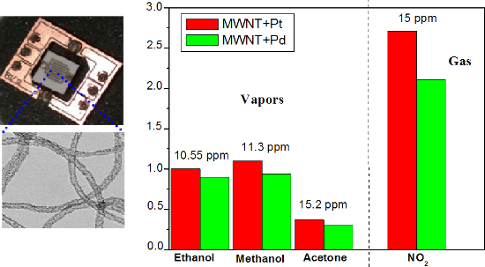
- area, is essential to maximize the effect of adsorbates on metal clusters, which may result in higher sensitivity. Second, while the duration of the sputtering decoration step was basically the same for Pt and Pd, the power used for decorating MWCNTs with Pd was significantly higher than for Pt



Graphene on SiC(0001) inspected by dynamic atomic force microscopy at room temperature
Beilstein J. Nanotechnol. 2015, 6, 901–906, doi:10.3762/bjnano.6.93
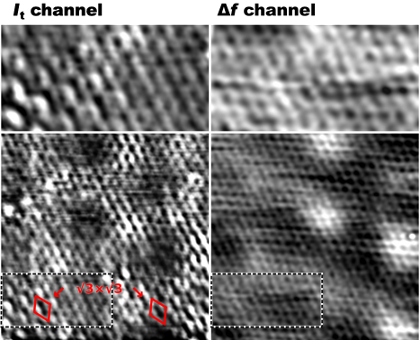
- defects in graphene and graphite [3][13][28][29] and adsorbates [30][31][32]. We also recorded a prominent example of this effect at ion-etched graphene – see Figure 1e. This effect is generally explained by intervalley scattering of electrons in graphene [33]. In contrast, in a special case where the
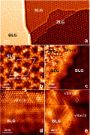


![[Graphic 1]](/bjnano/content/inline/2190-4286-6-93-i1.png?max-width=637&scale=1.18182) × 6
× 6Stick–slip behaviour on Au(111) with adsorption of copper and sulfate
Beilstein J. Nanotechnol. 2015, 6, 820–830, doi:10.3762/bjnano.6.85
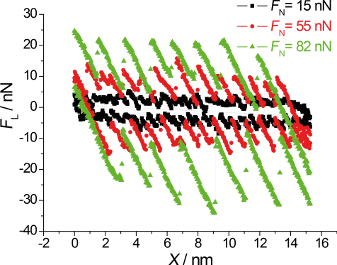
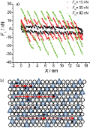
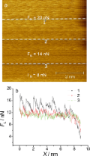
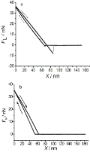
- layer or even displacements of adsorbates [10][13]. We showed that the pressure necessary for the displacement of adsorbates such as a UPD metal calculated from a typical pressure dependence of the adsorption free enthalpy (as given by the adsorption volume, cf. [14][15]) does correspond to the pressure
- study of the nature of atomic-scale friction with respect to the Au(111) surface, covered with different adsorbates. We would like to find out what factors influence friction and to learn more about the role of the double layer thereupon. It is also our ongoing interest to elucidate whether findings
- (Figure 14a) is observed in the potential region positive of and at the pzc where the gold surface is free of adsorbates or covered with a sulfate layer; the value of the adhesion is independent of the potential. For all potentials negative of the pzc including the copper monolayer the adhesion disappears





Nanoparticle shapes by using Wulff constructions and first-principles calculations
Beilstein J. Nanotechnol. 2015, 6, 361–368, doi:10.3762/bjnano.6.35
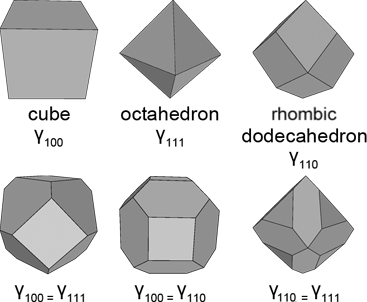
- involves the surface coverage, θ, the adsorption energy, Eads, and the area per surface atom, Aat [15]: Interactions between adsorbates are implicitly taken into account in Equation 1, as these interactions will affect the values of both Eads and θ. An example of Wulff construction is shown in Figure 1 for
- planes with indexes of zeros and ones. An exception might be nanoparticles with strong interactions with their environment. In that case, high-index surfaces that contain steps and kinks offer better binding of adsorbates which will lower their surface energy (see Equation 1). However, due to the fact



Kelvin probe force microscopy in liquid using electrochemical force microscopy
Beilstein J. Nanotechnol. 2015, 6, 201–214, doi:10.3762/bjnano.6.19
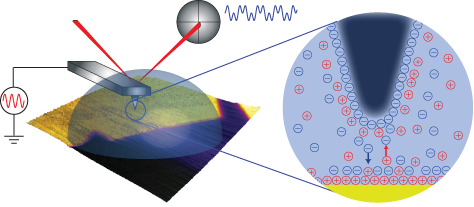
- , become complicated by feedback artefacts and stray capacitance even in vacuum [33][34][35]. In ambient environments, the interpretation of surface potential values increases in complexity due to the possible shielding of the surface by mobile adsorbates and the presence of a thin water layer, resulting


![[Graphic 6]](/bjnano/content/inline/2190-4286-6-19-i11.png?max-width=637&scale=1.18182) response collected 200 nm above a grounded Au electrode in (a, b, c) air, (d, e, f) decane an...
response collected 200 nm above a grounded Au electrode in (a, b, c) air, (d, e, f) decane an...


![[Graphic 22]](/bjnano/content/inline/2190-4286-6-19-i27.png?max-width=637&scale=1.18182) spectra [bias-on] collected 500 nm above HOPG in aqueous solutions of increasing salt concent...
spectra [bias-on] collected 500 nm above HOPG in aqueous solutions of increasing salt concent...

![[Graphic 25]](/bjnano/content/inline/2190-4286-6-19-i30.png?max-width=637&scale=1.18182) spectra [bias-on] collected 500 nm above (a) HOPG and (b) Au in milli-Q water (vertical color...
spectra [bias-on] collected 500 nm above (a) HOPG and (b) Au in milli-Q water (vertical color...

![[Graphic 27]](/bjnano/content/inline/2190-4286-6-19-i32.png?max-width=637&scale=1.18182) spectra [bias-on] recorded 500 nm above a HOPG/Au boundary in milli-Q water. T...
spectra [bias-on] recorded 500 nm above a HOPG/Au boundary in milli-Q water. T...

Materials and characterization techniques for high-temperature polymer electrolyte membrane fuel cells
Beilstein J. Nanotechnol. 2015, 6, 68–83, doi:10.3762/bjnano.6.8
- onto the platinum surface depending on the potential. They also suggested possible orientations of the adsorbates. At low potentials, the undissociated H3PO4 molecules are likely to adsorb on platinum through the non-protonated oxygen atom under the C3v symmetry. Only one IR peak at 1050 cm−1
- in HT-PEM by using in operando X-ray absorption spectroscopy (XAS) incorporating the Δμ technique. The goal of this study was also to investigate phosphoric acid adsorption on platinum in a real fuel cell. The technique is capable to determine adsorbates on the platinum catalyst particles by
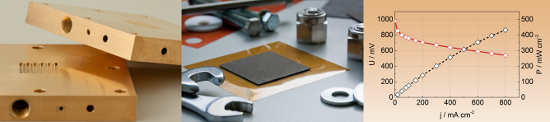
- – μfoil. With various cell potentials, different adsorbates were observed on the platinum nanoparticles as shown in Figure 13. Three potential regions were identified with distinctly different species covering the catalyst surface. At cell potentials lower than 300 mV, hydrogen is adsorbed. In the




Localized surface plasmon resonances in nanostructures to enhance nonlinear vibrational spectroscopies: towards an astonishing molecular sensitivity
Beilstein J. Nanotechnol. 2014, 5, 2275–2292, doi:10.3762/bjnano.5.237
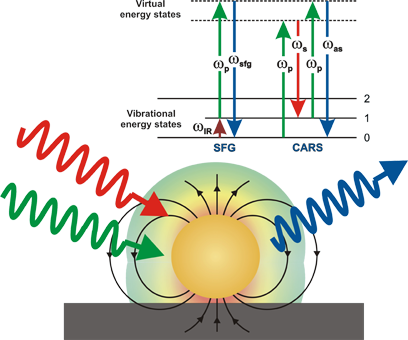
- the SFG emission from the interface, the authors obtained a nonlinear polarizability coefficient of the arachidic acid molecule. These results made the authors optimistic on the future possibility to use SPWs to identify molecular adsorbates. In 1997, Alieva et al. used a grating coated with silver




Spectroscopic mapping and selective electronic tuning of molecular orbitals in phosphorescent organometallic complexes – a new strategy for OLED materials
Beilstein J. Nanotechnol. 2014, 5, 2248–2258, doi:10.3762/bjnano.5.234
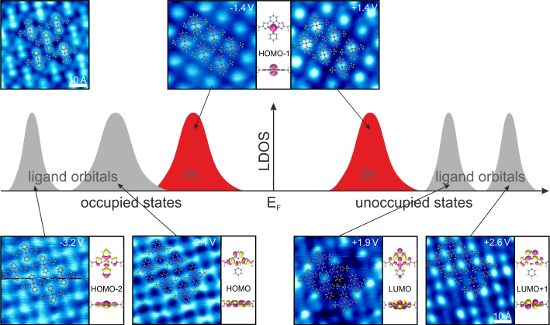
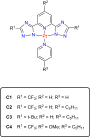
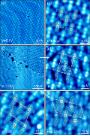
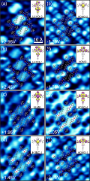
- between the Pt atom and the AL. This may occur when a molecule diffuses to an elbow site of the Au(111) herringbone reconstruction or a monatomic step edge, where the Au atoms have a lower coordination and hence interact stronger with adsorbates. At higher coverages, diffusion (and thus dissociation) is
- hindered. In fact, we cannot observe the unknown elongated molecular structures at high nominal coverages close to a complete monolayer. Occasionally, the supposed 4-pentylpyridine pairs are separated by a round protrusions. We speculate that these are Au atoms bound to the two adsorbates [40], as depicted



Electrical contacts to individual SWCNTs: A review
Beilstein J. Nanotechnol. 2014, 5, 2202–2215, doi:10.3762/bjnano.5.229
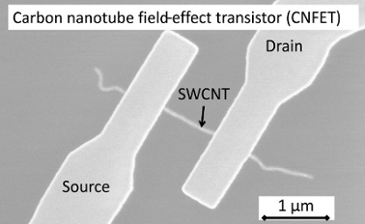
- properties. A constant or pulsed current [37][79][80][81] was applied through the electrodes. An instant heating locally in the contact area could remove the adsorbates remaining on the SWCNTs after wet deposition, thus reducing the tunneling barrier for carrier injection at the metal–SWCNT interface


Advances in NO2 sensing with individual single-walled carbon nanotube transistors
Beilstein J. Nanotechnol. 2014, 5, 2179–2191, doi:10.3762/bjnano.5.227
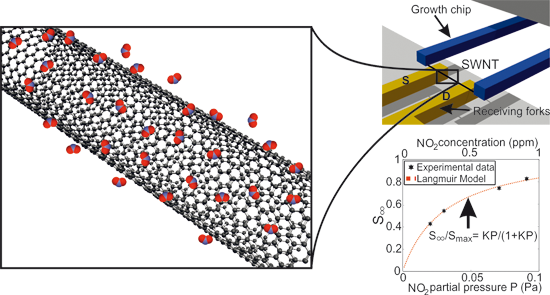
- summarize the current knowledge on this topic, focusing not only on the effect of adsorbates but also the effect of dielectric charge traps on the electrical transport in single-walled carbon nanotube transistors that are to be used in sensing applications. Recently, contact-passivated, open-channel
- . Therefore, all the carbon atoms in the nanotube can, in principle, interact with the analyte gas, while simultaneously supporting charge transport in the device. Thus, adsorbates and electrostatic charges and dipoles close to the nanotube can greatly impact charge transport. At the same time, the carbon
- architecture, with suspended or on-substrate tubes, and passivated or unpassivated contacts have been reported (Figure 1). The conductivity of a CNFET can be influenced by surface adsorbates. In particular, the adsorption of electron-withdrawing gases, such as NO2, or electron-donating gases such as NH3 can


Patterning a hydrogen-bonded molecular monolayer with a hand-controlled scanning probe microscope
Beilstein J. Nanotechnol. 2014, 5, 1926–1932, doi:10.3762/bjnano.5.203

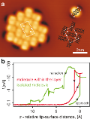
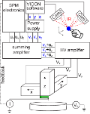
- the controlled manipulation to larger molecules is expected to multiply the potential of engineered nanostructures. Here we report an enhancement of the SPM technique that makes the manipulation of large molecular adsorbates much more effective. By using a commercial motion tracking system, we couple
- large organic adsorbates without prior knowledge of the potential to which the manipulated system is subjected. Experimental For the demonstration of our manipulation technique we chose one of the best-studied cases of the adsorption of complex organic molecules: the well-ordered interface formed by the
- shows, manual manipulation can also be used to “correct” errors by filling a created vacancy with a molecule that has been extracted from a different location. Conclusion In summary, HCM allows for the straightforward manipulation of single molecules of large organic adsorbates in bound assemblies. The


Cathode lens spectromicroscopy: methodology and applications
Beilstein J. Nanotechnol. 2014, 5, 1873–1886, doi:10.3762/bjnano.5.198

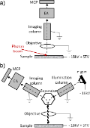
- ]. The backscattering intensity varies depending on the material, presence of adsorbates, formation of surface reconstructions and other ordered structures, giving the means to distinguish lateral variations in such properties. In the basic operation mode, only one of the low energy electron diffraction



Electronic and electrochemical doping of graphene by surface adsorbates
Beilstein J. Nanotechnol. 2014, 5, 1842–1848, doi:10.3762/bjnano.5.195
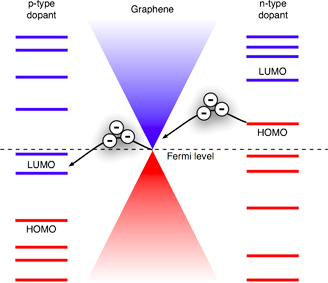
- controllable doping with charge carriers. Being a two-dimensional material graphene is extremely sensitive to surface adsorbates, so its electronic properties can be effectively modified by deposition of different atoms and molecules. In this paper, we review two mechanisms of graphene doping by surface
- adsorbates, namely electronic and electrochemical doping. Although, electronic doping has been extensively studied and discussed in the literature, much less attention has been paid to electrochemical doping. This mechanism can, however, explain the doping of graphene by adsorbates for which no charge
- transfer is expected within the electronic doping model. In addition, electrochemical doping is in the origin of the hysteresis effects often observed in graphene-based field effect transistors when operating in the atmospheric environment. Keywords: adsorbates; doping; electrochemical; electronic


Restructuring of an Ir(210) electrode surface by potential cycling
Beilstein J. Nanotechnol. 2014, 5, 1349–1356, doi:10.3762/bjnano.5.148
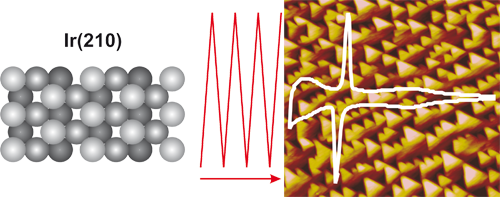
- ][11], (ii) structural changes in operando, e.g., for hydrogen evolution at PdAu nanoparticles [12], (iii) removal of islands by adsorbates, such as electrochemical annealing of Au(100) by adsorbed chloride [13][14], (iv) dissolution of metals at positive potentials and restructuring by oxidation


Sublattice asymmetry of impurity doping in graphene: A review
Beilstein J. Nanotechnol. 2014, 5, 1210–1217, doi:10.3762/bjnano.5.133
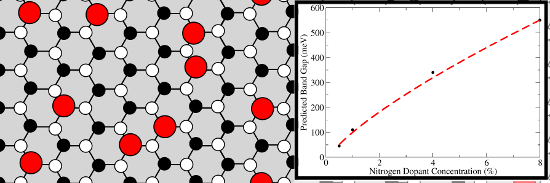
- we outline in this section. The natural question to ask is if this asymmetry is particular to nitrogen only, or if it can be found with other dopants. Theoretical findings in the past have shown that such an effect can be expected with a dilute concentration of certain adsorbates [59], and indeed
- of strain on such a system is difficult due to the technicalities of the CVD method, but could be explored using adsorbates instead of substitutions or by incorporation of the strain in to the nitrogen ion bombardement and annealing procedure discussed earlier. Another open question is if a critical


Double layer effects in a model of proton discharge on charged electrodes
Beilstein J. Nanotechnol. 2014, 5, 973–982, doi:10.3762/bjnano.5.111
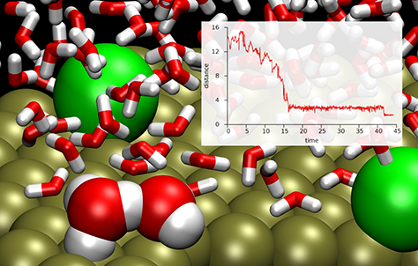
- different catalysts and different catalyst surface geometries. In this context water adsorbates and bilayers have been studied extensively. The electrostatic potential has been introduced either through the implementation of sophisticated boundary conditions [6], through balancing of net electrode charges
- 1 and 2 Cl− ions, each ion carries its full negative charge. The focus of the present work did not reach towards consideration of the electrochemically well-established effect of partial charge transfer, which has been investigated in particular for halogen adsorbates [34]. The magnitude of the
- approaching positively charged proton avoids the positively charged Na+ ion. As Figure 6 shows, this effect is indeed present, but it appears to be rather weak. In fact, the proton approaches the surface even slightly faster when the Na+ ion is present in the double layer. The presence of the ionic adsorbates


Effect of contaminations and surface preparation on the work function of single layer MoS2
Beilstein J. Nanotechnol. 2014, 5, 291–297, doi:10.3762/bjnano.5.32
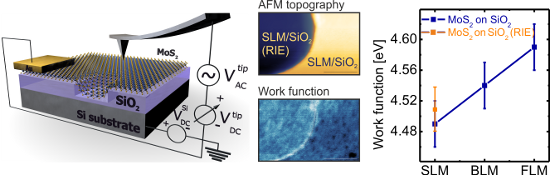
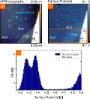
- and KPFM measurements the sample was introduced to the UHV system. Before the data collection the sample was heated in situ to 200 °C for 30 min to remove any adsorbates from ambience. In Figure 3a and Figure 3c the NC-AFM topography and the corresponding surface potential map are shown, respectively
- likely to be detrimental to the performance of SLM devices [53]. For graphene and MoS2 it has been shown, that adsorbates due to ambient exposure can have a strong impact on the work function of these materials, like inducing an additional charge transfer or even redox reactions with water [29][54]. In
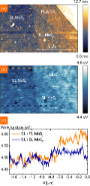
- pristine MoS2. We therefore conclude that the investigated MoS2 is not affected by ambient adsorbates. In Figure 4c we used the line profile to quantify the work function of SLM and BLM. The work function of SLM is determined to be the same as using the histogram analysis in Figure 3 with ΦSLM = 4.49



Nanoscale patterning of a self-assembled monolayer by modification of the molecule–substrate bond
Beilstein J. Nanotechnol. 2014, 5, 258–267, doi:10.3762/bjnano.5.28
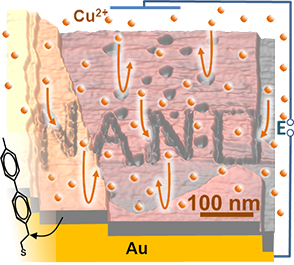
- followed by adsorption of AdSH. The appearance of Au adatom islands upon the thiol exchange suggests that the interfacial structures of BP2 and AdSH SAMs are different. Keywords: copper; electrodeposition; gold adatoms; nanolithography; negative resist; Introduction The applications of organic adsorbates


The role of surface corrugation and tip oscillation in single-molecule manipulation with a non-contact atomic force microscope
Beilstein J. Nanotechnol. 2014, 5, 202–209, doi:10.3762/bjnano.5.22
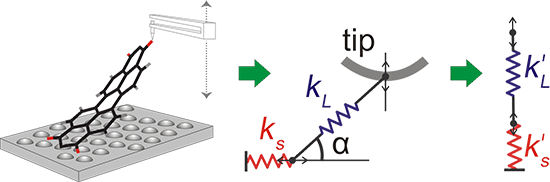
- -molecule junctions is still not generally understood and therefore the forces that act in the junction during the manipulation provide more direct information about the conformation of the molecule. One of the first attempts to manipulate large organic adsorbates with the tip of the LT-STM/NC-AFM has been

Change of the work function of platinum electrodes induced by halide adsorption
Beilstein J. Nanotechnol. 2014, 5, 152–161, doi:10.3762/bjnano.5.15
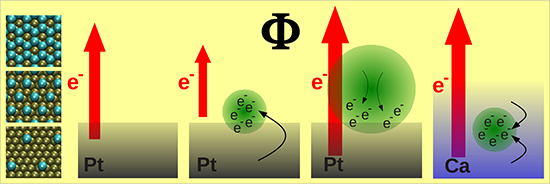
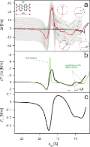
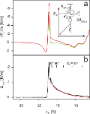
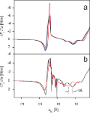
- iodine. For electronegative adsorbates, an adsorption-induced increase of the work function is usually expected, yet we find a decrease of the work function for Cl, Br and I, which is most prominent at a coverage of approximately 0.25 ML. This coverage-dependent behavior can be explained by assuming a
- chlorine, bromine and iodine on Pt(111) leads to an unexpected decrease of the work function. Based on calculations for several adsorbates on tungsten surfaces, Leung, Kao and Su pointed out that it is possible to relate the electronegativity scale to the direction of the charge transfer but not
- is another aspect that needs to be clarified. In a simple model, one may completely neglect the interaction between the adsorbates. In this case, a linear trend would be expected, where θ is the surface coverage and Δμ is the change in the surface dipole moment brought about by the adsorption of a


Core level binding energies of functionalized and defective graphene
Beilstein J. Nanotechnol. 2014, 5, 121–132, doi:10.3762/bjnano.5.12
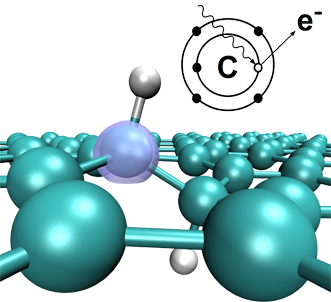
- SV site were considered as well, as the dangling bond constitutes a reactive site for the absorption of molecules from the environment. As the absorption of more electronegative atoms can have a large impact on the C 1s binding energy of the neighboring carbon atom, the following adsorbates were
- values are expected to be accurate and useful if an experimental baseline can be established in a specific study. Conclusion We have calculated the core level binding energies of both pristine and defective monolayered graphene functionalized with oxygen- and hydrogen-based adsorbates in a large and





