


Search results
Search for "agglomeration" in Full Text gives 284 result(s) in Beilstein Journal of Nanotechnology. Showing first 200.
A review on the green and sustainable synthesis of silver nanoparticles and one-dimensional silver nanostructures
Beilstein J. Nanotechnol. 2021, 12, 102–136, doi:10.3762/bjnano.12.9
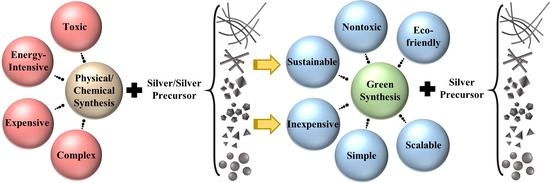
- unique surface characteristics [228]. Therefore, for safe biological applications (i.e. in the medical and food industry), this approach would be preferred as an alternative for methods that necessarily require the use of chemical stabilizers [108][112]. In addition, the small NP size, low agglomeration
- agglomeration, higher purity, and higher crystallinity compared to those produced by chemical methods [230]. The method is simple and reproducible [230]; however, the process runs using high operating temperatures, and more specifically, the center of the reaction tube may not reach the setpoint temperature due
- to the short residence time inside the reactor and finite heat transfer from the wall [124]. In general, although physical methods can produce nanoparticles with high purity, most of them are very expensive and may lead to agglomeration of products [140]. Based on all the disadvantages explained here


Fusion of purple membranes triggered by immobilization on carbon nanomembranes
Beilstein J. Nanotechnol. 2021, 12, 93–101, doi:10.3762/bjnano.12.8
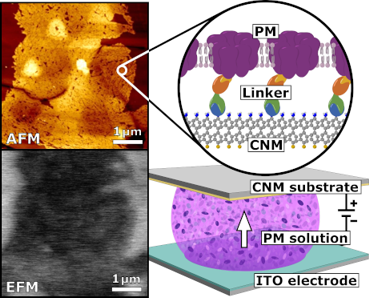
- no fusion but rather agglomeration is observed. Above 10 V, the patches seem to decay into smaller pieces, see Figure S4, Supporting Information File 1. A voltage of 5 V is optimal regarding the fusion results as shown in Figure 3. OD had to be low to prevent cluster formation. The number of merged


The role of gold atom concentration in the formation of Cu–Au nanoparticles from the gas phase
Beilstein J. Nanotechnol. 2021, 12, 72–81, doi:10.3762/bjnano.12.6
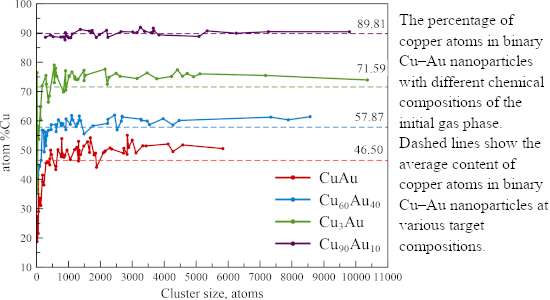
- simulation and the data on the size distribution of Cu3Au clusters obtained by laser deposition [3]. An analysis of the shape and distribution of the Cu3Au clusters on the substrate indicates that the agglomeration processes were suppressed in this case [3]. The reason for that may be the wide spatial
- linear shape, obtained by the agglomeration of many primary clusters. Therefore, its true size can be much larger. Consequently, we can conclude that with the chosen simulation parameters (i.e., the size of the system and the number of atoms contained in it) it was possible to repeat the results obtained
- approximate diameter value of the spherical cluster (D = 4.61 nm). In addition to this basic group, another five particles with a size of up to 17000 atoms were discovered, which were formed by agglomeration at sufficiently low temperatures. We observed a similar pattern for all of the heat energy removal


Effect of different silica coatings on the toxicity of upconversion nanoparticles on RAW 264.7 macrophage cells
Beilstein J. Nanotechnol. 2021, 12, 35–48, doi:10.3762/bjnano.12.3
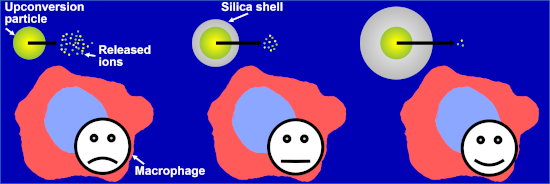
- , consequently, their cytotoxicity. This assumption is well supported by cell viability, ion release, cellular uptake, and cell cycle assays, even if other factors (e.g., surface functionalization and subsequent effects, such as agglomeration) also influence these processes. However, it was shown that silica


Bio-imaging with the helium-ion microscope: A review
Beilstein J. Nanotechnol. 2021, 12, 1–23, doi:10.3762/bjnano.12.1
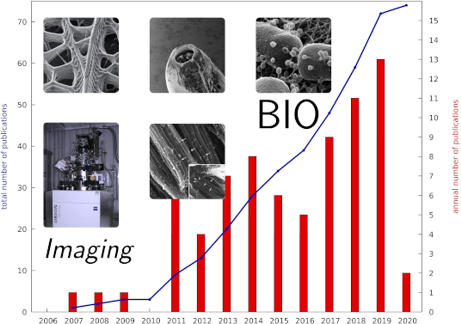
- have applied HMDS treatment for HIM [17][60][64][66]. (IV) Air drying: During air drying, the liquid–gaseous boundary is crossed, leading to strong surface tension, which acts on the sample and causes damage to the structure, leading to agglomeration and collapse. Consequently, air drying should only


Nanocasting synthesis of BiFeO3 nanoparticles with enhanced visible-light photocatalytic activity
Beilstein J. Nanotechnol. 2020, 11, 1822–1833, doi:10.3762/bjnano.11.164
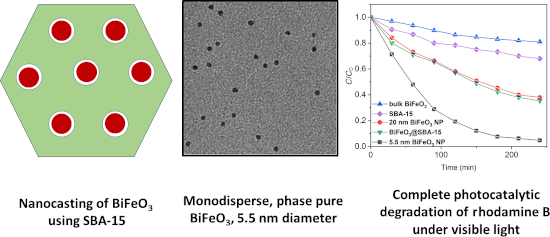
- calcination temperatures of at least 500 °C for a minimum of 1–2 h, which can lead to particle growth, agglomeration and to the formation of secondary phases. It should be noted that, in general, low calcination temperatures favor the generation of smaller particles with narrow bandgaps and promote the




Molecular dynamics modeling of the influence forming process parameters on the structure and morphology of a superconducting spin valve
Beilstein J. Nanotechnol. 2020, 11, 1776–1788, doi:10.3762/bjnano.11.160
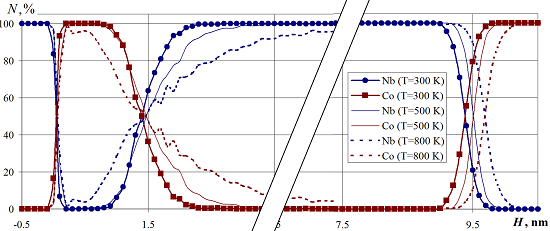
- speed led to a deviation of the composition from the data obtained in the basic version of the calculation. A significant increase in the flux intensity leads to higher agglomeration of the metal atoms above the surface of the substrate. The structure of the resulting nanofilms directly depends on the


Piezoelectric sensor based on graphene-doped PVDF nanofibers for sign language translation
Beilstein J. Nanotechnol. 2020, 11, 1655–1662, doi:10.3762/bjnano.11.148
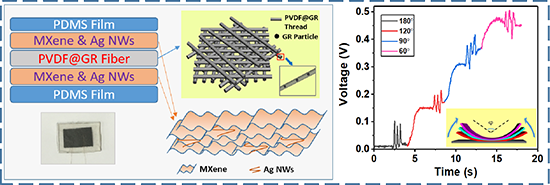
- , and 1.0 wt %. Figure 2b shows SEM images after doping with different concentrations. It can be found that all spinning solutions yield a uniform fiber film without GR agglomeration after electrospinning. Figure 2c shows the FTIR spectra of samples with different doping concentrations. Further, XRD was


High-responsivity hybrid α-Ag2S/Si photodetector prepared by pulsed laser ablation in liquid
Beilstein J. Nanotechnol. 2020, 11, 1596–1607, doi:10.3762/bjnano.11.142
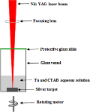
- taking into account the transmittance of the ablation liquid at 1064 nm. The ablation time for each sample was set to 20 min. Figure 1 shows a schematic of the pulsed laser ablation system used in this work. A rotating motor was used to help prevent the aggregation and agglomeration of particles during
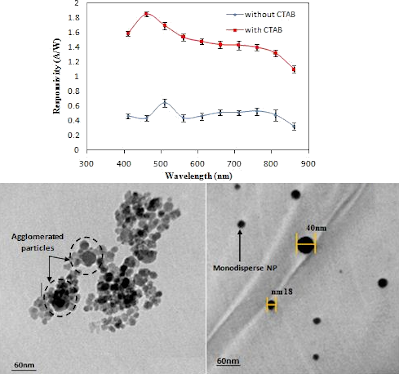
- intensity of peaks (surface-enhanced Raman scattering) due to the reduced agglomeration and aggregation of particles and the small size of the Ag2S particles prepared under the effect of the CTAB surfactant [29]. Inset of Figure 4 is the Raman spectrum of thiourea solution, in which three peaks were
- absorption compared with that prepared in the pure Tu solution. This result can be ascribed to the increased stability of the colloidal particles with CTAB as capping agent. Moreover, this finding indicated that no severe agglomeration of NPs occurred when CTAB was added to the Tu solution. The concentration




Wafer-level integration of self-aligned high aspect ratio silicon 3D structures using the MACE method with Au, Pd, Pt, Cu, and Ir
Beilstein J. Nanotechnol. 2020, 11, 1439–1449, doi:10.3762/bjnano.11.128
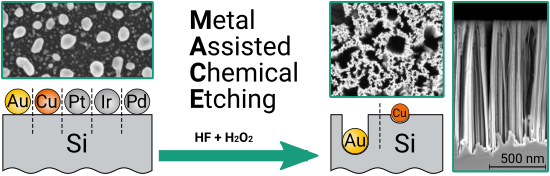
- necessary. This has not been investigated within this work. Up to this etching depth, the nanostructures are stable and withstand the drying process. There is no agglomeration or pattern collapse. However, with increasing etching depth, the structures become more fragile. Figure 5 shows SEM images of a
- the Pd-covered wafers, the Pt-covered wafers exhibited a homogeneous sponge-like structure without a bundling effect (Figure 7c,d). The structures are approx. 630 nm deep. The Pt particles seem to remain on the surface but show a partial agglomeration. This effect can be seen in Figure 7d. Despite the


One-step synthesis of carbon-supported electrocatalysts
Beilstein J. Nanotechnol. 2020, 11, 1419–1431, doi:10.3762/bjnano.11.126

- agglomeration (i.e., highly porous supports) [16]. After years of development, conventional synthesis methods still have problems meeting the requirements for scalability of the synthesis and long-term stability of the resulting catalyst. In this work, we report on a novel one-step synthesis approach that not
- , on which the Pt-NPs can then easily diffuse. Hence, these supports often require additional functionalization steps for avoiding metal particle agglomeration, which reduces the electrical conductivity and durability of the support. In sharp contrast, the one-step synthesis of Pt/CNW presented herein
- narrow PSDs due to the suppression of particle growth by agglomeration but also in increased long-term stability as was observed for all Pt/CNW catalysts when compared to HiSPEC4000 (see Figure 8). The respective cyclic voltammograms of the samples mentioned in Figure 7 and Figure 8 are given in




Magnetic-field-assisted synthesis of anisotropic iron oxide particles: Effect of pH
Beilstein J. Nanotechnol. 2020, 11, 1230–1241, doi:10.3762/bjnano.11.107
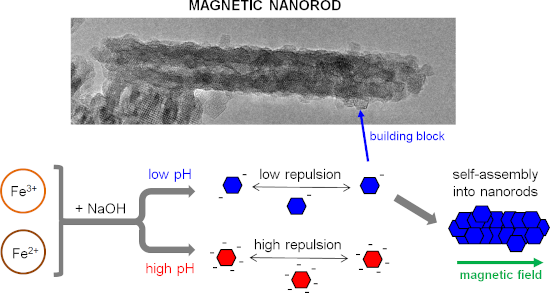
- [8][35]. On the one hand, these approaches are advantageous since as-prepared nanoparticles covered by surfactant or polymer molecules become more stable and less susceptible to fast agglomeration. On the other hand, the nanoparticle surfaces become covered by these compounds, which are sometimes





Influence of the magnetic nanoparticle coating on the magnetic relaxation time
Beilstein J. Nanotechnol. 2020, 11, 1207–1216, doi:10.3762/bjnano.11.105
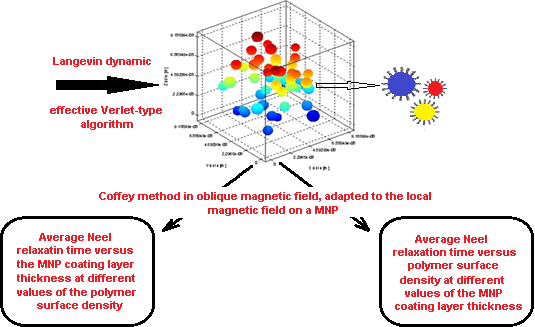
- Abstract Colloidal systems consisting of monodomain superparamagnetic nanoparticles have been used in biomedical applications, such as the hyperthermia treatment for cancer. In this type of colloid, called a nanofluid, the nanoparticles tend to agglomeration. It has been shown experimentally that the
- fill in this gap, this study presents a numerical simulation model that elucidates how the nanoparticle coating affects the nanoparticle agglomeration tendency as well as the effective magnetic relaxation time of the system. To simulate the self-organization of the colloidal nanoparticles, a stochastic
- performed to reduce the sensitivity of nanoparticles to air, humidity and acidity. In addition, it allows for the functionalization and absorption of proteins and creation of hydrophilic molecules at the surface of the nanoparticles to prevent agglomeration, reducing capillary obstruction risk. Coating can


High permittivity, breakdown strength, and energy storage density of polythiophene-encapsulated BaTiO3 nanoparticles
Beilstein J. Nanotechnol. 2020, 11, 1190–1197, doi:10.3762/bjnano.11.103
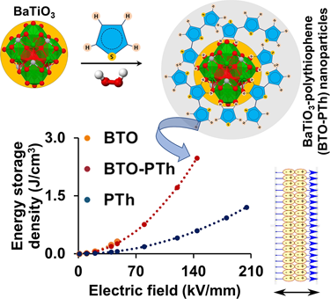
- ][10], which are largely attributed to the interphase inhomogeneity, poor distribution, and agglomeration of BTO nanoparticles in the polymer matrix. You et al. [10] observed an increase in the permittivity (from 4 to 14) of poly(arylene ether nitrile) filled with 40 wt % polyaniline-functional-BTO




Applications of superparamagnetic iron oxide nanoparticles in drug and therapeutic delivery, and biotechnological advancements
Beilstein J. Nanotechnol. 2020, 11, 1092–1109, doi:10.3762/bjnano.11.94
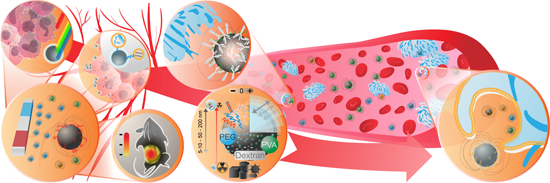
- circulation time than dextran-coated SPIONs [39], having better colloidal stability and reduced agglomeration tendency. In addition, very importantly, the PEG coating did not degrade the magnetization properties of the nanoparticles [82]. Chen et al. [40] showed that SPIONs functionalized with PEG, grafted
- medium, led to nanoparticle agglomeration. Dulbecco's Modified Eagle Medium (DMEM) with added serum yielded the highest nanoparticle stability compared to other media [54][87]. Also, PVA-coated SPIONs were not internalized by cells when the cell culture medium had serum in it. Without serum cell uptake


Wet-spinning of magneto-responsive helical chitosan microfibers
Beilstein J. Nanotechnol. 2020, 11, 991–999, doi:10.3762/bjnano.11.83
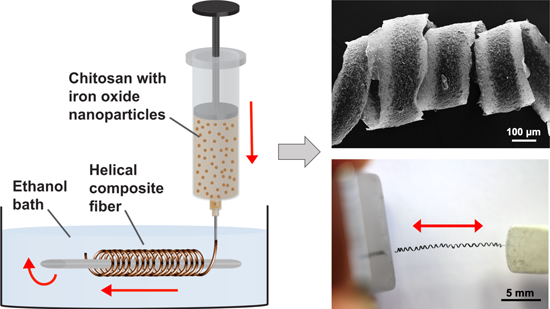
- panel) reveal a fiber diameter of approximately 130 µm and a higher magnification image confirms the coagulation-driven IOP agglomeration in the chitosan fibers (right panel). (C) SEM images obtained from the backscattered electrons show the difference in material contrast between the chitosan matrix


Agglomerates of nanoparticles
Beilstein J. Nanotechnol. 2020, 11, 854–857, doi:10.3762/bjnano.11.70
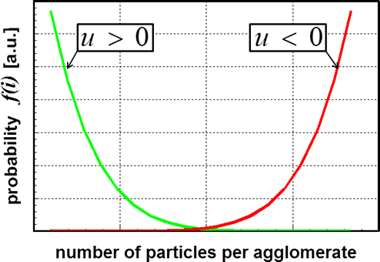
- Dieter Vollath NanoConsulting, Primelweg 3, Stutensee 76297, Germany 10.3762/bjnano.11.70 Abstract Nanoparticles tend to agglomerate. The process of agglomeration is ruled by thermodynamics. Depending on the sign of the enthalpy of interaction, ensembles consist of (repelling) poorly agglomerated
- . The exact determination of the size distribution of the agglomerates also gives the maximum size of the agglomerates. These considerations lead to an improved understanding of ensembles of agglomerated nanoparticles. Keywords: agglomeration; enthalpy; entropy; Gibbs entropy; nanoparticles; size
- microscopy of individual particles to analyze their shape or structure, it is necessary to apply a separation process. Earlier, the problem of agglomeration was already discussed in connection with colloids [2][3][4][5][6]. Recently, two studies of the formation of agglomerates of nanoparticles were


Nickel nanoparticles supported on a covalent triazine framework as electrocatalyst for oxygen evolution reaction and oxygen reduction reactions
Beilstein J. Nanotechnol. 2020, 11, 770–781, doi:10.3762/bjnano.11.62
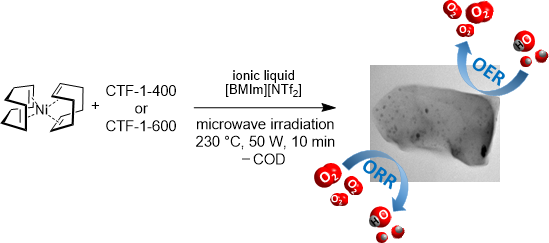
- stabilization of metal nanoparticles and for a good dispersion of active species that are formed upon reduction of coordinated or impregnated metal precursors while minimizing their agglomeration and leaching [35]. In the literature we can find some studies that are focused on CTFs as catalysts for ORR. In the


Structural optical and electrical properties of a transparent conductive ITO/Al–Ag/ITO multilayer contact
Beilstein J. Nanotechnol. 2020, 11, 695–702, doi:10.3762/bjnano.11.57
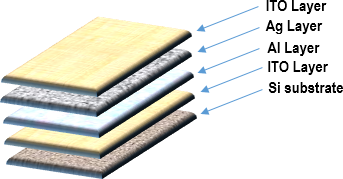
- dense particles. After annealing, the film surfaces become smoother and the grain sizes increase, with the IAAI films exhibiting larger grain sizes. Island formation or agglomeration of the Al–Ag metal film on the surface of the annealed IAAI film was not observed. Hence, the IAAI structure is stable at


Identification of physicochemical properties that modulate nanoparticle aggregation in blood
Beilstein J. Nanotechnol. 2020, 11, 550–567, doi:10.3762/bjnano.11.44
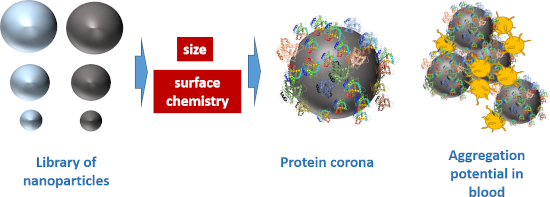
- may indirectly induce platelet aggregation. The interference with the coagulation system is not the only possible mechanism that may induce vascular occlusion, as the NP have a strong tendency to agglomerate also in water. The degree of the agglomeration is controlled by the size, shape and surface
- chemistry of the particles. Strong repulsive electrostatic charges and steric hindrance may stabilize the NPs and prevent agglomeration. In the bloodstream, agglomeration is related to the formation of a biocorona that modifies the electrostatic and steric repulsion among particles [22]. Finally, protein
- –protein interaction may lead to bridging among particles, thus promoting agglomeration [23]. In the present study, a set of six silica and carbon NPs of known size and morphology was used to evaluate the effect of the size and surface properties on the protein corona composition, platelet activation and




Synthesis and enhanced photocatalytic performance of 0D/2D CuO/tourmaline composite photocatalysts
Beilstein J. Nanotechnol. 2020, 11, 407–416, doi:10.3762/bjnano.11.31
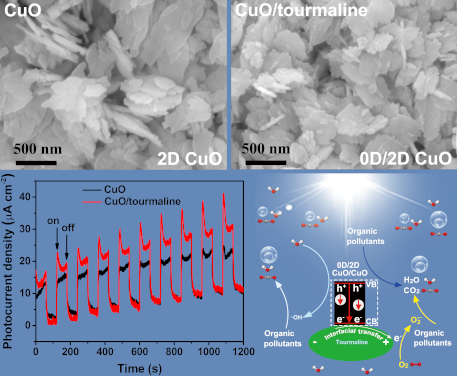
- and higher specific surface area compared with its bulk counterpart [11][12]. However, the agglomeration of nanoscale CuO results from the high surface energy and the quick recombination of the photoinduced charge carriers and restricts the photocatalytic activity [13][14]. At present, the
- CuO nanoflakes and significantly alleviated their agglomeration. The lattice fringes with a d spacing of 0.34 nm and 0.25 nm matched well with the (012) plane of tourmaline and the (002) plane of CuO, respectively (Figure 3d,e, inset). There was intimate interfacial contact between CuO and tourmaline


Interactions at the cell membrane and pathways of internalization of nano-sized materials for nanomedicine
Beilstein J. Nanotechnol. 2020, 11, 338–353, doi:10.3762/bjnano.11.25
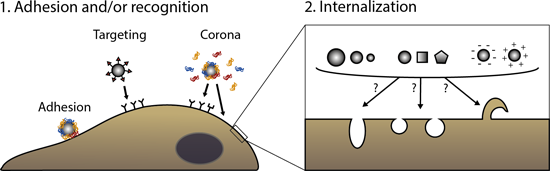
- describe some technical challenges concerning in vitro studies of the endocytosis of nano-sized materials. 4.1 Nanoparticle dispersion in biological media: agglomeration and corona formation One of the most important aspects to consider when studying nanoparticle interactions with cells, as well as when
- characterizing the mechanism for their internalization, is the stability over time and the potential agglomeration of nanoparticles in biological media. In fact, agglomeration can strongly affect the corona composition, the interaction with cells, as well as the pathways of internalization [59][184][185]. Thus
- , it is important to characterize the nanoparticle dispersion in the biological media in which the nanomedicine will be applied, and to monitor potential agglomeration and stability over time. Additionally, studies in which nanoparticles are incubated on cells without serum or other biological fluids


Size effects of graphene nanoplatelets on the properties of high-density polyethylene nanocomposites: morphological, thermal, electrical, and mechanical characterization
Beilstein J. Nanotechnol. 2020, 11, 167–179, doi:10.3762/bjnano.11.14
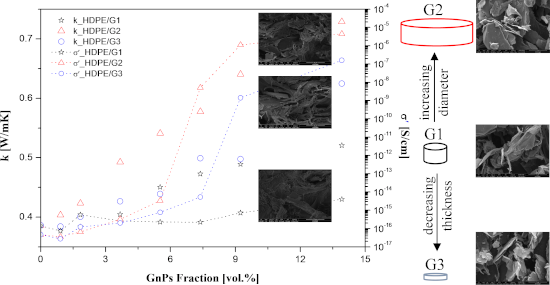
- transfer between GnPs and the HDPE matrix, while G2, with a larger size and thickness, demonstrated an effective improvement of the tensile strength of the nanocomposites because G2 achieved a better dispersion with less agglomeration, as seen in SEM images. According to the obtained results, the
- volume fraction of GnP. This may have been due to agglomeration of the GnPs in the polymer matrix [8]. The agglomeration of the GnPs may have increased the molecular mobility and decreased the thermal stability of the polymer nanocomposites [39]. The thermal stability of the nanocomposites was enhanced


Long-term stability and scale-up of noncovalently bound gold nanoparticle-siRNA suspensions
Beilstein J. Nanotechnol. 2019, 10, 2568–2578, doi:10.3762/bjnano.10.248
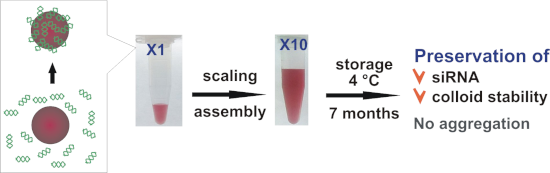
- clumping of particles in the suspension can be reversible or irreversible, which leads to the formation of agglomerates or aggregates, respectively, according to the definition of the IUPAC International Committee [28]. All existing methods for the registration of aggregation/agglomeration of particles in
- and Figure 3A). The appearance of rounded clusters of AuNP-siRNA with a diameter of not more than 200 nm was a consequence of aggregation/agglomeration of particles over the course of one day (Figure 3E). The particles in the clusters were arranged in several layers and were distinguishable. The


Formation of metal/semiconductor Cu–Si composite nanostructures
Beilstein J. Nanotechnol. 2019, 10, 2497–2504, doi:10.3762/bjnano.10.240
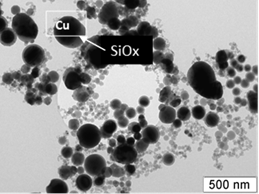
- core–shell nanoparticles upon the condensation of silicon atoms onto the core when a copper nanocluster is introduced into a gaseous medium consisting of silicon atoms. In [22], similar particles were obtained by laser ablation of Au nanoparticles onto larger Co-oxide particles and agglomeration with a





