


Search results
Search for "ammonia" in Full Text gives 153 result(s) in Beilstein Journal of Nanotechnology.
Perovskite-structured CaTiO3 coupled with g-C3N4 as a heterojunction photocatalyst for organic pollutant degradation
Beilstein J. Nanotechnol. 2018, 9, 671–685, doi:10.3762/bjnano.9.62
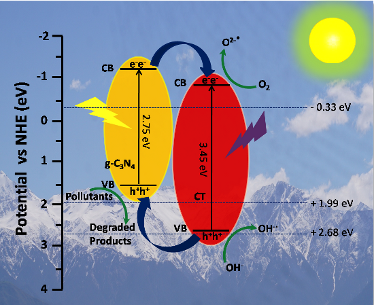
- pollutants from water very effectively. Experimental Materials Both titanium diisopropoxide bis(acetylacetonate) and dicyandiamide were purchased from Sigma-Aldrich, India. Calcium nitrate (Ca(NO3)2·4H2O), acrylamide and D-glucose were supplied by MP Biomedicals, India. Ammonia solution (NH3 about 25
- g of glucose and 0.135 mol of acrylamide were successively added with constant stirring. The thus-obtained viscous solution was made up to 100 mL by adding distilled water, and aqueous ammonia was added dropwise to get a final pH of 2. This solution was heated at 70 °C on a hot plate to initiate the


Anchoring Fe3O4 nanoparticles in a reduced graphene oxide aerogel matrix via polydopamine coating
Beilstein J. Nanotechnol. 2018, 9, 591–601, doi:10.3762/bjnano.9.55
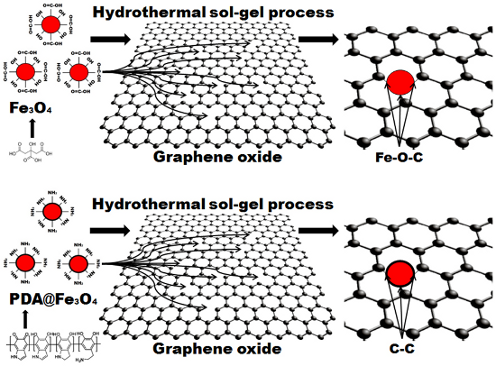
- sample was in turn related to ammonia used for magnetite nanoparticle synthesis. The deconvoluted detailed C 1s, O 1s, N 1s and Fe 2p spectra are presented in Figure 6. The positions and concentrations of the fitted peaks are listed in Table S1 in Supporting Information File 1. The C 1s lines were fitted
- ammonia in Fe3O4-containing samples made the identification of the PDA-related nitrogen peaks problematic. The analysis of the iron Fe 2p region indicated the presence of Fe3O4, as the fitted components – corresponding to Fe2+, Fe3+ and satellites – were positioned at the characteristic binding energy
- ≥99.5%, dopamine hydrochloride and ethylenediamine were obtained from Sigma-Aldrich. Hydrochloric acid 35–38%, sulfuric acid 95%, ethanol 99.8%, ethanol 96% and hydrogen peroxide solution 30% were purchased from POCH. Ammonia solution 25% and potassium permanganate were obtained from Chempur and J.T


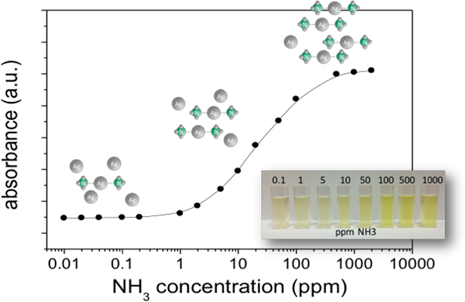
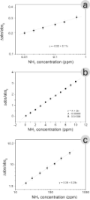
Colloidal solution of silver nanoparticles for label-free colorimetric sensing of ammonia in aqueous solutions
Beilstein J. Nanotechnol. 2018, 9, 499–507, doi:10.3762/bjnano.9.48
- Alessandro Buccolieri Antonio Serra Gabriele Giancane Daniela Manno GFA-Gruppo di Fisica Applicata, Dipartimento di Matematica e Fisica “E. De Giorgi”, Università del Salento Lecce, Italy 10.3762/bjnano.9.48 Abstract Silver nanoparticles were synthesized in the presence of saccharides and ammonia
- (NH3) in the concentration range from 10−2 to 103 ppm to develop an optical sensor for NH3 in aqueous solutions. Ammonia affects the features of the nanoparticles obtained in a concentration-dependent manner as determined by UV–vis absorption analysis and TEM observations. Structural and morphological
- analysis provides the basis for the production of a colorimetric label-free sensor for ammonia. Overall, surface plasmon resonance increases when ammonia concentration rises, although the functional trend is not the same over the entire investigated ammonia concentration range. Three different ranges have



BN/Ag hybrid nanomaterials with petal-like surfaces as catalysts and antibacterial agents
Beilstein J. Nanotechnol. 2018, 9, 250–261, doi:10.3762/bjnano.9.27
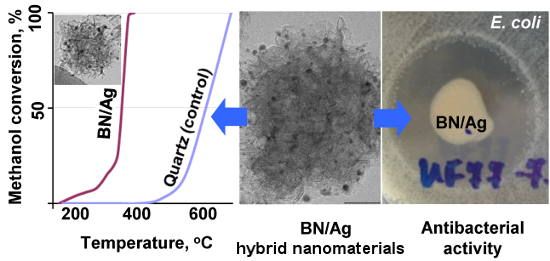
- effect against E. coli K-261. Experimental Synthesis of BN NPs and BN/Ag hybrid nanomaterials Raw BN NPs were produced using a boron oxide CVD process from a mixture of FeO, MgO, and B powders (a weight ratio 150:28:75) via a reaction of boron oxide vapour and flowing ammonia in the vertical induction





Review on optofluidic microreactors for artificial photosynthesis
Beilstein J. Nanotechnol. 2018, 9, 30–41, doi:10.3762/bjnano.9.5
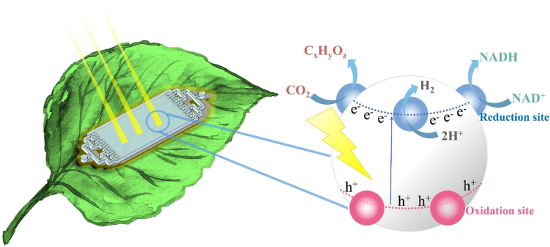
- water splitting. As a renewable and nontoxic gas, hydrogen works not only as a clean fuel but also as a feedstock for important chemical production, such as ammonia and methanol. Similarly, light-driven CO2 reduction has great potential as a clean fuel supplier, especially for the production of methanol


Gas-sensing behaviour of ZnO/diamond nanostructures
Beilstein J. Nanotechnol. 2018, 9, 22–29, doi:10.3762/bjnano.9.4
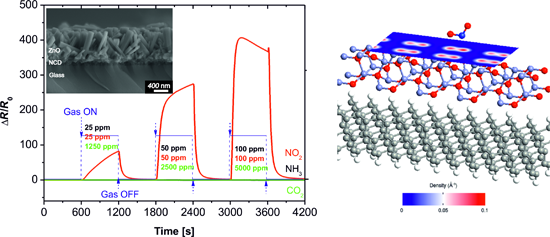
- ) in order to investigate their gas sensing properties for nitrogen dioxide (NO2), ammonia (NH3) and carbon dioxide (CO2) at different concentration ranges of 25–100 ppm or 1250–5000 ppm. For this purpose we developed three different gas sensor devices based on i) NCD thin films, ii) ZnO nanorods, and
- ), nitrogen dioxide (NO2) and ammonia (NH3) at different concentrations at a temperature of 150 °C. The constant gas flow of 100 mL/min was maintained during all the measurements. Results and Discussion Materials characterization and gas sensing Figure 2a shows a top-view SEM surface morphology image of the


Dry adhesives from carbon nanofibers grown in an open ethanol flame
Beilstein J. Nanotechnol. 2017, 8, 2719–2728, doi:10.3762/bjnano.8.271
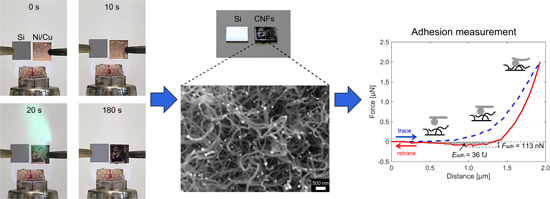
- their pure state under hydrogen or ammonia treatment. These processes require a comparably complex infrastructure, a certain amount of process gases and huge energy input. There exist, however, alternative methods for CNT and CNF growth which are surprisingly simple [5][6][7][8][9]. They need only an
- same time it avoids the use of unfavourable gases such as hydrogen or ammonia and electrical power for heating as the ethanol flame provides sufficiently high temperatures by itself. It is, of course, unlikely to produce CNFs on an industrial scale with an open flame under ambient conditions. It might


Bi-layer sandwich film for antibacterial catheters
Beilstein J. Nanotechnol. 2017, 8, 1982–2001, doi:10.3762/bjnano.8.199
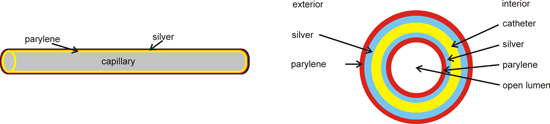
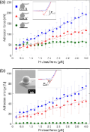
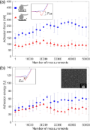
- ammonia, thereby enlarging the pH value. In turn, the formation of inorganic deposits (mainly hydroxyapatite, calcium oxalate and struvite) is promoted [5]. In ureteral stents with their maximum lumen of 1 mm, these deposits can completely block the drainage [6]. In both systems, the initial colonization
- easily precipitated by Cl− ions. The solubility product is 10−10 mol2/L2. Urine contains approximately 0.1 M of Cl−. Silver and silver ions can only be used because urine also contains urease and urea, which generate ammonia, NH3. Ammonia is responsible for a successful application of the antibacterial
- + solution (AgNO3 dissolved in a surplus of aqueous ammonia (type TL, Medorex, Nörten-Hardenberg, Germany), to which a certain amount of a monosaccharide (glucose) or a disaccharide (maltose) is added (denoted as Tollens’ reagent) and air (Figure 9), by which a chain of bubbles is generated, consisting of


Synthesis and catalytic application of magnetic Co–Cu nanowires
Beilstein J. Nanotechnol. 2017, 8, 1769–1773, doi:10.3762/bjnano.8.178
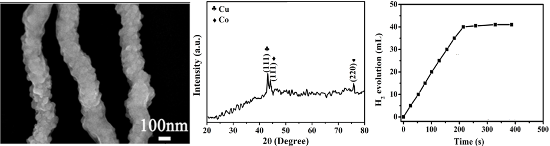
- easily separated from the reaction mixture. Furthermore, they were applied to the hydrolysis system of ammonia borane as a catalyst for the first time. More importantly, the catalysis results showed that the bimetallic nanowires possessed appealing catalytic performance. Therefore, a rapid and facile
- , bimetallic Co–Cu nanowires with a highly desirable linear structure were successfully synthesized via a rapid and facile template-free method [9][10][11] assisted by magnetic fields. Moreover, they were applied to catalyze the hydrolysis of ammonia borane (NH3–BH3, AB) for the first time. This result lays


Two-dimensional carbon-based nanocomposites for photocatalytic energy generation and environmental remediation applications
Beilstein J. Nanotechnol. 2017, 8, 1571–1600, doi:10.3762/bjnano.8.159
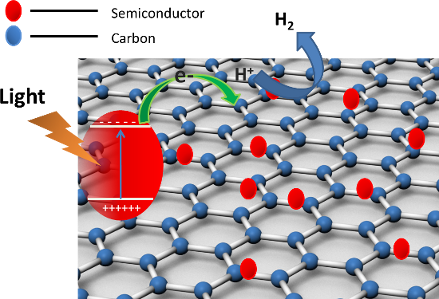
- photocatalytic reaction, the H2 evolution rate was constant. This is mainly because the GO band gap decreases during the reaction, leading to the upward shift of the VB. Teng et al. [113] have shown the functional engineering of GO for tuning its band gap by its treatment with ammonia and have explored its
- photocatalytic activity in water splitting reactions under visible light irradiation. Ammonia-modified GO (NGO) shows n-type conductivity due to the introduction of nitrogen functionality. The band gap of NGO is narrowed due to the removal of various epoxy and carboxyl groups and it further acts as a promising


Bright fluorescent silica-nanoparticle probes for high-resolution STED and confocal microscopy
Beilstein J. Nanotechnol. 2017, 8, 1283–1296, doi:10.3762/bjnano.8.130
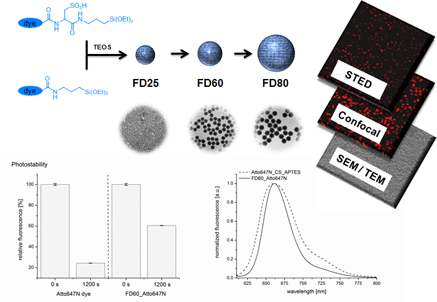
- methods. For this purpose different sizes of Atto647N-doped silica nanoparticles were synthesised following either the method of Stöber [36] or the C-dots method [42]. Both methods utilise ammonia as a catalyst, which has a large influence on the dimension and morphology of the obtained silica
- nanoparticles. Indeed, it is well known that the particle size increases with an increase in ammonia concentration [53][54]. The use of ammonia could be a major limitation for dyes, which are sensitive to high-alkaline pH values. Another drawback of both methods is a broader particle size distribution (Table 2
- /ammonia mixture (0.41 mL/23.57 mL/0.50 mL) directly before the corresponding amount of TEOS. The reaction mixture was stirred for 2 d at room temperature. To gain larger dyed silica nanoparticles (d = 60 nm) the same amount of dye was added to the changed ratio of TEOS (1.05 mL, 4.7 mmol) and the water


Characterization of ferrite nanoparticles for preparation of biocomposites
Beilstein J. Nanotechnol. 2017, 8, 1257–1265, doi:10.3762/bjnano.8.127
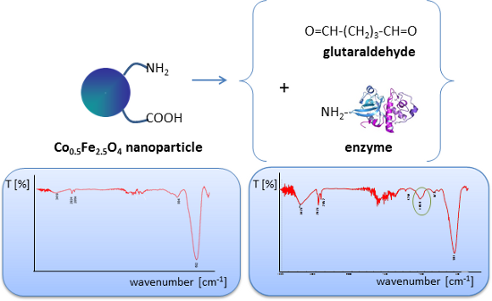
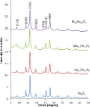
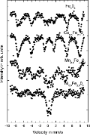
- ), Mn (Mn0.5Fe2.5O4) and Ni (Ni0.5Fe2.5O4) were prepared. The synthesis of these materials was done by the modification of Massart’s method [33]. This is based on the co-precipitation of (0.81 g) Fe(III) and (0.29 g) Fe(II) chlorides in 0.5% ammonia aqueous solution at a temperature of 80 °C under Ar



Preparation of thick silica coatings on carbon fibers with fine-structured silica nanotubes induced by a self-assembly process
Beilstein J. Nanotechnol. 2017, 8, 1145–1155, doi:10.3762/bjnano.8.116
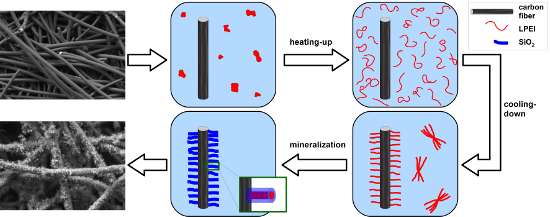
- methanol, dried under ambient conditions and subsequently dissolved in water by neutralizing with 25 wt % aqueous ammonia solution. The clear polymer solution was transferred into dialysis tubing (Aldrich, cellulose membrane, typical molecular weight cut-off: 3500 kDa) and the dialysis was carried out
- against 5 M ammonia solution for 3 days with 6 changes of the ammonia solution. The obtained white crystalline LPEI was washed with water and acetone and dried in a desiccator over silica gel under vacuum. The remaining water content is about 20 wt % as determined by thermogravimetric analysis


Hierarchically structured nanoporous carbon tubes for high pressure carbon dioxide adsorption
Beilstein J. Nanotechnol. 2017, 8, 1135–1144, doi:10.3762/bjnano.8.115
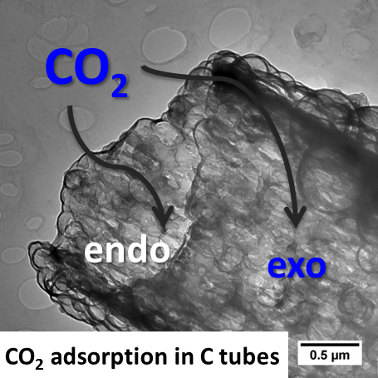
- material. Experimental Materials Polystyrene (PS, pro-plast from BASF), tetraethylorthosilicate (TEOS, ABCR), ammonia (NH3, Grüssing), dimethylformamide (DMF, Merck), tetrahydrofuran (THF, Merck), and ethanol (EtOH, Brenntag) were used as received without further purification. Synthesis of polystyrene


CVD transfer-free graphene for sensing applications
Beilstein J. Nanotechnol. 2017, 8, 1015–1022, doi:10.3762/bjnano.8.102
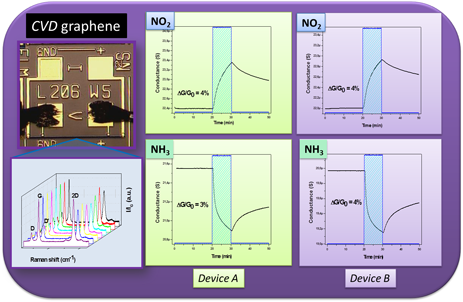
- straightforward integration in electronic devices. Keywords: ammonia; chemiresistors; CMOS-compatible process; graphene; nitrogen dioxide; transfer-free growth; Introduction Due to its extraordinary electronic, chemical, mechanical, thermal and optical properties, graphene has been defined as the “wonder
- have been exposed to NH3. Even in this case both chemiresistors exhibit a comparable percentage variation of the conductance, as well as similar kinetics (Figure 4). Because ammonia is an electron-donor analyte, the conductance show a decrease, further confirming the p-type nature of the synthesized


Investigation of growth dynamics of carbon nanotubes
Beilstein J. Nanotechnol. 2017, 8, 826–856, doi:10.3762/bjnano.8.85
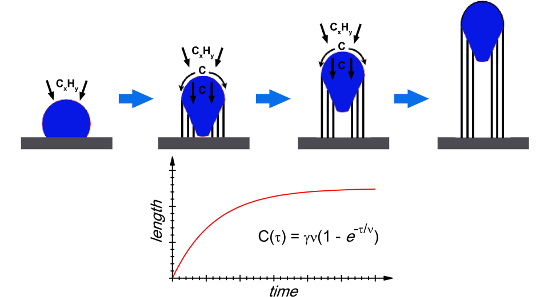
- floating-catalyst CVD process with a use of ferrocene as catalyst precursor and a small amount of ammonia. Over 90% of SWCNTs had near-armchair structure. It was suggested that NH3, which is a strong etchant, selectively etched off SWCNTs with small chiral angles due to their higher reactivity and lower


Synthesis of graphene–transition metal oxide hybrid nanoparticles and their application in various fields
Beilstein J. Nanotechnol. 2017, 8, 688–714, doi:10.3762/bjnano.8.74
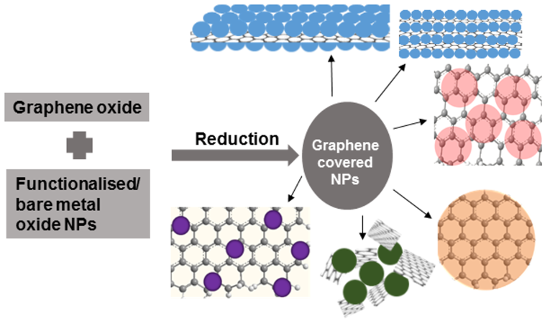
- lithium storage upon cycling contribute to an enhanced specific capacity [142]. N-doped MnO–graphene prepared by a simple hydrothermal method followed by a heat treatment under ammonia atmosphere, shows a higher capacity and cycle life due to the unique N-doped nanostructure and the efficient mixing with






Gas sensing properties of MWCNT layers electrochemically decorated with Au and Pd nanoparticles
Beilstein J. Nanotechnol. 2017, 8, 592–603, doi:10.3762/bjnano.8.64
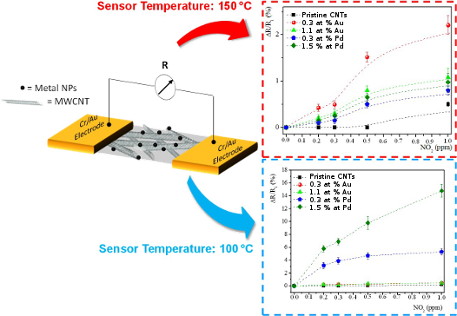
- this case, to explain the higher sensitivity of Pd-functionalized MWCNTs in the detection of ammonia and small hydrocarbon gas molecules like butane [54]. According to [54][55], when present on the MWCNT surface, Pd NPs form a weakly bonded complex between Pd atoms and adsorbed oxygen molecules at room


Graphene functionalised by laser-ablated V2O5 for a highly sensitive NH3 sensor
Beilstein J. Nanotechnol. 2017, 8, 571–578, doi:10.3762/bjnano.8.61
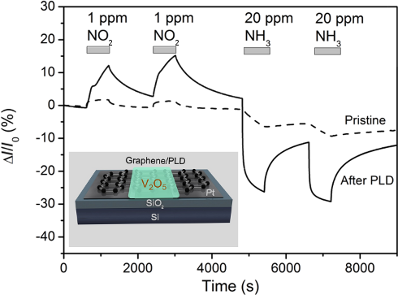
- on graphene with average thickness of ≈0.6 nm. From Raman spectroscopy, it was concluded that the PLD process also induced defects in graphene. Compared to unmodified graphene, the obtained chemiresistive sensor showed considerable improvement of sensing ammonia at room temperature. In addition, the
- between deposited V2O5 and graphene. Keywords: ammonia; electric conductivity; gas sensor; graphene; pulsed laser deposition; UV light activation; vanadium(V) oxide; Introduction Graphene, being a thin (semi)conducting material, is a promising gas sensing system. Highly sensitive response, down to
- gases, such as ammonia. Vanadium oxide based films and nanostructured layers have been previously synthesised for gas sensing applications by various methods [11], including pulsed laser deposition (PLD) [12]. PLD is a highly versatile method for relatively well-controlled preparation of thin films, and


Fiber optic sensors based on hybrid phenyl-silica xerogel films to detect n-hexane: determination of the isosteric enthalpy of adsorption
Beilstein J. Nanotechnol. 2017, 8, 475–484, doi:10.3762/bjnano.8.51
- ammonia were supplied by Merck (Darmstadt, Germany). Silicon precursors with purity greater than 98% were obtained from Sigma-Aldrich (Steinheim, Germany). All chemicals were used without further purification. Water was deionized and purified with a Milli-Q system (model 185, Millipore, Mosheim, France






Tailoring bifunctional hybrid organic–inorganic nanoadsorbents by the choice of functional layer composition probed by adsorption of Cu2+ ions
Beilstein J. Nanotechnol. 2017, 8, 334–347, doi:10.3762/bjnano.8.36
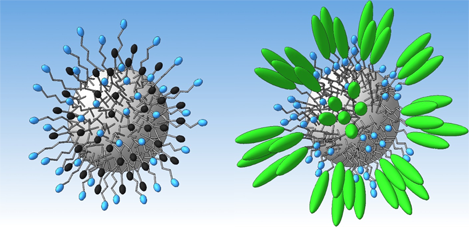
- into account the already developed principles of the production of APTES-derived materials [48][49]. The particles are generally smaller when higher TEOS/APTES ratios are applied [31]. They are less coalesced in the presence of higher ammonia content because of a stronger negative charging of the
- growing entities, which is especially important for highly hydrophobic materials that can otherwise form gels separating from solutions [50][51][52]. The most efficient way to keep the aminopropyl groups on the surface is to add TEOS after the APTES and, especially, to slightly increase the ammonia
- –ammonia complexes are well known. They also correlate well with the data obtained by some other physical methods (e.g., electron spectroscopy and EPR) as is traced in detail in [53]. Comparing the values of the sorption rate constants for monofunctional and amino/methyl samples, we can conclude, that the


Nitrogen-doped twisted graphene grown on copper by atmospheric pressure CVD from a decane precursor
Beilstein J. Nanotechnol. 2017, 8, 145–158, doi:10.3762/bjnano.8.15
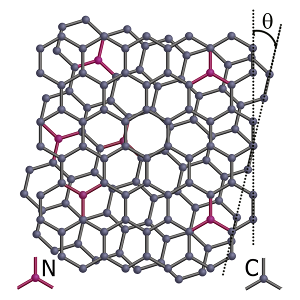
- edges [13]. Finally, we turn to the problem of nitrogen incorporation into graphene. Nitrogen can be incorporated into graphene sheet (i) in situ, using ammonia as a component of the gas carrier mixture [43] or with nitrogen containing precursors [60][61] and (ii) by post-treatment, e.g., by treatment
- in ammonia plasma [62] or N-ion irradiation [63]. To the best of our knowledge, there is only one article where N2 gas was used as the nitrogen source during the CVD growth [64]. In our opinion, the main difficulties in using N2 gas as a nitrogen source arises from the fact that nitrogen molecule


From iron coordination compounds to metal oxide nanoparticles
Beilstein J. Nanotechnol. 2016, 7, 2074–2087, doi:10.3762/bjnano.7.198
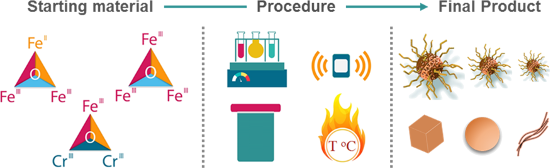
- for NPM1 the pH of the reaction system was adjusted to 11. The sample NPM0 was obtained by adding ammonia water to the aqueous solution of FeAc2, without any additional operations (stirring, heating, etc.) and used as a control. The NPM1 and NPM2 samples were obtained by adding ammonia water to an
- , (0.5 g in each case) in a furnace up to 600 °C in air (heating rate 50 °C/min) and maintained at this temperature for 5 h. Preparation of iron oxide nanoparticles under microwave irradiation (NPM series). FeAc2 (0.3 mmol) was dissolved in 1 mL of distilled water, after which 2 mL of ammonia water (25
- ultrasonicated for 1 min at 100 °C, then 40 mL of ammonia water (25%) were added to the solution. The ultrasonication time was 10 min for sample NPU1, and 30 min for NPU2. TEM images and particle size distribution histograms of NPT1a (a,c) and NPT1b (b,d). The TEM images (a,c) and the histogram of the particle


Solvent-mediated conductance increase of dodecanethiol-stabilized gold nanoparticle monolayers
Beilstein J. Nanotechnol. 2016, 7, 2057–2064, doi:10.3762/bjnano.7.196
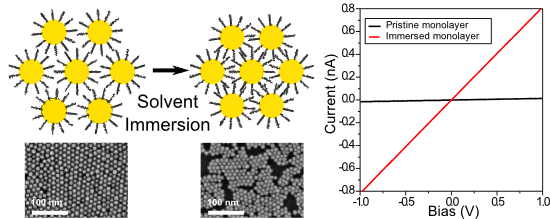
- nitrogen prior to immersion. For OPE/THF and TPT/EtOH immersion the molecular concentration was 1 mM. In the case of OPE, the acetyl protecting group was removed by addition of 20 µL ammonia (30%) in 3 mL solution while bubbling with nitrogen. The samples were immersed upside down. After immersion the



A dioxaborine cyanine dye as a photoluminescence probe for sensing carbon nanotubes
Beilstein J. Nanotechnol. 2016, 7, 1991–1999, doi:10.3762/bjnano.7.190
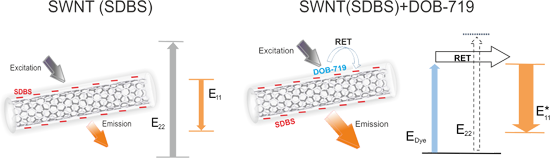
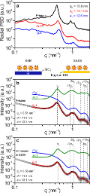
- probes for amines and ammonia [14][15][16]. Optical properties (absorption and PL) of monomeric and dimeric forms of DOB-719 were reported in [16] showing that there is a weak interaction of SWNTs with DOB-719. The novelty of the present study is an elucidation of the interaction of the dye with the





