Search results
Search for "anisotropy" in Full Text gives 246 result(s) in Beilstein Journal of Nanotechnology. Showing first 200.
Dynamics of superparamagnetic nanoparticles in viscous liquids in rotating magnetic fields
Beilstein J. Nanotechnol. 2019, 10, 2294–2303, doi:10.3762/bjnano.10.221
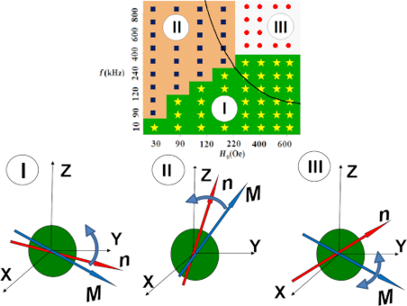
- parallel to the direction of the easy anisotropy axis of a rotating nanoparticle. Recently, the application of a rotating magnetic field (RMF) in biomedicine, in particular in magnetic hyperthermia, has been studied both theoretically [33][34][35][36][37][38][39] and experimentally [40][41][42][43
- assembly of superparamagnetic particles with uniaxial anisotropy distributed in a viscous liquid have been carried out. First, the behavior of a magnetic particle in a RMF is studied in the magneto-dynamics approximation [25][44][45] neglecting the thermal fluctuations of the particle magnetic moment and
- the effective magnetic anisotropy constant of the nanoparticle, Hk = 2K/Ms is the particle anisotropy field, and Ms is the saturation magnetization. Equations 1–3 describe the complex coupled dynamics of the unit vectors and in RMFs. Numerical solution of Equations 1–3 with a small time step


Targeted therapeutic effect against the breast cancer cell line MCF-7 with a CuFe2O4/silica/cisplatin nanocomposite formulation
Beilstein J. Nanotechnol. 2019, 10, 2217–2228, doi:10.3762/bjnano.10.214
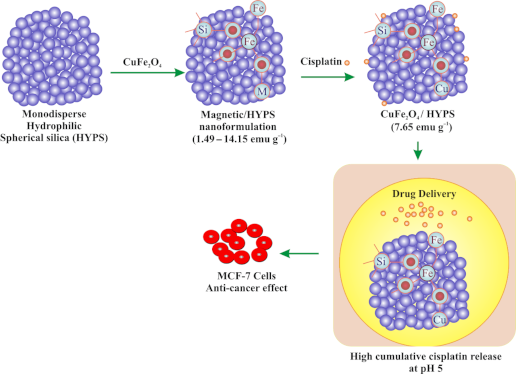
- surface anisotropy effect [9][10]. Among the ferrites, copper ferrites are interesting due to their superior conductive and magnetic characteristics. A mesoporous Cu1−xZnxFe2O4 system has been reported using a nanocasting technique [11]. Based on the Bertaut analysis, the doping of Zn tends to form mixed


Improvement of the thermoelectric properties of a MoO3 monolayer through oxygen vacancies
Beilstein J. Nanotechnol. 2019, 10, 2031–2038, doi:10.3762/bjnano.10.199
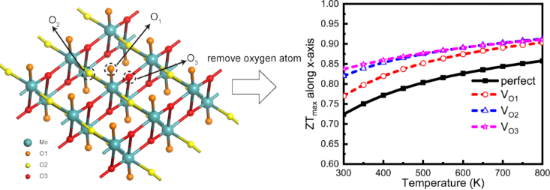
- of the MoO3 monolayer exhibit an evident anisotropic behavior which is caused by the similar anisotropy of the electrical and thermal conductivity. The thermoelectric materials figure of merit (ZT) value along the x- and the y-axis is 0.72 and 0.08 at 300 K, respectively. Moreover, the creation of


Review of advanced sensor devices employing nanoarchitectonics concepts
Beilstein J. Nanotechnol. 2019, 10, 2014–2030, doi:10.3762/bjnano.10.198
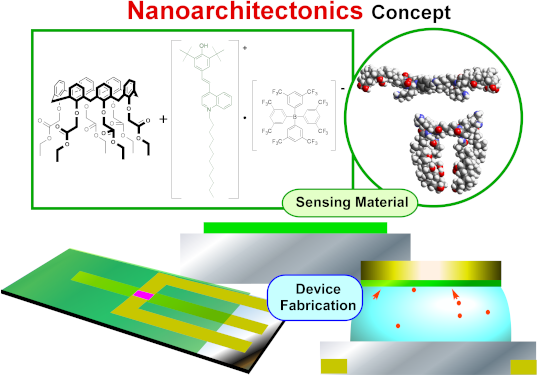
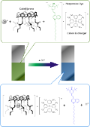
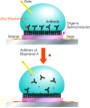
- significantly high mobility (10.4 cm2 V−1 s−1). In multilayer structures, the first layer on interface plays the main role in carrier transport and the layers above simply act as carrier suppliers. The crystal monolayer shows low anisotropy and thermally activated carrier transport. Such characteristics are





Correction: Remarkable electronic and optical anisotropy of layered 1T’-WTe2 2D materials
Beilstein J. Nanotechnol. 2019, 10, 1922–1922, doi:10.3762/bjnano.10.187

Oblique angle deposition of nickel thin films by high-power impulse magnetron sputtering
Beilstein J. Nanotechnol. 2019, 10, 1914–1921, doi:10.3762/bjnano.10.186
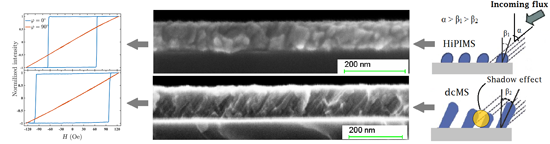
- anisotropy and coercivity fields than films deposited with dcMS. For the epitaxial films dcMS deposition gives biaxial anisotropy while HiPIMS deposition gives a well-defined uniaxial anisotropy. Results: We report on the deposition of 50 nm polycrystalline nickel thin films by dcMS and HiPIMS while the tilt
- at small tilt angles while larger tilt angles result in uniaxial magnetic anisotropy. The transition tilt angle varies with deposition method and is measured around 35° for dcMS and 60° for HiPIMS. Conclusion: Due to the high discharge current and high ionized flux fraction, the HiPIMS process can
- sputtering; magnetic anisotropy; nickel; Introduction The realization of electronics based on utilizing the electron spin degree of freedom, commonly referred to as spintronics, requires the integration of ferromagnetic films with semiconductors [1]. Nickel is a ferromagnetic heavy 3d transition metal that


Remarkable electronic and optical anisotropy of layered 1T’-WTe2 2D materials
Beilstein J. Nanotechnol. 2019, 10, 1745–1753, doi:10.3762/bjnano.10.170
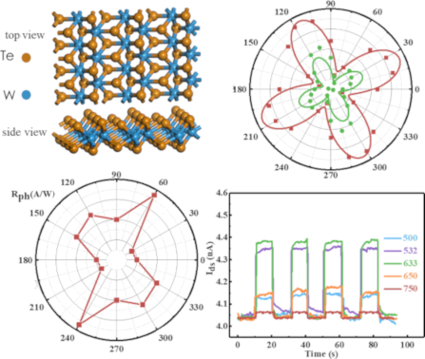
- -response is ascribed to the unique anisotropic in-plane crystal structure, consistent with the optical absorption anisotropy results. In general, 1T’-WTe2, with its highly anisotropic electrical and photoresponsivity reported here, demonstrates a route to exploit the intrinsic anisotropy of 2D materials
- characterization the natural anisotropy of 1T’-WTe2. In this paper, we present a combined experimental and quantitative study on the anisotropic optical and electronic properties of mechanically isolated 1T’-WTe2. Through a systematic characterization including Raman spectroscopy, X-ray photoelectron spectroscopy
- and azimuth-dependent reflectance difference microscopy (ADRDM), we firstly identified the 1T’-phase WTe2 to have an optical anisotropic crystal structure. Secondly, a 12-electrode-structure was designed for the evaluation the electrical anisotropy of 1T’-WTe2, and the results demonstrated up to 103


The impact of crystal size and temperature on the adsorption-induced flexibility of the Zr-based metal–organic framework DUT-98
Beilstein J. Nanotechnol. 2019, 10, 1737–1744, doi:10.3762/bjnano.10.169
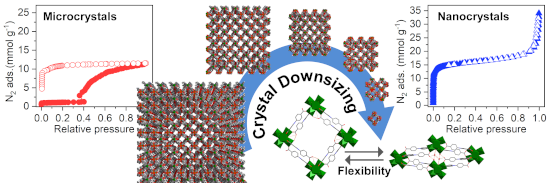
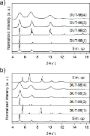
- the anisotropy of the crystals and the large peak broadening, leading to an overlap of the reflections of the two phases. To further analyze the nature of the phase mixture, we performed high-resolution transmission electron microscopy (HRTEM) analysis on DUT-98(4). HRTEM was previously applied for
- change in symmetry and the high crystal anisotropy. Nevertheless, the variable-temperature PXRD analysis clearly shows that elevated temperatures initiate a temperature-irreversible structural transition in DUT-98(2), which was also previously observed for DUT-98(1) [20]. This is well reflected in water



Magnetic segregation effect in liquid crystals doped with carbon nanotubes
Beilstein J. Nanotechnol. 2019, 10, 1464–1474, doi:10.3762/bjnano.10.145
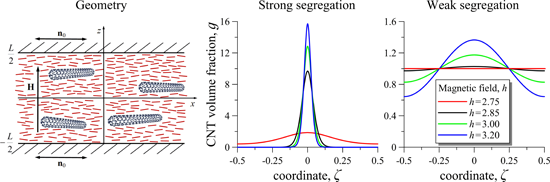
- anisotropy of the diamagnetic susceptibility, this leads to a decrease in the critical fields of magnetic [27][28] and electric [14][16][26][29][30] Fréedericksz transition (a threshold process of changing the orientational structure inside an NLC layer under the action of external fields [31]). Experiments
- the layer. At κ ≤ 1 the concentration stratification becomes substantial. Let us estimate the dimensionless parameters in Equation 7. According to [45] for a typical NLC the anisotropy of the diamagnetic susceptibility χa ≈ 10−6, and the elastic constants K33, K11 ≈ 10−12 N. The anisotropy of the
- with sufficiently large carbon nanotubes (l ≈ 10 μm, d ≈ 50 nm, ). In addition, the CNTs must have a high anisotropy of the diamagnetic susceptibility (γ ≥ 0.1). For a rough estimate of the tricritical value of the segregation parameter κ*, one can use Equation 20, which is valid for rigid anchoring


The effect of magneto-crystalline anisotropy on the properties of hard and soft magnetic ferrite nanoparticles
Beilstein J. Nanotechnol. 2019, 10, 1348–1359, doi:10.3762/bjnano.10.133
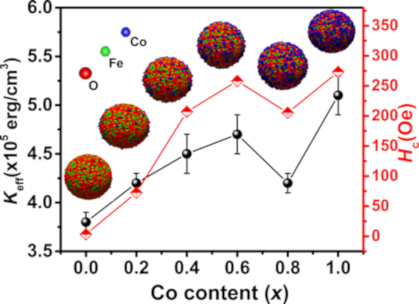
- collective magnetic behavior. Studies show that the magnetic properties are strongly affected by the magnetic anisotropy of NPs and by interparticle interactions that are the result of the collective magnetic behavior of NPs. Here we study these effects in more detail. For this purpose, we prepared CoxFe3
- −xO4 NPs, with x = 0–1 in steps of 0.2, from soft magnetic (Fe3O4) to hard magnetic (CoFe2O4) ferrite, with a significant variation of the magnetic anisotropy. The phase purity and the formation of crystalline NPs with a spinel structure were confirmed through Rietveld refinement. The effect of Co
- observed that the heat efficiency of soft Fe3O4 is about 4 times larger than that of hard CoFe2O4 ferrite, which was attributed to the high coercive field of samples compared with the external field amplitude. Keywords: anisotropy; cobalt; ferrite; Henkel plots; hyperthermia therapy; nanoparticles


On the relaxation time of interacting superparamagnetic nanoparticles and implications for magnetic fluid hyperthermia
Beilstein J. Nanotechnol. 2019, 10, 1280–1289, doi:10.3762/bjnano.10.127
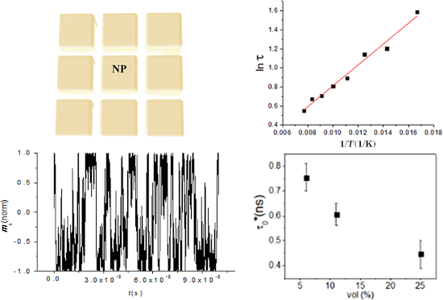
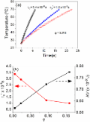
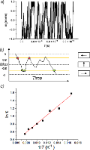
- performed on ferrofluids of different volume fractions. The theoretical support for the specific evolution of the relaxation time constant and the anisotropy energy barrier versus the interparticle interactions in a perturbation approach of the simple Néel expression for the relaxation time is provided via
- only to increase the anisotropy energy barrier per nanoparticle but also to decrease the specific time constant in the simplest Néel–Brown expression of the relaxation time, which is usually considered only as a material dependent parameter. In this context, the threefold aim of this paper is: (i) to
- measurements and (iii) to provide theoretical support for the specific evolution of the relaxation time constant and the anisotropy energy barrier in the Néel expression as function of interparticle interaction through a suitable exploitation of static and time-dependent micromagnetic simulations. Results and



Tailoring the magnetic properties of cobalt ferrite nanoparticles using the polyol process
Beilstein J. Nanotechnol. 2019, 10, 1166–1176, doi:10.3762/bjnano.10.116
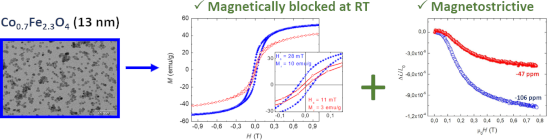
- while the sub-stoichiometric NPs (particularly for x ≈ 0.7) are expected to be less magnetostrictive but to present a higher magnetocrystalline anisotropy constant, as previously observed in bulk cobalt ferrites. To control the size of the NPs, in order to overcome the superparamagnetic limit, as well
- piezoelectric polymers. Keywords: cobalt ferrite; magnetocrystalline anisotropy; magnetostriction; nanoparticle; non-stoichiometry; polyol process; Introduction Recently, extrinsically (or artificially) magnetoelectric (ME) multiferroic (MF) materials have been seriously investigated for many applications in
- anisotropy of polycrystalline CoxFe3−xO4. The anisotropy was found to be the highest for x = 0.7 and 0.8 and the lowest for x = 0.2. However, the most interesting magnetostriction effects were found at the composition of x = 1. Therefore, the stoichiometry appears to be a key-parameter to tailor the


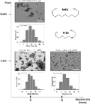


Nanoscale optical and structural characterisation of silk
Beilstein J. Nanotechnol. 2019, 10, 922–929, doi:10.3762/bjnano.10.93
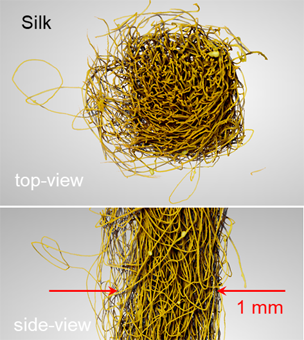
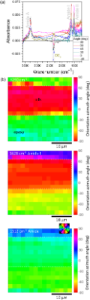
- , Melbourne, Australia 10.3762/bjnano.10.93 Abstract The nanoscale composition of silk defining its unique properties via a hierarchial structural anisotropy needs to be analysed at the highest spatial resolution of tens of nanometers corresponding to the size of fibrils made of β-sheets, which are the
- were carried out for comparison at IR wavelengths of 2–10 μm using synchrotron radiation. A reliable distinction of transmission changes by only 1–2% as the anisotropy of amide bands was obtained from nanometer-thin slices of silk. Keywords: absorbance; anisotropy; retardance; silk; Introduction
- properties of a material are interrelated. By using a wide spectrum of electromagnetic waves from visible light to terahertz radiation, it is possible to gain insights into complex hierarchical structures of composite materials. For materials with strong structural anisotropy, defined by the molecular


Magnetic field-assisted assembly of iron oxide mesocrystals: a matter of nanoparticle shape and magnetic anisotropy
Beilstein J. Nanotechnol. 2019, 10, 894–900, doi:10.3762/bjnano.10.90
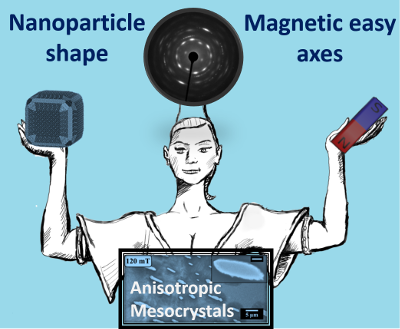
- orientation of some nanoparticles within the superlattice with <112>magnetite perpendicular to the substrate might be caused by the simultaneous competition of two types of anisotropic interactions between nanoparticles during the assembly process [24]. On one side the particle shape anisotropy promotes face
- -to-face alignment (i.e., interaction of the particle {110} faces with other particle faces within the layer) and on the other side magnetic anisotropy of magnetite nanoparticles induces the alignment of the <111>magnetite easy axis parallel to the direction of the external magnetic field


Co-doped MnFe2O4 nanoparticles: magnetic anisotropy and interparticle interactions
Beilstein J. Nanotechnol. 2019, 10, 856–865, doi:10.3762/bjnano.10.86
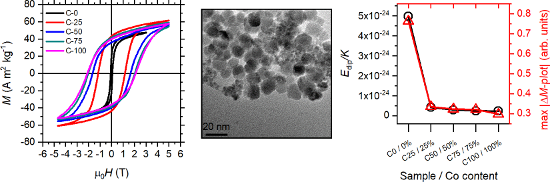
- , the effect of the chemical composition, i.e., the amount of Co doping, produces marked differences on the magnetic properties, especially on the magnetic anisotropy, with evident large changes in the coercive field. Moreover, Co substitution has a profound effect on the interparticle interactions, too
- . A dipolar-based interaction regime is detected for all samples; in addition, the intensity of the interactions shows a possible relation with the single particle anisotropy. Finally, the sample with the strongest interaction regime shows a superspin glass state confirmed by memory effect dynamics
- , hence showing a final net magnetization (ferrimagnetism) which depends directly on the specific population of Td and Oh sites. Furthermore, the magnetic anisotropy of the system is related to the specific cationic population and distribution in the different interstitial sites [19]. In the present paper


Ultrasonication-assisted synthesis of CsPbBr3 and Cs4PbBr6 perovskite nanocrystals and their reversible transformation
Beilstein J. Nanotechnol. 2019, 10, 666–676, doi:10.3762/bjnano.10.66
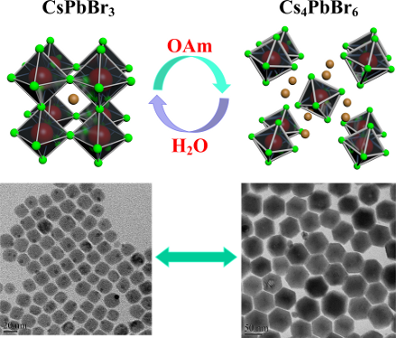
- images (Figure 4c–h) clearly confirm that the morphology of these PNCs can be tuned easily by changing the amount of OAm in the precursor solution, while keeping the amount of OA unchanged. We attribute this morphology change to the crystal anisotropy induced by the growth kinetics. The capping ligands



Coexisting spin and Rabi oscillations at intermediate time regimes in electron transport through a photon cavity
Beilstein J. Nanotechnol. 2019, 10, 606–616, doi:10.3762/bjnano.10.61
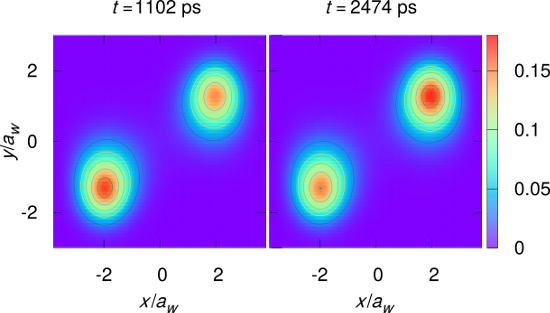
- , but only in this regime dominated by strong nonequilibrium processes. In the earlier calculations the central system was a short quantum wire with parallel quantum dots of the same shape. The anisotropy of the system makes the first excitation of the even parity one-electron ground state to be an odd


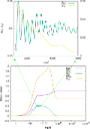
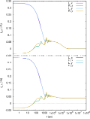
![[Graphic 40]](/bjnano/content/inline/2190-4286-10-61-i49.svg?max-width=637&scale=1.418184) and photon
and photon ![[Graphic 41]](/bjnano/content/inline/2190-4286-10-61-i50.svg?max-width=637&scale=1.418184) content in the open central system as a function of time. In additio...
content in the open central system as a function of time. In additio...
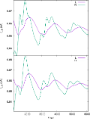
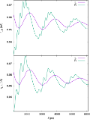
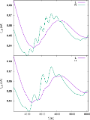

![[Graphic 60]](/bjnano/content/inline/2190-4286-10-61-i69.svg?max-width=637&scale=1.418184)
![[Graphic 61]](/bjnano/content/inline/2190-4286-10-61-i70.svg?max-width=637&scale=1.418184)
![[Graphic 62]](/bjnano/content/inline/2190-4286-10-61-i71.svg?max-width=637&scale=1.418184) and
and ![[Graphic 63]](/bjnano/content/inline/2190-4286-10-61-i72.svg?max-width=637&scale=1.418184) i...
i...
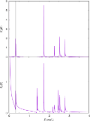
![[Graphic 76]](/bjnano/content/inline/2190-4286-10-61-i85.svg?max-width=637&scale=1.418184) in the steady state. The cavity pho...
in the steady state. The cavity pho...
Mechanical and thermodynamic properties of Aβ42, Aβ40, and α-synuclein fibrils: a coarse-grained method to complement experimental studies
Beilstein J. Nanotechnol. 2019, 10, 500–513, doi:10.3762/bjnano.10.51
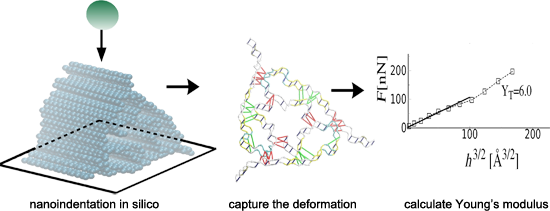
- molecular understanding. Our approach allows a comparison of diverse elastic properties based on different deformations , i.e., tensile (YL), shear (S), and indentation (YT) deformation. From our analysis, we find a significant elastic anisotropy between axial and transverse directions (i.e., YT > YL) for
- contact area, which will be the arc region that forms in contact with the sphere. In considering other shapes for the cantilever tip, such as conical or flat punch, the impact of the anisotropy is expected to be much higher [16]. Nonetheless, to our knowledge the exact shape of the cantilever tip cannot
- aggregation rate depends on the mechanical stability of the fibrils [27] our study could provide also hints for the self-assembly of β-amyloid and α-synuclein chains. Our results also indicate an elastic anisotropy namely, YT > YL, for all systems. In the case of α-syn fibrils this difference between YT and


Geometrical optimisation of core–shell nanowire arrays for enhanced absorption in thin crystalline silicon heterojunction solar cells
Beilstein J. Nanotechnol. 2019, 10, 322–331, doi:10.3762/bjnano.10.31
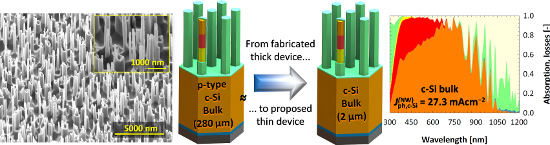
- bombarding the surface of the sample. Such effect occurs with higher speed on the horizontal than on the vertical plane, due to the larger angle of incidence of ions hitting the vertical side walls, which leads to a strong anisotropy of the Si etching rate. The process is made mask-less by the precipitation


Heating ability of magnetic nanoparticles with cubic and combined anisotropy
Beilstein J. Nanotechnol. 2019, 10, 305–314, doi:10.3762/bjnano.10.29
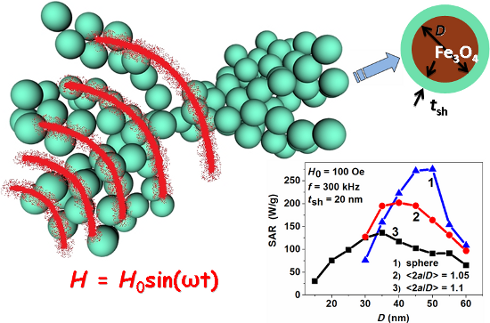
- , Moscow, Russia National Research Nuclear University “MEPhI”, 115409, Moscow, Russia 10.3762/bjnano.10.29 Abstract The low frequency hysteresis loops and specific absorption rate (SAR) of assemblies of magnetite nanoparticles with cubic anisotropy are calculated in the diameter range of D = 20–60 nm
- anisotropy. A substantial dependence of the SAR on the nanoparticle diameter is obtained for all cases investigated. Due to the influence of the magneto–dipole interaction, the SAR of fractal clusters of nanoparticles decreases considerably in comparison with that for weakly interacting nanoparticles
- magnetic anisotropy have mostly been studied. Meanwhile, perfect iron oxide nanoparticles of spherical shape should have cubic-type magnetic anisotropy [5]. However, to describe the existing experimental data properly one has also to take into account the possible perturbation of the nanoparticle shape. A


Relation between thickness, crystallite size and magnetoresistance of nanostructured La1−xSrxMnyO3±δ films for magnetic field sensors
Beilstein J. Nanotechnol. 2019, 10, 256–261, doi:10.3762/bjnano.10.24
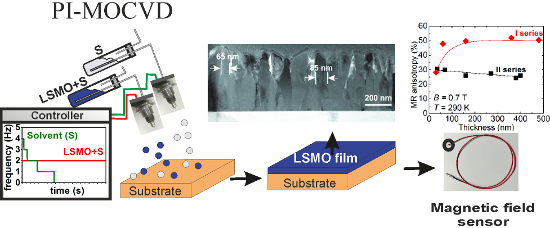
- additional supply source of precursor solution in an exponentially decreasing manner, exhibit the highest magnetoresistance and the lowest magnetoresistance anisotropy. The possibility to use these films for the development of magnetic field sensors operating at room temperature is discussed. Keywords
- practical applications due to low sensitivity and large magnetic anisotropy [15][16]. For this reason, the investigation and control of the magnetoresistive properties of manganite materials on the nanometer scale is of great importance. It was shown that the change of nanostructure by variation of
- range [1]. In this study, we present the possibility to tune and to select the necessary properties of nanostructured LSMO films by changing the film thickness and microstructure in order to obtain higher sensitivity and lower anisotropy, important for magnetic field sensing. Results and Discussion Two


Interaction of Te and Se interlayers with Ag or Au nanofilms in sandwich structures
Beilstein J. Nanotechnol. 2019, 10, 238–246, doi:10.3762/bjnano.10.22
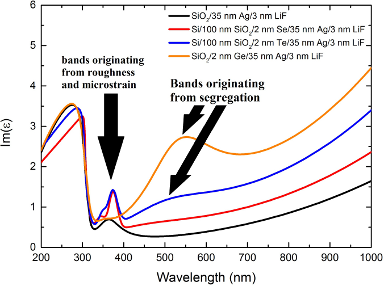
- ], enhanced abrasive properties of metal films [9] as well as effects like charge transport anisotropy [10] and giant magneto-optical Kerr response [11]. We have recently shown that depositing silver with an ultrathin germanium interlayer alters the density profile of the silver film [12]. Among the most


Threshold voltage decrease in a thermotropic nematic liquid crystal doped with graphene oxide flakes
Beilstein J. Nanotechnol. 2019, 10, 71–78, doi:10.3762/bjnano.10.7
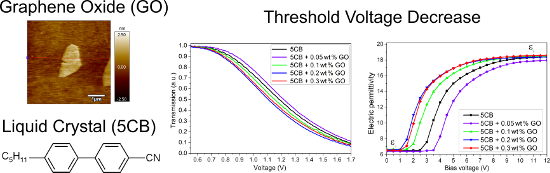
- , electric anisotropy, splay elastic constant, switch-on time, and switch-off time. The shape and dimensions of the GO flakes were studied using atomic force microscopy (AFM) and scanning electron microscopy (SEM). The influence of the GO concentration on the physical properties and switching process in the
- the tilt angle θ is small. When the voltage is above Uth, we start to observe the increase of θ [4]. The complete reorientation of the director n, θ = 90°, occurs at higher voltages U > Uth. The reorientation is caused by the anisotropy of the electric permittivity where ε|| and is the electric
- permittivity measured along the directions parallel and perpendicular to n, respectively. In the case of positive electric anisotropy (Δε > 0), the director is forced to align along the electric field. One of the most efficient methods to reduce the threshold voltage in nematic liquid crystals for high electro



A comparison of tarsal morphology and traction force in the two burying beetles Nicrophorus nepalensis and Nicrophorus vespilloides (Coleoptera, Silphidae)
Beilstein J. Nanotechnol. 2019, 10, 47–61, doi:10.3762/bjnano.10.5
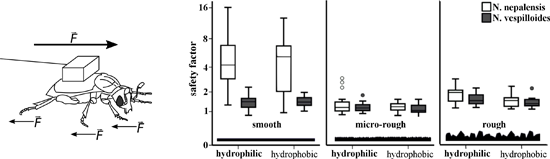
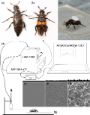
- ]. For theoretical access to the problem of frictional anisotropy considering factors such as the slope of the surface structures, the rigidity of the joints, and sliding speed, the reader is referred to [44]. Our results are in full accordance with previous measurements of the frictional directionality



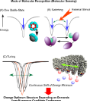
Colloidal chemistry with patchy silica nanoparticles
Beilstein J. Nanotechnol. 2018, 9, 2989–2998, doi:10.3762/bjnano.9.278
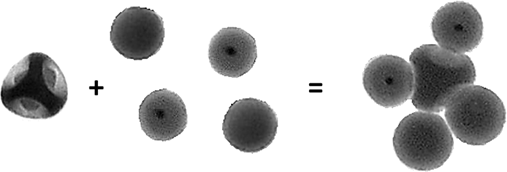
- molecular systems, the so-called “colloidal molecules” (CMs) [1]. Tremendous efforts have been devoted to the synthesis of particles with directional interactions to replicate bond schemes of molecular systems [2][3][4][5]. One efficient approach is to engineer particles with chemical anisotropy, that is