


Search results
Search for "biosensing" in Full Text gives 103 result(s) in Beilstein Journal of Nanotechnology.
Novel roles for well-known players: from tobacco mosaic virus pests to enzymatically active assemblies
Beilstein J. Nanotechnol. 2016, 7, 613–629, doi:10.3762/bjnano.7.54
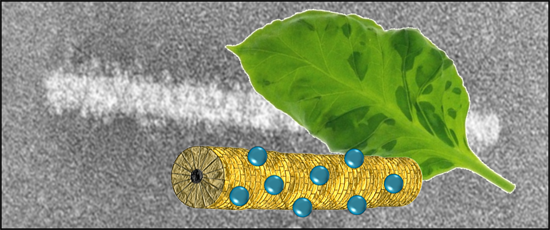
- diverse achievements obtained with TMV-based particles, compares them to the progress with related viruses, and focuses on latest results revealing special advantages for enzyme-based biosensing formats, which might be of high interest for diagnostics employing 'systems-on-a-chip'. Keywords: biotemplate
- scaffolding biotemplates in various applications, ranging from biosensing to tumor therapeutics. Hence, in the recent past, the number of reports on the successful construction of advantageous virus-derived hybrid materials and devices has been growing rapidly and reviewed extensively [5][7][8][65][66][67][68
- : the two-step method achieved maximum surface occupation with full enzymatic activity retained on the viral backbones. TMV adapter scaffolds conducive to biosensing layouts A main goal of the case study on TMV enzyme carriers was to find out if biodetection setups would profit from an integration of


Investigating organic multilayers by spectroscopic ellipsometry: specific and non-specific interactions of polyhistidine with NTA self-assembled monolayers
Beilstein J. Nanotechnol. 2016, 7, 544–553, doi:10.3762/bjnano.7.48
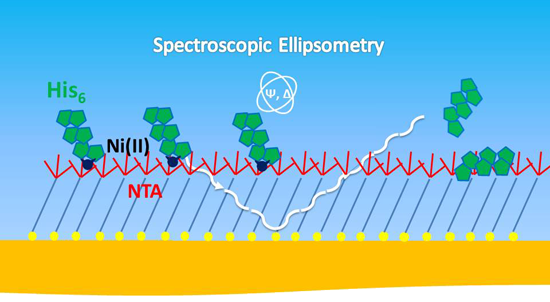
- ellipsometry; Introduction The design of biosensing devices requires precise immobilization, with controlled orientation, of functional proteins on a surface, generally consisting of a substrate functionalized with a molecular receptor layer [1][2]. After seminal works [3], the interaction of chelated Ni ions




Mismatch detection in DNA monolayers by atomic force microscopy and electrochemical impedance spectroscopy
Beilstein J. Nanotechnol. 2016, 7, 220–227, doi:10.3762/bjnano.7.20
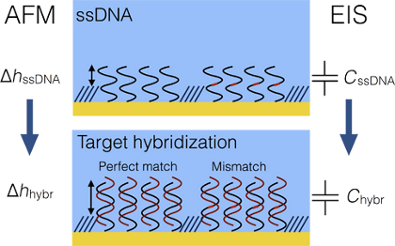
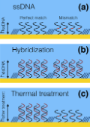
- -mechanical and electrochemical) and current label-free surface-based biosensing strategies, according to recent literature. As we can see from the table, SPR strategies seem to be the most promising in terms of limit of detection. However, in these devices the surface area is larger, limiting multiplexing


Controlled graphene oxide assembly on silver nanocube monolayers for SERS detection: dependence on nanocube packing procedure
Beilstein J. Nanotechnol. 2016, 7, 9–21, doi:10.3762/bjnano.7.2
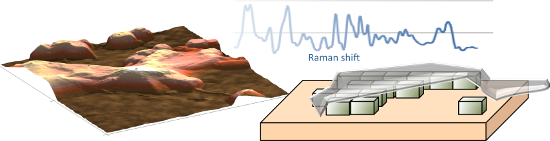
- ], optoelectronics [3], energy-harvesting applications [4], cancer imaging and therapy [5], sensing and biosensing applications [6][7]. In particular, sensors based on arrays of noble metal nanoparticles have become increasingly popular for the ultrasensitive detection of a variety of species ranging from small


Self-organization of gold nanoparticles on silanated surfaces
Beilstein J. Nanotechnol. 2015, 6, 2345–2353, doi:10.3762/bjnano.6.242
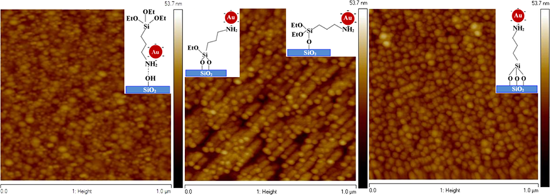
- structures [8]. AuNPs have been studied intensively for a wide range of applications such as catalysis [9], biosensing [10], colorimetric sensing [11], optical sensing (surface plasmon resonance (SPR) and surface-enhanced Raman scattering (SERS)) [12][13], photonics [13][14], photovoltaic devices [15] and


Optimized design of a nanostructured SPCE-based multipurpose biosensing platform formed by ferrocene-tethered electrochemically-deposited cauliflower-shaped gold nanoparticles
Beilstein J. Nanotechnol. 2015, 6, 1840–1852, doi:10.3762/bjnano.6.187
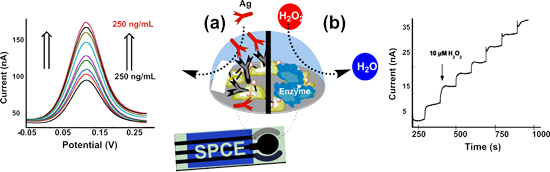
- ferrocene groups after the addition of antigen. One can conclude that ferrocene is useful as a transducing system to follow biosensing events but foreseeing the exact electrochemical behavior (amperometric vs potentiometric) remains very difficult. Furthermore, the redox center directly linked to the gold
- the specific analyte the current variation is weak denoting a very good specificity of the device. The current rise in the latter case is probably due to structural similarity between gIgG (i.e., antibody to hIgG antigen produced in goat) and the other immune proteins. Enzyme-based biosensing The
- fast electron-transfer rates from the redox moiety to the electrode surface. Furthermore, the ferrocene vicinity to the HRP enzyme is useful to constantly re-oxidize the enzyme FAD cofactor thus allowing the design of fast response biosensing devices endowed with a large dynamic range. The LoD and the


Template-controlled mineralization: Determining film granularity and structure by surface functionality patterns
Beilstein J. Nanotechnol. 2015, 6, 1763–1768, doi:10.3762/bjnano.6.180
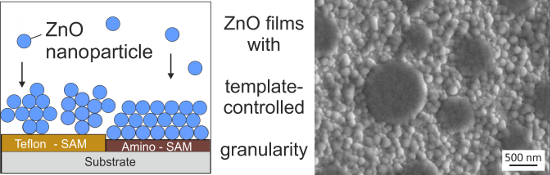
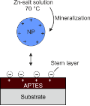
- the site-selective mineralization of a semiconductor material, zinc oxide (ZnO), on a chemically patterned surface [3]. ZnO thin films are of special interest since they can be used for different applications such as solar cells [16], biosensing devices [17] and others [18]. By using a nearly

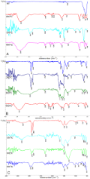
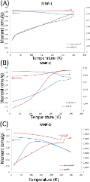
Thermal treatment of magnetite nanoparticles
Beilstein J. Nanotechnol. 2015, 6, 1385–1396, doi:10.3762/bjnano.6.143
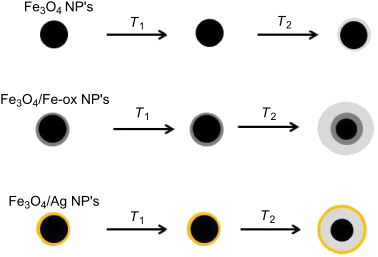
- their application in various fields. The list of possible applications encompasses biomedical engineering, MRI contrast agents, hyperthermia treatment, sensing and biosensing [2][3]. They are also very promising candidates for electrical-related applications, for example, energy and magnetic storage




Growth and morphological analysis of segmented AuAg alloy nanowires created by pulsed electrodeposition in ion-track etched membranes
Beilstein J. Nanotechnol. 2015, 6, 1272–1280, doi:10.3762/bjnano.6.131
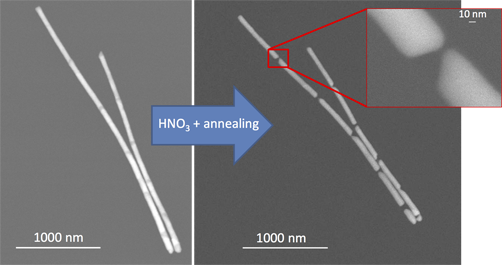
- for surface enhanced Raman spectroscopy [38][41][42][43] and for biosensing [44]. Furthermore, such gaps with precisely controlled dimensions allow for the systematic investigation of multipole surface plasmon modes [39][45][46]. Because of their high electrical conductivity [47], Au and Ag metallic
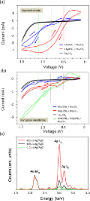

Synergic combination of the sol–gel method with dip coating for plasmonic devices
Beilstein J. Nanotechnol. 2015, 6, 500–507, doi:10.3762/bjnano.6.52
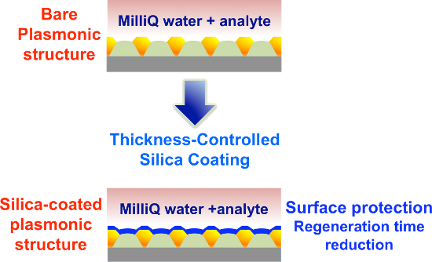
- 10.3762/bjnano.6.52 Abstract Biosensing technologies based on plasmonic nanostructures have recently attracted significant attention due to their small dimensions, low-cost and high sensitivity but are often limited in terms of affinity, selectivity and stability. Consequently, several methods have been
- at a metal–dielectric interface [1][2][3][4][5]. Recently, due to such remarkable properties, biosensing technologies based on plasmonic nanostructures have attracted significant attention, particularly in the development of label-free sensors [6][7][8]. It is well known that surface plasmons (SPs
- hydrophobic property of the surface is an important characteristic from the perspective of biosensing applications since it also allows for altering the surface affinity for specific molecules. The surface of the films prepared from fresh sol of pH ≈4 was further characterized through contact angle


Hollow plasmonic antennas for broadband SERS spectroscopy
Beilstein J. Nanotechnol. 2015, 6, 492–498, doi:10.3762/bjnano.6.50
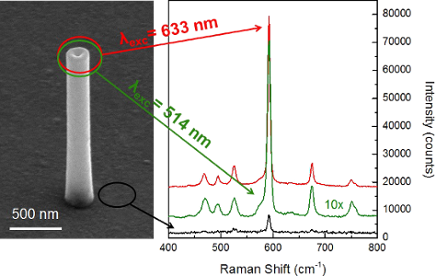
- large enhancement of the vibrational features both in the case of resonant excitation and out-of-resonance excitation. Such characteristics indicate that these structures are potential candidates for plasmonic enhancers in multifunctional opto-electronic biosensors. Keywords: biosensing; multiband
- has become an important factor for the routine application of this technique to biology. There has been a significant increase in the number of studies concerning applications based on plasmonic effects in recent years. The areas of interest range from biomedicine, with examples of biosensing devices


A scanning probe microscope for magnetoresistive cantilevers utilizing a nested scanner design for large-area scans
Beilstein J. Nanotechnol. 2015, 6, 451–461, doi:10.3762/bjnano.6.46
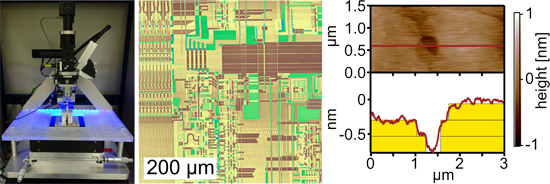
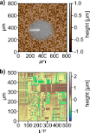
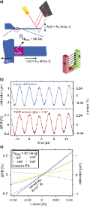
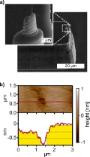
- effects; magnetostriction; scanning probe microscopes and components; Introduction Since its invention in the 1980s [1] the atomic force microscope (AFM) became a versatile tool frequently used in nanoscale metrology, biosensing, maskless lithography and high density data storage with nearly as many


Functionalization of α-synuclein fibrils
Beilstein J. Nanotechnol. 2015, 6, 124–133, doi:10.3762/bjnano.6.12
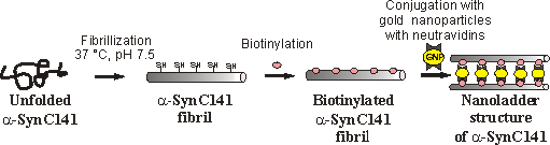
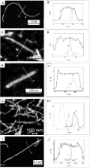
- ][45][54] and the construction of biosensing platforms [22]. Herein we present a feasible method to perform the postassembly bio-functionalization of amyloid fibrils. Our results demonstrate the robustness and stability of such amyloid. The resultant multicomponent nanostructure (nanoladders) should


Formation of stable Si–O–C submonolayers on hydrogen-terminated silicon(111) under low-temperature conditions
Beilstein J. Nanotechnol. 2015, 6, 19–26, doi:10.3762/bjnano.6.3
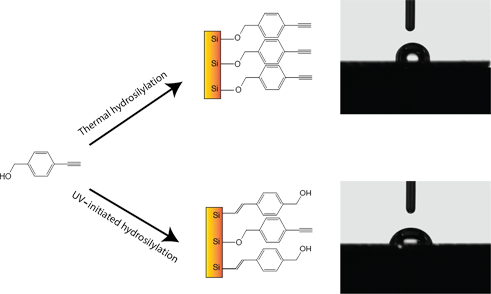
- order to gain access to the electronic properties of silicon, it is imperative that the organic layer on the top surface be kept thin enough to avoid a masking of the intrinsic properties of silicon, especially in biosensing application [1]. So far, hydrosilylation is among the most commonly accepted


Sequence-dependent electrical response of ssDNA-decorated carbon nanotube, field-effect transistors to dopamine
Beilstein J. Nanotechnol. 2014, 5, 2113–2121, doi:10.3762/bjnano.5.220
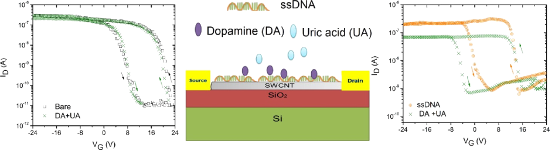
- electronic platform for biosensing [14]. Previously, numerous works have demonstrated that nucleic acid-functionalized CNT-based FETs exhibit fast, specific, and reproducible response to the detection of various polar molecules [15][16]. Since ssDNA has four bases, it gives the possibility of numerous


Effect of channel length on the electrical response of carbon nanotube field-effect transistors to deoxyribonucleic acid hybridization
Beilstein J. Nanotechnol. 2014, 5, 2081–2091, doi:10.3762/bjnano.5.217
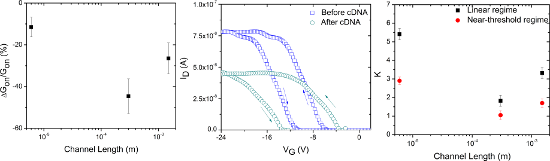
- -dimensional electronic materials, and their further development has been encouraged in high frequency applications [8][9], chemical sensing [10][11] and biosensing [12][13]. Recently, SWCNTs have been demonstrated as one of the best biosensors for a number of reasons: i) their diameter (several nanometers) is
- characteristics, which are indicators of the various contributing FET biosensing mechanisms [19], vary with channel length. A change in more than one of these electrical parameters after hybridization indicates the influence of multiple FET mechanisms. Therefore, it becomes essential to take into consideration


High speed e-beam lithography for gold nanoarray fabrication and use in nanotechnology
Beilstein J. Nanotechnol. 2014, 5, 1918–1925, doi:10.3762/bjnano.5.202
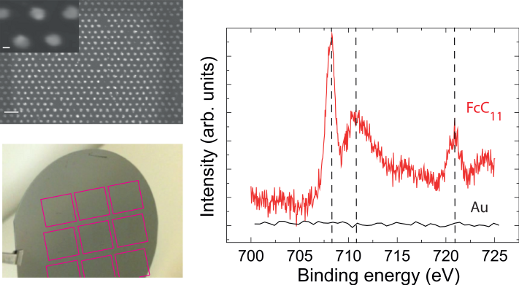
- after the self-assembly process. The developed technology, which will surely be of great importance for molecular electronics study on such nanoarrays, also promising exciting future works in chemistry and biosensing. Experimental Nanoarray fabrication As described in [1][8], for e-beam lithography, we


Mechanical properties of sol–gel derived SiO2 nanotubes
Beilstein J. Nanotechnol. 2014, 5, 1808–1814, doi:10.3762/bjnano.5.191
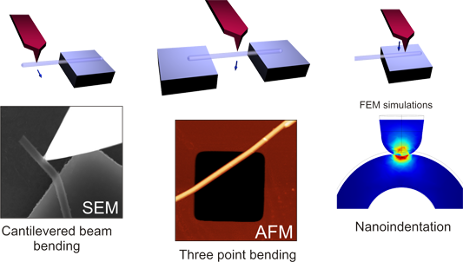
- environmentally sensitive materials [4][5], biological and biosensing applications [6][7][8], waveguide optics and photonics [9][10][11][12]. However, only a few publications were dedicated to the investigation of the mechanical properties of one-dimensional silica nanostructures, and even less to the ones


Different endocytotic uptake mechanisms for nanoparticles in epithelial cells and macrophages
Beilstein J. Nanotechnol. 2014, 5, 1625–1636, doi:10.3762/bjnano.5.174
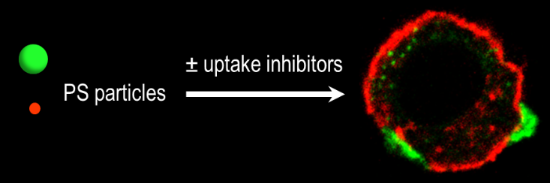
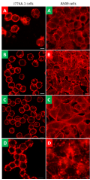
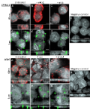
- delivery [1][2][3][4][5][6], biosensing [7] and bio-medical imaging [8]. In order to develop optimal NPs for biomedical use, much attention is given to the understanding of the basic mechanism of NP interactions with cellular systems at the single cellular level [9][10][11]. It has already been shown that



In vitro interaction of colloidal nanoparticles with mammalian cells: What have we learned thus far?
Beilstein J. Nanotechnol. 2014, 5, 1477–1490, doi:10.3762/bjnano.5.161
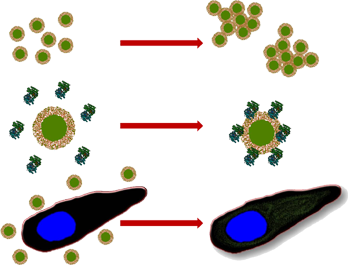
- impact of NPs that merits discussion. There is a big difference between the use of NPs for cellular labeling or biosensing studies in research, as opposed to any therapeutic (in vivo) utility, and the two should never be thought of together or directly compared. It was, for example, recently shown that


Nanocavity crossbar arrays for parallel electrochemical sensing on a chip
Beilstein J. Nanotechnol. 2014, 5, 1137–1143, doi:10.3762/bjnano.5.124
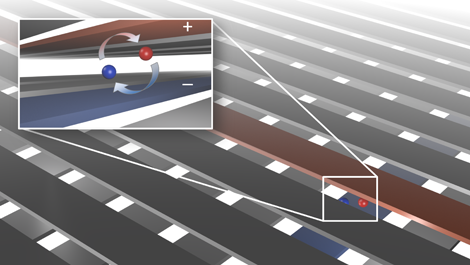
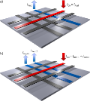
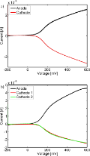
- sensors that are highly desirable for applications such as on-chip parallel biosensing or the detection of chemical communication in a neuronal network. This can be achieved via the organization of feed lines in a perpendicular arrangement. Individual sensors are then located at each of the feed line


In vitro toxicity and bioimaging studies of gold nanorods formulations coated with biofunctional thiol-PEG molecules and Pluronic block copolymers
Beilstein J. Nanotechnol. 2014, 5, 546–553, doi:10.3762/bjnano.5.64
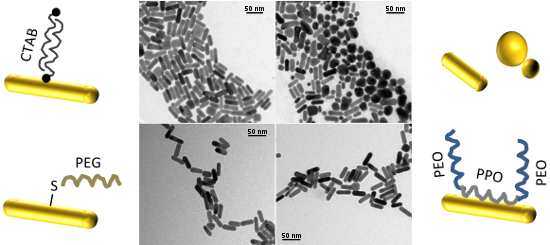
- ]. Furthermore, it is well reported that AuNRs are often used for surface enhanced Raman spectroscopy (SERS) biosensing applications. This is based on the observation that a gold rod-like particle has a higher electric field at both ends of the rod [10][11] where it is particularly useful for enhancing the


Dye-doped spheres with plasmonic semi-shells: Lasing modes and scattering at realistic gain levels
Beilstein J. Nanotechnol. 2013, 4, 974–987, doi:10.3762/bjnano.4.110
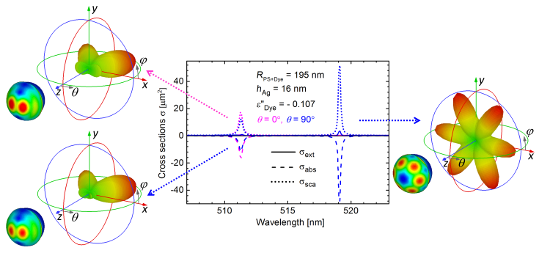
- used for important applications such as biosensing [18], plasmon-enhanced solar cells [19][20], or as substrates for surface-enhanced Raman scattering [21][22] and coherent anti-Stokes Raman scattering [23]. A severe problem for all plasmonic applications is the damping of plasmons due to Ohmic losses





Photocatalytic antibacterial performance of TiO2 and Ag-doped TiO2 against S. aureus. P. aeruginosa and E. coli
Beilstein J. Nanotechnol. 2013, 4, 345–351, doi:10.3762/bjnano.4.40
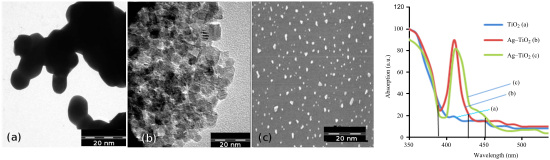
- photocatalytic efficiency [8][9]. However, silver nanoparticles have prospective applications including biosensing, biodiagnostics, optical fibers, and antimicrobial and photocatalytic uses. Silver ions are known to cause denaturation of proteins present in bacterial cell walls and slow down bacterial growth [5


FTIR nanobiosensors for Escherichia coli detection
Beilstein J. Nanotechnol. 2012, 3, 485–492, doi:10.3762/bjnano.3.55
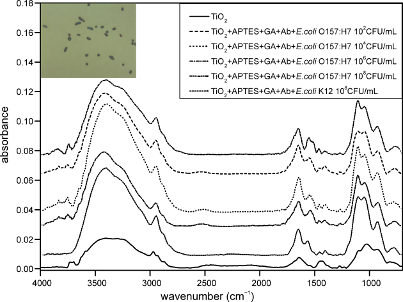
- traditional devices into biosensing systems with high sensitivity. In particular, mesoporous titania thin films synthesized with the sol–gel method, were used to immobilize biomolecules (antibodies and pathogens) thanks to the high surface area due to their nano-organization, visible in a AFM image (Figure 1





