


Search results
Search for "catalysis" in Full Text gives 325 result(s) in Beilstein Journal of Nanotechnology. Showing first 200.
Zinc oxide nanostructures for fluorescence and Raman signal enhancement: a review
Beilstein J. Nanotechnol. 2022, 13, 472–490, doi:10.3762/bjnano.13.40
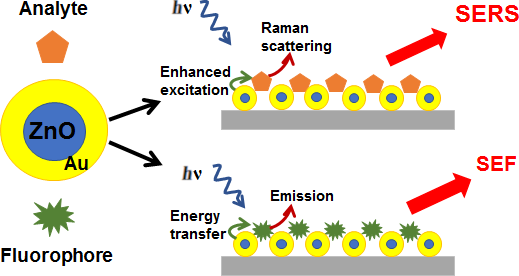
- , due to the energy and electron transfer from plasmon-resonant metal surfaces to the adjacent semiconductor. Such hybrid materials have been proposed for medical and pharmaceutical applications, catalysis, and electronics [88]. The photoluminescence emission of ZnO nanoparticles has been exploited in




Interfacial nanoarchitectonics for ZIF-8 membranes with enhanced gas separation
Beilstein J. Nanotechnol. 2022, 13, 313–324, doi:10.3762/bjnano.13.26
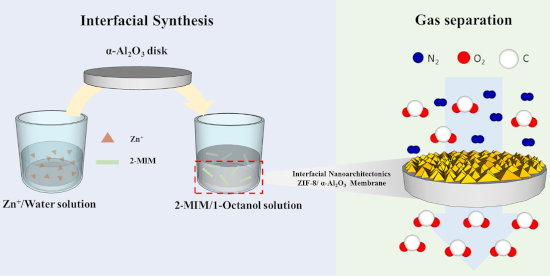
- ]. Given these structural properties, MOFs are widely applied to gas storage [18], gas/liquid separation [18][19][20], energy storage [21][22][23], sensing [24], catalysis [25], electrochemistry [26], and bio-related fields [27]. Zeolitic imidazolate frameworks (ZIFs), a subclass of MOFs, comprise


Surfactant-free syntheses and pair distribution function analysis of osmium nanoparticles
Beilstein J. Nanotechnol. 2022, 13, 230–235, doi:10.3762/bjnano.13.17
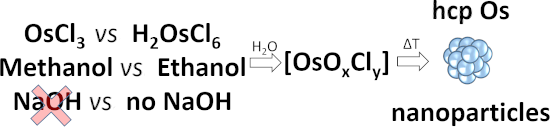
- ] complexes. Keywords: metal nanoparticles; osmium; pair distribution function; surfactant-free synthesis; Findings Precious metals are limited resources, yet fundamental for a range of applications, such as in medicine or catalysis [1][2][3]. There are relatively few reports on osmium (Os) compared to
- by the Danish National Research Foundation (DNRF-149) Center for High-Entropy Alloys Catalysis (CHEAC). This research used resources of the Advanced Photon Source, a U.S. Department of Energy (DOE) Office of Science User Facility, operated for the DOE Office of Science by Argonne National Laboratory


Impact of device design on the electronic and optoelectronic properties of integrated Ru-terpyridine complexes
Beilstein J. Nanotechnol. 2022, 13, 219–229, doi:10.3762/bjnano.13.16
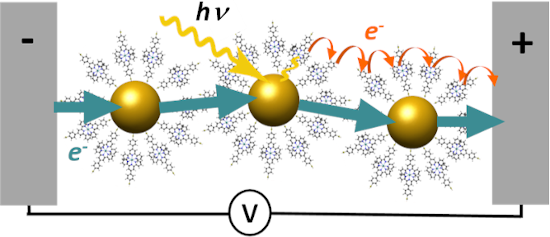
- [5][6][7]. TP complexes, themselves or as hybrid materials with (semi)conducting species, are redox-active and, thus, enable applications in nanoelectronics and catalysis [8][9][10]. Among the suitable transition metal centers, Ru is highly attractive since Ru(TP)2-complexes show intense metal-to


Theoretical understanding of electronic and mechanical properties of 1T′ transition metal dichalcogenide crystals
Beilstein J. Nanotechnol. 2022, 13, 160–171, doi:10.3762/bjnano.13.11
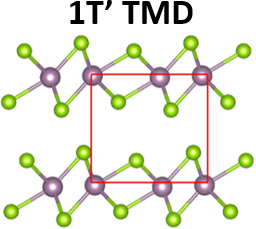
- Seyedeh Alieh Kazemi Sadegh Imani Yengejeh Vei Wang William Wen Yun Wang Centre for Catalysis and Clean Energy, School of Environment and Science, Griffith University, Gold Coast Campus, QLD 4222, Australia Department of Applied Physics, Xi’an University of Technology, Xi’an 710054, China 10.3762
- from catalysis to energy storage and electronic devices [1][2][3][4][5][6]. Generally, each TMD layer can be described as a sandwich type of structure (X–TM–X), where TM and X are transition metal cations (e.g., Mo and W) and chalcogen anions (e.g., S and Se). Individual layers are bound via




Tin dioxide nanomaterial-based photocatalysts for nitrogen oxide oxidation: a review
Beilstein J. Nanotechnol. 2022, 13, 96–113, doi:10.3762/bjnano.13.7
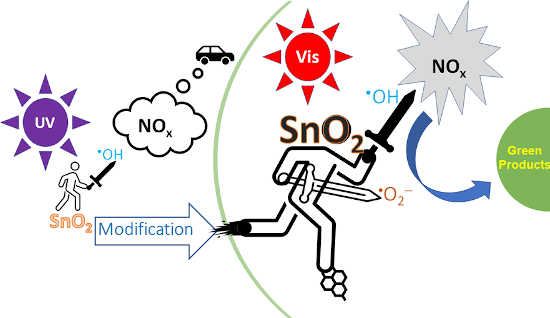
- vacancy defects (OVs) [15][16]. Therefore, SnO2 is considered a potential material in various technological fields such as catalysis, optoelectronic devices, rechargeable lithium batteries, electrocatalysis, photocatalysis, solar energy conversion, and gas sensing [17][18][19][20][21][22][23][24]. In the
- BY 4.0. The proposed process of NO + O2 reaction over Ce–SnO2 under visible light irradiation. The ROS reacted with the activated NO− intermediates to nitrates and nitrites. Figure 15 was reprinted from [39], Applied Catalysis B: Environmental, vol. 284, by Song, X.; Qin, G.; Cheng, G.; Jiang, W
- time of SnO2 NPs (a) and Ag@SnO2 (b). Figure 16 was reprinted from [72], Catalysis Communications, vol. 136, by Bui, D. P.; Nguyen, M. T.; Tran, H. H.; You, S.-J.; Wang, Y.-F.; Van Viet, P. “Green synthesis of Ag@SnO2 nanocomposites for enhancing photocatalysis of nitrogen monoxide removal under solar


Sputtering onto liquids: a critical review
Beilstein J. Nanotechnol. 2022, 13, 10–53, doi:10.3762/bjnano.13.2
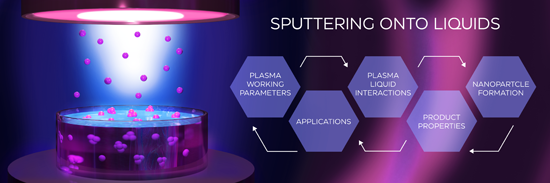
- . Because of the size effects, NPs have unique properties that allow them to be used as components of advanced materials for a wide range of applications such as optics, catalysis, or biomedicine [1][2][3]. Since the properties of NPs strongly depend on their size, size distribution, shape, composition, and






Chemical vapor deposition of germanium-rich CrGex nanowires
Beilstein J. Nanotechnol. 2021, 12, 1365–1371, doi:10.3762/bjnano.12.100
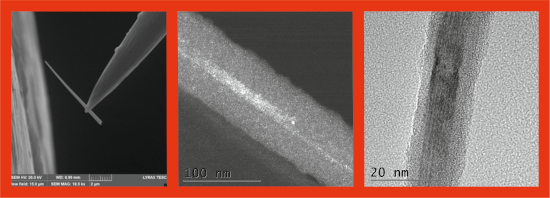
- applications, as well as catalysis. Moreover, their compatibility with silicon technology is advantageous. The rising need for advanced technologies in IT, aerospace, chemical, and power supply industries has accelerated the search for novel materials that could be applied along with traditional materials or



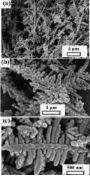
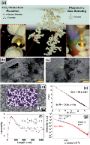
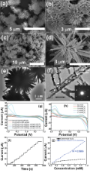
Morphology-driven gas sensing by fabricated fractals: A review
Beilstein J. Nanotechnol. 2021, 12, 1187–1208, doi:10.3762/bjnano.12.88



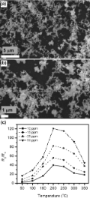

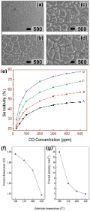
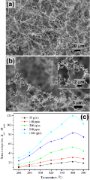


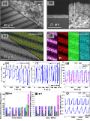





Effects of temperature and repeat layer spacing on mechanical properties of graphene/polycrystalline copper nanolaminated composites under shear loading
Beilstein J. Nanotechnol. 2021, 12, 863–877, doi:10.3762/bjnano.12.65
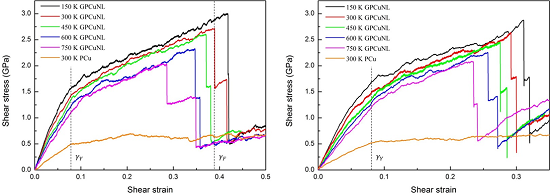
- properties in various fields, such as supercapacitors, integrated electrodes, catalysis, and sensors [10][11][12][13]. Furthermore, the interaction between graphene and matrix materials directly affects the mechanical properties of composites [14]. The van der Waals force between graphene and metals can

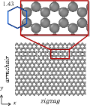
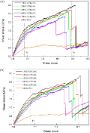






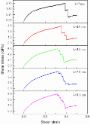



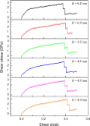



Recent progress in actuation technologies of micro/nanorobots
Beilstein J. Nanotechnol. 2021, 12, 756–765, doi:10.3762/bjnano.12.59
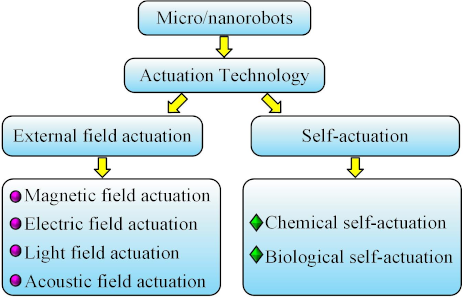
- the order of 10−14 N and is related to the concentration of H2O2. This research provides vital insights and theoretical foundations for in-depth exploration of the performance of micro/nanorobots in the future. Xu et al. [41] developed a micro/nanorobot based on platinum catalysis, which can be


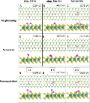
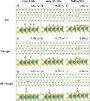
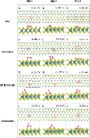
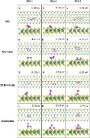
Prediction of Co and Ru nanocluster morphology on 2D MoS2 from interaction energies
Beilstein J. Nanotechnol. 2021, 12, 704–724, doi:10.3762/bjnano.12.56
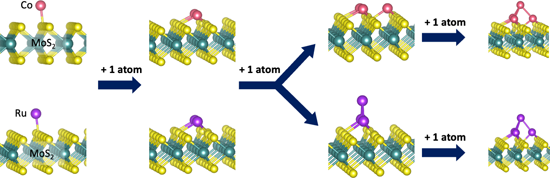
- . Based on this understanding, we propose Co on MoS2 as a suitable candidate for advanced interconnects, while Ru on MoS2 is more suited to catalysis applications. Keywords: cobalt (Co); 2D materials; molybdenum disulfide (MoS2); ruthenium (Ru); thin film nucleation; Introduction Layered materials that
- can be exfoliated into 2D sheets continue to generate significant interest across various disciplines, including batteries [1][2], catalysis [3][4], electronics [5][6][7][8][9][10], photonics [11][12], and sensors [13][14][15][16]. This is due in part to the interesting properties of these 2D
- MoS2 ML, where n = 1–4. Co and Ru are of great interest in conjunction with MoS2 for application in advanced interconnects as alternatives to Cu [30][31][32][33][34][35] and TaN. Applications in catalysis include Pt-free hydrogen evolution catalysts [36][37][38][39][40][41]. Interconnects require high




Gold(I) N-heterocyclic carbene precursors for focused electron beam-induced deposition
Beilstein J. Nanotechnol. 2021, 12, 257–269, doi:10.3762/bjnano.12.21
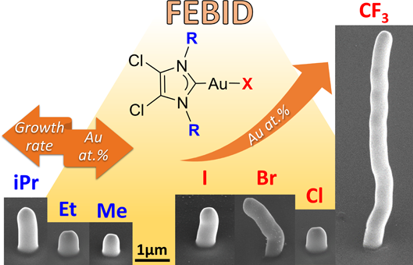
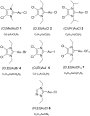
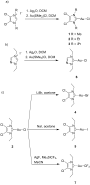
- substantially, rendering the precursor more volatile. This is valid only if the compounds maintain a constant lattice [33][34][41]. Gold(I) NHC complexes are known for their versatility in different applications such as catalysis [42], biomedicine [43], and photochemistry [44]. While chemically very different





A review on the green and sustainable synthesis of silver nanoparticles and one-dimensional silver nanostructures
Beilstein J. Nanotechnol. 2021, 12, 102–136, doi:10.3762/bjnano.12.9
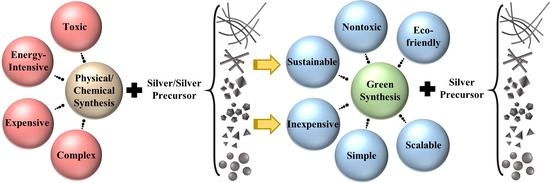
- ][34][35][36], wastewater remediation [37][38], and catalysis [39][40][41][42][43], to name a few. The success of nanotechnology has been established and the promising outcomes cannot be overlooked; however, the main principles behind the production of nanomaterials are yet to be examined more closely


The role of gold atom concentration in the formation of Cu–Au nanoparticles from the gas phase
Beilstein J. Nanotechnol. 2021, 12, 72–81, doi:10.3762/bjnano.12.6
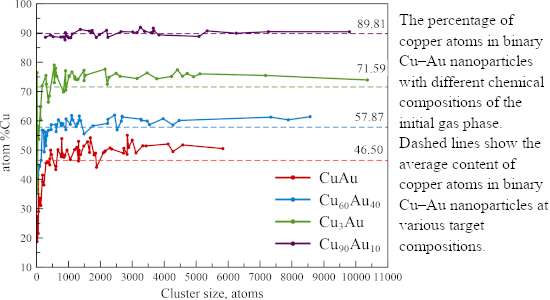
- application in the field of catalysis and optics. Thus, it has been shown that, in heterogeneous catalysis, Cu–Au nanoalloys usually exhibit a synergistic effect in oxidative reactions and the preferential oxidation of carbon monoxide (CO) to carbon dioxide at ambient temperature as well as in the selective
- is an increase in the catalytic activity when compared to the monometallic Au or Cu nanoparticles [3]. In addition to catalysis, Cu–Au nanoalloys are also of great interest in optics, in which the doping of copper into gold nanoparticles causes the appearance of strong surface plasmon resonances. In
- catalysis of industrial reactions, optics, optoelectronics, and medical applications. We also noted that predicting the structure of nanoparticles consisting of different chemical elements is not a trivial task because of its dependence on both the size and the complex energy landscape. To achieve


Oxidation of Au/Ag films by oxygen plasma: phase separation and generation of nanoporosity
Beilstein J. Nanotechnol. 2020, 11, 1608–1614, doi:10.3762/bjnano.11.143
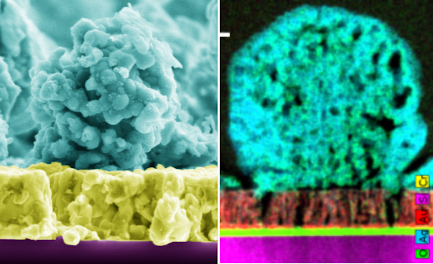
- oxygen, solid-state diffusion in metal alloys as well as the Kirkendall effect. The nanoporous microspheres generated by the silver oxidation within the Au/Ag alloy film might have potential applications to the field of gas sensors and catalysis since those require nanoporous semiconductor materials with


High-responsivity hybrid α-Ag2S/Si photodetector prepared by pulsed laser ablation in liquid
Beilstein J. Nanotechnol. 2020, 11, 1596–1607, doi:10.3762/bjnano.11.142
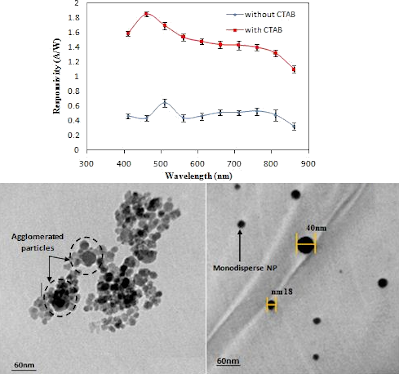
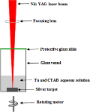
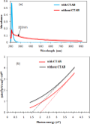
- enabled them to be used in many promising applications, for example, catalysis and electronic and optoelectronic devices [1][2][3]. In this regard, controlling particle sizes and attaining them within a narrow size distribution are important. Silver sulfide is an important semiconducting material with a




One-step synthesis of carbon-supported electrocatalysts
Beilstein J. Nanotechnol. 2020, 11, 1419–1431, doi:10.3762/bjnano.11.126

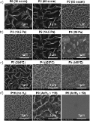
- limitations and increases the surface area [20]. A typical histogram of the Pt-NPs is shown in Figure 2c, displaying a narrow PSD with a geometric standard deviation [21] between 1.24 and 1.3. Such a narrow PSD, in combination with a small particle size, is essential to reach high mass activities in catalysis




Analysis of catalyst surface wetting: the early stage of epitaxial germanium nanowire growth
Beilstein J. Nanotechnol. 2020, 11, 1371–1380, doi:10.3762/bjnano.11.121
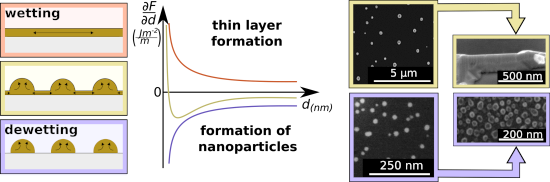
- sample with a drawn-in wetting angle θ. (d) Image of germanium 1D structures grown on a silicon substrate, which were formed via the catalysis of gold droplets during germanium deposition. The inset at the lower left corner shows an image of an inclined sample. The droplet at the top of the germanium


Magnetohydrodynamic stagnation point on a Casson nanofluid flow over a radially stretching sheet
Beilstein J. Nanotechnol. 2020, 11, 1303–1315, doi:10.3762/bjnano.11.114
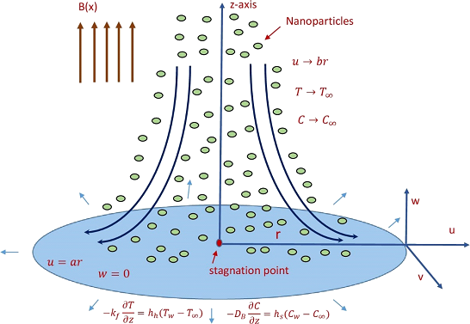
- Brownian motion and thermophoretic properties. Due to these features, nanoparticles are widely used in catalysis, imaging, energy-based research, microelectronics, and in other applications in the medical and environmental fields. These nanoparticles are composed of metals and nonmetals and are frequently


Role of redox-active axial ligands of metal porphyrins adsorbed at solid–liquid interfaces in a liquid-STM setup
Beilstein J. Nanotechnol. 2020, 11, 1264–1271, doi:10.3762/bjnano.11.110
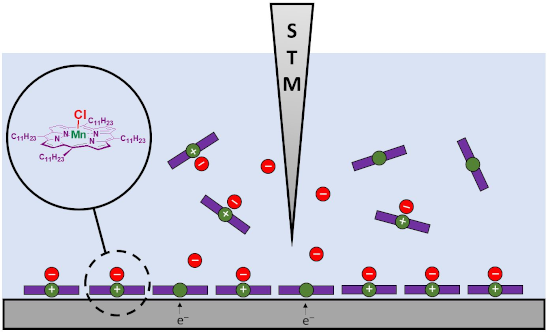
- single-molecule level, employing scanning tunneling microscopy (STM) [7][8][9]. Since our aim was to stay as close as possible to the laboratory conditions at which catalysis takes place (typically in an organic solvent under ambient conditions), we carried out our STM studies at a solid–liquid interface
- fate of this ligand is. In the catalysis study with MnTUPCl at the Au(111) surface, two possible mechanisms were proposed [7]: (i) A surface gold atom coordinates to the manganese center of MnTUPCl in an axial ligand-like fashion, inducing a chlorine radical to dissociate, thereby reducing the Mn(III
- added salts, allows us to pinpoint the behavior of the axial ligand of our catalyst in the non-polar liquid in which also our catalysis studies were carried out. Still, our system shows several of the characteristics of a conventional electrochemical cell. Apart from the bias dependency of the reaction


Straightforward synthesis of gold nanoparticles by adding water to an engineered small dendrimer
Beilstein J. Nanotechnol. 2020, 11, 1110–1118, doi:10.3762/bjnano.11.95
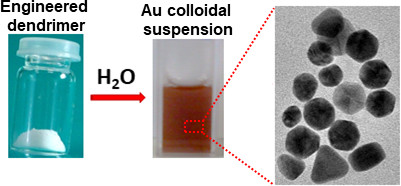
- Research on nanoparticles (NPs) in general, and gold nanoparticles in particular, results in the generation of thousands of publications every year, including reviews [1][2]. Different applications for gold nanoparticles have been proposed, for example, in catalysis [3][4] and in biology [5] – especially


Simulations of the 2D self-assembly of tripod-shaped building blocks
Beilstein J. Nanotechnol. 2020, 11, 884–890, doi:10.3762/bjnano.11.73
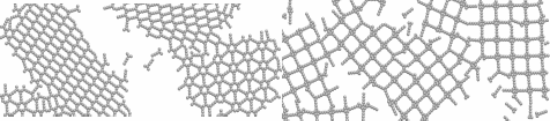
- a confinement template to initiate chemical reactions. It can be thought of as an extension of heterogenous catalysis where the initial precursors, the intermediate state, and the final supramolecular network all remain in an adsorbed state. Complex self-assembled structures are essential for many


Nickel nanoparticles supported on a covalent triazine framework as electrocatalyst for oxygen evolution reaction and oxygen reduction reactions
Beilstein J. Nanotechnol. 2020, 11, 770–781, doi:10.3762/bjnano.11.62
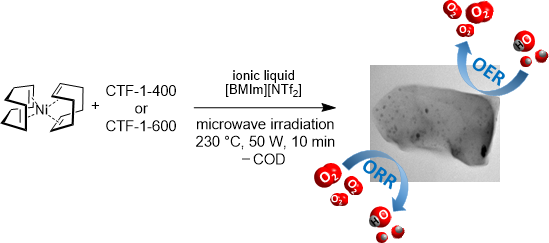
- /CTF-1-400-20, whereas 7 atom % N is involved in bonding to Ni for Ni/CTF-1-600-22. Electrochemical catalysis In order to investigate the activity of the synthesized materials in the OER, rotating disc electrode (RDE) experiments were conducted in 1 mol/L KOH solution in a three-electrode cell. Figure


Effect of Ag loading position on the photocatalytic performance of TiO2 nanocolumn arrays
Beilstein J. Nanotechnol. 2020, 11, 717–728, doi:10.3762/bjnano.11.59
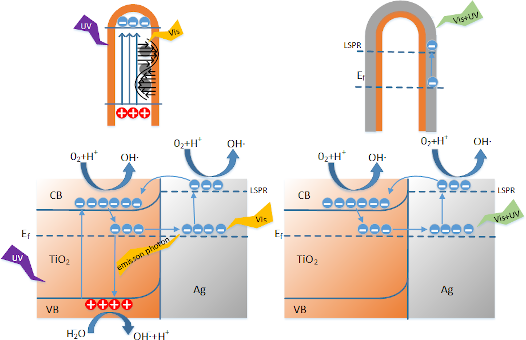
- photolithography and the template method by Sung et al. [30]. In this case, Ag particles were loaded on the outside of the nanocolumns by magnetron sputtering, and the catalysis was carried out at a sputtering time of 30 min. Besides, Jani et al. [31] studied the preparation of TiO2 nanotube arrays by anodization
- , and Ag particles were loaded on the inside and the outside of the nanotubes by chemical deposition. The catalysis of this composite was carried out at a concentration of 1100 mM in AgNO3 solution. It was found that the loading position of precious metal particles in the TiO2 structure could not be





