Search results
Search for "cells" in Full Text gives 1112 result(s) in Beilstein Journal of Nanotechnology. Showing first 200.
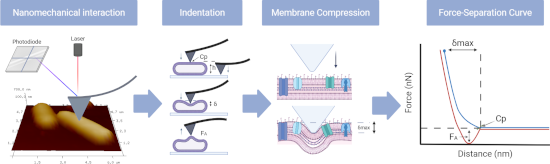
Mechanical stability of individual bacterial cells under different osmotic pressure conditions: a nanoindentation study of Pseudomonas aeruginosa
Beilstein J. Nanotechnol. 2025, 16, 1171–1183, doi:10.3762/bjnano.16.86


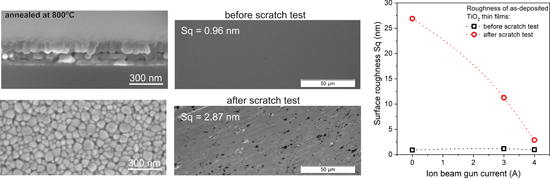
Influence of ion beam current on the structural, optical, and mechanical properties of TiO2 coatings: ion beam-assisted vs conventional electron beam evaporation
Beilstein J. Nanotechnol. 2025, 16, 1097–1112, doi:10.3762/bjnano.16.81
- , and good availability, TiO2 in the form of thin films is now widely used in the development of gas sensors, photodetectors, solar cells, memristors, and photocatalysts [1][12][15][16][17]. The area of application of titanium dioxide is also related to the crystal structure in which it occurs, that is
- , brookite, anatase, or rutile [16][17][18][19][20]. The rutile phase is the most stable structure of TiO2, while anatase is a metastable phase. Recently, the anatase phase of TiO2 has been particularly used in the production of solar cells and optical coatings. According to [17][18], titanium dioxide in the




Fabrication of metal complex phthalocyanine and porphyrin nanoparticle aqueous colloids by pulsed laser fragmentation in liquid and their potential application to a photosensitizer for photodynamic therapy
Beilstein J. Nanotechnol. 2025, 16, 1088–1096, doi:10.3762/bjnano.16.80
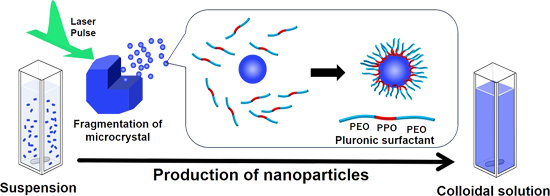
- generation of reactive oxygen species by AlClPc, ZnPc, and PtOEP nanoparticles and the photocytotoxicity for PC12 and HeLa cells, and demonstrated that the nanoparticles can be used as photosensitizers for photodynamic therapy. Keywords: aqueous colloid; photosensitizer; phthalocyanine; pulsed laser
- against cancer cells was reported. However, conventional methods of producing nanoparticle colloids require organic solvents and excessive amounts of organic adjuvants, which may have other implications for research in pharmacological, photochemical, and medical applications, and also may interfere with
- polypropylene oxide (PPO) arranged in a triblock structure. Here, the stability in phosphate-buffered saline (PBS, pH 7.2), which is used widely in pharmacology and biomedical experiments, was examined. We evaluated the phototoxicity of the fabricated nanoparticle colloids in vitro against PC12 cells (a cell


Piezoelectricity of hexagonal boron nitrides improves bone tissue generation as tested on osteoblasts
Beilstein J. Nanotechnol. 2025, 16, 1068–1081, doi:10.3762/bjnano.16.78
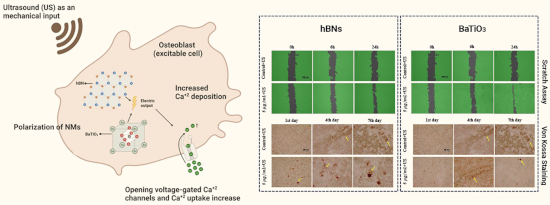
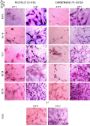
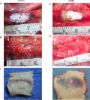
- 10.3762/bjnano.16.78 Abstract Bone tissue, also known as bone, is a hard and specialized connective tissue consisting of various bone cells. Internally, it has a honeycomb-like matrix providing rigidity to the bone and a piezoelectric feature contributing to bone remodeling. Bone remodeling is a crucial
- process involving osteoblastic replacement and resorption by osteoclastic cells to maintain structural integrity and mechanical properties of the bone tissue as it grows. However, in cases of fracture or degeneration, the natural self-regeneration process or inherent piezoelectricity of the body may not
- with ultrasound (US) exposure. The results showed that the NMs are not cytotoxic at the concentrations tested and the migration ability and calcium deposit formation of the cells treated with the NMs and upon US exposure were significantly increased. These results demonstrate that the hBNs have the


Soft materials nanoarchitectonics: liquid crystals, polymers, gels, biomaterials, and others
Beilstein J. Nanotechnol. 2025, 16, 1025–1067, doi:10.3762/bjnano.16.77
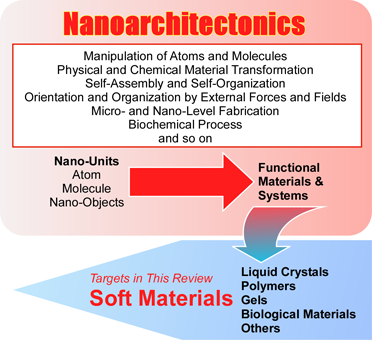
- [149][150][151][152][153]. Nanoarchitectonics is also used in the development of chemical catalysts [154][155][156][157][158], photocatalysts [159][160][161][162][163], sensors [164][165][166][167][168], biosensors [169][170][171][172][173], devices [174][175][176][177][178], solar cells [179][180][181
- ][182][183], fuel cells [184][185][186][187][188], batteries [189][190][191][192][193], supercapacitors [194][195][196][197][198], and other energy applications [199][200][201][202][203]. Furthermore, it is employed in environmental remediation [204][205][206][207][208], drug delivery [209][210][211
- and polar moieties can exhibit ferroelectric behavior and electronic carrier transport properties. The corresponding materials have been the subject of investigation for potential applications in electroluminescent devices, field-effect transistors, and solar cells [228][229][230][231][232]. To






A calix[4]arene-based supramolecular nanoassembly targeting cancer cells and triggering the release of nitric oxide with green light
Beilstein J. Nanotechnol. 2025, 16, 1003–1013, doi:10.3762/bjnano.16.75
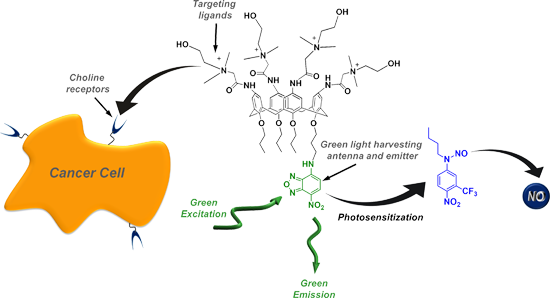
- cancer cells that overexpress the choline transporters, and it can be visualized thanks to the fluorescent tag. The fluorogenic unit also acts as a green light harvesting center, making the nanoassembly a photo-nanoreactor able to encapsulate a hydrophobic nitric oxide (NO) photodonor, otherwise
- purpose, we report the design and synthesis of the cationic calix[4]arene 1 and its supramolecular nanoassembly with the blue-light-activatable nitroso-derivative NOPD 2 (Scheme 1). We show that (i) 1 self-assembles in water medium into nanoaggregates able to internalize into cancer cells selectively and
- specifically target cancer cells overexpressing choline transporters and, after encapsulation of the NOPD 2, stimulate NO release through a green-light-triggered photosensitization process. Results and Discussion Design and synthesis Calix[4]arene 1 integrates four choline moieties at the upper rim of the


Shape, membrane morphology, and morphodynamic response of metabolically active human mitochondria revealed by scanning ion conductance microscopy
Beilstein J. Nanotechnol. 2025, 16, 951–967, doi:10.3762/bjnano.16.73
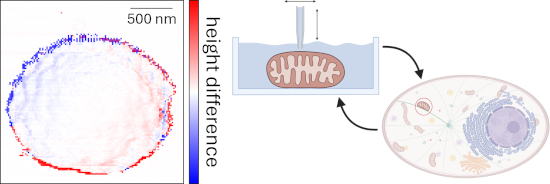
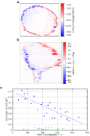
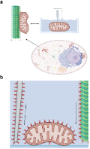
- , Rostock University Medical Center, 18057 Rostock, Germany 10.3762/bjnano.16.73 Abstract Mitochondrial network dynamics play a key role in enabling cells to adapt to environmental changes. Fusion and fission of mitochondria, as well as their contact with other organelles, are central processes
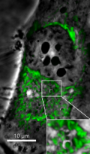
- . Consequently, the outer membrane, which separates the mitochondrion from the cytoplasm, has become a focus of investigation. We analysed metabolically active mitochondria from HeLa cells using scanning ion conductance microscopy to generate nanoscopically resolved, three-dimensional topographies. Our
- Mitochondria are essential organelles in eukaryotic cells, primarily responsible for energy supply. They have an endosymbiotic origin, resulting from the incorporation of an ancestral prokaryote into another prokaryotic host approximately 1.8 billion years ago [1][2][3]. This symbiotic relationship gave rise



Ar+ implantation-induced tailoring of RF-sputtered ZnO films: structural, morphological, and optical properties
Beilstein J. Nanotechnol. 2025, 16, 872–886, doi:10.3762/bjnano.16.66
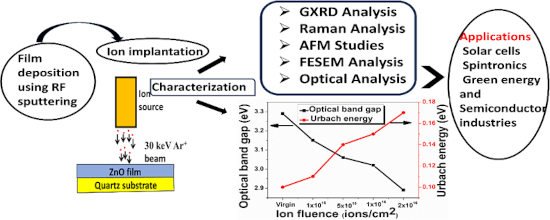
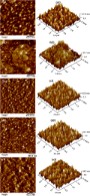
- displays [5], solar cells [6], and light-emitting diodes [7]. There are numerous methods for synthesizing ZnO films, including pulsed laser deposition, spray pyrolysis, radio frequency (RF) sputtering, and sol–gel techniques. Here RF sputtering is preferred over other methods because it provides high
- , although the variation in surface parameters and optical characteristics can significantly impact the applicability of ZnO films in semiconductors, spintronics, solar cells, and green energy industries [3][18]. This motivated us to investigate the emergence of Raman longitudinal optical modes and their






Insights into the electronic and atomic structures of cerium oxide-based ultrathin films and nanostructures using high-brilliance light sources
Beilstein J. Nanotechnol. 2025, 16, 860–871, doi:10.3762/bjnano.16.65

- field of environmental remediation [9]. The related ability of the material to easily store and release oxygen also plays a key role in energy conversion technologies, including fuel cells and batteries [10][11]. Gas sensing applications of ceria-based materials are based on the modifications of the
- rationalized the observed high activity of the material in direct methanol fuel cells [37]. Regarding the Ni-CeO2−x(111) system, a study of the methanol reaction revealed that the strong metal–support interactions between Ni and CeO2 determines the high selectivity for CO2 production, instead of the formation
- soft X-ray range. Reaction cells with an ultrathin membrane that confines the gas in a narrow region extremely close to the sample surface were applied to the study of Cu- and Fe-doped cerium oxide films during thermal treatments in hydrogen at ambient pressure [58]. The combination of ambient pressure


Supramolecular hydration structure of graphene-based hydrogels: density functional theory, green chemistry and interface application
Beilstein J. Nanotechnol. 2025, 16, 806–822, doi:10.3762/bjnano.16.61
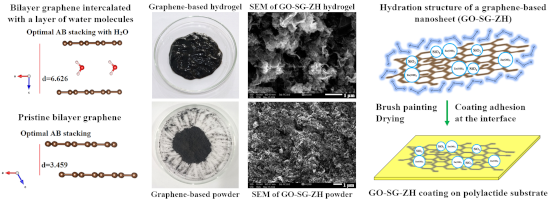
- advance nanoscale properties and nanotechnology applications. Keywords: antibacterial coating; bioinspired hydration; density functional theory; graphene-based hydrogel; supramolecular structure; Introduction Biological cells are assemblies of biomolecules that are hydrated with water molecules. The
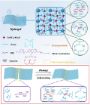
- . High water content and large spacing distance in the hydrogel structure are key factors that prevent van der Waals and π–π interactions between graphene-based sheets. Figure 2b depicts the hydrated assembly of biological cells in nature. The natural hydrated structure includes intracellular water, cell
- hydrogel in Figure 2a is biomimetic to the natural system of biological cells described in Figure 2b. Hydration shells on GO-SG-ZH nanosheets, particularly the first interfacial water layer, generate hydration forces to maintain intersheet distances and nanoscale structures in the artificial system. The


Serum heat inactivation diminishes ApoE-mediated uptake of D-Lin-MC3-DMA lipid nanoparticles
Beilstein J. Nanotechnol. 2025, 16, 740–748, doi:10.3762/bjnano.16.57
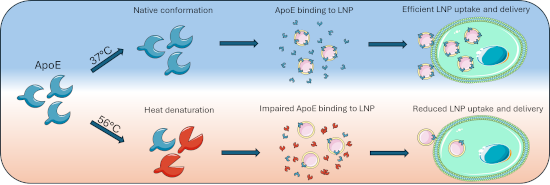
- internalization of RNA molecules by target cells [23]. Several LNP encapsulated RNA-based therapeutics have achieved approval by the United States Food and Drug Administration (FDA) [24], including patisiran/Onpattro for the treatment of hereditary transthyretin amyloidosis. Onpattro LNPs are administered
- intravenously after which they are dependent on the adsorption of the plasma protein apolipoprotein E (ApoE) to their surface to efficiently target LDL-receptor expressing cells in the liver and deliver the siRNA cargo [25][26]. As the protein corona seems to play a pivotal role in LNP tissue distribution and
- (Peprotech), and 50 nM hydrocortisone (Sigma), in flasks coated with 0.1% gelatin (Merck). All cells were cultured at 37 °C with 5% CO2. Cell lines were transformed to express the dual luciferase system as described by Evers et al. [28]. Briefly, cell lines were transfected with a pHAGE2-PGK-FFluc-SV40-Rluc


Efficiency of single-pulse laser fragmentation of organic nutraceutical dispersions in a circular jet flow-through reactor
Beilstein J. Nanotechnol. 2025, 16, 711–727, doi:10.3762/bjnano.16.55
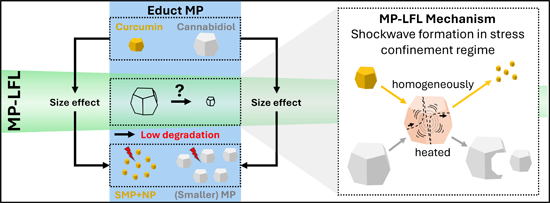
- particle surface and quantified regarding feedstock mass concentration and nutraceutical type. Cytotoxicity in HepG2 cancer cells was significantly reduced in cells treated with laser-processed curcumin in comparison to unirradiated curcumin controls, and antioxidant effects were proven, ensuring high
- greater intracellular uptake and increased cytotoxicity on rat C6 glioma cells [36]. Laser-generated nanoscale cinnamon was also synthesized and showed enhanced antibacterial activity against Gram-negative and Gram-positive bacteria after particle size reduction compared to the unirradiated educt [37
- molecules [75][76]. The effect of curcumin on cancer cells has been frequently examined, and two potentially contradictory effects are frequently discussed. On the one hand, curcumin nanoparticles are said to be more cytotoxic to cancer cells like HepG2 than the corresponding microparticle formulations [77


Nanostructured materials characterized by scanning photoelectron spectromicroscopy
Beilstein J. Nanotechnol. 2025, 16, 700–710, doi:10.3762/bjnano.16.54
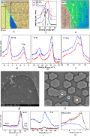
- one-transistor-one-resistor cells with minimal footprint [25] can be realized. Optimizing nanowire diameter and distance further enhances the strong light adsorption of III–V materials, resulting in nanowire-based solar cells of high efficiency [26]. While such nanowire-based devices are highly
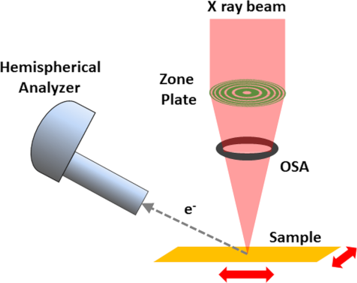
- high spatial resolution. We correlate that to the chemical surface composition, distinguishing between surface and bulk effects on the path towards improved surface properties of nanowire solar cells with further enhanced efficiency. Furthermore, they demonstrate the large suitability of SPEM for


The impact of tris(pentafluorophenyl)borane hole transport layer doping on interfacial charge extraction and recombination
Beilstein J. Nanotechnol. 2025, 16, 678–689, doi:10.3762/bjnano.16.52
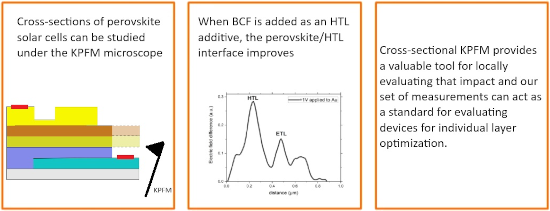
- in solar cells based on these materials. To do so on operating solar cells, we created samples with exposed cross-sections and examined their potential profile distributions with Kelvin probe force microscopy (KPFM), implementing our comprehensive measurement protocol. Using the Lewis acid tris
- ; hole transport layer doping; Kelvin probe force microscopy; perovskite solar cells; Introduction Perovskite solar cells (PSCs) are a promising class of photovoltaic material that exhibits high power conversion efficiencies and relies on a low-cost solution-processed fabrication method [1][2][3][4]. At
- the core of their success lies the perovskite absorber material, which exhibits impressive bulk properties, such as long carrier lifetimes and low recombination rates [5][6][7][8]. However, the granular nature of perovskites and the layered structure of their solar cells, introduce complications such


Colloidal few layered graphene–tannic acid preserves the biocompatibility of periodontal ligament cells
Beilstein J. Nanotechnol. 2025, 16, 664–677, doi:10.3762/bjnano.16.51
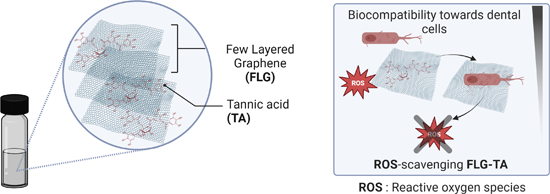
- , demonstrating no cytotoxicity to periodontal ligament cells up to 200 µg·mL−1 while promoting cellular adhesion and maintaining chromatin integrity. Overall, because of its favorable biocompatibility FLG–TA holds promise as a novel biomaterial for dental applications. Keywords: antioxidant properties
- ; biocompatibility; dental applications; few layered graphene–tannic acid biocomposite (FLG–TA); periodontal ligament cells (PDL); Introduction Dental diseases remain a global health challenge [1]. Dental biomaterials are crucial in both therapeutic and preventive strategies, with nanotechnology emerging as a
- microhardness without compromising biocompatibility [7]. In another work, the formulation of an injectable calcium phosphate cement–chitosan–graphene oxide (GO) composite was found to be effective. This composite fostered the proliferation of human dental pulp stem cells [8]. Despite these promising findings




Nanoscale capacitance spectroscopy based on multifrequency electrostatic force microscopy
Beilstein J. Nanotechnol. 2025, 16, 637–651, doi:10.3762/bjnano.16.49

- study materials such as perovskite solar cells [18][19][20] and Li-ion batteries [21][22][23]. AFM enables simultaneous acquisition of topographic and electronic data by applying AC or DC voltages across the tip–sample gap, allowing for the detection of capacitive forces [24][25] or contact potential




A formulation containing Cymbopogon flexuosus essential oil: improvement of biochemical parameters and oxidative stress in diabetic rats
Beilstein J. Nanotechnol. 2025, 16, 617–636, doi:10.3762/bjnano.16.48
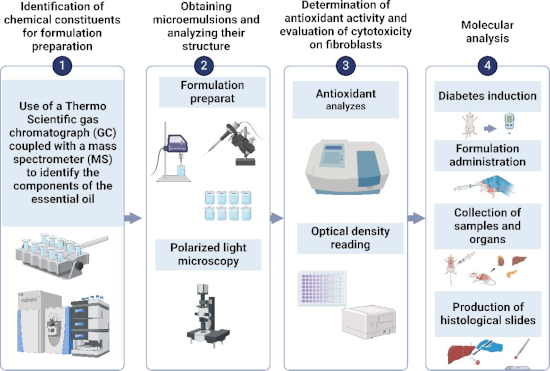
- reach 700 million cases by 2045 [1]. The main causes of DM are related to a deficit in insulin production due to a loss of pancreatic β-cell function (type-1 DM) [1], or due to insulin resistance and a partial deficit in the secretion of this hormone by pancreatic β-cells (type-2 DM). Various therapies
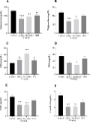
- 200 µg/mL), with cell viability values of less than 70% when compared to the control (100% viability). The cytotoxicity of EOCF was confirmed in the study by Al-Ghanayem [38], who showed viabilities in keratinocyte cells of 51.5% and 70.5% at concentrations of 1.25 and 0.6 µL/mL of EOCF, respectively
- . The use of STZ in animals causes conditions similar to that of some humans with type-1 diabetes without glycemic control. STZ has been shown to significantly increase blood glucose levels in Wistar rats. STZ’s mechanism of action alters the DNA base sequences of pancreatic islet β-cells and stimulates




Polyurethane/silk fibroin-based electrospun membranes for wound healing and skin substitute applications
Beilstein J. Nanotechnol. 2025, 16, 591–612, doi:10.3762/bjnano.16.46
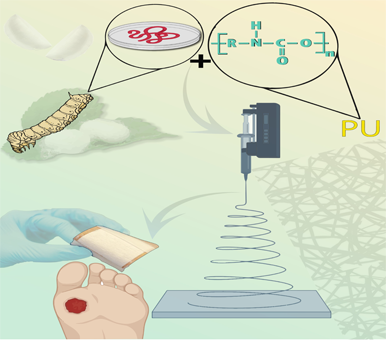
- cells [29]. Multiple cell types including immune cells, fibroblasts, and keratinocytes work together to repair wounds [30]. Skin regeneration occurs mainly through the proliferation and differentiation of keratinocytes, the major cell type of the epidermis, that move to cover the wound and generate new
- against microbes and as scaffold for immune cells. Also, it stores growth factors and cytokines to promote healing [35]. Platelets bring the immune cells to the injury site either through direct capturing or by the release of the secretome. The secretome activates keratinocytes and fibroblasts of the
- resident skin cells [36]. Inflammation At this stage of wound healing, skin regeneration begins and continues till the end. Skin regeneration is essential for maintaining homeostasis, avoiding infection, and repairing the skin’s barrier function [37]. The inflammation process kills pathogens, prevents the



Nanomaterials in targeting amyloid-β oligomers: current advances and future directions for Alzheimer's disease diagnosis and therapy
Beilstein J. Nanotechnol. 2025, 16, 561–580, doi:10.3762/bjnano.16.44
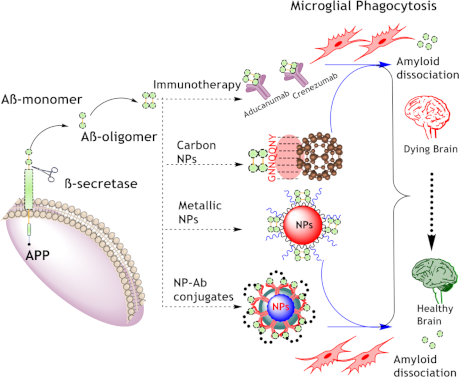
- efficacy. Additionally, NMs can interact directly with tissues and cells, potentially halting disease progression by preventing protein misfolding and the formation of toxic oligomers, a hallmark of AD pathology. Overall, nanotechnology holds significant potential to advance both the diagnosis and
- neuroblastoma cells compared to pure curcumin. Moreover, the Cur-SNSDS system effectively prevented cognitive decline in aged APPSwe/PS1deE9 mice, suggesting its potential as a therapeutic intervention for AD [60]. Ultimately, these diverse examples illustrate the transformative, versatile, and effective
- nanobiomaterials derived from cell primitives as a promising therapeutic strategy. These biomimetic nanomaterials, comprising components such as cells, extracellular vesicles (EVs), and cell membranes offer several advantages. Their nanoparticulate size facilitates long-term circulation, reduces immune response


Water in nanoporous hexagonal boron nitride nanosheets: a first-principles study
Beilstein J. Nanotechnol. 2025, 16, 510–519, doi:10.3762/bjnano.16.39
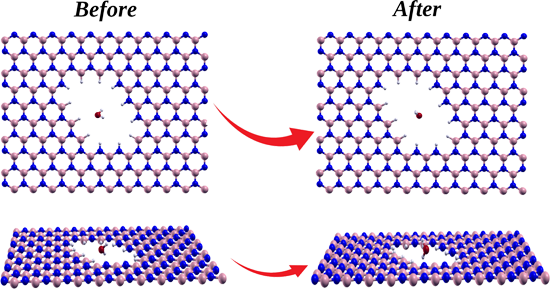
- into a uniform real space grid defined using an energy cutoff of 200 Ry. The employed unit cells are periodic in the x–y directions; in the z direction, we have used vectors large enough to avoid the interaction between the periodic images. In order to investigate the energetic stability of the h-BN




N2+-implantation-induced tailoring of structural, morphological, optical, and electrical characteristics of sputtered molybdenum thin films
Beilstein J. Nanotechnol. 2025, 16, 495–509, doi:10.3762/bjnano.16.38
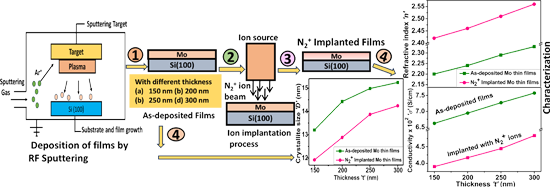
- Usha Rani Kafi Devi Divya Gupta Sanjeev Aggarwal Ion Beam Centre, Department of Physics, Kurukshetra University, Kurukshetra-136119, India 10.3762/bjnano.16.38 Abstract Molybdenum (Mo) thin films have extensive applications in energy storage devices and photovoltaic solar cells because of their
- technological applications owing to their outstanding characteristics. The high melting point and stability of molybdenum ensure that it remains structurally intact under the harsh operating conditions of solar cells [1][2]. This stability is essential for long-term reliability and performance. The low


Synthetic-polymer-assisted antisense oligonucleotide delivery: targeted approaches for precision disease treatment
Beilstein J. Nanotechnol. 2025, 16, 435–463, doi:10.3762/bjnano.16.34

- contact with the targeted cells, ASO drugs still need to be internalised by cells and overcome internal cellular trafficking to determine their functional delivery. During this process the oligonucleotides are engulfed into endosomes and released into the cytoplasm, where they either exert their action or
- intact after RNase treatment. In addition, the εPLL-modified GNPs exhibited high gene-silencing activity in HeLa-Luc cells, indicating efficient delivery of ASOs and other splice switching oligonucleotides, such as anti-microRNAs and DNAzymes, into the cells. The following year, Le Vay et al. designed a
- significantly improved gene silencing efficiency in prostate cancer cells, compared to a control diblock copolymer micelle. While cellular internalisation of ASO complexes can take place through several pathways, it has been previously reported that non-specific adsorptive endocytosis is the predominant


Biomimetics and bioinspired surfaces: from nature to theory and applications
Beilstein J. Nanotechnol. 2025, 16, 418–421, doi:10.3762/bjnano.16.32

- ) approach. For instance, Bartoli et al. [8] reviewed the potential applications of nanostructured carbon coatings – such as nanodiamonds, carbon nanotubes, and graphene-based materials – to improve interaction on the interface between medical implants and living cells. Several biological materials exhibit

Development of a mucoadhesive drug delivery system and its interaction with gastric cells
Beilstein J. Nanotechnol. 2025, 16, 371–384, doi:10.3762/bjnano.16.28

- , which were also capable of diffusion through artificial mucus. The nanoparticles were not toxic to gastric epithelial cells and can be internalized by the cells within 4 h. The adsorption of nanoparticles onto mucus-secreting gastric cells was found to be correlated with cell number. The delivery system
- rate. The mucoadhesive characteristic of the system was tested in situ and in vitro. In addition, the in vitro cytotoxicity and internalization of the nanoparticles by mucus-secreting gastric cells were also investigated. We believe that usage of the developed system may increase the retention time of
- . In this way, the possible mucus penetration in the stomach may be deduced more accurately. Determination of cell viability Possible toxic effects of EudAlg NPs on the human gastric adenocarcinoma cell line AGS were assessed for three days in 24-well plates for 1 × 10⁵ cells and 1 mg/mL NPs per well


Tailoring of physical properties of RF-sputtered ZnTe films: role of substrate temperature
Beilstein J. Nanotechnol. 2025, 16, 333–348, doi:10.3762/bjnano.16.25
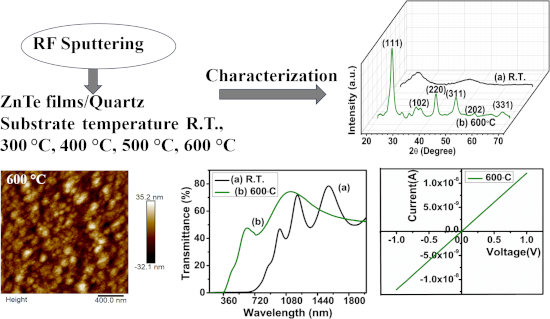
- fossil fuels to fulfil the growing demands of energy results in environmental pollution. Environmentally friendly resources such as solar and wind energy can act as a substitute for these non-renewable energy resources because of their sustainability and abundance. Commonly, silicon-based solar cells are
- used for this purpose. However, the requirement of very pure material for making these devices leads to high production cost. Metal chalcogenide-based solar cells, because of their low cost and comparable efficiency, can act as a substitute for the Si-based technology. Metal chalcogenide (II–VI
- (CdZnTe) compounds. Currently many efforts are made to increase the efficiency of CdTe-based solar cells. A maximum efficiency of 22.1% has been achieved using CdTe-based solar cells. The efficiency can be tuned by the formation of a stable ohmic back contact. For this, a material with a bandgap greater