


Search results
Search for "cluster" in Full Text gives 312 result(s) in Beilstein Journal of Nanotechnology. Showing first 200.
The role of gold atom concentration in the formation of Cu–Au nanoparticles from the gas phase
Beilstein J. Nanotechnol. 2021, 12, 72–81, doi:10.3762/bjnano.12.6
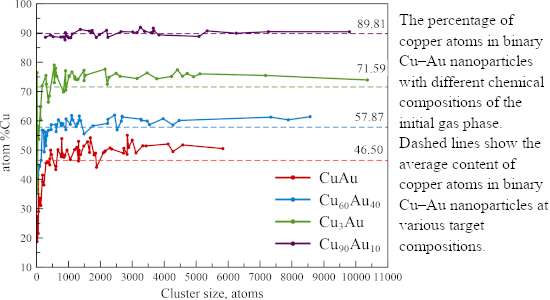
- –Au clusters are formed with chemical compositions corresponding to the composition of the evaporated material [14]. In the case of cluster deposition onto amorphous carbon, various cluster morphologies were observed, such as cuboctahedral and decahedral. For clusters supported on a MgO substrate
- distribution of the evaporated primary fragments of the cluster due to the high ambient temperature. This interferes with the combination of the resulting clusters as a result of the high kinetic energy of the atoms, and, possibly, also of the short time of approach to the substrate. As a result, in the case
- of Cu3Au, spherical nanoparticles well separated in space were obtained with an average size of 1.9 ± 0.7 nm [3]. The maximum possible cluster size was 5.5 nm. The nanoparticles were single crystals with the face-centered cubic (FCC) structure displayed along the [110] axis and their lattice


Electron beam-induced deposition of platinum from Pt(CO)2Cl2 and Pt(CO)2Br2
Beilstein J. Nanotechnol. 2020, 11, 1789–1800, doi:10.3762/bjnano.11.161
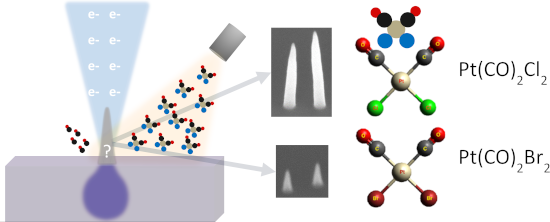
- , Gainesville, Florida, 32611-7200, USA Department of Chemistry, Johns Hopkins University, Baltimore, MD, 21218, USA Department of Chemistry and the Renewable Energy and Chemical Transformations Cluster, University of Central Florida, Orlando, Florida, 32816-2366, USA 10.3762/bjnano.11.161 Abstract Two


Selective detection of complex gas mixtures using point contacts: concept, method and tools
Beilstein J. Nanotechnol. 2020, 11, 1631–1643, doi:10.3762/bjnano.11.146
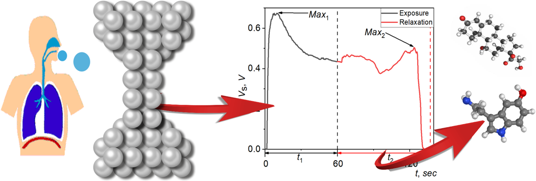
- tested using the breath media from healthy participants as a control. Cluster analysis of the testing results using the criteria we developed earlier [41] was performed to select sensors with the most similar parameters. As a result of these procedures, a set of 25 sensors was selected in which any pair


![[Graphic 4]](/bjnano/content/inline/2190-4286-11-146-i8.svg?max-width=637&scale=1.18182) in th...
in th...

![[Graphic 7]](/bjnano/content/inline/2190-4286-11-146-i11.svg?max-width=637&scale=1.18182) in the...
in the...
Wafer-level integration of self-aligned high aspect ratio silicon 3D structures using the MACE method with Au, Pd, Pt, Cu, and Ir
Beilstein J. Nanotechnol. 2020, 11, 1439–1449, doi:10.3762/bjnano.11.128
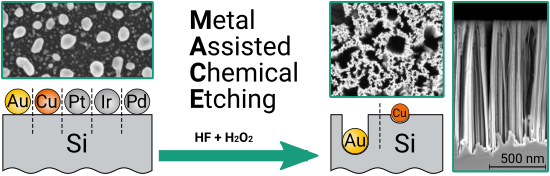
- main etching mechanism remains the same. However, these structures stick together at the topmost point. The nanostructure bundles form during the drying process. This occurs when the capillary forces during drying are high enough to cluster neighbouring single Si wires, and the adhesion force of the


Transient coating of γ-Fe2O3 nanoparticles with glutamate for its delivery to and removal from brain nerve terminals
Beilstein J. Nanotechnol. 2020, 11, 1381–1393, doi:10.3762/bjnano.11.122
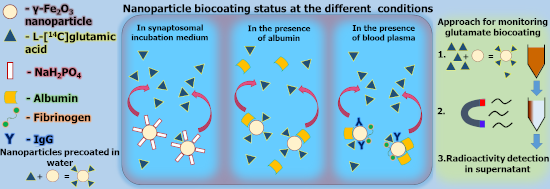
- version of ArgusLab 4.0.1 (Mark Thompson and Planaria Software LLC©) for modeling a biomodified nanoparticle, and a trial version of the Materials Sciences Suite 2015 (Schrödinger Software©) software package to generate appropriate images of the whole protein–nanoparticle cluster. Statistical analysis The


Analysis of catalyst surface wetting: the early stage of epitaxial germanium nanowire growth
Beilstein J. Nanotechnol. 2020, 11, 1371–1380, doi:10.3762/bjnano.11.121
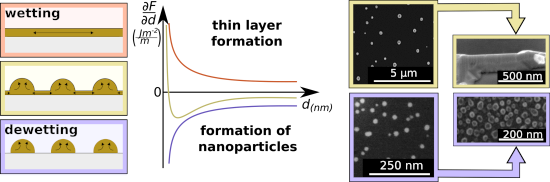
- silicon oxide is related to the size of the gold droplets formed during dewetting. Since the VLS-induced nanowire growth is a catalytic process, a minimum amount of gold atoms inside the droplet is necessary to dissolve germanium inside the gold cluster. This minimum amount is exceeded only on silicon but


Applications of superparamagnetic iron oxide nanoparticles in drug and therapeutic delivery, and biotechnological advancements
Beilstein J. Nanotechnol. 2020, 11, 1092–1109, doi:10.3762/bjnano.11.94
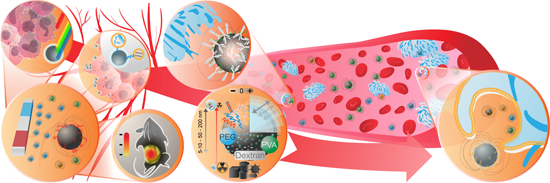
- nanoparticles, without doping or doped with rare earth metals, were designed in our labs for the use in MRI. Our studies showed that their effects on cells depend on the cell type, cluster design and concentration [158][159]. Asgari et al. [160] produced 50 nm SPION–carbon dot nanoparticles, which were designed


Transition from freestanding SnO2 nanowires to laterally aligned nanowires with a simulation-based experimental design
Beilstein J. Nanotechnol. 2020, 11, 843–853, doi:10.3762/bjnano.11.69
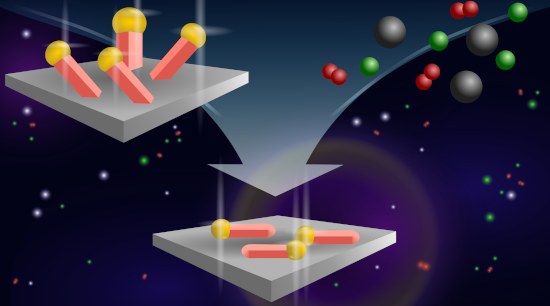
- control of the powder temperature, and by reducing the competing Au cluster density (i.e., using a well-separated Au cluster or an abrupt gold film edge). This gives the possibility to look deeper into the laterally aligned NW growth and to achieve higher control of the resulting NW properties. To use the





Electromigration-induced directional steps towards the formation of single atomic Ag contacts
Beilstein J. Nanotechnol. 2020, 11, 680–687, doi:10.3762/bjnano.11.55
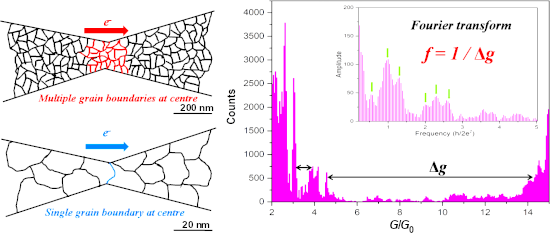
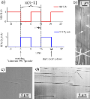
- 2e2/h [5][7]. Furthermore, conductance histograms of alkali metals and the direct comparison of conductance peak values with the magic numbers of cluster size suggest that the preferred electronic quantum modes influence the mechanically stable diameters [8][9]. This electronic shell effect was not


Evolution of Ag nanostructures created from thin films: UV–vis absorption and its theoretical predictions
Beilstein J. Nanotechnol. 2020, 11, 494–507, doi:10.3762/bjnano.11.40
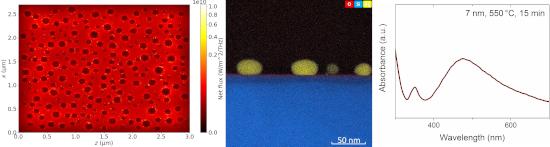
- cluster used. We plan to use a more advanced and less memory-consuming method, FETD (finite elements in time domain, FEM), in the future. Conclusion This work presents synthesis and UV–vis absorption studies of Ag nanostructures deposited on glass or silicon substrates. As shown, the formation of




DFT calculations of the structure and stability of copper clusters on MoS2
Beilstein J. Nanotechnol. 2020, 11, 391–406, doi:10.3762/bjnano.11.30
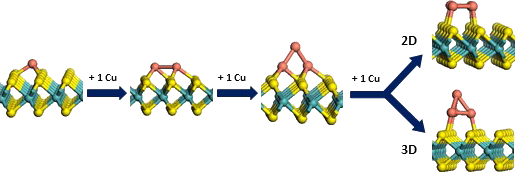
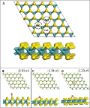
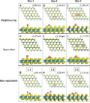
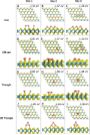
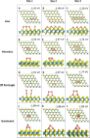
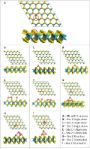
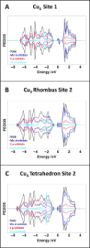
- vacancy on the adsorption energy and geometry of single Cu adatoms and the Cu4 clusters. The results of this investigation show that the stability of small Cun clusters on a MoS2 ML is driven mainly by Cu–Cu interactions and not dependent on whether the cluster is 2D or 3D. Further, the density-of-states
- ) adsorbed on MoS2. The energy of a single gas phase Cu atom (ECu_atom) is multiplied by n, the number of Cu atoms in adsorbed Cun. 2. Binding energy with reference to a free Cun cluster: where ECu_cluster is the energy of the most favourable Cun nanocluster structure in vacuum. For two atoms, this is a Cu2
- dimer, for three atoms it is a triangle and for four atoms it is a tetrahedral configuration. 3. Addition energy: where n is the number of Cu atoms. This models adding a Cu atom to an existing adsorbed cluster with (n − 1) Cu atoms. For the calculations involving MoS2 with an S vacancy, the vacancy

Formation of nanoripples on ZnO flat substrates and nanorods by gas cluster ion bombardment
Beilstein J. Nanotechnol. 2020, 11, 383–390, doi:10.3762/bjnano.11.29
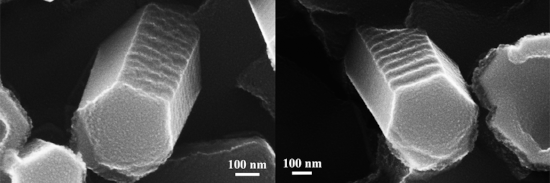
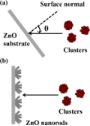
- Technological Research (CeFITec), Dept. de Física da Faculdade de Ciências e Tecnologia (FCT), Universidade Nova de Lisboa, Caparica 2829-516, Portugal Shenzhen Institute of Wuhan University 10.3762/bjnano.11.29 Abstract In the present study Ar+ cluster ions accelerated by voltages in the range of 5–10 kV are
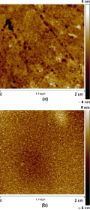
- used to irradiate single crystal ZnO substrates and nanorods to fabricate self-assembled surface nanoripple arrays. The ripple formation is observed when the incidence angle of the cluster beam is in the range of 30–70°. The influence of incidence angle, accelerating voltage, and fluence on the ripple
- parallel steps or ribs. The more ordered ripple formation on nanorods can be associated with the confinement of the nanorod facets in comparison with the quasi-infinite surface of the flat substrates. Keywords: cluster ion bombardment; gas cluster ion beam; surface ripples; ZnO nanorods; Introduction The



Formation of metal/semiconductor Cu–Si composite nanostructures
Beilstein J. Nanotechnol. 2019, 10, 2497–2504, doi:10.3762/bjnano.10.240
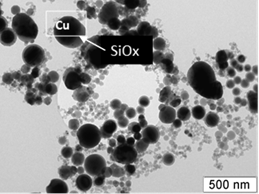
- molecular dynamics research package [25]. A part of the calculations was performed using the resources of the Information and Computing Center of the Novosibirsk State University. Results and Discussion Modelling a free spherical cluster of a copper/silicon alloy We considered a free spherical cluster of a
- copper/silicon alloy with a random distribution of atoms of 4.6 nm in size, with different silicon concentrations, obtained by cutting a sphere from an ideal fcc lattice as the initial object. Initially, the cluster was in the liquid state. The beginning of the cooling process was accompanied by the
- relaxation of the initial state at a temperature T = 1800 K. The cluster was cooled to a temperature of 300 K within the framework of the canonical ensemble using the Nose thermostat. The time step was τ = 1 fs. The cooling rate is 1 K/ps (1012 K/s). For the calculation, we used the speed variant of the


Label-free highly sensitive probe detection with novel hierarchical SERS substrates fabricated by nanoindentation and chemical reaction methods
Beilstein J. Nanotechnol. 2019, 10, 2483–2496, doi:10.3762/bjnano.10.239
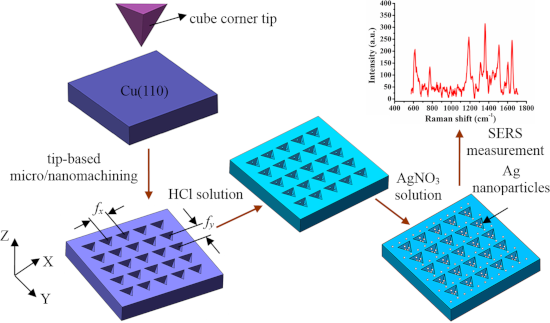
- beam lithography and self-assembly methods to fabricate gold clusters of micrometer size and regular spacing. Subsequently, the detection resolution of 4-acetamidothiophenol was 0.05 g/L using the substrate. Nanoparticle cluster array structures with a size of 40 nm were fabricated by electron beam
- of copper structure and adjacent silver nanoparticle cluster structures where the scale is set to log|E/E0|. A new hot spot is generated due to the interaction with adjacent Ag nanoparticles. At the same time, the other hot spot between the Ag nanoparticle and the pile-up of copper structure is
- formed and the SERS hot spot intensity is greatly enhanced. The electric field intensity of the three adjacent Ag nanoparticle cluster structures on the pile-up of the Cu substrate is 380 V/m. The electric field intensity is further greatly enhanced compared with a single Ag nanoparticle on the pile-up


Mannosylated brush copolymers based on poly(ethylene glycol) and poly(ε-caprolactone) as multivalent lectin-binding nanomaterials
Beilstein J. Nanotechnol. 2019, 10, 2192–2206, doi:10.3762/bjnano.10.212
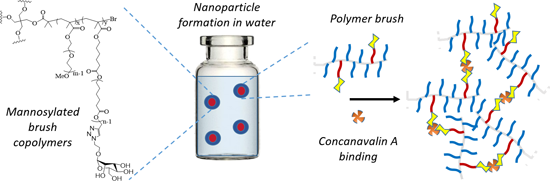
- recently synthesized with the aim of producing powerful anti-pathogenic agents [4]. The so called “cluster glycoside effect” is the enhanced activity of a multivalent glycoderivative with respect to the monovalent saccharide [5]. Glycopolymers, i.e., polymers presenting pendant saccharides, are an



Green and scalable synthesis of nanocrystalline kuramite
Beilstein J. Nanotechnol. 2019, 10, 2073–2083, doi:10.3762/bjnano.10.202
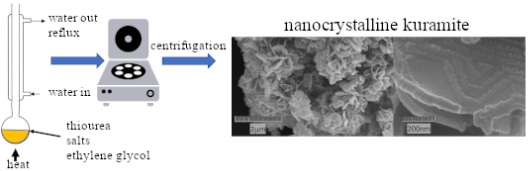
- colocalized (Figure 2d). Hence, Cu is the only cation without an inverse relationship with Cl, suggesting that Cu and Cl must be partially colocalized in an associated phase. Figure 2d also shows that the data points of samples S2 and S1 cluster around the position of kuramite in the transformed space


Optimization and performance of nitrogen-doped carbon dots as a color conversion layer for white-LED applications
Beilstein J. Nanotechnol. 2019, 10, 2004–2013, doi:10.3762/bjnano.10.197
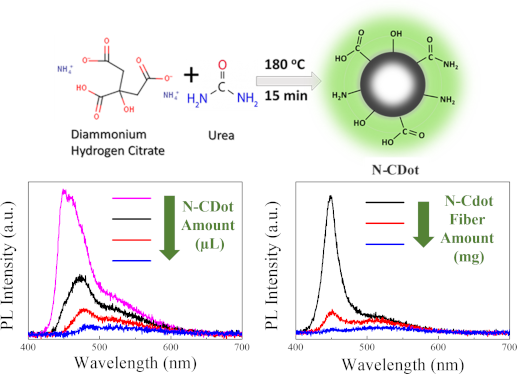
- presented in Figure 2b is the magnified image of the red squared region shown in Figure 2a. Figure 2b reveals that the cluster of about 40 nm in size, which is seen in Figure 2a, is formed by at least seven sub-10 nm nanocrystals. It is convenient to present d-spacing values for the identification of these


Nanostructured and oriented metal–organic framework films enabling extreme surface wetting properties
Beilstein J. Nanotechnol. 2019, 10, 1994–2003, doi:10.3762/bjnano.10.196
- experimental details. Acknowledgements The authors are grateful for funding from the German Science Foundation (SPP 1928 8481830/92, Excellence Cluster NIM). Moreover, the authors thank the Free State of Bavaria for funding in the context of the Research Network SolTech. The authors thank Dr. Markus Döblinger


Charge-transfer interactions between fullerenes and a mesoporous tetrathiafulvalene-based metal–organic framework
Beilstein J. Nanotechnol. 2019, 10, 1883–1893, doi:10.3762/bjnano.10.183
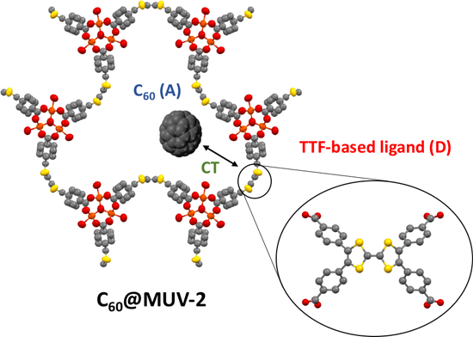
- is based on the 6-connected trimeric cluster [Fe3(μ3O)(COO)6] as secondary building unit (SBU) and tetratopic tetrathiafulvalene-tetrabenzoate (TTFTB4−) ligands. This MOF shows a hierarchical structure with mesoporous channels of ≈3 nm and orthogonal microporous channels of ≈1 nm. In addition, it
- characterisation of C60@MUV-2 Synthesis and encapsulation of C60 into MUV-2 MUV-2 was synthesised as previously described based on the solvothermal reaction of tetrathiafulvalene tetrabenzoic acid (H4TTFTB), the preformed cluster [Fe3O(CH3COO)6]ClO4 and acetic acid as a modulator in dimethylformamide (DMF) [52
- dispersion corrections were performed to quantify the total stabilization gained when C60 interacts with MUV-2 in arrangements A and B. Interaction energies (Eint) were calculated for the cluster C60@TTFTB at the B3LYP-D3/6-31G** level of theory with counterpoise correction, using the minimum-energy geometry




Engineered superparamagnetic iron oxide nanoparticles (SPIONs) for dual-modality imaging of intracranial glioblastoma via EGFRvIII targeting
Beilstein J. Nanotechnol. 2019, 10, 1860–1872, doi:10.3762/bjnano.10.181
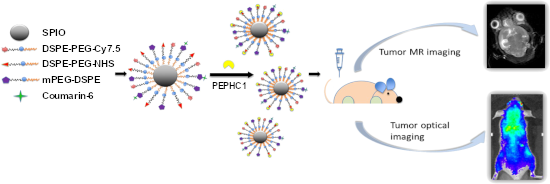
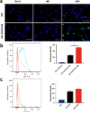
- size of whole clusters was around 100 nm, which is much larger than the diameter as determined by TEM. This discrepancy might be due to nanoprobe cluster formation in water. Nanoparticles of diameter around 110 nm can successfully escape the phagocytosis of the reticuloendothelial system (RES) and




Long-term entrapment and temperature-controlled-release of SF6 gas in metal–organic frameworks (MOFs)
Beilstein J. Nanotechnol. 2019, 10, 1851–1859, doi:10.3762/bjnano.10.180
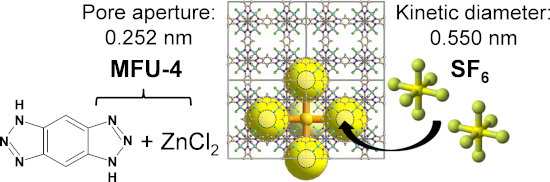
- cluster DFT calculations, as described previously [44]. ESP values for the symmetry unique atoms of MFU-4 and SF6 are displayed in the Supporting Information File 1 in Figure S13. Prior to the potential energy scan, all atomic positions of the MFU-4 unit cell were fully relaxed at tight convergence


The impact of crystal size and temperature on the adsorption-induced flexibility of the Zr-based metal–organic framework DUT-98
Beilstein J. Nanotechnol. 2019, 10, 1737–1744, doi:10.3762/bjnano.10.169
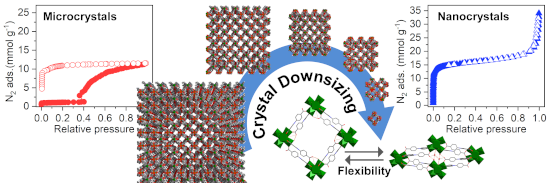
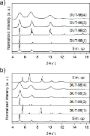
- flexible MOFs are being reported and their use in the areas of storage [4], separation [5] and sensing [6] of gases is being evaluated; their structural flexibility and adsorption behavior can be manipulated by applying chemical functionalization to the ligand [7] and metal cluster [8]. However, recent
- cluster of 1.5 nm, which is in good agreement with the lattice parameter and the inter-cluster distance of the DUT-98op crystal structure (Supporting Information File 1, Figure S8). The regular arrangement of the clusters indicates a high symmetry that matches the tetragonal symmetry in DUT-98op. In
- contrast, the DUT-98cp phase would exhibit a different microscopic structure due to the lower, monoclinic symmetry. In addition, no missing cluster or linker defects could be detected that are well-known for Zr-MOFs [36][37], demonstrating that the observed behavior does not depend on increasing



Direct observation of oxygen-vacancy formation and structural changes in Bi2WO6 nanoflakes induced by electron irradiation
Beilstein J. Nanotechnol. 2019, 10, 1434–1442, doi:10.3762/bjnano.10.141
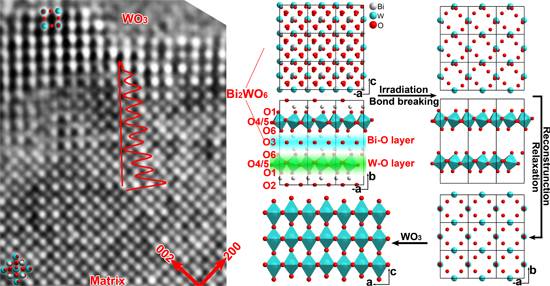
- clusters on the nanoflake surfaces, and the oxygen atoms are released from the nanoflakes, while the W–O networks reconstruct to form WO3. A possible mechanism that accounts for the observed processes of Bi cluster formation and oxygen release under energetic electron irradiation is also discussed
- . Local electric fields contribute to the observed process of Bi cluster formation and oxygen release. Our experimental results suggest that the use of energetic electrons in a TEM is an effective means to induce oxygen vacancies or other defects in bismuth tungsten oxides. We suggest that it is possible


Fe3O4 nanoparticles as a saturable absorber for giant chirped pulse generation
Beilstein J. Nanotechnol. 2019, 10, 1065–1072, doi:10.3762/bjnano.10.107
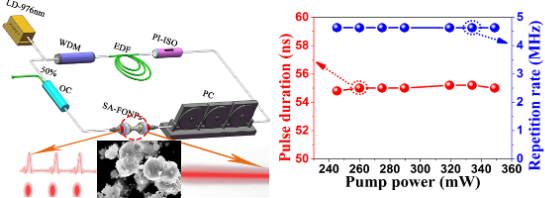
- ) Nonlinear transmission measurement setup for the Fe3O4 SA. (d) Nonlinear optical absorption characteristics of the FONP-based SA. (a) Energy-dispersive spectroscopy, (b) Raman spectroscopy, (c) X-ray diffraction pattern, and (d) UV–vis–NIR spectrum of the as-prepared Fe3O4 cluster-structured nanoparticles


Correlation of surface-enhanced Raman scattering (SERS) with the surface density of gold nanoparticles: evaluation of the critical number of SERS tags for a detectable signal
Beilstein J. Nanotechnol. 2019, 10, 1016–1023, doi:10.3762/bjnano.10.102
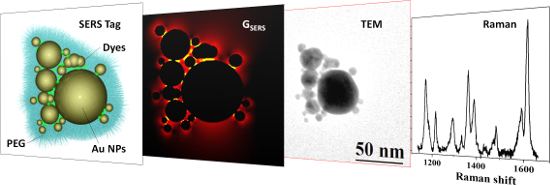
- interdipole spacing much smaller than the wavelength of interest [44][45][47]. Therefore, in the present case, 4 × 10⁵ dipoles were used for the target, corresponding to an interdipole spacing of less than 0.5 nm. Results and Discussion In this study, AuNTs consist of a cluster of Au nanoparticles aggregated





