Search results
Search for "colloids" in Full Text gives 130 result(s) in Beilstein Journal of Nanotechnology.
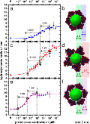
Streptavidin-coated gold nanoparticles: critical role of oligonucleotides on stability and fractal aggregation
Beilstein J. Nanotechnol. 2017, 8, 1–11, doi:10.3762/bjnano.8.1
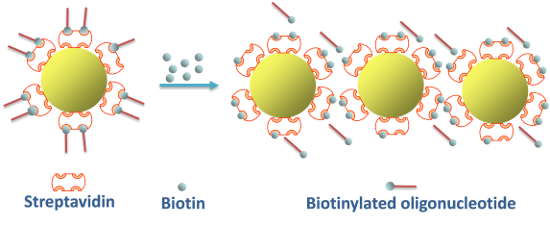
- colloids have been the focus of research for many decades because of their intriguing electronic and optical properties, depending on the size and shape of gold nanoparticles (AuNPs) [1], which support several biomedical and pharmaceutical applications [2]. The functionalization of AuNPs with biologically
- reduction was obtained after 10 min. The solution was cooled to the room temperature and filtered through a 0.45 μm mixed cellulose ester membrane filter. To prevent light-induced flocculation of the colloids, all colloidal gold solutions were stored in the dark and refrigerated at 4 °C. Similar conditions




Layered composites of PEDOT/PSS/nanoparticles and PEDOT/PSS/phthalocyanines as electron mediators for sensors and biosensors
Beilstein J. Nanotechnol. 2016, 7, 1948–1959, doi:10.3762/bjnano.7.186
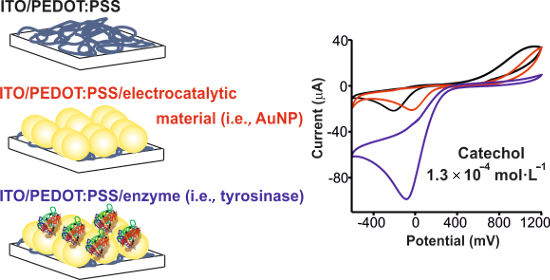
- ) and copper(II) phthalocyanine tetrasulfonic acid tetrasodium salt (CuPc, 0.05 g/L) were purchased from Sigma-Aldrich. Gold nanoparticle (AuNPs, 30–40 nm) colloids were synthesized according to a modification of the procedure proposed by Slot and Geuze [12][40]. Using this procedure, a red colloid with


Hydrophilic silver nanoparticles with tunable optical properties: application for the detection of heavy metals in water
Beilstein J. Nanotechnol. 2016, 7, 1654–1661, doi:10.3762/bjnano.7.157
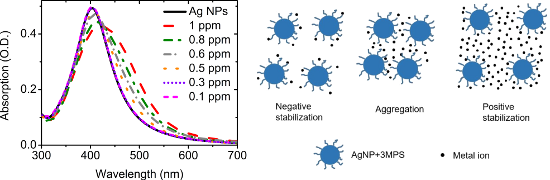
- groups on the surface [47]. The presence of these negatively charged groups also guarantees the stability of the colloids over time, as was confirmed by the ζ-potential measurements [48][49]. Moreover, to improve the monodispersity of the AgNPs two different synthetic approaches were used. In the first


Nano- and microstructured materials for in vitro studies of the physiology of vascular cells
Beilstein J. Nanotechnol. 2016, 7, 1620–1641, doi:10.3762/bjnano.7.155
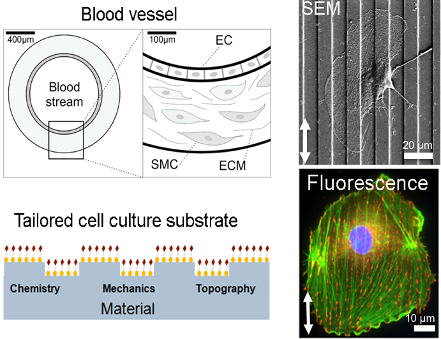
- colloids is tunable and determines the resolution of the pattern. Resolutions of few tens of nanometers can be achieved [74][75]. 1.4 Materials selection The importance of choosing the appropriate material for cell–substrate interaction studies depends on the inherent ability of the material to be modified



Straightforward and robust synthesis of monodisperse surface-functionalized gold nanoclusters
Beilstein J. Nanotechnol. 2016, 7, 1278–1283, doi:10.3762/bjnano.7.118
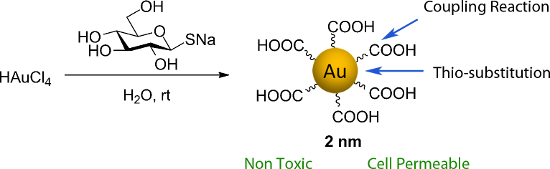
- Silvia Varela-Aramburu Richard Wirth Chian-Hui Lai Guillermo Orts-Gil Peter H. Seeberger Max Planck Institute of Colloids and Interfaces, Department of Biomolecular Systems, Am Mühlenberg 1, 14476 Potsdam, Germany Freie Universität Berlin, Department of Biology, Chemistry, Pharmacy, Arnimallee 22


Assembling semiconducting molecules by covalent attachment to a lamellar crystalline polymer substrate
Beilstein J. Nanotechnol. 2016, 7, 784–798, doi:10.3762/bjnano.7.70
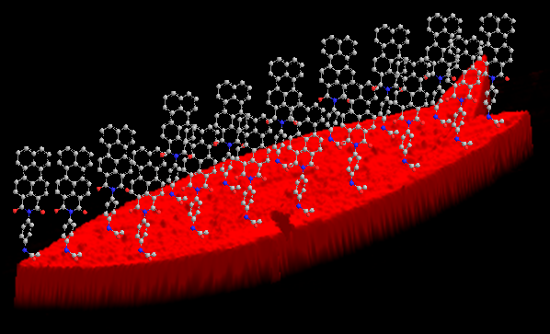
- stabilized colloids, self-assembly at the air–water interface has been demonstrated to be an efficient route to generate close packed monolayers with virtually crystalline order up to sizes of square-centimeters [7]. While repulsive forces introduced by surfactants are often used to support the assembly


Antibacterial activity of silver nanoparticles obtained by pulsed laser ablation in pure water and in chloride solution
Beilstein J. Nanotechnol. 2016, 7, 465–473, doi:10.3762/bjnano.7.40
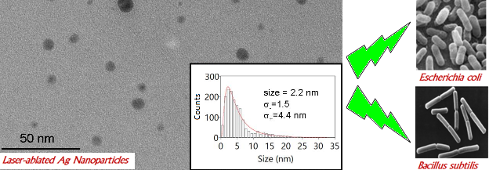
- as antibacterial agents with applications in several fields due to their strong, broad-range antimicrobial properties. AgNP synthesis by pulsed laser ablation in liquid (PLAL) permits the preparation of stable Ag colloids in pure solvents without capping or stabilizing agents, producing AgNPs more
- by synthesizing the NPs using pulsed laser ablation in liquid (PLAL). In fact, PLAL is a physical approach that permits preparation of stable metal colloids in pure solvents without the use of capping or stabilizing agents [26][27]. The NPs are obtained by focusing a pulsed laser beam onto a metallic
- target immersed in a liquid, which can be a pure solvent or a solution containing capping and stabilizing molecules, when required. In the first case, the surface of PLAL-synthesized NPs is considered to be “clean” and the colloids will be free from reaction by-products. With this method, it is possible


Organized films
Beilstein J. Nanotechnol. 2016, 7, 406–408, doi:10.3762/bjnano.7.35

- Maurizio Canepa Helmuth Mohwald Department of Physics, University of Genova, via Dodecaneso 33, 16146 Genova, Italy, Max Planck Institute of Colloids and Interfaces, Am Mühlenberg 1, 14476 Potsdam, Germany 10.3762/bjnano.7.35 Langmuir–Blodgett (LB) films, prepared by transferring an amphiphilic
Surface coating affects behavior of metallic nanoparticles in a biological environment
Beilstein J. Nanotechnol. 2016, 7, 246–262, doi:10.3762/bjnano.7.23
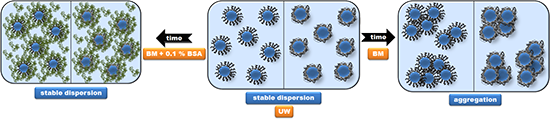
- vigorously at room temperature for 45 min. After the synthesis, silver colloids were centrifuged at 11,000g for 20 min. After decanting the supernatant, the residue was suspended in ultrapure water and kept at 4 °C in the dark. BrijAgNPs were synthesized by mixing an aqueous solution of AgNO3 (0.09 mL, 50 mM

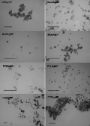
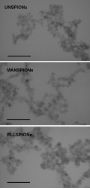


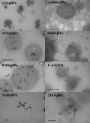

Influence of calcium on ceramide-1-phosphate monolayers
Beilstein J. Nanotechnol. 2016, 7, 236–245, doi:10.3762/bjnano.7.22
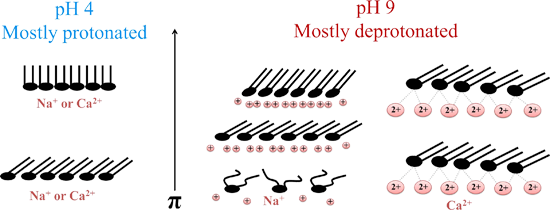
- Joana S. L. Oliveira Gerald Brezesinski Alexandra Hill Arne Gericke Max Planck Institute of Colloids and Interfaces, Colloid Chemistry Department, Wissenschaftspark Potsdam-Golm, Am Mühlenberg 1, 14476 Potsdam, Germany Department of Biological Sciences, Kent State University, Kent, Ohio 44242, USA


Controlled graphene oxide assembly on silver nanocube monolayers for SERS detection: dependence on nanocube packing procedure
Beilstein J. Nanotechnol. 2016, 7, 9–21, doi:10.3762/bjnano.7.2
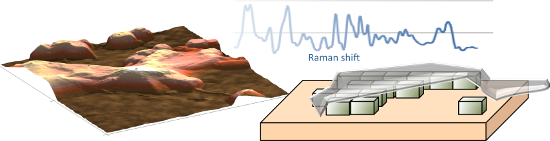
- Colloids and Interface Science) are acknowledged for partial financial support.


pH-Triggered release from surface-modified poly(lactic-co-glycolic acid) nanoparticles
Beilstein J. Nanotechnol. 2015, 6, 2504–2512, doi:10.3762/bjnano.6.260
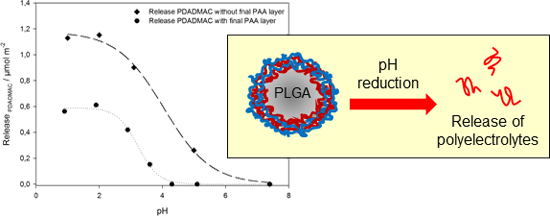
- ultrathin polyelectrolyte multilayers (PEM) with well adjustable properties and architecture. Layer build-up is based on alternating adsorption of cationic and anionic compounds, such as polyelectrolytes [15], proteins [16], nucleic acids [17][18], dyes [19], and even colloids [14] onto the surface of


Chemiresistive/SERS dual sensor based on densely packed gold nanoparticles
Beilstein J. Nanotechnol. 2015, 6, 2498–2503, doi:10.3762/bjnano.6.259
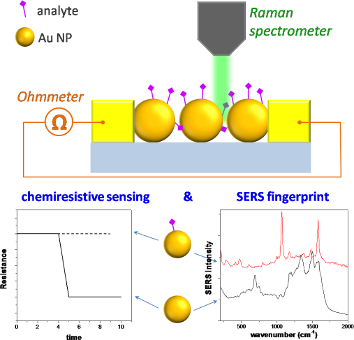
- demonstration of a dual electrical/optical sensing concept based on gold nanoparticles, combining unique advantages of both chemiresistor and SERS sensors. Results and Discussion Dual sensing concept The main idea of this work stems from the fact that the same physical systems (noble metal colloids) and the
- same fabrication tools (colloidal self-assembly) could in principle yield novel nano-enabled devices with both optical and electrical functionalities. A graphical summary describing the envisaged DEOS concept is given in Figure 1. An array of noble metal colloids assembled between electrodes on a solid


Ultrastructural changes in methicillin-resistant Staphylococcus aureus induced by positively charged silver nanoparticles
Beilstein J. Nanotechnol. 2015, 6, 2396–2405, doi:10.3762/bjnano.6.246
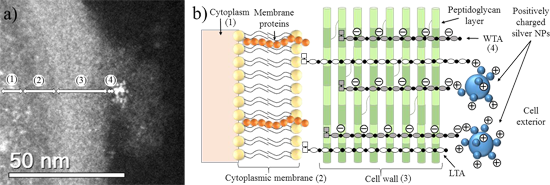
- envelope protein precursors, demonstrating that AgNPs target bacterial cell membranes by depleting the proton motive force. AgNP surfaces adsorb Ag+; therefore, colloids consist of three species of silver: Ag+, metal Ag0 (its mixture), and surface-adsorbed Ag+ [41]. Recently, the presence of three particle
- of AgNP species is referred to as the third species, and it is central to the study of the bactericidal and ultrastructural effects of AgNPs against methicillin-sensitive Staphylococcus aureus (MSSA) and MRSA. By acquiring zeta potential measurements before and after the filtration of Ag colloids


Green and energy-efficient methods for the production of metallic nanoparticles
Beilstein J. Nanotechnol. 2015, 6, 2354–2376, doi:10.3762/bjnano.6.243
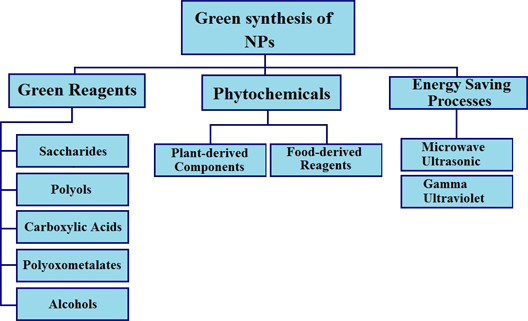


Au nanoparticle-based sensor for apomorphine detection in plasma
Beilstein J. Nanotechnol. 2015, 6, 2224–2232, doi:10.3762/bjnano.6.228
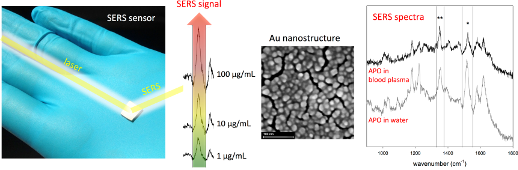
- colloids synthesized by laser ablation in liquids, suitably functionalized and tagged with Raman reporters, have effectively revealed specific biomolecules, even in chemically complex environments such as cells [9][10][11][12]. On the other hand, silver and gold colloids produced by chemical routes can be


An adapted Coffey model for studying susceptibility losses in interacting magnetic nanoparticles
Beilstein J. Nanotechnol. 2015, 6, 2173–2182, doi:10.3762/bjnano.6.223

- nanoparticle causes changes in the orientation of its magnetization [16]. At the limit between hysteretic and superparamagnetic regime, under biomedical conditions of amplitude and frequency of the external magnetic field, susceptibility losses in magnetic colloids can be described by linear response theory


Electrochemical behavior of polypyrrol/AuNP composites deposited by different electrochemical methods: sensing properties towards catechol
Beilstein J. Nanotechnol. 2015, 6, 2052–2061, doi:10.3762/bjnano.6.209
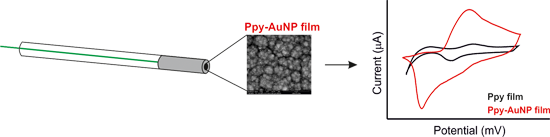
- The synthesis of AuNPs colloids was carried out according to the procedure proposed by Slot and Geuze [35]. Two solutions were prepared: (1) HAuCl4 (0.25·10−3 mol/L) in deionized water and (2) sodium citrate dehydrate (17·10−3 mol/L) in deionized water. 20 mL of solution (1) was heated until boiling


Simulation tool for assessing the release and environmental distribution of nanomaterials
Beilstein J. Nanotechnol. 2015, 6, 938–951, doi:10.3762/bjnano.6.97

- ENM (with size of 10 nm), ENM attached to colloids, and ENM attached to larger particles), while assuming an arbitrary value of 0.1 for both aggregation and attachment efficiencies [11]. As a consequence, the above approach does not account for the temporal dynamics of multimedia distribution and the


Protein corona – from molecular adsorption to physiological complexity
Beilstein J. Nanotechnol. 2015, 6, 857–873, doi:10.3762/bjnano.6.88
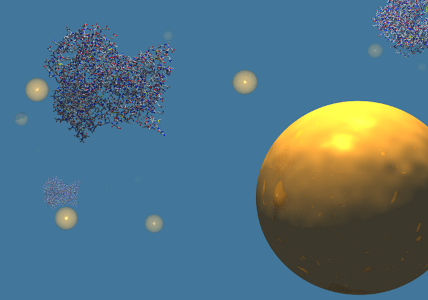
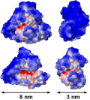
- of individual proteins in the physiological corona. This is, however, not a straight forward task, as many colloids are well known to be unstable in serum [7][53][102][113] suggesting contributions of additional parameters. The factual situation under physiological conditions will likely consist of




Influence of gold, silver and gold–silver alloy nanoparticles on germ cell function and embryo development
Beilstein J. Nanotechnol. 2015, 6, 651–664, doi:10.3762/bjnano.6.66
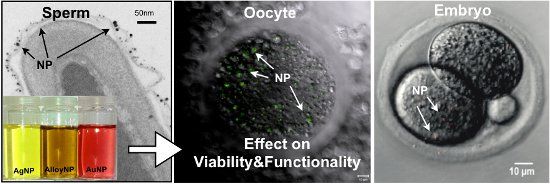
- alloy nanoparticle colloids (Figure 2) [50][54]. Besides representing the collected data, it will be put into context with other recent studies on the same subject. Effect of gold and silver nanoparticles on spermatozoa The main purpose of spermatozoa is the safe delivery of the male genome to the
- determine though, as silver nanoparticle toxicity also depends on particle size as well as particle composition. The latter could distinctly been shown by employing gold–silver alloy colloids as model nanoparticles. The active components seem to be the Ag+ ions released from the particles, rather than the
- nanotoxicology on reproductive cells provides an ideal tool. Schematic representation of experiments conducted within the collaboration project REPROTOX. (A) Exemplary AuAg colloids with different molar fractions. (B) Correlation of gold molar fraction with the maximum surface plasmon resonance extinction peak





Silica micro/nanospheres for theranostics: from bimodal MRI and fluorescent imaging probes to cancer therapy
Beilstein J. Nanotechnol. 2015, 6, 546–558, doi:10.3762/bjnano.6.57
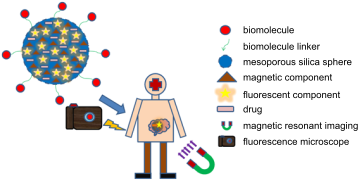
- -shell-encapsulated hybrid nanomaterials consisting of paramagnetic Gd3+ ions and QDs or Au nanocrystals. The citric-acid-capped gold colloids and CdSe/ZnS QDs were silanized by using mercaptopropyltrimethoxysilane (MPS) as surfactant. Further, a Gd3+-DOTA (tetraazacyclododecanetetraacetic acid) complex


Raman spectroscopy as a tool to investigate the structure and electronic properties of carbon-atom wires
Beilstein J. Nanotechnol. 2015, 6, 480–491, doi:10.3762/bjnano.6.49
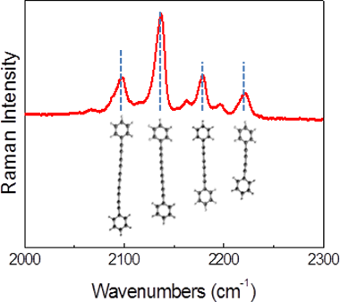
- surfaces. SERS in solution has been carried out by adding silver and gold colloids to the sample solution while for surface SERS (S-SERS), silver and gold nanoislands supported on silicon and glass substrates have been used [39]. It was observed that the SERS spectrum is radically different from the Raman


Comparative evaluation of the impact on endothelial cells induced by different nanoparticle structures and functionalization
Beilstein J. Nanotechnol. 2015, 6, 300–312, doi:10.3762/bjnano.6.28
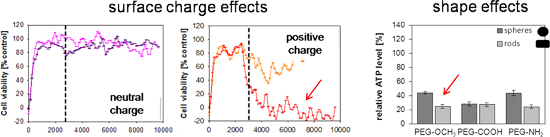
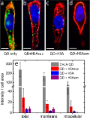
- similar uptake behavior compared to the OCH3-functionalized gold colloids, indicating a clathrin- and macropinocytosis-dependent mechanism (Figure 7b). Our analysis of uptake mechanisms of different gold nanoparticle formulations confirms literature data, in which a clathrin- and macropinocytosis
- characterization of the different nanoparticle formulations To investigate the effects of the shape, functionalization, size and composition of various nanoparticles on endothelial cells we used gold colloids (GNP), asymmetric gold@metal oxide Janus particles (Au@MnO or Au@Fe3O4), spherical metal oxides (MnO or
- Fe3O4) and quantum dots (QDs). 1) Gold nanoparticles (GNP): The gold colloids with a core size of approximately 40 nm in diameter were synthesized according to Rosman et al. [45] and were spherically or rod-like shaped. GNP without surface functionalization were transferred to 0.1 M





Multifunctional layered magnetic composites
Beilstein J. Nanotechnol. 2015, 6, 134–148, doi:10.3762/bjnano.6.13
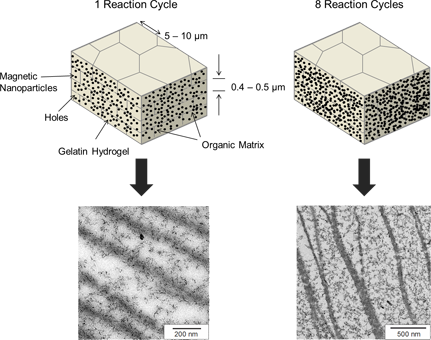
- Laboratory for Neutron Scattering, Paul Scherrer Institute, 5232 Villigen PSI, Switzerland Technische Universität München, Forschungs-Neutronenquelle Heinz Maier-Leibnitz (FRM II), 85748 Garching, Germany Department of Biomaterials, Max Planck Institute of Colloids & Interfaces Science Park Golm, 14424