Search results
Search for "crystallites" in Full Text gives 201 result(s) in Beilstein Journal of Nanotechnology. Showing first 200.
Friction force microscopy of tribochemistry and interfacial ageing for the SiOx/Si/Au system
Beilstein J. Nanotechnol. 2018, 9, 1647–1658, doi:10.3762/bjnano.9.157
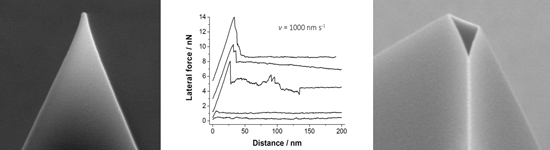
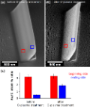
- the contact region. b) Detail of panel a) showing the amorphous Si with its sharp boundary to crystalline Si as well as crystallites (highlighted) in the Au layer. c) Close-up resolving the crystal lattice in the Au coating layer. The lattice distance was measured to be 2.4 Å. d) Detail of the




Sulfur-, nitrogen- and platinum-doped titania thin films with high catalytic efficiency under visible-light illumination
Beilstein J. Nanotechnol. 2018, 9, 1629–1640, doi:10.3762/bjnano.9.155
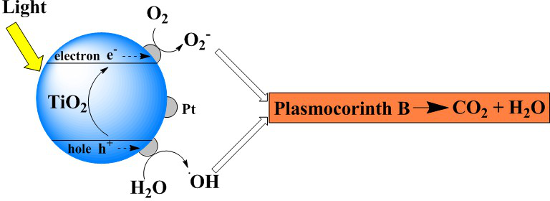
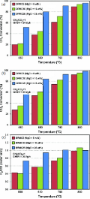
- angle. Larger crystallites were found in samples synthesized with HCl (REF–Thiourea_20, 39–60 nm) compared to samples synthesized with H2SO4 (S1–S5, 10–18 nm). The results also show a trend of decreasing crystallite size with increasing volume of H2SO4 added during the synthesis (S1–S5). We contribute


A novel copper precursor for electron beam induced deposition
Beilstein J. Nanotechnol. 2018, 9, 1220–1227, doi:10.3762/bjnano.9.113
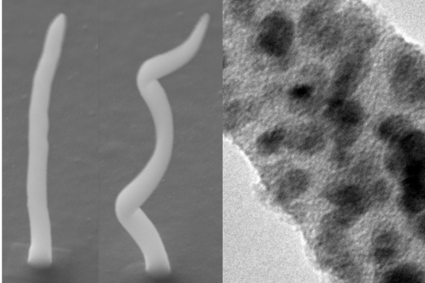
- deposits, with crystallites below ≈20 nm in diameter. Selected area electron diffraction (SAED) of the deposit (Figure 2e) yields diffraction rings which fully correspond to pure Cu, with no rings corresponding to Cu oxides. SAED was carried out for different regions within the deposit covering a


Understanding the performance and mechanism of Mg-containing oxides as support catalysts in the thermal dry reforming of methane
Beilstein J. Nanotechnol. 2018, 9, 1162–1183, doi:10.3762/bjnano.9.108
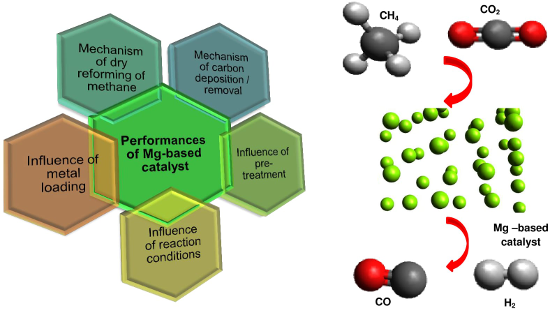
- to the ZrO2 support suppressed carbon deposition, which occurred between the crystallites of t-ZrO2 and prohibited a shift of the zirconia support from the tetragonal phase to the monoclinic phase. This catalyst tends to survive with low carbon formation (0.89 mg/gcatalyst/h for 40 h with CO2 and CH4






Comparative study of sculptured metallic thin films deposited by oblique angle deposition at different temperatures
Beilstein J. Nanotechnol. 2018, 9, 954–962, doi:10.3762/bjnano.9.89
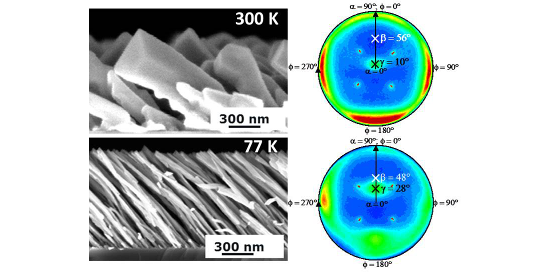
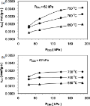
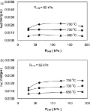
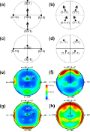
- measurements are carried out exemplarily for Al thin films to study the orientation of these crystallites. Stereographic projections of the in-plane pole figures for such films are calculated [17]. Thereby, Figure 2a and 2b depict the calculated stereographic projections for a vertically deposited (θ = 0
- the Al crystallites are oriented in the same direction. Additionally, in Figure 2f and 2h four broad but still separated pole density maxima at a polar angle α = 54.7° are obtained. Notice that the underlying symmetry of Al is cubic. Consequently, this experimentally observed angle is in good
- , it can be noted that the calculated positions of the pole density maxima are in good agreement with the measured positions of the pole density maxima. Furthermore, Figure 2e and 2g reveal that the [100] direction of the crystallites γ differs from the tilt angle β of the columns, both measured with



Effect of annealing treatments on CeO2 grown on TiN and Si substrates by atomic layer deposition
Beilstein J. Nanotechnol. 2018, 9, 890–899, doi:10.3762/bjnano.9.83
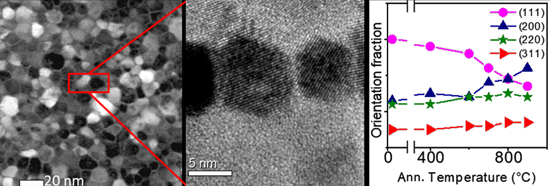
- is even clearer looking at the inset of Figure 6b: After annealing at 900 °C, the (111) and (200) crystallites have equivalent size, Further, we notice that after annealing at 900 °C the (111) and (200) peaks have the same intensity, which hints to a preferential crystallographic orientation of the


Facile chemical routes to mesoporous silver substrates for SERS analysis
Beilstein J. Nanotechnol. 2018, 9, 880–889, doi:10.3762/bjnano.9.82
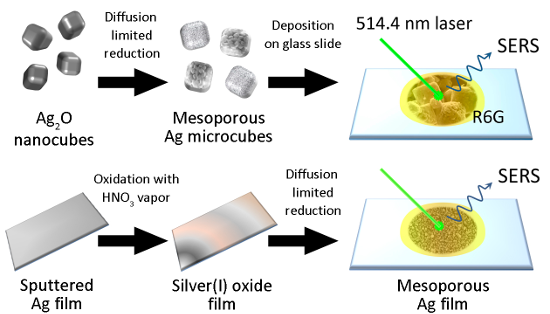
- efficient method for synthesis of silver polygonal structures with amazingly precise shape control using silver(I) oxide as a structural precursor. According to the technique described also elsewhere [27], polycrystalline uniform Ag2O polyhedron-like crystallites could be quantitatively obtained. Such cubic
- and octahedral crystallites are of interest as models for mesoporous silver synthesis. In the present manuscript we used submicrometer-sized Ag2O cubes as precursors for mesoporous silver structures resulting from diffusion-limited reduction [26][27]. The same reduction method was also used to
- known for its ability to increase the endurance performance of athletes, which resulted in its inclusion to the World Anti-Doping Agency (WADA) prohibited list. Results and Discussion Following the procedure proposed by Lyu et al. [26], Ag2O cubic crystallites were synthesized by alkaline precipitation


Heavy-metal detectors based on modified ferrite nanoparticles
Beilstein J. Nanotechnol. 2018, 9, 762–770, doi:10.3762/bjnano.9.69
- dominate magnetite phase. The most intense reflexes were recognized and indexed to (220), (311), (400), (422), (511), (440), respectively, typical for magnetite [24]. The peak widths, however, are different among the presented samples. This can be caused by chemical modification of the crystallites related


Synthesis and characterization of two new TiO2-containing benzothiazole-based imine composites for organic device applications
Beilstein J. Nanotechnol. 2018, 9, 721–739, doi:10.3762/bjnano.9.67
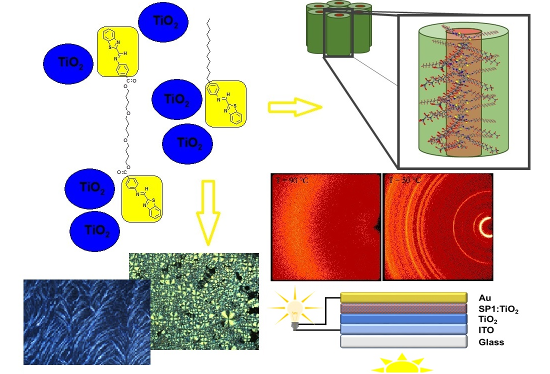
- out to be too rough to be measured with AFM, these samples were prepared with the spin coating technique (1000 rpm, 40 s). As one can see in Figure 10a, the topography of pure SP2 imine and SP2:TiO2 composites in each case reveals quite large crystallites randomly distributed on the glass surface, and






Optimisation of purification techniques for the preparation of large-volume aqueous solar nanoparticle inks for organic photovoltaics
Beilstein J. Nanotechnol. 2018, 9, 649–659, doi:10.3762/bjnano.9.60
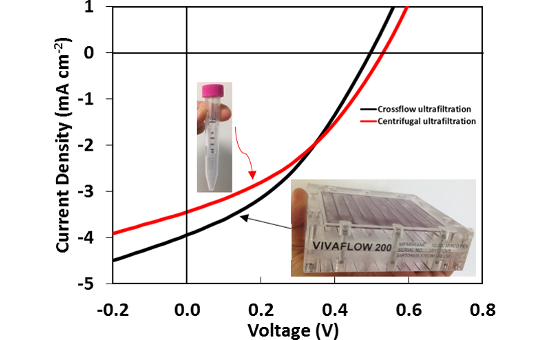
- ). The surface morphology/topography showed, as expected, a decreased number of SDS crystallites on the surface of the ASNP film with increased ultrafiltration steps. The device performance revealed distinct peaks in efficiency with ultrafiltration: centrifuge purified inks reached a maximum efficiency
- aggregates present in the film prepared from an ink with a dilution factor of 625 are no longer observed once a highly purified ink with a dilution factor of 9.8 × 10⁶ is utilized and thus we ascribe the observed aggregates to SDS crystallites which are eliminated with SDS removal. When using crossflow


Towards 3D crystal orientation reconstruction using automated crystal orientation mapping transmission electron microscopy (ACOM-TEM)
Beilstein J. Nanotechnol. 2018, 9, 602–607, doi:10.3762/bjnano.9.56
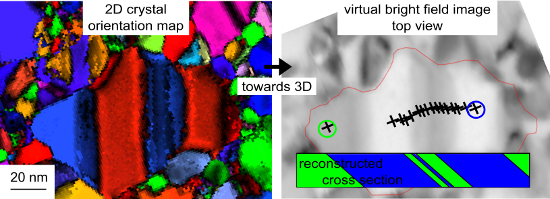
- the electron-transparent TEM specimen lamellas are often only a few tens of nanometers thick, overlapping structures, such as crystallites of different orientations and phases, are unavoidable and typically unwanted. Nevertheless, in some cases it is even desirable to have overlapping crystallites to
- reduce the influence of the free surface and to increase the interaction between crystallites to represent bulk behavior, especially related to in situ studies (e.g., tensile or thermal testing) inside the TEM [2][5][6][7][8][9]. However, the 2D projection of a 3D volume with overlapping structures
- experimental spot diffraction pattern [32]. In the case of overlapping crystallites, the experimental diffraction pattern is a superimposed result of the corresponding individual crystal orientations [34][35]. Hence, superimposed diffraction patterns have more than one match with a cross-correlation index

Fabrication and photoactivity of ionic liquid–TiO2 structures for efficient visible-light-induced photocatalytic decomposition of organic pollutants in aqueous phase
Beilstein J. Nanotechnol. 2018, 9, 580–590, doi:10.3762/bjnano.9.54
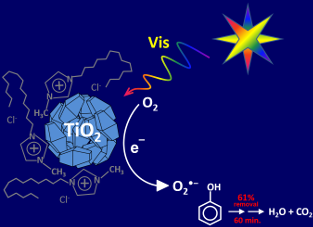
- line width analysis of the anatase (101) reflection peak, the average crystal size of the crystallites (d) forming photocatalysts with the highest (IL:TBOT molar ratio 1:3) and the lowest photoactivity (IL:TBOT molar ratio 1:10), estimated by the Scherrer equation, were determined and summarized in




Influence of the preparation method on the photocatalytic activity of Nd-modified TiO2
Beilstein J. Nanotechnol. 2018, 9, 447–459, doi:10.3762/bjnano.9.43
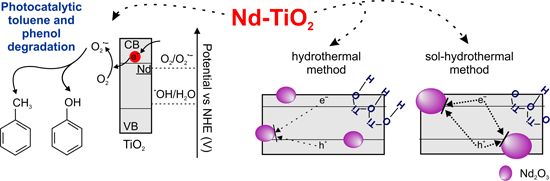
- photocatalysts prepared by the hydrothermal method showed a higher contraction of crystallites than those obtained by the sol–hydrothermal method. The present study reveals that loading with neodymium ions hindered the increase in grain size of TiO2 during hydrothermal synthesis. Our findings correlate with some
- investigation, the presence of lanthanides in the obtained samples contributed to a decrease in size of the crystallites, which probably caused an increase in the specific surface area of photocatalysts [24][32][33]. The difference in ion radii (0.99 Å for Nd3+ and 0.75 Å for Ti4+) suggests that Nd3+ ions
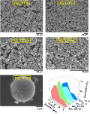
- of Ti–O–Nd bonds probably restricts direct contact between TiO2 crystallites and stabilizes the anatase phase and crystallite growth [25][35]. Morphology Surface morphology of the obtained photocatalysts was studied using scanning electron microscopy (SEM). Figure 2 shows a SEM image of pristine TiO2




Facile synthesis of ZnFe2O4 photocatalysts for decolourization of organic dyes under solar irradiation
Beilstein J. Nanotechnol. 2018, 9, 436–446, doi:10.3762/bjnano.9.42
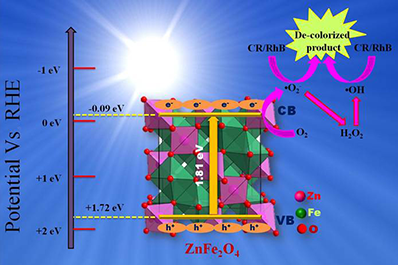
- microscopy (FESEM) provides surface morphology and topography of the prepared materials. Figure 2 shows the surface topography of ZFO-500. The sample consists of agglomerated nanoparticles with smooth surface. The agglomeration of ZFO-500 is accompanied with the formation of small crystallites [28]. TEM The


Blister formation during graphite surface oxidation by Hummers’ method
Beilstein J. Nanotechnol. 2018, 9, 407–414, doi:10.3762/bjnano.9.40
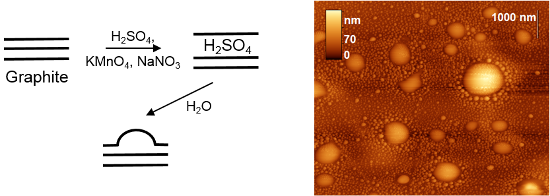
- oriented crystallites with almost parallel c-axes. The inclination angle between the crystallites is characterized by a mosaic spread, which is between 0.1° and 3° for HOPG [10]. In this paper, we used a new material, highly annealed pyrolythic graphite (HAPG). The mosaic spread of a flat HAPG film can be
- before the treatment The mosaic structure of the HAPG was examined by scanning electron microscopy (SEM). The HAPG surface after cleavage is shown in Figure 2. The size of the crystallites in the basal plane range from 10 to 200 μm, while for comparison, they are about 10 μm for HOPG with the mosaic
- . The samples were tilted relative to the electron beam by 45°, which enhances the contrast between the crystallites [25]. A Renishaw InVia Raman spectrometer was used. The spectra were recorded using a 514.4 nm laser with a power of 14 mW. a) Raman spectra of the highly annealed pyrolythic graphite


Photocatalytic and adsorption properties of TiO2-pillared montmorillonite obtained by hydrothermally activated intercalation of titanium polyhydroxo complexes
Beilstein J. Nanotechnol. 2018, 9, 364–378, doi:10.3762/bjnano.9.36
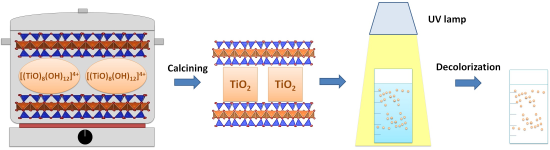
- mass fraction of rutile crystallites (XR) in the samples of TiO2-pillared materials was determined from the radiographs by the ratio of heights of peaks (101) of anatase IA and (110) of rutile IR according to the equation [29]: The hydrothermally intercalated samples annealed at 300–800 °C are a
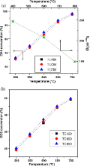
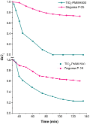
- the growth of crystallites. Indeed, the size of the anatase crystallites sequentially increases from 5.6 to 12.7 nm (Table 2) with increasing calcination temperature from 300 to 800 °C. According to the data of Figure 2, the phase transformation of anatase into rutile lies in the temperature range
- ), agglomerates of TiO2 crystallites with different shapes and sizes dispersed on the surface of MM are clearly seen. On the surface of TiO2-PMMH500 (Figure 5b-1) there are coral-like formations of titanium oxide, between which the TiO2 aggregates are distributed. Such a surface profile of a hydrothermally






Synthesis and characterization of electrospun molybdenum dioxide–carbon nanofibers as sulfur matrix additives for rechargeable lithium–sulfur battery applications
Beilstein J. Nanotechnol. 2018, 9, 262–270, doi:10.3762/bjnano.9.28
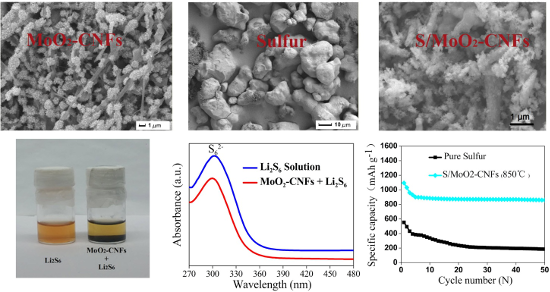
- sintering temperature. Interestingly, a change in fiber morphology was observed when the calcination temperature increased to 850 °C. The nanofibers consisted of connected particles or crystallites, which is consistent with previous reports [29]. Further structural characterization of the as-prepared MoO2


BN/Ag hybrid nanomaterials with petal-like surfaces as catalysts and antibacterial agents
Beilstein J. Nanotechnol. 2018, 9, 250–261, doi:10.3762/bjnano.9.27
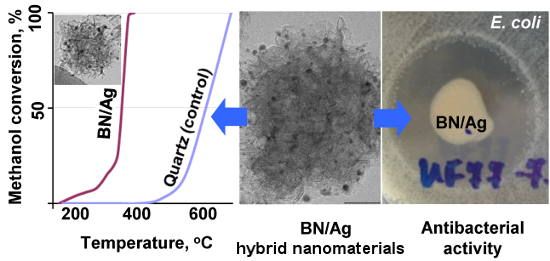
- with a size smaller than 6–9 nm consisted of small crystallites with coherent (twinned) or semi-coherent grain boundaries. The interplanar distances estimated from the fast Fourier transform (FFT) patterns (Figure 2c and 2f, insets) were d = 0.231 nm and d = 0.205 nm. These distances well correspond





Gas-assisted silver deposition with a focused electron beam
Beilstein J. Nanotechnol. 2018, 9, 224–232, doi:10.3762/bjnano.9.24
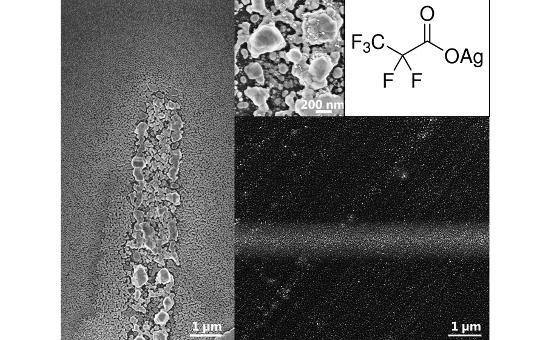
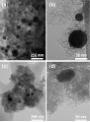
- the first time in FEBID and resulted in deposits with high silver content of up to 76 atom %. As verified by TEM investigations, the deposited material is composed of pure silver crystallites in a carbon matrix. It showed good electrical properties and a strong Raman signal enhancement. Interestingly
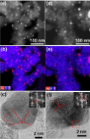
- deposits fits very well the inflection point of the simulated radial BSE density distribution (white dashed line). In this area, the spot deposit consists of small crystallites that are grown on larger underlying particles (inset Figure 1a). In contrast, the halo material was deposited solely via the
- interaction of adsorbed precursor molecules with BSE and generated SE, leading to the deposition of larger crystallites. The particles in the halo appear to be very similarly sized up to a distance of 3.25 µm from the center (green). This matches the shallow decay of one decade of the BSE density in this area


Comparative study of post-growth annealing of Cu(hfac)2, Co2(CO)8 and Me2Au(acac) metal precursors deposited by FEBID
Beilstein J. Nanotechnol. 2018, 9, 91–101, doi:10.3762/bjnano.9.11
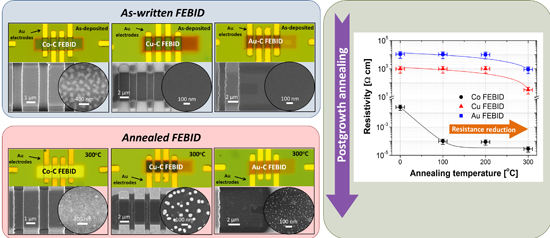
- crystallites in a disordered carbon matrix. The integrated intensities of individual D and G carbon bands were evaluated using a Lorentzian peak fitting in order to deconvolute them. Thus, the values of the ID/IG ratio could be extracted as approximately 0.98, 0.84 and 0.65 for as-deposited Co–C, Cu–C and Au–C


Direct writing of gold nanostructures with an electron beam: On the way to pure nanostructures by combining optimized deposition with oxygen-plasma treatment
Beilstein J. Nanotechnol. 2017, 8, 2530–2543, doi:10.3762/bjnano.8.253
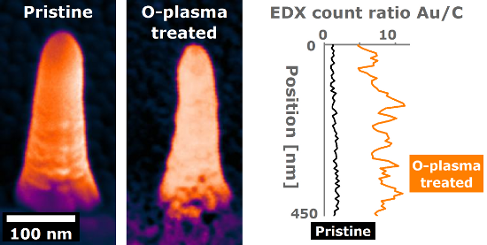
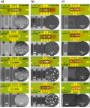
- ratio (up to 50), measuring several micrometers in height while only having ≈100 nm in diameter (Figure 1b). Transmission electron microscopy (TEM) revealed the polycrystalline nature of the NPs having 3–8 nm crystallites embedded in an amorphous matrix (Figure 1c), which seems to be a common feature of
- ). Once the deposition rate was optimized and the samples were produced, high-angle annular dark field scanning transmission electron microscopy (HAADF-STEM) revealed that the crystallites in the planar deposits were considerably larger than those in NPs (compare Figure 1f to Figure 1c). Although both

Tailoring the nanoscale morphology of HKUST-1 thin films via codeposition and seeded growth
Beilstein J. Nanotechnol. 2017, 8, 2307–2314, doi:10.3762/bjnano.8.230
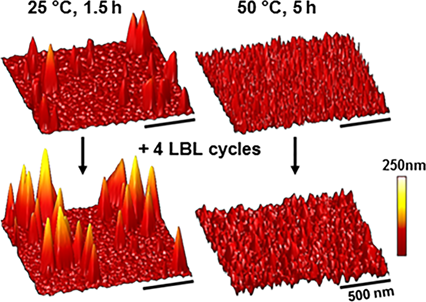
- particulates were slowly replaced by the prevalence of smaller crystallites (ca. 10 nm) covering the substrate at a high density. Elevated temperature was found to expedite the growth process to obtain the full range of surface morphologies with reasonable processing times. Seed crystals formed by the
- substrates [11][12][13][14]. The growth mechanism for HKUST-1 surMOF films fabricated by LBL deposition was found to be Volmer–Weber, with small crystallites nucleating and ripening on the substrate upon continued deposition cycles, as opposed to a van der Merwe growth mechanism that produces a conformal
- film [11][12]. For surMOF film growth via LBL deposition, it was found that temperature and surface chemistry (terminal functional group of SAM) control the crystal face growth of the crystallites on the substrate [11][12][15][16][17]. This provides some degree of control over roughness, particle size


Methionine-mediated synthesis of magnetic nanoparticles and functionalization with gold quantum dots for theranostic applications
Beilstein J. Nanotechnol. 2017, 8, 1734–1741, doi:10.3762/bjnano.8.174
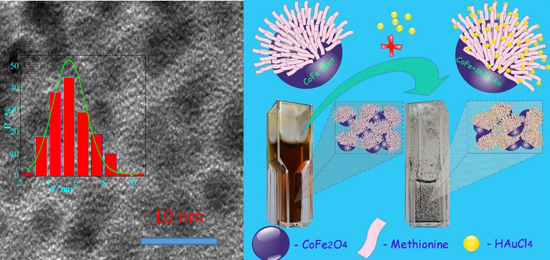
- crystallites in the solution [5][15]. The deposition of gold onto the surface of magnetic iron oxide-based NPs can also be achieved via their impregnation with hydroxylamine [16], vitamin C [17] or methionine [18][19], which are capable to reduce the gold ions at the surface of NPs. However, in this case
- , uniform coating of magnetic NPs can only be obtained via precise control of the precursor content and all steps of the multistep process [17][18]. As a result, this way is time-consuming and it does not fully prevent the formation of gold crystallites in the plating solution. Moreover, to avoid the


Oxidative stabilization of polyacrylonitrile nanofibers and carbon nanofibers containing graphene oxide (GO): a spectroscopic and electrochemical study
Beilstein J. Nanotechnol. 2017, 8, 1616–1628, doi:10.3762/bjnano.8.161
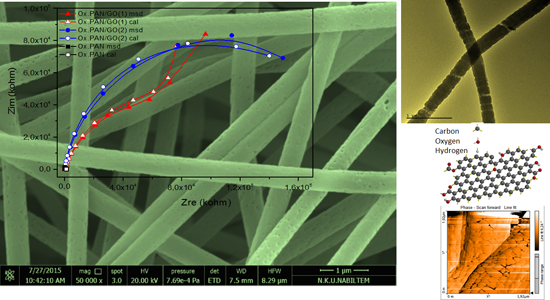
- ]. The ratio of the D and G bands provides an information about the crystallinity of the carbonaceous material [52][54]. The G band (1590 cm−1) represents ordered graphitic crystallites [52], while the D band around 1350 cm−1 is related to disordered turbostratic structures [55]. The measured intensity
- ratio between D band and G band (R = ID/IG) indicates structurally ordered graphite crystallites [30][54]. The R value of CNF is around 0.9. A lower R value means a more crystalline material with higher conductivity [56]. Position and intensity of D and G band demonstrate the electronic structure and


Formation of ferromagnetic molecular thin films from blends by annealing
Beilstein J. Nanotechnol. 2017, 8, 1469–1475, doi:10.3762/bjnano.8.146
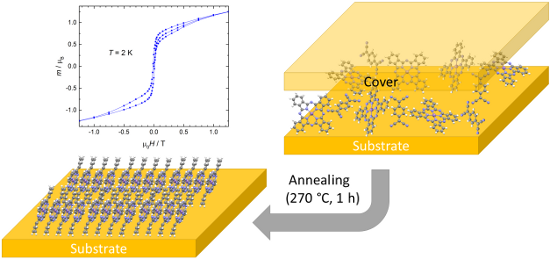
- for one hour (Figure 2b) does not affect the surface morphology. However, increasing the temperature to 330 °C and covering the films (Figure 2c) leads to the formation of larger crystallites. Similar results are obtained for the mixed films (Figure 2d–f), although annealing at a temperature of 270 °C
- already allows the molecules to rearrange into large elongated crystallites. This was observed previously for iron phthalocyanine (FePc) thin films deposited at different substrate temperatures [16]. However, in that case the length of the major axis was found to be 200 nm at a temperature of 260 °C. The
- crystallites in our MnPc films reach a size of up to 10 µm for their longer axis, which is attractive for high coercivity in magnetism and improved charge transport along the crystallites. Results from optical microscopy can be refined by X-ray diffraction (XRD). Figure 3a shows the XRD patterns of the as