Search results
Search for "current–voltage" in Full Text gives 161 result(s) in Beilstein Journal of Nanotechnology.
Light extraction efficiency enhancement of flip-chip blue light-emitting diodes by anodic aluminum oxide
Beilstein J. Nanotechnol. 2018, 9, 1602–1612, doi:10.3762/bjnano.9.152
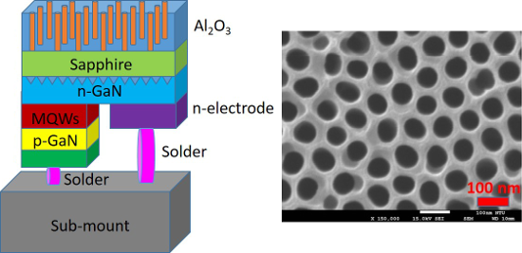
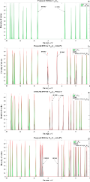
- typical light output power–current–voltage (L–I–V) characteristics of the LEDs with and without AAO structures. The AAO structures enhance the LEE of LEDs but do not change the L–I–V properties. Rigorous coupled-wave analysis We used the rigorous coupled-wave analysis (RCWA) to verify our hypothesis and
- electroluminescence (AREL) spectra of samples FC-BLED and AAO70. Angular resolution of LEE enhancement of (b) AAO60, (c) AAO70, and (d) AAO80. Typical light output power–current–voltage (L–I–V) curves of the samples in this study. Sample structure used in rigorous coupled-wave analysis (RCWA) calculations: (a) AAO


Absence of free carriers in silicon nanocrystals grown from phosphorus- and boron-doped silicon-rich oxide and oxynitride
Beilstein J. Nanotechnol. 2018, 9, 1501–1511, doi:10.3762/bjnano.9.141
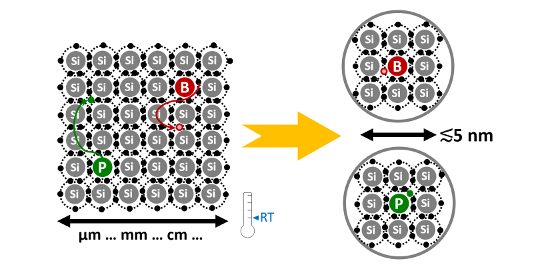
- , which allows for completely N-free silicon oxide. In this work, we investigate the properties of B- and P-incorporating Si NCs embedded in pure silicon oxide compared to silicon oxynitride by atom probe tomography (APT), low-temperature photoluminescence (PL), transient transmission (TT), and current
- –voltage (I–V) measurements. The results clearly show that no free carriers, neither from P- nor from B-doping, exist in the Si NCs, although in some configurations charge carriers can be generated by electric field ionization. The absence of free carriers in Si NCs ≤5 nm in diameter despite the presence


A novel copper precursor for electron beam induced deposition
Beilstein J. Nanotechnol. 2018, 9, 1220–1227, doi:10.3762/bjnano.9.113
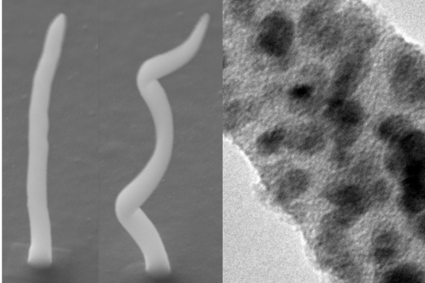
- ). Electrical measurements were performed at room temperature using a conventional four-probe setup with a Keithley 2400 source meter. The power dissipation on the deposits was limited to 1 nW to avoid self-heating and changes in atomic composition. The current voltage curve is provided in Supporting


Synthesis and characterization of two new TiO2-containing benzothiazole-based imine composites for organic device applications
Beilstein J. Nanotechnol. 2018, 9, 721–739, doi:10.3762/bjnano.9.67
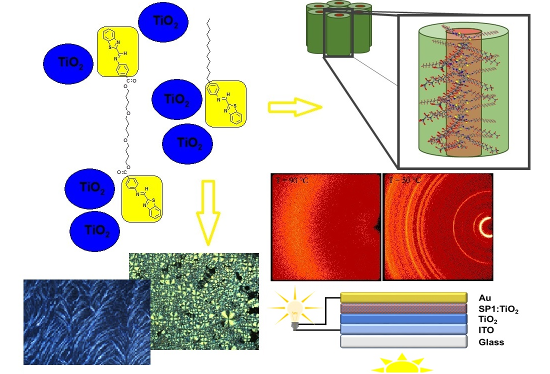
- architecture of the device is more likely to be used as a photodiode (I–V characteristics at first (I) and third (III) part of spectrum) than for solar cells (small effect under illumination at fourth (IV) part of current–voltage characteristics). However, additional work is required to improve the electrical
- TiO2 layer. A gold electrode was deposited by thermal evaporation in vacuum (5 × 10⁻⁶ mbar). The current–voltage (I–V) characteristics were measured under illumination of a AM1.5 solar simulator (Oriel 150 W). The light power density was measured by a Newport Oriel P/N 91150V reference solar cell






Combined scanning probe electronic and thermal characterization of an indium arsenide nanowire
Beilstein J. Nanotechnol. 2018, 9, 129–136, doi:10.3762/bjnano.9.15
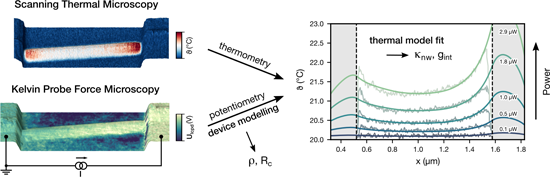
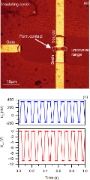
- the reconstruction method from sweeps of the bias current in Figure 2b. Two-terminal current–voltage (I–V) characteristics of the nanowire device, shown in Figure 3a, are calculated given the voltage drop across the source and drain electrodes, and the known current I passed through the nanowire. The


Inelastic electron tunneling spectroscopy of difurylethene-based photochromic single-molecule junctions
Beilstein J. Nanotechnol. 2017, 8, 2606–2614, doi:10.3762/bjnano.8.261
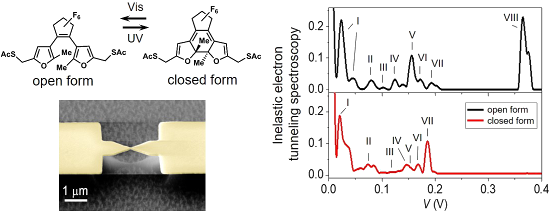
- current–voltage characteristics based on the two-parameter single-level model, where E0 specifies the position of an effective level with regard to the Fermi energy and Γ is the level broadening. Although the E0 values in the experiments are clearly smaller than the theoretically predicted differences of
- level broadening Γ, determined from the current−voltage measurements. Further discrepancies arise, if we quantitatively compare experimentally measured and theoretically predicted conductances. As stated above (see Figure 2), the predictions for the zero-temperature linear-response conductance of the
- spectra for the two different forms of C5F-ThM molecular junctions and compared them with computed IET spectra, as shown in Figure 3. The excitations of molecular vibrations appear as peaks in the second derivative of current–voltage characteristics (in the positive bias regime) and can be detected using


Robust procedure for creating and characterizing the atomic structure of scanning tunneling microscope tips
Beilstein J. Nanotechnol. 2017, 8, 2389–2395, doi:10.3762/bjnano.8.238
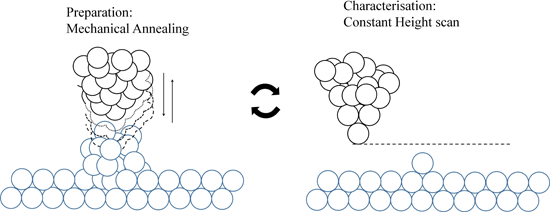
- multiple local apexes. For many purposes this does not hamper STM operation, since the tunnel current decays exponentially with the tunnel gap so that the atom closest to the surface will dominate the imaging signal. However, the reproducible shape of current–voltage spectra depends strongly on the tip


High-stress study of bioinspired multifunctional PEDOT:PSS/nanoclay nanocomposites using AFM, SEM and numerical simulation
Beilstein J. Nanotechnol. 2017, 8, 2069–2082, doi:10.3762/bjnano.8.207
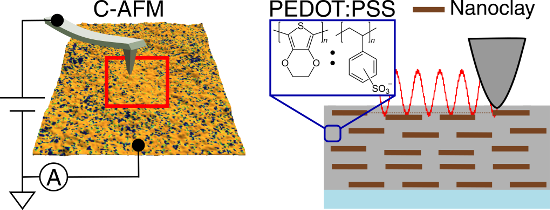
- within the linear regime. Due to the difficulty and unreliability of holding the AFM probe steady during measurement (due to high drift in ambient conditions), which would be required in order to maintain a constant contact area during a current-voltage (I–V) measurement, we confirm linearity of the I–V


Spin-dependent transport and functional design in organic ferromagnetic devices
Beilstein J. Nanotechnol. 2017, 8, 1919–1931, doi:10.3762/bjnano.8.192
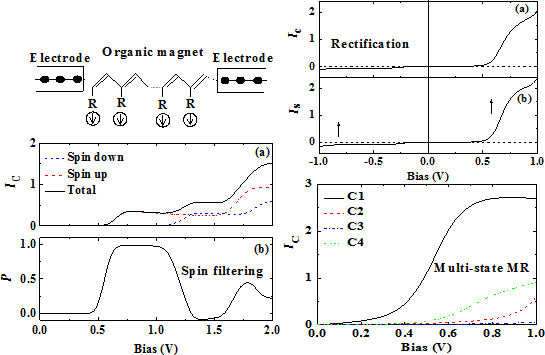
- identical nonmagnetic electrodes [31]. The spin-resolved and the total current calculated using the theory discussed in the previous section are shown in Figure 2a. The SP P = (I↑ − I↓)/(I↑ + I↓) of the current is given in Figure 2b. We have found a step-like current–voltage curve with a threshold voltage
- labeled as C1 (↑↑↑), C2 (↓↑↓), C3 (↑↑↓), and C4 (↓↑↑) and are illustrated in Figure 5c. The current–voltage characteristics for the four magnetization configurations are shown in Figure 6. It is found that the threshold voltage and the maximum magnitude of the current strongly depend on the magnetization
- -current rectification phenomenon can occur. Rectification of the charge current (CC) refers to an asymmetric current–voltage curve under reversal of the bias voltage. Molecular rectification has been proposed and investigated in the past decades, where the spatial asymmetry of the device, either at the


Three-in-one approach towards efficient organic dye-sensitized solar cells: aggregation suppression, panchromatic absorption and resonance energy transfer
Beilstein J. Nanotechnol. 2017, 8, 1705–1713, doi:10.3762/bjnano.8.171
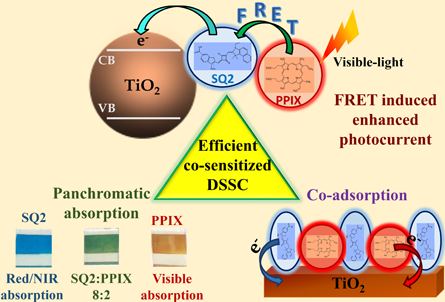
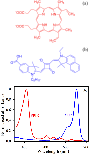
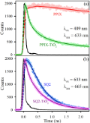
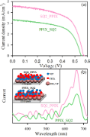
- , using time-resolved fluorescence decay measurements. The electron transfer time scales from the dyes to TiO2 have also been characterized for each dye. The current–voltage (I–V) characteristics and the wavelength-dependent photocurrent measurements of the co-sensitized DSSCs reveal that FRET between the



Transport characteristics of a silicene nanoribbon on Ag(110)
Beilstein J. Nanotechnol. 2017, 8, 1699–1704, doi:10.3762/bjnano.8.170
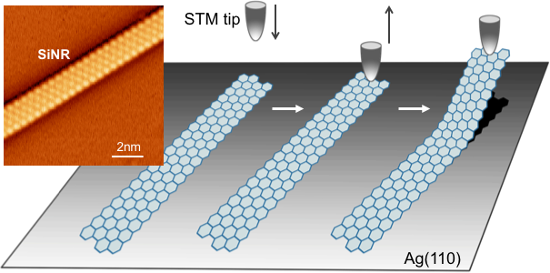
- silicene is to reduce the interfacial coupling. Recently, Tao et al. [24] successfully fabricated a silicene field effect transistor by peeling off the (2√3×2√3)R30° silicene from the Ag substrate and demonstrated the current–voltage characteristics supporting the survival of Dirac fermions. This study


Process-specific mechanisms of vertically oriented graphene growth in plasmas
Beilstein J. Nanotechnol. 2017, 8, 1658–1670, doi:10.3762/bjnano.8.166
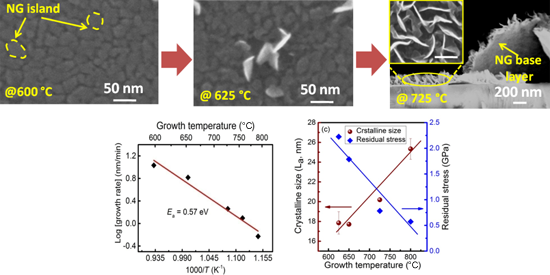
- electrical properties. The linear current–voltage relationship from the four-probe resistance measurement confirms the ohmic behavior of all the studied samples (Figure 10). The NG film, grown at 600 °C, is also found to be electrically conducting with a sheet resistance of 5.6 kΩ/sq. The sheet resistance of


Group-13 and group-15 doping of germanane
Beilstein J. Nanotechnol. 2017, 8, 1642–1648, doi:10.3762/bjnano.8.164
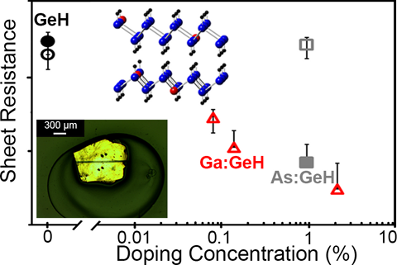
- measurements were conducted using a Keithley 4200-SCS attached to a Lake Shore Cryonics Inc. probe station. Two-probe current–voltage measurements were performed in both vacuum (ca. 10−4 mbar) and under ambient conditions in the dark. Schematic diagram of doped a) CaGe2 and b) GeH after detintercalation. Red



Parylene C as a versatile dielectric material for organic field-effect transistors
Beilstein J. Nanotechnol. 2017, 8, 1532–1545, doi:10.3762/bjnano.8.155
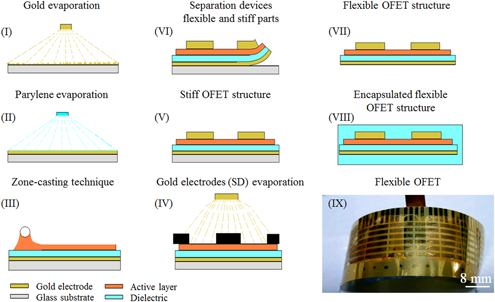
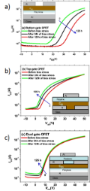
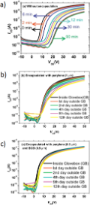
- alteration of the current–voltage characteristics before and after an application of a passivation layer was recorded [67]. Because of the specific properties of the parylene deposition procedure taking place at room temperature, no changes in the semiconducting channel were induced and the device fabricated




Charge transport in organic nanocrystal diodes based on rolled-up robust nanomembrane contacts
Beilstein J. Nanotechnol. 2017, 8, 1277–1282, doi:10.3762/bjnano.8.129
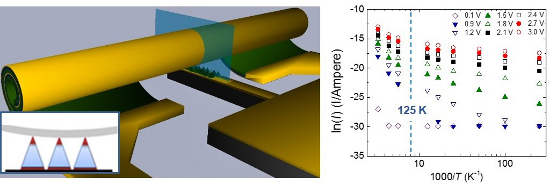
- contacts. The nanocrystals consist of vanadyl phthalocyanine (VOPc) and copper hexadecafluorophthalocyanine (F16CuPc) heterojunctions. The temperature dependent current–voltage behaviors were investigated to unveil the charge transport properties of the nanocrystals. As most of the well-studied charge
- the charge transport properties of the crystalline nanopyramids, an electrical characterization is performed by measuring the current–voltage (I–V) characteristics. As shown in Figure 2a, the strong charge transfer (CT) between VOPc and F16CuPc causes the heterojunction nanopyramids with double
- shown in Figure 3a. Similar to the current–voltage characteristics at room temperature, the current under forward bias remains dominant also at lower temperatures. By plotting the temperature dependent current behavior (ln(I)–1000/T) under different bias we obtain two distinct regions with different


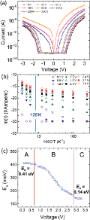
Ultrasmall magnetic field-effect and sign reversal in transistors based on donor/acceptor systems
Beilstein J. Nanotechnol. 2017, 8, 1104–1114, doi:10.3762/bjnano.8.112
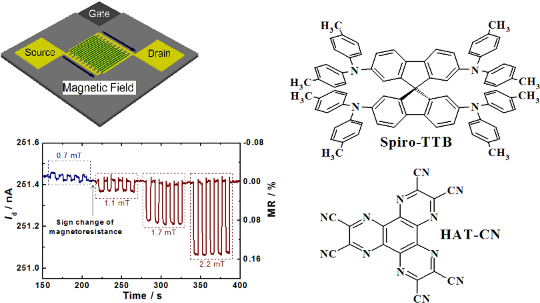
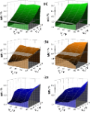
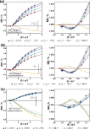
- magnetic field, reminiscence effects of the electromagnet and the uncertainty of our magnetic-field sensor, the uncertainty of the stated magnetic-field strength is ±80 µT. Current–voltage measurements were performed by using a Keithley 4200 semiconductor characterization system equipped with preamplifiers




Analysis and modification of defective surface aggregates on PCDTBT:PCBM solar cell blends using combined Kelvin probe, conductive and bimodal atomic force microscopy
Beilstein J. Nanotechnol. 2017, 8, 579–589, doi:10.3762/bjnano.8.62
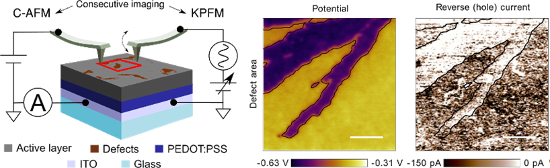
- Information Supporting Information contains detailed experimental setup, image cross-correlation, analysis of an aged sample, time evolution of surface aggregates, aggregate removal during KPFM scans, a typical current–voltage curve, cantilever calibration, comparison of contact-mode and bimodal AFM


Anodization-based process for the fabrication of all niobium nitride Josephson junction structures
Beilstein J. Nanotechnol. 2017, 8, 539–546, doi:10.3762/bjnano.8.58
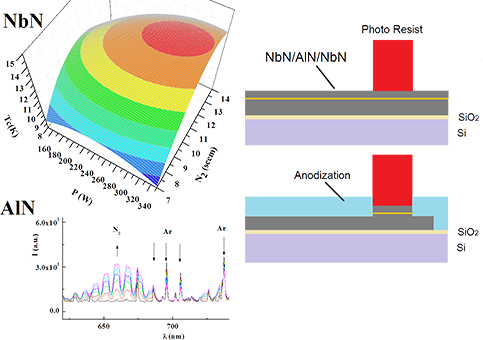
- surface and their stoichiometry. A multilayer superconductor/insulator/superconductor was obtained by successive depositions and patterned by means of the proposed anodization technique to obtain a NbN/AlN/NbN Josephson junction the current–voltage characteristic of which was measured in a liquid helium
- replacement with oxygen is observed from the measurements and a rough stoichiometry can be extrapolated compatible with Nb2O5. Tunnel junctions In Figure 11a we show the current–voltage characteristic of a Josephson-junction measured at 4.2 K. The three-layer junction (NbN/AlN/NbN) is formed by three films of
- the spectra is observed that only niobium and nitrogen are present before the process. After the oxidation process the nitrogen was completely replaced with oxygen. a) Current–voltage characteristic for NbN Josephson junction and b) diffraction pattern obtained measuring Jc as function of the applied


Copper atomic-scale transistors
Beilstein J. Nanotechnol. 2017, 8, 530–538, doi:10.3762/bjnano.8.57
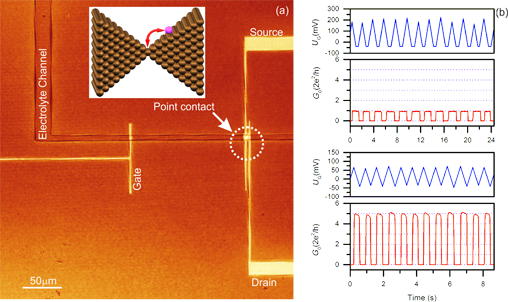
- converted to a voltage (Uout) using the current–voltage converter circuit consisting of the copper point-contact, a resistor (R) and an operational amplifier (Analog Devices, OP07) (Figure 5a). The wide supply and input voltage ranges of the operational amplifier are ±15 V and ±14 V, respectively. The


Performance of natural-dye-sensitized solar cells by ZnO nanorod and nanowall enhanced photoelectrodes
Beilstein J. Nanotechnol. 2017, 8, 287–295, doi:10.3762/bjnano.8.31
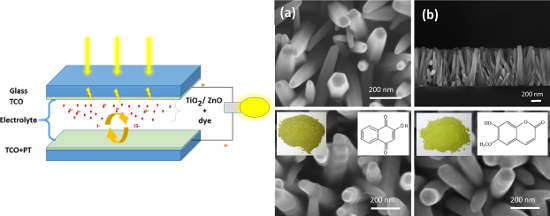
- concentration three times, we increase the loaded dye in the ZnO NR layer and we clearly observed the absorbance peak related to the collected dye in the photoanode side at 665 nm. The prepared photoanode was assembled with a platinized counter electrode. The current–voltage (I–V) measurements were carried out
- electrolyte (SOLARONIX). The used henna and mallow powders were prepared in-house by drying henna and mallow plants. Afterwards, the dried plants were milled and sieved to obtain the final powder. Current–voltage characteristics and layer conductivity were measured using a computer-controlled Keithley 4200
- in dye for 23 h, in the first concentration, and after 37 h in the second concentration. Current–voltage measurements (a) assembled cells with ZnO NWs as a layer in the photoanode side with and without a TiO2 blocking layer annealed at 200 °C, 300 °C, and without annealing using different ambient gas


Graphene–polymer coating for the realization of strain sensors
Beilstein J. Nanotechnol. 2017, 8, 21–27, doi:10.3762/bjnano.8.3
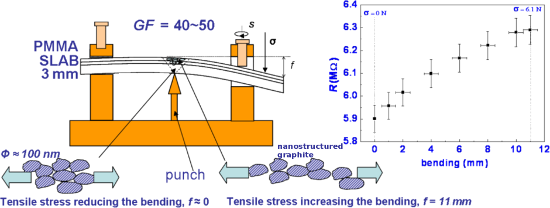
- constitutes the maximum achievable performance of silicon-based sensors. The electrical resistance and mechanical properties of the graphene-coated PMMA slat were investigated by current–voltage (I–V) measurements and micro-Raman spectroscopy (μ-RS) during bending tests. Moreover, infrared thermographic
- carried out under unload and maximum load conditions. For this purpose a two-probe configuration based on a picoammeter (Keithley, 6487) has been used to measure the current−voltage (I−V) curves between the electrodes located on A1 and A2 areas, as shown in Figure 4. The same setup was used to monitor
- . The effect of the bending on the electrical properties of the PMMA/graphene compound were investigated by measuring the current–voltage (I–V) using the electrical connection shown Figure 4. The measurement was performed in presence of a voltage of 5 V. Figure 6 reports the results of the current


Obtaining and doping of InAs-QD/GaAs(001) nanostructures by ion beam sputtering
Beilstein J. Nanotechnol. 2017, 8, 12–20, doi:10.3762/bjnano.8.2
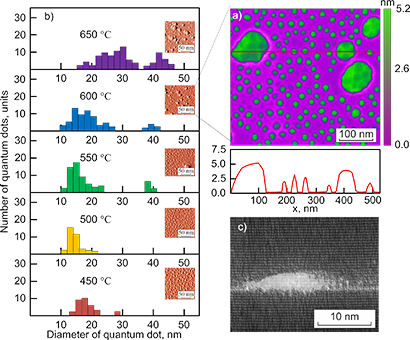
- quantum dots into the continuum of the conduction band. However, photoluminescence can only provide information about the energy levels in quantum dots but not about the transport mechanisms. For this purpose, we examined dark current–voltage characteristics of the samples with different doping levels. It
- is important to note that we doped not the quantum dots but the gallium arsenide spacer layers. Dark I–V measurements were carried out at a temperature of 90 K. The obtained results were shown in Figure 9. Two regions can be distinguished in the current–voltage curves. The first region is from 0.0 to


Solvent-mediated conductance increase of dodecanethiol-stabilized gold nanoparticle monolayers
Beilstein J. Nanotechnol. 2016, 7, 2057–2064, doi:10.3762/bjnano.7.196
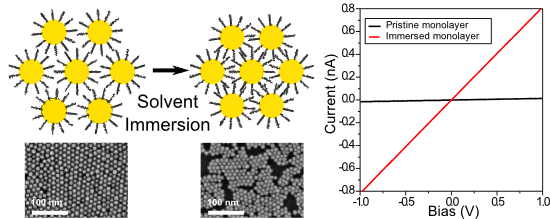
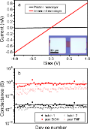
- conductance of such devices was measured by acquiring I–V curves before and after immersing them in pure solvents. All devices exhibit a linear current–voltage response before and after solvent immersion as shown in Figure 1a for a randomly picked device. The differential conductance value of each device is
- is provided in Supporting Information File 1. (a) Current–voltage relation of 20 µm × 10 µm gold nanoparticle monolayer before (black) and after (red) immersion in EtOH. The inset shows an optical image of a representative device. (b) Conductance values measured for 44 devices and their mean values



Layered composites of PEDOT/PSS/nanoparticles and PEDOT/PSS/phthalocyanines as electron mediators for sensors and biosensors
Beilstein J. Nanotechnol. 2016, 7, 1948–1959, doi:10.3762/bjnano.7.186
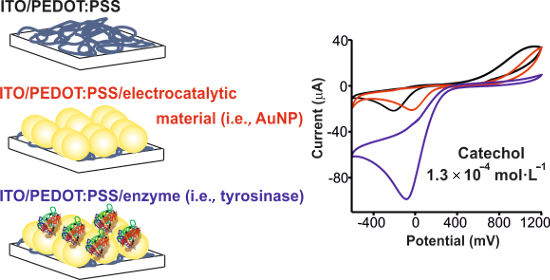
- and resistivity were measured with the four-point probe test (Table 1). The current–voltage curves obtained from PEDOT/PSS and PEDOT/PSS/EM electrodes exhibited a good linear fit with correlation coefficients higher than 0.999. It has been reported that the addition of different dopants to an aqueous


Monolayer graphene/SiC Schottky barrier diodes with improved barrier height uniformity as a sensing platform for the detection of heavy metals
Beilstein J. Nanotechnol. 2016, 7, 1800–1814, doi:10.3762/bjnano.7.173
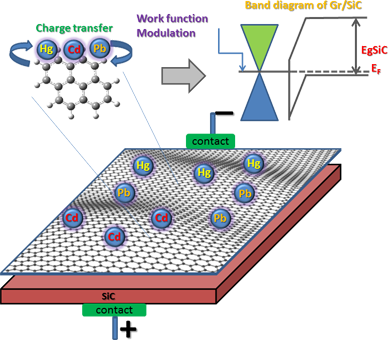
- graphene on silicon carbide is fabricated by thermal decomposition of a Si-face 4H-SiC wafer in argon atmosphere. Current–voltage characteristics of the graphene/SiC Schottky junction were analyzed by applying the thermionic-emission theory. Extracted values of the Schottky barrier height and the ideality
- current–voltage characteristics, which can be used as the sensor signal. The shift of the I–V curves can be calibrated to measure the concentration of heavy metals. It is important to emphasize that the key factors determining the performance of the graphene-based Schottky barrier diode as sensing
- conducting silver glue deposited on the Pd contact. As a back ohmic contact to SiC a Pd metallic electrode was also used. Figure 1 is a schematic illustration of the Pd/graphene/4H-SiC/Pd vertical device. The current-voltage (I–V) characteristics of the fabricated devices were measured and analyzed in order