Search results
Search for "elasticity" in Full Text gives 137 result(s) in Beilstein Journal of Nanotechnology.
Dispersion of single-wall carbon nanotubes with supramolecular Congo red – properties of the complexes and mechanism of the interaction
Beilstein J. Nanotechnol. 2017, 8, 636–648, doi:10.3762/bjnano.8.68
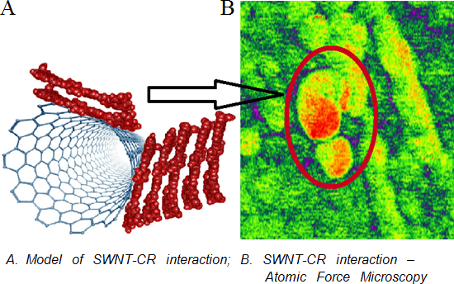
- CR-dispersed SWNTs (obtained at 5:1 CR/SWNT ratio) analysing mechanical parameters such as elasticity, adhesion, dispersion (dissipation energy) and deformation (Figure 11). Cholate dispersed SWNTs form a monolayer at the mica surface (Figure 11.1) while SWNT–CR complexes form a thick layer with
- single nanotubes protruding above its surface (Figure 11.2). This can be explained by gel-like properties of the complex formed at high CR/SWNT ratio (see Figure 5B,C), which is a network of nanotubes and supramolecular CR. Elasticity measured as the stiffness range is specified in arbitrary relative
- units. Elasticity reached of about 200 mArb on the free SWNT (black) compared to mica layer (red) (Figure 11.1A). In Figure 11.2A we observed a thick layer of SWNTs covered by CR with elasticity of about 450 mArb, but also bulbs which show much lower stiffness and higher plasticity. These bulbs were


When the going gets rough – studying the effect of surface roughness on the adhesive abilities of tree frogs
Beilstein J. Nanotechnol. 2016, 7, 2116–2131, doi:10.3762/bjnano.7.201




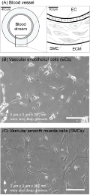
Nano- and microstructured materials for in vitro studies of the physiology of vascular cells
Beilstein J. Nanotechnol. 2016, 7, 1620–1641, doi:10.3762/bjnano.7.155
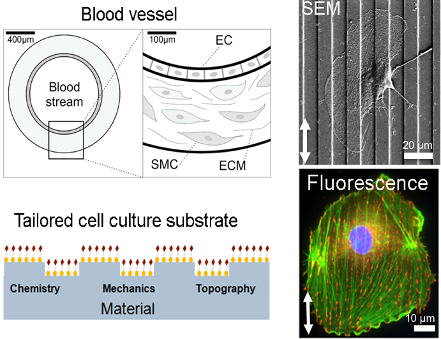
- hydrogel and thus its stiffness can be varied. Their elasticity can be tuned over a wide range from below 1 kPa to above 100 MPa [79]. An additional feature of PEG hydrogels is their low protein absorption. This characteristic makes them often to the coating material of choice when surfaces need to have
- , crosslinker and photoinitiator, as well as the intensity of UV light and the exposure time, the pore size of the hydrogel and consequently the elasticity can be tuned. Stiffness from PAA hydrogels can be tuned from ca. 50 Pa to more than 700 kPa [50][114][115][116]. Due to their easy availability and handling



The self-similarity theory of high pressure torsion
Beilstein J. Nanotechnol. 2016, 7, 1267–1277, doi:10.3762/bjnano.7.117
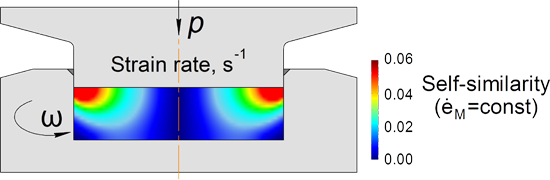
- Equation 1 for shear strain with a factor decreasing the angle of rotation of the sample due to slippage. The same result was obtained experimentally in [7]. The effect of the elasticity of the anvils on the geometry of the sample and the distribution of the shear strain has been investigated in [8][9][10


Functional diversity of resilin in Arthropoda
Beilstein J. Nanotechnol. 2016, 7, 1241–1259, doi:10.3762/bjnano.7.115
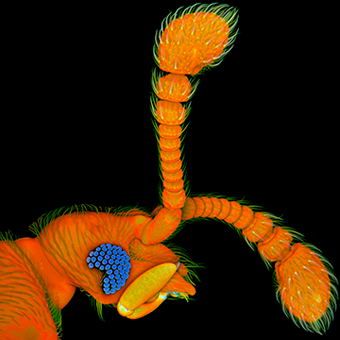
- of resilin in different arthropod exoskeleton systems Resilin is known from numerous arthropod exoskeletons where it is present in diverse structures and allows manifold functions, which in most cases are based on its very pronounced elasticity and its ability to completely recover after deformation
- within the hard and stiff chitinous structures, which (because of the stiffness of the material) likely requires only small amounts of bending and, therefore, only short muscle contractions [17][18][20]. The flexibility and elasticity of resilin are assumed to facilitate this mechanism by reducing the
- elasticity and fatigue resistance, resilin appears to be a very suitable material for exoskeleton structures that are typically intensively deformed for a rather large number of times during the lifetime of the organisms. A butterfly proboscis, for example, is tightly and spirally coiled when it is in its


Advanced atomic force microscopy techniques III
Beilstein J. Nanotechnol. 2016, 7, 1052–1054, doi:10.3762/bjnano.7.98

- two major categories: local measurements of mechanical properties and high resolution force measurements and spectroscopy. The characterization of mechanical properties by AFM manifests themselve primarily in the local detection of adhesion, friction and elasticity. Georg Fantner and his co-workers
The hydraulic mechanism in the hind wing veins of Cybister japonicus Sharp (order: Coleoptera)
Beilstein J. Nanotechnol. 2016, 7, 904–913, doi:10.3762/bjnano.7.82
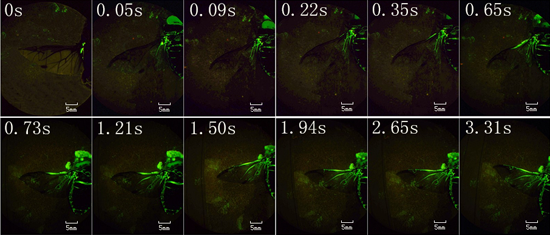
- (such as vein discontinuities, venation change, and vein membrane elasticity) [1]. Additionally, the hemolymph runs within the veins, assisting in the folding and unfolding movements of the wings [5]. The folding/unfolding behavior of beetle hind wings has been extensively researched. Its mechanism has



Finite-size effect on the dynamic and sensing performances of graphene resonators: the role of edge stress
Beilstein J. Nanotechnol. 2016, 7, 685–696, doi:10.3762/bjnano.7.61
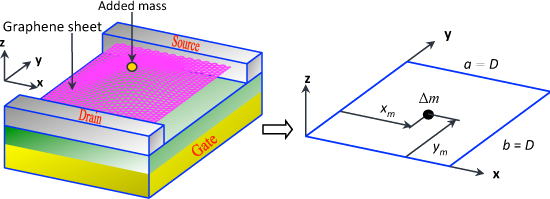
- energetic model as has been also described in surface elasticity theory [4][27]. It was found that edge stress has an impact on both the harmonic and nonlinear oscillations of a graphene resonator, and that the detection sensitivity of a graphene resonator depends on the edge stress. Our study sheds light


Cantilever bending based on humidity-actuated mesoporous silica/silicon bilayers
Beilstein J. Nanotechnol. 2016, 7, 637–644, doi:10.3762/bjnano.7.56
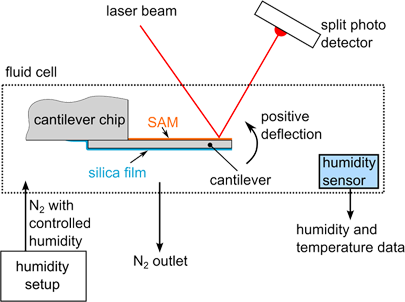
- pores the resulting surface and bulk stresses in the solid pore walls can be calculated and, by using elasticity theory, the strains of the porous material can be obtained. This step is generally not a simple task as it depends critically on the geometry of the pore network. For cylindrical pores on a


Correlative infrared nanospectroscopic and nanomechanical imaging of block copolymer microdomains
Beilstein J. Nanotechnol. 2016, 7, 605–612, doi:10.3762/bjnano.7.53
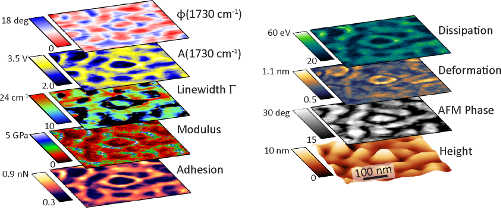
- elasticity and the hardness of the sample [32]. Polymers, including syndiotactic PMMA, tend to pack in a semi-ordered way to minimize the total free energy, though this is highly dependent on tacticity and molecular weight distribution [35]. Crystallinity also creates varying mechanical properties, as
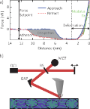
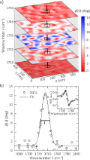
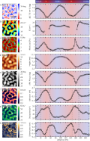


![[Graphic 9]](/bjnano/content/inline/2190-4286-7-53-i10.png?max-width=637&scale=1.18182) (1730 ...
(1730 ...
Characterization of spherical domains at the polystyrene thin film–water interface
Beilstein J. Nanotechnol. 2016, 7, 581–590, doi:10.3762/bjnano.7.51
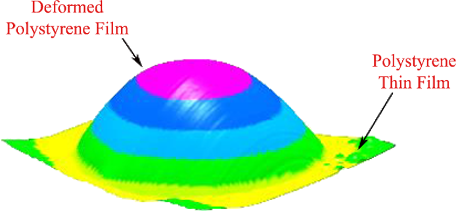
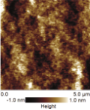
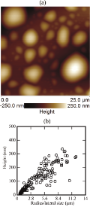
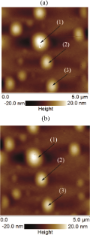
- silicon substrate at the sites that are relatively weakly bonded. Silicon is hydrophilic in nature, and therefore, in the presence of water, the PS film might easily detach. Furthermore, an additional analysis of these domains was also conducted by taking into account the modulus of elasticity of the PS




Nanoscale effects in the characterization of viscoelastic materials with atomic force microscopy: coupling of a quasi-three-dimensional standard linear solid model with in-plane surface interactions
Beilstein J. Nanotechnol. 2016, 7, 554–571, doi:10.3762/bjnano.7.49
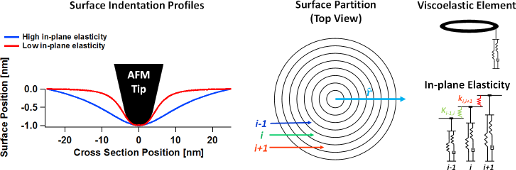
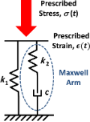
- AFM simulation. A multifrequency AFM simulation tool based on the above sample model is provided as supporting information. Keywords: atomic force microscopy; modeling; polymers; simulation; spectroscopy; standard linear solid; surface elasticity; surface energy; viscoelasticity; Introduction The
- increase in the sample surface area, which has an associated energy cost either due to elasticity or surface free energy, or both [19][20]. The overall effect is that as the tip travels into the surface, the surface profile evolves in a way that minimizes the associated energy cost. Third, these surface
- polymer surfaces that exhibit significant variability in the horizontal direction, thus precluding a rigorous continuum treatment at the nanoscale. The existence of a surface energy “penalty” either due to surface free energy or due to elasticity leads to an attempt on the part of the material to reduce


Free vibration of functionally graded carbon-nanotube-reinforced composite plates with cutout
Beilstein J. Nanotechnol. 2016, 7, 511–523, doi:10.3762/bjnano.7.45
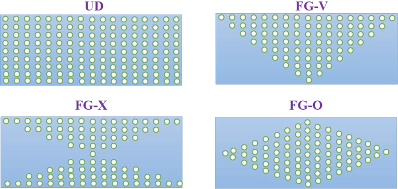
- ] and Mundkur et al. [46]. Malekzadeh et al. [45] obtained the frequencies according to a three dimensional elasticity formulation and using the Chebyshev–Ritz formulation, whereas boundary characteristics of orthogonal polynomial functions are invoked into the Ritz formulation by Mundkur et al. [46] to
- made from PmPV with elasticity modulus Em = 2.1 GPa, Poisson’s ratio νm = 0.34 and mass density ρm = 1150 kg/m3. The volume fraction of CNTs is set equal to 0.17 and the dispersion pattern of the CNTs is of the FG-V type. In such case, the efficiency parameters are obtained as η1 = 0.149 and η2 = η3


Determination of Young’s modulus of Sb2S3 nanowires by in situ resonance and bending methods
Beilstein J. Nanotechnol. 2016, 7, 278–283, doi:10.3762/bjnano.7.25
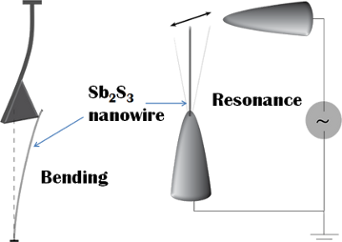
- from surface atoms being in a different environment than the bulk. An increasing surface-to-volume ratio may lead to the observed stiffening trend that has been described using a number of mechanisms such as surface reconstruction [28], surface bond saturation [41] and bulk nonlinear elasticity [42


Controlled graphene oxide assembly on silver nanocube monolayers for SERS detection: dependence on nanocube packing procedure
Beilstein J. Nanotechnol. 2016, 7, 9–21, doi:10.3762/bjnano.7.2
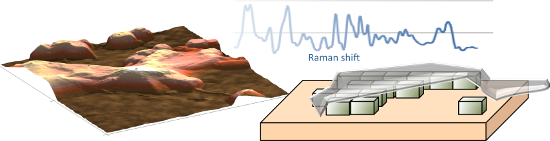
- interparticle distance, which in turns results in rigid arrays with suppressed elasticity and scarce resistance to mechanical stress. Nevertheless, the fabrication of large-scale homogeneous layers required for SERS detection has not been fully achieved. In this work we assembled closely packed AgNCs arrays
- /m in contrast with what reported previously [29][37]. We computed the surface compressional modulus from the experimental π–A data using Equation 1 The surface compressional modulus is related to the elasticity and fluidity of the monolayer [38] and its value identifies the different monolayer


A simple and efficient quasi 3-dimensional viscoelastic model and software for simulation of tapping-mode atomic force microscopy
Beilstein J. Nanotechnol. 2015, 6, 2233–2241, doi:10.3762/bjnano.6.229
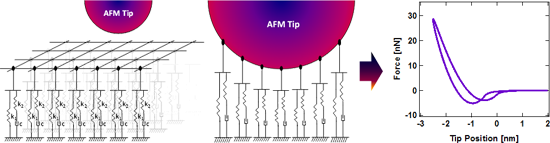
- ], providing a modulus of elasticity and ‘dissipation’ parameters, which can be practical and efficient in a variety of situations. Nevertheless, further developments still remain in terms of model improvements that consider the most fundamental behaviors of viscoelastic bodies. Specifically, the above



Imaging of carbon nanomembranes with helium ion microscopy
Beilstein J. Nanotechnol. 2015, 6, 1712–1720, doi:10.3762/bjnano.6.175
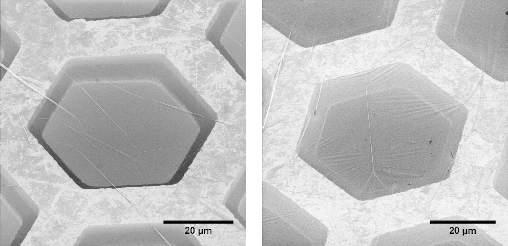
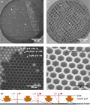
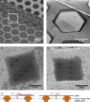
- mechanical properties, such as elasticity and porosity, as well as the chemical composition of the resulting CNM. The freely suspended CNMs are made by transferring the cross-linked SAM from its substrate to a holey structure, such as a metal grid. The resulting CNM is approximately as thick as the original




Atomic force microscopy as analytical tool to study physico-mechanical properties of intestinal cells
Beilstein J. Nanotechnol. 2015, 6, 1457–1466, doi:10.3762/bjnano.6.151
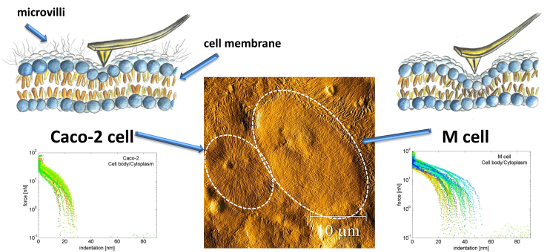
- topographies of Caco-2 cells and M cells. Furthermore, cell elasticity (i.e., the mechanical response of a cell on a tip indentation), was elucidated by force curve measurements. Besides elasticity, adhesion was evaluated by recording the attraction and repulsion forces between the tip and the cell surface
- available at the cell edge. The elasticity of M cells was 1.7-fold higher compared to Caco-2 cells and increased significantly from the cell periphery to the nuclear region. Since elasticity can be directly linked to cell adhesion, M cells showed higher adhesion forces than Caco-2 cells. The combination of
- ; elasticity; M cells; mechanical properties; Introduction The human small intestine consists of a cell monolayer, which is predominantly composed of enterocytes mixed with mucus-secreting goblet cells [1]. Apart from enterocytes, membranous epithelial cells (M cells) reside throughout the small intestine as


Stiffness of sphere–plate contacts at MHz frequencies: dependence on normal load, oscillation amplitude, and ambient medium
Beilstein J. Nanotechnol. 2015, 6, 845–856, doi:10.3762/bjnano.6.87
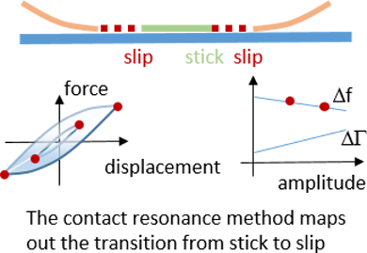
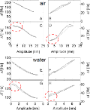
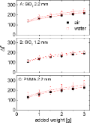
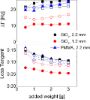
- partial slip, which assumes the tangential stress in the sliding zone to be constant, independent of normal pressure [14][15]. The value of the constant stress, τ0, is the free parameter of the model. Savkoor solved the equations of continuum elasticity and derived the force–displacement relations. These




Mapping of elasticity and damping in an α + β titanium alloy through atomic force acoustic microscopy
Beilstein J. Nanotechnol. 2015, 6, 767–776, doi:10.3762/bjnano.6.79
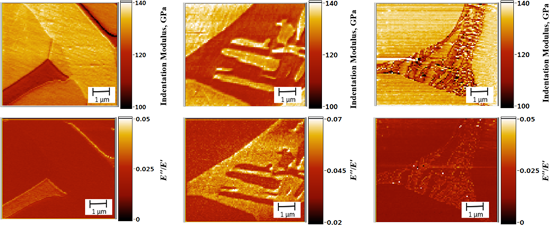
- -resonance spectra are used to calculate the contact stiffness k* and the local contact damping E″/E′ by employing suitable models for the tip–specimen contact, and in turn enabling one to image and to measure the local elasticity or the storage modulus E′ and the damping or loss modulus E″ of the specimen


Exploiting the hierarchical morphology of single-walled and multi-walled carbon nanotube films for highly hydrophobic coatings
Beilstein J. Nanotechnol. 2015, 6, 353–360, doi:10.3762/bjnano.6.34
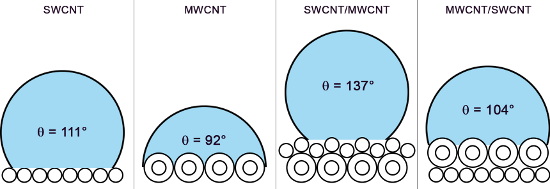
- evaporative drying of single-walled carbon nanotube film during its preparation [36][37][41]. The out-of-plane assembly is the result of the competition between attractive capillary forces and bending stress due to the elasticity of SWCNT film. Once the liquid is completely evaporated, a pattern of micrometer


Strain distribution due to surface domains: a self-consistent approach with respect to surface elasticity
Beilstein J. Nanotechnol. 2015, 6, 321–326, doi:10.3762/bjnano.6.30
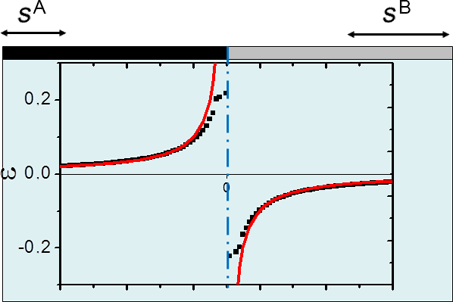
- integral equation that contains surface elastic constants, Sij. For surfaces with positive Sij the new approach avoids the introduction of a cut-off length. The classical and the new approaches are compared in case of 1-D periodic ribbons. Keywords: surface strain; surface elasticity; strain field
- generalized to other structures such as 2D circular domains. The so-obtained equations are less tractable but the main result remains the same (see Appendix II). Appendix I: Surface elasticity From a thermodynamic point of view all extensive quantities may present an excess at the interface between two media
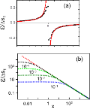
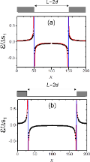
- ) Classical model in which each domain is characterized by its own supposedly constant surface stress. (b) When taking into account surface elasticity, the surface stress at mechanical equilibrium is no longer constant except far from the boundary. (a) Continuous (red) curve: normalised strain field ε/Δs1


Mechanical properties of MDCK II cells exposed to gold nanorods
Beilstein J. Nanotechnol. 2015, 6, 223–231, doi:10.3762/bjnano.6.21
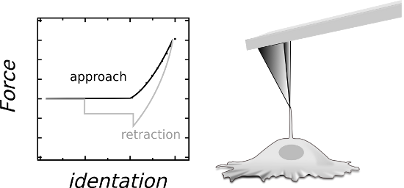
- the elasticity of the epithelial cell line MDCK II probed by AFM and QCM. The combination of these two techniques allows to monitor the influence of nanoparticles on the elastic properties of MDCK II cells both from the apical and basal side. The data permits to compare mechanics of cells exposed to
- of Hertzian mechanics to describe the elasticity of cells we also used a recently introduced tension model treating the cells as a liquid droplet (red continuous lines in Figure 3) [27][28]. According to the tension model we consider the cell as an isotropic elastic shell that produces a restoring
- force in response to indentation with a conical indenter originating from two sources, linear elasticity due to area dilatation and pre-stress (constant tension). Pre-stress is mainly generated by contractile actomyosin, strong adhesion at the cell-borders and interaction of the plasma membrane with the


Boosting the local anodic oxidation of silicon through carbon nanofiber atomic force microscopy probes
Beilstein J. Nanotechnol. 2015, 6, 215–222, doi:10.3762/bjnano.6.20
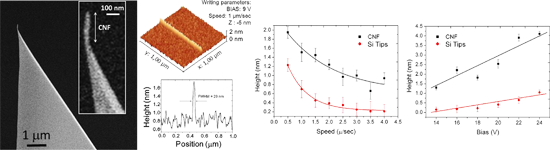
- occurs in spite of the relative weakness of the mechanical clamping of the CNF onto the Si apex. The bending elasticity of the CNF-Si probe upon mechanical contact above a few nanonewtons can be compromised to permanent bending (buckling), particularly for longer CNFs, or rupture [22]. Nevertheless, CNF


Synthesis of boron nitride nanotubes and their applications
Beilstein J. Nanotechnol. 2015, 6, 84–102, doi:10.3762/bjnano.6.9
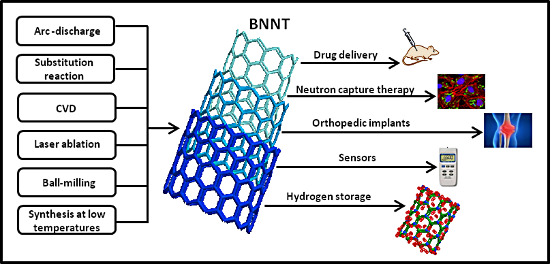
- compared to HA alone, an increase in elasticity of up to 120%, a 129% increase in hardness, and an 86% increase in fracture toughness were possible. The BNNT–HA composite also showed a 75% increase in the wear resistance. It was noted that the addition of BNNTs to HA did not have any adverse effect on