Search results
Search for "electrical conductivity" in Full Text gives 253 result(s) in Beilstein Journal of Nanotechnology. Showing first 200.
The effect of cobalt on morphology, structure, and ORR activity of electrospun carbon fibre mats in aqueous alkaline environments
Beilstein J. Nanotechnol. 2021, 12, 1173–1186, doi:10.3762/bjnano.12.87
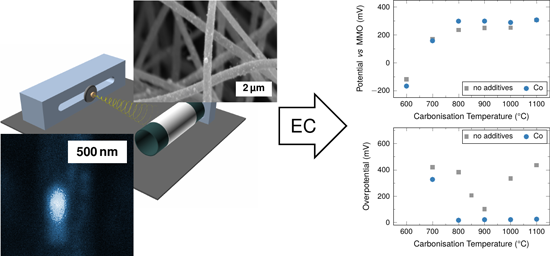
- regard the entirety of the insights found in a holistic approach. The behaviour of the reference fibres without cobalt is governed by two competing properties, nitrogen-content and electrical conductivity. As discussed in detail in a previous study, a higher nitrogen content and a higher conductivity
- will increase the activity and reduce the required overpotential [12]. However, at increasing temperatures, on the one hand, nitrogen is removed, reducing activity, while on the other hand, the carbon becomes more graphitised increasing electrical conductivity. The optimum of activity is found at


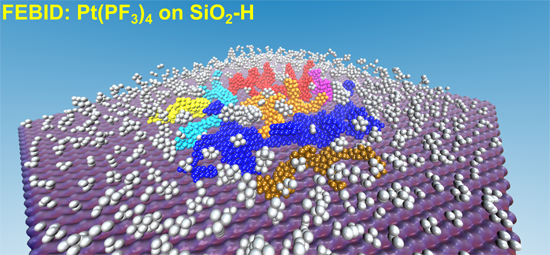
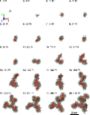
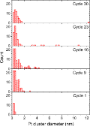
Irradiation-driven molecular dynamics simulation of the FEBID process for Pt(PF3)4
Beilstein J. Nanotechnol. 2021, 12, 1151–1172, doi:10.3762/bjnano.12.86








First-principles study of the structural, optoelectronic and thermophysical properties of the π-SnSe for thermoelectric applications
Beilstein J. Nanotechnol. 2021, 12, 1101–1114, doi:10.3762/bjnano.12.82
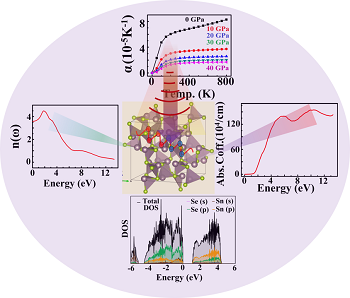
- understand the thermoelectric (TE) response and applicability of the cubic π-SnSe alloy, we employed the semiclassical Boltzmann transport theory to determine the Seebeck coefficient (S), the electrical conductivity (σ/τ), as well as the electronic part of the thermal conductivity (κe/τ) by applying the
- following relations [9]: Here, f0(T,ε) is the Fermi distribution function, α and β are tensor indices, Ω is cell volume, and σαβ(ε) is the electrical conductivity tensor computed through Fourier interpolation of the band energies. We have evaluated these TE parameters under a constant relaxation time (τ
- devices. Another important TE parameter is the electrical conductivity, which is shown in Figure 9b for the cubic π-SnSe alloy as a function of temperature. The electrical conductivity parameter describes the flow of charge carriers from high- to low-temperature regions. We found that the electrical


Assessment of the optical and electrical properties of light-emitting diodes containing carbon-based nanostructures and plasmonic nanoparticles: a review
Beilstein J. Nanotechnol. 2021, 12, 1078–1092, doi:10.3762/bjnano.12.80
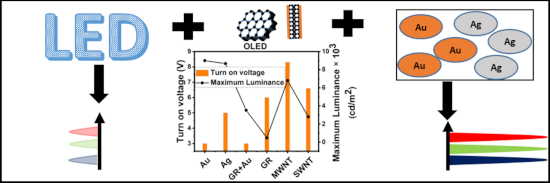
- review is available in Table 1. Enhancing the anode characteristics For LED, the general strategy is to use a current-spreading layer (anode) with a high electrical conductivity and a high transparency ranging from the UV to the red region. Additionally, it should also be cost-effective and producible on


Progress and innovation of nanostructured sulfur cathodes and metal-free anodes for room-temperature Na–S batteries
Beilstein J. Nanotechnol. 2021, 12, 995–1020, doi:10.3762/bjnano.12.75
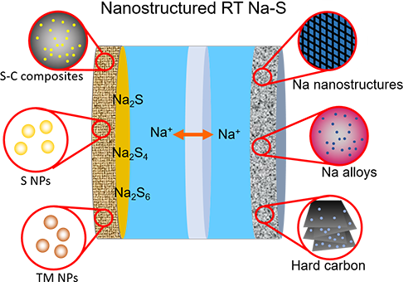
- because both Na2S8 and the reduction products, Na2Sn (4 < n < 8), show higher electrical conductivity than elemental sulfur and sodium sulfide Na2S and faster reaction kinetics with Na+ [42]. Therefore, by employing the S/Na2Sn redox couple as cathode, the electrode conductivity is enhanced, which
- presents severe obstacles to a more widespread use, especially in commercial alkali–sulfur batteries. The major electrochemical challenges of bulk sulfur are low electrical conductivity, large volume expansion on discharge (S → Na2S), slow reaction kinetics with Na, formation and loss of polysulfides due
- even higher than that of metal Na [9]. However, also phosphorous anodes suffer from large volume expansion (up to 490%), but in addition also from low electrical conductivity [76]. The use of amorphous (red) phosphorous can lessen the expansion problem and extend cycle life. For instance, a red




A review of defect engineering, ion implantation, and nanofabrication using the helium ion microscope
Beilstein J. Nanotechnol. 2021, 12, 633–664, doi:10.3762/bjnano.12.52
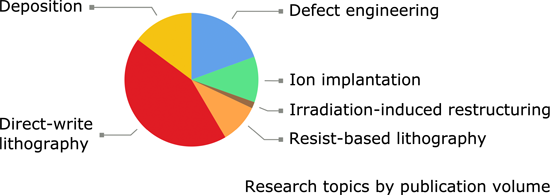
- analysis of these substrate effects can be found in [18]. Electrical and electronic properties The majority of defect engineering studies using the HIM have focused on tuning electrical conductivity. First work in this area concentrated on graphene, seeking to locally modulate its 2D electronic structure


High-yield synthesis of silver nanowires for transparent conducting PET films
Beilstein J. Nanotechnol. 2021, 12, 624–632, doi:10.3762/bjnano.12.51
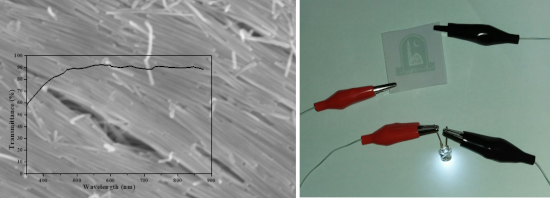
- electrodes made of sputtered indium tin oxide (ITO) films [1][2][3]. These films are widely used because of their high transmittance, low sheet resistance, and high electrical conductivity. Yet, they still have some major drawbacks such as high cost, intrinsic brittleness due to the ceramic nature [4], and
- electrical conductivity [12]. AgNWs are important as they offer a possibility to overcome light–matter interaction in the visible region. The optical properties of AgNWs are determined by localized surface plasmon resonance (LSPR), which depends on shape, size, and environment of the material [13]. AgNWs
- as a by-product of the reaction drastically affect the electrical conductivity and transparency of the silver nanowires network, thus limiting the optoelectronic applications [30][31]. Here, a fast one-pot modified polyol protocol [32] was employed to obtain ultrapure silver nanowires. In this facile


A stretchable triboelectric nanogenerator made of silver-coated glass microspheres for human motion energy harvesting and self-powered sensing applications
Beilstein J. Nanotechnol. 2021, 12, 402–412, doi:10.3762/bjnano.12.32
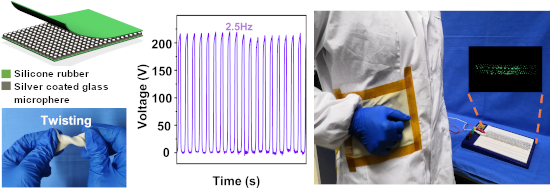
- the mold slowly. Second, SCGMs (diameter of 30 μm, Shenzhen Changxinda Shielding Materials Co. LTD) with good electrical conductivity were spread evenly over the surface. Finally, different films were prepared by adjusting the ratio between silicone and rubber/SCGMs (1:1, 1:1.5, 1:2, 1:2.5

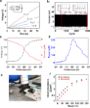


Nickel nanoparticle-decorated reduced graphene oxide/WO3 nanocomposite – a promising candidate for gas sensing
Beilstein J. Nanotechnol. 2021, 12, 343–353, doi:10.3762/bjnano.12.28
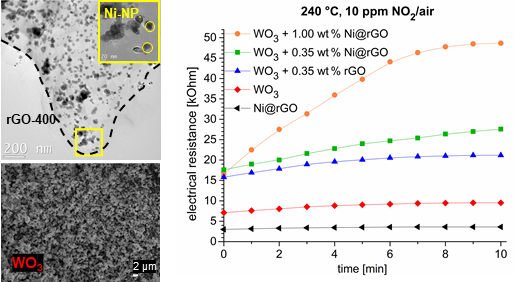
- placed in a tube furnace with a temperature regulator. To enhance electrical conductivity and to improve contact Ag electrodes were deposited on parallel sides of the pellets. The measurement procedure was carried out for NO2 and acetone in a stationary regime in a precisely controlled atmosphere (10 ppm


A review on the biological effects of nanomaterials on silkworm (Bombyx mori)
Beilstein J. Nanotechnol. 2021, 12, 190–202, doi:10.3762/bjnano.12.15
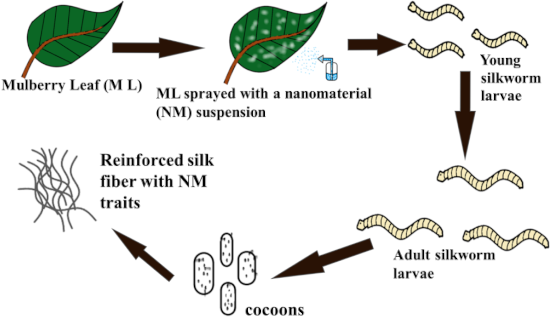
- graphitic structure enhanced its electrical conductivity [162]. Graphene has excellent electrical conductivity, optical properties, and mechanical strength [163][164][165][166], and these traits were conferred to the silk fibers. It was also indicated that silkworms fed with a lower concentration (0.2 wt


Paper-based triboelectric nanogenerators and their applications: a review
Beilstein J. Nanotechnol. 2021, 12, 151–171, doi:10.3762/bjnano.12.12
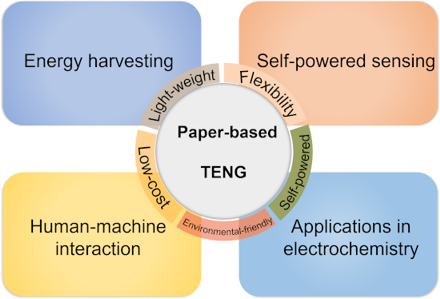
- flexible conductive materials, metallic materials (e.g., copper, zinc, silver, and gold) are still frequently used as electrodes for flexible electronics due to their excellent electrical conductivity. By using the Kapton tape to attach soft stencils to paper, various metals can be deposited through the






A review on the green and sustainable synthesis of silver nanoparticles and one-dimensional silver nanostructures
Beilstein J. Nanotechnol. 2021, 12, 102–136, doi:10.3762/bjnano.12.9
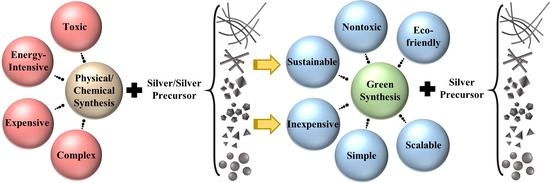
- characteristics including antimicrobial activity, electrical conductivity, thermal conductivity, optical characteristics, and mechanical properties. The antimicrobial characteristic of silver nanoparticles (AgNPs) has made them highly applicable in the biomedical and therapeutic fields [69][70][71]. Currently
- demonstrated unique electrical properties. AgNPs coated on polycarbonate substrates were previously used to increase the electrical conductivity of polycarbonate composites [79]. AgNPs have also demonstrated minimum or no adverse effects on mechanical strength when embedded in polymeric materials or composites


ZnO and MXenes as electrode materials for supercapacitor devices
Beilstein J. Nanotechnol. 2021, 12, 49–57, doi:10.3762/bjnano.12.4
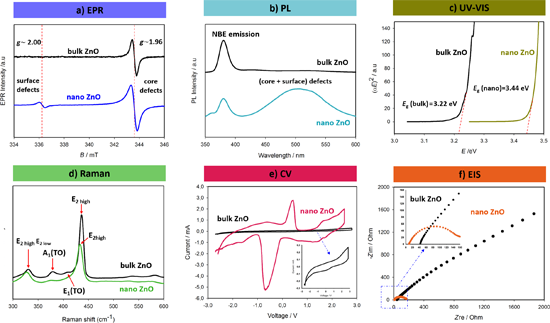
- alternatives to metal oxides are two-dimensional (2D) MXenes. Their properties include environmental sustainability, lamellar structure, high transformation efficiency, high surface hydrophilicity, and good electrical conductivity [14]. Therefore, in the following section we discuss the main properties of
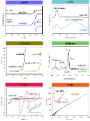
Self-standing heterostructured NiCx-NiFe-NC/biochar as a highly efficient cathode for lithium–oxygen batteries
Beilstein J. Nanotechnol. 2020, 11, 1809–1821, doi:10.3762/bjnano.11.163
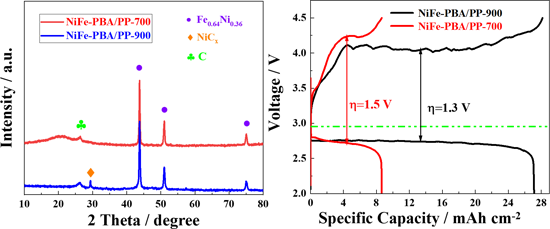
- properties (similar to PGMs), high durability, and high electrical conductivity, transition metal carbides have recently become an active research topic. As such, they have been intensively studied as promising alternatives to PGM catalysts in the development of alternative ORR and OER catalysts [24][25






Seebeck coefficient of silicon nanowire forests doped by thermal diffusion
Beilstein J. Nanotechnol. 2020, 11, 1707–1713, doi:10.3762/bjnano.11.153
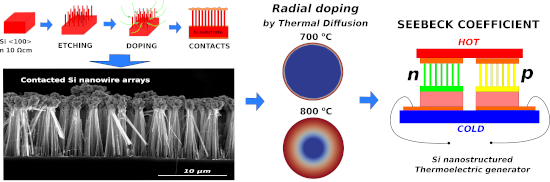
- sustainable. Silicon has a very high power factor S2σ [1][2][3][4] (S is the Seebeck coefficient and σ is the electrical conductivity). This, combined with the reduced thermal conductivity when nanostructured [5][6][7][8][9][10], makes it very suitable for thermoelectric applications. As added value, silicon
- fabricated on the top of a silicon nanowire forest, which can be achieved by copper electrodeposition [18]. 2) The optimum doping concentration of the nanowires for the exploitation of the maximum power factor of silicon [3] needs to be found. Both the Seebeck coefficient and the electrical conductivity
- depend on the doping concentration. In particular, S decreases with increasing doping concentrations. At the same time, high doping concentrations yield high values of electrical conductivity σ. Hence, a trade-off between S and σ needs to be found, such that the product S2σ is maximized. Nanowires with


One-step synthesis of carbon-supported electrocatalysts
Beilstein J. Nanotechnol. 2020, 11, 1419–1431, doi:10.3762/bjnano.11.126

- discussed in the following. Traditional multistep synthesis methods for Pt/C catalysts use supports, which are partially graphitized for reaching the required high electrical conductivity and durability. Therefore, the support surface is characterized by a low density of binding sites for anchoring Pt-NP
- , on which the Pt-NPs can then easily diffuse. Hence, these supports often require additional functionalization steps for avoiding metal particle agglomeration, which reduces the electrical conductivity and durability of the support. In sharp contrast, the one-step synthesis of Pt/CNW presented herein




Effect of localized helium ion irradiation on the performance of synthetic monolayer MoS2 field-effect transistors
Beilstein J. Nanotechnol. 2020, 11, 1329–1335, doi:10.3762/bjnano.11.117
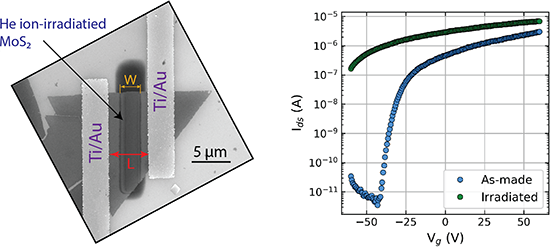
- Technology, Universität der Bundeswehr München, Werner-Heisenberg-Weg 39, 85577 Neubiberg, Germany 10.3762/bjnano.11.117 Abstract Helium ion irradiation is a known method of tuning the electrical conductivity and charge carrier mobility of novel two-dimensional semiconductors. Here, we report a systematic
- cm−2 [13][14][15][16][17], as well as good electrical conductivity for up to approx. 1018 ions cm−2 [9][10][18]. Sulfur vacancies (SVs) and the formation of a dislocation–divacancy complex can lead to significant n-doping in MoS2 [19], which shifts the threshold voltage (Vth) of the FET to higher


Magnetohydrodynamic stagnation point on a Casson nanofluid flow over a radially stretching sheet
Beilstein J. Nanotechnol. 2020, 11, 1303–1315, doi:10.3762/bjnano.11.114
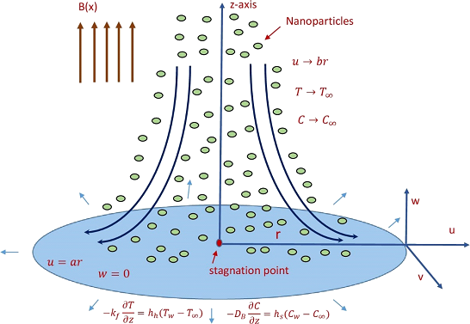
- generation, DT is the thermophoresis diffusion coefficient, σ is the electrical conductivity, β represents the Casson fluid parameter, and T represents the nanofluid temperature. The following similarity variables are taken into consideration: Finally, the ODEs describing the proposed flow problem can be


Structure and electrochemical performance of electrospun-ordered porous carbon/graphene composite nanofibers
Beilstein J. Nanotechnol. 2020, 11, 1280–1290, doi:10.3762/bjnano.11.112
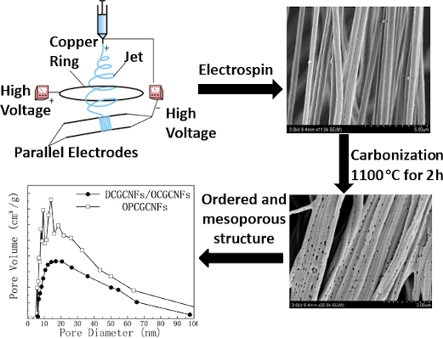
- electrical conductivity and good biocompatibility [28][29][30]. Studies have indicated that graphene still maintains an excellent charge/discharge performance at an electrochemical scan rate of almost 250 mV·s−1 [31] and has an excellent cycle performance and fast charge/discharge characteristics [32
- electrode electrospinning method (MPEM). It was found that the alignment of the composite nanofibers (CNFs) improved their electrical conductivity. Therefore, this study provided a convenient and straightforward approach to synthesize ordered porous carbon/graphene CNFs (CGCNFs) with a high number of
- specific surface area. The increase in the specific surface area of the electrode due to increased porosity facilitates ion transportation, which increases the conductivity of monolithic electrodes [24][25][26]. Although the porous carbon nanofibers have a high specific surface area, their low electrical


A few-layer graphene/chlorin e6 hybrid nanomaterial and its application in photodynamic therapy against Candida albicans
Beilstein J. Nanotechnol. 2020, 11, 1054–1061, doi:10.3762/bjnano.11.90
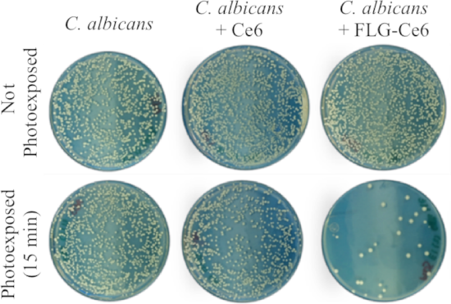
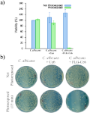
- GO (rGO) [22]. GO and rGO have been conjugated to several photosensitizers to enhance their performance in PDT [15][17][23][24][25]. However, for enhancing the characteristics of a Ps, the properties of graphene, such as electrical conductivity and chemical stability are very important, and these


Gas-sensing features of nanostructured tellurium thin films
Beilstein J. Nanotechnol. 2020, 11, 1010–1018, doi:10.3762/bjnano.11.85
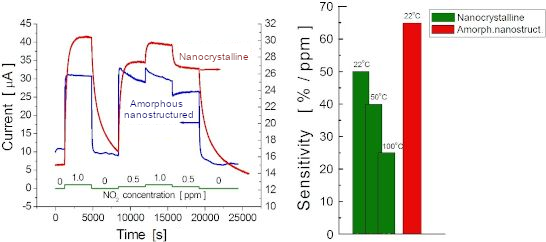
- different operating temperatures with respect to scanning electron microscopy and X-ray diffraction analyses. It was shown that both types of films interacted with nitrogen dioxide, which resulted in a decrease of electrical conductivity. The gas sensitivity, as well as the response and recovery times
- with an approximate average size of 100 nm. Assuming the neutrality of the Au/Te contacts, the electrical conductivity of the film is mainly controlled by the bulk, surface and grain boundary resistances. On the other hand, due to the peculiarities of chalcogens and chalcogenide materials [1][30], a


Effect of magnetic field, heat generation and absorption on nanofluid flow over a nonlinear stretching sheet
Beilstein J. Nanotechnol. 2020, 11, 976–990, doi:10.3762/bjnano.11.82
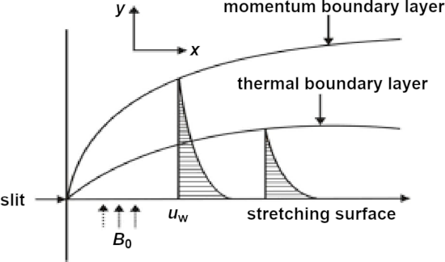
- expansion coefficient, ρp is the particle density, σ denotes the nanofluid electrical conductivity, B0 denotes the magnetic induction, vw denotes the suction/injection velocity and Q0 (Q) denotes the heat generation (absorption) coefficient. us in Equation 8 represents the slip velocity, given as which is


Structural optical and electrical properties of a transparent conductive ITO/Al–Ag/ITO multilayer contact
Beilstein J. Nanotechnol. 2020, 11, 695–702, doi:10.3762/bjnano.11.57
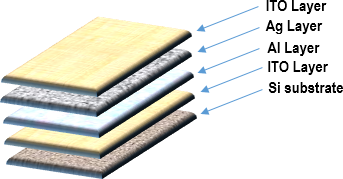
- roughness is attributed to the increasing grain sizes [35]. The large grain sizes of IAAI films reduce the number of grain boundaries and thus the scattering at grain boundaries. This improves the carrier mobility leading to an increased electrical conductivity of the films. The surface morphology of the


Preparation, characterization and photocatalytic performance of heterostructured CuO–ZnO-loaded composite nanofiber membranes
Beilstein J. Nanotechnol. 2020, 11, 631–650, doi:10.3762/bjnano.11.50
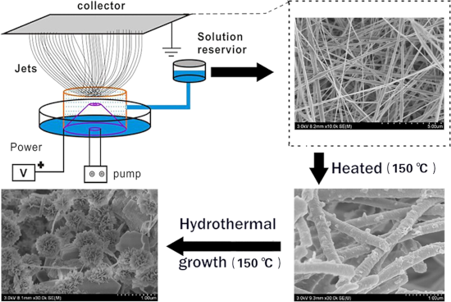
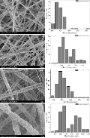
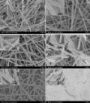
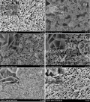
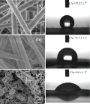
- widely used to fabricate nanofiber membranes because of its good spinnability, electrical conductivity, and heat resistance. However, carbonized PAN nanofiber membranes usually have poor mechanical properties. Polyvinylidene fluoride (PVDF) has better mechanical properties but a lower melting point











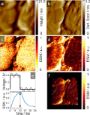
Comparison of fresh and aged lithium iron phosphate cathodes using a tailored electrochemical strain microscopy technique
Beilstein J. Nanotechnol. 2020, 11, 583–596, doi:10.3762/bjnano.11.46
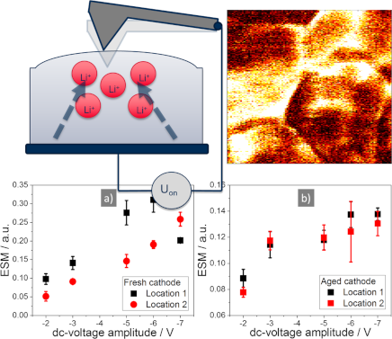
- additional mechanical (stiffness, elasticity), electrical (conductivity, surface potential), electrochemical (reactivity, mobility and activity), mechanoelectrical (piezoelectricity) and chemical (chemical bonding) material properties. In situ AFM imaging of the sample topography is often used to study the