


Search results
Search for "energy transfer" in Full Text gives 153 result(s) in Beilstein Journal of Nanotechnology.
Laser-assisted fabrication of gold nanoparticle-composed structures embedded in borosilicate glass
Beilstein J. Nanotechnol. 2017, 8, 2454–2463, doi:10.3762/bjnano.8.244
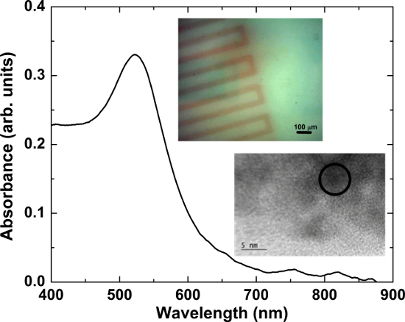
- irradiation. This emission is evidence of nonlinear effects taking place, as the light consisted of multiple components in the visible or even the UV spectrum. Thus, when considering the process of energy transfer from the laser pulse to the glass sample, one should also take into account more complex


Electron beam induced deposition of silacyclohexane and dichlorosilacyclohexane: the role of dissociative ionization and dissociative electron attachment in the deposition process
Beilstein J. Nanotechnol. 2017, 8, 2376–2388, doi:10.3762/bjnano.8.237
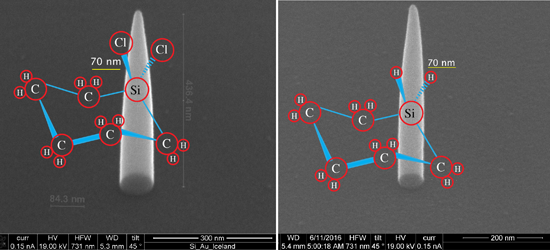
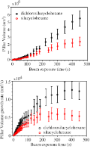
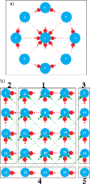
- through effective impulsive energy transfer. Then, the decomposition of the precursor molecules would be confined within the diameter of the primary electron beam and a spatial resolution better than 1 nm would be achievable on a routine basis. However, when a high-energy electron beam impinges on a solid





Changes of the absorption cross section of Si nanocrystals with temperature and distance
Beilstein J. Nanotechnol. 2017, 8, 2315–2323, doi:10.3762/bjnano.8.231
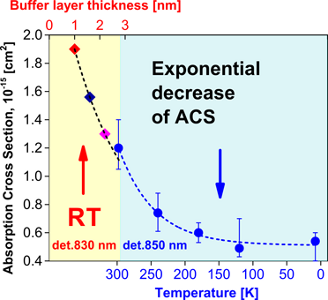
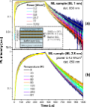
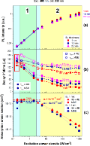
- of the efficiency of energy transfer between confined NC layers. An exponential decrease of the ACS with decreasing temperature down to 120 K can be explained by smaller occupation number of phonons and expansion of the band gap of Si NCs at low temperatures. This study clearly shows that the ACS of
- (Figure 4a). On the other hand, in presence of exciton migration some neighboring NCs can work as antenna, because a NC can be excited either directly through photon absorption or indirectly through an energy transfer from a nearby NC. Therefore, an ACS enhancement is expected for the system of
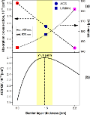
- much stronger) enhancement of ACS was reported by Priolo et al. [17] for a sample in which a substantial energy transfer was expected. An optimum inter-nanocrystal distance Recently, we showed [5] that unlike ACS the PL QY is exponentially growing with increase of separation between confined NC layers


Suppression of low-energy dissociative electron attachment in Fe(CO)5 upon clustering
Beilstein J. Nanotechnol. 2017, 8, 2200–2207, doi:10.3762/bjnano.8.219
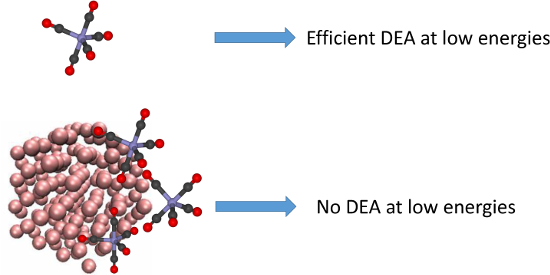
- a large change (increase) in the DEA cross section, since this is extremely sensitive to the overlap of the two curves around the Franck–Condon region [11]. Finally, the target molecule can be stabilized by mechanical suppression of the dissociation (caging) and energy transfer to the environment


Velocity dependence of sliding friction on a crystalline surface
Beilstein J. Nanotechnol. 2017, 8, 2186–2199, doi:10.3762/bjnano.8.218
- conservative simulations, for example, can describe the energy transfer into internal vibrational energy omitting all unphysical damping terms altogether [20][21][22][23][24][25]. The disadvantage of this approach is that, due to the finite and relatively small number of degrees of freedom available in a
- reason we do include a weak viscous damping term, but this term acts on the elastic substrate only. We make sure that the effect of this term is negligible for the target of this research: the energy transfer from the slider to the substrate. This model virtually allows us to dispose of the arbitrary
- one of Figure 2, which of course allows for no energy transfer, and no dissipation. As damping is decreased to the physically relevant underdamped region γ < (mK)1/2, friction stabilizes to a physically significant γ-independent value. However, when γ is further decreased below approximately 10−2 (mK


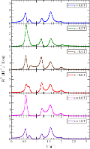
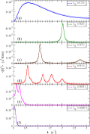

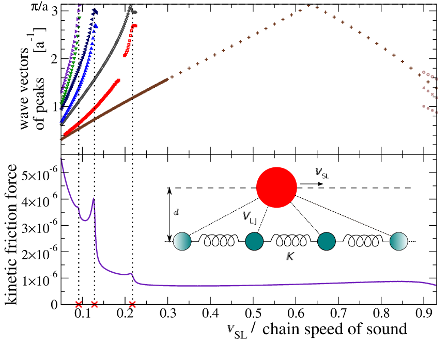
![[Graphic 31]](/bjnano/content/inline/2190-4286-8-218-i50.svg?max-width=637&scale=1.18182) as functions of vSL. Panels (c) and (d): detail ...
as functions of vSL. Panels (c) and (d): detail ...

![[Graphic 34]](/bjnano/content/inline/2190-4286-8-218-i53.svg?max-width=637&scale=1.18182) , with the dynamic friction Fd as a function of vSL...
, with the dynamic friction Fd as a function of vSL...


![[Graphic 40]](/bjnano/content/inline/2190-4286-8-218-i59.svg?max-width=637&scale=1.18182) (symbols), compared with the values of k of the phonons who...
(symbols), compared with the values of k of the phonons who...


Ester formation at the liquid–solid interface
Beilstein J. Nanotechnol. 2017, 8, 2139–2150, doi:10.3762/bjnano.8.213
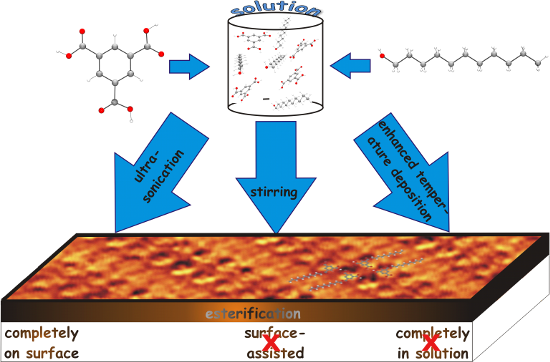
- thoroughly investigated. In addition to the imaging, the tunnel tip was active in promoting the reaction by local energy transfer to and local transport of the reactants. Endothermal on-surface reactions of a whole molecular monolayer can be initiated by a corresponding heating process after deposition. STM


Synthesis and characterization of noble metal–titania core–shell nanostructures with tunable shell thickness
Beilstein J. Nanotechnol. 2017, 8, 2083–2093, doi:10.3762/bjnano.8.208
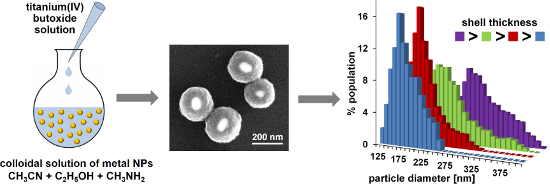
- electromagnetic fields increased the efficiency of light interaction with sensitizers (dyes). On the other hand, plasmon resonance energy transfer (PRET) and “hot” electron transfer led to an increased e−/h+ pair generation and amplified number of carriers available for photocurrent generation. An increased


Three-in-one approach towards efficient organic dye-sensitized solar cells: aggregation suppression, panchromatic absorption and resonance energy transfer
Beilstein J. Nanotechnol. 2017, 8, 1705–1713, doi:10.3762/bjnano.8.171
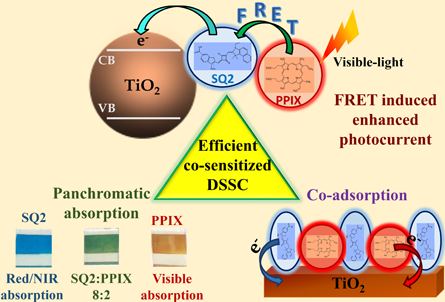
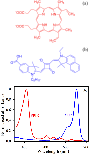
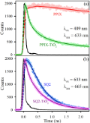
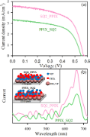
- absorption coefficients in the visible and NIR region of the solar spectrum and to probe the possibility of Förster resonance energy transfer (FRET) between the two dyes. FRET from the donor PPIX to acceptor SQ2 was observed from detailed investigation of the excited-state photophysics of the dye mixture
- . Keywords: anti-aggregation; co-sensitization; dye-sensitized solar cells (DSSC); Förster resonance energy transfer (FRET); NIR harvesting; panchromatic absorption; Introduction The increasing demand for fossil-fuel energy sources and the intensifying environmental pollution have promoted an extensive
- using a sensitizer solution cocktail mixing one dye absorbing in the visible region with another dye absorbing in the NIR region or incorporating Förster resonance energy transfer (FRET) between two co-sensitizers [9][15][16][17][18][19]. However, co-sensitization brings some additional complexity to



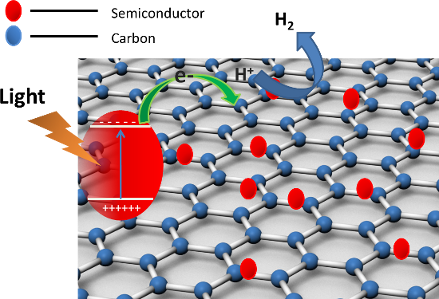
Two-dimensional carbon-based nanocomposites for photocatalytic energy generation and environmental remediation applications
Beilstein J. Nanotechnol. 2017, 8, 1571–1600, doi:10.3762/bjnano.8.159


Bright fluorescent silica-nanoparticle probes for high-resolution STED and confocal microscopy
Beilstein J. Nanotechnol. 2017, 8, 1283–1296, doi:10.3762/bjnano.8.130
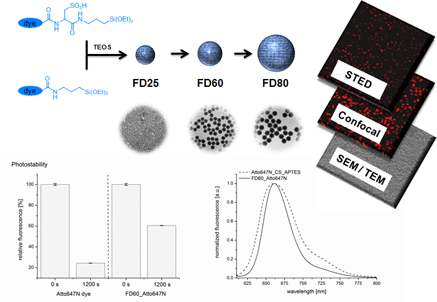
- multicolour silica particles with or without Förster resonance energy transfer (FRET). These different approaches are currently under investigation. Experimental Materials All syntheses and purification steps in aqueous solution were conducted in ultrapure water (18.2 MΩ·cm, MilliQ water purification system


ZnO nanoparticles sensitized by CuInZnxS2+x quantum dots as highly efficient solar light driven photocatalysts
Beilstein J. Nanotechnol. 2017, 8, 1080–1093, doi:10.3762/bjnano.8.110
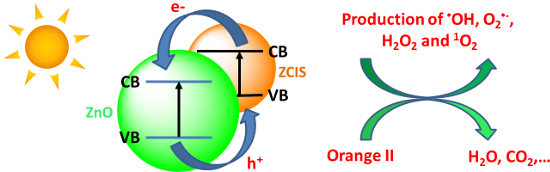
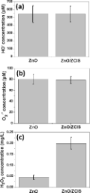
- oxygen 1O2 generation has scarcely been reported for photocatalysts and may originate from the oxidation of O2•− into 1O2 and triplet oxygen 3O2 or from the energy transfer of the photo-excited catalyst to 3O2 [50][51][52][53]. 1O2 has been demonstrated to play a key role in some TiO2-catalyzed
- are formed by the ZnO/ZCIS catalyst, we suppose that 1O2 is preferentially generated by the oxidation of O2•− by holes rather than by an energy transfer of the photo-excited catalyst to 3O2. Conclusion In summary, we have successfully prepared ZnO/ZCIS composites via a facile thermal treatment at 400




Synthesis of graphene–transition metal oxide hybrid nanoparticles and their application in various fields
Beilstein J. Nanotechnol. 2017, 8, 688–714, doi:10.3762/bjnano.8.74






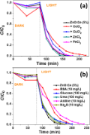
Photo-ignition process of multiwall carbon nanotubes and ferrocene by continuous wave Xe lamp illumination
Beilstein J. Nanotechnol. 2017, 8, 134–144, doi:10.3762/bjnano.8.14
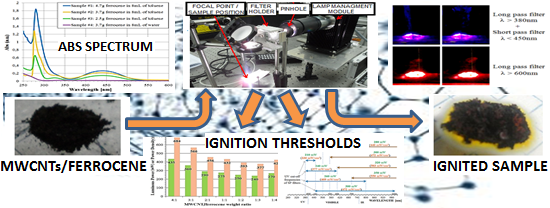
- process (b). Chemical reactions relative to photo-induced electron and energy transfer in MWNTs–FeCp2 nanocomposites occurring during the photo-induced ignition process. Solvent type and amount of ferrocene used in this work.




Grazing-incidence optical magnetic recording with super-resolution
Beilstein J. Nanotechnol. 2017, 8, 28–37, doi:10.3762/bjnano.8.4
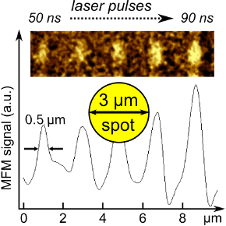
- (~70%). The Co layer is the single greatest absorber in the stack by a factor of 2 (Figure 7, inset), which is ideal for energy transfer to the desired magnetic layer only. The inset further shows the ideal wavelength within the visible regime to be as short as possible for maximal coupling efficiency


A dioxaborine cyanine dye as a photoluminescence probe for sensing carbon nanotubes
Beilstein J. Nanotechnol. 2016, 7, 1991–1999, doi:10.3762/bjnano.7.190
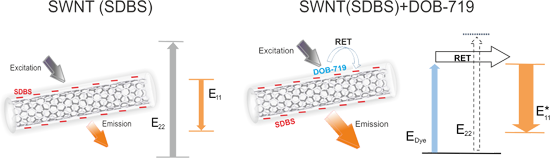
- we have revealed new optical features in the spectral range of the intrinsic excitation of the dye due to resonance energy transfer from DOB-719 to SWNTs. Specifically, we have observed an emergence of new PL peaks at the excitation wavelength of 735 nm and a redshift of the intrinsic PL peaks of
- . Keywords: dioxaborine cyanine dye; photoluminescence; resonant energy transfer; sensor; single-walled carbon nanotubes (SWNTs); Introduction Carbon nanotubes exhibit unique physical and chemical properties distinctive from other materials because of their extreme aspect ratio offering a number of exciting
- sidewall with π-conjugated organic compounds [9][10][11][12]. Considering sensors, particular attention has to be paid to the PL enhancement in aqueous media, like the complexation and resonant energy transfer (RET) from cyanine dyes to the SWNTs covered by anionic surfactants in water [12]. However, a


Dynamic of cold-atom tips in anharmonic potentials
Beilstein J. Nanotechnol. 2016, 7, 1543–1555, doi:10.3762/bjnano.7.148
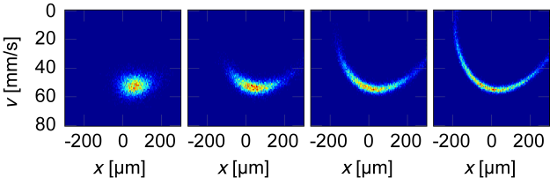
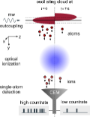
- -atom tip. Assuming certain symmetries, the complete phase-space distribution function can then be obtained from a time-of-flight image series. Unfortunately, absorption imaging is a fully destructive process, such that the cold-atom tip is destroyed due to energy transfer from absorbed photons. At




High performance Ce-doped ZnO nanorods for sunlight-driven photocatalysis
Beilstein J. Nanotechnol. 2016, 7, 1338–1349, doi:10.3762/bjnano.7.125
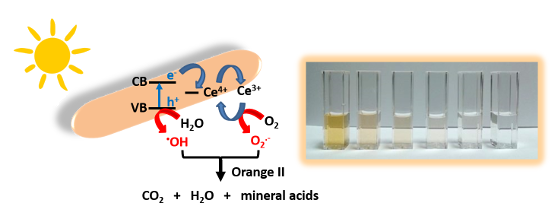
- efficiency by energy transfer processes and this topic is becoming an exciting area of research for developing electronic and optical applications like sensors, light-emitting phosphors or flat panel displays [14][15][16][17][18][19][20][21][22][23][24][25][26][27]. Due to the defects induced in the ZnO







Photocurrent generation in carbon nanotube/cubic-phase HfO2 nanoparticle hybrid nanocomposites
Beilstein J. Nanotechnol. 2016, 7, 1075–1085, doi:10.3762/bjnano.7.101
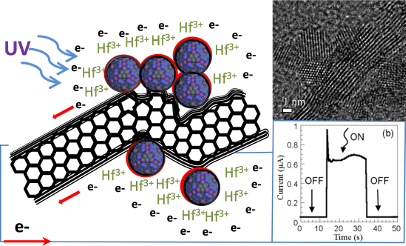
- optical quenching was attributed to a nonradiative energy transfer from the quantum dot to the SWCNT in the ground state [53]. In the present study, we observe an overall decrease in the PL intensity when the HfO2 nanoparticles are attached to the CNT compared to the PL emission of the free-standing


The influence of phthalocyanine aggregation in complexes with CdSe/ZnS quantum dots on the photophysical properties of the complexes
Beilstein J. Nanotechnol. 2016, 7, 1018–1027, doi:10.3762/bjnano.7.94
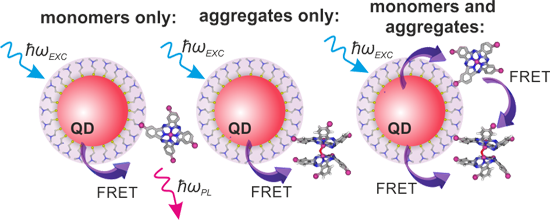
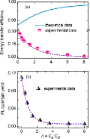
- Technology, Dublin 8, Ireland 10.3762/bjnano.7.94 Abstract The formation of nonluminescent aggregates of aluminium sulfonated phthalocyanine in complexes with CdSe/ZnS quantum dots causes a decrease of the intracomplex energy transfer efficiency with increasing phthalocyanine concentration. This was
- ; Förster resonance energy transfer; photosensitizer; semiconductor nanocrystals; tetrapyrroles; Introduction Semiconductor quantum dots (QDs) and their complexes with organic molecules have been a subject of extensive research during the last couple of decades. In particular, complexes of QDs and
- , photoexcited tetrapyrrole molecules undergo intersystem crossing from a singlet state to a triplet state. Energy is then transferred from the triplet state to the surrounding oxygen molecules. This energy transfer converts oxygen to the extremely reactive singlet oxygen, which can destroy diseased cells [11



Highly compact refractive index sensor based on stripe waveguides for lab-on-a-chip sensing applications
Beilstein J. Nanotechnol. 2016, 7, 751–757, doi:10.3762/bjnano.7.66
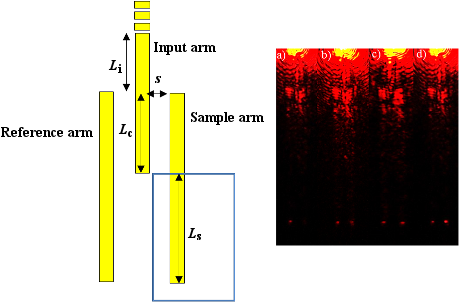
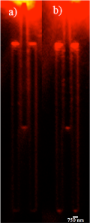
- input end to increase the energy transfer of incoming light into the input waveguide [22]. The gratings were excited through an inverted microscope set-up using a 633 nm wavelength laser, further details are provided in [22]. The plasmon propagation and coupling in the RI sensor was imaged using CdSe




Coupled molecular and cantilever dynamics model for frequency-modulated atomic force microscopy
Beilstein J. Nanotechnol. 2016, 7, 708–720, doi:10.3762/bjnano.7.63
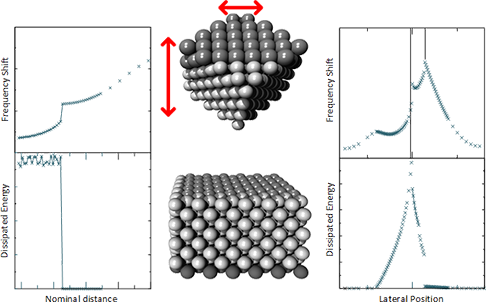
- integrals of the three cartesian components add up to zero (corresponding to energy transfer into lateral degrees of freedom) or not (corresponding to adhesion hysteresis). This is more elaborate and likely more error-prone than monitoring the energies directly. Simulation method It is not feasible to
- -values). It is due to an energy transfer into the lateral degree of freedom. A signature of this effect is that it is nearly equally strong on both sides of the points of strongest attraction between tip and substrate, so that the scan has two dissipation maxima per lattice constant, but only one
- soon as d becomes small enough and remains roughly constant below. At the same time, the frequency of the cantilever oscillation changes discontinuously. If the normal cantilever oscillation is damped, for lateral oscillations get excited, the energy transfer increases smoothly with decreasing d, due


Hierarchical coassembly of DNA–triptycene hybrid molecular building blocks and zinc protoporphyrin IX
Beilstein J. Nanotechnol. 2016, 7, 697–707, doi:10.3762/bjnano.7.62
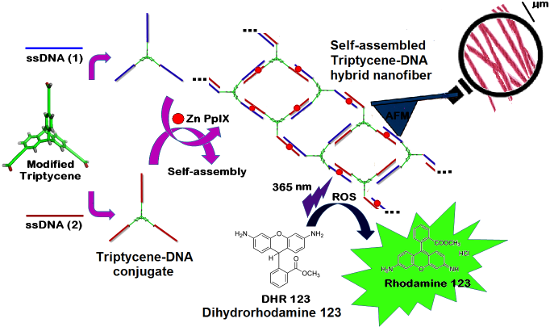
- was chosen as a prototype where ROS generation is proportional to the extent of oxidation of DHR 123. The ROS generation was attributed to energy transfer from the PpIX molecules to neighboring oxygen atoms upon irradiation at 330 nm. The formation of R 123 from DHR 123 was quantified by steady-state


Fabrication and properties of luminescence polymer composites with erbium/ytterbium oxides and gold nanoparticles
Beilstein J. Nanotechnol. 2016, 7, 630–636, doi:10.3762/bjnano.7.55
- nanoparticles is not always a good solution to the problem because of the possible decrease of luminescence intensity due to the counterproductive introduction of energy-transfer processes at high concentrations of rare earth ions. For example, as it was shown in [5] for Er-doped silicon materials, a practical


Organized films
Beilstein J. Nanotechnol. 2016, 7, 406–408, doi:10.3762/bjnano.7.35

- ]. Their impact on interface science over the last four decades was undoubtedly based on pioneering works such as the beautiful studies of Kuhn and Möbius on energy transfer between molecules arranged with angstrom precision [2], or the stimulating works of Roberts and Petty [3], which envisaged many
Early breast cancer screening using iron/iron oxide-based nanoplatforms with sub-femtomolar limits of detection
Beilstein J. Nanotechnol. 2016, 7, 364–373, doi:10.3762/bjnano.7.33
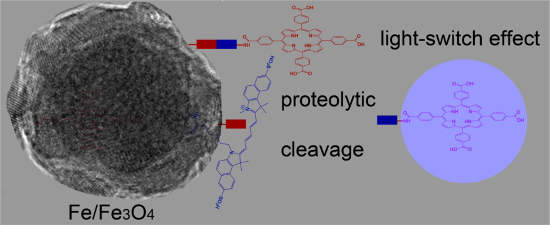
- sequence. A second dye (cyanine 5.5) is permanently linked to the dopamine coating (Figure 1). This design enables both, plasmon-resonance quenching (SET) [20][21] and Förster resonance energy transfer (FRET) quenching [20][22] of the tethered TCPP units. Once TCPP is released via proteolytic cleavage of
- -resonance quenching (dipole–surface energy transfer (SET) [20][21]) from TCPP to Fe/Fe3O4 and Förster resonance energy transfer (FRET [20][22]) from TCPP to cyanine 5.5. The latter is permanently tethered to the inorganic nanoparticle. For all of the employed consensus sequences, with the exceptions of
- effect” upon proteolytic cleavage: the fluorophore is switched on due to the increase in distance between the Fe/Fe3O4 core/shell nanoparticle, leading to decreased Förster resonance energy transfer (FRET) [21][24], k1, and dipole–surface energy transfer (SET) [20][22], k2. Further explanations are





