


Search results
Search for "functional materials" in Full Text gives 117 result(s) in Beilstein Journal of Nanotechnology.
Coexistence of strongly buckled germanene phases on Al(111)
Beilstein J. Nanotechnol. 2017, 8, 1946–1951, doi:10.3762/bjnano.8.195
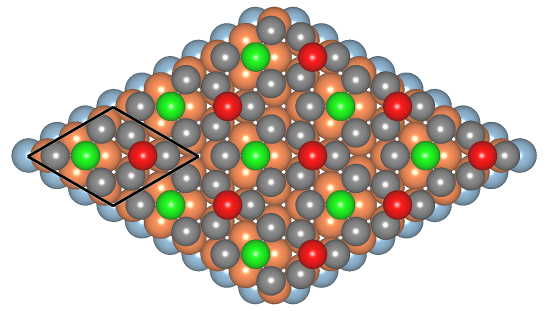
- Initiative for Novel Functional Materials supported by the Swedish Research Council (Contract No. 2008-6582). The calculations were carried out at the National Supercomputer Centre (NSC), supported by the Swedish National Infrastructure for Computing (SNIC).


Nanotribological behavior of deep cryogenically treated martensitic stainless steel
Beilstein J. Nanotechnol. 2017, 8, 1760–1768, doi:10.3762/bjnano.8.177
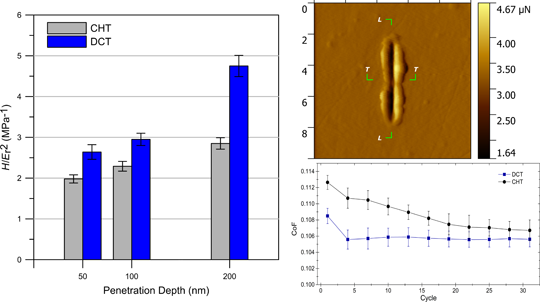
- Research Area in Materials Science on Functional Materials at Linköping University (Faculty Grant SFO-Mat-LiU No.2009-00971).


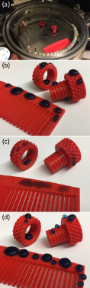
Surface functionalization of 3D-printed plastics via initiated chemical vapor deposition
Beilstein J. Nanotechnol. 2017, 8, 1629–1636, doi:10.3762/bjnano.8.162
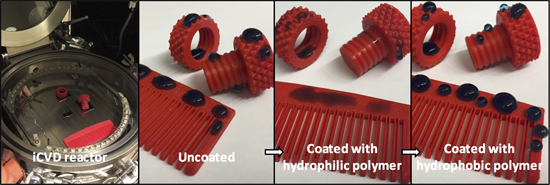
- beam selectively hardens layers of photocurable resin and then the object is covered with another layer of fresh resin [14][15]. Though the number of printable functional materials is burgeoning [1][16][17], tuning the materials properties within the constraints of printability is still a challenge



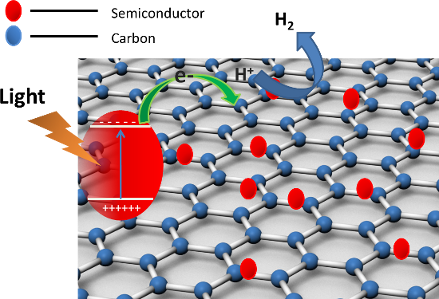
Two-dimensional carbon-based nanocomposites for photocatalytic energy generation and environmental remediation applications
Beilstein J. Nanotechnol. 2017, 8, 1571–1600, doi:10.3762/bjnano.8.159


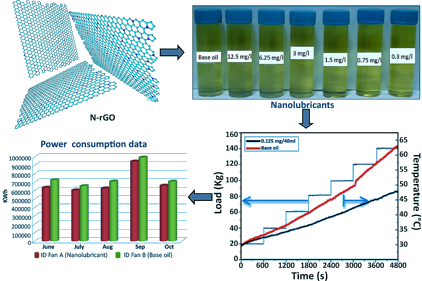
Development of a nitrogen-doped 2D material for tribological applications in the boundary-lubrication regime
Beilstein J. Nanotechnol. 2017, 8, 1476–1483, doi:10.3762/bjnano.8.147
- Shende Rashmi Chandrabhan Velayudhanpillai Jayan Somendra Singh Parihar Sundara Ramaprabhu Department of Physics, Alternative Energy and Nanotechnology Laboratory, Nano Functional Materials Technology Centre, Indian Institute of Technology Madras, Chennai, Tamil Nadu 600036, India Nano & Applied


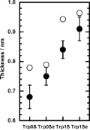
Triptycene-terminated thiolate and selenolate monolayers on Au(111)
Beilstein J. Nanotechnol. 2017, 8, 892–905, doi:10.3762/bjnano.8.91

- appreciate financial support by the Deutsche Forschungsgemeinschaft through the graduate school 611 ("Functional materials"). Financial support by Natural Science Foundation of China (NSFC 21673032) and State Key Laboratory of Physical Chemistry of Solid Surfaces, Xiamen University (201507) are gratefully




Carbon nanotube-wrapped Fe2O3 anode with improved performance for lithium-ion batteries
Beilstein J. Nanotechnol. 2017, 8, 649–656, doi:10.3762/bjnano.8.69
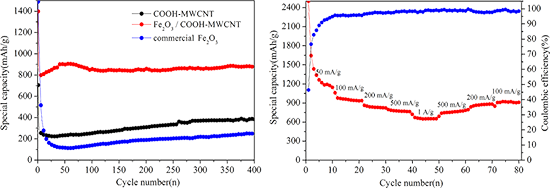
- 510006, China Laboratory of Nanophotonic Functional Materials and Devices, School of Information and Photoelectronic Science and Engineering, South China Normal University, Guangzhou 510006, China 10.3762/bjnano.8.69 Abstract Metall oxides have been proven to be potential candidates for the anode


Gas sensing properties of MWCNT layers electrochemically decorated with Au and Pd nanoparticles
Beilstein J. Nanotechnol. 2017, 8, 592–603, doi:10.3762/bjnano.8.64
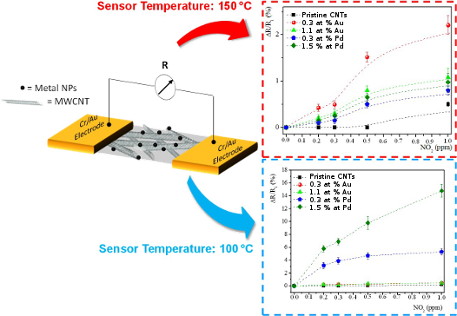
- Italian National Agency for New Technologies, Energy and Sustainable Economic Development (ENEA), Laboratory Functional Materials and Technologies for Sustainable Applications - Brindisi Research Center, Brindisi, Italy, CNR-IFN Bari, Bari, Italy 10.3762/bjnano.8.64 Abstract Multiwalled carbon nanotube


Selective photodissociation of tailored molecular tags as a tool for quantum optics
Beilstein J. Nanotechnol. 2017, 8, 325–333, doi:10.3762/bjnano.8.35
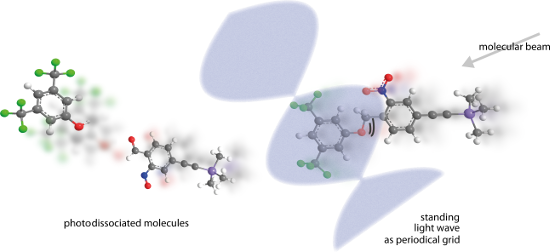
- Institute of Nanotechnology (INT), Karlsruhe Institute of Technology (KIT), Hermann-von-Helmholtz-Platz 1, D-76344 Eggenstein-Leopoldshafen, Germany Lehn Institute of Functional Materials (LIFM), Sun Yat-Sen University (SYSU), Xingang Rd. W., Guangzhou, China 10.3762/bjnano.8.35 Abstract Recent progress in


Colorimetric gas detection by the varying thickness of a thin film of ultrasmall PTSA-coated TiO2 nanoparticles on a Si substrate
Beilstein J. Nanotechnol. 2017, 8, 229–236, doi:10.3762/bjnano.8.25
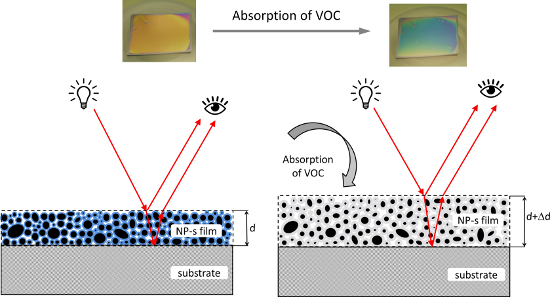
- Urmas Joost Andris Sutka Meeri Visnapuu Aile Tamm Meeri Lembinen Mikk Antsov Kathriin Utt Krisjanis Smits Ergo Nommiste Vambola Kisand Institute of Physics, University of Tartu, W. Ostwaldi 1, 50411 Tartu, Estonia Laboratory of Functional Materials Technologies, Riga Technical University, Paula


Sensitive detection of hydrocarbon gases using electrochemically Pd-modified ZnO chemiresistors
Beilstein J. Nanotechnol. 2017, 8, 82–90, doi:10.3762/bjnano.8.9
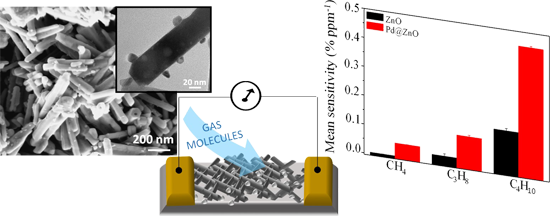
- Agency for New Technologies, Energy and Sustainable Economic Development (ENEA), Laboratory Functional Materials and Technologies for Sustainable Applications - Brindisi Research Center, Brindisi, Italy CNR-IFN Bari, Bari, Italy 10.3762/bjnano.8.9 Abstract Pristine and electrochemically Pd-modified ZnO


Surface-enhanced Raman scattering of self-assembled thiol monolayers and supported lipid membranes on thin anodic porous alumina
Beilstein J. Nanotechnol. 2017, 8, 74–81, doi:10.3762/bjnano.8.8
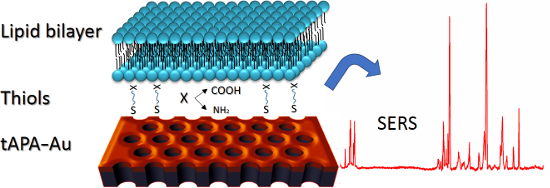
- the physisorption of coating layers of functional materials [20][21]. The main component of the biological membrane that separates and protects the interior of all living cells from the outside environment is a phospholipid bilayer. For this reason, as well as for the complexity of real samples of



Graphene–polymer coating for the realization of strain sensors
Beilstein J. Nanotechnol. 2017, 8, 21–27, doi:10.3762/bjnano.8.3
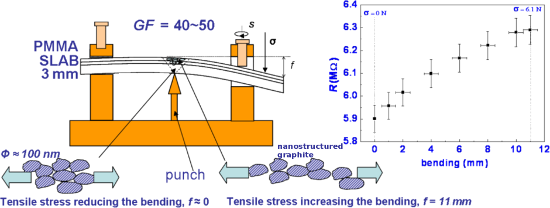
- other considered functional materials, indicating a larger sensitivity of the graphene-based composite in terms of temperature response to external stimulus. In particular, the graphene-coated PMMA substrate exhibits higher temperature changes compared to that of PMMA substrate alone, and a lower


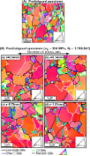
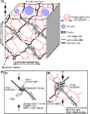
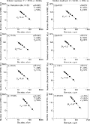
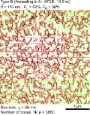
A new approach to grain boundary engineering for nanocrystalline materials
Beilstein J. Nanotechnol. 2016, 7, 1829–1849, doi:10.3762/bjnano.7.176
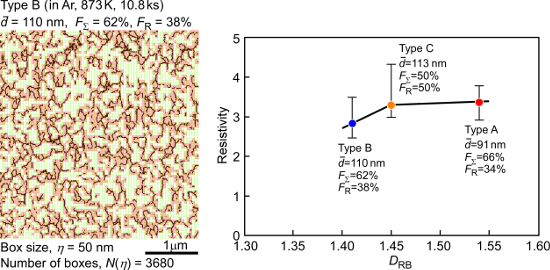
- performance nanocrystalline or submicrometer-grained materials with desirable mechanical properties such as enhanced fracture resistance. Finally, the potential power of GBE is demonstrated for high performance functional materials like gold thin films through precise control of electrical resistance based on
- unique bulk properties of nanocrystalline materials. It is suggested that the dominant effects of grain boundaries on bulk properties of nanocrystalline structural or functional materials should be examined in relation to the applied processing methods, because the details of generation mechanisms of
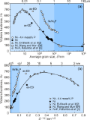
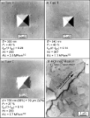
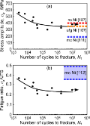
- properties. Finally, our most recent work on GBE for the control of electrical resistivity in gold thin films is introduced as an example of a possible challenge toward GBE for high performance functional materials. Effect of grain boundary microstructure on hardness in electrodeposited nanocrystalline








Monolayer graphene/SiC Schottky barrier diodes with improved barrier height uniformity as a sensing platform for the detection of heavy metals
Beilstein J. Nanotechnol. 2016, 7, 1800–1814, doi:10.3762/bjnano.7.173
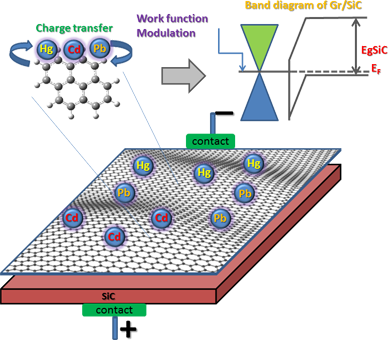
- FOX’. JE and ALS acknowledge support from the Swedish Government Strategic Research Area in Materials Science on Functional Materials at Linköping University (Faculty Grant SFO-Mat-LiU # 2009-00971). Part of this manuscript has been presented at the Spring 2016 Meeting of the European Materials




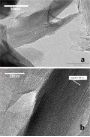
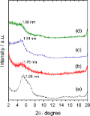
Effective intercalation of zein into Na-montmorillonite: role of the protein components and use of the developed biointerfaces
Beilstein J. Nanotechnol. 2016, 7, 1772–1782, doi:10.3762/bjnano.7.170
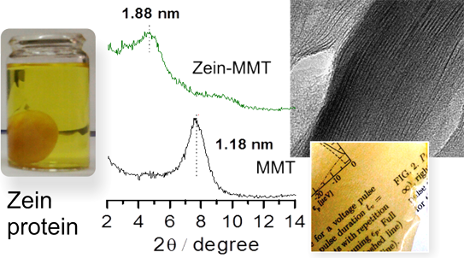
- ]. Particularly, biological species can be employed in the preparation of these materials, giving rise to biohybrids, which represent a growing field of research addressed to produce advanced functional materials [2]. Many studies have demonstrated that even large molecules, such as polypeptides and proteins




Photothermal effect of gold nanostar patterns inkjet-printed on coated paper substrates with different permeability
Beilstein J. Nanotechnol. 2016, 7, 1480–1485, doi:10.3762/bjnano.7.140
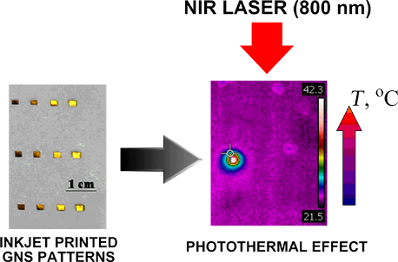
- Chemistry, Center of Functional Materials, Åbo Academi University, Porthaninkatu 3-5, 20500, Turku, Finland Department of Chemistry, University of Pavia, viale Taramelli 12, 27100, Pavia, Italy 10.3762/bjnano.7.140 Abstract Inkjet printing of spherical gold nanoparticles is widely applied in the
- effect; Introduction Due to advantages over other patterning techniques, inkjet printing technology has met important challenges to pattern a broad range of functional materials with promising biomedical application [1][2][3][4][5][6][7]. Inks based on metal nanoparticles are widely used in inkjet


Fabrication and properties of luminescence polymer composites with erbium/ytterbium oxides and gold nanoparticles
Beilstein J. Nanotechnol. 2016, 7, 630–636, doi:10.3762/bjnano.7.55
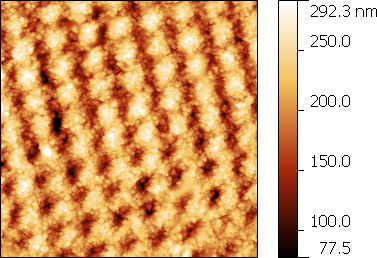
- interaction length of about 5 mm, which is sufficient for applications in integrated optics. It is an important task to create such functional materials with high concentrations of Er for waveguides of integrated optical systems that can realize amplification in a few millimeters long waveguide instead of


In situ observation of deformation processes in nanocrystalline face-centered cubic metals
Beilstein J. Nanotechnol. 2016, 7, 572–580, doi:10.3762/bjnano.7.50
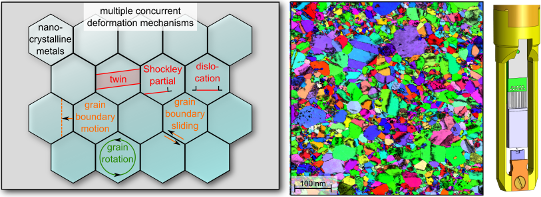
- Nanostructured Functional Materials at KIT is gratefully acknowledged.


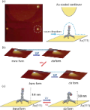
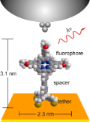
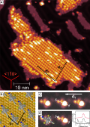
Rigid multipodal platforms for metal surfaces
Beilstein J. Nanotechnol. 2016, 7, 374–405, doi:10.3762/bjnano.7.34

- Michal Valasek Marcin Lindner Marcel Mayor Institute of Nanotechnology, Karlsruhe Institute of Technology (KIT), Hermann-von-Helmholtz-Platz 1, D-76344 Eggenstein-Leopoldshafen, Germany Lehn Institute of Functional Materials (LIFM), Sun Yat-Sen University (SYSU), Xingang Rd. W., Guangzhou, China










Sonochemical co-deposition of antibacterial nanoparticles and dyes on textiles
Beilstein J. Nanotechnol. 2016, 7, 1–8, doi:10.3762/bjnano.7.1
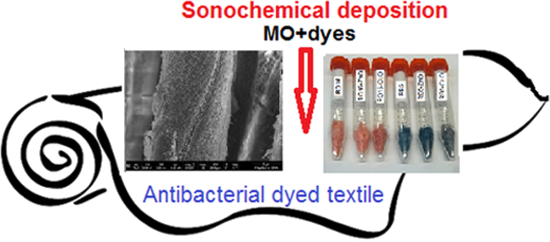
- process led to the partial reduction of Ag+ to metallic Ag, while AgCl was also formed due to the presence of Cl−. In the current work we describe the deposition of two different functional materials on textiles, e.g., dyes and biocidal NPs that were synthesized and embedded onto the surface from a
- after 65 washing cycles at 75 °C [9]. Herein, for the first time we report on the co-deposition of two functional materials. The morphologies of the dye alone and co-deposited dye and metal oxides were studied by HRSEM and are shown in Figure 4. The morphology of RB5 sonochemically deposited on cotton
- impart two functions in a one-step process that led to stabilization of the dye on the surface while exposed to the solution. Conclusion This is the first time that the sonochemical coating technique was applied for co-deposition of two functional materials. The simultaneous coating of the antibacterial




Self-organization of gold nanoparticles on silanated surfaces
Beilstein J. Nanotechnol. 2015, 6, 2345–2353, doi:10.3762/bjnano.6.242
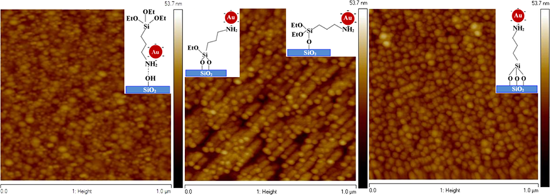
- of Oman Functional Materials Division, School of Information and Communication Technology, KTH Royal Institute of Technology, Isafjordsgatan 22, SE-164 40 Kista Stockholm, Sweden 10.3762/bjnano.6.242 Abstract The self-organization of monolayer gold nanoparticles (AuNPs) on 3


Controlled switching of single-molecule junctions by mechanical motion of a phenyl ring
Beilstein J. Nanotechnol. 2015, 6, 2088–2095, doi:10.3762/bjnano.6.213
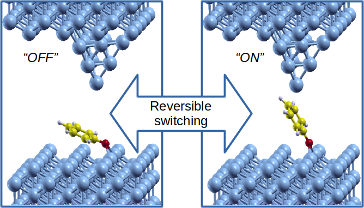
- IKERBASQUE, Basque Foundation for Science, 48013 Bilbao, Spain School of Computer Science, Physics and Mathematics, Linnaeus University, 391 82 Kalmar, Sweden Division of Nano and New Functional Materials Science, Graduate School of Science and Engineering, University of Toyama, 930-8555 Toyama, Japan


Electrospray deposition of organic molecules on bulk insulator surfaces
Beilstein J. Nanotechnol. 2015, 6, 1927–1934, doi:10.3762/bjnano.6.195
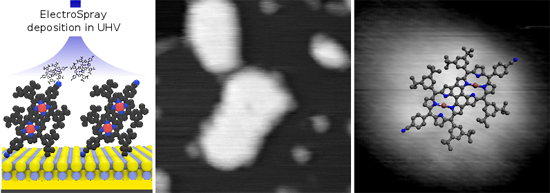
- molecules; non-contact AFM; ultra-high vacuum (UHV); Introduction Large complex molecules with tunable electronic properties are building block candidates for functional materials with special electrochemical and photophysical properties, which are of fundamental interest for many applications such as


Towards multifunctional inorganic materials: biopolymeric templates
Beilstein J. Nanotechnol. 2015, 6, 1698–1699, doi:10.3762/bjnano.6.172

- generation of inorganic functional materials not found in living nature. This highly topical research field is currently drawing worldwide attention and is a main subject of the Priority Program 1569, “Generation of multifunctional inorganic materials by molecular bionics”, of the Deutsche
- Claudia Steinem Joachim Bill Institute of Organic and Biomolecular Chemistry, Georg-August University Göttingen, Tammannstr. 2, 37077 Göttingen, Germany University of Stuttgart, Institute of Materials Science, Heisenbergstr. 3, 70569 Stuttgart, Germany 10.3762/bjnano.6.172 Inorganic functional
- materials are widely applied due to their electrical, optical, magnetic and mechanical properties. Accordingly, these materials exhibit an enormous impact on key technologies relevant for future fields such as energy generation and storage, information and medical technology as well as automotive



