Search results
Search for "graphite" in Full Text gives 381 result(s) in Beilstein Journal of Nanotechnology. Showing first 200.
Progress and innovation of nanostructured sulfur cathodes and metal-free anodes for room-temperature Na–S batteries
Beilstein J. Nanotechnol. 2021, 12, 995–1020, doi:10.3762/bjnano.12.75
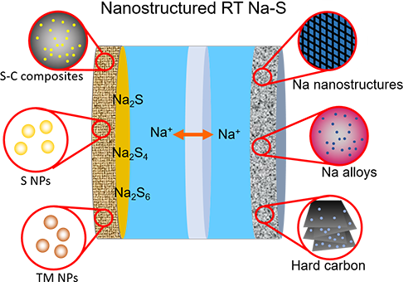
- carbon black and other amorphous carbons. While Na+ does not insert in graphite in contrast to Li+, hard carbon can store considerable amounts of sodium in the range of 300 mAh·g−1 (Figure 10D) [82]. For their use in sodium batteries hard carbon materials can be pre-sodiated prior to the cell assembly




Molecular assemblies on surfaces: towards physical and electronic decoupling of organic molecules
Beilstein J. Nanotechnol. 2021, 12, 950–956, doi:10.3762/bjnano.12.71

- ligands attached to the metal center of the porphyrin were observed regardless of the type of surface (highly oriented pyrolytic graphite (HOPG) and Au surfaces were used), solvent (1-phenyloctane and n-tetradecane) and tip material (Pt/Ir, Au, and W), which indicates that the ligands have to be decoupled
- this Thematic Issue discuss structural templating effects at the solid–liquid interface by systematically looking at the influence of organic decoupling layers. Reynaerts et al. [76] investigated the suitability of long-chain alkanes as physical decoupling layers from a graphite surface. The occurrence
Self-assembly of Eucalyptus gunnii wax tubules and pure ß-diketone on HOPG and glass
Beilstein J. Nanotechnol. 2021, 12, 939–949, doi:10.3762/bjnano.12.70
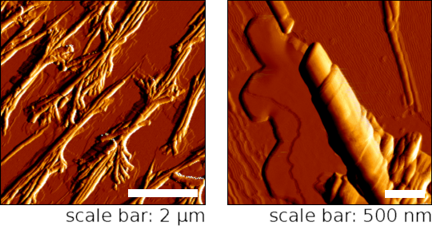
- , amorphous substrates. The glasses were cleaned with chloroform before their use in recrystallization studies. Highly oriented pyrolytic graphite (HOPG) was used as non-polar, crystalline substrates (SPI supplies, West Chester, USA). Freshly cleaned HOPG surfaces were prepared by stripping off a layer of




Reducing molecular simulation time for AFM images based on super-resolution methods
Beilstein J. Nanotechnol. 2021, 12, 775–785, doi:10.3762/bjnano.12.61
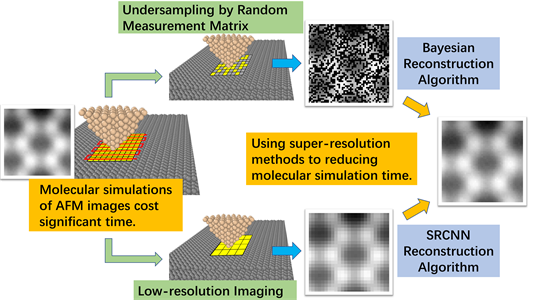
- angle is 70°, and the hemispherical tip radius is 16 Å. We calculate the surface energy maps with a four-layer graphite and gold samples. The dimensions of the graphite and gold substrates are 9 × 9 × 1.1 and 9 × 9 × 0.4 nm3, respectively. All simulations are performed under equal height conditions. The
- schematic of the AM mode simulation model with conical tip apex is illustrated in Figure 1. The bottom layer atoms of the substrate are fixed to keep the sample stable. For the graphite substrate, the carbon–carbon interactions within each graphene layer are described by the AIREBO potential [55]. The
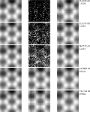
- loss function: where n is the number of training samples. The parameters are updated with the gradient descent as where η denotes the learning rate. Results and Discussion Molecular dynamics simulation results Molecular dynamics simulation is used to obtain the energy maps of graphite and gold samples




Recent progress in magnetic applications for micro- and nanorobots
Beilstein J. Nanotechnol. 2021, 12, 744–755, doi:10.3762/bjnano.12.58
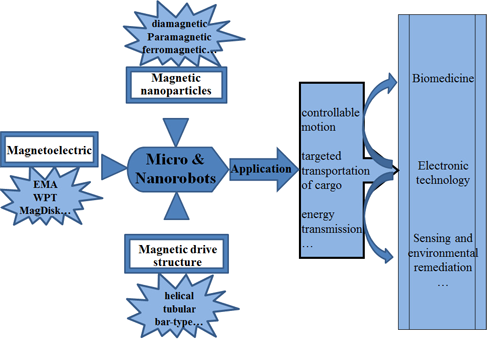
- control mechanism. In the method of Uvet et al., the levitation height of the microrobot was controlled by an external ring-shaped permanent magnet, and pyrolytic graphite (PG) was used to provide the balance force. The microrobot was composed of SU8 and permanent magnets. The direction of the 3D motion


Fate and transformation of silver nanoparticles in different biological conditions
Beilstein J. Nanotechnol. 2021, 12, 665–679, doi:10.3762/bjnano.12.53
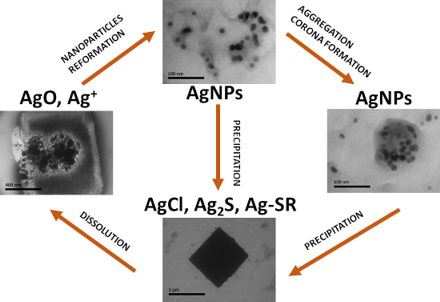
- biological fluids, obtained from animal experiments. A multimethod approach was used to examine their behaviour and transformation under experimental conditions relevant for in vivo settings by performing dynamic light scattering (DLS), electrophoretic light scattering (ELS), graphite furnace atomic




Boosting of photocatalytic hydrogen evolution via chlorine doping of polymeric carbon nitride
Beilstein J. Nanotechnol. 2021, 12, 473–484, doi:10.3762/bjnano.12.38
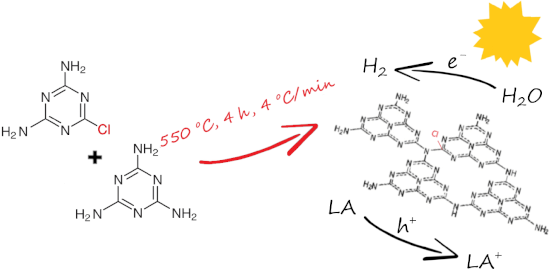
- hydrogen [1][2][3][4], environmental remediation [5][6], decomposition of organic pollutants [7], CO2 reduction into hydrocarbon fuels [8][9][10], disinfection [11][12], and selective organic transformations [13][14]. One of the most studied catalysts is polymeric carbon nitride (PCN). This graphite-like


Solution combustion synthesis of a nanometer-scale Co3O4 anode material for Li-ion batteries
Beilstein J. Nanotechnol. 2021, 12, 424–431, doi:10.3762/bjnano.12.34
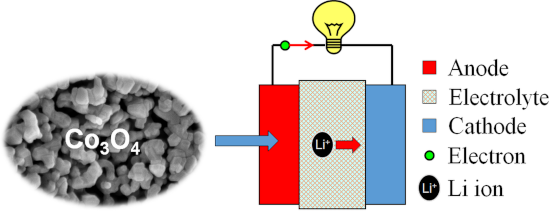
- oscillates around 690 mAh·g−1 up to the 70th cycle. Then, it gradually fades and reaches about 533 mAh·g−1 after 100 cycles. Nevertheless, the measured capacity is still 1.43 times higher than the theoretical capacity of commercially used graphite electrodes (372 mAh·g−1 [10][21]). This behavior is


Spontaneous shape transition of MnxGe1−x islands to long nanowires
Beilstein J. Nanotechnol. 2021, 12, 366–374, doi:10.3762/bjnano.12.30
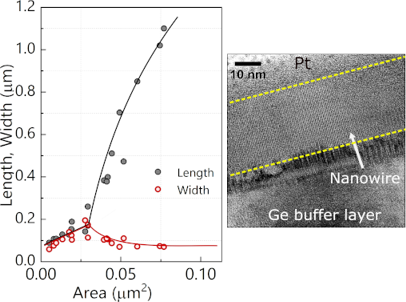
- and 25 mA with a graphite monochromator. Step-scan diffractograms were collected in the 2θ range of 3–70° with 0.02° step and 3 s/step counting time. For HRTEM analysis, focused ion beam (FIB) lamellae were prepared using a dual-beam FIB. The lamellae were oriented along the elongation direction. The


Nickel nanoparticle-decorated reduced graphene oxide/WO3 nanocomposite – a promising candidate for gas sensing
Beilstein J. Nanotechnol. 2021, 12, 343–353, doi:10.3762/bjnano.12.28
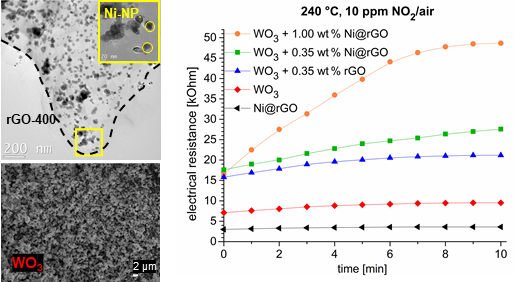
- , because it has only a few functional groups on its surface, which limits the chemisorption of gas molecules [28]. Graphene oxide (graphite oxide, GO), in contrast, has numerous oxygen functionalities and few remaining π bonds and is therefore electrically insulating [29]. GO can be reduced (reduced
- decomposition approach with rGO synthesized from reduced graphite oxide at 400 °C. It is extremely important that the used rGO is thoroughly dried because of the oxyphilic nature of nickel nanoparticles. Therefore, before the nanoparticle synthesis, the rGO was dried using a turbo molecular pump at 5 × 10⁻⁷
- oxidation and thermal reduction process using natural graphite (type KFL 99.5 from AMG Mining AG, former Kropfmühl AG, Passau, Germany) as starting material. Graphite was oxidized according to [67]. Reduction of the graphite oxide was performed at 400 °C. Before using rGO in the nanoparticle synthesis, it


Scanning transmission helium ion microscopy on carbon nanomembranes
Beilstein J. Nanotechnol. 2021, 12, 222–231, doi:10.3762/bjnano.12.18
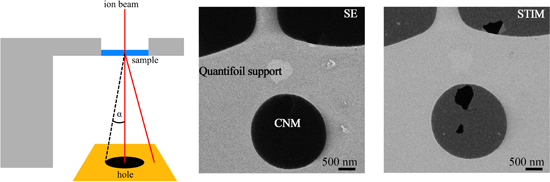
- detector in the dark field [20]. Kavanagh et al. used a silicon diode array as a pixelated sensor for transmission imaging to observe ion beam scattering with a static beam and as an end-point detection for pore milling into graphite sheets [21]. This work presents the design and capabilities of a dark
- microscopy (EFTEM) data, both being established techniques for the thickness measurement of thin films. All three presented methods, STIM, XPS, and EFTEM, require an assumption about density and composition of the material in order to calculate absolute thicknesses, so graphite was chosen as a well
- Turchanin et al. [27]. In order to provide comparability of the results to STIM and EFTEM, the attenuation length was assumed to be 27 Å, the same as that of graphite [28]. The XPS results yield values of 2.1 nm for the thin CNM and 12.4 nm for the thick CNM. Both values are in good agreement with 2.2 nm


A review on the biological effects of nanomaterials on silkworm (Bombyx mori)
Beilstein J. Nanotechnol. 2021, 12, 190–202, doi:10.3762/bjnano.12.15
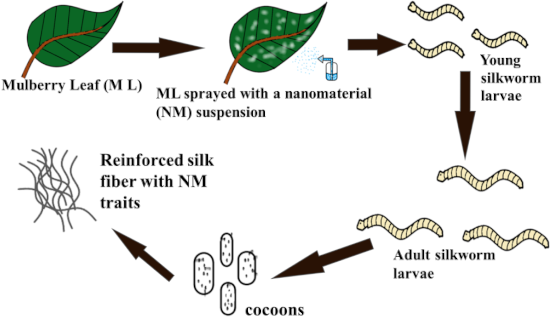
- ), sensitivity, and moderate body size make Caenorhabditis elegans (nematode) [45] an ideal model organism to study environmental nanotoxicity at the nanoscale level. C. elegans was used as a model organism to evaluate the impact of an exposure to a 50–100 mg/L dose of graphite, graphite oxide nanoplatelets, and


The role of gold atom concentration in the formation of Cu–Au nanoparticles from the gas phase
Beilstein J. Nanotechnol. 2021, 12, 72–81, doi:10.3762/bjnano.12.6
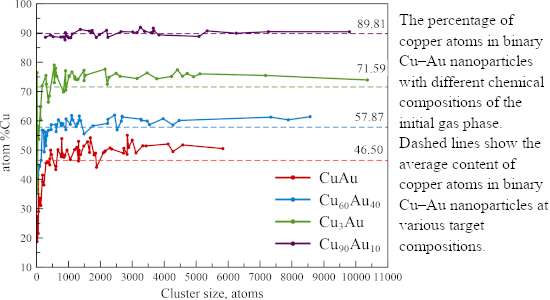
- the case of physical methods for producing Cu–Au nanoparticles, it seems possible to create particles with the desired chemical composition. In [3], the Cu–Au nanoparticles obtained by laser deposition on a graphite substrate were analyzed via transmission electron microscopy–energy-dispersive X-ray


Free and partially encapsulated manganese ferrite nanoparticles in multiwall carbon nanotubes
Beilstein J. Nanotechnol. 2020, 11, 1891–1904, doi:10.3762/bjnano.11.170
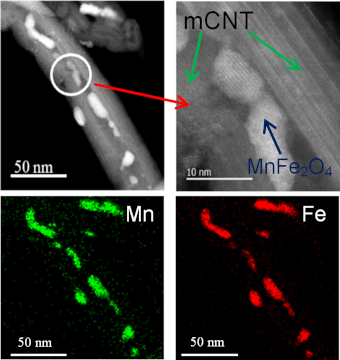
- graphite and it is explained by the destabilization of π electrons due to the curvature of the graphene sheets [35]. As observed from Figure 1e and Figure 6, there are large spectral differences between free MnFe2O4, MnFe2O4/MWCNTs, and pristine MWCNTs. Considering that the probing depth of UPS is only at




Self-standing heterostructured NiCx-NiFe-NC/biochar as a highly efficient cathode for lithium–oxygen batteries
Beilstein J. Nanotechnol. 2020, 11, 1809–1821, doi:10.3762/bjnano.11.163
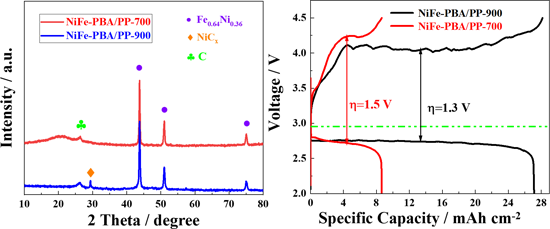
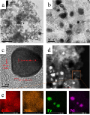
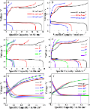
- calcined at 700 °C, NiFe-PBA/PP-900 had a grape-like morphology (Figure 2c). The crystal structure of NiFe-PBA/PP-T samples was obtained from XRD (Figure 2d). A characteristic peak at approx. 2θ = 26.4° was observed in the XRD patterns of both samples, and was attributed to the (002) plane of graphite
- particle shown in Figure 3c was tightly surrounded by lattice fringes, and the measured d-spacing of these lattices was approx. 0.30 and 0.34 nm, which corresponded to the (111) plane of NiCx and to the (002) plane of graphite, respectively. The element mappings (Figure 3d and Figure 3e) show that C and N






Nanomechanics of few-layer materials: do individual layers slide upon folding?
Beilstein J. Nanotechnol. 2020, 11, 1801–1808, doi:10.3762/bjnano.11.162
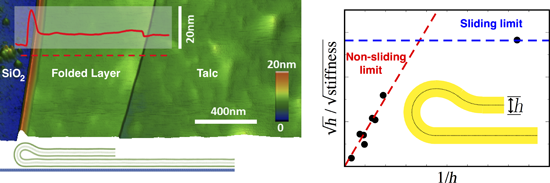
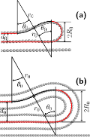
- methods; atomic force microscopy (AFM); molecular dynamics (MD); Raman spectroscopy; nanostructured materials; Introduction Layered materials such as graphite, talc, and transition metal dichalcogenides (TMDs), held together by strong covalent bonds within layers and relatively weak van der Waals
- several substrates is far from complete. Besides, uncertainties in the measured values of α can be large. For instance, experimental values of α for graphite ranging from 0.12 up to 0.72 N/m have been reported [24][25][26][27][28][29][30][31]. Regarding the bending stiffness κ, experimental values have
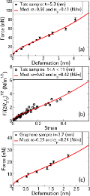
- ][26][27][28][29][30][31]). It is worth mentioning that our result (α = 0.25 N/m) compares well with other direct experimental determinations of α (0.27 N/m [28] and 0.37 N/m [30]), in which layers of graphene in highly oriented pyrolytic graphite were mechanically manipulated using a probe. Besides
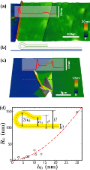

![[Graphic 5]](/bjnano/content/inline/2190-4286-11-162-i8.svg?max-width=637&scale=1.18182) =
= ![[Graphic 6]](/bjnano/content/inline/2190-4286-11-162-i9.svg?max-width=637&scale=1.18182) as a function of 1/h for the nine measured talc samples. h is a directly measured ...
as a function of 1/h for the nine measured talc samples. h is a directly measured ...
Adsorption and self-assembly of porphyrins on ultrathin CoO films on Ir(100)
Beilstein J. Nanotechnol. 2020, 11, 1516–1524, doi:10.3762/bjnano.11.134
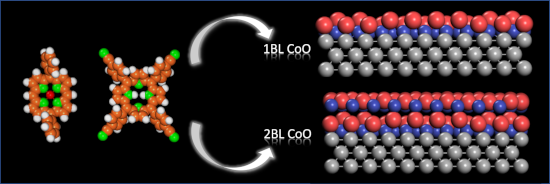
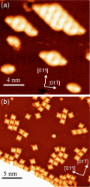
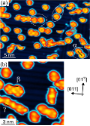
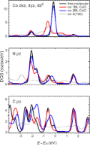
- % purity, Figure 1a) and 2H-TCNPP (2, Porphyrin Systems, 97% purity, Figure 1b) were evaporated from a graphite crucible effusion cell. Co-DPP was evaporated at a measured cell temperature of 540 K and 2H-TCNPP at 640 K, which resulted in a molecular deposition rate of 0.04 and 0.06 nm−2·min−1. Both




Wafer-level integration of self-aligned high aspect ratio silicon 3D structures using the MACE method with Au, Pd, Pt, Cu, and Ir
Beilstein J. Nanotechnol. 2020, 11, 1439–1449, doi:10.3762/bjnano.11.128
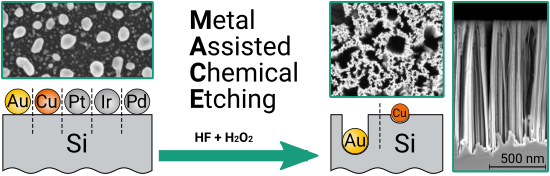
- transport and improve the efficiency of the thermoelectric generator [7]. Silicon nanowire arrays are also an emerging anode material for integrated lithium-ion batteries. They have a ten times higher theoretical capacity than graphite and can be used for cells with high energy density. However, these


Impact of fluorination on interface energetics and growth of pentacene on Ag(111)
Beilstein J. Nanotechnol. 2020, 11, 1361–1370, doi:10.3762/bjnano.11.120
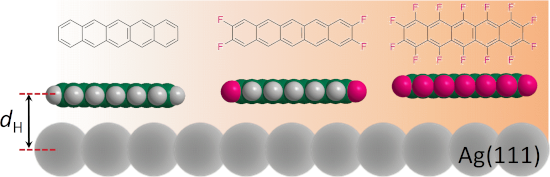
- or PFP with a flat-lying (long and short molecular axes parallel to the substrate) orientation, which have IEs (in monolayers on graphite) of 5.65 eV and 6.20 eV, respectively [25][26]. The decrease in the IE is due to solid state polarization, which is a general phenomenon for molecular thin films
- contrast to the monolayers of PEN and PFP on graphite, with a likewise lying-down orientation and large differences in the HOMO positions [11][25][26]. In general, for a strong interfacial coupling and charge transfer, the resonance structure of the adsorbate in the monolayer can be notably different from


Growth of a self-assembled monolayer decoupled from the substrate: nucleation on-command using buffer layers
Beilstein J. Nanotechnol. 2020, 11, 1291–1302, doi:10.3762/bjnano.11.113
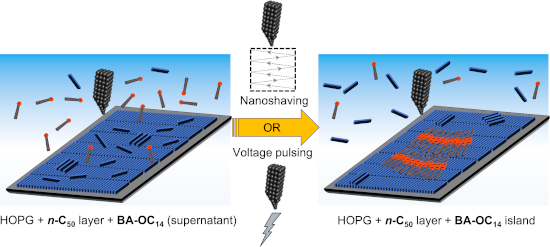
- typical building block, namely 4-tetradecyloxybenzoic acid at the 1-phenyloctane–graphite interface in the presence and in the absence of a buffer layer formed by a long chain alkane, namely n-pentacontane. Using scanning tunneling microscopy (STM), three different structural polymorphs were identified
- for 4-tetradecyloxybenzoic acid at the 1-phenyloctane–graphite interface. Surprisingly, the same three structures were formed on top of the buffer layer, albeit at different concentrations. Systematic variation of experimental parameters did not lead to any new network in the presence of the buffer
- formed at the solution–solid interface, is a more of routine occurrence than an exception. Such structurally diverse monolayers are typically formed on solid substrates such as highly oriented pyrolytic graphite (HOPG), graphene, and metals such as Cu, Ag and Au and have been characterized using scanning


Structure and electrochemical performance of electrospun-ordered porous carbon/graphene composite nanofibers
Beilstein J. Nanotechnol. 2020, 11, 1280–1290, doi:10.3762/bjnano.11.112
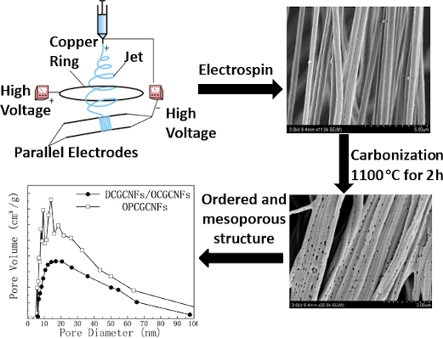
- standard three-electrode cell at room temperature. A graphite rod was used as the counter electrode, Hg/HgO was used as the reference electrode, and a 6.0 M KOH aqueous solution was used as the electrolyte solution. The electrochemical performance of the CCGNFs was investigated using an electrochemical
- the (200) PAN crystal plane [30]. The peaks at approximately 26.5°, 44.5°, and 54.5° in the XRD spectra were typical peaks of either graphite or graphene [36][37]. These peaks were related to the (002) diffraction plane of hexagonal graphite structures in carbon materials. The XRD patterns of PAN
- ° disappeared after carbonization due to the decomposition of PAN during the process. Moreover, the diffraction peak intensity of the (002) crystal plane of the carbonized graphite structure was significantly enhanced, indicating that the carbonization process enhanced the crystallinity of the graphite


Gas sorption porosimetry for the evaluation of hard carbons as anodes for Li- and Na-ion batteries
Beilstein J. Nanotechnol. 2020, 11, 1217–1229, doi:10.3762/bjnano.11.106
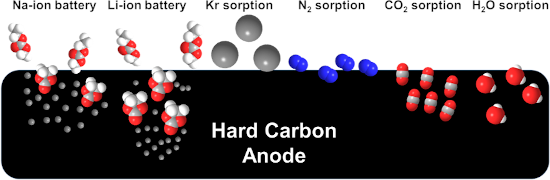
- carried out to understand the storage mechanisms of both lithium and sodium ions inside many different carbons. Due to the progress in LIB research and the implementation of stoichiometric and highly reversible graphite anodes (forming LiC6), disordered carbons were considered less. Although the volume
- expansion of HCs during lithium intercalation is lower than that of graphite, implying longer lifetimes, the relatively lower volumetric energy density due to their lower density and lower energy efficiency were detrimental for their commercial usage in the uprising market of portable devices. In 1997, the
- market share of HC and graphite was still 52% and 43%, respectively, and today graphite is almost exclusively used as negative electrode material in commercial LIBs [11]. Graphite with an interlayer distance of 0.335 nm cannot be intercalated by sodium without solvent co-intercalation [9][12][13


Hybridization vs decoupling: influence of an h-BN interlayer on the physical properties of a lander-type molecule on Ni(111)
Beilstein J. Nanotechnol. 2020, 11, 1168–1177, doi:10.3762/bjnano.11.101
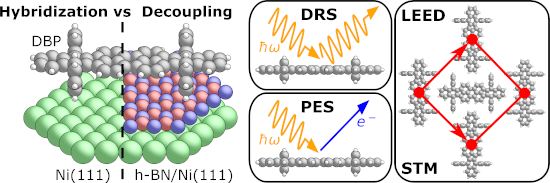
- rubrene on highly oriented pyrolytic graphite (HOPG) [29]. Our interpretation of the optical spectra is further supported by LT-STM measurements (see Supporting Information File 1, Figure S2) which show a completely filled monolayer as well as molecular clusters on top of the first layer. Lateral


Scanning tunneling microscopy and spectroscopy of rubrene on clean and graphene-covered metal surfaces
Beilstein J. Nanotechnol. 2020, 11, 1157–1167, doi:10.3762/bjnano.11.100
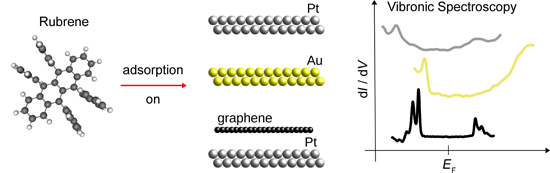
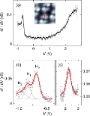
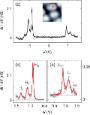
- this peak to the LUMO or LUMO+1. Much wider unoccupied molecular resonances have been observed, too, in pump–probe photoemission experiments on thin C42H28 films adsorbed on highly oriented pyrolithic graphite and traced to the elevated molecule–substrate hybridization with a concomitant reduced



A few-layer graphene/chlorin e6 hybrid nanomaterial and its application in photodynamic therapy against Candida albicans
Beilstein J. Nanotechnol. 2020, 11, 1054–1061, doi:10.3762/bjnano.11.90
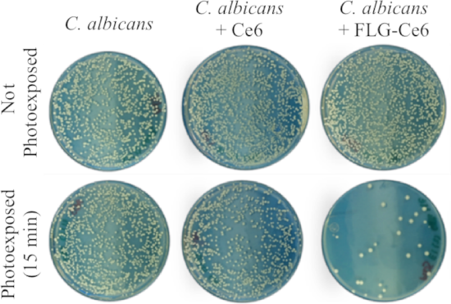
- Discussion The liquid phase exfoliation of graphite was first carried out in toxic, non-biocompatible solvents due to the match in the surface energy of graphene and the solvents [33]. However, the interest in using graphene for biological applications has led to the development of new synthetic techniques
- synthesis of FLG by the exfoliation of graphite in water and phosphate buffer saline (PBS) using Ce6 as the stabilizing molecule. The π–π stacking interactions between FLG and Ce6 allows the stabilization of FLG in biocompatible media. Following this methodology, a FLG-Ce6 hybrid nanomaterial was prepared
- by the exfoliation of graphite in sterile deionized water using Ce6 as the stabilizing molecule. To do this, graphite was sterilized by exposure to ultraviolet light for 45 min, and a methanol solution of Ce6 was filtered using a 0.2 μm pore size filter to ensure the sterility of the sample. The