Search results
Search for "immobilization" in Full Text gives 127 result(s) in Beilstein Journal of Nanotechnology.
Streptavidin-coated gold nanoparticles: critical role of oligonucleotides on stability and fractal aggregation
Beilstein J. Nanotechnol. 2017, 8, 1–11, doi:10.3762/bjnano.8.1
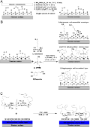
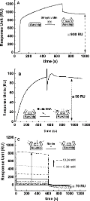
- the SA-BiotinDNA complex by using SPR (Figure 6). Increasingly concentrated solutions of free biotin were adsorbed over SA-BiotinDNA immobilized on the SPR chip gold surface. The immobilization of BiotinDNA on surface-immobilized SA produced an SPR signal of about 90 RU (Figure 6B) while a negative
- competitive displacement of BiotinDNA by free biotin. (A) Streptavidin covalent immobilization on gold chip. (B) Streptavidin-BiotinDNA complex formation. (C) Competitive displacement of BiotinDNA by the interaction of increasing amount of free-biotin with surface-immobilized SA-BiotinDNA. Normalized




A novel electrochemical nanobiosensor for the ultrasensitive and specific detection of femtomolar-level gastric cancer biomarker miRNA-106a
Beilstein J. Nanotechnol. 2016, 7, 2023–2036, doi:10.3762/bjnano.7.193
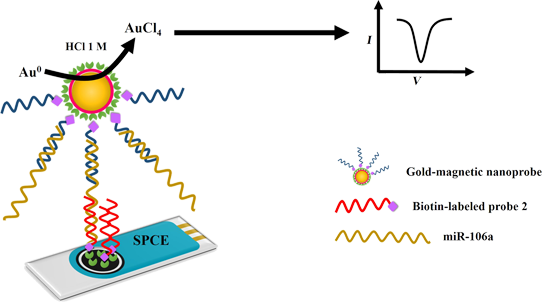
- of 4 × 10⁻¹⁴ M) [41]. Therefore, we used this strategy in preparing gold–magnetic nanoprobes. Immobilization of P1 on the gold–magnetic NPs was initiated by functionalizing these particles using MUA prior the streptavidin coating in presence of EDC/NHS. Each molecule of MUA provides one biding site
- streptavidin and biotin is remarkably fast and stable and leads to non-covalent immobilization of P1 onto the NPs. Finally, an immobilization efficacy of about 90% was achieved based on the measured OD260 values before and after immobilization. Improved immobilization efficacy compared to our previous work
- revealed that better streptavidin coating at the primer step can significantly result in higher probe immobilization efficacy and surely elevate the sensitivity and stability of following biosensing procedure. Characterization of modified electrodes and assessment of the fabrication procedure The


Organoclay hybrid materials as precursors of porous ZnO/silica-clay heterostructures for photocatalytic applications
Beilstein J. Nanotechnol. 2016, 7, 1971–1982, doi:10.3762/bjnano.7.188
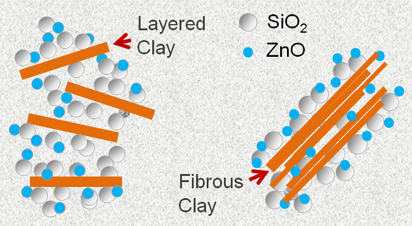
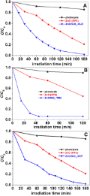
- microparticulated layered silicates of the smectite family, giving rise to materials exhibiting interesting properties [8][9]. The immobilization of those NP on clay surfaces represents an advantage for the easier recovering of the photocatalyst from the reaction medium compared to ZnO NP alone. In recent years





Functionalized platinum nanoparticles with surface charge trigged by pH: synthesis, characterization and stability studies
Beilstein J. Nanotechnol. 2016, 7, 1822–1828, doi:10.3762/bjnano.7.175
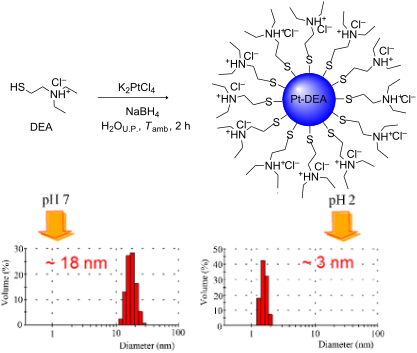
- colloidal stability; hydrophobic or hydrophilic thiol-based ligands have been deeply exploited [14][15]. Among others, 2-diethylaminoethanethiol hydrochloride (DEA) has been used as a stabilizing thiol for gold nanoparticles used for the immobilization of lipase [16]. Among others, hydrothermal and


Scanning probe microscopy studies on the adsorption of selected molecular dyes on titania
Beilstein J. Nanotechnol. 2016, 7, 1642–1653, doi:10.3762/bjnano.7.156
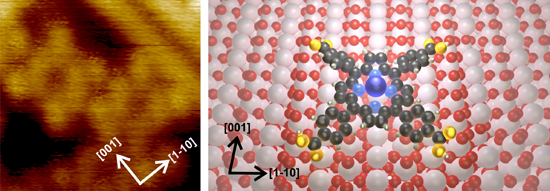
- centred on top of the Ti rows and those centred on the oxygen rows. Furthermore, under specific conditions, CoPc molecules are immobilized on the surface without aggregation, i.e., when deposited with a low rate on a substrate kept at an elevated temperature [44]. The authors ascribe the immobilization of
- immobilization of molecules on the surface. Based on results from high-resolution photoelectron spectroscopy measurements, the authors concluded that the interaction between the molecules in the first monolayer and the substrate comes from the π-electrons of isoindole group and the bridging oxygen atoms on the


Development of adsorptive membranes by confinement of activated biochar into electrospun nanofibers
Beilstein J. Nanotechnol. 2016, 7, 1556–1563, doi:10.3762/bjnano.7.149
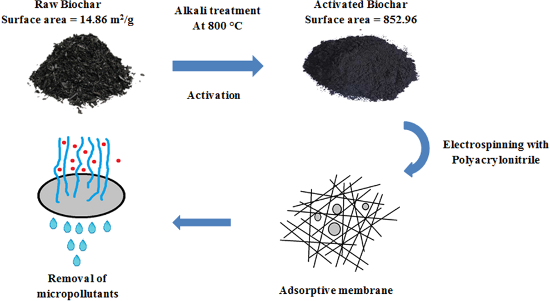
- precursors with an affinity to target compounds, modification of the membrane surface with functional groups or embedding adsorbents into membrane matrices [2]. There are many reports on functionalization or embedding adsorbents into conventional ultrafiltration membranes for immobilization of different
- metallic ions, malachite green and methylene blue from water. Embedding carbonaceous materials, such as carbon nanotubes and graphene in NFMs has been investigated for different applications, such as glucose sensors, hydrogen storage and enzyme immobilization [18][19]. However, to the best of our knowledge
- was around 6.3 mg/g of membrane. Therefore, further research is still needed to increase the adsorption capacity through increased adsorbent loading or adsorbent specific surface area. Also, working on other applications of these adsorptive membranes, such as immobilization of enzyme would be of




Three-gradient regular solution model for simple liquids wetting complex surface topologies
Beilstein J. Nanotechnol. 2016, 7, 1377–1396, doi:10.3762/bjnano.7.129



![[Graphic 10]](/bjnano/content/inline/2190-4286-7-129-i31.png?max-width=637&scale=1.18182) and standard deviation as a function of the cavity diameter d (in...
and standard deviation as a function of the cavity diameter d (in...

![[Graphic 20]](/bjnano/content/inline/2190-4286-7-129-i41.png?max-width=637&scale=1.18182) and the corresponding fluctuations (measured along the x-direction) indica...
and the corresponding fluctuations (measured along the x-direction) indica...

![[Graphic 28]](/bjnano/content/inline/2190-4286-7-129-i49.png?max-width=637&scale=1.18182) and the corresponding standard deviation as measure of variation in the ...
and the corresponding standard deviation as measure of variation in the ...

![[Graphic 39]](/bjnano/content/inline/2190-4286-7-129-i60.png?max-width=637&scale=1.18182) and standard deviation as function of cut-off fraction c for fixed ...
and standard deviation as function of cut-off fraction c for fixed ...
High antiviral effect of TiO2·PL–DNA nanocomposites targeted to conservative regions of (−)RNA and (+)RNA of influenza A virus in cell culture
Beilstein J. Nanotechnol. 2016, 7, 1166–1173, doi:10.3762/bjnano.7.108
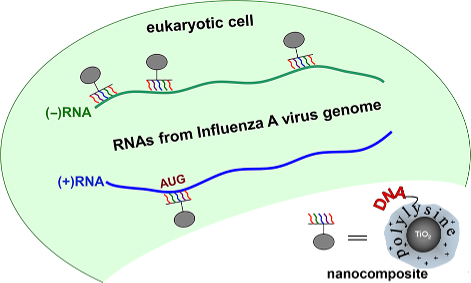
- )-containing oligonucleotides (PL–DNA) were synthesized as described in [17]. The TiO2·PL–DNA nanocomposites were prepared by mixing PL–DNA and anatase nanoparticles (≈5 nm diameter) at room temperature for 20–30 min. The yield of the immobilization was ≈95%, with the capacity of the nanocomposites for


Gold nanoparticles covalently assembled onto vesicle structures as possible biosensing platform
Beilstein J. Nanotechnol. 2016, 7, 655–663, doi:10.3762/bjnano.7.58
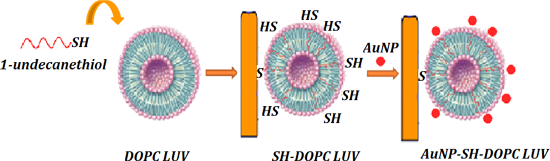
- electrochemical impedance spectroscopy or square wave voltammetry [22][23]. It is known that antibodies can be immobilized onto AuNPs without losing their biological properties [24][25]. Thus, the covalent immobilization of vesicles decorated with AuNPs on a gold surface could increase the amount of immobilized


Novel roles for well-known players: from tobacco mosaic virus pests to enzymatically active assemblies
Beilstein J. Nanotechnol. 2016, 7, 613–629, doi:10.3762/bjnano.7.54
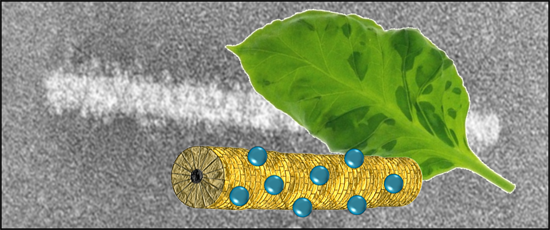
- (length: 300 nm) in combination with functional ligands such as peptides, enzymes, dyes, drugs or inorganic materials is advantageous for applications ranging from biomedical imaging and therapy approaches over surface enlargement of battery electrodes to the immobilization of enzymes. TMV building blocks
- addressable coupling sites exposed on their outer and sometimes inner surfaces, they offer intriguing possibilities for use as nanocontainers for the encapsidation or fabrication of compounds, or as nanofiber scaffolds for the immobilization and presentation of functional units. Most of the novel approaches
- vaccination [125][126][127][128][129]. Finally, the exposure of enzymes or biocatalytically active domains on the TMV surface is an area of intense research, since the viral nanoparticles are expected to offer specific advantages over conventional immobilization matrices [130][131]. These approaches, however


Investigating organic multilayers by spectroscopic ellipsometry: specific and non-specific interactions of polyhistidine with NTA self-assembled monolayers
Beilstein J. Nanotechnol. 2016, 7, 544–553, doi:10.3762/bjnano.7.48
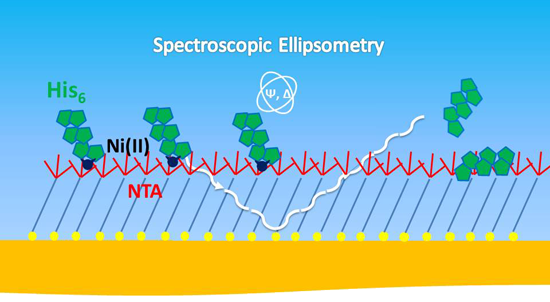
- ellipsometry; Introduction The design of biosensing devices requires precise immobilization, with controlled orientation, of functional proteins on a surface, generally consisting of a substrate functionalized with a molecular receptor layer [1][2]. After seminal works [3], the interaction of chelated Ni ions
- (NTA) group, after loading with nickel ions (Ni(II)), provide platforms able to specifically bind his-tag proteins [13][14][15][16][17][18] and enzymes that retain their activity upon immobilization [19][20][21]. The affinity between the adsorbent surface and the protein can be modulated, e.g., by
- functionalities were probed using imaging SPR. In [51] the NTA–Ni(II)-mediated immobilization of His6-tagged green fluorescent protein on a silica surface was reported. Ellipsometry, at two wavelengths, was exploited mainly to characterize the precursor NTA SAM (about 15 nm thick) while the interactions with




Bacteriorhodopsin–ZnO hybrid as a potential sensing element for low-temperature detection of ethanol vapour
Beilstein J. Nanotechnol. 2016, 7, 501–510, doi:10.3762/bjnano.7.44
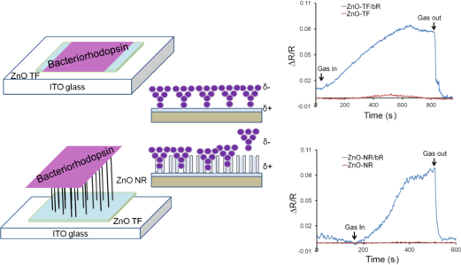
- retention of functional properties ex vivo, and a lack of immobilization techniques to prevent denaturation [4][8]. Interestingly, the protein bacteriorhodopsin (bR) has been proven to have significant stability against thermal, chemical and photochemical degradation [11][12][13]. Also, bR maintains its
- biological activity after immobilization on solid supports and exhibits charge transport in thin films [8][14][15]. These properties have attracted researchers for the development of novel bio-hybrid devices [5][7][16][17][18][19]. Hybrids of bR protein with various metal/metal oxides (e.g., Au, Ag, TiO2


Rigid multipodal platforms for metal surfaces
Beilstein J. Nanotechnol. 2016, 7, 374–405, doi:10.3762/bjnano.7.34

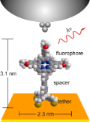
- the most commonly used immobilization chemistry on gold electrodes is the formation of covalent bonds between thiols and gold substrates, also a few examples profit from the interaction of delocalized π-systems with the flat substrate to arrange a subunit perpendicular to the surface such as, e.g










Hydration of magnesia cubes: a helium ion microscopy study
Beilstein J. Nanotechnol. 2016, 7, 302–309, doi:10.3762/bjnano.7.28
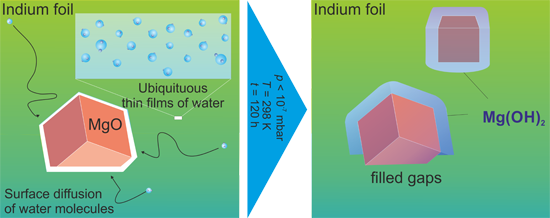
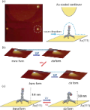
- these oxides are in physical contact with a solid substrate such as the ones used for immobilization to perform electron or ion microscopy imaging. We used helium ion microscopy (HIM) and investigated morphological changes of vapor-phase-grown MgO cubes after vacuum annealing and pressing into foils of
- results are significant and should be relevant for everyone working with nanomaterials under ambient and high-vacuum conditions. Conductive substrates require appropriate drying and surface cleaning prior to sample immobilization and measurement. Apart from the transformation behavior of cubic oxides such


Mismatch detection in DNA monolayers by atomic force microscopy and electrochemical impedance spectroscopy
Beilstein J. Nanotechnol. 2016, 7, 220–227, doi:10.3762/bjnano.7.20
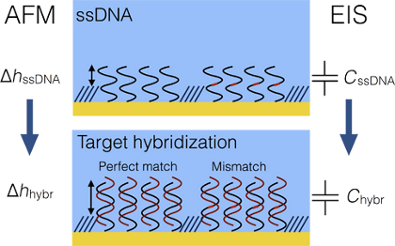
- nanografting have been properly chosen to obtain a surface density of probes optimal for the detection of target hybridization, following previous works of our group [23][24][25]. After the immobilization the ssDNA patches are measured through AFM topographic imaging in soft contact with standard silicon


Sonochemical co-deposition of antibacterial nanoparticles and dyes on textiles
Beilstein J. Nanotechnol. 2016, 7, 1–8, doi:10.3762/bjnano.7.1
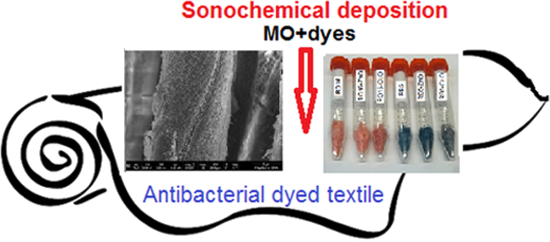
- is the direct impregnation of textiles in the reactant solution. Other methods such as chemical vapor deposition (CVD) of silver NPs on textiles have also been used [1]. Among the various other coating techniques the sonochemical immobilization was carried out on a large variety of substrates




Self-organization of gold nanoparticles on silanated surfaces
Beilstein J. Nanotechnol. 2015, 6, 2345–2353, doi:10.3762/bjnano.6.242
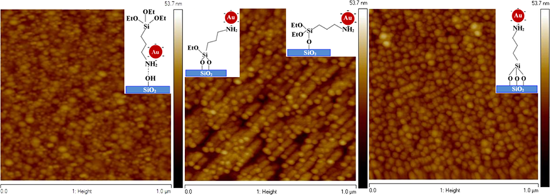
- ]. A considerable amount of work has focused on the immobilization of AuNPs on amine-terminated self-assembled monolayer on different substrates [21][22][23]. In this study, colloidal self-organization of AuNPs was achieved through electrostatic interactions between AuNPs and the functionalized surface


Green synthesis, characterization and catalytic activity of natural bentonite-supported copper nanoparticles for the solvent-free synthesis of 1-substituted 1H-1,2,3,4-tetrazoles and reduction of 4-nitrophenol
Beilstein J. Nanotechnol. 2015, 6, 2300–2309, doi:10.3762/bjnano.6.236
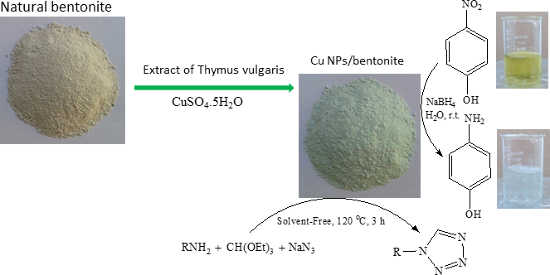
- NPs/bentonite The Cu NPs/bentonite composite was prepared by a simple and inexpensive method involving the immobilization of Cu NPs on bentonite using an aqueous extract of Thymus vulgaris without the usage of any special capping agents or surfactant template. The plant not only functioned as a


Orthogonal chemical functionalization of patterned gold on silica surfaces
Beilstein J. Nanotechnol. 2015, 6, 2272–2277, doi:10.3762/bjnano.6.233
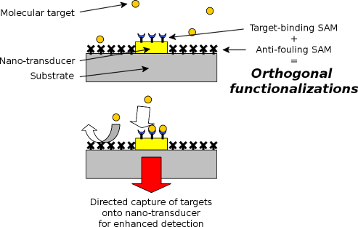
- dielectric surfaces for even greater enhancement of LSPR-based biosensors. First, the orthogonality of the functionalization is often assumed from “end of process measurements” (i.e., SPR signal readout occurs after target immobilization) rather than directly characterized prior to target immobilization
- functionalization with biologically pertinent molecules (antifouling poly(ethylene glycol) silane and biotinylated thiols) was used for the selective immobilization of proteins onto metallic nanostructures relevant to the development of LSPR biosensors and characterized by atomic force microscopy (AFM). Results and
- biotinylated thiols and antifouling PEG/silanes. A similar approach was already used to direct the immobilization of streptavidin-coated nanoparticles [31] onto the gold nanostructures. Here, “single” (i.e., not adsorbed on beads) proteins were immobilized as shown in Figure 5. Conclusion The orthogonal


Synthesis, characterization and in vitro biocompatibility study of Au/TMC/Fe3O4 nanocomposites as a promising, nontoxic system for biomedical applications
Beilstein J. Nanotechnol. 2015, 6, 1677–1689, doi:10.3762/bjnano.6.170
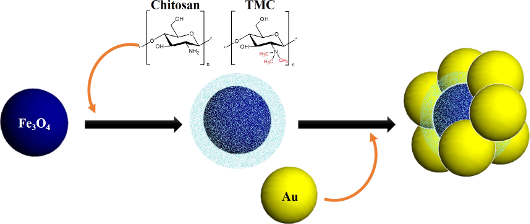
- biocompatibility), they can be utilized as catalysts, labels, and as a protective substrate, especially for immobilization of biomolecules in various fields of modern science [29][30]. Au nanoparticles are extensively used in the design and construction of fuel cells and many types of sensors (e.g
- particularly anticipated in the fields of electrochemical sensors and biosensors, where Au nanoparticles play a fundamental role as labels or platforms for immobilization. In this respect, our results suggest that enhanced signal amplification and increased magnetic separation efficiency are likely. In




Transformations of PTCDA structures on rutile TiO2 induced by thermal annealing and intermolecular forces
Beilstein J. Nanotechnol. 2015, 6, 1498–1507, doi:10.3762/bjnano.6.155
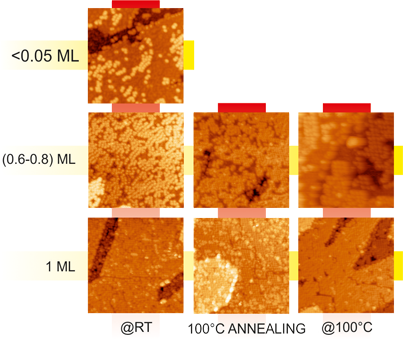
- the [001] crystallographic direction. This indicates that in adopting the most favoured geometry upon adsorption, the key role is played by the molecule–substrate interactions. For on-terrace species, immobilization is reached by additional interactions with surface defects. For low, sub-monolayer


Polymer blend lithography for metal films: large-area patterning with over 1 billion holes/inch2
Beilstein J. Nanotechnol. 2015, 6, 1205–1211, doi:10.3762/bjnano.6.123
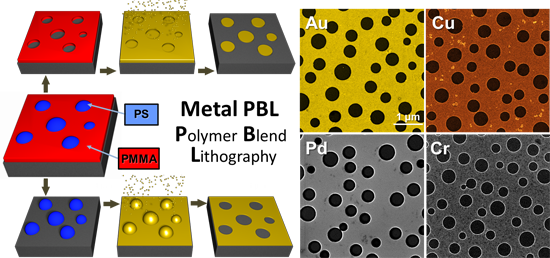
- applications [23]. The surface of the metal can be selectively modified with molecules such as thiols and used for immobilization of biomaterials [33]. The perforated metal films, which can be fabricated on large areas based on spin-coating and physical vapor deposition (PVD), have the potential to be used as
- be used for various applications, e.g., in cell adhesion studies, for the immobilization of biomaterials, for plasmonics such as optical filters or as resist layers for anisotropic reactive ion etching. The wavelength-selective optical transmission of our perforated films due to the localized surface


Patterning technique for gold nanoparticles on substrates using a focused electron beam
Beilstein J. Nanotechnol. 2015, 6, 1010–1015, doi:10.3762/bjnano.6.104
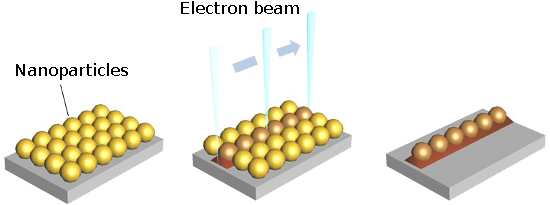
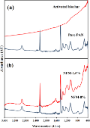
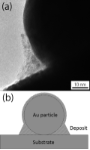
- -shaped area. Although the original distribution was not perfect and many particles were missing in the L-shaped area, it is demonstrated that the electron beam irradiation can immobilize the nanoparticles over a large area on the substrate. To reveal the mechanism of nanoparticle immobilization, Raman
- organic molecules formed on the surfaces of the substrate and the nanoparticles, and that the amorphous carbon was formed during step (ii). This amorphous carbon is considered to fix the particles onto the substrate. The immobilization of the nanoparticle on the substrate surface is considered to occur
- particles on the substrate. Then, the sample, which consisted of the final substrate with immobilized particles, was observed using SEM. The TEM observation and the Raman spectroscopy measurement were carried out on the specimen to reveal the mechanism of immobilization. Schematic illustration of the




Microwave assisted synthesis and characterisation of a zinc oxide/tobacco mosaic virus hybrid material. An active hybrid semiconductor in a field-effect transistor device
Beilstein J. Nanotechnol. 2015, 6, 785–791, doi:10.3762/bjnano.6.81
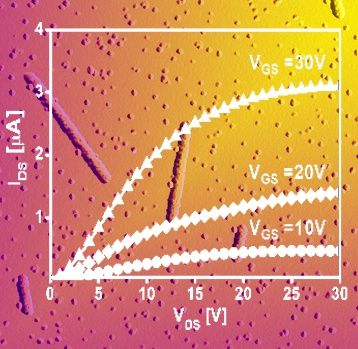
- drop TMV (0.5 μL, 0.5 mg/mL) was placed onto the FET substrate surface and incubated for 10 min. The excess virus suspension was removed by blow drying the substrate under a mild argon flow. The positively charged zinc cations facilitate the efficient immobilization of the negatively charged TMV


Self-assembled anchor layers/polysaccharide coatings on titanium surfaces: a study of functionalization and stability
Beilstein J. Nanotechnol. 2015, 6, 617–631, doi:10.3762/bjnano.6.63
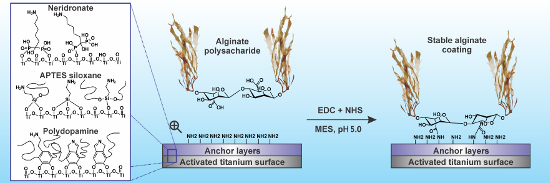
- and a thin, alginate hydrogel could be used in bone tissue engineering as a scaffold material that provides biologically active molecules. The main objective of this contribution is to characterize the activation and the functionalization of titanium surfaces by the covalent immobilization of
- immobilization, as well as the stability upon immersion under physiological-like conditions, are demonstrated by different surface sensitive techniques such as spectroscopic ellipsometry, infrared reflection–absorption spectroscopy and X-ray photoelectron spectroscopy. The changes in morphology and the
- inorganic surface chemistry [8]. Procedures based on electrostatically driven adsorption [9][10][11], covalent coupling [12], electrochemical surface modifications [13], self-organized organic layers [14][15], etc. have been extensively studied for the immobilization of biologically active molecules [16] on