


Search results
Search for "interface" in Full Text gives 1005 result(s) in Beilstein Journal of Nanotechnology. Showing first 200.
Efficiency of single-pulse laser fragmentation of organic nutraceutical dispersions in a circular jet flow-through reactor
Beilstein J. Nanotechnol. 2025, 16, 711–727, doi:10.3762/bjnano.16.55
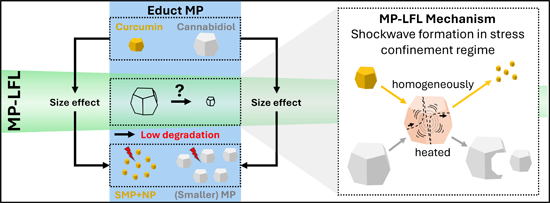
- application-relevant at the interface between nutritional science and the pharmaceutical industry [46][47]. This study aims to elucidate how an organic MP suspension needs to be designed to enable energy- and process-efficient fragmentation with just one nominal laser pulse-per-particle (and practically only
- incidence fluence of (284 ± 45) mJ·cm−2. The estimated fluence values are defined as the incident fluence at the CJ interface. Of course, in the excited volume there are geometry-related fluence gradients due to refraction at the curved interface between ambient air and the liquid jet, as well as


Nanostructured materials characterized by scanning photoelectron spectromicroscopy
Beilstein J. Nanotechnol. 2025, 16, 700–710, doi:10.3762/bjnano.16.54
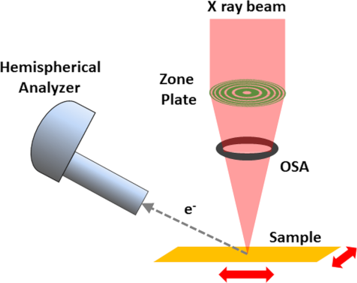
- promising, their performance is often limited by surface properties of the III–V semiconductor material, which furthermore can vary for individual nanowires. This includes native oxides on semiconductor surfaces and their possible removal, surface passivation, and interface defects [27]. Therefore, in-depth
- used to obtain detailed information about nanowire surface, interface composition, and chemical reactions averaging over thousands or millions of nanowires in ensemble measurements [28], SPEM allows to investigate individual semiconductor nanostructures [29]. We investigated the surface chemical
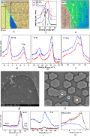
- the local binding energy position of the core level directly follows the energy of the valence and conduction band and thus the band-bending at the interface between the p- and n-doped segments, the observed shift in binding energy directly reflects the in-built potential of the p–n junction at the


High-temperature epitaxial growth of tantalum nitride thin films on MgO: structural evolution and potential for SQUID applications
Beilstein J. Nanotechnol. 2025, 16, 690–699, doi:10.3762/bjnano.16.53
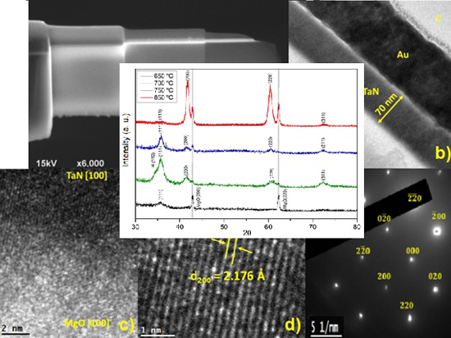
- confirmed by the matching orientations of the lattice planes, suggesting a coherent interface between the two materials. Similar results were reported by Chaudhuri et al. [19] and Elangoval and collaborators [20]. The XRD patterns reveal a relatively low contribution from the Ta2O5 and TaNO compounds, which
- interface between MgO substrate and TaN thin film. (d) Transversal section showing the interplanar spacing of TaN. (e) Indexed electron diffraction pattern of the TaN thin film. AFM image of the TaN film deposited at pN2 = 90 mTorr and T = 850 °C. Atomic composition of TaN thin films as function of pN2


The impact of tris(pentafluorophenyl)borane hole transport layer doping on interfacial charge extraction and recombination
Beilstein J. Nanotechnol. 2025, 16, 678–689, doi:10.3762/bjnano.16.52
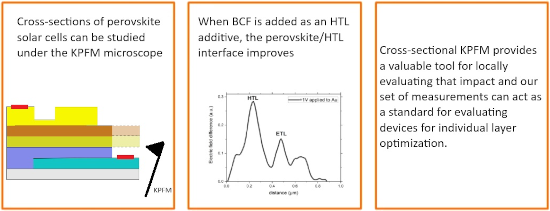
- (pentafluorophenyl)borane (BCF), we enhanced the hole extracting material/perovskite junction quality in spiro-OMeTAD and in PTAA based devices. Measurements under illumination show that the improvement is caused by a reduced recombination rate at the perovskite/hole transporter interface. Keywords: cross-section
- /perovskite interface, in order to evaluate the effects of dopants such as BCF on the interfacial potential landscape in working devices. In this work we chose four HTL doping configurations that have been reported for high-performing solar cells [24][37][38]: (i) spiro-OMeTAD doped with LiTFSI and tBP, (ii
- illumination. Our results indicate that the inclusion of BCF has a passivating effect on iodide defects within the devices. Particularly, a major improvement on the diode character of the HTL/perovskite interface was observed, in both spiro-OMeTAD and PTAA cells. The details of device fabrication, ion milling


Colloidal few layered graphene–tannic acid preserves the biocompatibility of periodontal ligament cells
Beilstein J. Nanotechnol. 2025, 16, 664–677, doi:10.3762/bjnano.16.51
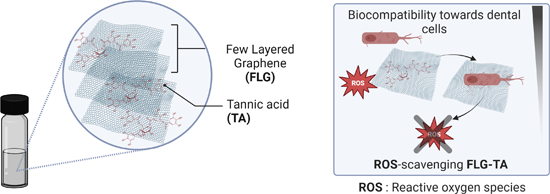
- employed to determine structure and surface functionalities. Second, by employing TA, we aim to develop graphene layers rich in polyphenols to serve as a bioactive interface for cellular interactions. Given that TA possesses potential antioxidant properties, we assessed the in vitro free radical scavenging
- antioxidant characteristics. Given TA’s significant antioxidant potential due to its phenolic functional groups [17], it was hypothesized that graphene layers rich in phenols could serve as a biocompatible interface for PDL cells. Thus, the cytotoxicity of the FLG–TA biocomposite was evaluated by measuring
- partial antioxidant properties, creating an interface that reduces ROS and provides protection against oxidative stress for PDL cells (Figure 4). To investigate whether TA adsorption affects cell adhesion properties beyond ROS reduction, PDL cell growth was monitored at 24 and 48 h following treatment




Nanoscale capacitance spectroscopy based on multifrequency electrostatic force microscopy
Beilstein J. Nanotechnol. 2025, 16, 637–651, doi:10.3762/bjnano.16.49

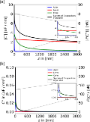
- understanding of material properties, particularly at the nanoscale, where phenomena such as quantum confinement, interface effects, and defect dynamics play a critical role. Innovations in characterization techniques have enabled researchers to explore these properties with unprecedented precision, paving the




Focused ion and electron beams for synthesis and characterization of nanomaterials
Beilstein J. Nanotechnol. 2025, 16, 613–616, doi:10.3762/bjnano.16.47

- tetracarbonyl methyl acrylate (Fe(CO)4MA)) is studied in the gas phase using mass spectrometry and during electron-induced processes [7][8]. This issue also presents insights from initial studies using the novel (hfac)AgPMe3 precursor [9], which notably demonstrates a high level of purity at the interface with

Polyurethane/silk fibroin-based electrospun membranes for wound healing and skin substitute applications
Beilstein J. Nanotechnol. 2025, 16, 591–612, doi:10.3762/bjnano.16.46
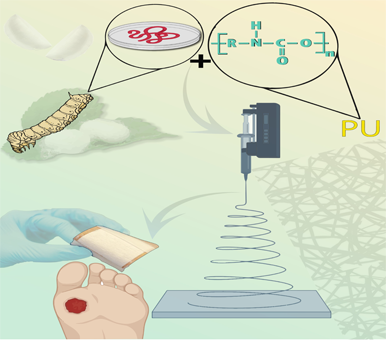
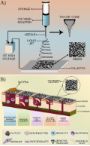
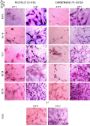
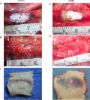
- interface materials being particularly rare. Currently, silicone rubber and, to a lesser extent, PU are the only elastomeric compounds that have demonstrated potential for such applications [133]. Aromatic PUs seem to be more stable than aliphatic PUs. PUs with no or few ether linkages have given rise to a



Retrieval of B1 phase from high-pressure B2 phase for CdO nanoparticles by electronic excitations in CdxZn1−xO composite thin films
Beilstein J. Nanotechnol. 2025, 16, 551–560, doi:10.3762/bjnano.16.43

- interdiffusion at the interface between the CdxZn1−xO (x = 0.4) alloy film and the Si wafer substrate [24]. This process initiates significant diffusion of Si atoms, starting at the film–substrate interface and extending into the thin film layer, leading to the formation of Si–O bonds. At an annealing
- temperature of 900 °C, Si diffusion intensifies, resulting in an increased thickness of the amorphous silicon oxide layer at the film–substrate interface [24]. The interdiffusion of Si, O, Cd, and Zn atoms near the SiOx layer (i.e., at the substrate–film interface) facilitates the formation of willemite
- Zn2SiO4 nanoparticles [24]. Previous investigations have elucidated that the out-diffusion of Zn2SiO4 nanoparticles from the film–substrate interface to the surface occurs with a larger unit cell volume (1569.22 Å3) compared to CdO (105.29 Å3) and ZnO (47.40 Å3) generating localized pressure [1]. This


Biomimetics and bioinspired surfaces: from nature to theory and applications
Beilstein J. Nanotechnol. 2025, 16, 418–421, doi:10.3762/bjnano.16.32
- ) approach. For instance, Bartoli et al. [8] reviewed the potential applications of nanostructured carbon coatings – such as nanodiamonds, carbon nanotubes, and graphene-based materials – to improve interaction on the interface between medical implants and living cells. Several biological materials exhibit

Pulsed laser in liquid grafting of gold nanoparticle–carbon support composites
Beilstein J. Nanotechnol. 2025, 16, 349–361, doi:10.3762/bjnano.16.26
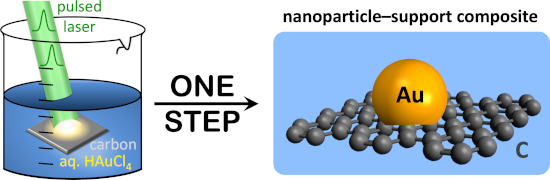
- synthesis–attachment are long preparation times, the generation of hazardous organic solvent and ligand waste [15], and poor electrical contact at the nanoparticle–support interface, particularly for nanoparticles with surfactant-terminated surfaces [16]. Conventionally made nanoparticles rely on
- nanoparticles on supports. We surmise that our in situ decontaminated/activated carbon surfaces enabled immediate embedding of small nucleation sites, at which the laser made nanoparticles grow, resulting in superior physical and electrical contact at the nanoparticle–support interface (shown below). We used
- evidence for Au–C bonds in the XPS data, likely because the generated gold nanoparticles obscured any Au–C bonds that may have formed at the gold–carbon interface. XPS is surface-sensitive, with a typical probe depth limited to the top few nanometers of a material [63]. Therefore, underground (under the


Tailoring of physical properties of RF-sputtered ZnTe films: role of substrate temperature
Beilstein J. Nanotechnol. 2025, 16, 333–348, doi:10.3762/bjnano.16.25
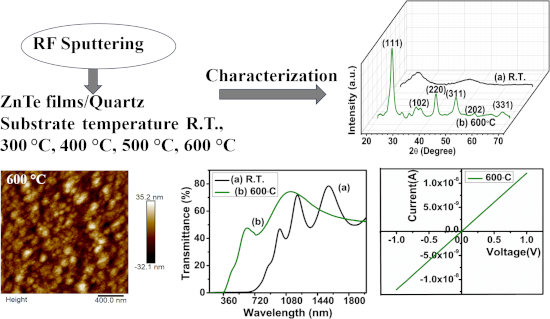
- than 5.78 eV, that is, the sum of CdTe electron affinity (4.28 eV) and bandgap (1.5 eV), would be required. Such a material is not available; therefore, the formation of a Schottky barrier is unavoidable. Because of the small 0.1 eV valance band offset at the CdTe/ZnTe interface, which is best for
- the interference of two beams, one reflected from the surface and the other from the film–substrate interface. The occurrence of interference fringes in the transmittance spectra implies that there is a well-defined boundary between film and substrate and that films with uniform thickness were grown




Emerging strategies in the sustainable removal of antibiotics using semiconductor-based photocatalysts
Beilstein J. Nanotechnol. 2025, 16, 264–285, doi:10.3762/bjnano.16.21
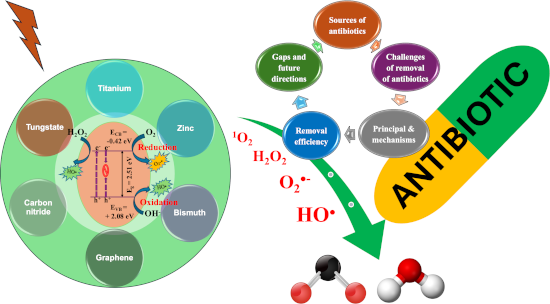
- are desired. When exposed to visible light, electrons at a lower CB location on SC2 interact with holes on the VB of SC1 via the heterojunction interface (Figure 5e) or an intermediary conducting medium (Figure 5f). This enables the photocatalyst to maintain high redox capacity. Efficiency of
- heterojunction interface matching, and limited carrier transfer routes [85]. Bi-based materials for the degradation of antibiotics include various compounds such as Sillén-type BiOX, scheelite structures (BiVO4, BiOIO3, Bi2O3, and Bi2S3), Aurivillius-type Bi2MO6 (M = Mo, Cr, and W), and other composites



Radiosensitizing properties of dual-functionalized carbon nanostructures loaded with temozolomide
Beilstein J. Nanotechnol. 2025, 16, 229–251, doi:10.3762/bjnano.16.18
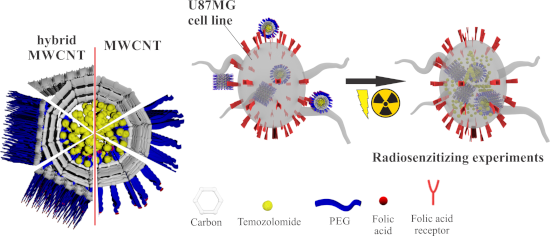
- photodynamic therapy can be obtained [1][2][3][4][5]. It has been shown that CNs have an anti-amyloid aggregation activity, and some of them (i.e., carbon nanotubes (CNTs) and graphene) are able to interface with neurons and neuronal circuits and play an important role in the modulation of neurobiological




A review of metal-organic frameworks and polymers in mixed matrix membranes for CO2 capture
Beilstein J. Nanotechnol. 2025, 16, 155–186, doi:10.3762/bjnano.16.14
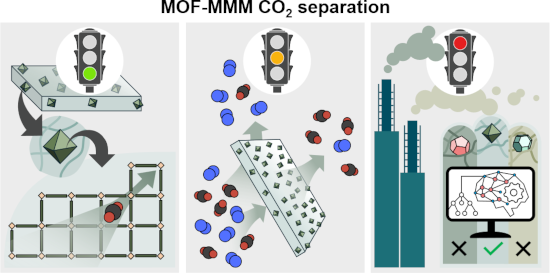
- functional groups can drastically enhance MOF-membrane polymer compatibility [24]. Last, the rich MOF chemistry and tunability pave the way to advanced MMMs with specialized functionality for CO2 separation. For MOF-integrated MMM fabrication, the MOF–polymer matrix interface is crucial to its CO2 separation
- performance (as detailed further in section 3.5). Although the organic linkers within the MOF typically offer support to the membrane polymer matrix, the interface between the MOF and the matrix may still be suboptimal. In this case, the CO2 separation performance of the finalized MOF-based MMM may be
- considerably impaired compared to that of the pristine MOF [86]. The major issue arising from such incompatibility is the formation of void defects within the MMM due to insufficient adhesion between the MOF interface and the polymer matrix. Such voids act as non-specific permeation sites [80]. Consequently




Comparison of organic and inorganic hole transport layers in double perovskite material-based solar cell
Beilstein J. Nanotechnol. 2025, 16, 119–127, doi:10.3762/bjnano.16.11
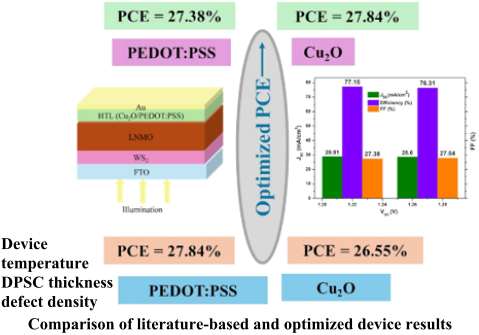
- PEDOT:PSS are the two HTLs that are analyzed concerning the double perovskite material LNMO. The HTL needs better conductivity, better electron blocking, and more hole mobility for better carrier transportation at the perovskite/HTL interface. It is hydrophobic with a wider bandgap and does not easily
- important part of a PSC. It blocks electrons, and only holes are captured to make carrier transportation feasible across the perovskite/HTL interface. Here, the impact of both inorganic Cu2O and organic PEDOT:PSS as HTLs is studied. The simulation of the FTO/WS2/LNMO/Cu2O/Au device with increasing thickness
- both HTL materials (Table 3 and Figure 3). The increase of the PCE with Cu2O signifies a better absorption of light with minimum reflection and, hence, increased carrier transportation across the interface. Cu2O is inorganic, and the high temperature leads to improved hole mobility and better charge


Modeling and simulation of carbon-nanocomposite-based gas sensors
Beilstein J. Nanotechnol. 2025, 16, 90–96, doi:10.3762/bjnano.16.9
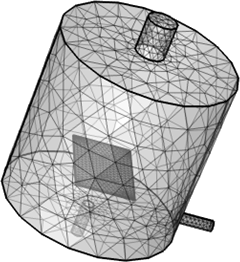
- (reaction engineering, transport of diluted species, laminar flow, and chemistry interface), create the geometry of the sensor within a gas chamber, and select the materials. We then set up the physics with boundary conditions, mesh the geometry using tetrahedral and triangular elements, and define study




Instance maps as an organising concept for complex experimental workflows as demonstrated for (nano)material safety research
Beilstein J. Nanotechnol. 2025, 16, 57–77, doi:10.3762/bjnano.16.7

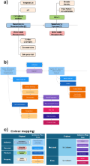
- test users were engaged in assessing the tool’s usefulness and interface usability. Regular feedback during all phases of the development was crucial in guiding the development process with regards to defining and prioritising the requirements in terms of nodes and edges. An instance map can be created


Precursor sticking coefficient determination from indented deposits fabricated by electron beam induced deposition
Beilstein J. Nanotechnol. 2025, 16, 35–43, doi:10.3762/bjnano.16.4

- , 15, 30, 35 and 40 °C using a self-made cryo-stage made from copper and equipped with a heater. The stage was cooled via a thick strand of copper wires connected to a Meissner trap cooled with liquid nitrogen. The temperature was controlled via a heating element inserted as an interface layer between


Bioinspired nanofilament coatings for scale reduction on steel
Beilstein J. Nanotechnol. 2025, 16, 25–34, doi:10.3762/bjnano.16.3

- ). After a reaction time of six hours, the surface is coated with a micrometer layer of SNFs. The surface reaction is proceeded by hydrolysis of TCMS due to water in the solvent. Subsequently, hydrolyzed TCMS molecules react with surface hydroxy moieties at the interface and thereby induce the
- interfaces, the flow velocity is assumed to be zero when modeling viscous drag, on super-hydrophobic surfaces the shear is reduced, leading to slip of the liquid across the surfaces and a non-zero flow velocity [26]. Flow at the material interface can hinder or prevent settling, nucleation, and growth of
- calcium carbonate scale at the interface. Conclusion In conclusion, our study demonstrates the potential of biomimetic approaches to address the industrial challenge of scaling on steel surfaces. By drawing inspiration from the unique water-repelling properties of Collembola skin, we have fabricated


A nanocarrier containing carboxylic and histamine groups with dual action: acetylcholine hydrolysis and antidote atropine delivery
Beilstein J. Nanotechnol. 2025, 16, 11–24, doi:10.3762/bjnano.16.2

- molecules. Within a microemulsion system, they self-assemble at the interface between water and oil. The hydrophilic groups face the aqueous phase, while the resorcinarene scaffold with tails on the lower rim points towards the dispersed (oil) phase. Under slightly basic conditions (pH 8.5), resorcinarenes


Mechanistic insights into endosomal escape by sodium oleate-modified liposomes
Beilstein J. Nanotechnol. 2024, 15, 1667–1685, doi:10.3762/bjnano.15.131
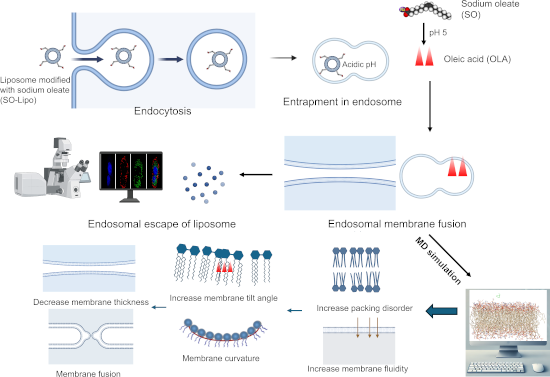
- membrane structure and dynamics. In contrast, the density profile for AUR (Figure 6c) shows a peak near the water–membrane interface, indicating a more superficial insertion compared to OLA. AUR’s density decreases significantly toward the bilayer center, highlighting its preference for interacting with
- within the membrane interface. AUR’s strong interaction with the membrane surface, coupled with its shallow insertion depth, suggests that it may play a role in modulating membrane surface properties without causing extensive disruption to the bilayer’s hydrophobic core. The differential interaction
- engagement and extensive hydrogen bonding highlight its role in stabilizing and potentially modulating the membrane interface, possibly facilitating controlled membrane perturbations such as localized thinning. These findings align with previous studies that have demonstrated AUR’s primary action through





Natural nanofibers embedded in the seed mucilage envelope: composite hydrogels with specific adhesive and frictional properties
Beilstein J. Nanotechnol. 2024, 15, 1603–1618, doi:10.3762/bjnano.15.126
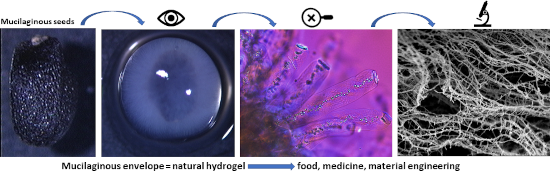
- conditions. The direct consequence of the temperature increase is the oxidation of phenolic molecules and the accumulation at the air–water interface of the mucilage envelope. This process also has an influence on the frictional properties of basil seed mucilage. As our experiments showed, the oxidised
- phenolic molecules, which are concentrated on the mucilage surface, can be maximised [98]. Thus, we assume that increased concentration of phenolic compounds at the mucilage interface has an important antimicrobial function for the seed. The mucilage envelope supports the germination through speeding it up


Integrating high-performance computing, machine learning, data management workflows, and infrastructures for multiscale simulations and nanomaterials technologies
Beilstein J. Nanotechnol. 2024, 15, 1498–1521, doi:10.3762/bjnano.15.119

- combines code execution, rich text, and multimedia elements into a single document [77]. Scientists can leverage Jupyter notebooks to develop, document, and share computational workflows. These notebooks serve as an interface where theoretical concepts are transformed into executable code, enhancing


Effect of radiation-induced vacancy saturation on the first-order phase transformation in nanoparticles: insights from a model
Beilstein J. Nanotechnol. 2024, 15, 1453–1472, doi:10.3762/bjnano.15.117

- typically involve parameters such as activation energies and defect concentrations, and they can be solved to obtain the steady-state concentrations of defects. According to chemical rate theory, which incorporates the effect of particle interface sinks, steady-state concentrations of interstitials and
- vacancies in a material can be determined by considering two extreme cases, namely, (i) the case of vacancy–interstitial recombination, where defects are annihilated through recombination reactions, and (ii) the case of particle interface sinks, where defects are trapped and annihilated at external
- described by kinetic equations taking into account recombinations [22][23][24]: Here, Kv is the defect generation rate (or atomic displacement rate, displacements per atom per second), Re is the recombination coefficient, Kd is the sink strength at the interface or external boundary (assumed equal for both





