Search results
Search for "mobility" in Full Text gives 473 result(s) in Beilstein Journal of Nanotechnology. Showing first 200.
Nanotechnological approaches in the treatment of schistosomiasis: an overview
Beilstein J. Nanotechnol. 2024, 15, 13–25, doi:10.3762/bjnano.15.2

- mobility, couple separation, and tegument alterations. In vivo, the main criteria used is reducing worm burden, quantity and diameter of granuloma, eggs in feces, and oxidative stress markers (e.g., glutathione, nitrite/nitrate, and malondialdehyde). Generally, articles that do not show effectiveness data


Sulfur nanocomposites with insecticidal effect for the control of Bactericera cockerelli
Beilstein J. Nanotechnol. 2023, 14, 1106–1115, doi:10.3762/bjnano.14.91
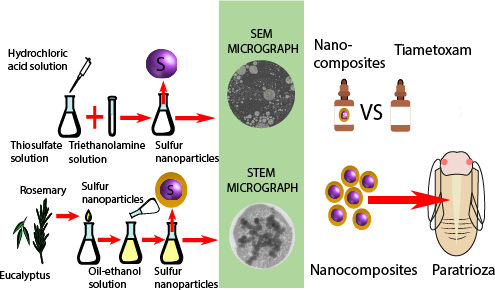
- larvae, pupae, and adults of the fruit fly Drosophila melanogaster [48]. In addition, nanoencapsulated essential oils have chemical activity and increased mobility, allowing for the penetration into insect tissues through the cuticle or by ingestion through the digestive tract [49]. Essential oils are


Dual-heterodyne Kelvin probe force microscopy
Beilstein J. Nanotechnol. 2023, 14, 1068–1084, doi:10.3762/bjnano.14.88
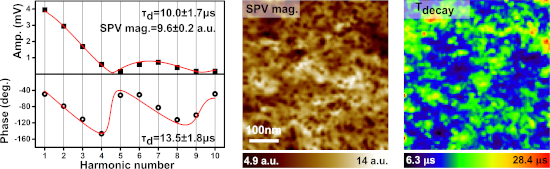
- processes of photogeneration and carrier annihilation (by electron–hole recombination). In addition, from the venture of time-resolved KPFM under pulsed illumination, the SPV dynamics are mainly governed by the effective carrier mobility and trapping mechanisms. The main factor limiting the photocharging
- dynamics is indeed the effective mobility of holes and electrons (under the effect of drift diffusion) in the donor and acceptor networks. After the application of a light pulse – and during the duration of the pulse – the charge mobility limits the rate at which an electrostatic equilibrium can be reached
- depositing caesium lead halide perovskite nanosheets (NSs) on a highly oriented pyrolytic graphite (HOPG) substrate. Lead halide perovskites have emerged recently as materials with unique optical and electronic properties, such as high absorption coefficients, high defect tolerance, and charge mobility. Due




A visible-light photodetector based on heterojunctions between CuO nanoparticles and ZnO nanorods
Beilstein J. Nanotechnol. 2023, 14, 1018–1027, doi:10.3762/bjnano.14.84
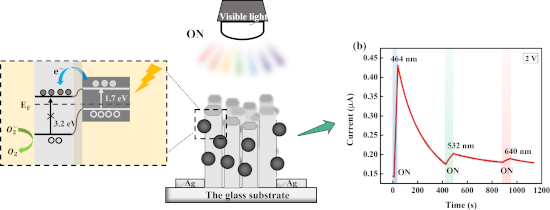
- because of its large exciton binding energy of 60 meV at room temperature [20], excellent chemical and thermal stability, high electron mobility, non-toxicity, low cost, and simple synthesis [21][22]. Various shapes of ZnO nanomaterials can be easily obtained by controlling synthesis conditions (e.g


Isolation of cubic Si3P4 in the form of nanocrystals
Beilstein J. Nanotechnol. 2023, 14, 971–979, doi:10.3762/bjnano.14.80
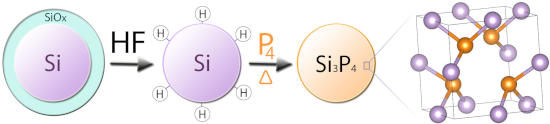
- facile lithium transport and possess a promising capacity of 2700 and 862/737 mA·h·g−1, respectively [16][17]. In the case of the synthesized nanoscale particles, a high level of Li mobility can be reached because of their developed surface and the interconnected ordered network of silicon vacancies with


N-Heterocyclic carbene-based gold etchants
Beilstein J. Nanotechnol. 2023, 14, 865–871, doi:10.3762/bjnano.14.71
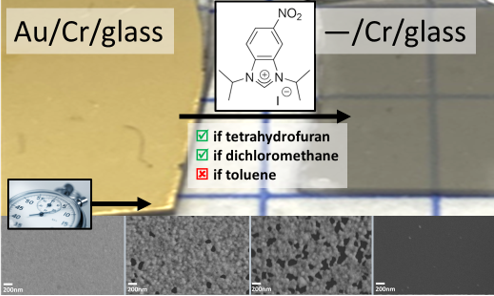
- , in turn, can promote surface mobility of gold across a sample, allowing for the formation of herringbone structures, pits, and step edges [23][24][25]. Other work has shown that tetrahydrofuran (THF), an organic solvent used for SAM formation [1][2][4][6][7][8], can roughen the gold surface at atomic



Ultralow-energy amorphization of contaminated silicon samples investigated by molecular dynamics
Beilstein J. Nanotechnol. 2023, 14, 834–849, doi:10.3762/bjnano.14.68
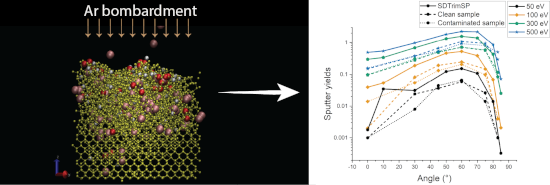
- discussion in the forthcoming sections. In Figure 7, we can see that the mean implantation depths of the contaminants are increasing with impact energy, as expected, with a slight difference between oxygen and hydrogen, which is related to their mobility. Because of the electronegativity of oxygen and its




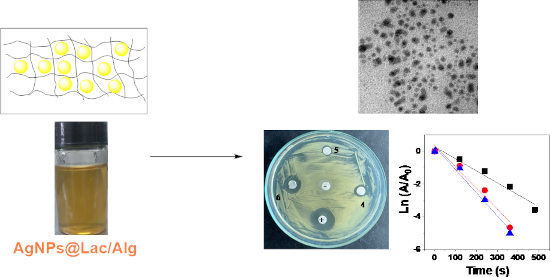
Silver nanoparticles loaded on lactose/alginate: in situ synthesis, catalytic degradation, and pH-dependent antibacterial activity
Beilstein J. Nanotechnol. 2023, 14, 781–792, doi:10.3762/bjnano.14.64
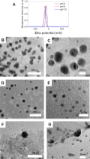
- thankful to Vietnam Academy of Science and Technology (QTCZ01.01/22-23) and to Czech academy of Sciences (Mobility Plus Programme No. VAST-22-02) for funding this work.


Metal-organic framework-based nanomaterials as opto-electrochemical sensors for the detection of antibiotics and hormones: A review
Beilstein J. Nanotechnol. 2023, 14, 631–673, doi:10.3762/bjnano.14.52
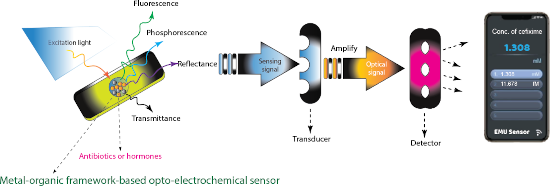
- might produce localization of donor states close to the aromatic ring, were suggested as the source of the bandgap modulation due to changes in the functionality of the organic linker [82]. Due to MOFs’ low resistivity and rapid charge carrier mobility, some researchers [80][81][82][83] have recently
- suggested that MOFs occasionally exhibit superconductive behaviour. The presence of metallic state bands, which correspond to π-type crystal orbitals centred on ligand atoms and metal ions, as well as the availability of the most extensive mobility pathways between the sheets, clarified the conductive


Suspension feeding in Copepoda (Crustacea) – a numerical model of setae acting in concert
Beilstein J. Nanotechnol. 2023, 14, 603–615, doi:10.3762/bjnano.14.50
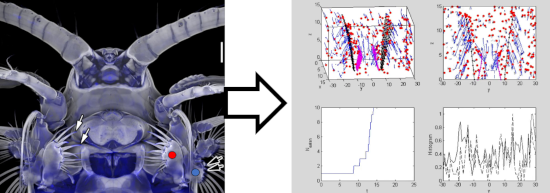
- -resolution CLSM imaging or atomic force microscopy. As it was visualized by CLSM [55][56][57], the basal parts of some short and long setae appear to be relatively soft and seem to contain resilin or other proteins. This should influence the mobility of the rotating setae. To account for this in the
- component. In the model, each long seta is constructed from 15 segments and each short one from seven segments. Each seta is rotated around a base segment from minimal to maximal angles, ϕmin and ϕmax, respectively. We varied these angles in a wide interval to simulate the different rotational mobility of


Mixed oxides with corundum-type structure obtained from recycling can seals as paint pigments: color stability
Beilstein J. Nanotechnol. 2023, 14, 467–477, doi:10.3762/bjnano.14.37
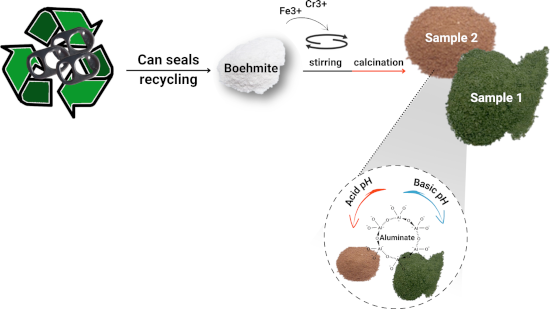
- ) – Finance Code 001 for a graduate scholarship, D. F. L. H. thanks UMONS for the PhD grant, J. d. O. P. thanks the FNRS for mobility grant (2021/V6/5/003–JG/MF–726). C. B. is a Research Associate of the FRS-FNRS, Belgium. C. B. and J. P. thank the Belgian Fund for Scientific Research under the FRFC contract




Bismuth-based nanostructured photocatalysts for the remediation of antibiotics and organic dyes
Beilstein J. Nanotechnol. 2023, 14, 291–321, doi:10.3762/bjnano.14.26
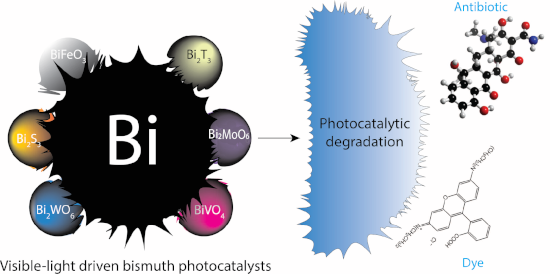
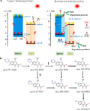
- carrier separation, high photo-transporter mobility, appropriate physical and chemical properties, sufficient band alignment to meet the kinetic requirements of the target reaction, and anti-corrosion stability in reactive environments [18][19][20]. Figure 1 depicts the mechanism of the photocatalyst. In
- orbitals, as opposed to the valence band of TiO2, which is made up entirely of O 2p orbitals. The mobility of the photogenerated charge carriers is increased by the well-dispersed Bi 6s orbital. Due to their distinctive structure, Bi-based photocatalysts exhibit a steeper absorption edge in the visible
- light absorption, weaker charge separation, and poor charge carrier mobility. Researchers are concentrating on several strategies, such as doping, heterojunction formation, induction of the surface plasmon resonance effect, and the formation of Z-schemes, Schottky junctions, and engineered composites


Combining physical vapor deposition structuration with dealloying for the creation of a highly efficient SERS platform
Beilstein J. Nanotechnol. 2023, 14, 83–94, doi:10.3762/bjnano.14.10
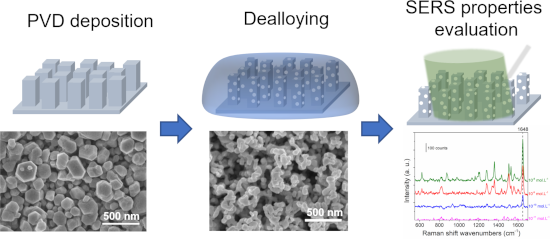
- growth of Ag–Al crystallites in a truncated octahedron shape at low temperatures (below 170 °C) [32][33]. Due to the rather short distance between the substrate and the target (i.e., 10 cm), particles have greater mobility, resulting in the growth of crystalline structures [34]. This induces the faceting




Atmospheric water harvesting using functionalized carbon nanocones
Beilstein J. Nanotechnol. 2023, 14, 1–10, doi:10.3762/bjnano.14.1
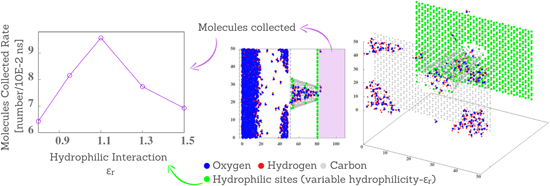
- occurs due to the presence of hydrophilic sites at the nanocone entrance. The functionalization, together with the high mobility of water inside nanostructures, leads to a fast water flow through the nanostructure. We show using molecular dynamics simulations that this device is able to collect water if
- led to the development of mimetic strategies [18][19][20][21], which require the combination of wetting and dewetting properties used by the beetle. The hydrophobic region, as is also the case for the cactus, is fundamental for the mobility of water. Water presents other kinds of anomalous behavior in
- super flow in nanostructures has been explored in processes of separating water from salt or from other contaminants. This high mobility of water under nanoconfinement requires huge pressure and, consequently, a lot of energy [27][28]. In order to help water entrance and decrease the amount of required




Electrical and optical enhancement of ITO/Mo bilayer thin films via laser annealing
Beilstein J. Nanotechnol. 2022, 13, 1589–1595, doi:10.3762/bjnano.13.133
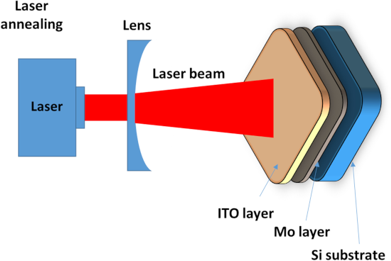
- . The concentration and mobility of charge carriers need to be increased to overcome this problem. Furthermore, enhancing electrical and optical performance at the same time is a critical research topic that has many challenges. Generally, the physical properties of TC materials are essentially affected


Induced electric conductivity in organic polymers
Beilstein J. Nanotechnol. 2022, 13, 1551–1557, doi:10.3762/bjnano.13.128
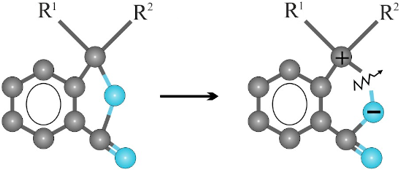
- , to analyze the I–V at 300 K, one can apply the formalism of the theory of injection currents, which makes it possible to estimate the concentration of intrinsic charge carriers (n0) and their minimum mobility (μ) [18]: where, j is the current density, L is the distance between the electrodes, Un is
- the voltage corresponding to the transition point from linear to parabolic dependency of the I–V’s, n0 is the equilibrium concentration of charge carriers, ε and ε0 dielectric constants of the polymer and vacuum, respectively, and μ is the maximum mobility of charge carriers. According to this model



Recent trends in Bi-based nanomaterials: challenges, fabrication, enhancement techniques, and environmental applications
Beilstein J. Nanotechnol. 2022, 13, 1316–1336, doi:10.3762/bjnano.13.109
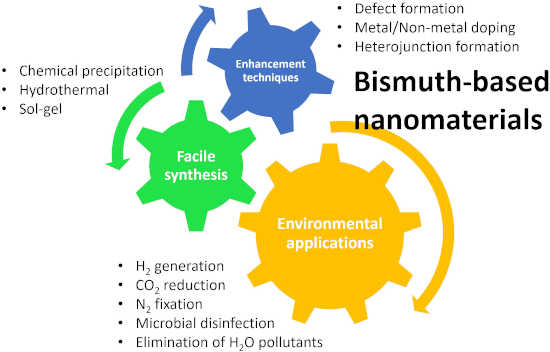
- than Bi5+. The earlier compounds have been examined more thoroughly than the latter. The overlap of O 2p and Bi 6s orbitals in the valence band (VB) of Bi3+-containing compounds improves photogenerated charge mobility and, hence, improves photocatalytic activity [22][23]. Furthermore, except for BiOF
- expediting the detachment and mobility of photoinduced charges. This, in turn, increases the ability of holes and electrons to undergo oxidation and reduction, respectively. As a consequence of this, the ZnIn2S4/BiVO4 heterojunction has unusual photocatalytic activity. It has an H2 evolution rate much higher




Enhanced electronic transport properties of Te roll-like nanostructures
Beilstein J. Nanotechnol. 2022, 13, 1284–1291, doi:10.3762/bjnano.13.106
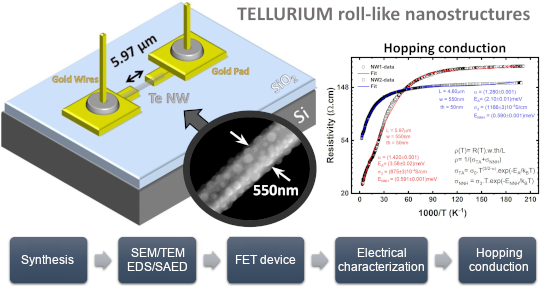
- by a facile synthesis and extensively studied by scanning and transmission electron microscopy. The nanostructures are made of pure and crystalline Tellurium with trigonal structure (t-Te), and exhibit p-type conductivity with enhanced field-effect hole mobility between 273 cm2/Vs at 320 K and 881
- cm2/Vs at 5 K. The thermal ionization of shallow acceptors, with small ionization energy between 2 and 4 meV, leads to free-hole conduction at high temperatures. The free-hole mobility follows a negative power-law temperature behavior, with an exponent between −1.28 and −1.42, indicating strong phonon
- ), nanorods (NRs), nanowires (NWs), nanobelts (NBs), nanotubes (NTs), nanoflowers (NFs) and chiral nanostructures [6][7][8][9][10]. Trigonal tellurium (t-Te) MLs have also been recently proposed as a silicon successor for nanoelectronics because of their high hole mobility and current density [3]. Combining




Role of titanium and organic precursors in molecular layer deposition of “titanicone” hybrid materials
Beilstein J. Nanotechnol. 2022, 13, 1240–1255, doi:10.3762/bjnano.13.103
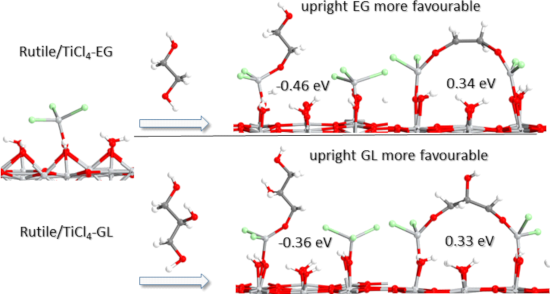
- molecular mobility is significantly higher than in any corresponding crystalline form and there is a lower coordination number for atoms in the surface which gives rise to enhanced chemical reactivity of the amorphous surface. These results show that the choice of the surface can have a major impact on the


Application of nanoarchitectonics in moist-electric generation
Beilstein J. Nanotechnol. 2022, 13, 1185–1200, doi:10.3762/bjnano.13.99
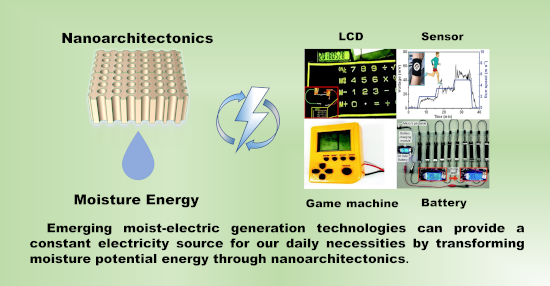
- , µ is the effective ionic mobility, and ν is the liquid flow rate, which plays an important role in MEGs. The flow potential is a reflection of the joint action of the fluid and the nanochannel, so it can be shown from Equation 1 that various parameters of the nanochannel material, such as flow


Effects of focused electron beam irradiation parameters on direct nanostructure formation on Ag surfaces
Beilstein J. Nanotechnol. 2022, 13, 1004–1010, doi:10.3762/bjnano.13.87
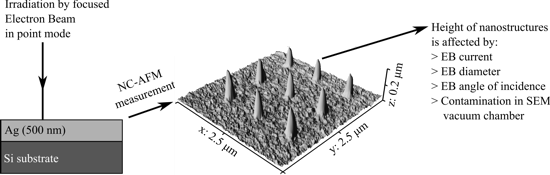
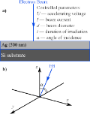
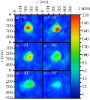
- to different adhesion coefficients between the surface and hydrocarbons. Results from EDX measurements strongly suggest that metal atoms or ions are capable of moving within carbon–metal nanowires under the influence of EB. High Ag ion mobility under electric fields or EB has also been reported in




Design of a biomimetic, small-scale artificial leaf surface for the study of environmental interactions
Beilstein J. Nanotechnol. 2022, 13, 944–957, doi:10.3762/bjnano.13.83
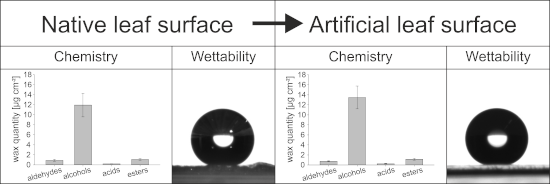
- surfaces. CAH is a qualitative measure of the mobility of a droplet on a surface [36]. The larger the hysteresis, the harder a droplet rolls off [37]. CAH is defined as the difference between the advancing and the receding CA. It can be determined for a droplet with varying volume or for a droplet on an
Self-assembly of C60 on a ZnTPP/Fe(001)–p(1 × 1)O substrate: observation of a quasi-freestanding C60 monolayer
Beilstein J. Nanotechnol. 2022, 13, 857–864, doi:10.3762/bjnano.13.76
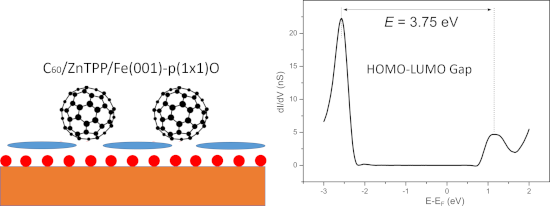
- measurements and for modeling by ab initio calculations. Periodic and compact films are generally obtained when the molecules possess enough surface mobility, that is, when the diffusion energy (Ed) is low compared to the thermal energy kBT, where T is the substrate temperature and kB is the Boltzmann constant


Efficient liquid exfoliation of KP15 nanowires aided by Hansen's empirical theory
Beilstein J. Nanotechnol. 2022, 13, 788–795, doi:10.3762/bjnano.13.69
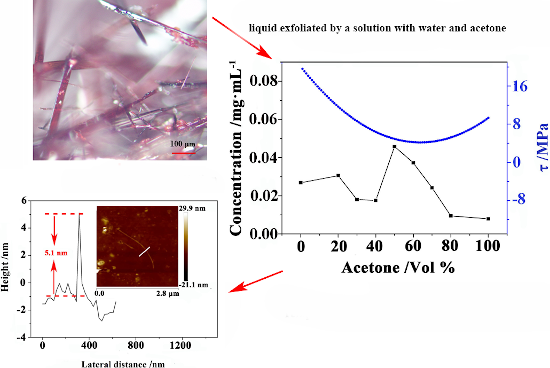
- Abstract The KP15 nanowires with one-dimensional properties has a defect-free surface, high anisotropy, and carrier mobility which is desirable for the development of novel nanodevices. However, the preparation of nanoscale KP15 is still inefficient. In this work, the Hansen solubility parameters of KP15
- weak interaction between these chains [3][4]. Therefore, those 1D materials have defect-free surfaces, high anisotropy, and carrier mobility. For example, TiS3 nanowires obtained by mechanical stripping have a large carrier mobility of about 10000 cm2·V−1·s−1 [5][6][7]. Fibrous phosphorus is also a new
- one-dimensional material with high carrier mobility (308 cm2·V−1·s−1) and rapid response time [8][9][10]. These one-dimensional materials are ideal for photovoltaic and photocatalytic applications. The KP15 is considered to be a novel low-dimensional material with layered structure, high hole carrier


Effects of substrate stiffness on the viscoelasticity and migration of prostate cancer cells examined by atomic force microscopy
Beilstein J. Nanotechnol. 2022, 13, 560–569, doi:10.3762/bjnano.13.47
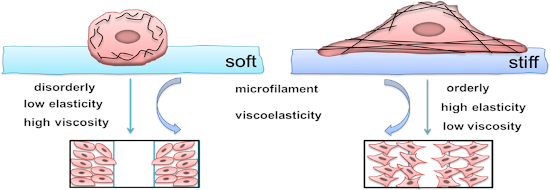
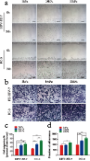
- , the lower the cell viscosity. Conversely, HPV-PZ-7 cells did not show this characteristic (Figure 5b and Supporting Information File 1, Figure S6b). The physical quantity expressed by viscosity is inversely proportional to mobility. The lower the viscosity, the more mobile the cell is, and the
- mobility of the cells is positively correlated with their ability to invade. Wullkopf et al. [40] found that, in a 3D breast cancer model, an increased viscosity might actually aid cells at an invasive front. Our study firstly shows that substrate stiffness could affect the migration and invasion of